Elizabeth Clare is an Associate Professor in the Department of Biology at York University, affiliated with the Faculty of Science. Her research focuses on developing novel technologies to monitor biodiversity and assess ecosystem responses to environmental change, particularly using environmental DNA (eDNA). She pioneered airborne DNA sampling to study terrestrial biodiversity at continental scales and has contributed to BIOSCAN, a global biodiversity program. Research Themes: Biodiversity monitoring, species interactions, environmental change resilience, bat biology, tropical ecosystems. Technological Innovations: Airborne eDNA, iDNA from leeches, and mobile lab sequencing in remote locations. Her work has been featured in Science , Nature , and media outlets like Wired and NPR . She teaches courses in evolution, ecology, and conservation biology, emphasizing critical thinking and applied research. Recent grants include NSERC and Genome Canada funding for airborne DNA projects. Clare collaborates globally, with fieldwork in Belize, South America, and Southeast Asia. Her lab's 'airDNA' technology has revolutionized biodiversity surveys, leveraging existing air-quality networks for ecological insights. She advises students on projects like urban bat ecology and BIOSCAN applications. Awards include election to the Royal Society of Canada (2023) and recognition for teaching innovations like the BioAudio podcast. Her lab also develops open-access tools, such as 3D-printable eDNA filters.
Univ.-Prof. Karl Crailsheim is a Professor at the University of Graz, affiliated with the Institute of Zoology within the Faculty of Natural Sciences. His research focuses on honeybee behavior, physiology, and health, particularly investigating the honeybee superorganism and threats to their colonies. He explores swarm systems, robotics, and swarm intelligence, with recent emphasis on colony losses and environmental threats. His work bridges biology and robotics, applying insights from honeybee behavior to algorithm design. Research interests include honeybee nutrition, immune responses, pathogen impacts, and the application of citizen science in ecological studies. Key projects involve tracking honeybee behavior, analyzing pollen diversity, and developing robotic systems inspired by swarm dynamics. Collaborative efforts with citizen scientists enhance ecological data collection. Publications highlight advancements in understanding bee health, pesticide effects, and swarm robotics. His interdisciplinary approach addresses both biological and technological challenges in apiculture and robotics.
Dr. Mary E. Power is a Professor of the Graduate School at the University of California, Berkeley. She specializes in river ecology, focusing on algal-based food webs and their interactions with hydroclimatic regimes. Her research integrates field experiments and long-term monitoring in the South Fork Eel River, examining how flow variations and environmental conditions drive ecosystem state transitions. Primary Research Site: Angelo Coast Range Reserve (Mendocino Co., CA) Key Methodologies: In situ incubations, stable isotope probing, nanoSIMS analysis Current Focus: 2024- study of three alternative algal food web states during summer low flows Her work reveals critical thresholds where reduced summer flows and warming pools shift nutritious algal ecosystems toward toxic cyanobacterial dominance, impacting salmon and cross-ecosystem linkages. Selected Research Trends: Hydrological control of food web structure Cyanotoxin dynamics in river networks Climate change impacts on freshwater ecosystems Long-term ecological reconstructions via sediment cores Top-down and bottom-up regulation of river communities Her lab employs cutting-edge techniques to analyze microbiome elemental exchanges and successional patterns in Cladophora glomerata, a dominant green macroalga in the Eel River system.
John Markham is a Professor in the Department of Biological Sciences within the Faculty of Science at the University of Manitoba. His office is located in W481 Duff Roblin Building, and he can be contacted via email at John.Markham@umanitoba.ca or by phone at 204-474-7180. His research focuses on: Community ecology in northern ecosystems Symbiotic nitrogen fixation processes Ecosystem engineering mechanisms Arctic and boreal forest dynamics Plant-soil-animal interactions Environmental stressor impacts on nutrient cycling Professor Markham's work centers on how biotic interactions shape subarctic and boreal environments, particularly through the lens of nitrogen-fixing plants and animal-mediated ecosystem engineering. His research demonstrates how Arctic foxes create nutrient hotspots via denning that enhance plant productivity and diversity in tundra ecosystems, while his studies on actinorhizal plants (especially alders) reveal complex responses to salinity, temperature, moisture, and elevated CO2 levels. Analysis of his 15 most recent publications (2021-2025) shows consistent emphasis on Arctic fox ecosystem engineering impacts on forest dynamics, nitrogen fixation symbiosis under environmental stressors, and landscape-scale nutrient cycling. His work integrates field experiments across Canadian sites with remote sensing and biogeochemical analyses, revealing how animal activities and microbial symbioses drive ecosystem resilience in northern environments facing climate change.
Prof. Benno Liebchen holds a faculty position at the Technische Universität Darmstadt within the Institute for Condensed Matter Physics , part of the Faculty of Physics. He leads the Liebchen Group , dedicated to advancing research in the Theory of Soft Matter , focusing on active matter, colloidal systems, and non-equilibrium phenomena. His work explores collective behavior in self-propelled particles, phase transitions in active fluids, and adaptive strategies in smart materials. Research Interests include: Active matter dynamics and pattern formation Non-equilibrium statistical mechanics Biophysical systems and biomimetic design Computational modeling of soft matter Recent publications highlight breakthroughs in intelligent active particles , self-reverting vortices , and motility-induced phase coexistence . His lab develops tools like the AMEP Python package to analyze active systems. Teaching responsibilities include advanced modules in soft matter physics. Collaborative projects involve interdisciplinary approaches to microswimmer behavior and machine learning-driven optimization of collective systems. Contact: +49 6151 16-24509 / Office: S2|04 104
Jessica Forrest is an Associate Professor in the Department of Biology at the University of Ottawa, affiliated with the Faculty of Science. Her research focuses on evolutionary ecology, particularly plant-pollinator interactions, climate change impacts on pollinators, and the ecological consequences of phenological shifts. She studies native bees, their interactions with plants, and how agricultural practices can benefit from native bee ecology. Her work spans field studies in natural and agricultural landscapes, emphasizing pollinator conservation and climate adaptation. Notable projects include investigations into bee nesting habitat enhancement in orchards, the effects of drought on alpine bees, and the role of floral traits in pollinator attraction. Research Themes: Pollination ecology, climate change biology, bee behavior, and agricultural sustainability. Labs/Teams: Leads the Forrest Lab at the University of Ottawa, involving graduate and undergraduate students in field and lab-based studies. Her recent work highlights the importance of Asteraceae pollen in protecting mason bees from brood parasites and the complex effects of temperature on bee reproductive success in high-elevation habitats. Students advised include Lydia, Michelle, Natasha, Roisin, Tovah, and others, with projects ranging from bee cognition to agricultural pollination systems. The Forrest Lab collaborates widely, addressing applied and theoretical questions in pollinator ecology.
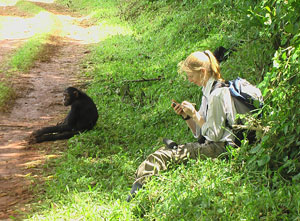
Dr. Catherine Crockford is Research Professor and Director of the Ape Social Mind Lab at the Max Planck Institute for Evolutionary Anthropology, affiliated with the Department of Human Behavior, Ecology and Culture. She co-directs the Tai Chimpanzee Project in Ivory Coast, studying habituated chimpanzee groups and sooty mangabeys. Her research examines primate social cognition, communication evolution, and neuroethology through behavioral observations, hormone sampling, and neuroimaging. Key interests include: Evolution of social bonding and cooperation mechanisms Maternal effects on offspring development Vocal communication and combinatorial signaling Neurobiological bases of social behavior Her publications demonstrate consistent focus on chimpanzee vocal combinatorics, stress physiology, social learning, and comparative neuroanatomy, often integrating field data with endocrine and imaging methodologies. She leads an ERC project investigating early-life influences on social skills and supervises 8 PhD students researching primate communication, social dynamics, and energetics. Laboratory infrastructure supports field endocrinology and collaborative neuroimaging studies.
Jaimejuan Mar Cabeza is a Senior University Lecturer at the University of Helsinki, affiliated with the Faculty of Biological and Environmental Sciences, Organismal and Evolutionary Biology Research Programme, and the Helsinki Institute of Sustainability Science (HELSUS). She leads the Global Change and Conservation Lab and serves as a supervisor for the Doctoral Programme in Interdisciplinary Environmental Sciences and the Doctoral Programme in Wildlife Biology. University of Helsinki: Senior University Lecturer Faculty of Biological and Environmental Sciences Organismal and Evolutionary Biology Research Programme Helsinki Institute of Sustainability Science (HELSUS) Global Change and Conservation Lab (Principal Investigator) Dr. Cabeza's research focuses on ecology, evolutionary biology, and conservation science with particular emphasis on human-wildlife conflicts, climate change impacts on biodiversity, and sustainable pastoral systems. Her work spans multiple continents with significant field research in Madagascar and Kenya. She employs interdisciplinary approaches that integrate ecological, social, and cultural dimensions of conservation. Her recent publications reveal strong trends in bat ecology and pest suppression services, human-carnivore coexistence, and the role of traditional ecological knowledge in conservation. The research demonstrates increasing integration of social science perspectives with ecological studies, particularly examining how cultural practices and governance systems affect conservation outcomes. Best International Teacher (2010) Commendation for good thesis supervision (2009, 2011) Best Talk, Student Conference on Conservation Science (2000) Dr. Cabeza actively supervises 4 PhD students and 3 MSc students, with a strong commitment to education at multiple levels from school children to advanced doctoral candidates. She coordinates the RESPECT field course in Madagascar and has developed novel pedagogical approaches for conservation education. Her research is supported by multiple active projects including 'Thinking like an elephant' (2025-2028), 'Conservation trade-offs' (2024-present), and 'Pastoralism as a global herbivory socio-ecosystem' (2023-2026). She leads the Global Change and Conservation Lab, which brings together researchers from diverse disciplines to address complex conservation challenges at the intersection of ecology, social science, and policy. The lab maintains strong international collaborations, particularly with institutions in Africa where much of their field research takes place.
Prof. Dr. Marek Basler is an Associate Professor of Infection Biology at the Biozentrum, University of Basel , leading a research group focused on the Type VI Secretion System (T6SS) in bacterial pathogens. His work bridges structural biology, molecular microbiology, and computational analysis to unravel the mechanisms of this contractile nanomachine. PhD in Microbiology (2007, Institute of Microbiology, CAS, Prague) Postdoctoral Fellow (2007–2013, Harvard Medical School) Assistant Professor (2013–2018) and Associate Professor (since 2018) at Biozentrum His research explores the structure, assembly, and therapeutic potential of the T6SS, a critical virulence factor in pathogens like Pseudomonas aeruginosa . Key themes include bacterial defense strategies , intermicrobial competition , and host-pathogen interactions . Recent projects highlight T6SS roles in antibiotic resistance and horizontal gene transfer . The most recent publications (2025–2024) reveal novel insights into T6SS activation by environmental stress , toxin diversity , and host cell targeting . Trends span microbial ecology , nanomachine dynamics , and computational modeling of bacterial interactions. Scientific Awards : EMBO Membership (2023) ERC Consolidator Grant (2019) EMBO Gold Medal (2018) Friedrich Miescher Award (2018) EMBO Young Investigator (2015) His lab (Basler Lab) utilizes state-of-the-art microscopy , biochemical techniques , and live-cell simulations (e.g., BacFighT6 ). Collaborations span institutions like Harvard Medical School and NCCR-AntiResist , with future work targeting antibacterial therapies .
Dr. Bok Sowell is a Professor in the Department of Animal & Range Sciences at Montana State University, affiliated with the College of Agriculture. His expertise spans rangeland ecology, wildlife habitat conservation, and livestock nutrition. He holds a Ph.D. in Range Nutrition from New Mexico State University (1989), an M.S. in Mule Deer Nutrition from Texas Tech University (1981), and a B.S. in Wildlife Management from New Mexico State University (1978). Research focuses on sagebrush ecosystems, sage-grouse conservation, grizzly bear behavior, and livestock grazing management. Notable projects include studies on fence modifications for sage-grouse nest survival, stable isotope analysis of army cutworm moths, and dormant season grazing strategies for beef cattle. Teaching includes courses like Natural Resource Conservation and Wildlife-Livestock Nutrition . Over 35 peer-reviewed articles highlight contributions to rangeland ecology and wildlife management. Awards include the 2024 Founder's Day Award for Excellence and recognition for academic advising. Grants include funding from the US Fish and Wildlife Service for sagebrush landscape management. Professional service includes roles with the Society for Range Management and Ecosphere journal. He leads efforts to restore aspen ecosystems and mitigate human-wildlife conflicts in the Greater Yellowstone Ecosystem.
Andrea Santangeli serves as a Supervisor in the Doctoral Programme in Wildlife Biology and holds a Docentship in the Organismal and Evolutionary Biology Research Program at the University of Helsinki's Faculty of Biological and Environmental Sciences. He maintains an additional affiliation as an Honorary Fellow at the University of Cape Town's FitzPatrick Institute of African Ornithology under the National Research Foundation Centre of Excellence since August 2019. His research spans international collaborations across multiple continents, with particular focus on African and European conservation challenges. Dr. Santangeli completed his doctoral thesis titled 'Assessing the effectiveness of different approaches to species conservation' at the University of Helsinki in 2013. His educational background established the foundation for his current research program focused on evidence-based conservation strategies and effectiveness assessment. His research interests center on wildlife conservation biology, particularly avian ecology and species protection. Santangeli's work examines human-wildlife interactions, conservation prioritization, and the effectiveness of different conservation approaches. He investigates how climate change affects species distributions and community composition, with special attention to vulture conservation, bird-feeding practices, and the impacts of agricultural systems on biodiversity. His approach integrates ecological, social, and policy dimensions to develop comprehensive conservation solutions. Species conservation effectiveness Human-wildlife interactions Climate change impacts on biodiversity Vulture conservation Bird community dynamics Ecosystem services assessment Analysis of Santangeli's recent publications (2023-2025) reveals a strong focus on interdisciplinary conservation science addressing urgent global challenges. His work increasingly integrates One Health approaches, examining connections between wildlife health, ecosystem functioning, and human activities. Key themes include climate change adaptation strategies, human dimensions of conservation, and technological innovations for monitoring and protection. His research shows growing emphasis on policy-relevant science that directly informs conservation decision-making at multiple scales. His scientific recognition includes an Honorary Fellowship at the University of Cape Town's prestigious FitzPatrick Institute of African Ornithology, part of the DST NRF Centre of Excellence. This position acknowledges his significant contributions to African ornithology and conservation science, particularly his work on vulture conservation across the continent. As a doctoral supervisor, Santangeli guides the next generation of conservation scientists through the Wildlife Biology doctoral program. His research is supported by multiple projects, including the ongoing 'Understanding the drivers and species ecological traits underpinning the global trade in wild birds' (2019-2024), which examines wildlife trade dynamics and conservation implications. His work demonstrates strong international collaboration networks across Europe, Africa, and beyond. Santangeli's research activities involve extensive fieldwork, data analysis, and policy engagement. He participates in academic visits to institutions like the Center d'Études Biologiques de Chizé in France and contributes to scientific conferences and peer review for leading conservation journals. His work often involves citizen science approaches, as evidenced by the 'iratebirds' project on aesthetic attraction to birds.
Jürgen Groeneveld is a researcher at the Department of Ecological Modelling at the Helmholtz Centre for Environmental Research (UFZ) in Leipzig, Germany. His work focuses on agent-based modelling of ecological and socio-environmental systems, with a particular emphasis on pollinator conservation, climate change impacts, and biodiversity digital twins. He contributes to the BioDT Project and collaborates on initiatives like the BEEHAVE and BEE-STEWARD models for honeybee and bumblebee dynamics. His research integrates computational methods with ecological theory to address challenges in sustainable land use and environmental policy. Key projects include modeling land use transformations, analyzing the effects of pesticides on pollinators, and exploring risk-sharing mechanisms for smallholder farmers. Groeneveld has published extensively on topics such as metapopulation dynamics, forest fragmentation, and the application of standardized protocols (e.g., ODD) for simulation models. His work bridges theoretical ecology with practical applications, aiming to inform conservation strategies and climate adaptation policies. He participates in interdisciplinary collaborations across the UFZ’s research units, including the 'Smart Models / Monitoring' group. His contributions span publications in journals like Ecological Modelling, Ecosphere, and Nature, reflecting his expertise in both ecological and computational methodologies.
Lori L. Holt is a Professor of Psychology at the University of Texas at Austin (UT-Austin), where she leads the Holt Lab. Previously, she served as faculty at Carnegie Mellon University (1999–2023), contributing to the Center for the Neural Basis of Cognition. Her research focuses on auditory cognitive neuroscience, exploring how learning, attention, and neural mechanisms shape speech perception and communication. She holds a BS and PhD in Psychology from the University of Wisconsin-Madison (1995, 1999). Her work investigates the neural foundations of listening, emphasizing adaptive plasticity in speech perception, statistical learning dynamics, and the interplay between sensory input and cognitive processes. Recent studies examine how short-term sound statistics influence perceptual weighting, the impact of accent exposure on speech production, and neural correlates of auditory category learning. The Holt Lab, equipped with EEG facilities, advances understanding of voice perception, speech motor control, and neurocognitive adaptation. Dr. Holt teaches courses such as Behavioral Neuroscience (PSY 332) and Biopsychology (PSY 308), reflecting her expertise in linking biological mechanisms to psychological processes. Her research has been published in leading journals, with a focus on auditory neuroscience, statistical learning, and neurorehabilitation.
Douglas Bird is Professor of Anthropology at Penn State, researching interactions between social/ecological systems in foraging societies. His collaborative fieldwork with Martu Aboriginal communities examines hunting, fire ecology, and landscape evolution. Key research areas: Ethnoarchaeology of hunter-gatherers Anthropogenic fire regimes Co-evolution of humans/ecosystems Coastal archaeology Field sites include Australia's Western Desert and Torres Strait Islands.
Maurizio Ramanzin is a Full Professor at the University of Padova , affiliated with the School of Animal Science and Department of Agronomy, Animals, Food and Natural Resources (DAFNAE) . His research focuses on Agricultural Sustainability , Environmental Impact Assessment , and Precision Livestock Farming . Academic Field : AGR/19 Email : maurizio.ramanzin@unipd.it Address : Agripolis - Viale dell'università, 16 - Legnaro (Padova) – ITALY His work explores the interactions between livestock systems and ecosystem services in mountainous regions, with emphasis on: Grazing Management and biodiversity conservation Life Cycle Assessment (LCA) of dairy and beef systems Climate Change Adaptation in Alpine ungulates Animal Welfare in small-scale farms Technological Tools (GPS, NIRS) for monitoring grazing behavior Key trends in his recent publications include: Quantifying environmental drivers of wolf predation on livestock Developing low-cost biologging systems for dairy cows Analyzing social-ecological trade-offs in mountain agriculture Assessing microbial dynamics in alpine soils