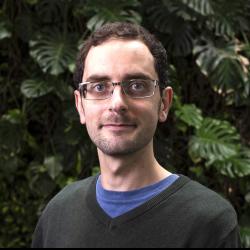
Louise CopemanView profile
Researcher
Louise Copeman holds a Courtesy Appointment in the College of Earth, Oceanic, and Atmospheric Sciences (CEOAS) at Oregon State University, affiliated with the Department of Fisheries, Wildlife, and Conservation Sciences. She is based at the Hatfield Marine Science Center (HMSC) in Newport, Oregon, where she leads the Marine Lipids Laboratory—a Cooperative Institute for Marine Resources Studies (CIMRS) facility. Her research integrates physiology, ecology, and biochemistry to study how environmental change affects marine species. Education: B.Sc. (Hons), Memorial University, Newfoundland, Canada (1996) M.Sc. (Aquaculture), Memorial University, Newfoundland, Canada (2001) Ph.D. (Marine Ecology), Memorial University, Newfoundland, Canada (2011) Her research focuses on the bioenergetics of cold-water marine organisms, particularly the impacts of temperature, ocean acidification, oil contamination, and food quality on lipid allocation, growth, and survival in early life stages of crabs and fish. She investigates how climate-induced changes in prey lipids influence population persistence and biogeography. Her work provides critical physiological data for ecosystem and population models, especially in Arctic and sub-Arctic regions. The 15 most recent publications highlight a consistent focus on lipid dynamics, thermal biology, and climate stressors in marine fish and crustaceans. These works span disciplines such as marine biochemistry, ecotoxicology, and climate change ecology, with frequent use of fatty acid biomarkers, controlled experiments, and field-based physiological assessments. Key species include Arctic cod, Pacific cod, walleye pollock, and various crabs, reflecting her focus on ecologically and commercially important North Pacific species. Louise Copeman has not been publicly recognized with scientific awards in the provided text. She mentors graduate students and has advised at least one M.Sc. student, Brittany Koenker, who graduated in 2017. Her research is supported by multiple grants from NOAA, BOEM, North Pacific Research Board, and Alaskan Sea Grant, covering projects on oil toxicity, optimal thermal habitats, ocean acidification, and Arctic ecosystem surveys. These grants reflect sustained funding and collaborative leadership in marine climate research. She directs the Marine Lipids Laboratory at HMSC, a specialized facility for lipid and fatty acid analysis in marine organisms. The lab supports experimental studies on energy allocation and nutritional physiology, contributing to broader efforts in marine resource sustainability and climate adaptation.