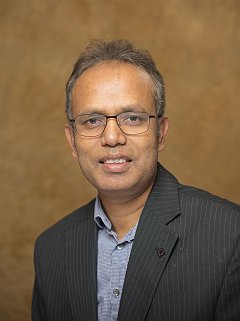
Prof. Dr. Jörg E. Drewes is a Full Professor and Chair at the Research Institute for Urban Water Management, Technical University of Munich (TUM), Germany. He also serves as Academic Program Director for Environmental Engineering at TUM and is a co-founder of Waterloop Solutions GmbH. His work spans advanced water treatment technologies, wastewater reuse, and environmental health surveillance. Affiliations : TUM, Colorado School of Mines, King Abdullah University of Science and Technology, UNSW Water Research Centre Research focuses on advanced oxidation processes , membrane fouling mitigation , micropollutant removal , and wastewater epidemiology for public health. His team develops integrated systems for water-energy-food nexus applications and graphene oxide-based treatment solutions. Recent publications address PFAS remediation , UVC-LED pre-treatment for biofouling control, and GIS-based wastewater surveillance models . Awards include the Bayerische Staatsmedaille (2023) and William Dunbar Medal (2022). 2023 : Bayerische Staatsmedaille 2022 : William Dunbar Medal 2018 : IWA Fellow He leads the Nexus@TUM initiative and contributes to EU water resilience strategies. Collaborations include projects in Germany, China, India, and Spain, focusing on climate-resilient water systems and resource recovery .
Prof. Dr.-Ing. Ahmad Osman is a Professor at the Saarland University of Applied Sciences (htw saar), specializing in Test Technologies and Test Methods within the Faculty of Engineering. He also holds an Adjunct Professor position at Laval University in Quebec, Canada, in the Department of Electrical Engineering and Computer Science. His research focuses on Artificial Intelligence applications in Signal and Image Processing for Non-destructive Testing (NDT) , with extensive work on Deep Learning , 3D Ultrasound Tomography , and Sensor Data Fusion in industrial contexts. Engineering Artificial Intelligence Signal Processing Image Processing Non-destructive Testing Quality Control Augmented Reality Osman leads the AutomaTiQ research group and serves as Head of the Algorithms/Signal and Data Processing Department at Fraunhofer IZFP . His recent publications (2017–2022) emphasize Deep Learning for defect detection in CFRP , Terahertz Imaging for artwork diagnostics, and Acoustic Sensors for agricultural quality control. He has organized international conferences on Structural Health Monitoring and contributed to Springer books on NDT technologies. His projects include ComforTex-AI (2024) and development of 3D positioners for ultrasound measurements. Collaborations span institutions in Germany, Canada, Italy, and Brazil, with advisory roles in the German Society for NDT and technical committees for conferences in Montreal and Egypt.
Dr. Peter Bartsch serves as curator of the fish collection and construction project officer at the Museum für Naturkunde (MfN), Leibniz Institute for Evolution and Biodiversity Science, which is affiliated with Humboldt University Berlin. With expertise in ichthyology, embryology, and comparative anatomy, Dr. Bartsch has been instrumental in the museum's collection management and building renovation projects since joining the institution as a research associate before becoming curator in 2000. Dr. Bartsch received his academic training in ichthyology, embryology, and comparative anatomy at the University of Cologne. His academic career includes positions as a research assistant at the University of Tübingen and a postdoctoral fellowship at the Natural History Museum in Stockholm before joining the Museum für Naturkunde. Dr. Bartsch's primary research focuses on the evolution and systematics of major groups of bony fishes (Osteichthyes), with particular emphasis on primitive ray-finned fish lineages. His work integrates morphological analysis of both fossil and extant species to understand evolutionary relationships. A significant portion of his research centers on the developmental biology of ancient fish groups, especially the Polypteridae (bichirs), examining embryonic development, skeletal formation, and sensory systems. More recently, his interests have expanded to include the logistics and optimal management of research collections, reflecting his administrative responsibilities at the museum. Analysis of Dr. Bartsch's recent publications reveals a consistent focus on fish morphology, evolution, and development, with particular attention to primitive actinopterygian lineages. His work spans both systematic taxonomy and functional morphology, with increasing attention to museum collection management challenges. The publications demonstrate expertise in comparative anatomy across diverse fish groups including chondrichthyans (sharks, rays, and chimaeras) and basal actinopterygians. Recent work shows integration of molecular phylogenetic approaches with traditional morphological analysis. Dr. Bartsch has held significant administrative roles at the Museum für Naturkunde, serving as head of the collections department from 2011 to 2013. He was responsible for the museum's construction program for the east wing reconstruction, completed in 2010, which created modern facilities for the storage and scientific processing of the museum's wet collections. Currently, he manages the second phase of the building's renovation that began in 2011 and participates in planning for the future development of the museum's facilities. The Museum für Naturkunde houses extensive ichthyological collections that form the basis for Dr. Bartsch's research. His work involves close collaboration with various research teams within the museum, particularly in the areas of molecular phylogenetics, collection preservation, and paleontological research. The museum's facilities include specialized laboratories for morphological analysis, molecular studies, and collection management that support his research activities.
Chanchal K. Roy is Professor of Software Engineering/Computer Science at the University of Saskatchewan and Co-Director of the Software Research Lab. He leads an NSERC CREATE graduate program on Software Analytics Research and co-leads the Data Management group for an NSERC CFREF project on Food Security, with over 170 publications cited 6,000+ times. His research centers on software clone detection using the widely adopted NICAD system, software evolution, empirical studies, and AI-driven software analytics. Recent work integrates large language models for code generation, clone detection in the AI era, and developer interactions with tools like ChatGPT, emphasizing practical applications in maintenance and analytics. Analysis of his 15 most recent publications reveals a strong trend toward AI/ML integration in software engineering: 12 of 15 articles (2025) explore LLMs, quantum computing, or deep learning for tasks like bug localization, code snippet generation, and feature-toggle analysis. Key themes include empirical validation of AI tools, Stack Overflow data mining, and cross-domain frameworks for Society 5.0. His scientific awards include: Most Influential Paper Awards (SANER 2018, ICPC 2018) Outstanding Young Computer Science Researcher Award (CS-Can/Info-Can, 2018) New Researcher Award (University of Saskatchewan, 2019) New Scientist Research Award (College of Arts and Science, 2019) As lead of the NSERC CREATE program and CFREF data group, he mentors graduate students in software analytics while securing major grants. He actively serves on program committees for ASE, ICSE, and FSE, reviewing journals and organizing workshops on clone detection and empirical methods. His lab focuses on real-world applications in food security data management and software evolution. The Software Research Lab, co-directed by Roy, drives projects like NICAD and the NSERC CREATE initiative, emphasizing open-source contributions and industry collaboration. Current efforts include quantum-SE integration and AI-augmented maintenance tools under the CFREF food security mandate.
Dr. Maryegli Fuss is a Scientific Associate at the Institute for Technology Assessment and Systems Analysis (ITAS), Karlsruhe Institute of Technology (KIT) in Germany. She heads the 'Energy-X Nexus' working group within the 'Sociotechnical Energy Futures' research group and serves as academic mentor for the doctoral program Climate, Resources and Circular Economy (KLIREC) . She also contributes to ITAS's 'New Work' initiative and provides scientific advice for German-Indian university collaborations (TU9 network). Education: PhD in Philosophy (Sustainability), KIT (2022) MSc in Material Flow Management, Trier University of Applied Sciences (2012) BSc in Agro-industrial Chemistry, Federal Institution of Goiás, Brazil (2010) Research Focus: Her transdisciplinary work integrates sustainability science, systems analysis, and industrial ecology. Primary domains include: (1) Circular economy implementation in waste management systems, (2) Energy-resource nexus (Water-Waste-Energy-Food), (3) Supply chain risks for critical materials in renewable energy, and (4) Life cycle assessment of low-carbon transitions. Methodologies feature material flow analysis, stakeholder interviews, and socio-technical system modeling. Publications: Her research output emphasizes sustainable waste management in Global South contexts (especially Brazil), critical material supply chains for energy transitions, and environmental assessment frameworks. Recurring themes include circular economy implementation challenges, transdisciplinary approaches, and policy design for resource security. Leadership: Coordinates international research partnerships (e.g., Chile/Indonesia water-energy nexus projects) and leads doctoral mentoring initiatives focused on climate-resource systems.
Prof. Dr.-Ing. Arne Pietsch is a faculty member at the Technical University of Luebeck in the Department of Mechanical Engineering and Economics . His expertise centers on apparatus and plant engineering for the food industry , with a focus on hygienic apparatus engineering and high-pressure technology . Specializations: Food process engineering, supercritical fluid applications, and industrial plant design Current role: Founding Officer in the department His research spans supercritical CO2 processes , including decaffeination, turbine cleaning, and polymer impregnation. He integrates high-pressure systems into engineering education and explores viscosity dynamics in food processing. Key publication trends (2012–2019) highlight work in: Supercritical fluid extraction and impregnation High-pressure equipment safety and design Gas-assisted oilseed pressing Coffee processing quality control
Jun.-Prof. Dr. Christian Krupitzer is a Tenure Track Professor in Food Informatics at the University of Hohenheim's Institute of Food Science and Biotechnology, part of the Faculty of Natural Sciences. He leads the Department of Food Informatics and is a member of the Computational Science Hub (CSH). His research focuses on self-adaptive software systems, machine learning (especially edge computing), IoT technologies, and software engineering applied to food processing and agricultural systems. Education: PhD in Business Information Systems (Dr. rer. pol.), University of Mannheim (2018) M.Sc. and B.Sc. in Business Information Systems, University of Mannheim (2010–2012) High School Diploma (Abitur) from Wilhelmi-Gymnasium Sinsheim (2007) Research Interests: Krupitzer’s work integrates computational methods with food science, emphasizing adaptive systems for food quality monitoring, IoT in agriculture, and machine learning for predictive analytics. He explores edge computing’s role in real-time decision-making and secure group communication schemes for IoT networks. Publications: His recent work spans predictive maintenance in Industry 4.0, digital twins in food systems, and blockchain applications in supply chain authentication. The articles highlight trends in interdisciplinary approaches combining AI, IoT, and domain-specific challenges in food production and logistics. Awards: No scientific awards explicitly listed in the provided materials. Grants & Advising: While specific grants are unmentioned, his roles as department head and tenure-track professor suggest involvement in research funding. No formal advisee list provided, though his team includes postgraduate researchers like Dana Jox, Daniel Einsiedel, and others. Labs & Teams: Leads the Food Informatics department and collaborates with the Computational Science Hub. His team focuses on developing innovative solutions for food systems through computational methods.
Núria Agell Jané is a Full Professor at ESADE Business School , Universitat Ramon Llull, specializing in Artificial Intelligence and Decision-Making Systems. She leads the JUICE (Judgements and Decisions in the Market Place) research group and the ESADE D3 - Institute for Data-Driven Decisions . Doctorate in Applied Mathematics (Qualitative Reasoning Modelling), UPC-BarcelonaTech Bachelor's in Mathematics, University of Barcelona Her research focuses on Artificial Intelligence , Decision-Making Systems , and Fuzzy Logic , with applications in Business, Marketing, and Sustainability. Recent publications emphasize Hesitant Fuzzy Linguistic Term Sets , Consensus Modeling , and AI in Sustainable Development . She coordinates multiple publicly and privately funded projects applying AI to Business and Marketing challenges. As PhD Programme Director (2005-2013) and current Department Director of Operations, Innovation and Data Sciences , she has shaped academic and research strategies at ESADE. Her work spans collaborations with institutions like LAAS-CNRS (France) and University of Edinburgh Business School , with over 40 journal publications and 50 conference contributions. She has directly supervised 11 PhD students in AI and Decision Sciences.
Dr. Matthew James Slater is the Head of the Aquaculture Research Group at the Alfred Wegener Institute, focusing on sustainable marine bioeconomy. His work emphasizes integrated multitrophic aquaculture (IMTA), holothurian ecology, and economic development through aquaculture. He leads applied research with industry partners to develop sustainable feed solutions and improve aquaculture practices. Research interests include optimizing feed ingredients from by-products (e.g., black soldier fly larvae, shrimp processing remains) and exploring the ecological roles of sea cucumbers. He investigates the effects of environmental factors (soundscapes, light, temperature) on aquatic species and promotes circular economy principles in aquaculture. Key contributions span over 60 peer-reviewed publications, with recent work on microplastic contamination in fish and the economic value of small-scale fisheries. His research integrates interdisciplinary approaches to address global challenges in aquaculture sustainability and food security. Contact: matthew.james.slater@awi.de | +49(471)4831-2727 | Alfred Wegener Institute, Bussestraße 27, 27570 Bremerhaven
Dr. Friedrich Longin is an Adjunct Professor and Group Leader of the Wheat Research Group at the State Seed Breeding Institute of the University of Hohenheim, Germany. He leads research on wheat breeding, alternative wheat varieties, and increasing biodiversity in wheat cultivation. University of Hohenheim: Habilitation in Plant Breeding (2016), Adjunct Professor (2019) University of Hohenheim and China Agricultural University in Beijing: Doctorate in a German-Chinese graduate program University of Hohenheim: Studied agricultural biology, specializing in biotechnology and plant breeding Dr. Longin's research focuses on breeding alternative wheat varieties, pre-breeding in wheat, processing and nutritional quality of wheat varieties, nutrient use efficiency in wheat species, and increasing biodiversity and sustainability in wheat cultivation. His breeding research into alternative crops has led to the resurgence of traditional varieties such as spelt, emmer, and einkorn. His work bridges fundamental plant breeding science with practical applications for sustainable agriculture and food systems. He has made significant contributions to understanding the genetic basis of wheat quality traits, disease resistance, and nutritional properties. His recent publications demonstrate a strong focus on genomics-based approaches to wheat improvement, with particular attention to grain quality, nutritional properties, disease resistance, and the relationship between wheat varieties and human health. There is a clear trend toward integrating molecular breeding techniques with traditional approaches, and an increasing emphasis on understanding the health implications of wheat consumption, particularly regarding inflammatory responses and food sensitivities. Active participant in numerous national and international research projects related to wheat breeding and genetic resources Regularly invited to speak at national and international conferences on wheat breeding and sustainable agriculture Volunteers on several professional committees related to plant breeding and agricultural research Dr. Longin heads the Wheat Research Group at the State Seed Breeding Institute of the University of Hohenheim, which focuses on developing improved wheat varieties with enhanced nutritional quality, disease resistance, and environmental adaptability. His team works closely with farmers, millers, and bakers to ensure that new varieties meet the needs of the entire production chain from farm to fork.
Professor Johanita Kruger is a faculty member at the University of Applied Sciences Fulda, Germany, where she holds the position of Professor of Food Technology and Nutrition. Previously, she has held roles including Researcher at the University of Hohenheim and Lecturer at the University of Pretoria. Her research focuses on nutrient bioavailability, particularly inhibitors and enhancers of bioactive compounds, with an emphasis on polysorbate micelle absorption mechanisms, food-to-food fortification strategies, and mineral bioavailability in African green leafy vegetables. She collaborates internationally on projects funded by the German Research Foundation (DFG) and USAID, addressing issues such as micronutrient deficiencies and food processing innovations. Her educational background includes a PhD in Nutrition from the University of Pretoria, alongside extensive post-doctoral and research experience across multiple institutions. University of Applied Sciences Fulda, Germany (2023–present) University of Hohenheim, Stuttgart (2020–2023; 2016–2018) University of Pretoria, South Africa (2015–2015; 2011–2013) Her research interests span food biofunctionality, including the development of novel micellar formulations and the evaluation of food processing techniques to enhance nutrient bioavailability. Key projects include defining food-to-food fortification strategies and investigating iron/zinc bioavailability in traditional African diets. She has contributed to interdisciplinary collaborations, such as the USAID Feed the Future Innovation Lab for Food Processing. Publications highlight advancements in polysorbate micelle stability, polyphenol encapsulation, and the efficacy of tropical plant-based fortification. Her work bridges laboratory research and real-world applications, aiming to improve global food security and nutritional outcomes. Laboratory activities include the USAID-funded Food Processing Lab and collaborative projects with institutions in France and Slovenia. No scientific awards are explicitly noted in the provided text. Her advising and grants include DFG funding for micelle absorption studies and contributions to the Kenyan Flour Blending Initiative. Students and lab teams focus on topics like cereal biofortification and nutrient-micelle interactions.
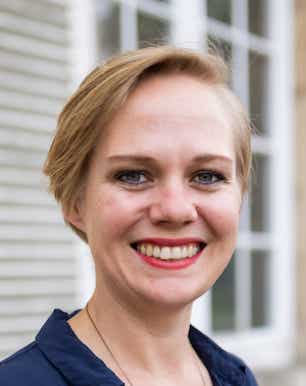
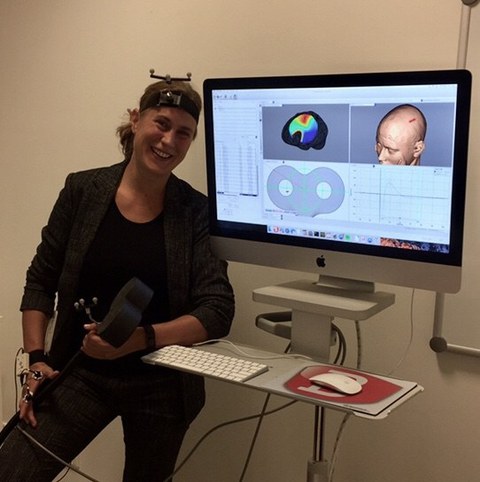
Franziska M. Korb is a Researcher at the Institute of General Psychology, Biopsychology and Methods of Psychology at Technische Universität Dresden. She holds a PhD in Psychology from the University of Leipzig (2008) and has conducted extensive postdoctoral research at institutions including Duke University (USA), the Max Planck Institute for Human Cognitive and Brain Sciences (Leipzig), and the University Clinic Cologne. Her research focuses on cognitive control mechanisms, decision-making processes, and the neural underpinnings of self-control and emotional regulation. She has received awards such as the Charlotte Bühler Award for teaching excellence (2014) and grants for pilot studies and travel. Korb is also an ad-hoc reviewer for multiple prestigious journals and research councils. Her academic journey includes a diploma in Psychology from Leipzig (2004) and research internships at UC San Diego and the Max Planck Institute. She explores topics like brain networks (e.g., salience network), decision conflict, and the role of anticipated emotions in self-regulation. Her work combines neuroimaging (fMRI, EEG), transcranial stimulation (TMS/tDCS), and behavioral experiments to study cognitive and affective processes in health and clinical populations (e.g., anorexia nervosa). Research Highlights: Investigates how brain connectivity predicts self-controlled choices. Examines neural mechanisms of honesty and reward circuits in moral decisions. Studies framing effects in food choices and future consequences in health behaviors. Explores cognitive effort tolerance and dark triad personality traits. Awards and Grants: Charlotte Bühler Teaching Award (2014) DAAD Travel Award (2014) DEFD Best Poster Award (2013) Start-up grant for pilot studies (2014) Professional Contributions: Active in open science initiatives, replication studies, and academic ethics education. Collaborates internationally, including with Duke University and the Max Planck Society.
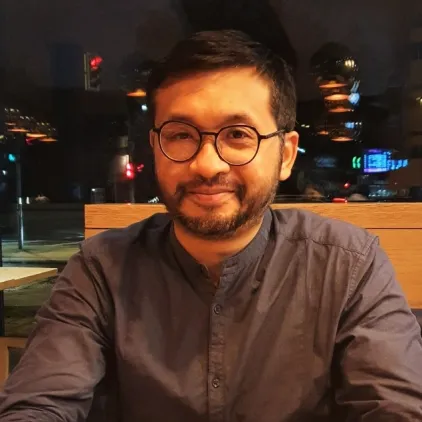
Prof. Hendro Wicaksono is a Professor of Data-Driven Industrial Systems at the School of Business, Social & Decision Sciences, Constructor University Bremen gGmbH. His expertise lies in applying AI and data-driven methods to enhance decision-making in complex industrial systems. He holds a Dr.-Ing. from Karlsruhe Institute of Technology (Germany) and M.Sc./B.Sc. degrees from German and Indonesian institutions. Research Interests : Focuses on causal AI, explainable AI, digital twins, sustainable industrial systems, and smart cities. His work integrates machine learning with domain-specific challenges in supply chains and energy management. Projects : Led over 10 funded projects including Delfine (accelerating energy transition), Talenta (digital asset management), and xAgri (agri-food supply chain analytics). Collaborates with global partners like Stadtwerke Trier and JetBrains. Teaching : Courses include Data Management in Industry 4.0, Production Planning, and Smart Cities. Recently on sabbatical in Spring 2023. Students : Supervises 20+ PhD/Master students researching topics like causal ML in software projects, EV adoption modeling, and blockchain logistics. Affiliations : Visiting Professor at University of Exeter, Adjunct Professor at Sebelas Maret/Airlangga Universities (Indonesia), and Academic Leader at Bandung Institute of Technology.
Masahiro Ryo is a Professor of Environmental Data Science at Brandenburg University of Technology (BTU) and leads the working group "Artificial Intelligence for Smart Agriculture" at the Leibniz Centre for Agricultural Landscape Research (ZALF). His research integrates machine learning with ecological systems to address global sustainability challenges, focusing on biodiversity, soil health, and AI-driven agricultural solutions. His work spans environmental data science, ecosystem services, and smart agriculture. Key themes include explainable AI for biodiversity monitoring, soil organic carbon prediction, and machine learning applications in ecological modeling. Recent publications highlight trends in environmental AI, with applications in yield mapping, fungal taxonomy, and global change ecology. He emphasizes the integration of ecological theory with deep learning to tackle small-data problems and improve model transferability. Contact: masahiroryo@gmail.com | Personal Website
Prof. Dr.-Ing. habil. Konrad Koch is a Professor at the Technical University of Munich (TUM), leading the working group on energy-efficient wastewater treatment since 2012. He holds the Chair of Urban Water Management within the TUM School of Engineering and Design. His career includes a habilitation in 2018 and appointment as an Extraordinary Professor (Apl.-Prof.) in 2023. He previously worked at the Bavarian State Research Center for Agriculture and earned his PhD from TUM in 2010. Education: PhD (Dr.-Ing.), Technical University of Munich (2010) Diploma in Waste Management and Contaminated Sites, TU Dresden (2007) Research at TU Hamburg-Harburg (2006–2007) Research focuses on sustainable use of organic waste streams, anaerobic digestion, wastewater treatment innovation, and energy recovery. Key areas include biological methanation, CO₂ utilization, and process optimization for resource efficiency. Koch actively bridges lab-scale to full-scale applications, emphasizing practical implementation in urban wastewater systems. Publications highlight advancements in biogas potential testing standardization, microbial methanation, and co-digestion strategies. His work addresses challenges like nitrogen oxide emissions and substrate selection for anaerobic processes. Lab affiliation: Chair of Urban Water Management, TUM. Collaborates with interdisciplinary teams on projects like ENCOVER, CANDO, and the Urban Water-Energy-Food Nexus. Editor for Bioresource Technology and Environmental Technology & Innovation .