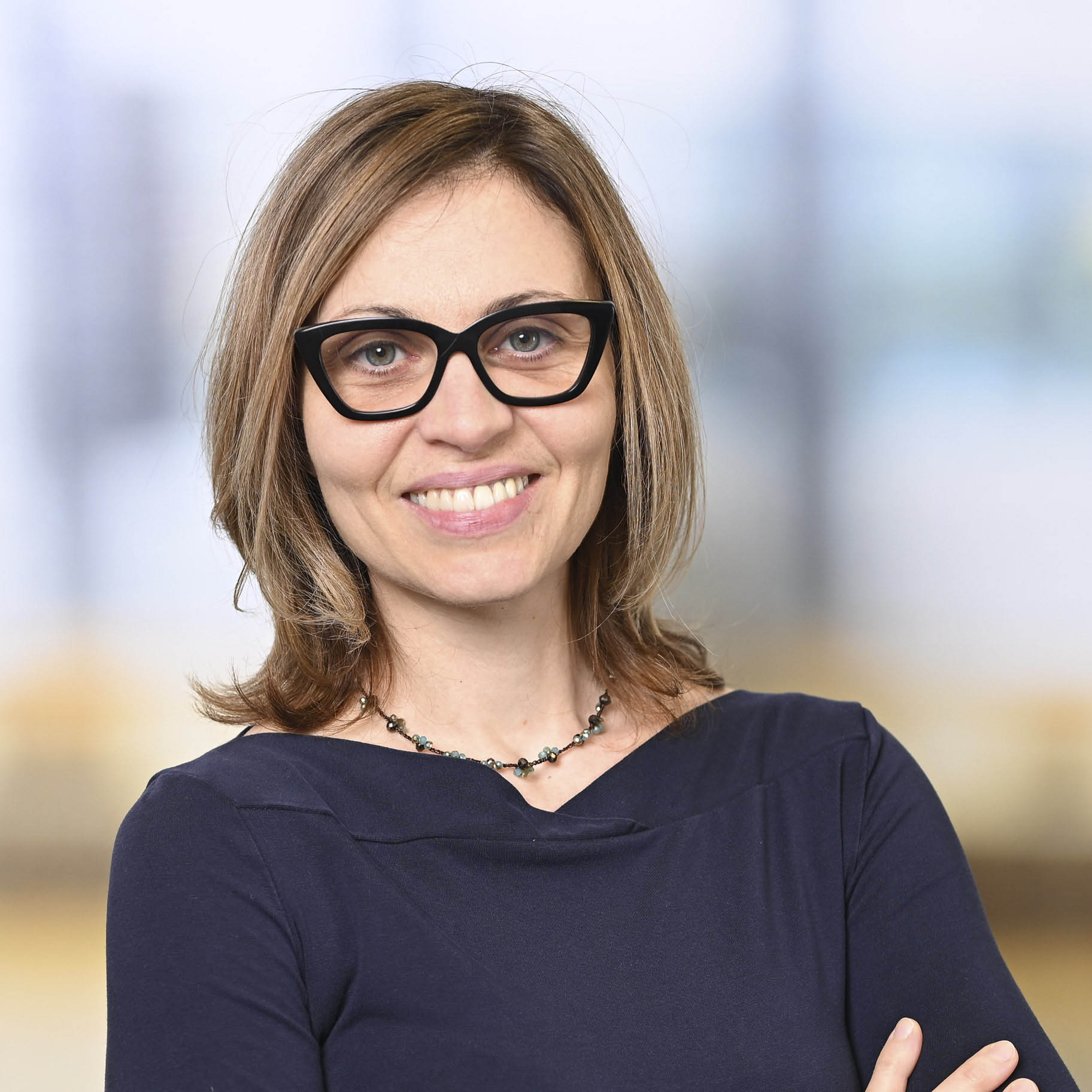
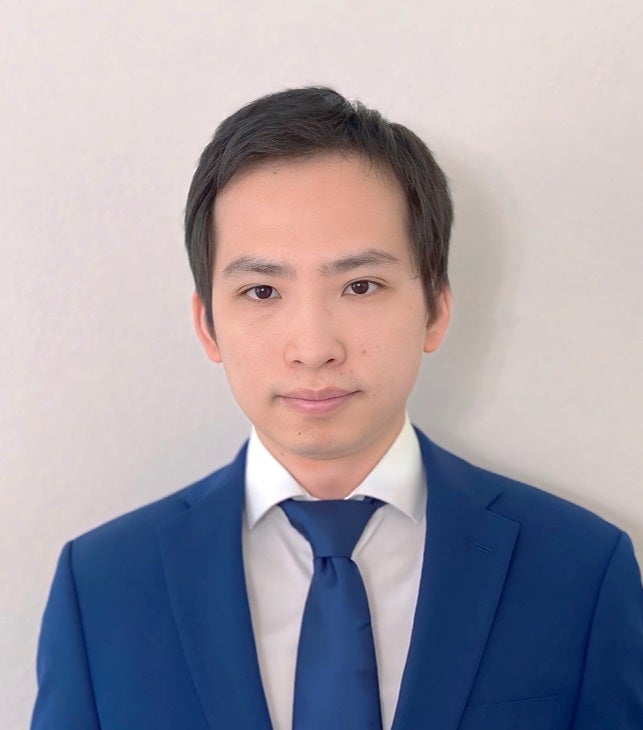
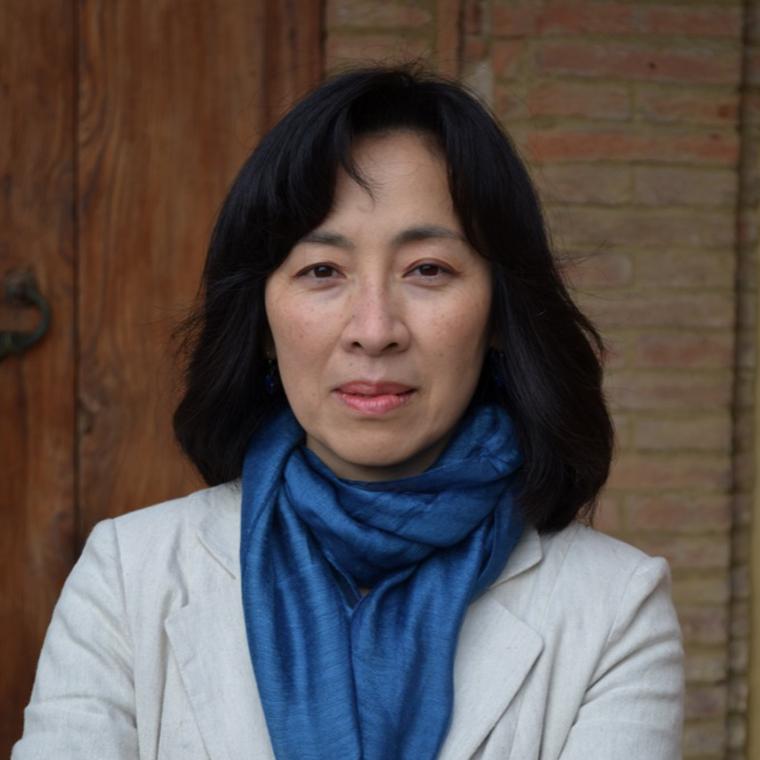
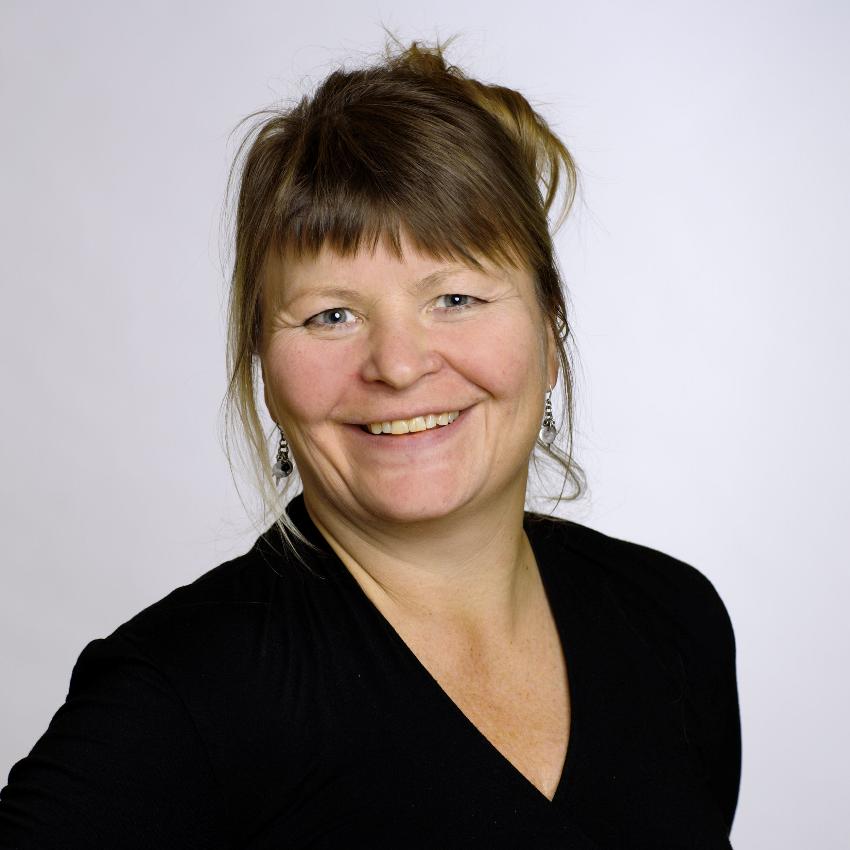
Dr. Maria Forlicz is affiliated with the Department of Process Management at Wrocław University of Economics. Her research focuses on behavioral economics, decision-making under risk/uncertainty, insurance economics, and socioeconomic factors influencing consumer behavior. She explores topics such as risk attitudes in financial and tourism contexts, experimental methods, and cross-country comparisons in insurance and debt management. Her work includes analyzing the psychological and economic drivers behind consumer choices, including organic food preferences among Gen Y and Z, and the impact of co-insurance on moral hazard. She has conducted studies on CSR reporting, tourism risks, and the illusion of predictability in random outcomes. Her experimental research often employs incentivized methods to study real-world behavior. Maria’s publications span over a decade, with recent works addressing emerging trends like usage-based insurance and the digitalization of financial advice. She has collaborated internationally, studying Poland, Spain, Ukraine, the UK, and others. Her research contributes to policy design, marketing strategies, and risk management frameworks.
Valeria Garbin is a Full Professor in the Department of Chemical Engineering at Delft University of Technology (TU Delft), Faculty of Applied Sciences. She heads the Transport Phenomena section and leads the Garbin Research Group, which focuses on microscale fluid dynamics, soft and biological materials, colloid and interface science, aiming to advance sustainable processes and products, including applications in drug delivery and bioprocessing. Institution: Delft University of Technology Faculty: Faculty of Applied Sciences Department: Department of Chemical Engineering Section: Transport Phenomena Position: Full Professor She obtained her MSc in Physics from the University of Padova (2003) and her PhD from the University of Trieste, Italy (2007). She was a Rubicon Fellow at the University of Twente (2007–2009), a postdoctoral researcher at the University of Pennsylvania (2009–2012), started her independent group at Imperial College London (2012), and joined TU Delft in 2019. Her research interests center on microscale transport phenomena in complex fluids, including droplets, particles, and biological systems. She integrates fluid dynamics with soft matter physics and colloid science to understand how microstructural changes affect macroscopic behavior in formulated products such as foods, personal care items, and pharmaceuticals. A major focus is on enabling sustainable innovation by replacing harmful ingredients through fundamental insights into flow and interfacial behavior. Valeria Garbin has secured several high-level research grants, including an ERC Starting Grant (2015), an ERC Proof of Concept Grant (2022), and an NWO Vici Grant (2022). She has been recognized with the McBain Medal (2018) and the Soft Matter Lectureship (2020). Her research group includes postdoctoral researchers and PhD students working on topics such as Pickering emulsions, microfiber filtration using acousto-fluidics, and electrohydrodynamic drying of biomass. Although no specific article list was provided in the source text, her work likely spans journals in soft matter, fluid mechanics, and chemical engineering, with emphasis on experimental, simulation, and modeling approaches to complex fluid systems. ERC Starting Grant (2015) ERC Proof of Concept Grant (2022) NWO Vici Grant (2022) McBain Medal (RSC/SCI, 2018) Soft Matter Lectureship (RSC, 2020) She advises multiple PhD students and postdocs, contributing to training the next generation of scientists in transport phenomena and sustainable technology. Her group collaborates across disciplines to bridge fundamental science with industrial applications. She teaches courses such as Fysische Transportverschijnselen (BSc), Advanced Interfacial Engineering (MSc), and Molecular Transport Phenomena (MSc), contributing significantly to chemical engineering education at TU Delft. The Garbin Research Group is actively involved in developing scalable, non-clogging filtration technologies, improving energy efficiency in drying processes, and designing tunable multiphase catalytic systems. Their approach combines precision experiments, particle-based simulations, and analytical modeling to link microscale dynamics to macroscopic performance.
Zheng Guo is a Professor in the Department of Biological and Chemical Engineering at Aarhus University, specializing in interdisciplinary research at the interface of biocatalysis, materials chemistry, and sustainable chemical engineering. His work focuses on advancing enzymatic processes for environmental remediation, lipid engineering, and functional material design. Key research areas include biocatalytic degradation of pollutants (e.g., PFAS, synthetic dyes), development of enzyme-based optoelectronic devices, and innovative lipid synthesis strategies. He leads several high-impact projects such as the ACTPAC initiative for plastic waste valorization and the HyProfuel program for sustainable aviation fuel research. Collaborations span academic and industrial partners to address challenges in circular economy and green chemistry. Current Projects : Assessing lipid nutritional value in cultivated meat (LipCellMeat, 2025-2026) C1-to-Cn biopathway development for autotrophic yeast (2023-2027) Hydroprocessing sustainable aviation fuels (HyProfuel, 2022-2026) Publications highlight breakthroughs in enzymatic catalysis, nanomaterial synthesis, and bio-inspired optoelectronics. His team’s work frequently appears in top-tier journals like Advanced Science , ACS Synthetic Biology , and Journal of Agricultural and Food Chemistry . Guo actively mentors graduate researchers and has pioneered methodologies for industrial biotechnology applications, with a strong emphasis on translating fundamental discoveries into scalable industrial solutions.
Torsten Lindström is a faculty member at Linnaeus University, affiliated with the Faculty of Technology and the Department of Mathematics . His research focuses on qualitative analysis of dynamical systems with applications to ecology and epidemiology , encompassing differential equations , discrete-time models , and stochastic processes . He is actively involved in the International Center for Mathematical Modeling (ICMM) and the Stochastic Analysis and Stochastic Processes research group. His research spans ecological modeling, predator-prey dynamics, and mathematical education. He has authored a textbook on Linear Algebra and contributes to Ordinary Differential Equations Dynamical Systems Teacher education in Geometry courses. Notably, he is the editor of a special volume on mathematical models in biology. His recent publications analyze stochastic disease spread , limit cycles , and stability theory , reflecting interdisciplinary work between mathematics, ecology, and education. Collaborations with institutions like the University of Oslo and SpringerLink highlight his international engagement. Teaching materials, including recorded lectures on Linear Algebra and Dynamical Systems, are publicly accessible.
Yang Lin is an Assistant Professor at the University of Rhode Island , affiliated with the Department of Mechanical, Industrial & Systems Engineering . His research focuses on Microfluidics , Acoustofluidics , and Organ-on-a-Chip technologies, with applications in Environmental Monitoring , Food Safety , and Human Health . Education : Ph.D. in Mechanical Engineering (2019) and M.S. in Mechatronic Engineering (2015) from the University of Illinois at Chicago, and B.S. in Mechanical Design Manufacturing and Automation (2012) from Beijing Information Science and Technology University. Research Interests include: Acoustofluidics : Developing non-invasive, biocompatible fluid manipulation techniques using acoustic bubbles and membranes. AI-Enhanced Diagnostics : Leveraging convolutional neural networks for sample-to-answer diagnostic systems in public health. 3D Printed Microfluidics : Expanding additive manufacturing for low-cost, complex physiological structures in healthcare. Environmental Microfluidics : Detecting microplastics and contaminants in water and food systems. Publications highlight advancements in 3D printed microneedles , machine learning for nanoplastic detection , and magnetofluidic biosensors . Lab Members include current Ph.D. students and alumni who have completed M.S. and B.S. degrees under his mentorship.
Annalisa Ferretti is an Associate Professor at the University of Modena and Reggio Emilia, specializing in the Department of Chemical and Geological Sciences. Her research focuses on paleontology, biostratigraphy, and geochemical analysis of conodonts, with a particular emphasis on their role in understanding paleoenvironmental changes and diagenetic processes. Research Interests: Paleoecology, Sr isotope stratigraphy, fossil diagenesis, deep-sea vertebrate evolution, and ironstone formation mechanisms. Teaching: Courses in Paleoclimatology, Paleontology, and Evolution for Geosciences and Natural Sciences programs. Her scientific work spans from Cambrian bioapatite studies to Late Triassic conodont evolution, with notable contributions on mineralization processes, extinction events, and planetary analogs for Martian spherules. She also participates in academic governance initiatives related to inclusive education. Notable Publications: Investigations on conodont apatite isotopes, Devonian extinction dynamics, Eocene iron ooid genesis, and paleoclimatic reconstructions using fossil proxies. Office: Via Campi 103, Modena. Student Reception: Fridays 9:00-10:00 AM by prior telephone arrangement.
Prof. Dr. Raif Bayır is a Turkish academic at Karabük University's College of Engineering, Department of Mechatronics Engineering. With a career spanning 2000-2024, he has held continuous full-time faculty positions from Assistant Professor to Professor. His research focuses on Robotics, Hybrid/Electric Vehicles, and Artificial Intelligence. Doctorate: Gazi University (2005) - Electronics & Computer Education Postgraduate: Gazi University (1998) - Electronics & Computer Education Undergraduate: Gazi University (1995) - Electronics & Computer Education His work integrates Artificial Intelligence techniques into Electric Vehicle systems, Robotics, and Agricultural Engineering applications. Recent publications emphasize Deep Learning for Mask Detection, Real-Time Battery Monitoring, and Autonomous Navigation Systems. Scientific awards include: 2017 METU Line-Following Robot 1st Prize 2016 TÜBİTAK Domestic Product Award 2015 TÜBİTAK Electromobil Best Design Prize He has advised over 20 graduate theses on topics spanning Electric Vehicle Components, Beehive Monitoring Systems, and Intelligent Control Applications. His research teams have developed multiple TÜBİTAK-supported projects including Automotive Test Stands and Battery Management Systems.
Cihan BECAN , Ph.D., is an Associate Professor at Üsküdar University's Faculty of Communication, Department of Advertising since 2023. Previously served as Assistant Professor at Istanbul Aydin University's Public Relations and Advertising Department (2010-2023). Holds a B.Sc. in Communication Management (Istanbul Bilgi University, 2005), M.Sc. in Marketing Communication and Public Relations (Bahcesehir University, 2007), and Ph.D. in Public Relations and Advertising (Istanbul University, 2014). Current administrative roles: Science Communication Coordinator, Faculty Board Member, Advertising Research Group Coordinator Active in international conferences (MEDCOM 2024, Communication in Digital Age Symposiums) Research focuses on neuromarketing , digital advertising , and consumer behavior . Key areas include emotional appeals in advertising, gamification strategies, and sustainable communication. Supervised 11 graduate theses on topics like brand activism, environmental awareness, and gender equality in ads. Scientific contributions: 23 publications including 8 book chapters. Notable awards include the 2018 Crystal Apple Award for advertising analysis. Collaborated on text mining and sentiment analysis projects, particularly in environmental sustainability advertising. Administrative roles include founding the Advertising and Consumer Research Group, coordinating science communication initiatives, and serving on multiple university committees (Disciplinary, Assessment, Student Clubs). Currently teaches courses in advertising theory, brand communication, and media planning to 250+ students annually.
Alessandro Fedeli is an Associate Professor in the Department of Naval, Electrical, Electronic and Telecommunications Engineering (DITEN) at the University of Genoa, Italy. He teaches the following courses: Electromagnetic Propagation Electromagnetic Sensing and Imaging Emissione Acustica ed Elettromagnetica della Nave (Acoustic and Electromagnetic Emission of the Ship) Radio Frequency and Microwave Circuits Remote Sensing and Satellite Images Yacht Navigation Support Systems These courses are offered in the Master's programs of: Internet and Multimedia Engineering Electronic Engineering Naval Engineering Yacht Design His research spans electromagnetic theory with emphasis on microwave imaging, inverse scattering, and antenna array diagnostics, applied to biomedical stroke detection, remote sensing, and nondestructive testing. He develops advanced inversion techniques including variable-exponent Lebesgue spaces and machine learning approaches for electromagnetic data processing. Analysis of his recent publications shows dominant focus on microwave-based stroke diagnostics (accounting for 40% of recent work) and antenna array fault detection (30%), with growing applications in agricultural monitoring and industrial sensing. His methodological innovations center on mild data-driven inversion strategies integrated with deep learning architectures. No scientific awards were mentioned in the available information. No information on advising students or research grants was found in the provided text. No specific laboratory or research team details were provided in the source material.
Benjamin R Runkle is a Professor in the Department of Biological and Agricultural Engineering at the University of Arkansas at Fayetteville . He leads the Landscape Flux Research Group , focusing on carbon-water-energy cycle interactions in agricultural and wetland systems. His work combines field measurements with climate modeling to advance sustainable rice production and global climate mitigation strategies. BS/PhD in Civil & Environmental Engineering from Princeton/UC Berkeley Postdoctoral research at University of Hamburg (2009-2014) Research spans methane emissions , evapotranspiration , and hydrological controls in rice paddies and Arctic wetlands. Recent projects include Landsat-based methane mapping and climate-smart agricultural modeling . Key applications: global climate models , carbon accounting , and water-efficient irrigation . Selected peer-reviewed publications (2024-2025) address peatland methane dynamics, rice carbon budgets, and remote sensing for climate-smart systems. Awards: NSF CAREER (2018), AGU Sulzman Award (2024), and multiple departmental teaching/research honors. Advising: Mentored senior design teams (ASABE Gunlogson Competition 1st place 2020) Grants: NASA Carbon Monitoring System (2021), USDA Climate Smart Commodities (2022) Labs/Teams: Landscape Flux Group , FLUXNET-CH4 network , and ACT-America airborne campaigns collaborations. Public engagement: Featured in New York Times (2023), DW (2023), and Research Frontiers podcast (2025).
Tomoko Tamari is Reader in Sociology at Goldsmiths, University of London, affiliated with the Institute for Creative and Cultural Entrepreneurship (ICCE). She joined Goldsmiths in 2013 after serving as a research fellow at Nottingham Trent University. Her academic background spans sociology, mass communication studies, and women's studies, with current interests intersecting sociology, cultural studies, and body studies. She serves as Managing Editor of Body & Society (Sage Publications) and coordinates the Theory Culture & Society 'New Encyclopaedia Project'. Tamari's research interests encompass Japanese culture and society, consumer culture, visual culture, and technology's relationship with the body. Her current working areas include animation and human perception (particularly affect in digital aesthetics and hand-drawing moving images), technology and modern architectural design (exploring Japanese Metabolism movement), food culture and lifestyles in 20th century Japan, the body and medicine (focusing on probiotics industry), body image and prosthetic aesthetics in Paralympic culture, techno-animism, and human-machine integration. Her work consistently examines how technology reshapes bodily experience and cultural practices. Her recent publications demonstrate a clear trajectory toward examining the intersections of digital technologies, human perception, and embodiment. The majority of her work from 2023-2025 focuses on AI, digital aesthetics, animation, and the materiality of the body in technological contexts. This represents an evolution from her earlier work on Japanese consumer culture and department stores toward contemporary digital and technological questions while maintaining her core interest in embodiment and cultural practices. Tamari has been actively involved in academic leadership through her editorial roles, including co-editing special journal issues on the Tokyo Olympics and post-university scholarly apparatus. Her conference presentations reflect engagement with cutting-edge discussions about AI, embodiment, and the future of knowledge production in digital society. While specific grant information isn't detailed in the provided texts, her extensive publication record and editorial positions indicate significant research activity and scholarly recognition.
Edel O. Elvevoll is a Professor of Industrial Food Science at the Norwegian Fisheries College, part of UiT The Arctic University of Norway. She holds an MSc in Engineering from NTNU/RWTH Aachen (1983) and a PhD from NTNU (1988). Research Focus: Seafood health effects, processing impact on nutritional quality, marine low-trophic resources, and environmental toxins Teaching: Food safety, unit operations in food industry, design of food production facilities Research Groups: Affiliated with the Seafood Science research group and SECURE project Collaborations: Extensive work with international committees and projects like SEYFISH (H2020), SDCS, and AQUAVITAE (H2020) Her recent publications address marine resource utilization, food safety (heavy metals, POPs), and environmental impact assessments. Articles highlight innovations in lipid extraction methods, bioactive peptides, and sustainable aquaculture solutions. Key subfields include seafood processing, nutrient retention, marine toxin analysis, and climate performance. Edel O. Elvevoll contributes to policy discussions through roles in the Norwegian Scientific Committee for Food and Environment (VKM) and interdisciplinary workshops on sustainable blue food systems.
James Lindner serves as an Alumni Professor of Agriscience Education within the Department of Curriculum and Teaching at Auburn University's College of Education. He has held this position since 2019, following his prior service as a Professor at Auburn University from 2015 to 2019. His academic work centers on advancing agricultural education through rigorous research and innovative pedagogical approaches. Dr. Lindner's research focuses on agricultural literacy development, multilingual education in agricultural contexts, and methodological advancements in educational assessment. His work emphasizes culturally responsive teaching practices and the integration of technology to enhance student learning outcomes. Key areas include survey instrumentation, reliability coefficient analysis, and the application of AI-driven solutions to address educational challenges in agricultural settings. Analysis of his 2023-2025 publications reveals a strong trend toward AI integration in agricultural education, particularly for improving literacy and supporting multilingual learners. His methodological contributions to survey research and scale development have significantly strengthened empirical rigor in agricultural education scholarship, while his recent work on peer review processes and journal reporting demonstrates leadership in academic publishing standards.
Prof. Vivek Pachauri holds the Chair of Materials for Electrical Engineering I at RWTH Aachen University, leading research at the Institute of Materials for Electrical Engineering. His work bridges materials science and bioelectronics, focusing on graphene-based transducers, silicon nanowires, and metal-organic frameworks (MOFs) for biosensing applications. University: RWTH Aachen University (Germany) Department: Materials for Electrical Engineering Academic Rank: Professor Email: pachauri@iwe1.rwth-aachen.de His research spans nanoscale sensor development , microfluidic platforms , and bioelectronic systems , with applications in disease detection, environmental monitoring, and cellular analysis. Recent work highlights programmable molecular amplification and multi-parametric point-of-care diagnostics. Key trends in his publications include: Advanced 2D materials (graphene oxide, MoS 2 ) Metal-organic frameworks for fluorescence sensing Microfluidic integration of biosensors Plasmonic and Fano resonance-based detection Low-cost cellular assays using organic electronics
Dr. David Fox is an Associate Professor in the Department of Chemistry at the University of Warwick. His research focuses on synthetic organic and medicinal chemistry, drug discovery and development, asymmetric and catalytic reactions, and synthetic route design for lead molecules. Current projects include medicinal chemistry for enzyme inhibitors, synthetic methodology for heterocycles, and collaborations with RxCelerate Ltd. He teaches undergraduate modules CH222 Speclab, CH271, CH3E9, and CH408. Research Interests: Specializing in small molecule and asymmetric synthesis, with applications in medicinal chemistry/drug discovery and GMP process development. Key areas include drug molecule design, fast synthesis methods, and synthetic route optimization. Publications & Patents: His work spans synthetic methods for autophagy inducers, anti-inflammatory agents, ligands for GPCRs, and molecular imaging of reactive intermediates. Collaborations with IBM Zurich on NC-AFM/STM have enabled structural analysis of otherwise unisolable molecules. Education: BA and DPhil from the University of Oxford, followed by postdoctoral research at Cambridge. Students: Supervises PhD/MSc students Matthew Clayton, Matthew Taylor, and Emma Scott.