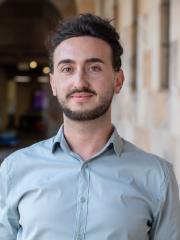
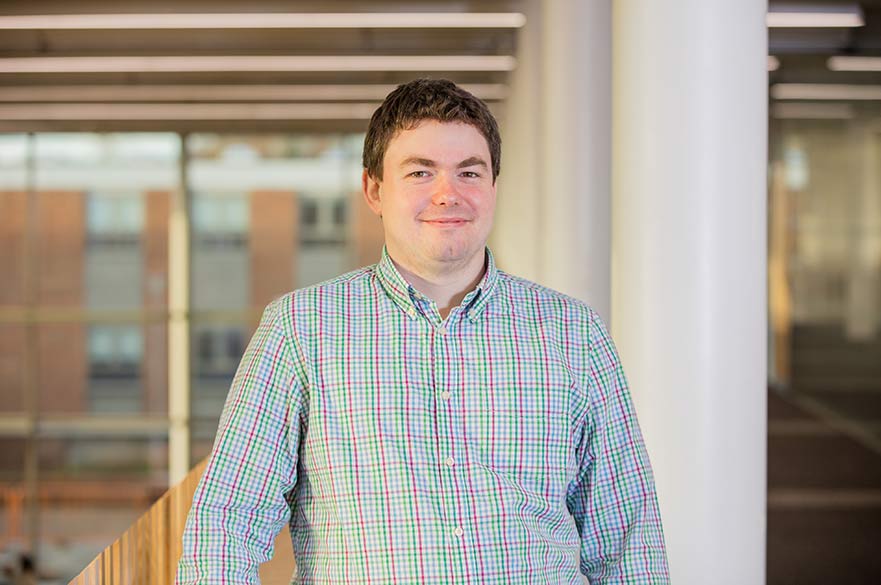
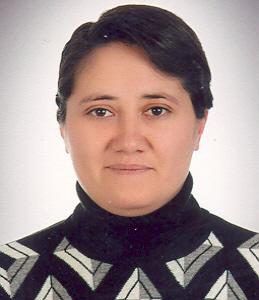
Dr. Sithara Sreenilayam is an Assistant Professor in the School of Mechanical & Manufacturing Engineering at Dublin City University since June 2023 and a Funded Investigator at I-Form, the SFI Research Centre for Advanced Manufacturing. She holds a Ph.D. in Soft Matter Physics from Technological University Dublin and an M.Sc. in Physics from Mahatma Gandhi University, India. Her research spans nanomaterials, printed electronics, additive manufacturing, laser processing, and liquid crystals. She investigates applications in energy storage, biomedical devices, and environmental solutions. Dr. Sreenilayam has published extensively on these topics, with recent work focusing on nanoparticle synthesis, 3D-printed biomedical scaffolds, and functional materials for sensing applications.
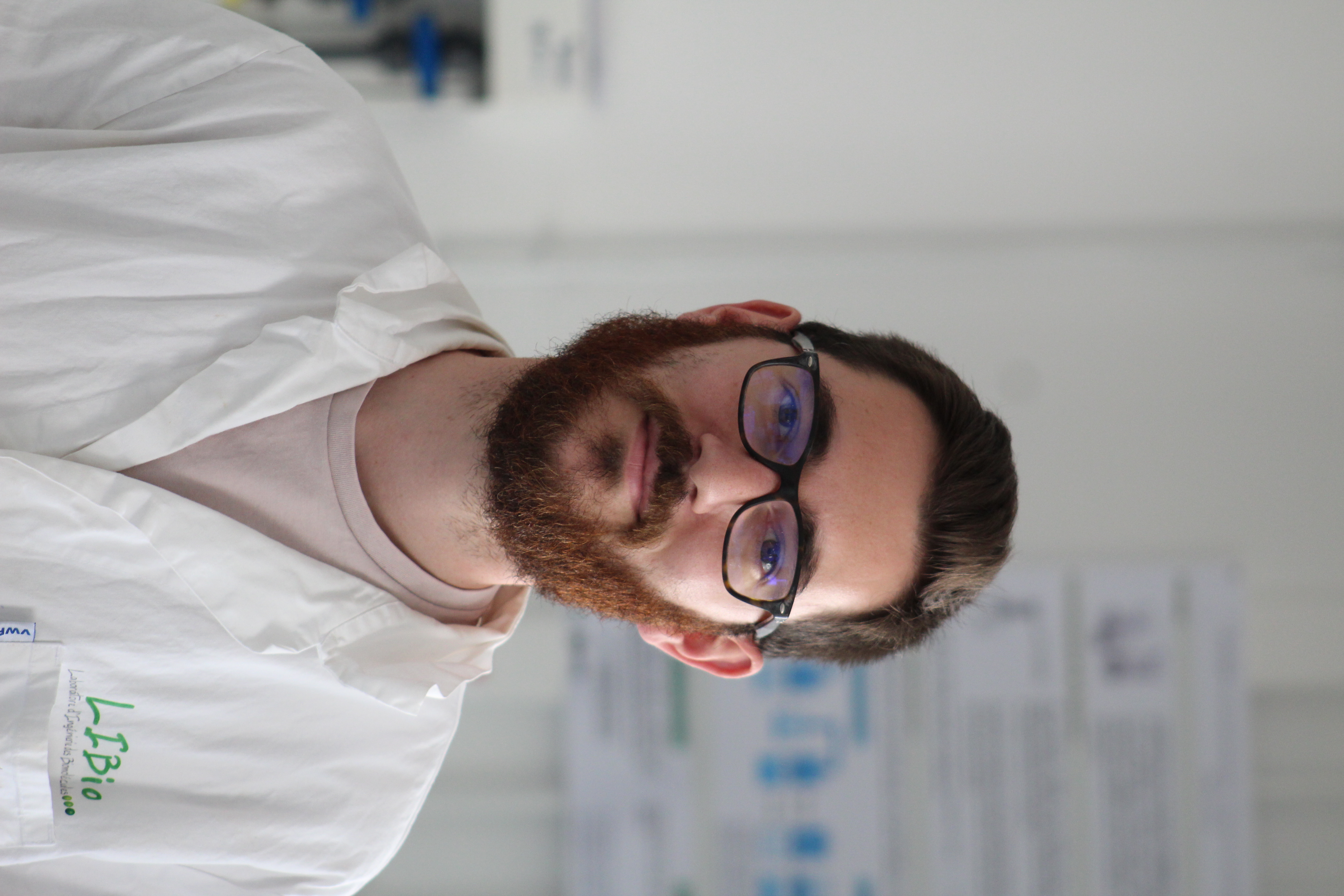
Bernardo Castro Dominguez is a Senior Lecturer in Chemical Engineering at the University of Bath, leading the Smart Process Engineering Lab. His research integrates engineering, chemistry, robotics, and computer science to develop sustainable materials and processes for pharmaceuticals, sensing, and waste recycling. He holds a Ph.D. in Chemical Engineering from the University of Tokyo and M.S./B.S. degrees from the University of Utah. Dominguez's work focuses on digital process engineering, machine learning for materials discovery, and sustainable manufacturing. His lab develops innovative methods like electrospinning for membrane fabrication and AI-guided material design, emphasizing environmental sustainability. He collaborates on projects including hydrochar production, CO2 conversion, and biomedical manufacturing. Publications show strong emphasis on membrane technology, additive manufacturing, and computational modeling for industrial applications.
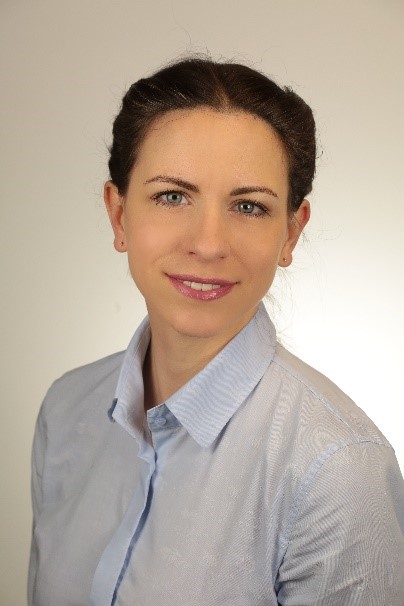
Dr. Kevin Cronin is a Senior Lecturer in Process Engineering at the Department of Process & Chemical Engineering, University College Cork (UCC). His academic career includes roles at the University of Ulster and the SKF Engineering and Research Centre. He holds a BE (Mech) from University College Dublin, a MEngSc in Tribology from UCD, and a PhD in Mechanical Engineering from Brunel University (UK). His research focuses on probabilistic simulation of thermal processing in food engineering, mechanical design of process equipment, and process safety. Key areas include variability analysis in food processing, vessel structural integrity, and timber drying optimization. Research interests span computer modelling techniques like Monte Carlo methods and Markov chains, with applications in food quality, process safety, and material behavior. Notable projects include probabilistic studies on food processing variability, vessel collapse analysis, and bioprocessing equipment design. His work integrates stochastic analysis to enhance industrial processes, such as optimizing energy consumption in timber drying and mitigating risks in pharmaceutical solvent transfer systems. Publications highlight contributions to food engineering, material science, and mechanical systems. Recent articles address rehydration behaviors of dairy powders, particle dynamics in vibrating systems, and compliant gripper design. Teaching responsibilities include modules on process safety, mechanical design, and engineering materials.
Prof. Seda ERSUS is a Professor in the Department of Food Engineering at Ege University's Faculty of Engineering. Her research focuses on food technology, plant protein resources, functional food development, and sustainable food packaging solutions. She has extensive experience in food processing methodologies, including thermal analysis, enzymatic extraction, and biodegradable material synthesis. Her work emphasizes valorization of agricultural byproducts and waste materials, with notable contributions to aerogel production from plant proteins, cellulose nanocrystals from black carrot waste, and biocomposite packaging films from safflower residues. She also explores innovative drying techniques and encapsulation methods to enhance food quality and shelf-life. Key research areas include food chemistry, food engineering, and the application of nanotechnology in food systems. Her studies often bridge fundamental science with industrial applications, aiming to address challenges in nutrition, sustainability, and food safety. Over 150 publications and active collaborations reflect her leadership in advancing food science and engineering.
Associate Professor of Metallurgy at the Department of Systems Engineering and Industrial Technologies (DISTI), University of Parma since November 1998, with qualification as Full Professor in Metallurgy (ING-IND/21). Specializes in metallic materials processing and characterization, with emphasis on advanced manufacturing techniques and industrial applications. Education: PhD in Metallurgical Engineering, Polytechnic University of Turin (1995) Degree in Physics, University of Bologna (1990) Post-Doc, University of Ancona/Polytechnic University of Marche (1995-96) Research Fellow, Oregon State University (1993) Research Fellow, NTNU Trondheim (1993-95) Research Focus: Prof. Cerri's work centers on additive manufacturing (particularly laser powder bed fusion), friction stir processing/welding, and microstructure-property relationships in metallic alloys. Her research investigates heat treatment optimization for additively manufactured components, surface modification techniques for aerospace applications, and mechanical behavior of light alloys under extreme conditions. She examines microstructural evolution during processing and its impact on creep resistance, work hardening, and corrosion properties. Publication Trends: Recent publications demonstrate a strong focus on Al-Si-Mg and Ti-6Al-4V alloys produced via laser powder bed fusion, with particular attention to heat treatment effects, microstructural gradients, and mechanical property characterization. Her work bridges fundamental metallurgy with industrial applications, especially in aerospace and food industry sectors, emphasizing post-processing techniques to enhance component performance and reliability. Advising and Grants: Member of the PhD Program in Industrial Engineering teaching staff at University of Parma. Secured competitive European Commission funding (ESTEEM2 grant 20150526-Cerri) for TEM research at FELMI-ZFE in Graz. Served as reviewer for HORIZON 2020 projects and major materials science journals including Materials Science and Engineering A and Journal of Alloys and Compounds. Promoted international collaborations through Memoranda of Understanding with University of Southern California and NTNU. Labs and Collaborations: Maintains active research partnerships with Norwegian University of Science and Technology (NTNU), University of Southern California, and FELMI-ZFE in Graz. Serves on the editorial board of 'La Metallurgy Italiana' and has held leadership roles in international conferences including THERMEC 2016 and 2020 as Scientific Committee member.
Dr Davor Daniloski is a Postdoctoral Research Fellow at the School of Chemical Engineering , University of Queensland . His research bridges food science, bioprocess engineering, and materials engineering, focusing on dairy protein functionality and sustainable food technologies. Current research themes include β-casein polymorphism, edible packaging development, and milk digestion mechanisms Collaborates with interdisciplinary teams across biomedical and materials engineering Davor's publication record (23 journal articles and 3 book chapters) demonstrates expertise in dairy processing, functional foods, and sustainable packaging solutions. His work explores both fundamental milk protein behavior and applied food technology innovations. Email: d.daniloski@uq.edu.au
Arnaud Paul is a Lecturer at the University of Lorraine, affiliated with the College of Science and Technology (FST). His research focuses on biochemistry and molecular biology applied to food science, particularly the reactivity of molecules in food matrices and the molecular mechanisms of deterioration in biosourced materials like milk. He also investigates functional biomolecules for enhancing nutritional and organoleptic qualities of food products. His recent publications highlight interdisciplinary work spanning Biochemistry , Toxicology , and Food Science , with a focus on molecular stability during food processing and storage, enzymatic coagulation properties, and RNA biology in cellular contexts. His work often employs advanced analytical and molecular techniques. Teaching includes food biochemistry, protein biochemistry, and molecular biology methods for the food industry. He is involved in patents related to purification and preservation of milk protein powders, reflecting his applied research in food technology.
Dr. Eng. Aleksandra Grząbka-Zasadzińska is a researcher at the Faculty of Chemical Technology , Institute of Chemical Technology and Engineering of Poznań University of Technology. Her work focuses on polymer composites , biomaterials , and renewable polymers . Education: M.Sc. in 2013 Ph.D. in Chemical Sciences (Chemical Technology) in 2017 Research Interests: She specializes in lignocellulosic materials and ionic liquid modifications for enhancing mechanical/thermal properties of biodegradable polymers. Her recent studies on polylactide composites with TiO2-lignin and lysozyme-modified nanocellulose highlight advancements in antibacterial and sustainable composites . Collaborative work with pharmaceutical engineers explores granulation processes using statistical models . Scientific Contributions: 26 peer-reviewed articles (2016-2025) in journals like Cellulose , Molecules , and Materials , including 3 invention patents on composite boards and polyurethane foams. Supervised 1 doctoral dissertation on polypropylene-wood composites .
Dragosav Mutavdžić serves as a Senior Research Associate at the Department of Living Systems Sciences, Institute for Multidisciplinary Research, University of Belgrade. His expertise lies in statistical processing of spectroscopic data from biological samples using chemometric techniques and advanced software platforms. His academic credentials include: PhD in Multidisciplinary Sciences - Chemometrics (2016), University of Belgrade Master of Science in Statistics (2010), Faculty of Economics, University of Belgrade Bachelor's in Chemistry (2003), Faculty of Chemistry, University of Belgrade Mutavdžić specializes in chemometrics applied to fluorescence, FTIR, and Raman spectroscopy data from biological systems. His research leverages SPSS, STATISTICA, The Unscrambler, R, Python, and Matlab for data visualization and analysis, with significant contributions to forensic science through nanomaterial-based fingerprint imaging techniques and food safety applications. Analysis of his 2015-2019 publications reveals dominant research themes in carbon-based nanomaterials for forensic imaging (quantum dots, nano-powders), multivariate analysis of spectroscopic data for contaminant detection, and biological system characterization using chemometric methods. Key application areas include forensic evidence analysis, food safety monitoring, and environmental sensing. He currently participates in COST Action CA16101 (MULTI-modal Imaging for Forensic Science Evidence) and previously contributed to project OI 173017 on plant cell wall engineering. His collaborative work spans multiple international research teams across Serbia, Spain, Portugal, and the UK, though no formal student supervision is documented.
Miloš Prokopijević is a Senior Research Associate at the Department of Living Systems Sciences, Institute for Multidisciplinary Research, University of Belgrade, where he has progressed from Research Trainee (2011) to his current senior role since 2024. His academic foundation includes a Doctor of Biochemical Sciences (2017) and Bachelor's degree in Biochemistry (2008), both from the Faculty of Chemistry, University of Belgrade. Prokopijević's research centers on Enzymology and Enzyme Immobilization , with deep expertise in Materials Science applications for plant biopolymers. His work pioneers chemical modification techniques for biopolymers like pectins and alginates, developing sustainable hydrogel systems for enzyme encapsulation with industrial biotechnology applications. Analysis of his 2012-2025 publication record reveals consistent innovation in enzyme immobilization methodologies, particularly using plant-derived carriers. His recent work expands into food safety diagnostics (2025 honey quality study) and environmental stress responses in plants, demonstrating interdisciplinary integration of biochemical engineering and materials science. His research is supported by significant grants: Current : "Microstructure and mechanical characteristics of concrete with recycled materials" (2019-2021), Serbia-Croatia bilateral project. Completed : Project OI173017 "Investigations of structure-function relationships in plant cell wall and modification of wall structure by enzymatic engineering" (2011-2020), funded by Serbia's Ministry of Education, Science and Technological Development. Prokopijević actively contributes to the Biochemical Society of Serbia, Serbian Chemical Society, and Serbian Society for Plant Physiology, and participates in the Institute's Center for Green Technologies, reflecting his commitment to sustainable scientific advancement.
Professor Rob Morris is a distinguished academic at Nottingham Trent University's School of Science & Technology within the Physics and Mathematics department. He serves as Professor of Physics and Departmental Research Coordinator for the physics team. His research spans diverse applications of magnetic resonance technology, with core interests in: Medical imaging hardware development (especially MRI and ultrasound) Food process control and product stability monitoring Wastewater treatment and sustainability applications Natural fiber composites for medical devices Acoustic levitation and benchtop nuclear fusion Professor Morris pioneered the use of MRI for food product analysis and developed embeddable NMR probes for environmental monitoring. His recent publications reveal strong trends in biomedical applications of magnetic resonance, with significant focus on: Glioblastoma treatment through magnetic nanoparticle drug delivery Musculoskeletal tissue engineering Sustainable composite materials for radiotherapy Advanced food quality monitoring systems As an active collaborator, he leads multinational projects including the Marie Skłodowska-Curie Action SuChAQuality and ERA Talents APRISE initiative. His external engagements include chairing Foresight Innovations' scientific advisory board and guest editing special issues for Applied Sciences and Sensors journals. Professor Morris maintains strong industry partnerships with organizations across Turkey, Germany, Serbia, and the UK, while supervising numerous PhD and postgraduate projects with practical hardware development focus.
Prof. Dr. Ralf Habermann is a Professor of Process Engineering – Purification Technology at the University of Applied Sciences Emden/Leer, Department of Technology – Natural Science Technology (NWT). His research focuses on mechanical and environmental process engineering, including solid mixing, recycling, wastewater treatment, and agglomeration processes. Key projects include the ZIM-Projekt (2018–2020) developing an autonomous toilet system and a DFG project (1996–2000) investigating mixing quality in continuous solid mixers. His research interests emphasize solid mixing dynamics, material characterization, and energy-efficient processes. Recent publications (2021–2010) explore modeling mixing processes, quality assessment in solid mixing, and particle behavior in mixers. His work bridges theoretical models with industrial applications, particularly in environmental and food technology sectors. Prof. Habermann contributes to professional boards such as ProcessNet’s Mixing Processes group. His projects highlight innovations in recycling, wastewater treatment, and high-intensity mixing systems.
Christine Culot is a Professor at the University of Namur, Department of Chemistry. Her research focuses on polymorphism in triglycerides and pharmaceutical compounds, utilizing techniques like X-ray diffraction and molecular modeling. She has led multiple collaborative projects, including MIRVALIS_UNAMUR series (2023-2025) and the Analysis of Polymorphism of Drugs (1995-2003). Her work bridges materials science with pharmaceutical applications, emphasizing lipid structures and drug formulation. Education: PhD in Chemistry (1994) under Prof. F. Durant, Master in Chemistry (1989). Research Interests: Polymorphism characterization, lipid chemistry, drug delivery systems, and computational modeling of molecular structures. She has organized conferences on drug discovery strategies and participated in interdisciplinary training for doctoral students. Labs/Teams: Involved in collaborative research networks focusing on pharmaceutical applications and lipid technologies.
Associate Professor Banu Koç currently serves at Gaziantep University's Faculty of Tourism, Gastronomy and Culinary Arts after being promoted from Doctor Lecturer roles (2015-2023) across multiple faculties including Fine Arts and Social Sciences Institute. Holding a PhD in Food Engineering from Ege University (2014), she has 20+ years of academic experience in food processing technologies. Education: PhD (Food Engineering) - Ege University (2014), MSc (Food Technology) - Ege University (2008), BSc (Food Engineering) - Ege University (2004) Her research focuses on drying technologies , food microencapsulation , and gastronomy science , particularly examining spray drying, freeze-drying, and stabilization of food enzymes like transglutaminase. Recent work explores alternative starch sources , sustainable ingredient utilization , and traditional Turkish sherbets . Scientific contributions include 36 peer-reviewed articles, 44 conference papers, 16 research projects (including TÜBİTAK-funded studies), and 2 food-related patents. Key awards: 2018 Gaziantep University Science Award (2018) and Best Paper Award in Food Engineering (2011) from Indian Food Scientists Association. She supervises graduate research on topics like legume-based probiotics , traditional beverage preservation , and cultural gastronomy , with notable theses completed on loquat seed starch, red meat marination, and Samsun Georgian cuisine.
Assoc. Prof. Dr. Müge URGU ÖZTÜRK is an academic at Ege University's Faculty of Engineering, Department of Food Engineering. Her research focuses on Food Sciences and Engineering, particularly Milk/Dairy Technology and Meat/Meat Products Technology. Institution: Ege University Faculty: Faculty of Engineering Department: Department of Food Engineering Academic Rank: Associate Professor Her work emphasizes sustainable processing technologies, including UV light applications for microbial control in dairy products and plant-based fat substitution strategies in meat formulations. She explores chemical/microstructural properties of food systems and storage stability optimization through maltodextrin, microparticulated proteins, and novel emulsion systems. Article trends show expertise in dairy/meat emulsion engineering, fat substitution technologies, and sustainable food processing methods. Recent 2025 work focuses on industrial meat waste valorization for greener solutions. Contact: muge.urgu@ege.edu.tr