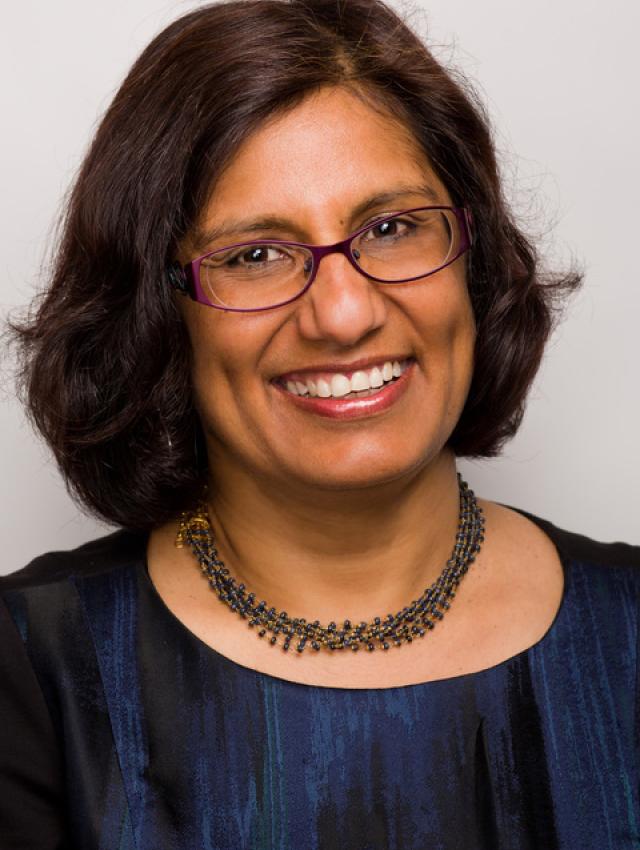
Anna S. Mattila is the Marriott Professor of Lodging Management and serves as Professor-in-Charge of the Graduate Program at the School of Hospitality Management, Pennsylvania State University. Her research spans social media, service recovery, servicescape, prosocial behaviors, cross-cultural studies, and wellness in hospitality contexts. Education : B.S. and Ph.D. from Cornell University, M.B.A. from University of Hartford Mattila's work examines how emotions, cultural norms, and technological innovations like AI influence consumer decisions in hospitality. Her studies cover topics from robotic service interactions to sustainable food marketing and moral psychology in tourism. She has published extensively in journals such as International Journal of Hospitality Management and Journal of Consumer Marketing . Her recent articles focus on AI integration in hospitality, consumer trust in virtual influencers, upcycled food adoption, and the psychological effects of servicescape design. Key themes include ethical consumption, digital transformation, and cross-cultural consumer behavior. Advising : Supervised Anqi Luo's dissertation on service recovery in 2022 Mattila's office is located in 224 Mateer Building, University Park, PA. She contributes to advancing hospitality research through methodological consulting and the Penn State Biomarker Core Laboratory.
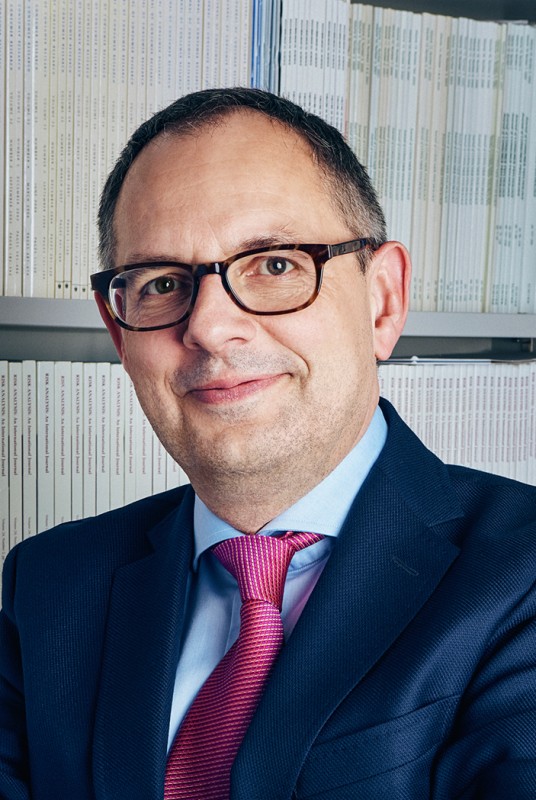
Artur W. Dubrawski is an Alumni Research Professor of Computer Science and Director of the Auton Lab at Carnegie Mellon University's School of Computer Science. He leads interdisciplinary research on Artificial Intelligence, Machine Learning, and Robotics with real-world applications in healthcare, nuclear safety, food safety, and counter-human trafficking. His work focuses on bridging gaps between data-driven AI and empirical sciences through probabilistic modeling, predictive analytics, and time-series intelligence. Lab: Auton Lab (founded 1993) Collaborations: Allegheny County Health Department, USDA, CDC, U.S. Army Research Impact: AI for wastewater-based COVID-19 forecasting, radiological inspection systems, and hospital infection detection His students and affiliates include current PhD candidates Angela Chen, Emma Erickson, Cecilia Morales, Willa Potosnak and past researchers like Benedikt Boecking (co-inventor of Interactive Weak Supervision). The lab has spun off startups like Marinus Analytics (IBM XPrize finalists) and developed open-source tools like auton-survival for survival analysis. Key Grants: $10.5M U.S. Army contract for AI-driven predictive maintenance research.
Aberham Hailu Feyissa is an Associate Professor at the National Food Institute of the Technical University of Denmark , specializing in process modeling and sustainable food engineering. His research bridges complex transport phenomena with practical food manufacturing challenges. Ph.D. in Food Process Engineering, Technical University of Denmark MSc in Food Science, K.U.Leuven and Universiteit Gent BSc in Chemical Engineering, Bahir Dar University His work focuses on coupled mass and heat transfer during solid food processing, aiming to develop robust first-principles models for predictive process optimization. Key applications include Ohmic heating , digital twin technology , and bioactive ingredient extraction . Recent publications highlight his contributions to sustainable food processes , including insect-based feed modeling , seaweed bread kinetics , and clean-label cheese formulation . His methodological innovations span FTIR spectroscopy , computational fluid dynamics , and kinetic modeling . Supervisor for PhD students S. S. Turgut , M. E. Jabali , and Dahal S. Principal Investigator for projects like Modelling and Digitalisation of Food Processes and Sustainable Extraction of Bioactive Insect Fractions Active in conference presentations and peer review , he drives advancements in food process understanding through mechanistic modeling and mathematical simulation .
Jonathan H. Cantor is a Policy Researcher and Professor of Policy Analysis at the RAND School of Public Policy . His research focuses on health policies related to substance use disorder , mental health , and health behaviors , integrating frameworks from health economics , policy analysis , and public health . He leads the Mental Health and Addiction Treatment Tracking Repository , a national longitudinal database for substance use and mental health treatment facilities. His work examines treatment availability for older adults (funded by the National Institute on Aging) and telehealth services in mental health (funded by the National Institute of Mental Health). Recent NIMH grants aim to quantify mental health crisis services supply and its impact on population health. His recent publications (e.g., JAMA , Health Affairs ) address topics like opioid treatment accessibility , telehealth disparities , and food insecurity in higher education . His research spans health equity , preventive healthcare , and modeling/simulation approaches.
Ellen Riloff serves as Department Head and Professor in the Department of Computer Science at the University of Arizona, where she leads research at the intersection of natural language processing (NLP) and artificial intelligence. Her work bridges theoretical advancements with real-world applications in social computing, planetary science, and crisis response systems. Education: Ph.D. in Computer Science, University of Massachusetts at Amherst (1994) Research Focus: Dr. Riloff specializes in affective computing and information extraction , developing techniques to recognize emotion, social cues, and embodied expressions in text. Her methodologies frequently employ bootstrapping, stacked learning, and semantic lexicon induction. Recent projects address crisis informatics (e.g., social cue recognition in emergencies) and interdisciplinary applications like the Mars Target Encyclopedia for planetary science data extraction. Publication Trends: Analysis of her 15 most recent publications (2021–2025) reveals three dominant trajectories: (1) affective event modeling in social contexts with applications to crisis response; (2) domain-specific NLP for planetary science and food systems; and (3) advanced language model techniques including retrieval-augmented generation and multi-view prompting. Her work increasingly integrates deep learning with traditional linguistic features. Grants and Leadership: Dr. Riloff has directed multiple NSF-funded projects, including RI: Small: Recognizing Implicit Personal States in Natural Language (2016) and RI: Small: Acquiring Domain Knowledge from Text through Cooperative Bootstrapping (2010). These initiatives pioneered bootstrapping frameworks for affective event recognition and information extraction. She also co-organized the Workshop on Pattern-based Approaches to NLP (2023), highlighting her leadership in advancing hybrid NLP methodologies. Collaborative Infrastructure: She co-developed the Mars Target Encyclopedia—a large-scale information extraction system that processes planetary science literature to create structured databases of Mars surface targets. This project demonstrates her commitment to building reusable scientific infrastructure through NLP.
Jürgen König is a full professor at the Department of Nutritional Sciences , University of Vienna, leading the Research Professorship Specialized Human Nutrition . His work bridges psychological and physiological dimensions of eating behavior, with additional focus on population-level nutritional assessment in Austria. Academic Rank: Professor Department: Nutritional Sciences Research Focus: Hunger/satiety mechanisms, Public health nutrition, Food safety Key research themes include: Psychological drivers of eating behaviors (stress, food craving, sensory cues) Physiological regulation of nutrient homeostasis National nutrition surveys assessing dietary patterns Caloric restriction and metabolic adaptation Child and adolescent hydration/nutrition policies Recent publications highlight: Mechanistic studies on caloric restriction effects (2025) Pandemic impacts on school nutrition (2024) Global obesity/diabetes trends analysis (2024) Behavioral nudging in food selection (2024) Microbiota's role in dietary interventions (2023) Contact: juergen.koenig@univie.ac.at | Sekretariat: sekretariat.ew@univie.ac.at
Dr. V.M. (Bala) Balasubramaniam is a Professor in the Department of Food Science and Technology at The Ohio State University. He holds editorial roles in food engineering journals and is a Fellow of IFT and IUFoST. His research focuses on clean food manufacturing technologies, particularly high-pressure and nonthermal methods, emphasizing microbial inactivation and nutrient preservation. He teaches unit operations in food engineering and contributes to industry via short courses and pilot plant demonstrations. Education: B.S. (Tamil Nadu Agricultural University), M.S. (Asian Institute of Technology), Ph.D. (Ohio State University). Research Interests: Thermal/nonthermal processing, food safety/quality modeling, and innovative applications of high-pressure technologies. Recent work includes ultra-shear technology development and superheated steam sanitation. Over 100 scientific papers, 20 book chapters, and co-edited books on high-pressure processing. Awards include the 2021 IFT Research & Development Award and 2017 Calvert L. Willey Award. Advising: Supervises graduate students like Liz Astorga Oquendo and Shruthy Seshadrinathan. Industrial outreach includes a USDA consortium for ultra-shear commercialization. Labs/teams focus on pilot-scale equipment testing and microbial efficacy studies.
James Fogarty is a Professor at the Paul G. Allen School of Computer Science & Engineering, University of Washington. He serves as a core member of the DUB Group (Design. Use. Build.), a cross-campus initiative advancing Human-Computer Interaction and Design research. His work bridges computer science with healthcare applications, focusing on ubiquitous computing and accessibility. Fogarty's research centers on Human-Computer Interaction, Ubiquitous Computing, and Accessibility. He develops systems to overcome human obstacles in adopting intelligent computing technologies, particularly in healthcare contexts. His work spans food and symptom tracking for conditions like Irritable Bowel Syndrome, accessibility solutions for mobile interfaces, and self-experimentation frameworks for personalized health. Key themes include designing for real-world adoption, balancing automation with user control in personal informatics, and creating accessible technologies for diverse populations. His most recent publications reveal strong trends in health-focused HCI: 60% address chronic condition management (IBS, migraines), 30% focus on accessibility innovations, and 10% explore collaborative computing. Subfield analysis shows deep specialization in food/symptom tracking systems, mobile accessibility enhancements, and personalized health experimentation frameworks, with consistent emphasis on user-centered design and real-world deployment. Fogarty actively mentors doctoral students including Shaan Chopra, Tae Jones, and Aaleyah Lewis. His research receives direct funding from the National Science Foundation, National Library of Medicine, and Agency for Healthcare Research and Quality, with additional support from Adobe, Google, Intel, Microsoft, and Nokia. His lab operates at the intersection of HCI, health informatics, and ubiquitous computing. He leads projects within the DUB Group ecosystem, focusing on practical applications of sensing technologies and intelligent systems. Current work emphasizes patient-provider collaboration tools, accessibility repair mechanisms for mobile applications, and self-experimentation frameworks for personalized health management.
Kusum L. Ailawadi is the Charles Jordan 1911 TU'12 Professor of Marketing at the Tuck School of Business at Dartmouth College. She has established herself as a leading expert in marketing channel strategy, brand equity, and multi-channel distribution systems. Her research examines the strategic interaction and distribution of power between manufacturers and their distribution channel partners, with particular focus on how store brands, promotions, and brand equity affect performance. Education: PhD, University of Virginia, 1991 MBA, Indian Institute of Management, 1984 BSc (Honors), St. Stephen's College, Delhi University, 1982 Professor Ailawadi's research spans two primary streams: the first focuses on manufacturer-retailer relationships and channel strategy, examining how power dynamics affect brand performance; the second investigates how marketing actions influence consumers' health status and the nutritional quality of grocery shopping. She has pioneered research showing how warehouse club shopping affects consumer behavior, revealing that club store shoppers spend more, shop more frequently, and consume more calories than non-club shoppers. Her work on multi-channel distribution has been synthesized in her influential 2020 book Getting Multi-Channel Distribution Right , which provides practical guidance for managing brands across physical and digital channels. Her extensive publication record in top marketing journals like Journal of Marketing , Journal of Marketing Research , and Marketing Science demonstrates consistent scholarly impact. Analysis of her recent work shows a strong focus on the evolving retail landscape, with particular attention to private label brands, multi-channel strategies, and the behavioral economics of consumer shopping patterns. Her research increasingly bridges marketing theory with practical applications in retail strategy and consumer health. Notable Awards: Winner, Paul H. Root Award for Significant Contribution to the Advancement of the Practice of Marketing (2018) Distinguished Alumni Award, Indian Institute of Management Bangalore (2020) Winner, John D.C. Little Best Paper Award, Marketing Science (2005) Winner, First William Davidson Award for Best Contribution to Theory and Practice in Retail Marketing (1997) Multiple finalist positions for Paul E. Green Award across various years Professor Ailawadi serves as president of the INFORMS Society for Marketing Science and has held editorial positions at major marketing journals including Journal of Marketing , Journal of Marketing Research , and Marketing Science . She teaches the highly regarded MBA elective on Multi-Channel Routes to Market and has consulted with companies across consumer goods, retailing, consulting, and financial services sectors. Her expertise has also been sought in legal cases related to distribution, brand equity, and promotions, where she has served as both consulting and testifying expert. Her research has been widely covered in media outlets including Harvard Business Review , Wall Street Journal , Forbes , and Advertising Age , demonstrating the practical relevance of her academic work. Her TEDx talk 'Outsmarting the Marketers' further illustrates her ability to translate complex marketing concepts for broader audiences.
Asbjørn Moltke is a Postdoctoral Researcher at the Department of Electrical and Photonics Engineering at the Technical University of Denmark (DTU), working within the Fiber Sensors & Supercontinuum research group. His research is centered on advanced photonic technologies, including supercontinuum generation, ultrafast lasers, and nonlinear optical phenomena, with applications in renewable energy and biosensing. His research interests span nonlinear optics , fiber photonics , UV light generation , and laser-based material processing . He applies these technologies to areas such as solar cell fabrication , optical sensing , and metasurface engineering . His work contributes to UN Sustainable Development Goals related to clean energy and responsible innovation. The recent publications highlight a strong trend in developing high-power, low-noise UV and visible supercontinuum sources through pump modulation techniques, as well as their application in solar cell processing and biomolecular detection . These works reflect a multidisciplinary approach combining theoretical modeling, numerical simulation, and experimental validation in advanced photonic systems. No scientific awards were mentioned in the provided text. Asbjørn Moltke has been involved in significant research projects and has served as a supervisor in a PhD project focused on UV supercontinuum sources and metasurfaces. He has presented his work at international conferences, demonstrating active engagement in the scientific community. While no specific grants are listed, his participation in funded PhD projects indicates involvement in competitively supported research. He is affiliated with the Fiber Sensors & Supercontinuum group at DTU, a leading team in nonlinear fiber optics and advanced light source development. This team focuses on pushing the boundaries of supercontinuum technology for industrial and biomedical applications.
Matthieu Cord is a Professor at Sorbonne University and Scientific Director of valeo.ai, leading research in computer vision, deep learning, and computational cooking. He heads the MLIA team at ISIR Lab, focusing on multimodal models, transformers, and efficient architectures. Research areas include computer vision, large language models with vision, and AI-driven food analytics. Key projects: VISA-DEEP AI chair, Foundation VaViM models, and SmolVLA collaboration with Hugging Face. His recent work examines scalable multimodal models , trajectory prediction , and diffusion-based segmentation , with studies on in-context learning and biased shortcut learning in visual question answering. Articles highlight DeiT variants , fishr for OoD generalization , and STEEX for counterfactual explanations . Scientific awards include IUF Honorary Membership (2009), BMVC 2017 Best Paper, and ICIP 2018 Best Paper. As an advisor, he supervised PhD theses on topics like GAN editing , semantic segmentation , and multimodal retrieval . Current roles involve mentoring the 'Research Band' at MLIA and leading EU-funded initiatives like SCAPE. His work bridges theoretical AI exploration with practical applications in autonomous driving and food technology.
Dr. Megan Bailey is an Associate Professor and Canada Research Chair (Tier II) in Integrated Ocean and Coastal Governance at Dalhousie University's Marine Affairs Program, part of the Faculty of Science. She holds a PhD from the University of British Columbia (UBC) and has conducted postdoctoral research at Wageningen University in the Netherlands. Her work focuses on global fisheries governance, combining market and state approaches to achieve sustainable outcomes, particularly in transboundary fisheries and tuna governance. Bailey’s research integrates game theory, global value chain analysis, and informational governance to address challenges in seafood sustainability. She emphasizes collaboration among governments, NGOs, and industry to enhance transparency and equity in fisheries management. Her projects often center on Indigenous rights, Arctic char fisheries in Nunatsiavut, and the impacts of market mechanisms like eco-labels and trade policies. Key areas of research include: cooperative management of shared fish stocks, traceability systems, food security, and equitable allocation in fisheries. She leads the Bailey Lab, which supports interdisciplinary projects such as the North Atlantic Right Whale conservation initiative and the Sustainable Nunatsiavut Futures Project. Bailey has supervised numerous PhD and Master’s students, fostering the next generation of marine governance researchers. Her scientific contributions include over 50 peer-reviewed publications, with recent work addressing Indigenous data sovereignty, decolonizing research methodologies, and the socio-ecological impacts of climate change on coastal communities. Bailey is a principal investigator for the Nippon Foundation Ocean Nexus Center, furthering global ocean equity initiatives.
Emie Yiannaka is a Professor in the Department of Agricultural Economics at the University of Nebraska-Lincoln, affiliated with the College of Agricultural Sciences and Natural Resources. Her research focuses on the economic impacts of new technologies and policies in the agri-food sector, including genetically modified products, food fraud, and consumer behavior. Ph.D. in Agricultural Economics, University of Saskatchewan (2002) M.Sc. in Agricultural and Resource Economics, Mediterranean Agronomic Institute at Chania, Greece (1996) M.A. in Agricultural Policy, Mediterranean Agronomic Institute at Chania, Greece (1995) B.Sc. in Agricultural Economics, Aristotle University of Thessaloniki, Greece (1994) Her research spans topics such as innovation economics, intellectual property strategies, consumer acceptance of food technologies, and the economic effects of corporate social responsibility. Recent work examines food fraud deterrence, information avoidance behavior, and ecosystem services valuation. She has published extensively in journals like Journal of Agricultural and Resource Economics , PLOS ONE , and American Journal of Agricultural Economics . Yiannaka has taught courses including Agricultural Marketing in Multinational Environments, Applied Welfare Economics, and Innovation Strategies. She has mentored numerous advisees, including Mavroutsikos C., Deka A., Britwum K., and Meerza S.I.A., who co-authored key publications on food fraud and consumer behavior.
Michael Siegrist is a Full Professor of Consumer Behavior at ETH Zurich's Department of Health Sciences and Technology. His research focuses on risk perception, risk communication, acceptance of new technologies, and decision making under uncertainty, with particular emphasis on food and consumer behavior. He has established himself as a leading researcher in understanding how people perceive risks related to food, chemicals, and emerging technologies. Dr. Siegrist earned his education at the University of Zurich, where he studied psychology, economics, and mass communication. He completed his dissertation in 1994 and his Habilitation in 2001 at the Faculty of Arts. Between 1998-2000, he was a visiting researcher at Western Washington University, funded by the Swiss National Science Foundation. He began teaching and research activities at ETH Zurich in 2004 and became a Full Professor there in 2007. His research interests span risk perception and communication, with particular focus on food safety, disgust sensitivity, naturalness perception, and sustainability. His work examines how consumers evaluate risks related to food technologies, chemicals, and environmental issues. He has published extensively on topics including cultured meat acceptance, food labeling, household chemical safety, and the psychological factors influencing consumer decisions under uncertainty. His research often employs cross-cultural approaches, comparing consumer perceptions across different countries and demographic groups. Dr. Siegrist's publications reveal a strong trend toward understanding the psychological mechanisms behind consumer acceptance of novel food technologies, particularly alternative proteins. His recent work increasingly focuses on sustainability issues in food consumption, examining how consumers perceive environmental impacts of food choices and respond to policy measures aimed at promoting sustainable eating habits. He has made significant contributions to understanding how naturalness claims, disgust sensitivity, and cultural factors shape food preferences and risk perceptions. As an active researcher, Dr. Siegrist collaborates with numerous colleagues across disciplines, including veterinary science, nutrition, and agricultural technology. His work spans both theoretical contributions to risk perception frameworks and practical applications for food industry and policy development.
Ravi Dhar is the George Rogers Clark Professor at the Yale School of Management and holds an affiliated appointment as a Professor of Psychology at Yale University. He serves as Director of the Center for Customer Insights , focusing on consumer behavior, branding, and marketing strategy through psychological and economic frameworks. Ph.D. in Marketing, University of California at Berkeley (1992) MS, University of California at Berkeley (1990) MBA, Indian Institute of Management (1987) BTech, Indian Institute of Technology (1986) His research examines preference formation, self-regulation, and the interplay of conflicting goals in consumer decisions. Recent work explores sustainability, mobile commerce, and how guilt paradoxically enhances consumer pleasure. He has published over 50 articles and advised Fortune 100 companies across industries. Key trends in his publications include behavioral economics , eco-conscious consumption , and technology-mediated decisions . His studies address choice overload, goal systems, and the psychological drivers of indulgence versus self-control. Distinguished Scientific Contribution Award (Society for Consumer Psychology, 2012) Yale SOM Alumni Teaching Award (2012) William O'Dell Award Finalist (2004, 2008, 2012) AMA Doctoral Consortium Fellow (1991) Dhar consults firms on customer insights and has held visiting roles at HEC Paris , Erasmus University , and Stanford/NYU . He edits top journals like Journal of Consumer Research and Marketing Science , shaping academic and industry discourse.