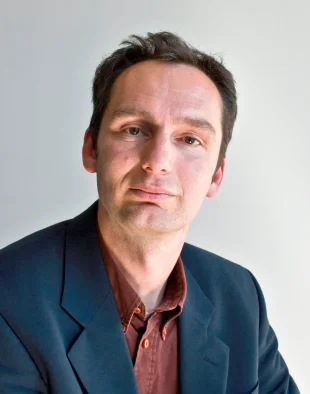
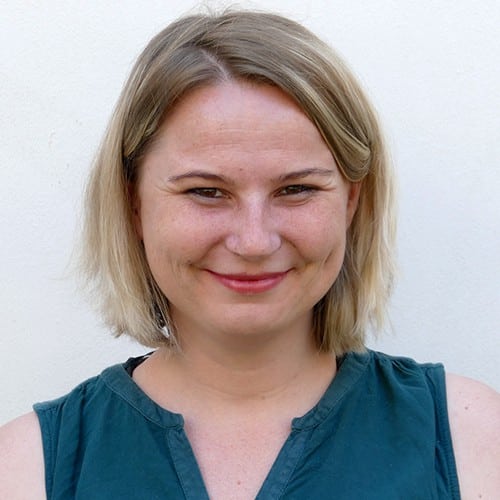
Anders Damgaard is an Associate Professor and Head of BSc studies at the Department of Environmental and Resource Engineering (DTU Sustain), Technical University of Denmark. His research focuses on environmental assessment methodologies, particularly Life Cycle Assessment (LCA), and their application to waste management systems, resource recovery, and policy development. He leads the development of LCA models like EASEWASTE/EASETECH and collaborates with institutions such as the Danish EPA and Nordic Council of Ministers. Key research areas include carbon footprints of waste treatment, textile waste composition, and additive impacts in plastics recycling. Education: Not explicitly stated in provided texts. Research Interests: Waste management optimization, circular economy frameworks, sustainable technologies, and policy-driven environmental assessments. His recent publications address topics such as carbon footprints of sewage sludge treatments, Nordic textile waste composition, and challenges in plastic additive inclusion in LCA studies. He supervises PhD students in projects involving lifecycle modeling, construction waste recycling, and consumer practices in circular economies. As part of DTU Sustain, he contributes to interdisciplinary teams advancing sustainable resource management and policy solutions.
Peter H. Verburg is a Full Professor of Environmental Spatial Analysis at the Institute for Environmental Studies (IVM) , Vrije Universiteit Amsterdam, leading the Environmental Geography group. He has held this position since 2010 and previously served as an Assistant Professor at Wageningen University (2003–2010) and Senior Researcher at Alterra (2009–2010). His research focuses on land use analysis, spatial modeling, and interdisciplinary environmental studies. Education: PhD in Land Use Modelling, Wageningen University (2000) MSc in Physical Geography, Wageningen University (1996) Key Research Interests: Dr. Verburg is renowned for developing the globally used CLUE land-use modeling framework. His work integrates methods from social sciences, econometrics, and earth sciences to analyze land-use patterns and policies. He actively contributes to EU projects on sustainable urban planning, climate adaptation, and ecosystem services. Current roles include co-Editor-in-Chief of Landscape and Urban Planning , member of the Earth Commission, and Science-Policy Interface member of UNCCD. Professional Activities: Former Chair of Global Land Programme (Future Earth) Lead researcher in multiple EU initiatives (e.g., BrightspotsCSA, TURAS) Organized workshops on land-use modeling and ecosystem services Awards: Highly Cited Researcher (2018, Web of Science top 1%) Research and Collaboration: He has published over 415 peer-reviewed articles and supervised 38 PhD theses. His projects span land-use modeling in China, Central Asia, and the Mekong region. Collaborations include UN agencies, European research networks, and global sustainability initiatives.
John Bagterp Jørgensen is a Professor at the Department of Applied Mathematics and Computer Science, Technical University of Denmark (DTU). His research focuses on computational methods for Model Predictive Control (MPC), numerical optimization, and dynamic optimization, with applications in industrial processes, biomedical systems, and sustainable energy. He holds leadership roles in 2-control ApS, a company developing advanced control solutions for industries such as cement production and oil recovery. Education: PhD and M.Sc. in Technical Sciences from DTU (1997–2005 and 1991–1997). Professional experience includes roles as an Assistant Professor at DTU and CTO/CEO at 2-control ApS. Research interests span MPC algorithms, numerical methods for differential equations, and system identification. His work bridges academia and industry, addressing challenges in energy efficiency, vaccine manufacturing, diabetes treatment, and cement production processes. His recent articles emphasize industrial applications of control systems, including cement rotary kiln dynamics, vaccine production optimization, and dual-hormone artificial pancreas development. He has received the Nordic Energy Research Award (1994) and contributed to UN Sustainable Development Goals related to affordable energy and industrial innovation. Advising and grants: Supervises multiple PhD projects on topics like electrification of industrial processes and sustainable SCP production. Collaborates with global institutions on energy and biomedical research. Labs/teams: Leads teams in DTU’s Scientific Computing and Center for Energy Resources Engineering, with active partnerships in industry and academia.
Teis Hansen is a Professor of Innovation and Entrepreneurship at the Department of Food and Resource Economics , University of Copenhagen, with a side-position at SINTEF 's Department of Technology Management in Norway. His academic background includes a PhD in Economic Geography (2012) and an MSc in Regional and Urban Planning Studies (2008, LSE). His research spans innovation studies, sustainability transitions, and economic geography , focusing on spatial innovation dynamics, transformative policy, green urban development, foundational economy, and technology transfer between developed and emerging economies. Empirical work covers bioeconomy, energy-intensive industries, maritime transport, plastics, and energy systems. Recent collaborations include international partnerships in Norway, Sweden, and Denmark. His 112 research outputs include 63 journal articles, 9 book chapters, and policy-relevant reports. Key publications address climate change mitigation frameworks, carbon capture feasibility, and circular bioeconomy transitions .
Beate Conrady is an Associate Professor in Infectious Disease Epidemiology and Animal Health Economics at the Department of Veterinary and Animal Sciences, Faculty of Health and Medical Sciences, University of Copenhagen, where she joined in April 2021. She has been affiliated with the Centre for Sustainable Health (CSH) since May 2020. Previously, she led the working group on Epidemiology and Animal Health Economics at the University of Veterinary Medicine in Vienna for eight years. Her research focuses on the development and application of mathematical and economic models to assess prevention and intervention strategies for infectious diseases in veterinary and public health contexts. Key areas include zoonoses, cattle disease control, biosecurity, and One Health. She has extensive experience in international consultancy, including with EFSA, the Austrian Government, and European scientific networks. Beate's recent publications (2020–2024) demonstrate a strong emphasis on disease transmission modeling, surveillance systems, and economic evaluation of health interventions. Her work spans Salmonella, foot-and-mouth disease, Cryptosporidium, and vector-borne diseases, often employing advanced modeling techniques and large-scale data analysis. She has received more than 11 scientific awards for her contributions to infectious disease epidemiology and animal health economics. Consultant for European Food Safety Authority (EFSA) Member of international scientific committees (Med-Vet-Net, DISCONTOOLS) Principal investigator and consortium leader with over 7.5 million EUR in research funding, including more than 1 million EUR in third-party funds She is actively involved in editorial and peer-review activities for leading journals and contributes to policy development in animal health and zoonotic disease control.
Janine Leschke is Professor in Political Economy of Labour Markets at Copenhagen Business School's Department of Management, Society and Communication and a member of CBS Sustainability's Sustainability Governance Group. Her work centers on European labour markets, welfare states, and social policy through institutional and micro-data analysis. Her research focuses on comparative European labour market and welfare state analysis, emphasizing flexibility-security dynamics. Key areas include non-standard employment, job quality, gender disparities, platform work, and social sustainability. She investigates big data and algorithmic impacts on public employment services using institutional frameworks and micro-data. Recent publications (2023-2025) highlight platform work regulation, job quality measurement in digital markets, and intra-EU migration effects on wage structures. Her work consistently examines technological change, social protection, and flexicurity models within European governance. Leschke supervises projects on labour market inequality, digital transformation, migration, and social policy using diverse methodologies. She led the EU Horizon 2020 HECAT project (2020-2023) on disruptive labour market technologies and participates in EUSOCIALCIT, ReNEW, and STYLE through ESPAnet networks. She contributes to CBS's Sustainability Governance Group and European research networks including ESPAnet and Nordic ESPAnet to advance comparative social policy analysis.
Michael Obersteiner is Professor and Director of the Environmental Change Institute (ECI) at the University of Oxford, where he leads interdisciplinary research on climate change, ecosystems, and sustainability. He previously served as Director of the Ecosystems Services and Management (ESM) Program at the International Institute for Applied Systems Analysis (IIASA), a position he held since 2011. His research focuses on biophysical and economic modeling of terrestrial ecosystems, forestry, agriculture, and integrated assessment, with strong applications in environmental policy. His work supports science-based decision-making for institutions including the European Commission, WWF, and OECD. He has published over 250 scientific papers and is recognized as a Highly Cited Researcher by Clarivate. The recent publications reflect a consistent focus on climate change mitigation, sustainable land use, carbon sequestration, and policy modeling. Key trends include the integration of economic and ecological models, scenario analysis for global change, and the role of land-based solutions in achieving climate targets. His work frequently bridges science and policy, emphasizing actionable insights. Highly Cited Researcher (Top 1% by citations, Clarivate) Professor Obersteiner has advised numerous national and international organizations, translating complex modeling outputs into policy recommendations. While specific grant details are not listed, his leadership of large-scale programs at IIASA and Oxford indicates substantial funding from public and international bodies. He has mentored researchers and led multidisciplinary teams, though formal student advisees are not named in the text. He has led major research units including the ESM Program at IIASA and now directs the Environmental Change Institute at Oxford, fostering collaborative, interdisciplinary teams focused on global environmental challenges.
Henrik Wenzel is a Professor at the Department of Green Technology, University of Southern Denmark, and a key figure in the SDU Climate Cluster. His work focuses on integrating renewable energy systems, carbon management, and sustainable resource recovery. Active in projects like FLEX-ENVIRONMENT (smart electrolysis systems) and CARMA-Green Fuels (carbon management) Contributions to Power-to-X technologies, biogas optimization, and circular economy frameworks Research trends from his publications include: Life Cycle Assessment (LCA) of emerging energy systems Optimization of hydrogen production and regional energy parks Addressing water-conscious energy production and carbon capture challenges Scientific awards: SDU Innovation Prize (2022) TEK Innovation Prize (2022) Fyens Stiftstidendes Forskerpris (2015) Current supervision includes MSc theses on biomass resources for carbon management and global Power-to-X collaboration.
Wusheng Yu is a full-time Professor in the Department of Food and Resource Economics at the Faculty of Science, University of Copenhagen, holding this position since March 2018 after serving as Associate Professor from 2005-2018. His academic foundation includes a PhD in Agricultural Economics from Purdue University (2000) and an MSc in Economics from Renmin University of China (1995). Educational background: PhD in Agricultural Economics, Purdue University, West Lafayette, IN, USA (2000) MSc in Economics, Renmin University of China, Beijing, China (1995) Professor Yu's research centers on international trade, agricultural policy, computable general equilibrium modeling, and climate-food security intersections. He employs advanced quantitative methods to analyze global trade dynamics and environmental policy impacts, with recent work emphasizing geopolitical dimensions of food systems under climate stress. His methodological approach combines empirical analysis with scenario-based modeling to address real-world policy challenges. Analysis of his 2023-2025 publications reveals three dominant trends: (1) Geostrategic assessments of food security amid global tensions, (2) Climate-agriculture policy integration through emission modeling, and (3) Trade mechanism innovations like carbon border adjustments. His work bridges theoretical economics with actionable policy insights, particularly for EU and developing economies. Professor Yu coordinates graduate courses in Advanced International Trade and Applied Trade and Climate Policy Models. His research is funded by the European Union, Danish governmental bodies, and international organizations, operating under an advisory committee with private sector representatives as specified by departmental Terms of Reference. He maintains strict institutional alignment as a full-time permanent employee without external remuneration. His collaborative network spans seven countries with significant engagement in Danish animal food sectors and public authorities. The Section for Production, Markets and Policy at IFRO serves as his primary research hub, facilitating cross-border studies on trade-displacement effects and food demand elasticity modeling under socioeconomic pathways.
Stefanie Sohn is an Associate Professor at the University of Southern Denmark , affiliated with the Department of Business and Sustainability and cross-appointed to Entrepreneurship and Supply Chain & Technology Management. Her research bridges consumer behavior , digitalization , sustainability , and health , employing mixed-method approaches. Education : Ph.D. in Business Administration, Technische Universität Braunschweig Her scholarly output spans AI in customer service , color psychology in branding , and sustainable transport adoption , with publications in Journal of Retailing , Journal of Marketing , and Psychology & Marketing . Recent projects include DigSmart , focusing on chatbot-enabled digital security education . Key awards include the 2025 Best Paper Award and multiple German industry prizes (2017–2019). She supervises Larysa Luzinska and contributes to conference organization, including the 2025 Global Marketing Conference .
Kirsten Gram-Hanssen is a Professor at Aalborg University, specifically within the Department of Construction, Urban and Environmental Engineering at the Faculty of Engineering and Science. Her academic work is centered in the Section for City, Housing and Property, where she leads the Research Group for Sustainable Cities and Everyday Practice. She maintains an active research profile with numerous publications and projects focused on sustainable energy systems. Her educational background is not explicitly detailed in the provided text, but her PhD specialization in socio-technical analyses forms the foundation of her interdisciplinary approach connecting social sciences with engineering perspectives on sustainability. Gram-Hanssen's research interests focus on housing, everyday life, and consumption from a climate and energy perspective . She examines differences in household consumption practices through a practice-theoretical lens that emphasizes routines and technical infrastructures. Her work demonstrates that social organization of everyday life matters as much for home energy consumption as the technical efficiency of buildings and appliances. She also investigates how new technologies like private solar panels and smart home controls affect both energy consumption and daily life practices. Her research has significant implications for sustainable transitions and energy policy. Her recent publications show a clear trend toward addressing the energy crisis, sustainable consumption practices, and the intersection of technology with everyday life. The research spans domains including housing, food, and mobility, with a strong focus on practical solutions for energy transition and sustainability challenges. Her work increasingly addresses inequality, ethics, and policy implications of energy transitions. Active Principal Investigator on multiple major research projects including SGD: Shared Green Deal (2022-2027), FoMoHo: Food, Mobility and Housing in the Sustainable Transition of Everyday Life (2021-2025), and GECKO: Building greener societies (2021-2024) Frequent media commentator on energy and sustainability issues, with 197 media appearances documented Extensive research dataset creation including the eCAPE energy crisis interviews (2024) and smart home interviews (2022) Regular contributor to international conferences and workshops on sustainable consumption and energy practices Professor Gram-Hanssen has supervised numerous PhD students (9 documented) and actively participates in the academic community through peer review, conference organization, and editorial work. Her research group, the Research Group for Sustainable Cities and Everyday Practice, works at the intersection of social science and engineering to address sustainability challenges through understanding everyday practices and their relationship to energy systems.
Bente Halkier is a Professor in Sociology at the University of Copenhagen's Department of Sociology, part of the Faculty of Social Sciences. Her work focuses on consumption practices, food politics, and qualitative methodologies. She has held academic roles since 1993, including leadership roles in research groups and centers. PhD in Social Sciences from Roskilde University (1998) Professorships at Roskilde University (2011–2016) and University of Copenhagen (2016–present) Her research explores how everyday practices like food consumption intersect with broader societal issues. Key areas include: Contestation over food safety and dietary advice Convenience food dynamics and sustainability Interactions between media, science, and consumer behavior Her recent projects include studies on socioeconomic disparities in dietary health and the role of food practices in climate change mitigation. She has led multiple grants, including the Proper Food under Economic Constraints project (2018–2021). Bente has authored over 30 academic books and journal articles, edited volumes on consumption studies, and served on editorial boards for journals like Cultural Sociology and Journal of Consumer Culture . She frequently collaborates internationally, including with institutions in the UK, Sweden, and Norway.
Henrik Halkier is a Professor at Aalborg University's Department of Culture and Learning within the Faculty of Social Sciences and Humanities. He serves as Director of AAU Excellence and leads research on sociocultural aspects of sustainability, green transitions, and tourism policy. His work integrates evolutionary economic geography, institutional change, and regional development frameworks. Research interests include destination dynamics, policy innovation, and cross-border cultural tourism in rural areas. He coordinates major EU projects like CROCUS (Horizon Europe) and Danish initiatives on regional planning. Over 291 publications span journals like Regional Studies and policy reports. 4 major awards include Honorary Professorships and visiting roles at UK institutions Supervised 12 PhD students focusing on topics like urban sociology, tourism policy, and regional governance Active in 27 research projects with € millions funding Awards highlight his contributions to tourism studies and regional policy: Honorary Professor at Tomsk Polytechnic (2013), Regional Studies Association Fellowship (2012), and visiting roles at Strathclyde & Paisley Universities. Advising spans 2001–2014 with students researching topics from Nordic policy history to adventure tourism innovation. Leads 5 ongoing projects including Denmark's tourism policy evolution and green cruise community studies. Labs/teams: Tourism Research Unit (TRU), CROCUS consortium, and Danish regional policy networks. Future work focuses on non-mandatory planning systems and sustainable Arctic tourism.
Steffen Dalsgaard is a Professor at the Technologies in Practice group at IT University of Copenhagen. As Head of Center for Climate IT, he leads initiatives exploring how digital technologies interact with climate change mitigation. He also contributes to the Center for Information Security and Trust. PhD in Anthropology and Ethnography (Aarhus University, 2010) Recipient of DFF Sapere Aude grant, ERC Consolidator Grant, and Carlsbergfondet funding Key research areas: climate data valuation, sociopolitical implications of IT, and comparative ethnography Research Focus: Investigates intersections between digital technologies, climate change, and sociocultural values through ethnographic studies in Denmark, Papua New Guinea, and Brazil. Examines carbon markets, environmental technoscience, and digital governance systems. Scientific Awards: ERC Consolidator Grant (DecouplingIT) DFF Sapere Aude grant Carlsbergfondet grant Key Collaborations: Works with Independent Research Fund Denmark, European Commission, and external bodies like the Academy for Technical Sciences (ATV). Leads multidisciplinary projects involving climate data analysis and sustainable technology implementation.
Ella Fegitz is a Research Fellow at the University of Southern Denmark, affiliated with the Department for the Study of Culture and the Interdisciplinary Centre on Population Dynamics (CPop HUM). Her work focuses on post-feminist subjectivity, neoliberalism, and the intersections of gender, aging, and media representation. She explores how media and policy construct narratives around aging entrepreneurial femininity, particularly in the UK context, while addressing systemic issues like sexism, ageism, and digital literacy's impact on women's employability. Ella’s research integrates cultural gerontology, critical media analysis, and social policy evaluation. Her interdisciplinary approach examines topics ranging from intergenerational dynamics in feminist mentorship to climate activism at Burning Man festivals. She critiques post-feminist media portrayals of gender, sexuality, and race across platforms like Italian newspapers, vegan vlogs, and popular culture series like Sex and the City . Her publications analyze themes including neoliberal feminism's impact on older women's labor participation, the politics of female anger in aging populations, and the cultural symbolism of Burning Man’s environmental narratives. Ella’s work bridges theoretical frameworks with lived experiences, emphasizing marginalized voices in socio-cultural discourses.