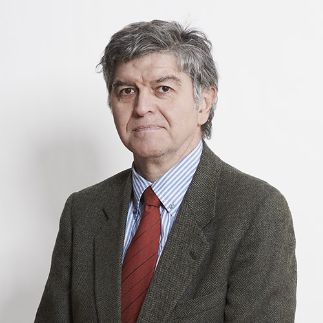
Gianfranco Anfora is a Full Professor at the University of Trento, affiliated with both the Department of Civil, Environmental and Mechanical Engineering and the Center Agriculture Food Environment (C3A), where he serves as Deputy Dean. His research focuses on agricultural entomology, biological control, and sustainable pest management. Key expertise areas include integrated pest control, semiochemicals, and viticulture-related challenges. Anfora teaches courses on biopesticides, vine protection, and eco-sustainable management of invasive species. His research emphasizes vibrational communication in pests like Halyomorpha halys and Drosophila suzukii, exploring non-chemical control strategies such as sterile insect techniques and biological control agents. Collaborative projects include classical biological control programs targeting invasive species in vineyards and果园. Anfora’s work often bridges ecology and applied pest management, addressing climate and landscape impacts on agricultural practices. Recent studies highlight innovations in vibrational mating disruption, substrate-borne signaling, and radiation effects on pest behavior. His contributions aim to balance productivity, environmental sustainability, and regulatory compliance within agri-food systems. No scientific awards are explicitly mentioned, but his extensive publication record reflects significant contributions to entomological and agricultural research.
Giuseppe Banfi is a Professor of Clinical Biochemistry and Clinical Molecular Biology at Vita-Salute San Raffaele University, where he has held a full academic position since 2006. His career spans over three decades, combining clinical laboratory leadership with academic contributions in aging, musculoskeletal health, and nutritional biochemistry. Graduated Medicine (1984, University of Pavia) Specialized in Hygiene and Preventive Medicine (1988, University of Milan) His research focuses on clinical biochemistry applications in geriatrics, musculoskeletal disorders, and immuno-nutrition. Recent publications highlight innovations in laboratory medicine value-based models, sarcopenia tele-rehabilitation platforms, and aging-related fall prevention strategies. Journal collaborations span Clinical Chemistry and Laboratory Medicine and Endocrine Reviews . Current work involves multidisciplinary integration of oral health in orthopedic surgery, telemedicine effectiveness for musculoskeletal conditions, and vitamin D supplementation guidelines. His leadership in scientific research programs at Galeazzi Orthopedic Institute and San Donato Foundation Hospital Group demonstrates ongoing translational science engagement. Management roles include directorships at Fondazione Centro San Raffaele and Istituto Insubrico Ricerca per La Vita Foundation.
Aldo Todaro is an Associate Professor of Food Science and Technology at the University of Catania since October 1, 2024. Previously, he worked as a University Researcher (2007–2011) and Associate Professor (2019–2024) at the University of Palermo. His research focuses on enzymatic activity in food processing, brewing innovation (malting processes and beer production), and sustainable food technology. Education: PhD in Food Science and Technology (University of Catania, 2006); Laurea in Food Science and Technology (University of Catania, 2001). His research has resulted in over 100 publications (74 ISI/SCOPUS-indexed) and an H-index of 24. He has participated in national and international projects (PRIN, PON, HORIZON 2020) and collaborated with food companies. Currently, he teaches Fundamentals of Unit Operations and has previously taught Unit Operations in Food Technology , Technology and Quality in the Food Supply System , and Food Processing . Scientific Awards: National Scientific Qualification for first-tier professorships (2021) Open badges for digital competence and language proficiency courses Ordinary member of SISTAl since 2012 International Engagement: Visiting professor at the University of Burgundy (2021) Visiting scientist at Hohenheim University (2009) He serves as a referee for journals like the Journal of Agricultural and Food Chemistry and is on the editorial board of three open-access journals. His work spans sustainability assessments (LCA in agrofood), technological innovation in citrus derivatives (via CRA-ITIDA), and digital pedagogy in food science education.
Professor Franca Zanardi is a Full Professor of Organic Chemistry at the Department of Food and Pharmaceutical Sciences, University of Parma, Italy. With a career spanning over two decades, she transitioned from University Researcher (1998-2002) to Associate Professor (2002-2019) before achieving her current role in 2019. Her research focuses on biomedical applications of peptidomimetics, asymmetric synthesis methodologies, and radiolabeled agents for disease diagnosis. Research Interests: Design and synthesis of integrin-targeting peptidomimetics for tumor therapy and diagnostics Development of asymmetric organocatalytic strategies for molecular diversity Creation of radiolabeled compounds for non-invasive diagnosis of neoplastic diseases Scientific Awards: Adolfo Quilico Medal (2024) Premio alla Ricerca Scientifica 'Chimica Organica per le scienze della vita' (2017) Three Excellence Citation Awards (2012, 2012, 2016) Two Hot Paper Recognitions (2015, 2020) Grants and Leadership: Principal Investigator for SARS-CoV-2 biomedical projects (2020-2022), PRIN2020 grant recipient (2022-2024), and participant in multiple international research collaborations. She leads the BioOrganicSynthesiS (BOSS) Group and serves on editorial advisory boards including ACS Central Science .
Luisa Mannina is a Full Professor of Food Chemistry at Sapienza University of Rome, Department of Chemistry and Technology of Drugs, Faculty of Pharmacy and Medicine. She leads the Food Chemistry Laboratory (FOODCHEMLAB) and serves as Director of the Metabolomics Unit focusing on Foods, Nutraceuticals and Biological Fluids Research. Her academic career spans over 25 years with progressive appointments from Assistant Professor to her current Full Professor position since January 2019. Full Professor of Food Chemistry (2019-present) Associate Professor of Food Chemistry (2009-2019) Director of multiple Master's programs in Nutraceuticals and Cosmeceutics Coordinator of PhD program in Molecular design and characterization for health promotion Member of numerous institutional committees at Sapienza University Professor Mannina's research centers on Nuclear Magnetic Resonance (NMR) methodologies for food analysis and metabolomics. She has developed innovative analytical protocols for determining metabolic profiles of food matrices and biological fluids, enabling authentication of geographical origin, variety, and cultivation methods for diverse food products. Her work spans olive oils, fruits, industrial hemp, and various agricultural products, with particular emphasis on NMR-based metabolomics for food authentication and quality assessment. She has established herself as a leading expert in industrial hemp analysis, publishing extensively on cannabis inflorescences, seed oils, and related products. Analysis of her recent publications reveals a strong focus on sustainable food systems, with particular attention to agri-food waste valorization, novel food development from unconventional sources like medicinal mushrooms, and advanced analytical techniques for food authentication. Her work increasingly integrates NMR with other analytical methods to address complex food science challenges, including food fraud detection, nutritional enhancement through processing techniques, and chemopreventive properties of plant-based products. The research demonstrates consistent evolution from fundamental food characterization toward applied solutions addressing contemporary food system challenges. Her scientific recognition includes: GIDRM/GIRM 2018 Gold Medal ANVUR Research Funding (2017) Associate Editor of Journal of Integrated Omics Member of Scientific Committee of La Rivista Italiana delle Sostanze Grasse Professor Mannina has successfully supervised numerous PhD students and directed multiple Master's programs. Her research is supported by substantial funding from regional, national, and European sources, including projects on industrial hemp valorization (€150,000), innovative bio-packaging (€50,000), and metabolomic studies of Mediterranean diet adherence (€14,500). She maintains active collaborations with European research institutions and industry partners through various research contracts. Her Food Chemistry Laboratory (FOODCHEMLAB) is equipped with state-of-the-art analytical instrumentation including NMR, HPLC-PDA, GC-MS, and other advanced equipment for comprehensive food analysis. The laboratory serves as a hub for metabolomic research, food authentication studies, and valorization of agricultural by-products, contributing significantly to Sapienza University's research profile in food science and technology.
Prof. Chiara Dall'Asta is a Full Professor of Food Chemistry at the University of Parma's Department of Food Science. Since 2023, she serves as the Rector's Delegate for Doctoral Programs and has coordinated the PhD Course in Food Science since 2019. She acts as the Chancellor’s liaison to the European Food Safety Authority (EFSA) and contributes to EFSA Working Groups, authoring multiple scientific opinions on mycotoxin risk assessment. Her research spans natural bioactive compounds, mycotoxins, metabolomics, and computational toxicology, with recent expansion into food fraud detection using non-targeted mass spectrometry. Key methodologies include HR-MS metabolomics, ion mobility MS, and computational models to study xenobiotic interactions. She has published over 200 peer-reviewed papers and edited the book Masked Mycotoxins . Recent publications (2022-2025) highlight trends in mycotoxin analysis, food safety risk assessment, plant-based product safety, and computational toxicology. Work frequently integrates advanced analytical technologies (e.g., GC-IMS, LC-HRMS) with chemometrics for food authenticity and contamination studies. Teaching responsibilities include courses in Food Characterization, Risk Assessment of Chemical Compounds, and Xenobiotics in Food across undergraduate and graduate programs in Gastronomic Science, Food Safety, and Pharmaceutical Chemistry.
Maria Grazia Alaimo is a Researcher in the Department of Earth and Marine Sciences at the University of Palermo . Her work focuses on environmental geochemistry, atmospheric pollution analysis, and biomonitoring using plants, lichens, and human biological matrices. She has conducted extensive studies on trace element distribution in urban and industrial areas of Sicily. Current affiliation: University of Palermo Academic rank: Researcher Research Interests: Her research spans trace element geochemistry , urban air quality , and human exposure to heavy metals . Key areas include: Atmospheric pollution dynamics Soil and plant interactions Biomonitoring techniques Industrial contamination effects Health risk assessment Recent publications demonstrate expertise in PM10/PM2.5 analysis , lichen biomonitoring , and heavy metal accumulation in mushrooms and human hair . While no explicit awards or students are listed in available data, her work contributes to environmental health and pollution mitigation strategies.
Prof. Alessandro Bertucci is an Associate Professor at the University of Parma, Department of Chemical, Life and Environmental Sustainability Sciences, specializing in Analytical Chemistry (CHIM/01). He earned his Ph.D. in Chemical Sciences through a dual Italian-French program at the University of Parma and the University of Strasbourg, receiving the "Best Scientific Thesis in France" award. Education: Master's in Chemistry (2011, University of Parma), Ph.D. in Chemical Sciences (2015, University of Parma/Strasbourg) Postdoctoral Experience: University of Rome Tor Vergata (2015-2016), Sanford Burnham Prebys Medical Institute (2016), University of Melbourne (2016), UC San Diego (2017-2020) His research integrates molecular recognition with synthetic design for biomolecular systems programming , focusing on nanoscale diagnostics and precision medicine . Key methodologies include DNA nanotechnology, electrochemical biosensing, and responsive nanomaterials. Recent publications highlight CRISPR-based diagnostics and low-cost spectrophotometric platforms . His work has been recognized with the Galileo Galilei International Prize (2021) and ISSNAF Young Investigator Finalist (2018). Scientific Awards: Galileo Galilei Prize (2021), ISSNAF Finalist (2018) Fellowships: Marie Skłodowska-Curie Global Fellowship (2017), Endeavour Research Fellowship (2016), Umberto Veronesi Fellowship (2020) He teaches Bioanalytical Methods (Master's in Genomic, Molecular and Industrial Biotechnology) and Analytical Chemistry for Materials (Bachelor's in Materials Science), with extensive experience in course coordination and curriculum development.
Marco Pelin is an Associate Professor at the University of Trieste's Department of Life Sciences, where he serves in multiple leadership roles including Member of the Department's Board, Doctoral Studies Boards, and as Delegate for Outgoing Orientation. He is a key researcher in the 'Pharmacology and Toxicology of Natural Substances' group, focusing on biomedicine and pharmacology/chemotherapy research strands. His research examines: Risk characterization of algal biotoxins and detection methods Toxicological mechanisms of marine toxins (palytoxins, azaspiracids) Nanomaterial safety assessments (graphene toxicity) Ecotoxicological impacts using Artemia franciscana models Publication analysis reveals two primary research arcs: marine toxin toxicology (detection methods, mechanisms, risk assessment) and nanomaterial safety (cutaneous exposure risks, biocompatibility evaluations). His work consistently employs cellular models and develops analytical techniques for environmental monitoring. Active research grants include: Principal Investigator: 'Tox-IT' (Emerging toxins in Italian seas) Scientific lead: 'Safe2energy' (2D material lifecycle safety) Contributor: 'STOPTTXs' (Tetrodotoxin risk mitigation) He collaborates in the Pharmacology and Toxicology research group with Prof. Aurelia Tubaro, supervising technical staff and PhD candidates while utilizing cellular and ecotoxicological laboratory models.
Rossana Bellopede is an Associate Professor at the Politecnico di Torino, affiliated with the Department of Environmental, Land and Infrastructure Engineering (DIATI) . She leads the Raw Materials (DIATI) laboratory and contributes to projects like CITERIA (critical raw material recovery) and SHOWCAVE (tourist cave impact mitigation). Her roles include coordinating PhD programs in Civil and Environmental Engineering and teaching courses on Circular Economy , Natural Stone Characterization , and Occupational Safety . Research focuses on solid waste recovery (tunnel muck, mining tailings) natural stone durability (weathering, bowing phenomena) microplastic pollution (karst systems, groundwater, caves) asbestos testing (industrial safety) Recent publications examine textile wastewater microfibers (2025), microplastic transport in karst environments (2025), and critical raw material recovery techniques (2025). Her work aligns with SDG 12 (Responsible Consumption) and SDG 11 (Sustainable Cities). Scientific participations include Advisor for ANIM (National Mining Engineers Association) Organizing committee of Heritage Stones Workshop (2021) Research network PROMETIA (2018-2025) She manages commercial projects like CE marking for Piasentina Stone , develops FAST4C circular textiles protocols (2024-2028), and supervises PhD candidates studying microplastic pollution in karst systems stone durability mechanisms sustainable construction materials
Maurizio Ramanzin is a Full Professor at the University of Padova , affiliated with the School of Animal Science and Department of Agronomy, Animals, Food and Natural Resources (DAFNAE) . His research focuses on Agricultural Sustainability , Environmental Impact Assessment , and Precision Livestock Farming . Academic Field : AGR/19 Email : maurizio.ramanzin@unipd.it Address : Agripolis - Viale dell'università, 16 - Legnaro (Padova) – ITALY His work explores the interactions between livestock systems and ecosystem services in mountainous regions, with emphasis on: Grazing Management and biodiversity conservation Life Cycle Assessment (LCA) of dairy and beef systems Climate Change Adaptation in Alpine ungulates Animal Welfare in small-scale farms Technological Tools (GPS, NIRS) for monitoring grazing behavior Key trends in his recent publications include: Quantifying environmental drivers of wolf predation on livestock Developing low-cost biologging systems for dairy cows Analyzing social-ecological trade-offs in mountain agriculture Assessing microbial dynamics in alpine soils
Gianni Galaverna is a Full Professor in Food Chemistry at the Department of Food and Drug, University of Parma, Italy. He has been a core faculty member since 1997 and currently serves as Director of the Department (2024–2027). He teaches Food Chemistry and Food Safety at both undergraduate and postgraduate levels, including in the International Master in Food Technology (MITA) with the University of Buenos Aires. PhD in Chemical Sciences, University of Parma (1994) MSc in Chemistry, University of Parma (1989) His research centers on food chemistry and safety, with a strong focus on mycotoxins , bioactive compounds , and advanced analytical methodologies . He applies chromatographic and mass spectrometry techniques for targeted and untargeted profiling of food components. His work explores the chemical transformations of food during processing and storage, as well as the metabolic fate of toxins in mammals. The recent publications reflect a multidisciplinary trend combining metabolomics , agricultural sustainability , and mechanistic toxicology . His studies span from perennial wheat characterization to computational toxicology of pesticides and endocrine disruptors like zearalenone, indicating a broad integration of food science, environmental health, and molecular mechanisms. He has received the Millipore Research Award (1990) for his thesis on enantiomeric chromatographic separation. Principal Investigator or Research Unit Leader in multiple national (PRIN, AGER, PSR) and EU (FP7) projects Research contracts with food industry partners Active in scientific peer review and evaluation panels (PRIN, SIR, FIRB) He is a member of the Board of the Interdepartmental Center SITEIA.PARMA (Food Safety, Quality and Technology), the PhD Program in Food Science, and the National Commission for Academic Habilitation in Pharmaceutical and Food Chemistry. He also contributes as a member of editorial boards, including Toxins (MDPI), and as a guest editor for chromatography journals.
Prof. Benedetta Bottari is an Associate Professor at the Department of Food and Drug Science, University of Parma. She specializes in food microbiology, focusing on lactic acid bacteria, fermented foods, and microbial dynamics in dairy products like Parmigiano Reggiano cheese. Her research employs molecular techniques like PCR analysis and fluorescence microscopy to study microbial viability and biodiversity. Educational Background: PhD in Food Science and Technology (2006–2009), University of Parma MSc in Food Science and Technology (2004), University of Parma BSc in Agricultural Studies, Diploma from G. Marconi High School (1994–1999) Research Interests: Prof. Bottari’s work centers on microbial ecology in food systems, probiotic development, food safety, and the application of advanced molecular methods to study cheese microbiota. She has contributed to projects on prebiotic effects, UV treatment for microbial abatement, and the role of microbial communities in food quality. Grants & Projects: Co-led projects on Parmigiano Reggiano microbiota and probiotic strain selection Scientific coordination of EU-funded dairy science education initiatives Collaborations with industries like Tetra Pak and CIPACK for food safety solutions Teaching: She teaches courses in Food Microbiology, Probiotics, and Functional Foods across undergraduate and graduate programs in Food Engineering, Gastronomy, and Nutrition. Labs & Teams: Her research group focuses on food microbiology, collaborating with institutions like SIMTREA and the Parmigiano Reggiano Consortium to advance food technology and safety.
Federica POLLASTRO is an Associate Professor at the University of Eastern Piedmont 'Amedeo Avogadro', Department of Pharmaceutical Sciences. Her research focuses on cannabinoid pharmacology, drug delivery systems, and neuropharmacology, with particular emphasis on the therapeutic potential of cannabinoids in neurodegenerative and inflammatory diseases. She leads projects such as NOrCa (Exploring Cannabis waste for circular economy applications) and has collaborated on initiatives like PRIME (green chemistry processes) and NUTRAcore (bioeconomy-driven food ingredients). Her work addresses cannabinoid synthesis, cytotoxic effects on cancer cells, and molecular mechanisms underlying neuroprotection. Key collaborations span European institutions, with projects funded by the Italian Ministry of Research and Piedmont Region. Publications emphasize transcriptomic analysis of cannabinoids' effects on Alzheimer's, Parkinson's, and glioblastoma models. Research activity highlights include: Over 150 peer-reviewed articles (2005–2025) Principal Investigator on grants totaling €2M+ (e.g., FFABR 2017, NOrCa 2023–2025) Development of novel cannabinoid derivatives and drug delivery systems Investigations into bitter taste receptor signaling in gastrointestinal physiology
Salvatore BARRECA is a Fixed-term Assistant Professor of Analytical Chemistry (CHIM/01) at the University of Catania , Department of Chemical Sciences. His research focuses on environmental and food analysis, sample preparation techniques, and photochemical remediation methods. Key research areas include: Environmental pollution and water quality monitoring Chromatography and mass spectrometry applications Photochemical and photocatalytic degradation of pollutants Chemical risk assessment in food and environmental matrices Development of analytical methods for trace contaminants Endocrine disruptors and emerging pollutants Recent work emphasizes perovskite solar cell environmental safety, fluoride analysis in beverages, and heavy metal quantification in food products. His publications demonstrate expertise in hyphenated analytical techniques (UHPLC-Q-TOF-MS, LC-MS/MS) and environmental biomonitoring. Salvatore is associated with Marco Arculeo's Lab at the University of Catania. He has contributed to patents related to photochemical water purification systems while maintaining active research collaborations across Italy and international institutions like Goethe University Frankfurt and Masaryk University.