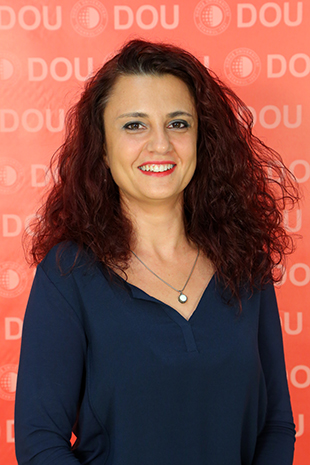
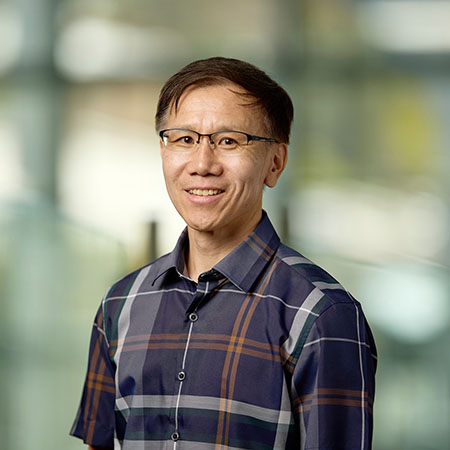
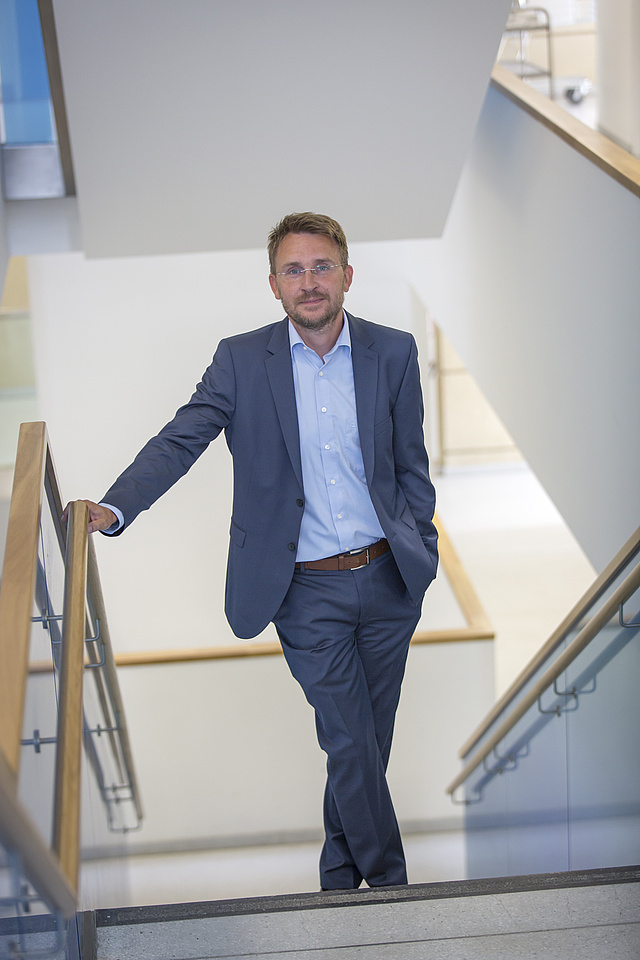
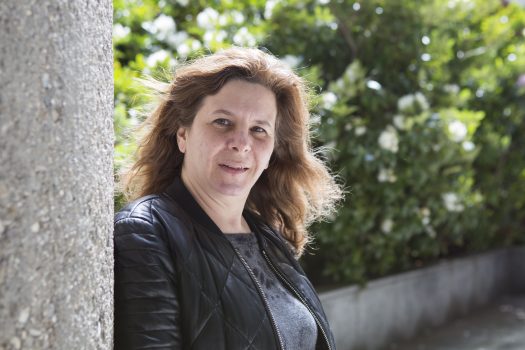
Dr. Emel ÖNAL DUMANOĞLU is an Assistant Professor at Doğuş University’s College of Engineering in the Department of Industrial Engineering , with a research focus on nanotechnology and photodynamic therapy . She also teaches courses including Nanoscience and Nanotechnology and Chemistry . Education: PhD in Chemistry (2014) from Gebze Institute of Technology and Université Claude Bernard Lyon 1 MSc in Chemistry (2009) from Gebze Institute of Technology BSc in Chemistry (2004) from Uludağ University Her research explores nanoparticle/nanofiber structures for photodynamic therapy and gas sensor applications. Key themes include porphyrin and phthalocyanine synthesis , photophysical properties , and radical-based architectures . Recent publications highlight collaborations on biopolymer-encapsulated photosensitizers and structural modifications for enhanced oxygen sensing. Since 2018, she has taught Nanoscience and Nanotechnology and Chemistry courses. Administrative roles include Commission Membership at Doğuş University. Her earlier experience includes a TÜBİTAK project assistantship (2006).
Rebecca Davis is an Associate Professor in the Department of Chemistry at the University of Manitoba , Faculty of Science. Her research integrates computational, kinetic, and synthetic methods to address challenges in asymmetric organocatalysis and antibiotic discovery. Academic Rank: Associate Professor Institution: University of Manitoba Contact: Rebecca.Davis@umanitoba.ca Research Interests: Davis specializes in asymmetric organocatalytic reactions, focusing on mechanisms and catalyst design. She employs computational modeling and machine learning to develop molecular feature libraries for antibiotic discovery, particularly targeting Gram-negative bacteria. Her work also includes photo-aminocatalysis, remote functionalization, and cheminformatics applications. Publication Trends: Recent articles highlight her interdisciplinary approach, combining machine learning with synthetic chemistry for drug discovery, mechanistic studies in organocatalysis, and photophysical characterization of excited-state intermediates. Scientific Awards: Davis served as Past Chair of the CSC Organic Division and is a member of the Digital Research Alliance of Canada’s Researcher Council. Advising: She supervises graduate and undergraduate researchers in projects spanning asymmetric synthesis, computational modeling, and antibiotic development. Labs & Collaborations: The Davis Research Group collaborates with academic and industrial partners on predictive models for synthetic methods and data generation for machine learning in drug discovery.
Dr. Benjamin Rotstein is an Associate Professor at the University of Ottawa's Faculty of Medicine and a member of the Department of Biochemistry, Microbiology and Immunology. He serves as Director of the Molecular Imaging Probes and Radiochemistry Laboratory at the University of Ottawa Heart Institute, where he develops radiochemical methodologies for PET radiotracer discovery in cardiovascular and neurologic diseases. BSc from University of King’s College and Dalhousie University PhD from University of Toronto under Prof. Andrei Yudin NSERC Postdoctoral Fellowship at Harvard Medical School and Massachusetts General Hospital His research bridges radiochemistry, medicinal chemistry, and molecular imaging , focusing on carbon-11 and fluorine-18 radiotracer development for heart failure, atherosclerosis, and neuroimaging targets . Key areas include: Radioisotope incorporation techniques for small molecules and biomolecules Targeted imaging probes for cardiology, neuroscience, and oncology Validation of biomarkers for precision disease profiling and drug development Photoredox catalysis and isotope labeling innovations His recent publications highlight translational PET imaging in cardiovascular disease and atherosclerosis, with methodological advances in radiochemical synthesis and isotope exchange . Awards include NSERC fellowships, Discovery Grants, and trainee recognition for lab members like Megan and Christina. Dr. Rotstein supervises a cross-disciplinary team and collaborates with institutions such as the Lundgren Lab , Ardolino Lab , and Vienna researchers. His lab's grants include support from NSERC Discovery Grants Canadian Medical Isotope Ecosystem Brain-Heart Interconnectome Innovation Pitch Competition and is based at the University of Ottawa Heart Institute with full radiopharmaceutical infrastructure.
Sebastian Stoian is an Assistant Professor in the Department of Chemistry at the University of Idaho's College of Science. His research bridges inorganic chemistry, molecular magnetism, and bioinorganic chemistry, with a focus on transition metal complexes, spectroscopy, and electronic structure analysis. Education: PhD in Chemistry, Carnegie Mellon University. Stoian's work explores the interplay of spin and charge degrees of freedom in iron complexes, emergent magnetism in homologous series, and metal cofactor selection in enzymes like acetone carboxylase. He utilizes advanced spectroscopic techniques (e.g., Mössbauer, EPR) and computational methods to study magnetic properties, spin-orbit coupling, and catalytic mechanisms. Recent publications highlight trends in molecular magnetism , electronic structure analysis , and bioinorganic systems , including studies on spin-crossover materials, heterobimetallic complexes, and metalloenzyme cofactor preferences. His work also addresses solid-state chemistry and organometallic reactivity . Scientific Awards: Jack E. Crow Postdoctoral Fellow Guy C. Berry Graduate Research Award Stoian is affiliated with the National High Magnetic Field Laboratory and the Mellon College of Science at Carnegie Mellon University. His research has been supported by grants such as the NSF CAREER award.
Jun Yong Kang serves as Associate Professor in the Department of Chemistry and Biochemistry at the University of Nevada, Las Vegas, specializing in organic synthesis with emphasis on asymmetric catalysis, new reaction discovery, and biocompatible materials development. His research program centers on N-hetero phosphines as platforms for bifunctional organocatalysts, enabling novel cascade reactions including asymmetric tandem annulation and fluorination. These methodologies facilitate ring-opening polymerization for biocompatible polymers and future synthesis of biologically active complex molecules. Recent publications (2019-2025) reveal dominant expertise in phosphorus/sulfur chemistry, featuring metal-free carbon-phosphorus/sulfur bond formation, chiral phosphorus-based asymmetric catalysis, and functionalized organophosphorus compound synthesis through innovative activation strategies. Dr. Kang mentors graduate students Jeffrey Ash and Choi Tsang while supervising undergraduate researchers including Citlally Lopez, Lilian Huynh, and Parsa Azaei in collaborative synthetic chemistry projects.
Prof. Dr. Tevfik Raci Sertbakan is an Associate Professor at the Department of Physics, Faculty of Arts and Sciences, Kırşehir Ahi Evran University. He earned his PhD (2000), MSc (1994), and BSc (1991) in Physics from Gazi University. His career spans over 25 years, including roles as Department Head (2001–2004). Research Areas : Atomic and Molecular Physics, Spectroscopy, Quantum Chemistry, Laser Physics, and Clathrate Compounds. Scientific Contributions : Over 62 publications, 11 national research projects, and 58 citations. Key topics include DFT/TD-DFT studies, vibrational spectroscopy, and optoelectronic material development. Notable Awards : Recipient of International Publication Incentive Awards from Gazi University (1999–2005). He has mentored 10 graduate students, including PhD candidates, focusing on molecular structure and nanoparticle applications.
Assoc. Prof. Dr. Cengiz Soykan currently serves as an Associate Professor at the Medical Imaging Techniques Program within the Medical Services and Techniques Department at the Vocational School of Health Services , Kırşehir Ahi Evran University . He previously worked at the same institution under its former name Ahi Evran University from 2014-2021. Education : PhD in Physics, Pamukkale University (2014) MSc in Physics, Pamukkale University (2005) BSc in Physics, Pamukkale University (2001) Research Focus : Specializes in Condensed Matter Physics and Material Physics using Density Functional Theory (DFT) and ab-initio calculations . Key projects include lightweight shape memory alloys for biomedical implants, perovskite solar cells , and hydrogen storage materials . His work spans structural , mechanical , electronic , and optical property analyses. Projects : Principal Investigator for "Investigation of Physical Properties of Cu-Al-Be Alloys" (2015-2017) Researcher for "Low-Lead Perovskite Solar Cells" (2017-2020) Teaching : Teaches Basic Computer Sciences , Deontology & Professional Ethics , and Material Science at the associate degree and undergraduate levels. Has contributed to curriculum development in medical imaging and geriatric care programs. Scientific Collaborations : Collaborated with researchers from Pamukkale University , Kütahya Dumlupınar University , and Bolu Abant İzzet Baysal University . Worked with computational physics experts like Tahir Çağın and Cem Sevik (2010-2016).
Professor Martin Wilkening is Head of the Institute for Chemical Technology of Materials (ICTM) at Graz University of Technology, Austria, and serves as Vice Dean of the Faculty TCVB since 2023. With a distinguished career spanning over 15 years at TU Graz, he leads a prominent research group focused on solid-state physical chemistry and energy science. Full Professor at TU Graz (2011-present) Director of ICTM (2016-present) Vice Dean of Faculty TCVB (2023-present) Editor-in-Chief: Journal of Materials Science: Materials in Energy (2024) Wilkening completed his Ph.D. summa cum laude at the University of Hannover in 2005, followed by his habilitation in 2011. His career trajectory shows consistent advancement in both academic and administrative roles within the university structure. Professor Wilkening's research focuses on the preparation, characterization and functionalization of new materials for modern energy storage systems. His group employs solid-state NMR and conductivity spectroscopy to investigate ion transport processes in crystalline, nanostructured, and amorphous solids. Key research areas include lithium and sodium ion conductors, non-equilibrium compounds, solid-state diffusion mechanisms, and mechanochemistry. His work bridges fundamental understanding of ion dynamics with practical applications in battery technology. Analysis of his recent publications reveals a strong emphasis on understanding ion transport mechanisms at atomic scales, particularly through advanced NMR techniques. His research spans multiple energy storage materials systems including sulfides, halides, and oxides, with growing interest in sodium-ion conductors as alternatives to lithium-based systems. The work demonstrates sophisticated methodologies for probing both short-range and long-range ion dynamics across various temperature ranges. Starck-Promotionspreis of the German Chemical Society (GDCh, 2006) Wissenschaftspreis Hannover (2006) Research grant in 'Wege in die Forschung II' (2009) ADUC-Jahrespreis 2009 für Habilitanden (2010) Professor Wilkening has supervised over 25 PhD students to completion and currently leads a large research group comprising senior scientists, postdocs, PhD candidates, and technicians. His group actively participates in numerous research projects including DFG research unit 1277, SafeBattery (FFG), IMAGE (EU H2020), and several FFG-funded projects on lithium-ion battery technologies. The group maintains strong collaborations with industry partners including AVL, Samsung, and ams OSRAM.
Irina S. Moreira is a Researcher at the Centre for Biotechnology and Fine Chemistry (CBQF) within the School of Biotechnology at the Catholic University of Portugal. She holds a PhD in Biotechnology from the same institution and a Biology degree from the University of Porto. Dr. Moreira teaches courses in environmental science and toxicology, contributing to academic programs through her expertise in biodegradation processes. Her work bridges theoretical knowledge with practical applications in pollutant remediation, positioning her as a key contributor to environmental biotechnology research in Portugal. Education: PhD in Biotechnology, Universidade Católica Portuguesa Bachelor's in Biology, University of Porto Dr. Moreira specializes in the biodegradation of persistent pollutants, with particular focus on fluorinated compounds and emerging contaminants. Her work encompasses elucidating microbial metabolic pathways, optimizing bioreactor systems for degradation processes, and investigating bacterial strains capable of breaking down complex pollutants like endocrine disruptors and pharmaceuticals. She actively explores the potential of aerobic granular sludge technology and bioaugmentation strategies for wastewater treatment. Her research integrates molecular biology, environmental engineering, and toxicology to develop sustainable solutions for water and soil contamination. Analysis of Dr. Moreira's recent publications reveals a strong focus on microbial degradation of challenging pollutants including neonicotinoid insecticides, steroid hormones, and pharmaceutical compounds. Her work consistently identifies specific bacterial strains (notably Labrys portucalensis and Rhodococcus species) capable of complete degradation pathways. There's a clear progression from basic biodegradation studies toward applied wastewater treatment technologies, with increasing emphasis on real-world applications in saline environments and complex microbial communities. Scientific Awards: Annual Incentive of the Centre for Biotechnology and Fine Chemistry for researchers (2022) Annual Incentive of the Centre for Biotechnology and Fine Chemistry for researchers (2023) Annual Incentive of the Centre for Biotechnology and Fine Chemistry for researchers (2024) Best Poster award for "Microbial consortia selection for innovative Nature-based solution for air pollutants remediation" (2024) Dr. Moreira has co-supervised 1 master's thesis and 2 doctoral theses while serving as committee member for 4 additional master's defenses. She actively participates in international research projects including AGeNT (Aerobic granule technology for toxic wastewater treatment), MultiBiorefinery (valorization of agro-forest by-products), and FLUOROPHARMA (biodegradation of fluorinated pharmaceuticals). Her grant portfolio demonstrates strong collaboration with European research entities and includes participation in projects funded by national and international sources. She also serves as evaluator for prestigious funding bodies including the Australian Research Council and Austrian Science Fund. As a core member of the CBQF Task Force "Society Engagement," Dr. Moreira contributes to knowledge transfer initiatives connecting academic research with community needs. Her laboratory work focuses on microbial strain isolation and characterization, particularly for pollutant degradation applications. She collaborates extensively within the CBQF research center and maintains active partnerships with international research groups working on bioremediation technologies. Her team specializes in advanced analytical techniques including tandem mass spectrometry for metabolite identification and molecular methods for microbial community analysis.
Prof. Nathalie Ginovart is a leading academic at the University of Geneva , affiliated with the Department of Psychiatry and Department of Basic Neurosciences . Her research focuses on understanding how behavioral traits like impulsivity, novelty seeking, and risky decision-making interact with dysregulation in the mesocorticolimbic dopamine system to predispose individuals to addictive disorders (substance and behavioral). She employs a cross-species translational approach, integrating behavioral testing, in vivo molecular imaging (PET/SPECT), and pharmacogenetic tools in rodent models. Education: Not explicitly stated in the provided text. Affiliations: University of Geneva, Switzerland. Research Interests revolve around addiction mechanisms, dopamine receptor dynamics, and neural circuitry in impulsive behavior. Her lab investigates baseline and drug-induced changes in dopaminergic signaling, cross-species behavioral paradigms (e.g., rat Gambling Task), and receptor occupancy studies. Recent work examines how cocaine self-administration alters dopamine D2/3 receptor availability and amphetamine-induced release in relation to impulsivity. Publication Trends (2024–2019) span neuroscience, neuropsychopharmacology, and neuroimaging. Key areas include dopamine receptor subtypes (D1/D2/D3), cocaine addiction models, serotonin transporter imaging, impulsive action vs. risk-related decision-making, and computational methods for PET/SPECT data. Lab Members: Raphael Goutaudier (Postdoc) Florian Gilhet-Marchessaux (PhD Student) Laura Rodriguez Peris (PhD Student)
Prof. Volker Birke is a Full Professor of Chemistry/Technical Chemistry at the Wismar University of Applied Sciences, Germany, since 2016. He has over 30 years of experience in environmental chemistry and remediation technologies, with a focus on groundwater and soil contamination. He teaches courses in general, physical, technical, and environmental chemistry for process and environmental engineers. Professor, Wismar University of Applied Sciences (2016–present) Extraordinary Professor, Ostfalia University of Applied Sciences (2009–2016) Research Interests: Specializing in permeable reactive barriers (PRBs) for groundwater pollution, mechanochemical dehalogenation of persistent organic pollutants (POPs), and emerging contaminants like PFAS and pharmaceuticals. His work spans ex situ and in situ remediation technologies for chlorinated ethenes, PCBs, and chromite ore processing residues. International Collaborations: Long-term research partnerships with University of Newcastle and CRC CARE Institute in Australia (since 2004), including student exchanges and joint FuE projects. Also collaborates with Indian Institute of Technology Delhi on groundwater remediation projects. Grants & Projects: Coordinated Germany's large-scale R&D cluster RUBIN for PRB technologies (2006–2012). Currently supervises a DAAD-funded internship in Australia (2024) and a BMWi-funded FuE project (2023–2025) with German companies on wastewater treatment. Labs & Teams: Leads the Chemistry and Environmental Analytics Laboratory in Malchow, Germany, focusing on innovative remediation methods. Has managed over 50 national and international remediation projects in USA, India, and Australia.
LIU Xinyuan is a Chair Professor at the Department of Chemistry, Southern University of Science and Technology (SUSTech). He holds prestigious awards including the National Science Fund for Distinguished Young Scholars (2020) and serves as an Editorial Board Member for the Journal of Fluorine Chemistry. His research focuses on radical asymmetric chemistry, radical migration chemistry, and organofluorine chemistry. Education: Ph.D. in Organic Chemistry, University of Hong Kong (2010) M.S. in Organic Chemistry, Anhui Normal University/Shanghai Institute of Organic Chemistry (2004) B.S. in Chemistry, Anhui Normal University (2001) Research Interests: Dr. Liu's group develops novel catalytic systems for asymmetric radical reactions, including radical-involved difunctionalization of unactivated alkenes, C-H bond functionalization of alkanes, and cross-coupling reactions. His work combines transition-metal catalysis with organocatalysis to achieve stereochemical control of reactive radical intermediates, with applications in medicinal chemistry and materials science. Publications: His research group has published over 90 papers in top journals including Science, Nature Chemistry, and JACS, primarily focusing on asymmetric radical transformations, enantioconvergent coupling strategies, and organofluorine methodologies. Recent works demonstrate advances in copper-catalyzed enantioselective C-C/C-N bond formations and radical migration chemistry. Awards & Honors: National Science Fund for Distinguished Young Scholars (2020) Ministry of Education Distinguished Professor (2018) National Excellent Young Scholar (2017) Shenzhen Peacock Plan Award (2013) Outstanding Research Postgraduate Award, University of Hong Kong (2011) CAPA Distinguished Faculty Award (2019) Research Group: Leads an active team developing single-electron catalytic systems at SUSTech, recruiting postdoctoral researchers, PhD and master's students for projects in asymmetric radical synthesis. The group maintains collaborations with international institutions and focuses on fundamental challenges in radical chemistry.
Dr. Pradeep Dewapriya is a Research Fellow at the Queensland Alliance for Environmental Health Sciences (QAEHS) within the Faculty of Health, Medicine and Behavioural Sciences at the University of Queensland. With expertise in analytical chemistry and environmental health sciences, his work focuses on detecting and identifying emerging environmental contaminants using advanced mass spectrometry techniques. Dr. Dewapriya earned his academic credentials through an international journey: Bachelor of Food Science and Technology from the University of Peradeniya, Sri Lanka (2008) Master of Science in Biochemistry from Pukyong National University, South Korea (2013) PhD in Natural Products Chemistry from the University of Queensland (2019) His doctoral research at the Institute for Molecular Bioscience focused on developing strategies to investigate novel and bioactive microbial secondary metabolites using high-resolution mass spectrometry (HRMS). Following his PhD, he conducted postdoctoral research at the GEOMAR Helmholtz Centre for Ocean Research in Kiel, Germany, specializing in detecting small organic molecules in complex matrices. In 2020, he joined QAEHS where he continues to advance methods for monitoring human exposure to emerging environmental contaminants. Dr. Dewapriya's recent research output demonstrates a strong focus on per- and polyfluoroalkyl substances (PFAS), wastewater-based epidemiology, and non-target screening methodologies. His work spans environmental monitoring, analytical method development, and exposure assessment, with particular emphasis on identifying novel contaminants in water systems, consumer products, and the food chain. His publications reveal expertise in mass spectrometry-based analytical techniques and non-targeted metabolomic approaches applied to environmental health challenges. Dr. Dewapriya has made significant contributions to environmental science through: Discovery of over 25 novel compounds Development of HRMS-based workflows for contaminant detection Identification of novel PFAS compounds in Australian farm animals Detection of tyre-related toxic compounds in surface water Characterization of new metabolites of psychoactive compounds in wastewater As an active researcher and mentor, Dr. Dewapriya serves as Associate Advisor for PhD students working on PFAS capture technologies and non-target identification methods. He collaborates extensively with researchers across multiple institutions to transfer knowledge and expertise to Australian academia, advancing analytical chemistry in the region. His work at QAEHS involves cutting-edge research on environmental contaminants and their impact on human health, with a particular focus on developing innovative analytical approaches for exposure monitoring.
Dr. Sara Ghorbani Gorji is a Research Fellow at the Queensland Alliance for Environmental Health Sciences (QAEHS), The University of Queensland, specializing in environmental health and chemical exposure science. Her work focuses on per- and polyfluoroalkyl substances (PFAS) , passive sampling methodologies , and advanced analytical techniques for contaminant detection. Education: PhD in Food Science (2018), The University of Queensland Research interests include environmental contaminant mapping , chemical risk assessment , and metabolomics applications in food and environmental systems. She develops targeted and non-target mass spectrometry strategies to analyze persistent pollutants across water, soil, and consumer products. Recent publications highlight PFAS in compostable packaging , neonicotinoid ecotoxicity , and passive sampling innovations . Her work has informed policy guidelines for chemical regulation and industry standards for sustainable product development. Grants: Advance Queensland Women's Research Assistance Program (2021-2023) FOGO Contamination Study (2022-2024) Seafood PFAS Assessment (2023-2025) As Associate Advisor for multiple PhD candidates, she guides research on glyphosate exposure reduction , neonicotinoid fate , and FOGO material contaminants . Collaborations span government agencies, industry partners, and international institutions.
Stacey Brenner-Moyer serves as an Associate Professor in the Department of Chemistry at Rutgers University, where her research bridges synthetic organic chemistry, catalysis, and medicinal chemistry. Her work focuses on developing innovative organocatalytic methods with applications in drug synthesis and natural product development. Education Ph.D., Stanford University (2005) Postdoctoral Fellow, University of Cambridge (2005-2006) Research Interests Dr. Brenner-Moyer's research program centers on catalytic asymmetric reaction development using organocatalysis as the primary methodology. Her group pioneers transformations including cascade reactions, kinetic resolutions, sigmatropic rearrangements, and organo-metal co-catalyzed systems. These methods are strategically applied to natural product synthesis (e.g., (S)-(+)-bakuchiol and (S)-vigabatrin) and the creation of fluorinated bioactive analogues for medicinal applications. The lab maintains active collaborations with synthetic chemists, computational researchers, and biologists to advance reaction design and biological evaluation. Publication Trends Recent publications demonstrate a clear trajectory toward increasingly complex organocatalytic systems with pharmaceutical relevance, particularly in fluorination chemistry and rearrangement reactions. The 2024 Synfacts-highlighted [1,2]-Stevens rearrangement work exemplifies the group's focus on mechanistically novel transformations with direct applications in medicinal chemistry. Scientific Recognition 2013 Alfred P. Sloan CUNY Junior Faculty Research Award in Science and Engineering 2012 NSF Faculty Early Career Development (CAREER) Award Mentorship and Collaborations Dr. Brenner-Moyer actively mentors doctoral students including Ana (2024 Frank Torre and Allen Taylor award recipient for outstanding thesis), Fernanda (2025 Dean's Teaching Award winner), and current researchers Shruti, Kelvin, and Melanie. Her grant portfolio includes significant NSF support, with collaborative projects spanning synthetic methodology development and biological applications. Research Environment The Brenner Lab operates as a dynamic synthetic organic chemistry research group within Rutgers' Chemistry Department, currently comprising multiple Ph.D. students including newest member Anushka. The lab is recognized for its rigorous mechanistic approach to multi-step catalytic transformations and growing contributions to fluorinated compound synthesis for drug discovery.