Jean-Luc Thiffeault is a Professor of Applied Mathematics at the University of Wisconsin-Madison, serving as Chair of the Department of Mathematics. His research spans applied mathematics, fluid dynamics, and topological chaos, with a focus on mixing mechanisms in viscous flows, biogenic mixing by microorganisms, and computational modeling. Key research themes include: Topology-driven fluid mixing via braid theory; Chaotic advection in low-Reynolds environments; Microswimmer interactions with boundaries and waves; Development of numerical tools for dynamical systems analysis. He has authored significant software packages like braidlab (braid analysis), rodent (ODE integration), and jlt lib (utility functions for scientific computing). Collaborative projects include studies on hagfish slime unraveling, burger flipping dynamics, and Brownian particle winding around vortices. His work is supported by NSF grants DMS-0806821 and CMMI-1233935, emphasizing interdisciplinary approaches combining mathematics, physics, and computational methods.
Professor Fabian Waleffe is an Applied Mathematician at the University of Wisconsin, Madison, holding a joint appointment between the Department of Mathematics and the Department of Engineering Physics. His academic career spans multiple decades with extensive teaching experience at both UW Madison and MIT. Professor Waleffe's primary research focuses on the fundamental problem of turbulence in fluid flows and its relation to Exact Coherent States. He developed the Self-Sustaining Process theory for shear flows, which provides an ab initio method to discover families of 3D traveling wave solutions of the Navier-Stokes equations in all canonical shear flows. His research also encompasses geophysical flows and computational methods for solving partial differential equations, including spectral integration methods and numerical techniques for incompressible flows. His publication record demonstrates consistent focus on hydrodynamic instabilities, turbulence, and coherent structures. Recent work examines optimal heat transport in Rayleigh-Bénard convection, streak instability, and near-wall turbulence, integrating theoretical analysis, numerical computation, and physical insight to address fundamental questions in fluid dynamics. His research has evolved from early work on triad interactions in homogeneous turbulence to the current focus on exact coherent structures that form the 'backbone' of turbulent shear flows. Professor Waleffe has taught extensively across the mathematics and engineering curriculum. He has taught Math 321 (Vector and complex calculus for the physical sciences) for 29 semesters at UW Madison, along with numerous other undergraduate and graduate courses. His teaching spans from introductory calculus to advanced graduate topics in hydrodynamic instabilities and turbulence, reflecting his deep commitment to mathematical education in the physical sciences.
Timothy J. Muldoon is a Professor in the Department of Biomedical Engineering at the University of Arkansas, where he has been since 2012. He holds joint appointments in the (ENGR)-Engineering and (BMEG)-Biomedical Engineering programs. B.S. in Biomedical Engineering from Johns Hopkins University (2002) Ph.D. in Bioengineering from Rice University (2009) M.D. from Baylor College of Medicine (2010) Dr. Muldoon leads the Translational Biophotonics and Imaging Laboratory, focusing on multimodal microendoscopy , multiphoton imaging , and light sheet microscopy for cancer detection and treatment monitoring. His work bridges optical spectroscopy , nanotechnology , and microfluidics to develop novel diagnostic tools. Current research includes optical methods for assessing chemoradiotherapy response in colorectal cancer, metabolic imaging of tumor organoids , and point-of-care blood analysis systems . His publications (30+ peer-reviewed articles) and NIH-funded projects demonstrate clinical translation of optical biopsy technologies. National Institutes of Health Academic Research Enhancement Award (R15) - Cancer Imaging NIH Early Career Reviewer Program (2016) Burroughs Wellcome Collaborative Research Grant (2012) Dr. Muldoon teaches advanced courses in Biomedical Microscopy (BMEG 5504) and Biomedical Instrumentation (BMEG 2904), emphasizing optical techniques and physiological measurements . He has received multiple teaching and service awards at the University of Arkansas.
Francesco Fanelli is a Research Professor at the Basque Center for Applied Mathematics (BCAM) under Ikerbasque - Basque Foundation for Science. He is on leave from Université Claude Bernard Lyon 1 and Institut Camille Jordan since September 2023. His work spans partial differential equations (PDEs), fluid dynamics, harmonic analysis, and asymptotic behavior of non-homogeneous fluids. He has made significant contributions to: Hydrodynamics of inviscid and compressible fluids Multi-scale analysis and singular perturbation problems Well-posedness theory for hyperbolic operators with low regularity coefficients Fourier analysis methods in PDEs (Littlewood-Paley theory, paradifferential calculus) His research intersects with geophysical fluid dynamics, magnetohydrodynamics (MHD), and turbulence theory. His 15 most recent publications focus on: Ekman boundary layers and pumping effects Kolmogorov turbulence models Fast rotation asymptotics Low Mach number limits with stratification Singular integrals and Besov space applications Scientific recognition includes: PEDR teaching and research excellence fellowship (2017-2020, renewed 2021-2025) ERC Consolidator Grant finalist (2024) Vinci 2010 fellowship He organizes and participates in international conferences on fluid dynamics and PDEs. Collaborators include leading researchers from institutions in France, Italy, Spain, Poland, and Chile.
Dr. Michael Choma is an Adjunct Associate Professor in the Radiology & Biomedical Imaging department at Yale School of Medicine . He also serves as Vice President Clinical at LookDeep Health , a Bay-Area startup developing AI/computer vision technologies for inpatient telemedicine and patient monitoring. Dr. Choma holds a PhD (2004) and MD (2006) from Duke University , completed pediatric training at Boston Children’s Hospital , and pursued postdoctoral research at the Wellman Center for Photomedicine, Massachusetts General Hospital/Harvard Medical School . His research spans biomedical optics , medical imaging , and developmental biology , with a focus on optical coherence tomography (OCT) for studying pulmonary and cardiovascular physiology . He has developed OCT technologies to quantify cilia-driven fluid flow in respiratory systems, investigated embryo heart physiology , and designed novel light sources for speckle-free imaging. His work also bridges clinical medicine and engineering innovation , particularly in digital health and AI-driven diagnostics . Dr. Choma’s publications from 2015-2016 highlight trends in medical imaging , biophotonics , and computational diagnostics , with subfields including optical coherence tomography , fluid dynamics , and point-of-care testing . His scientific awards include the Numenta Startup Prize (2015) and Theodore von Kármán Fellowship (2014) . At Yale, Dr. Choma previously led an NIH-funded biophotonics laboratory and contributed to clinical radiology . He also served as an attending physician in the Yale-New Haven Primary Care Clinic . His interdisciplinary approach integrates medical practice , engineering , and data science , with recent interests in AI bias in medicine , digital pathology , and healthcare innovation .
Arnold Mathijssen is an Assistant Professor in the Department of Physics & Astronomy at the University of Pennsylvania, part of the School of Arts and Sciences. He leads the Mathijssen Lab, focusing on the physics of life, combining experimental and theoretical approaches in biophysics, fluid mechanics, and active materials. His research addresses fundamental questions about pathogen dynamics, biomedical material design, and collective behavior in living systems, with applications to public health and environmental science. Education includes a DPhil from the University of Oxford (2017), MSci and BSc from University College London (2012), and a teaching certificate from Stanford University (2019). He has held roles such as Postdoctoral Fellow at Stanford (2017-2020) and Director of the Working Group on Environmental and Biological Fluid Dynamics (2023-). Research interests span topics like hydrodynamic communication, pathogen clearance in airways, and bacterial contamination dynamics. Notable achievements include the 2025 Undergraduate Research Mentorship Award and media recognition for breakthroughs in optimizing coffee-brewing physics. He chairs conferences, edits scientific journals, and advocates for science accessibility through initiatives like 'Kitchen flows.' Lab affiliations: Centre for Soft and Living Matter at UPenn, Laboratory for Research on the Structure of Matter (LRSM). Media highlights include coverage in The New York Times, The Guardian, and New Scientist for his work on culinary fluid mechanics.
Bernard Doudin is a Professor at the University of Strasbourg, working with the Magnetic Objects on the NanoScale (DMONS) group at the Institute of Physics and Chemistry of Materials of Strasbourg (IPCMS). He holds office 1014 and can be contacted at bernard.doudin@ipcms.unistra.fr. Doudin has been actively coordinating several major research initiatives including STnano Coordinator for Innovative Training Networks, Coordinator of the Graduate School Quantum Science and Nanomaterials QMat, and Coordinator of the Interdisciplinary Thematic Institute Quantum Science and Nanomaterials. Doudin's research focuses on nanoscale devices that leverage the spin degree of freedom, with expertise spanning spintronics, 2D electronic detectors, multi-stimuli devices, and magnetic forces at the nanoscale. His work bridges physics, materials science, and chemistry, exploring applications in molecular electronics, nanofluidics, and electrochemistry. He has pioneered original systems and concepts in spintronics, evolving toward multifunctional devices that take advantage of quantum properties at the nanoscale. Analysis of his recent publications (2022-2025) reveals a strong focus on van der Waals heterostructures, magnetic microhydrodynamics, and graphene-based spintronic devices. His research shows a clear trend toward integrating multiple physical phenomena (magnetic, electrical, optical) in single devices, with particular emphasis on neuromorphic computing applications, magnetically controlled fluid dynamics, and photoferroelectric effects. The publications demonstrate interdisciplinary collaboration across physics, materials science, and engineering disciplines. PhD prize of the University of Lausanne (top 2%) NSF Career grant (1998) Adjunct Director of the NSF MRSEC Center (2000) Chaired Professor of the French Ministry (2005) Fellow of the University of Strasbourg International Studies (2014) Fellow of the Institut Universitaire de France (Senior, 2021) Professor Doudin has secured significant research funding and coordinates multiple large-scale projects including the Innovative Training Networks Marie Skodowska-Curie actions and the Graduate School Quantum Science and Nanomaterials. His leadership extends to scientific direction of cleanroom facilities and interdisciplinary research initiatives that bring together approximately 50 principal investigators across various quantum science and nanomaterials projects. Doudin leads research activities at IPCMS, particularly within the DMONS group focusing on magnetic phenomena at the nanoscale. His work integrates experimental approaches across spintronics, nanofabrication, and materials characterization, with strong connections to both fundamental physics and potential applications in next-generation electronic devices.
Dr. Thomas Goebel is an Assistant Professor at the Center for Earthquake Research and Information (CERI), University of Memphis. He holds a PhD from the University of Southern California (2013). His research focuses on induced seismicity, fault structure, and earthquake source processes, integrating rock mechanics, seismology, and hydrogeology. Key projects include studies on fault roughness effects, aftershock clustering, and induced seismicity mitigation. He leads the Earthquake Physics Group (EPG), comprising 1 PostDoc and 5 graduate students, and collaborates internationally on volcano monitoring and geothermal energy projects. Dr. Goebel has received the 2023 Tigers Ascending to Excellence Award. Education: PhD in Earth Sciences, University of Southern California, 2013. Research interests emphasize interdisciplinary approaches to understanding stress storage/release in the crust, earthquake size prediction, and fault responses to fluid perturbations. His work bridges laboratory experiments, numerical modeling, and statistical analyses to address fundamental seismological questions. Recent publications highlight contributions to induced seismicity spatial footprints, laboratory-based aftershock dynamics, and volcano-seismic network development. He actively mentors students, with recent accolades including NSF internships and travel awards. Labs/Teams: Earthquake Physics Group (EPG) at CERI, collaborating with institutions in France, El Salvador, and the U.S. on projects like volcanic seismic networks and fault hydrology studies.
Dr. David Wright is a Professor in the Department of English and Technical Communication at Missouri University of Science and Technology (Missouri S&T). He joined the faculty in 2007 after prior roles at NASA’s Education Project, Oklahoma state government, and the software industry. He holds a Ph.D. in Technical Communication (Oklahoma State University, 2007), an M.S. in Higher Education Administration (1996), and a B.S. in Organizational Psychology (1993), all from Oklahoma State University. His research focuses on smart home technology and artificial intelligence, particularly examining human-AI interaction through usability and user experience (UX) testing. He also explores technology diffusion, technical communication practices in emerging technologies, and educational methodologies for technical fields. His work integrates interdisciplinary approaches, blending engineering, sociology, and computer science. Recent publications highlight his contributions to IoT usability, smart home adoption challenges, and the intersection of AI ethics with virtual assistants. He has also authored studies on knowledge graph design, technical documentation in software development, and educational initiatives in computer science and healthcare. Dr. Wright teaches courses in technical writing, usability studies, and web-based communication. His academic service includes curriculum development and advising on technical communication pedagogy. While no specific awards are listed, his extensive publication record reflects sustained scholarly impact in his fields.
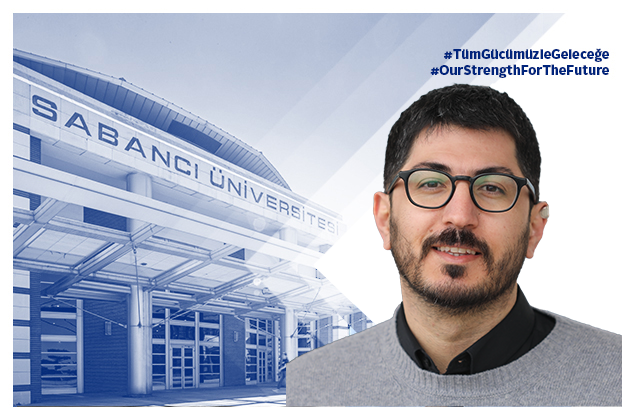
Dr. Morteza Ghorbani is a researcher and faculty member at Sabancı University's Faculty of Engineering and Natural Sciences (FENS), specializing in fluid mechanics and environmental engineering. He leads the AquaCav project, a collaborative effort with Oxford Brookes University, focused on developing sustainable water treatment solutions using hydrodynamic and acoustic cavitation. His research addresses global challenges such as PFAS pollution and wastewater management, with applications in biomedical devices and energy-efficient technologies. Key collaborations include projects funded by the International Science Partnership Fund (ISPF), leveraging his expertise in microfluidic systems and cavitation dynamics. Dr. Ghorbani's work combines experimental and numerical methods to optimize cavitation-based processes for environmental and biomedical applications. His contributions span from fundamental fluid dynamics studies to applied technologies like flexible cystoscopes and clot-on-a-chip platforms. Scientific achievements include the ISPF Research Collaboration Grant (2024) and advancements in PFAS removal, graphene exfoliation, and microalgae cultivation. His research group at Sabancı University explores interdisciplinary solutions at the intersection of engineering, nanotechnology, and sustainability.
Anne Staples is an Associate Professor in the Department of Mechanical Engineering at Virginia Tech, leading the Laboratory for Fluid Dynamics in Nature (FINLAB). Her research focuses on fluid mechanics in biological systems, medical fluid dynamics, and bioinspired engineering, leveraging computational modeling and microfluidic technologies to innovate in healthcare and engineering. Education: B.S. in Mechanical and Aerospace Engineering, Cornell University (2000) M.Eng. in Mechanical and Aerospace Engineering, Princeton University (2001) Ph.D. in Mechanical and Aerospace Engineering, Princeton University (2006) Postdoctoral Researcher at the Naval Research Laboratory (2006–2008) Research Interests: Her work spans bioinspired microfluidics, medical device design, and fluid dynamics in biological systems. Notable projects include developing pulse-driven micropumps for drug delivery and studying insect respiratory systems to inform engineering solutions. Publications: Over 50 peer-reviewed articles, focusing on topics like microfluidic systems, insect-inspired flow control, and hemodialyzer modeling. Recent work emphasizes wearable drug delivery and biomechanical innovations. Awards & Service: NIH Trailblazer Award (2024) Virginia Tech Dean’s Fellow (2023–present) Editorial Board Member, PLOS ONE and Scientific Reports (2021–present) Fulbright Scholar (2016) Grants & Collaborations: Leads a NIH-funded project to develop lightweight drug delivery devices. Collaborates with statisticians and biomedical engineers to simulate and optimize prototypes. Active in interdisciplinary teams at Virginia Tech and Georgia Tech. Labs & Teams: Directs the FINLAB, which integrates computational modeling, experimental microfluidics, and biological principles to address challenges in healthcare and environmental engineering.
Dr. Minkwan Kim is an Associate Professor at the University of Southampton's Department of Engineering and the Environment. His research focuses on advanced plasma technologies, CubeSat propulsion systems, and aerospace engineering solutions for space exploration and environmental challenges. He currently supervises seven PhD students in the fields of engineering and environmental science. Research Interests: CubeSat Propulsion Systems, Plasma Sterilization, Hypersonic Vehicle Shielding, In-Situ Resource Utilization, and Environmental Plasma Applications. His work combines experimental and computational approaches to address real-world problems such as space debris mitigation and atmospheric protection. Publications highlight innovations in plasma-driven water treatment, hypersonic magnetic shielding, and CubeSat mission design. Collaborations include projects on air sterilization systems and nanosatellite architectures. Dr. Kim has received recognition for an innovative idea addressing pandemic-related challenges through the AHSN Regional Competition (2020). Teaching responsibilities include modules like Advanced Astronautics and Spacecraft Systems Engineering. His supervision record spans diverse topics from plasma reactor design to CubeSat disposal strategies.
Prof. Sofía Calero is a Full Professor at the Eindhoven University of Technology (TU/e) and Vice Dean of the Department of Applied Physics & Eindhoven School of Education. She leads the Materials Simulation & Modelling group, focusing on computational methods for renewable energy and nanostructured materials. MSc (1995) and PhD (2000), University Complutense of Madrid Marie Curie Fellow (2001–2003), University of Amsterdam Ramón y Cajal Fellow (2004) and Full Professor (2017) at University Pablo de Olavide (Spain) Her research bridges computational physics-chemistry and industrial applications, developing force fields, algorithms, and simulation methods to reverse-engineer material properties. She specializes in adsorption , metal-organic frameworks , zeolites , and molecular simulation , contributing to SDGs like climate action and clean energy. Recent publications focus on halide perovskites , carbon dioxide capture , and nanostructured materials , with software tools like RASPA and iRASPA as key outputs. Articles span Nano Letters , Chem , and Journal of Physical Chemistry C . ERC Proof of Concept Grant (2018) Marie Curie Excellence Award (2005) Fellow of the Royal Society of Chemistry (2024) She has supervised 36 research works and taught courses like Advanced Materials Modelling and Mechanics . Her work involves collaborations with industries and institutions across Europe.
Dr. Amy Turitz is an Associate Professor of Obstetrics, Gynecology & Reproductive Sciences at Yale School of Medicine. She specializes in maternal-fetal medicine, focusing on high-risk pregnancies at Greenwich Hospital. Her research centers on preterm birth, fetal growth restriction, and obstetric complications. Dr. Turitz earned her MD from the Mount Sinai School of Medicine, completed her residency at the Hospital of the University of Pennsylvania, and her fellowship in Maternal-Fetal Medicine at Columbia University Irving Medical Center. She has been honored with multiple teaching awards for her mentorship of medical students, residents, and fellows. Education: BS in History, Wesleyan University (2005) MD, Mount Sinai School of Medicine (2009) Residency: Obstetrics & Gynecology, Hospital of the University of Pennsylvania (2013) Fellowship: Maternal-Fetal Medicine, Columbia University Irving Medical Center (2016) Research Interests: Dr. Turitz’s work explores mechanisms and interventions for preterm birth prevention, fetal growth restriction, and managing high-risk pregnancies. Her studies often involve collaborations on topics like cerclage timing, progesterone therapy, and maternal-fetal outcomes during pandemics. She emphasizes clinical translation to improve patient care. Awards: Sreedhar Gaddipati Maternal-Fetal Medicine Teaching Award (2023) APGO Excellence in Teaching Award (2020) Resident Teaching Award (2013) Labs/Teams: She co-founded the Cervix Research Working Group and was part of the Preterm Birth Prevention Center at Columbia University. Her current affiliations include the Maternal Fetal Medicine Unit at Yale.
Professor Christina Vanderwel is a Professor of Experimental Fluid Mechanics at the University of Southampton, leading the Aerodynamics and Flight Mechanics Research Group. She holds a UKRI Future Leaders Fellowship (2020-2027) and previously a Marie Curie Research Fellowship (2015-2017). Her expertise spans experimental fluid mechanics, turbulence studies, and urban air pollution modeling. She uses advanced techniques like PIV and PLIF in facilities such as wind tunnels and water tanks at Bolderwood Campus. Her research focuses on turbulent transport mechanisms, building aerodynamics, and pollution dispersion. Notable projects include simulating urban air quality and indoor ventilation systems. She has supervised four current PhD students and contributed to initiatives like the Low Carbon Comfort Centre. Awards include the Pierre Laberge Award for her PhD work (2014). Teaching includes courses on turbulence and aerodynamics. Her work bridges fundamental research with practical applications in sustainable urban design and environmental engineering.