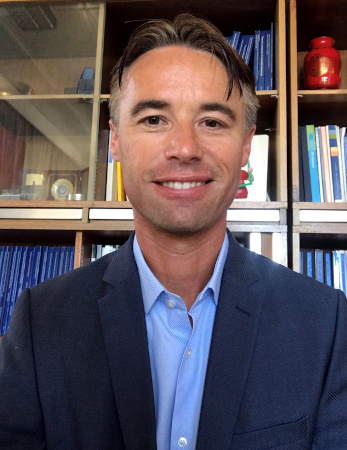
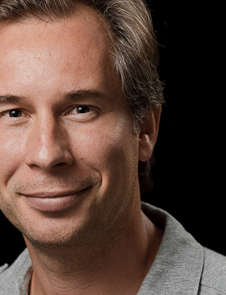
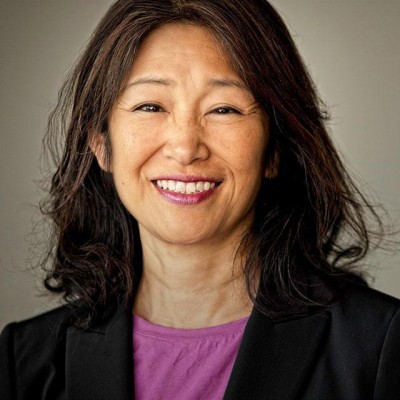
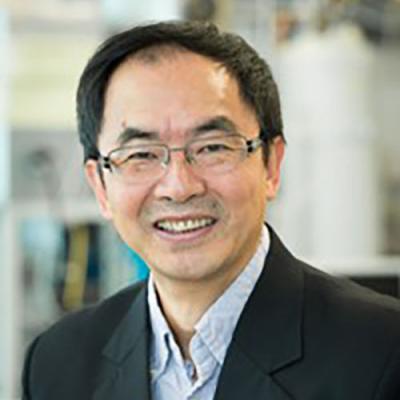
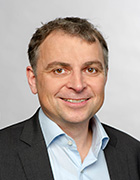
Kevin Van Geem is a full professor at Ghent University's Faculty of Engineering and Architecture, leading the Laboratory for Chemical Technology (LCT) and directing the Center of Sustainable Chemistry. His research focuses on thermochemical reaction engineering, transitioning fossil-based processes to renewable feedstocks, and integrating machine learning with chemical analysis. Director of Ghent University's pilot plants for steam cracking and chemical recycling Author of over 400 publications and founder of a spin-off company Specializes in kinetic modeling, process intensification, and sustainable chemistry His work spans chemical recycling, olefin production, and advanced analytical techniques for complex hydrocarbon mixtures. Recent articles highlight AI-driven catalysis, pyrolysis of polymers, and plasma-assisted CO2 utilization. Scientific awards include: Fulbright Research Scholar He bridges academia and industry through patented technologies and collaborative pilot-scale projects.
Arturo Macchi is a Professor in the Department of Chemical and Biological Engineering at the University of Ottawa, Faculty of Engineering. He holds a Ph.D. from the University of British Columbia, and MASc and B.Eng. degrees from the École Polytechnique de Montréal. His research focuses on multiphase reactor engineering, particularly fluidized bed systems, gas hydrates, microreactors, and CO₂ capture technologies. Collaborations include institutions like CanmetEnergy-Ottawa, NRC-ICPCE, and industry partners such as Syncrude Canada Ltd. and Lonza Inc. Key research areas include high-pressure multiphase reactors, CO₂ capture via dual fluidized beds, and microreactor design for pharmaceutical applications. His work integrates computational fluid dynamics (CFD) modeling with experimental validation to address challenges in energy efficiency, process intensification, and sustainable energy storage. Recent projects explore calcium looping processes for thermochemical storage and oxy-fuel combustion technologies. Publications highlight advancements in fluidization dynamics, bubble column hydrodynamics, and scale-up methodologies for industrial hydroprocessors. His contributions span both fundamental and applied research, bridging academic insights with industrial applications in petrochemical, environmental, and pharmaceutical sectors.
Naoko Ellis is a Professor in the Department of Chemical and Biological Engineering at the University of British Columbia, Faculty of Applied Science. Her work bridges advanced multiphase reaction engineering with pressing sustainability challenges, focusing on fluidized-bed technologies for CO₂ capture, biomass valorisation, and clean energy production. Research Interests Multiphase reaction engineering & fluidized beds CO₂ capture via calcium looping and chemical looping combustion Biomass gasification, pyrolysis, and tar mitigation Bio-oil upgrading and biochar engineering for environmental applications Engineering education innovation for sustainability literacy Recent publications (2020-2024) reveal an integrated approach combining rigorous reactor modeling, novel catalyst development, and educational scholarship. Energy and environmental engineering dominate the portfolio, with emerging use of machine-learning tools for process optimisation and extensive exploration of biochar and bauxite-residue valorisation. Scientific Recognition Guest editor for memorial special issues honouring Prof. John R. Grace (Canadian Journal of Chemical Engineering, Powder Technology, 2023-2024) Invited prefatory contributions on chemical engineering education (Canadian Journal of Chemical Engineering, 2024) Advising & Grant Landscape No specific student names or funding details were provided in the supplied text; however, the breadth of collaborative publications and education-focused papers indicates active supervision of graduate researchers and leadership in curriculum-development grants. Labs & Teams Operates within the multiphase reaction engineering laboratory environment at UBC Chemical and Biological Engineering, leveraging pilot-scale fluidized-bed facilities and advanced analytical instrumentation for thermochemical conversion studies.
Dr. Yasemin Dilşad Yılmazel is an Associate Professor in the Department of Environmental Engineering at Middle East Technical University (METU) in Ankara, Turkey, with a concurrent position as Assistant Professor at Rochester Institute of Technology. She earned her PhD from Villanova University in 2014 and has built a distinguished career in environmental biotechnology. Her educational background includes: Ph.D. in Civil and Environmental Engineering from Villanova University (2014) M.S. in Environmental Engineering from Middle East Technical University (2009) Dual B.S. degrees in Chemical Engineering and Environmental Engineering from Middle East Technical University (2007-2008) Dr. Yılmazel's research focuses on developing innovative bioprocesses that integrate anaerobic digestion with bioelectrochemical systems for sustainable wastewater management and bioenergy production. Her work with hyperthermophilic microorganisms represents a unique niche in the field, as these high-temperature processes offer advantages over conventional mesophilic systems. She investigates microbial electrochemical processes, biohydrogen production, environmental microbiology, and nutrient recovery from waste streams. Her laboratory work spans from fundamental microbial studies to applied engineering solutions for real-world environmental challenges. Her publication record demonstrates consistent contributions to the fields of bioelectrochemical systems and anaerobic digestion, with a particular emphasis on utilizing hyperthermophilic microorganisms for enhanced biohydrogen and biomethane production. Recent publications focus on carbon-based conductive materials for enhancing biomethane recovery, nutrient recovery through struvite precipitation, and the role of electroactive microorganisms in anaerobic processes. Her scientific achievements have been recognized through several awards: Grant Writer's Boot Camp, Rochester Institute of Technology University (2017) Honorable Mention, Link Foundation Energy Fellowship (2012) A&WMA Graduate Student Scholarship (2010) M.Sc. Scholarship from TÜBİTAK (2007-2009) First-ranking Graduate in Environmental Engineering at METU (2007) Dr. Yılmazel actively mentors a diverse group of students, including PhD candidates, MSc students, and undergraduates. Her research group BIOERG has secured substantial funding from organizations including TÜBİTAK, METU, and international partners. Current projects focus on utilizing electrostatically flocked electrodes for hydrogen and methane production, enhanced biohydrogen production from agro-industry wastes, and sustainable urbanization through innovative technologies. She also serves as a board member at METU's Climate Center, contributing to national sustainability initiatives. Her laboratory, the Bioprocess Engineering Research Group (BIOERG), conducts cutting-edge research on bioenergy systems, with particular expertise in integrating anaerobic digestion and bioelectrochemical systems for more efficient methane production from agro-wastes. The group investigates the utilization of hyperthermophilic microorganisms for biohydrogen production and studies the role of direct interspecies electron transfer in anaerobic processes.
Barış Çallı is a Professor at the Department of Environmental Technology, Faculty of Engineering, Marmara University (Turkey). He earned his Ph.D. in Environmental Technology from Boğaziçi University (2003) and received the Marie Curie Intra European Fellowship (2006) for his work on fermentative hydrogen production in Belgium. Since 2008, he has served as a full-time professor, leading 20 research projects focused on environmental bioprocesses, anaerobic digestion, biogas technology, resource recovery, and solid waste management. Ph.D. in Environmental Technology, Boğaziçi University (2003) Marie Curie Intra European Fellowship (2006) His research integrates bioprocess engineering with sustainable waste management, emphasizing biogas production, membrane technologies, and circular economy principles. Recent publications (2025-2021) address energy-neutral wastewater treatment, heavy metal recovery from sludge, and VFA-driven fermentation. Key subfields include anaerobic digestion , bioleaching , membrane reactor design , and agricultural waste valorization . Marie Curie Intra European Fellowship (2006) With 116 WoS publications and an H-index of 33 (Scholar), he has supervised 17 thesis advisories and contributed to 20 projects. His work aligns with UN Sustainable Development Goals (6, 7, 11, 12).
Xiaotao Bi is a Professor in the Department of Chemical and Biological Engineering at the Faculty of Applied Science, University of British Columbia. He is a Fellow of The Canadian Academy of Engineering, recognized for his significant contributions to the field of chemical engineering, particularly in biomass energy systems and environmental technologies. Dr. Bi's research focuses on developing environmental systems analysis and life cycle assessment tools to model and evaluate biomass energy systems. His work encompasses Canadian wood pellets, animal wastes, agricultural residues, and integrated impacts assessment of various biomass conversion processes including combustion, gasification, torrefaction, and pelletization. Current research interests include electrostatic charging of dielectric particles in gas-solids fluidized beds, dual fluidized bed for biomass steam gasification, and novel i-CFB reactors for catalytic NOx reduction. His extensive publication record demonstrates expertise across multiple domains of sustainable energy and environmental engineering. Recent work shows a strong emphasis on biomass conversion technologies, particularly microwave-assisted processes, fluidized bed systems, and waste valorization. There's a clear trend toward developing more efficient and environmentally friendly processes for converting various biomass feedstocks into energy and valuable products, with particular attention to addressing technical challenges like tar formation in gasification and electrostatic issues in particle handling. Dr. Bi has been recognized with the prestigious honor of being named a Fellow of The Canadian Academy of Engineering, which acknowledges his significant contributions to engineering research and practice in Canada. As a research leader, Dr. Bi has supervised numerous graduate students and secured funding for his research team to investigate innovative approaches to biomass conversion and environmental engineering challenges. His work bridges fundamental research with practical applications for sustainable energy systems. Dr. Bi leads a research team focused on developing advanced technologies for biomass conversion and environmental protection. His laboratory facilities likely include specialized equipment for fluidized bed operations, biomass processing, and analytical tools for characterizing biofuels and byproducts.
Markus Schubert is Professor of Process Engineering at Dresden University of Technology's Faculty of Mechanical Science and Engineering, appointed in September 2022. Previously, he served as Group Leader for Fluid Process Engineering at Helmholtz-Zentrum Dresden-Rossendorf's Institute of Fluid Dynamics (2017-2022) and led the 'Mehrphasenreaktoren' group (2012-2016). His academic background includes: Doctorate (summa cum laude) in Mechanical Science and Engineering, Technische Universität Dresden (2007) Studies in Process Technology and Engineering, Technische Universität Dresden (1997-2003) Professor Schubert's research centers on multiphase flow phenomena and reactor innovation, with expertise spanning bubble column hydrodynamics, distillation tray efficiency, and advanced reactor systems including rotating and foam-based designs. His experimental and computational work addresses mass transfer optimization and flow pattern characterization in complex industrial processes. Analysis of his 2009-2023 publications reveals consistent focus on multiphase flow visualization and reactor design, particularly using X-ray tomography (ERC XFLOW project) and CFD modeling for distillation and bubble column systems. Key trends include the integration of advanced imaging techniques with process optimization for separation efficiency. His scientific recognition includes: ERC Grant for XFLOW project (Ultrafast X-ray tomography of turbulent bubble flows, 2013-2016) Professor Schubert has secured competitive research funding including the ERC grant and led international collaborations at institutions like Université Laval and UNSW. His work bridges fundamental hydrodynamics with industrial applications in chemical and process engineering. He currently leads process engineering research at TU Dresden, building on his leadership of the Fluid Process Engineering group at HZDR where he directed experimental facilities for multiphase flow characterization and reactor development.
Prof. Dr.-Ing. Matthias Gaderer is a Professor of Renewable Energy Systems at the TUM Campus Straubing, Technical University of Munich. His research focuses on energy systems for heat, electricity, and fuels, with a particular emphasis on biomass, solar, and geothermal energy applications. He leads projects in combustion technologies, low-emission systems, and decentralized energy systems. Gaderer holds a doctorate from TUM and has extensive industry experience in process engineering. His work includes establishing applied biomass research at the Bavarian Center for Applied Energy Research and leading the research group 'Thermal Use of Biomass in High-Temperature Processes.' He is actively involved in committees such as the Scientific Committee of CEBC and Bavarian Science Forums. His teaching includes courses on energy systems and biomass utilization. Key projects include Reverion GmbH, FlexBioNeuro, and H2 real-world laboratory initiatives. Education: Process Engineering from TU Graz and KTH Stockholm. Research interests span thermochemical gasification, combustion technologies, and energy economics. His publications emphasize biomass gasification, hydrogen production, and sustainable energy systems. He collaborates on EU-funded projects like E2Fuels and leads teams in developing innovative energy solutions.
Dominic Pjontek is an Associate Professor in the Department of Chemical and Biochemical Engineering within the Faculty of Engineering at Western University. He is based in Room 377 of the Thompson Engineering Building and serves as an active researcher and educator in multiphase reactor engineering. His work is conducted both on the Western University campus and at the Institute for Chemicals and Fuels from Alternative Resources (ICFAR), a specialized facility for sustainable technology development. Dr. Pjontek received his Ph.D. and B.A.Sc. in Chemical Engineering from the University of Ottawa, where he earned multiple prestigious scholarships including the NSERC Postgraduate Scholarship for Doctoral Studies and the University of Ottawa Excellence Scholarship for Graduate Studies. His research focuses on the development and optimization of multiphase reactors through experimental studies, process modeling, and scale-up considerations. Key research areas include CO 2 conversion/utilization using gas-liquid-solid reactors, fundamental understanding of interfacial area and flow behavior in multiphase reactors, and innovative sustainable technologies for converting waste streams to value-added products. His work addresses critical technological barriers in developing next-generation reactors for sustainable chemical production. Analysis of Dr. Pjontek's recent publications reveals a strong trend toward carbon dioxide conversion technologies, fluid coker optimization, and sustainable process development. His research group has published extensively on gas-liquid-solid fluidized beds, reactor fouling mechanisms, and CO 2 hydrogenation processes, with increasing focus on sustainable chemical production methods that align with global decarbonization efforts. Scientific Awards and Recognitions: R. Mohan Mathur Award for Excellence in Teaching (2018) Maurice Bergougnou Teaching Award for Heat Transfer Operations (2015-2018) NSERC Postgraduate Scholarship for Doctoral Studies Multiple University of Ottawa Excellence Scholarships NSERC Canada Graduate Scholarship for Master's Studies Dr. Pjontek actively supervises numerous graduate students working on cutting-edge projects related to multiphase reactor engineering. His research group includes multiple Ph.D. and M.E.Sc. students working on projects such as CO 2 conversion to commodity chemicals, biosurfactant production, fluid coker heater modifications, and stripper shed fouling monitoring. He has successfully graduated numerous students who have completed theses on topics including fluid coker cyclone fouling, hydrodeoxygenation processes, and particle agglomeration phenomena. His research is supported through collaborations with industry partners like Syncrude Canada Ltd. and Origin Materials, as well as government funding agencies. Dr. Pjontek's laboratory work is conducted within the Chemical and Biochemical Engineering facilities at Western University, with specialized equipment for studying multiphase reactor systems. His research group maintains collaborations with other faculty members including Cedric Briens, Lars Rehmann, and Jose Herrera, forming a strong research cluster focused on sustainable process engineering and reactor technology development.
Leteng Lin is a Senior Lecturer at the Department of Built Environment and Energy Technology, Faculty of Technology, Linnaeus University. He holds a PhD in Chemical Engineering (2013), Master's (2005), and Bachelor's (2002) degrees from the same field. His research focuses on energy technology, chemical engineering, and sustainable resource utilization, particularly in combustion, gasification, and pyrolysis processes for biomass and waste feedstocks.
James A. Ritter is a Carolina Distinguished Professor and the L. M. Weisiger Professor of Engineering in the Department of Chemical Engineering at the University of South Carolina's Molinaroli College of Engineering and Computing, where he also holds the Gibbons Teaching Professorship. With over 171 peer-reviewed articles and 8 U.S. patents, his work centers on advancing cyclic adsorption technologies for industrial applications. Education: Ph.D., State University of New York at Buffalo, 1989 M.S., State University of New York at Buffalo, 1985 B.S., State University of New York at Buffalo, 1983 Research Focus: Professor Ritter's pioneering work spans gas separation, hydrogen storage, and carbon capture through pressure swing adsorption (PSA) and temperature swing adsorption (TSA). His research integrates fundamental adsorption science with practical process development, emphasizing structured adsorbents, novel modeling techniques, and experimental characterization of mass transfer dynamics. This work addresses critical energy and environmental challenges including CO 2 capture and naval fuel production. Publication Trends: Recent publications (2023-2025) demonstrate consistent innovation in cyclic adsorption processes, with emphasis on structured adsorbent design, advanced modeling (particularly kinetically limited linear driving force approaches), and experimental techniques for dynamic condition analysis. Key application areas include carbon capture at national facilities, naval ammonia production, and fundamental gas separation mechanisms using carbon molecular sieves. Scientific Recognition: AIChE Institute Award for Excellence in Industrial Gases Technology (2016) Fellow of the American Chemical Society (2012) Fellow of the American Institute of Chemical Engineers (2013) Fellow of the International Adsorption Society (2023) Professional Impact: Professor Ritter has consulted for over 40 organizations including NASA MSFC, ExxonMobil, Shell, and DOE, with current research funded by ONR and DOE. As Editor-in-Chief of Adsorption (since July 2024) and former Associate Editor (2021-2024), he shapes the field's scholarly discourse while leading collaborative projects with national laboratories and industry partners. Research Infrastructure: His work leverages university facilities at USC and partnerships with the National Carbon Capture Center, focusing on bench-scale to pilot-scale validation of adsorption processes for energy and environmental applications.
Dr. Mehdi Jafarian is a Senior Lecturer in the School of Chemical Engineering at the University of Adelaide . His work focuses on hydrogen production , CO2 capture , solar thermal energy , and chemical looping combustion . Key research areas include: Solar thermal integration in industrial processes Hydrogen generation via methane pyrolysis CO2 sequestration technologies Advanced water treatment systems Thermochemical energy storage Research Trends : Recent publications emphasize hydrogen production optimization , PFAS removal , and molten metal reactor systems . Sub-fields span flash reactor modeling , hydrodynamic cavitation , and membrane-free electrolysis . Contact : mehdi.jafarian@adelaide.edu.au
Andrew Sowinski serves as Associate Professor and Vice-dean of Programs at the School of Engineering Design and Teaching Innovation within the Faculty of Engineering at the University of Ottawa. Holding a Ph.D. from the University of Ottawa, his office is located in STE 1024Q with contact details including phone 613-562-5800 ext. 6288 and email sowinski@uOttawa.ca. Education: Ph.D. from University of Ottawa His research spans two primary domains: electrostatic phenomena in gas-solid systems and engineering education innovation. In electrostatics, he investigates contact electrification mechanisms in polyethylene fluidized beds, particle charging dynamics, reactor wall fouling, and pneumatic conveying systems, employing both experimental and computational (CFD) approaches. His education research focuses on developing non-traditional multidisciplinary design programs within conventional engineering faculties, addressing curriculum design, student recruitment, and assessment methodologies. Analysis of his 2021-2025 publications reveals consistent dual-focus work: electrostatics research emphasizes charge generation/mitigation in industrial polymerization processes, while education studies explore structural and implementation challenges of cross-disciplinary programs. His electrostatics work frequently combines particle-level charging experiments with system-level CFD modeling, while education publications document practical frameworks for program development amid traditional faculty structures. Scientific Awards: No scientific awards were documented in provided materials Advising and Grants: Specific details regarding graduate students, research grants, or funding sources were not disclosed in the source documentation, though his program leadership role as Vice-dean of Programs suggests significant administrative responsibilities in curriculum development and resource allocation.
Lasse Heikkinen is a Senior Lecturer at the Department of Technical Physics, Faculty of Science, Forestry and Technology, University of Eastern Finland. His work spans applied physics, process tomography, and educational technology, with a focus on innovative teaching methods like flipped classrooms during the pandemic. Current Role: Deputy Head of Department, Senior University Lecturer Research Themes: Electrical impedance tomography for industrial processes, flipped teaching frameworks, and physics education adaptation to remote learning. Recent publications highlight his dual expertise in process tomography (gas-solid flows, pharmaceutical monitoring) and pedagogical innovation (learning analytics, flipped classrooms). He has contributed to educational manuals and toolkits for teacher training. Key Projects: Technology education infrastructure development (2015–2024), pandemic-era teaching adjustments (2022). Collaborations: Active in international process tomography conferences and multidisciplinary teams like the Ameba project.
E.A. Bramer is an Assistant Professor at the Thermal Engineering group (ET-TFE-TE) within the Faculty of Engineering Technology (ET) at the University of Twente. With a career spanning since 1983, their expertise focuses on thermal conversion processes of coal, biomass, and industrial waste, including combustion, gasification, and pyrolysis technologies. Specialized in NOx formation/destruction during fluid bed combustion Developed patented Rotational Particle Separator (RPS) and PyRos reactor Conducted thermal separation research for green biofuels and material recovery Coordinates master courses in Energy from Biomass and Process Equipment Design Current research emphasizes cyclonic pyrolysis reactors and sustainable energy systems, with hands-on supervision of bachelor, master, PdEng, and PhD students in thermal engineering projects. Based at Horst Complex N246, they combine experimental work on pilot-scale pyrolysis plants (50 kg/hr throughput) with educational responsibilities across energy sustainability domains.