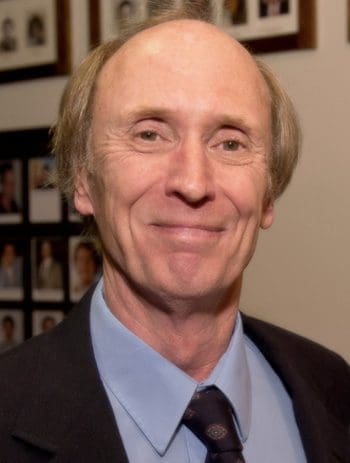
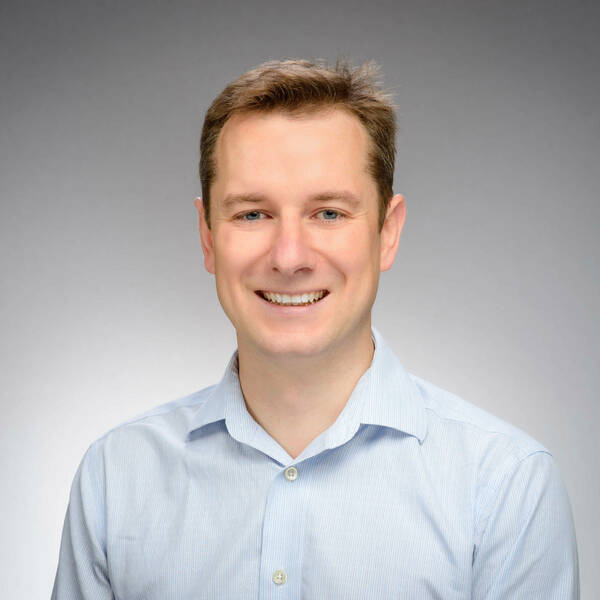
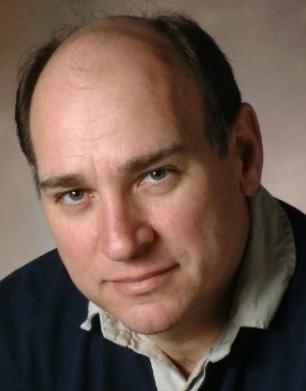
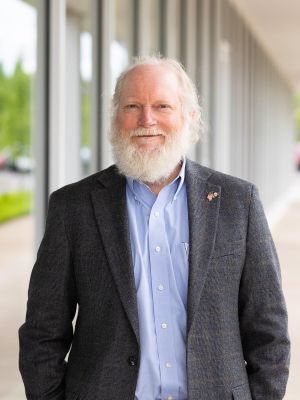
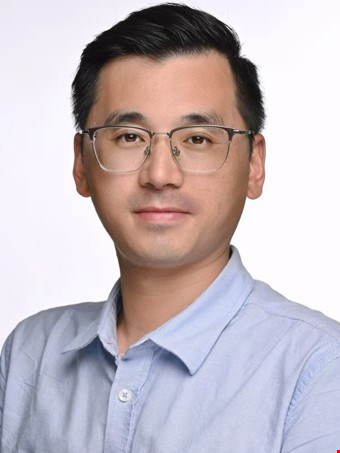
Dr. Peter L. Olson is a Research Professor at Johns Hopkins University's Department of Earth and Planetary Sciences. His research examines Earth's deep interior dynamics including core-mantle interactions, geomagnetic field generation, and planetary evolution processes. Research Focus: Combines theoretical models, numerical simulations, and laboratory experiments to study core dynamics, geodynamo processes, and mantle convection. Current investigations include the slow carbon cycle and polar ice shelf dynamics through interdisciplinary collaborations. Publications: Recent work explores geomagnetic reversal mechanisms, core-mantle boundary interactions, and planetary dynamo diversity using advanced computational models and fluid dynamics experiments. Education: Ph.D. from University of California, Berkeley
Alan Kaptanoglu is a Professor leading the Plasma Physics Group at New York University's Courant Institute. His research focuses on the intersection of applied mathematics, scientific machine learning, and nuclear fusion. He develops theoretical and computational tools for plasma modeling, control, and optimization in complex dynamical systems. Key areas include stellarator design optimization, machine learning-driven MHD simulations, and reactor-scale plasma confinement solutions. His work advances fusion energy research through innovations in magnetic field shaping, coil optimization, and data-driven modeling of plasma behavior. Research interests span plasma turbulence analysis, magnetohydrodynamics, and the application of physics-informed neural networks (PINNs). He explores how magnetic geometry influences plasma stability and turbulence using machine learning techniques. His team addresses challenges in fusion reactor design, such as minimizing Lorentz forces in electromagnetic coils and optimizing permanent magnet configurations for stellarators. Recent work emphasizes data-driven methods for discovering interpretable models in fluids and plasmas, including reduced-order modeling and sparse regression approaches. He collaborates on projects like the DIII-D tokamak and ITER, advancing fusion energy solutions through interdisciplinary computational and experimental efforts. His group's contributions bridge plasma physics with advanced mathematics and machine learning to tackle grand challenges in energy and astrophysical systems. Advising and grants are not explicitly detailed in the provided texts, but his leadership role suggests active mentorship in graduate research. The NYU Plasma Physics Group serves as a hub for cutting-edge research, hosting internships, summer schools, and collaborations with industry/academic partners.
Philbert Tsai is an Associate Teaching Professor in the Department of Physics at the University of California, San Diego (UCSD). He has held roles as QBio Lab Coordinator/Project Scientist (2015–Present) and Associate Project Scientist (2011–2015), overseeing advanced laboratory setups and bio-imaging research projects. His work focuses on neurovascular systems, microscopy techniques, and cortical blood flow dynamics. Education: Ph.D., Physics, UC San Diego, 2004 Research Interests: Quantitative analysis of cortical microvascular networks Development of ultra-high-resolution imaging systems (e.g., STED, two-photon microscopy) Neurovascular coupling mechanisms and their impact on brain oxygen supply Biomedical engineering applications in neuroscience research Lab & Projects: QBio Lab: Advanced instrumentation including confocal microscopes, 3D printers, and wet-lab equipment Developed vectorized models of mouse brain vasculature and ultra-wide-field multiphoton imaging systems Grants & Awards: No specific awards listed in provided text Collaborations: Worked extensively with colleagues like Dr. David Kleinfeld and Dr. Berislav Zlokovic on neurovascular projects.
Alan Lindsay is an Associate Professor in the Department of Applied and Computational Mathematics and Statistics (ACMS) at the University of Notre Dame, within the College of Science. He holds a Ph.D. from the University of British Columbia (2010) and a B.S. from the University of Edinburgh (2005). His research focuses on computational and analytical methods for partial differential equations (PDEs) modeling physical and biological systems, including Micro-Electromechanical Systems (MEMS), mathematical ecology, imaging, and inverse problems. His email is a.lindsay@nd.edu, and he is based in Crowley Hall. Education: Ph.D., Applied Mathematics, University of British Columbia, 2010 B.S., Mathematics, University of Edinburgh, 2005 Research Interests: Applied Partial Differential Equations Numerical Methods for PDEs Mathematical Biology and Biophysics Scientific Computing and Simulation MEMS and Micro-Electromechanical Systems Mathematical Modeling of Biological Processes Recent Research Trends: Lindsay’s work emphasizes computational techniques like boundary integral methods, kinetic Monte Carlo simulations, and bifurcation analysis to study diffusion processes, first passage times, and pattern formation in biological and physical systems. His studies bridge theoretical analysis and practical applications, such as optimizing T cell antigen recognition and modeling moth mating strategies. Grants & Advising: While no students are listed, his research is supported by grants in computational mathematics and biological modeling. His work often involves interdisciplinary collaborations with biologists and engineers. Labs/Teams: His research is conducted within the ACMS department, leveraging Notre Dame’s computational infrastructure.
Dr. Tobias Grafke is Associate Professor of Mathematics at the University of Warwick, specializing in applied and computational mathematics. His research develops tools to analyze stochastic systems in fluid dynamics, climate science, and active matter. Current projects focus on predicting rare events like AMOC collapse and turbulence proliferation using large deviation theory and numerical methods. Recent articles (2023-2025) investigate noise-induced climate tipping points, rogue wave mechanics, and scalable algorithms for stochastic PDEs. Grants include an EPSRC New Investigator Award (2020) and NSF/EPSRC joint funding. Teaches MA3J4 (Mathematical Modelling with PDE) and MA2K4 (Numerical Methods).
Soledad Villar is an Assistant Professor in the Department of Applied Mathematics and Statistics and a member of the Mathematical Institute for Data Science at Johns Hopkins University. She also contributes to the Data Science and AI Institute . Her research focuses on computational methods for extracting information from data, emphasizing optimization for data science, machine learning, equivariant representation learning, and graph neural networks. Dr. Villar holds a PhD in Mathematics from the University of Texas at Austin and has been a research fellow at New York University and the Simons Institute at UC Berkeley. Her work bridges theoretical foundations with practical applications in fields like scientific computing and political analysis. Awards include the National Science Foundation CAREER Award (2024). Her research has addressed topics such as gerrymandering detection, fluid dynamics modeling, and graph representation learning. She collaborates on interdisciplinary projects and organizes academic events like the One World MINDS Seminar and the Cibercoloquio Latinoamericano de Matemáticas . Her research interests span computational methods, equivariant machine learning frameworks, and graph neural networks, with applications in physics, engineering, and data-driven decision-making. She actively engages in advancing machine learning techniques for scientific and engineering challenges.
Sinisa Krajnovic is a Professor of Computational Fluid Dynamics and Head of the Department of Mechanics and Maritime Sciences at Chalmers University of Technology. His research focuses on vehicle aerodynamics, bluff-body flows, and time-dependent numerical simulations, particularly in ground vehicle flows (trains, cars, buses) and high-speed train dynamics. He leads studies on flow control mechanisms, bi-stable wake phenomena, and turbulence modeling using advanced CFD techniques like LES and PANS. Recent work emphasizes active flow control optimization, snow-resistance performance of bogies, and aerodynamic interactions in platoons. His 247+ publications span topics including high-speed train aerodynamics, ship airflow control, and bluff-body wake dynamics. Collaborations involve experimental validation and industrial applications in rail and marine transportation.
Ameya Jagtap is an Assistant Professor (Tenure-Track) in the Department of Aerospace Engineering at Worcester Polytechnic Institute (WPI), USA. Prior to this, he served as an Assistant Professor of Applied Mathematics (Research) at Brown University from 2021 to 2024. He holds a Ph.D. and M.E. in Aerospace Engineering from the Indian Institute of Science (IISc), and completed postdoctoral research at TIFR-CAM (India) and Brown University's Division of Applied Mathematics. His research bridges mechanical/aerospace engineering, applied mathematics, and computation, focusing on scientific machine learning algorithms that integrate data and physics. Key areas include physics-driven deep learning, uncertainty quantification, multi-scale simulations, and novel neural network architectures like quantum and graph networks. He serves on editorial boards for Neural Networks , Neurocomputing , and others. His work emphasizes interpretable neural operators for PDE solutions, domain decomposition methods, and adaptive activation functions to enhance PINN convergence. Notable contributions include XPINNs (extended physics-informed neural networks) and causal sweeping frameworks for PDEs. His research has been widely cited, particularly for PINN applications in supersonic flows and high-dimensional PDEs. Jagtap has delivered invited talks at institutions like Los Alamos National Laboratory, Tsinghua University, and the Alan Turing Institute. He is also recognized as a Top 2% World Scientist by Stanford University.
Septimiu (Tim) E. Salcudean is a Professor in the Department of Electrical and Computer Engineering at the University of British Columbia (UBC), holding both the Laszlo Chair in Biomedical Engineering and a Canada Research Chair. He earned his BEng and MEng from McGill University and his PhD from UC Berkeley in Electrical Engineering. From 1986 to 1989, he was a Research Staff Member at IBM T.J. Watson Research Center's robotics group before joining UBC. Education: BEng (McGill University, 1979) MEng (McGill University, 1981) PhD (University of California at Berkeley, 1986) Dr. Salcudean's research focuses on Medical Robotics , Image-Guided Interventions , and Elastography applications . He develops systems for robot-assisted surgery with da Vinci integration and ultrasound vibro-elastography for tissue parameter identification. His work spans prostate brachytherapy guidance , needle insertion simulation , and haptic interfaces for virtual environments. His research projects include Medical robotics with da Vinci system integration Ultrasound vibro-elastography for tissue analysis Needle insertion simulation in deformable tissue Prostate brachytherapy treatment planning His publications demonstrate expertise in Robotics and control systems Medical imaging and segmentation Teleoperation and haptics Scientific Awards: NSERC Synergy Award (2009) IEEE Fellowship (2004) UBC Killam Research Prize (2004) PRECARN Research Excellence Award (2008) Best Paper Awards (2004, 2003, 1999) As Technical/Editorial Board member of IEEE Transactions on Robotics and steering committee member at IPCAI , he contributes to academic leadership. He has supervised numerous graduate students in projects ranging from medical ultrasound to needle steering systems , with funding from NSERC, CIHR, and NIH. The Robotics and Control Laboratory at UBC, which he co-leads, houses advanced equipment including 5-DOF haptic interfaces, ultrasound machines, and motion simulators for medical and industrial applications.
Lina von Sydow is a Professor in Computational Science at Uppsala University's Department of Information Technology. She serves as Section Dean for the Mathematical-Computer Science Section since July 2023. Her academic journey includes becoming an Associate Professor in 2000, Senior Lecturer since 1997, and leading the Department of Information Technology from 2018 to 2023. PhD in Domain Decomposition Methods (1995, Uppsala University) Postdoctoral Fellow at Oxford University (1996-1997) Her research spans computational science with dual focuses on Computational Finance and Ice Sheet Modeling . In finance, she develops numerical methods for option pricing using PDEs, radial basis functions, and stochastic volatility models. In climate science, she contributes to ice sheet dynamics through full Stokes models and adaptive time-stepping approaches, particularly in simulating grounding line migration. Recent publications (2025) address gender disparities in IT education, including comparative analysis of admission trends and intervention studies to boost female enrollment. Earlier works (2020-2015) focus on high-order finite difference methods for financial derivatives, BENCHOP benchmarking projects, and preconditioning techniques for PDEs. Scientific awards include Excellent Teacher (2013) She actively collaborates on educational reforms, co-authoring studies like Gender-aware course reform in Scientific Computing (2013). Her leadership roles include Head of Department (2018-2023) and Section Dean (2023-present), influencing academic governance and interdisciplinary research. Labs and teams: Works with Uppsala University's Computational Science group, Elmer/ICE project collaborators (e.g., Per Lötstedt, Gong Cheng), and international partners in numerical finance and climate modeling.
Dr. Flávia Moreira De Sousa is a Tenure-Track Assistant Professor at the Department of Pharmaceutical Technology and Biopharmacy, Groningen Research Institute of Pharmacy, University of Groningen. With a pharmacy background and a Ph.D. in Biomedical Sciences from the University of Porto, she completed postdoctoral research at Imperial College London, a Marie Curie MINDED fellowship at Istituto Italiano di Tecnologia (2021-2022), and a WINS fellowship at Adolphe Merkle Institute. Ph.D. in Biomedical Sciences, University of Porto, Portugal Postdoctoral Researcher, Imperial College London Marie Curie MINDED Fellowship, Italy WINS Research Fellowship, Switzerland Her research pioneers biological nanotherapies for brain cancer, focusing on anti-angiogenic monoclonal antibody encapsulation to normalize glioblastoma vasculature and develop cancer nanovaccines. Her work spans Nanomedicine , Drug Delivery , and Tumor Microenvironment engineering, with recent publications analyzing β-carotene nanocarriers (2025), glioblastoma nanovaccination strategies (2024), and cytokine-based immunotherapy (2024). Scientific recognition includes 13 international awards and over 1800 citations (H-index 24). Key grants: Fulbright Program Marie Sklodowska-Curie Fellowship MIT Innovators Under 35 Female Science Talents initiative She collaborates across disciplines with teams at Imperial College London, Istituto Italiano di Tecnologia, and Adolphe Merkle Institute, contributing to UN Sustainable Development Goals through biomedical innovation.
Stephen Eubank serves as Professor of Biocomplexity and Professor of Public Health Sciences at the University of Virginia, where he holds a tenured position in the Department of Public Health Sciences and acts as deputy director of the Biocomplexity Institute. His work bridges computational modeling, epidemiology, and complex systems theory with significant contributions to large-scale simulation frameworks. Eubank's educational background includes: B.A. in Physics from Swarthmore College (1979) Ph.D. in Physics from the University of Texas at Austin (1986) Postdoctoral Associate in Fluid Turbulence at La Jolla Institute (1987) Postdoctoral Associate in Nonlinear Dynamics at Los Alamos National Laboratory (1991) His research centers on simulating socio-technical systems and computational epidemiology, with particular expertise in network structure dynamics and scaling phenomena. Eubank investigates how disease transmission and other diffusive processes interact with underlying network topologies, developing advanced simulation technologies for modeling realistic population behaviors. His work integrates physics-based approaches with public health applications through the Urban Infrastructure Suite framework. Eubank maintains an active research leadership profile as Principal Investigator for a key research group within the National Institutes of Health's MIDAS network. His career includes founding Prediction Company for market time-series analysis and serving as Visiting Scientist at ATR Kyoto for natural language processing research. As deputy director of the Biocomplexity Institute, Eubank leads the Urban Infrastructure Suite initiative—a collection of interoperable simulations modeling individual behaviors across entire urban regions. This work integrates physical infrastructure networks with social dynamics to model complex system interactions, building on his earlier TRANSIMS and EpiSims projects developed during his tenure at Los Alamos National Laboratory.
Professor Xinyan Wang is a leading academic at Brunel University London, affiliated with the College of Engineering, Design and Physical Sciences and the Department of Mechanical and Aerospace Engineering. He serves as a Principal Editor for Fuel (Elsevier) , editorial board member for multiple journals, and committee member for Hydrogen Europe Research and UK Chinese Society of Automotive Engineering. PhD, Power Machinery and Engineering, Tianjin University MSc, Power Machinery and Engineering, Tianjin University BEng, Thermal Energy and Power Engineering, Jiangsu University His research focuses on low-carbon fuel technologies for internal combustion engines, including hydrogen/ammonia combustion, biofuels, and nanobubble applications. He develops advanced hybrid electric systems and specializes in engine design optimization for alternative fuels. His work spans experimental investigations, computational modeling (CFD/MD/Chemkin), and optical diagnostics of combustion processes. Recent publications (2024-2025) highlight trends in hydrogen combustion analysis, nanofluid applications, dual-fuel strategies, and 2-stroke engine optimization. Key themes include emission reduction, ignition process decoupling, and integration of machine learning with molecular simulations for fuel characterization. UKRI Future Leaders Fellowship (2020) Editorial roles at Fuel , Highlights of Vehicles , and MDPI journals BSI committee member for fine bubble technology He supervises research on topics including zero-carbon fuel combustion, numerical simulations (chemical kinetics, CFD), and optical diagnostics for spray/combustion analysis. His teaching includes vehicle propulsion systems and major engineering projects at undergraduate/graduate levels.
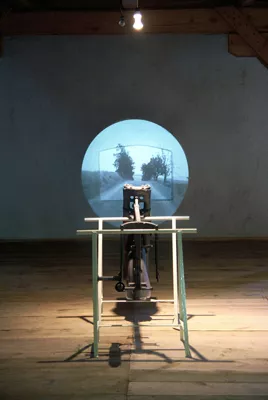
Patrik Kovačovský is a Professor and Studio Manager at the Department of Sculpture, Object, Installation at the Academy of Fine Arts in Bratislava. He works at the intersection of sculpture, architecture, and digital space, focusing on innovative artistic research and practice. Academy of Fine Arts in Bratislava (Department of Sculpture, 1990–1996) Art.D. studies, Academy of Fine Arts, 2001–2003 His research integrates traditional sculpture with virtual reality and architectural contexts, producing installations that explore memory, cosmic themes, and cultural identity. Recent works include Fluid Pictures (2011) and Kosmos (2006). 1996 Young Artist of the Year, Slovak National Gallery 2000 Annual Award, Galéria Klatovy/Klenová 2008 Visegrad Artist Residency 2010 Prohelvetia Residency in Zurich
François Goulette is a Professor and Deputy Director of the Computer Science and Systems Engineering Unit (U2IS) at ENSTA Paris, part of Institut Polytechnique de Paris. His research focuses on 3D point cloud processing, LiDAR perception, and autonomous systems within the Robotics Center (CAOR). His primary research interests lie in 3D point cloud processing , LiDAR perception , and autonomous systems . His work spans fundamental algorithm development to practical applications in autonomous driving, cultural heritage digitization, and robotics. He has made significant contributions to domain generalization of LiDAR perception, semantic segmentation of 3D point clouds, and point cloud registration techniques. The analysis of his recent publications reveals a strong focus on domain generalization for LiDAR perception systems, with multiple papers addressing challenges in 3D semantic segmentation across different environments. His work combines multi-scale architectures , unsupervised learning , and dataset creation to advance the state-of-the-art in autonomous systems perception. The research spans both theoretical algorithm development and practical applications in urban environments. François Goulette leads research activities within the Robotics Center (CAOR) at ENSTA Paris. His team develops advanced techniques for 3D environment understanding, with applications in autonomous vehicles, cultural heritage preservation, and industrial robotics. The research combines computer vision, machine learning, and robotics to solve challenging problems in 3D perception and scene understanding.