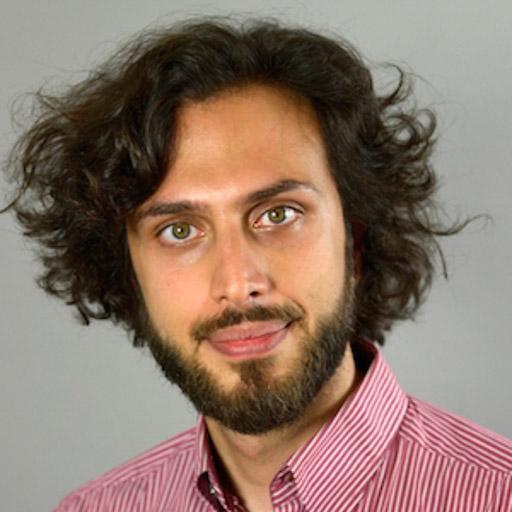
Dr. Andreas Zöttl is a physicist affiliated with the University of Vienna , currently serving as an Assistant Professor in the Computational and Soft Matter Physics department. His research focuses on computational modeling of active matter, microswimmers, and polymer dynamics, with applications in biophysics and soft materials. He teaches courses such as Computational Statistical Mechanics and Biological Physics , emphasizing theoretical and computational methods. His recent work explores reinforcement learning in microswimmer locomotion, chiral particle dynamics, and polymer behavior under shear flow. Research keywords include Machine Learning , Fluid Dynamics , and Soft Matter Physics . Themes span hydrodynamic interactions , active colloids , mesoscale simulations , and non-equilibrium systems . Contact: andreas.zoettl@univie.ac.at
Ming-Jun Lai is a Professor in the Department of Mathematics at the University of Georgia. His career spans decades, focusing on multivariate splines, sparse solutions of linear systems, wavelet theory, and their applications in numerical analysis and machine learning. Education: Lai received his Ph.D. from Texas A&M University and completed postdoctoral training at the University of Utah. He has supervised 22 Ph.D. students and two current Ph.D. candidates. Multivariate Splines: Applied to scattered data fitting, numerical PDE solutions, image enhancement, and surface design. Sparse Solutions: Used in compressed sensing, low-rank matrix recovery, and graph clustering. Wavelet Theory: Construction of biorthogonal and tight wavelet frames for image edge detection. Optimal Transport: Numerical solutions for Monge-Ampère equations. Research Trends (2025–2023): Recent work includes interpolating space curves with geometric continuity, spherical spline smoothing, and applications in machine learning, particularly graph clustering and optimal control in biological systems. Scientific Awards: UGA Research Medal (2002) McCay Award (2013) Advisees: Lai has mentored 24 Ph.D. students, including Zhaiming Shen (2024), Jinsil Lee (2023), and current students Valerio Palamra and Ye Tian. Laboratory & Collaborations: He collaborates with institutions like Georgia Tech, UCLA, and Zhejiang University, applying splines in aerospace engineering and biomedical imaging.
Imraan Faruque is an Associate Professor in the Department of Mechanical and Aerospace Engineering at Oklahoma State University (OSU), part of the College of Engineering, Architecture and Technology (CEAT). His research focuses on biologically-inspired flight control systems, engineered autonomy for unmanned aerial vehicles (UAVs), and the integration of sensory feedback mechanisms in autonomous systems. Education: Faruque holds a Ph.D. and M.S. in Aerospace Engineering from the University of Maryland (2011 and 2010) and a B.S. in Aerospace Engineering from Virginia Tech (2006). Research Interests: His work emphasizes bio-inspired solutions for aerial autonomy, including swarm coordination, gust-aware flight control, and human-autonomy interaction. Key areas include unmanned systems design, visual feedback algorithms, and adaptive control strategies derived from insect flight dynamics. Awards: He has received notable accolades such as the ONR Young Investigator Award (2019), AIAA Hal Andrews Young Engineer/Scientist Award (2017), and multiple 'Best in Session' recognitions at major conferences. His team also secured 1st Place in the International Aerial Robotics Championship (2005). Publications: Faruque’s research spans topics like orbital debris management, swarm intelligence, and tornado sensing with UAVs. His work bridges biological principles and engineering, with applications in aerospace, robotics, and environmental monitoring.
Alejandro Strachan is an Assistant Professor of Materials Engineering at Purdue University's College of Engineering. His research focuses on molecular modeling of advanced materials, with specific emphasis on atomistic and mesoscale simulations of condensed-phase chemistry, active materials, nanotechnology, and mechanical properties of structural materials. Ph.D. in Physics, University of Buenos Aires (1998) Postdoctoral Research, Caltech's Materials Process Simulation Center (1999-2002) Strachan's work integrates computational methods with machine learning to study material behavior under extreme conditions, including shock waves and high-pressure environments. His research spans energetic materials, phase transitions, and multiscale modeling frameworks. Recent publications highlight trends in combining quantum-accurate simulations with deep learning for non-equilibrium systems, FAIR data infrastructure for materials discovery, and multiscale reactive models for energetic composites. He also explores mechanochemistry, defect dynamics, and microstructure-property relationships. His computational simulations often address practical challenges in material stabilization, polymer interactions, and hotspot formation mechanisms. Strachan actively contributes to open science initiatives through platforms like nanoHUB and HUBzero.
Marco Panesi is a Professor in the Department of Aerospace Engineering at the University of Illinois at Urbana-Champaign and Director of the Center for Hypersonics and Entry Systems Studies (CHESS). His research focuses on non-equilibrium phenomena in high-enthalpy flows, plasma dynamics, and uncertainty quantification. He holds a Ph.D. from the von Kármán Institute for Fluid Dynamics (2009) and M.S. degrees from Università di Pisa (2003) and VKI (2005). Roles: Faculty Member, Research Director, Principal Investigator Key Affiliations: CHESS, University of Illinois, VKI Research Interests: Hypersonic flow modeling, non-equilibrium plasmas, radiation effects, machine learning applications in aerothermodynamics, ablation processes, and state-to-state chemistry. His work bridges computational fluid dynamics with experimental validation in facilities like the Plasmatron X wind tunnel. Publications: Over 100 peer-reviewed articles on topics ranging from plasma kinetics to thermal protection systems. Recent work emphasizes adaptive neural operator models and Bayesian uncertainty quantification. Awards: Includes the Vannevar Bush Faculty Fellowship (2021), NASA Groundbreaker Award (2021), and multiple early-career recognitions from AFOSR, NASA, and ESA. Grants & Leadership: Secured funding from NSF, NASA, and DOD. Leads multidisciplinary teams on projects like the CHyPS material response solver and hypersonic entry modeling. Labs & Facilities: Principal investigator for the UIUC Plasmatron X facility, a key resource for studying high-enthalpy plasma flows.
Michael J. Neilan is a Professor and Director of Graduate Studies in the Department of Mathematics at the University of Pittsburgh, part of the Dietrich School of Arts and Sciences. His research focuses on computational and applied mathematics, with emphasis on the finite element method, numerical approximations for nonlinear PDEs, and structure-preserving discretizations for incompressible fluid models and surface PDEs. Education: PhD in Mathematics, University of Tennessee, 2009 Research Interests: Computational PDEs, finite element methods, structure-preserving discretizations, incompressible fluid dynamics, surface PDEs, fully nonlinear PDEs (e.g., Monge-Ampère equations, optimal transport), and discontinuous Galerkin methods. Publications Trends: His work bridges theoretical analysis and computational implementation, with key contributions to mixed finite element methods, divergence-free formulations, and numerical techniques for nonlinear PDEs. Recent focus includes Monge-Ampère equations and stability analyses for fluid flow models. Editorial Roles: Managing Editor, Mathematics of Computation Associate Editor, IMA Journal of Numerical Analysis Associate Editor, Calcolo Associate Editor, Journal of Numerical Mathematics Professional Activities: Co-organizer of the Finite Element Circus, a leading conference in finite element theory and applications.
Johannes Brandstetter is an Associate Professor at the Institute for Machine Learning at Johannes Kepler University Linz (JKU) where he leads the "AI for data-driven simulations" research group. He is also Co-founder and Chief Scientist at Emmi AI, bridging academic research with industrial applications in AI-driven physics simulation. Brandstetter earned his PhD after working at CERN's CMS experiment on Higgs boson physics. In 2018, he transitioned to machine learning, joining Sepp Hochreiter's research group in Linz. From 2021-2023, he worked at the Amsterdam Machine Learning Lab under Max Welling and Microsoft Research, developing expertise in Geometric Deep Learning and neural surrogates for partial differential equations. He returned to JKU in October 2023 to establish his own research group. His research spans Machine Learning, Deep Learning, and Physics-Informed Machine Learning with focus areas including Neural PDE solvers, Computational Fluid Dynamics, and Climate Modeling. Brandstetter believes AI is poised to revolutionize industrial-scale simulations, potentially saving thousands of compute hours across engineering domains. His work integrates computer vision, numerical simulation, and engineering components to advance data-driven approaches. Recent publications reveal a strong trend toward foundation models for scientific applications, particularly in atmospheric modeling (Aurora), geometric deep learning, and neural surrogates for complex physical systems. His interdisciplinary work spans computer vision, climate science, computational physics, and engineering, demonstrating the versatility of his research approach. Principal Investigator for "AlKa-DL: Alpine karst spring discharge prediction" (FWF-funded, 2024-2027) Principal Investigator for Cluster of Excellence "Bilateral Artificial Intelligence" (FWF-funded, 2024-2029) Co-PI for "Fast, efficient and flexible CFD simulation through generative AI" (FFG-funded, 2025-2026) As an educator and researcher, Brandstetter actively engages with the scientific community through invited talks at major conferences including presentations on "Closing the Gap Between Scientific Foundation Models and Real-World Applications" (March 2025) and "Scientific Machine Learning for Science and Engineering" (February 2025).
Per-Gunnar Martinsson serves as Professor of Mathematics and Deputy Director of the Oden Institute at The University of Texas at Austin, holding the W. A. "Tex" Moncrief, Jr. Endowment in Simulation-Based Engineering and Sciences. He concurrently acts as Affiliated Professor of Mathematics at the Royal Institute of Technology (KTH) in Stockholm, where he chairs the MathDataLab scientific advisory board. Educational background: Ph.D. in Computational and Applied Mathematics, UT-Austin (2002) His research spans numerical analysis, scientific computing, and data science with emphasis on randomized linear algebra methods, accelerated direct solvers for elliptic PDEs, structured matrix computations, and applications in computational fluid dynamics and acoustics. Recent work extends to boundary integral equations, heterogeneous materials modeling, and lattice equations. Scientific awards: Germund Dahlquist Prize by SIAM (2017) Dr. Martinsson leads research initiatives through the Oden Institute's Center for Numerical Analysis and Center for Scientific Machine Learning, while providing strategic oversight to KTH's MathDataLab as chair of its scientific advisory board.
Behrooz Yousefzadeh is an Associate Professor in the Department of Mechanical, Industrial and Aerospace Engineering at Concordia University, Montreal. He leads the Wave and Vibration Engineering (WAVE) Lab, affiliated with the Applied Mathematics Lab of Quebec’s Centre de Recherches Mathématiques (CRM) and the Concordia Institute of Aerospace Design and Innovation (CIADI). His research focuses on nonlinear dynamics, mechanical metamaterials, architectural acoustics, and elastic wave propagation in periodic systems. His work bridges engineering, applied physics, and mathematics, with applications in vibration analysis of turbomachinery and novel wave-steering materials. Research Interests Mechanical vibrations and nonlinear dynamics Elastic wave propagation and metamaterials Stability analysis and architectural acoustics Nonreciprocal wave phenomena in spatiotemporally modulated systems Publications & Trends Recent work emphasizes nonreciprocal dynamics in modulated materials, phase-preserved wave steering, and defect engineering in periodic systems. Key contributions include experimental validation of nonreciprocal wave propagation and computational methods for nonlinear system analysis. Over 25 peer-reviewed articles highlight advancements in metamaterial design, parametric instability, and coiling fluid dynamics. Scientific Awards Best Paper Award at the International Symposium on Optomechatronic Systems (2014) Advising & Grants Supervised 6 students to completion (PhD/MASc). Active in securing research funding through collaborative projects with CRM, CIADI, and industry partners. Organized sessions at major conferences like SIAM, ICTAM, and Phononics. Labs & Collaborations WAVE Lab explores cutting-edge topics including: nonlinear wave steering, acoustic black holes in timber structures, and coiling patterns in fluid mechanics. Collaborations span applied mathematics, materials science, and aerospace engineering.
Professor Jega Jegatheesan is a faculty member at the School of Engineering at RMIT University in Australia. His research focuses on environmental and chemical engineering, with a particular emphasis on water treatment, resource recovery, and sustainable technologies. He leads projects addressing wastewater management, membrane technologies, and nature-based solutions for urban water systems. His work spans interdisciplinary areas such as desalination, biochar applications, and the recovery of valuable metals from industrial waste. Professor Jegatheesan holds a leadership role in supervising research projects, including studies on lithium-ion battery recycling, brine management, and environmental impact assessments. He collaborates internationally on initiatives like scaling nature-based water treatment technologies in Southeast Asia. His contributions bridge academia and industry, emphasizing sustainable practices and environmental policy.
Peter C. Lippert is an Associate Professor in the Department of Geology & Geophysics at the University of Utah , with research spanning paleomagnetism, tectonics, and environmental magnetism. His work connects geological time scales to climate dynamics, orogenic processes, and urban pollution monitoring. BS (2003) and PhD (2010) in Earth sciences Postdoctoral training at University of Arizona and UC Santa Cruz Research focuses include: Antarctic ice age cyclicity and Earth's orbital influences Hydrothermal alteration effects on paleomagnetic records in Tibet Magmatism during Mongol-Okhotsk Ocean closure Magnetofossils as climate proxies for rapid warming events Evergreen needle magnetization for urban pollution mapping Recent publications highlight collaborations across 50+ international institutions , with methodological innovations in site-level paleomagnetic analysis and FORC-PCA magnetofossil discrimination. His 15 most recent articles (2020–2024) address tectonic reconstructions, geomagnetic field evolution, and climate-ocean interactions. He serves on the Magnetics Information Consortium (MagIC) Steering Committee and has received the Taft-Nicholson Summer Faculty Fellow award. Teaching emphasizes Earth science as a philosophy, with courses on structural geology, dynamic Earth systems, and field research.
Dr. Sohrab Zendehboudi is an Equinor Chair Professor and research lead in the Department of Chemical and Process Engineering at Memorial University's Faculty of Engineering and Applied Science. His work focuses on energy and environmental challenges through experimental and modeling approaches. He has over 15 years of experience across academia and industry in Iran, Kuwait, the U.S., and Canada. He holds a PhD in Chemical Engineering (specializing in transport phenomena) from the University of Waterloo. Research interests include carbon capture, utilization, and sequestration (CCUS), renewable energy systems, process systems engineering, and advanced wastewater treatment. He leads a large research team addressing theoretical and practical challenges in energy sustainability and environmental protection. Key achievements include the 2023 Lectureship Award. His publications span topics like hydrogen production, CO2 storage, solar energy systems, and novel adsorbent materials. He actively seeks graduate students and researchers skilled in experimental work, numerical modeling, and machine learning for energy applications. Education: PhD in Chemical Engineering (University of Waterloo) Key Areas: CO2 Management, Bioenergy, Adsorption Technologies Labs/Teams: Large interdisciplinary research group Grants: Focus on renewable energy and sustainability projects
Dr. Tim Oates is a Professor in the Department of Computer Science and Electrical Engineering at the University of Maryland, Baltimore County . His research spans machine learning, artificial intelligence, and brain-machine interfaces, with a focus on weakly supervised methods, human-in-the-loop reinforcement learning, and grounded policy development for robotics. Ph.D., Computer Science, University of Massachusetts, Amherst, 2000 M.S., Computer Science, University of Massachusetts, Amherst, 1997 B.S., Computer Science and Electrical Engineering, 1989 Current research threads include: Developing non-invasive brain injury severity assessment via medical time series Modeling human brain development through computational frameworks Designing algorithms for autonomous robotic learning Recent publications highlight AI security mechanisms (backdoor detection via tensor decomposition, matrix factorization) Medical applications (3D artery reconstruction, skin lesion diagnosis, EEG denoising) Neuro-symbolic integration (holographic representations, language-guided reinforcement learning) Mathematical reasoning (schema-based problem solving, subitizing algorithms) Contact: oates@cs.umbc.edu | Office: 336 Information Technology and Engineering (ITE) Building
Liza M. Roger is an Assistant Professor in the School of Molecular Sciences at Arizona State University (ASU) and a Senior Global Futures Scientist at the Global Futures Scientists and Scholars Program. She is affiliated with the School of Ocean Futures and works at the Walton Center for Planetary Health. Education: Ph.D. in Marine Biology and Geochemistry (University of Western Australia, 2017) B.Sc. Hon. in Marine Biology and Natural Resources Management (University of Western Australia, 2011) Associate’s Degree (Université du Littoral Côte d’Opale, France, 2006) Her research explores how environmental change affects marine organisms in symbiotic relationships with microscopic algae, such as corals, mollusks, anemones, and jellyfish. She pioneers coral in vitro methodologies to advance understanding of symbiosis, biomineralization, and stress adaptation. Recent publications highlight her work on nanotechnology for coral reef conservation, thermal stress mitigation using engineered nanoceria, and interdisciplinary collaborations merging art with coral research. Her studies also address trace metal roles in coral nutrition, insulin signaling pathways, and innovative imaging techniques to monitor coral health. Scientific Awards: NSF’s 2021 Coral Bleaching Research Coordination Network Early Career Training Program Award VCU’s 2021 Postdoctoral Independent Research Award Liza’s multidisciplinary approach integrates expertise from oceanography, biochemistry, nanoscience, and sustainability. She previously worked at the Australian Institute of Marine Science and has field experience as a cetacean naturalist in Iceland and a scuba diving instructor in the Mediterranean Sea and Southeast Asia.
Geoffrey M. Geise is an Associate Professor at the University of Virginia's Department of Chemical Engineering , with a courtesy appointment in Materials Science and Engineering. His research focuses on advanced polymer membranes for water desalination, ion separation, and clean energy applications like redox flow batteries . He also directs the undergraduate chemical engineering program. Education: Ph.D. in Chemical Engineering (University of Texas at Austin, 2012) M.S.E. in Chemical Engineering (University of Texas at Austin, 2010) B.S. in Chemical Engineering (Pennsylvania State University, 2007) Research interests include: Fundamental studies of small molecule transport in polymeric materials Development of desalination and ion-selective membranes Non-aqueous redox flow battery membranes Microwave dielectric relaxation spectroscopy for material analysis Recent publications highlight breakthroughs in ion sorption mechanisms , solvent-specific membrane behavior , and modeling selectivity/permeability tradeoffs . Awards span teaching excellence (Hartfield Award, All-University Teaching Award), research recognition (NSF CAREER, NAMS Young Membrane Scientist), and innovation in lithium extraction technologies. Scientific Awards: National Science Foundation CAREER Award (2018) North American Membrane Society Young Membrane Scientist Award (2015) Ralph E. Powe Junior Faculty Award (2016) Journal of Membrane Science Editors’ Choice (2024) Geise actively teaches courses ranging from chemical thermodynamics to advanced transport processes while leading the Geise Research Group at UVA's Chemical Engineering 222 Lab and 325 Lab on McCormick Road.