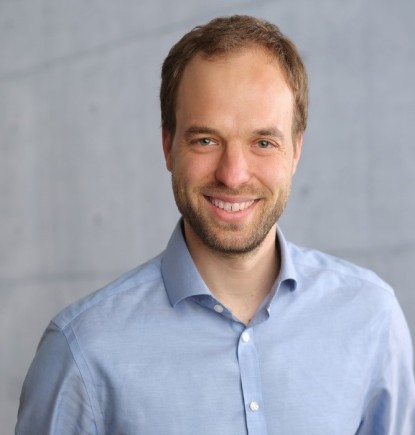
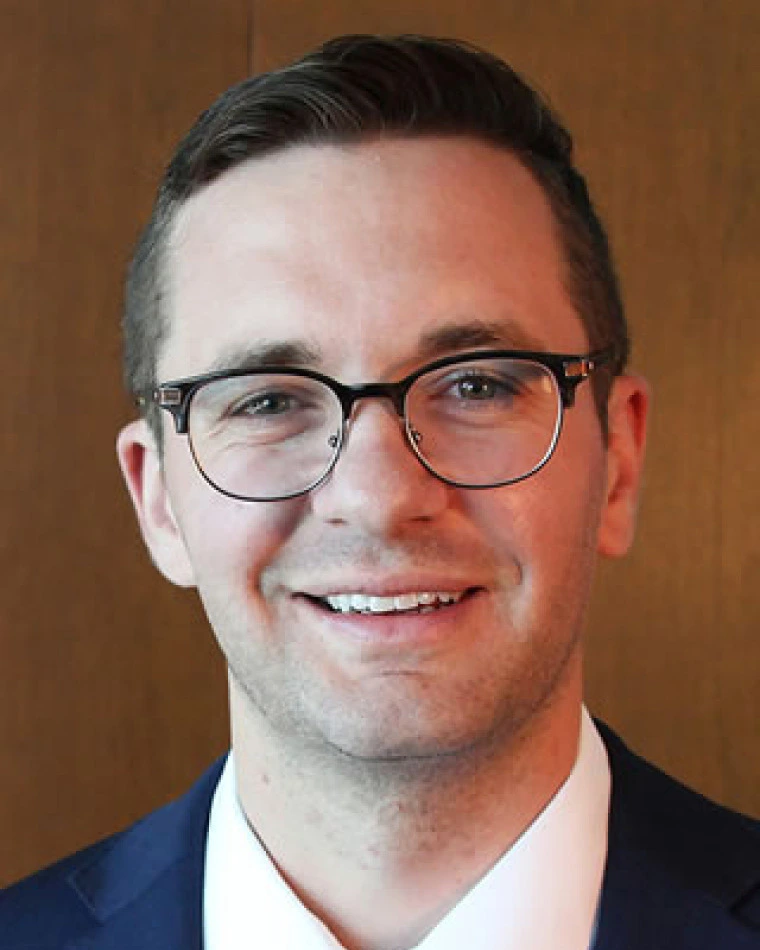
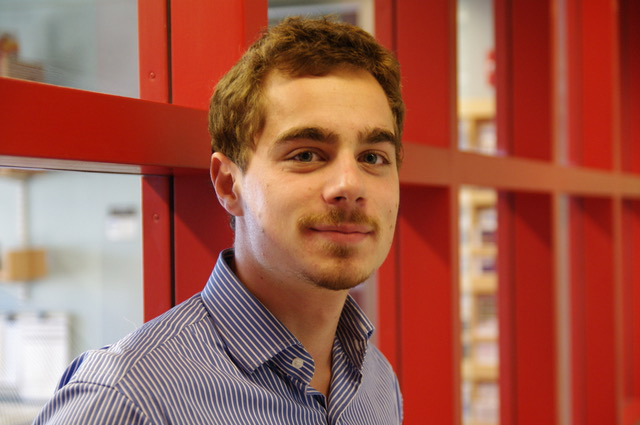
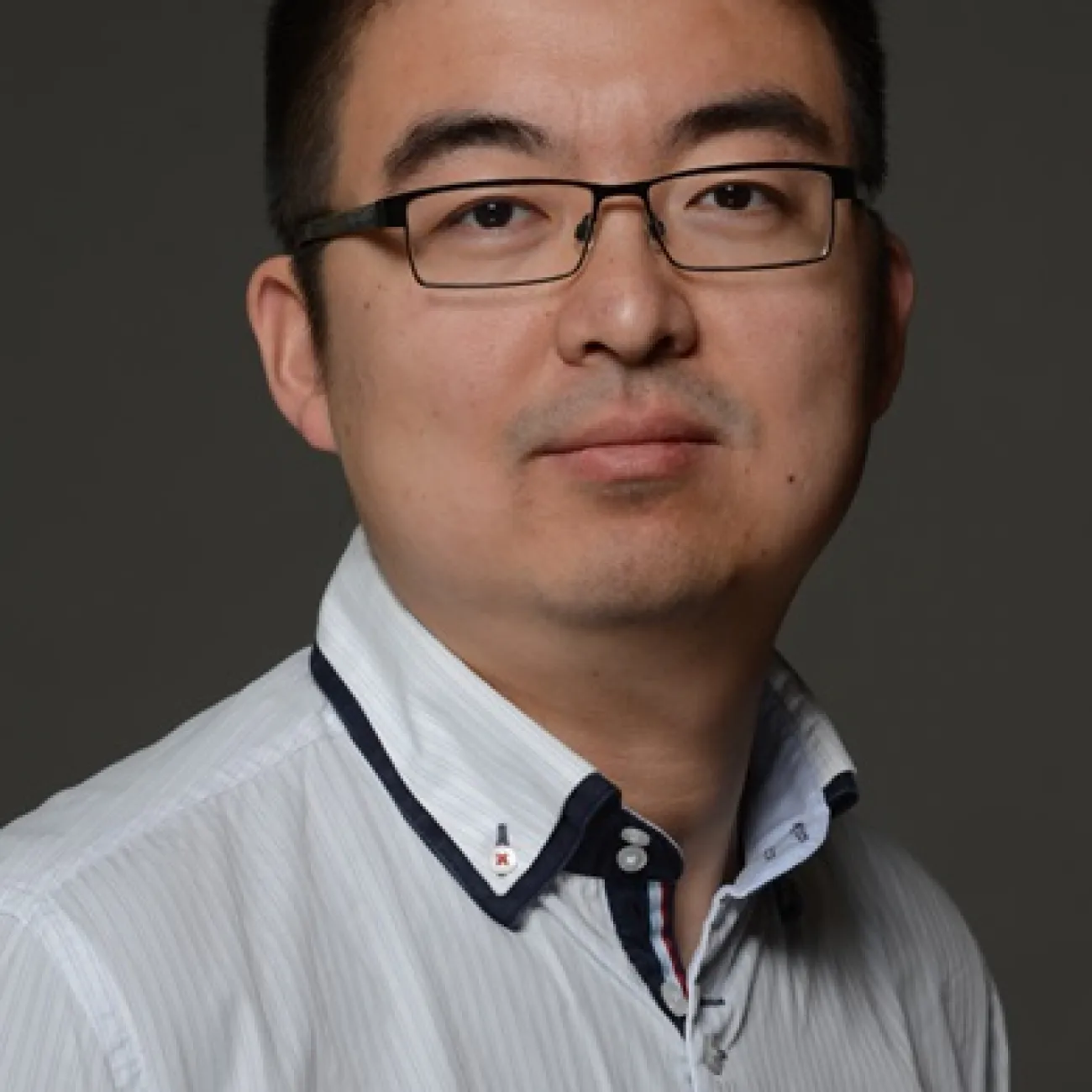
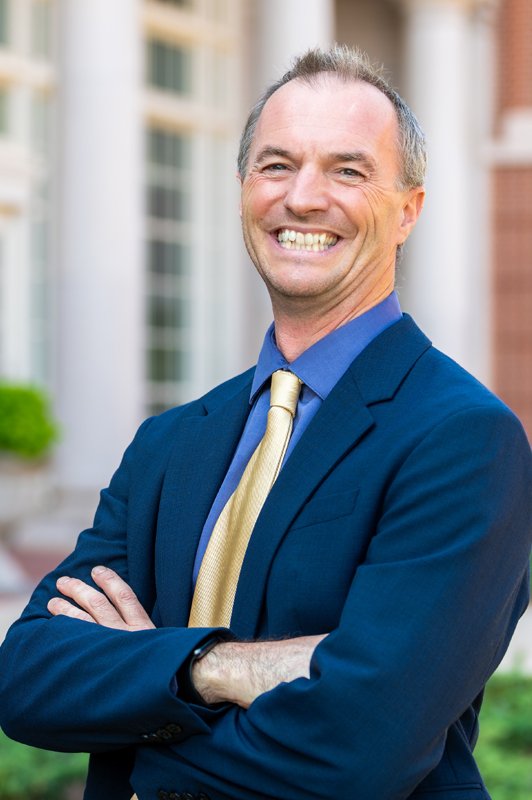
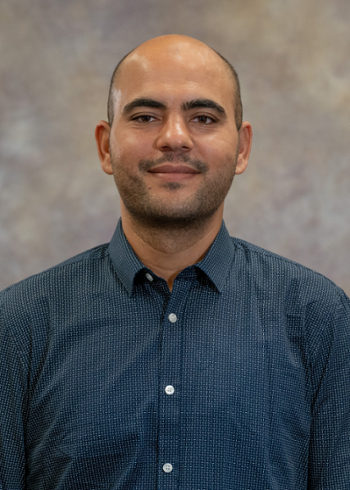
Prof. Benno Liebchen holds a faculty position at the Technische Universität Darmstadt within the Institute for Condensed Matter Physics , part of the Faculty of Physics. He leads the Liebchen Group , dedicated to advancing research in the Theory of Soft Matter , focusing on active matter, colloidal systems, and non-equilibrium phenomena. His work explores collective behavior in self-propelled particles, phase transitions in active fluids, and adaptive strategies in smart materials. Research Interests include: Active matter dynamics and pattern formation Non-equilibrium statistical mechanics Biophysical systems and biomimetic design Computational modeling of soft matter Recent publications highlight breakthroughs in intelligent active particles , self-reverting vortices , and motility-induced phase coexistence . His lab develops tools like the AMEP Python package to analyze active systems. Teaching responsibilities include advanced modules in soft matter physics. Collaborative projects involve interdisciplinary approaches to microswimmer behavior and machine learning-driven optimization of collective systems. Contact: +49 6151 16-24509 / Office: S2|04 104
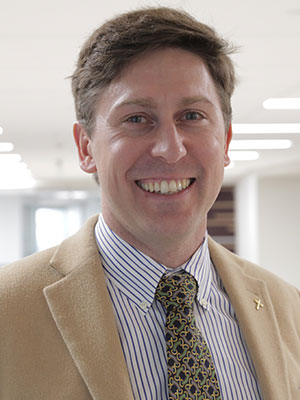
Joseph Katz is the William F. Ward Distinguished Professor of Mechanical Engineering at Johns Hopkins University's Whiting School of Engineering and a member of the National Academy of Engineering. His research focuses on experimental fluid mechanics, multiphase flow, cavitation phenomena, and advanced optical diagnostics. He directs the Laboratory for Experimental Fluid Dynamics and co-founded the Johns Hopkins Center for Environmental and Applied Fluid Mechanics. Key research areas include: - Turbulent boundary layers and compliant wall interactions - Cavitation dynamics in turbomachinery - Environmental fluid dynamics (oil spills, oceanic flows) - Medical imaging applications of fluid mechanics - Turbomachinery flow control (axial compressors) His work has been funded by agencies including the Office of Naval Research, NSF, NASA, and DOE. Over 150+ journal papers, 220+ conference papers, and 7 patents reflect his prolific output. Notable awards include the ASME Fluids Engineering Award and fellowships from ASME and APS. Key Contributions: - Developed novel optical diagnostics techniques - Advanced understanding of tip clearance flows in compressors - Studied oil dispersion mechanisms in marine environments - Pioneered holographic PIV for 3D flow visualization
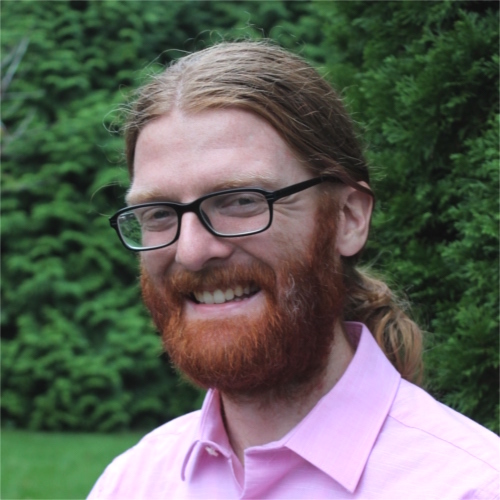
Kengo Deguchi is a Senior Lecturer in the School of Mathematics at Monash University. His research focuses on fluid dynamics, magnetohydrodynamics, and turbulence phenomena. He leads and collaborates on ARC-funded projects exploring flow control via topography, vortex dynamics in complex flows, and mathematical descriptions of magneto-hydrodynamic turbulence. Notable awards include the 2018 Faculty of Science Research Excellence Award and Vice-Chancellor’s Early Career Excellence Award. Education: Doctorate in Fluid Dynamics (details not specified in text) His research interests emphasize nonlinear instabilities, vortex dynamics, and coherent structures in shear flows. Recent work investigates Taylor-Couette flow chaos, subcritical transitions, and MHD dynamos. Over 40 publications span topics like turbulence statistics, chaotic patterns, and fluid instabilities. Key projects include investigating vortex persistence in counter-rotating systems and developing mathematical frameworks for MHD turbulence. He has secured funding through ARC grants (2017-2026) and collaborates internationally with experts like Prof. Hall and Prof. Blackburn. Grants: $A 2.6M+ in ARC funding (2017-2026) Labs/Teams: Collaborative fluid dynamics research groups focused on experimental and computational turbulence studies
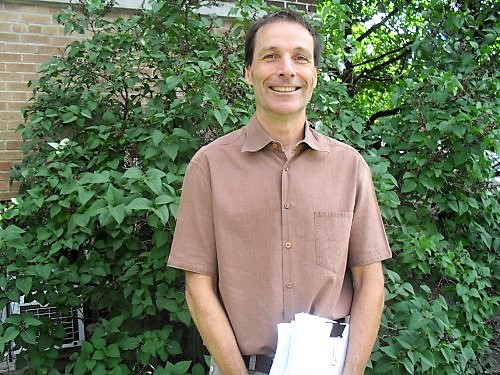
Timothy Jacobs is Professor and Head of Multidisciplinary Engineering at Texas A&M University, with joint appointment in Mechanical Engineering. His research advances combustion science, emission control, and alternative fuel applications. Education: Ph.D. Mechanical Engineering, University of Michigan (2005) M.S. Mechanical Engineering, University of Michigan (2002) B.S.E. Mechanical Engineering, University of Michigan (1999) Research focuses on fundamental combustion processes in natural gas engines, developing low-temperature combustion strategies and aftertreatment integration. Recent work optimizes prechamber ignition systems for large-bore engines and hydrogen production via piston reactors. Experimental diagnostics characterize cycle variability, unburned emissions, and flame dynamics. Publications demonstrate expertise in combustion modeling, engine control algorithms, and emission formation mechanisms. Applied research supports decarbonization of power generation and marine propulsion. Awards recognize teaching excellence and research leadership, including ASME Fellowship and university professorships. Secures funding for engine technology development from federal agencies and industry partners.
Ryan Murray is an Assistant Professor in the Department of Mathematics at North Carolina State University (NC State). His research focuses on developing mathematical tools to address problems in applied analysis, including calculus of variations, partial differential equations (PDEs), and their applications to machine learning, fluid dynamics, and control theory. He holds a PhD in Mathematics from Carnegie Mellon University (2016). His expertise spans regularization methods for machine learning, singular perturbations in materials science, algorithms for distributed optimization, and singularity formation in fluid dynamics. His work is supported by the National Science Foundation (NSF) and the Simons Foundation. He actively collaborates with researchers in data science, PDE analysis, and optimization. Key research areas include adversarial training in classification, geometric data analysis via statistical depths, and the analysis of vortex sheet singularities. His teaching experience includes courses on partial differential equations, optimal control theory, and linear control systems. Ryan has published extensively in journals such as SIAM Journal on Mathematics of Data Science , Archive for Rational Mechanics and Analysis , and Journal of Machine Learning Research . His articles explore topics ranging from graph-based learning to fluid dynamics instabilities.
Yves Bourgault is a Full Professor in the Department of Mathematics and Statistics at the University of Ottawa. He holds a MSc and PhD from Laval University. His research focuses on computational fluid dynamics, numerical methods, finite element techniques, and continuum mechanics modeling, with applications in cardiac electrophysiology and ecological systems. Dr. Bourgault has supervised several graduate students, including Edward Boey (co-supervised), Sana Keita, Saint-Cyr Koyagurebo-Ime, and Kak Choon Loy. His work integrates advanced numerical techniques to address complex problems in biomedical engineering, environmental science, and mathematical physics. Key methodologies include finite element methods, deferred correction schemes, and anisotropic mesh adaptation. His research group is part of the Applied Mathematics division at the University of Ottawa, emphasizing interdisciplinary applications. Recent work explores climate change impacts on ecological systems, cardiac tissue modeling using high-resolution MRI data, and robust numerical methods for reaction-diffusion equations. Publications span topics such as bidomain models for cardiac electrophysiology, fluid-structure interaction in heart mechanics, and mathematical modeling of fuel cells. His contributions bridge theoretical numerical analysis with real-world biomedical and environmental challenges.
Kyle Hanquist is an Assistant Professor in the Department of Aerospace and Mechanical Engineering at the University of Arizona, where he is also a member of the Graduate Faculty. He directs the Computational Hypersonics and Nonequilibrium Laboratory (CHANL), focusing on advanced simulation techniques for high-speed flows. His academic journey includes a PhD and MSE in Aerospace Engineering from the University of Michigan and a BSE in Mechanical Engineering from the University of Nebraska. PhD, Aerospace Engineering, University of Michigan, Ann Arbor MSE, Aerospace Engineering, University of Michigan, Ann Arbor BSE, Mechanical Engineering, University of Nebraska, Lincoln Dr. Hanquist's research centers on hypersonics, aerothermodynamics, and nonequilibrium flows , with strong emphasis on computational fluid dynamics , low-temperature plasmas , and thermal management systems . His work involves modeling complex physical phenomena such as electron transpiration cooling, plasma-assisted flow control, and high-temperature gas effects in reentry environments. He also investigates molecular gas dynamics and finite-rate chemistry in extreme conditions. His recent publications reveal a strong trend in computational modeling of hypersonic boundary layers , plasma sheaths , and shock-tube validation of thermochemical models . The interdisciplinary nature of his work spans aerospace engineering, plasma physics, and materials response under extreme thermal loads. Much of his research integrates multi-physics simulations to address fluid-thermal-structural interactions critical for next-generation hypersonic vehicles. Dr. Hanquist has received several scientific honors, including: 2020 AIAA Plasmadynamics and Lasers Best Paper Award Editor's Choice, AIP Publishing - Physics of Fluids (Summer I 2020) Featured Article, AIP Publishing - Physics of Fluids (Summer I 2021) Frontiers in Physics – Plasma Physics (Spring 2020) As an advisor and lab director, he mentors graduate students in computational hypersonics and collaborates with institutions like NASA and the University of Michigan. His research is supported by grants from aerospace and defense agencies, though specific funding sources are not listed. He teaches courses in fluid mechanics, numerical methods, and nonequilibrium flows, contributing to both undergraduate and graduate education. He leads the Computational Hypersonics and Nonequilibrium Laboratory (CHANL) , which develops and applies high-fidelity simulation tools for hypersonic applications. The lab focuses on kinetic modeling, plasma interactions, and optimization of thermal protection systems, often using massively parallel CFD codes and multi-fidelity surrogate models.
Tom Beucler is a Conditional Pre-Tenure Assistant Professor in Geo-Environmental Data Science at the University of Lausanne’s Institute for Earth Surface Dynamics (IDYST). He holds a Master’s degree in Science and Mechanics from École Polytechnique (2014) and a PhD in Atmospheric Science from MIT (2019). Postdoctoral research at Columbia University and UC Irvine focused on machine learning applications in climate science under Professors Pierre Gentine and Michael Pritchard. Research Interests: Climate informatics, atmospheric physics, fluid dynamics, tropical meteorology, and integrating machine learning into climate models for extreme weather prediction and hydrological cycle modeling. Collaborations: Works with environmental scientists and computer engineers to improve climate models using neural networks and causal discovery methods. Initiatives: Organizes weekly brainstorming sessions to promote machine learning adoption in environmental sciences. Publications span climate-invariant machine learning, data-driven parameterizations, and hybrid AI-climate modeling frameworks like ClimSim. His work emphasizes causal consistency and generalizability across climate conditions.
Niklas Linde is a full professor at the University of Lausanne's Faculty of Geosciences and Environment, leading the Department of Earth Sciences. He holds a PhD in Geophysics from Uppsala University (2005) and has held roles including Assistant Professor (2008), Associate Professor (2013), and Full Professor (2019). His research focuses on transforming geophysical signals into realistic hydrogeological models with rigorous uncertainty quantification. Key areas include probabilistic inversion, Bayesian methods, and geostatistical modeling applied to environmental and subsurface processes. Education: PhD in Geophysics (Uppsala University, 2005), postdoctoral positions at Lawrence Berkeley National Lab (USA), CNRS-CEREGE (France), and ETH Zurich (Switzerland). He joined UNIL in 2008 as an Assistant Professor in Environmental Geophysics. Research interests span geophysical inversion techniques, subsurface heterogeneity characterization, and the integration of geophysical and hydrological data. Current projects emphasize Bayesian approaches for model selection and rare event estimation, supported by grants from the European Commission and Swiss National Science Foundation. Collaborations involve international teams addressing challenges in hydrogeology, rock fracture dynamics, and 4D hydrogeology. Publications reflect advancements in inverse problem solving, stochastic simulation, and machine learning applications. His work bridges theory and practice, with field studies in alpine environments, fractured media, and environmental monitoring. Students under his supervision have explored topics like deep generative networks and Bayesian hydrogeological inversion. Advising: Supervised over a dozen PhD students, including recent works on variational Bayesian methods and geophysical data fusion. Grants include projects on uncertainty quantification and experimental design. Active in scientific societies and editorial roles, contributing to methodological advancements in Earth sciences.
Dr. Xi Yu is a Lecturer in Chemical Engineering at the University of Southampton, affiliated with the Faculty of Engineering and the Environment. He holds a Bachelor's from Tianjin University and a Ph.D. from the University of Sheffield. His research focuses on low carbon fuels, granulation techniques, and computational fluid dynamics. He has supervised PhD students such as Jerin Jacob and is currently accepting new PhD applicants in these areas. Dr. Yu's educational background includes degrees in Chemical Engineering and prior academic roles at Aston University and the Energy and Bioproducts Research Institute (EBRI). His work spans bioenergy systems, particle technology, and multi-physics modeling. Key research projects include advancements in biomass gasification, biofuel production, and sustainable energy systems. His publications emphasize computational modeling, fluid dynamics, and biomass utilization. Recent articles explore topics like absorption chiller systems, fluidization validation, and bio-oil aging strategies. He contributes to teaching modules such as CHEG3000 and CHEG3004, reflecting his commitment to both research and education.
David J. Olinger is a Professor of Aerospace Engineering at Worcester Polytechnic Institute (WPI). He specializes in renewable energy technologies, particularly airborne and hydrokinetic systems involving tethered kites and gliders for energy extraction from wind and ocean currents. His research emphasizes experimental and computational approaches to optimize these systems, including a low-cost kite-powered water pump for underdeveloped regions. Education: BS in Engineering (Lafayette College, 1983), MS in Mechanical Engineering (Rensselaer Polytechnic Institute, 1985), PhD in Mechanical Engineering (Yale University, 1990). Research focuses on fluid dynamics, aerodynamics, and fluid-structure interaction. His articles span advancements in tethered systems control, energy harvesting, and simulation techniques. Recent work integrates computational models and physical experiments to refine underwater kite systems and airborne wind energy solutions. Awards: Summer Faculty Research Fellow (1993, U.S. Navy) WPI Teaching Technology Fellowship (2000) ASME National Curriculum Innovation Award Honorable Mention (2001) Advising & Grants: Supervises graduate/undergraduate project teams in MQP (Major Qualifying Project) initiatives. Focuses on applied engineering solutions, such as renewable energy systems and fluid dynamics experiments. Labs/Teams: Leads a research group developing emerging energy technologies, emphasizing interdisciplinary collaboration between mechanical engineering and fluid dynamics.
Prof. Aswin Gnanaskandan is an Assistant Professor in the Department of Mechanical & Materials Engineering at Worcester Polytechnic Institute (WPI), where he joined in August 2020. He directs the Computational Multiphase Transport Laboratory, focusing on developing high-fidelity models for multiphase flows with applications in engineering and biomedical fields. His research is funded by NSF, Office of Naval Research, NIH, and the Center for Advanced Research in Drying. Education: PhD, Aerospace Engineering & Mechanics, University of Minnesota (2015) MS, Aerospace Engineering & Mechanics, University of Minnesota (2012) BS, Aeronautical Engineering, Madras Institute of Technology (2006) Research Interests: Computational Fluid Dynamics (CFD), Multiphase Flow Modeling, Biomedical Acoustics, High-Performance Computing, and applications in underwater transportation, propulsion, and biomedical acoustics. His work bridges fundamental fluid mechanics with real-world challenges in energy, health, and environmental systems. Recent Research Trends: His articles focus on microbubble-enhanced ultrasound therapy, cavitation dynamics in propulsion systems, and multiphase flow modeling across scales. Key themes include improving thermal ablation precision in medical treatments and optimizing industrial processes like spray drying through advanced numerical techniques. Awards: Excellence in Research Award (WPI, 2024) NSF Engineering Research Initiation Award (2023) James Nichols Heald Research Award (WPI, 2022) Teaching & Advising: Teaches undergraduate/graduate courses in Fluid Mechanics, Thermodynamics, and Numerical Methods. Advises multiple Major Qualifying Projects and fosters interdisciplinary collaboration through lab activities. His lab actively engages with industry and academic partners on projects like HIFU therapy and sustainable energy solutions. Labs & Teams: Leads the Computational Multiphase Transport Lab, which collaborates on projects involving CFD solver development (MFC 5.0), exascale computing, and biomedical acoustics. Aligns research with UN Sustainable Development Goals (SDG 7, 9, 13).
Lorenzo Cremaschi is an Associate Professor in the Department of Mechanical Engineering at Auburn University, where he leads the High Performance Scalable Building Energy Systems and Technologies (HPS-BEST) Laboratory. His research focuses on enhancing energy efficiency in buildings and transportation systems through advanced thermal-fluid technologies. Education Ph.D. Mechanical Engineering, University of Maryland M.S. Mechanical Engineering, University of Modena and Reggio Emilia B.S. Mechanical Engineering, University of Modena and Reggio Emilia Research Focus Dr. Cremaschi's research encompasses energy efficiency, scalable energy systems, and advanced heat/mass transfer processes. His laboratory investigates refrigeration systems, low-GWP refrigerants, frost/defrost phenomena, and novel dehumidification technologies. Current projects examine electrospray-enhanced heat exchangers, two-phase flow dynamics, and spray evaporation in HVAC systems. Research Output Recent publications demonstrate strong focus on thermal-fluid phenomena in energy systems, including experimental and numerical studies of two-phase flow, refrigerant performance, frost formation dynamics, and novel dehumidification technologies. Emerging themes include electrospray applications, low-GWP refrigerants, and system optimization for sustainable HVAC. Funding and Recognition Recipient of $150,000+ grant from ASHRAE for climate lab research Laboratory Leadership The HPS-BEST Laboratory under Dr. Cremaschi's direction collaborates with national laboratories and industry partners to develop scalable energy solutions. The lab specializes in experimental analysis of heat transfer fluids, phase-change processes, and system performance optimization for refrigeration and HVAC applications.
Pedro Jorge Martins Coelho is a Professor in the Mechanical Engineering Department at Instituto Superior Técnico, University of Lisbon, Portugal. His academic career spans several decades with a focus on advanced thermal sciences and computational methods. His research has significantly contributed to the understanding of radiative heat transfer phenomena in complex systems. Dr. Coelho's educational background includes a Ph.D. in Mechanical Engineering, which has provided the foundation for his extensive research in thermal sciences. His work demonstrates a strong theoretical foundation combined with practical applications across various engineering domains. His primary research interests encompass radiative heat transfer, turbulence-radiation interaction, combustion modeling, and numerical methods for thermal systems. Recent work has expanded into biomedical applications of thermal radiation, particularly in laser-tissue interactions for cancer detection and treatment. His publications reveal a consistent focus on developing and refining computational methods for solving complex heat transfer problems, with particular emphasis on the radiative transfer equation in various media and geometries. Analysis of his recent publications shows a clear evolution toward more complex and interdisciplinary applications, including biomedical thermal applications, advanced turbulence modeling, and thermal management of electrical systems. His work consistently bridges fundamental theoretical developments with practical engineering applications, particularly in combustion systems, energy recovery, and thermal management. Dr. Coelho has served on editorial boards for prestigious journals including Heat Transfer Research, Computational Thermal Sciences, and International Journal of Energy for a Clean Environment, demonstrating his standing in the thermal sciences community. His research collaborations span numerous institutions and researchers worldwide, as evidenced by his extensive publication record with various co-authors across different countries. He has also been involved in conference organization, serving as Associate Editor for major international heat transfer conferences.
Dr. Abdessattar Abdelkefi is a Professor in the Department of Mechanical & Aerospace Engineering at New Mexico State University's College of Engineering. He directs the Nonlinear Dynamics & Energy Harvesting Laboratory (NDEHL) and holds a Ph.D. from Virginia Tech (2012). His research bridges dynamics, fluid-structure interactions, and renewable energy, with applications in drones, MEMS, and energy harvesting. Research Focus Dr. Abdelkefi's work spans Dynamics & Vibrations , Aeroelasticity , and Robotics & Controls , emphasizing nonlinear phenomena and energy conversion. Key areas include: Vortex-induced vibrations for renewable energy harvesting Bio-inspired drone design and aerodynamic optimization Nanoscale sensors and microgyroscopes Flexoelectric and piezoelectric material applications Publication Trends Recent articles (2019-2020) focus on experimental/theoretical synergy in energy harvesting (galloping, vortex-induced, piezoelectric) and bio-inspired UAV design. Over 70% involve computational modeling validated with wind tunnel/field tests, highlighting innovations in broadband energy capture and nano/microsystem efficiency. Awards & Honors 2020: Outstanding Research Professor (MAE Academy) & Teaching-Research-Service Synergy Award (College of Engineering) 2019: Early Career Award (NMSU Research Council), Outstanding Research Professor, Los Alamos NMC Faculty Appointee 2013: Best Paper Award from Theoretical & Applied Mechanics Letters 2011–2012: Graduate Scholarships (Virginia Tech) Laboratory & Advising NDEHL researches vibration-based energy harvesting, nonlinear dynamics, and drone aerodynamics. Dr. Abdelkefi mentors graduate students in experimental/computational projects, though specific advisees are unnamed in available data.