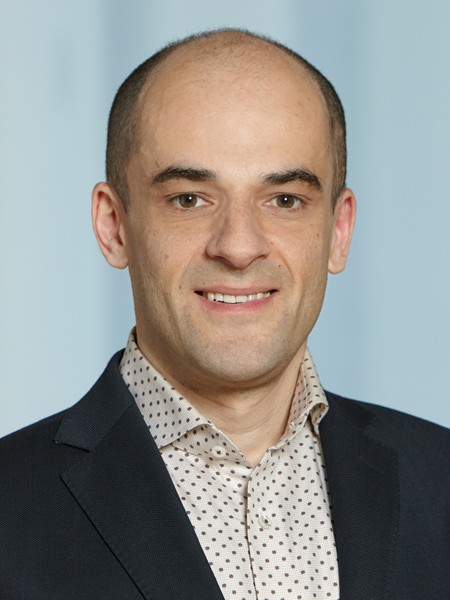
Jeremy Dahl is a Professor of Radiology (Pediatric Radiology) at Stanford University School of Medicine. He directs the Ultrasound Imaging & Instrumentation Lab and serves as Director of Research Academic Affairs in the Department of Radiology since 2020. He holds multiple affiliations across Stanford including Bio-X, the Cardiovascular Institute, Wu Tsai Human Performance Alliance, Maternal & Child Health Research Institute, Stanford Cancer Institute, and Wu Tsai Neurosciences Institute. Dr. Dahl received his B.S. in Electrical Engineering from the University of Cincinnati (1999) and Ph.D. in Biomedical Engineering from Duke University (2004). His research focuses on developing ultrasonic beamforming and image reconstruction methods for diagnostic imaging applications, particularly techniques that generate high-quality images in difficult-to-image patients. His laboratory specializes in B-mode and Doppler imaging techniques that utilize additional information from ultrasonic wavefields to improve image quality and develop real-time imaging systems for clinical applications including cardiac, liver, and fetal imaging. Dr. Dahl's research has led to significant advancements in ultrasound molecular imaging platforms, sound speed estimation, aberration correction, and reverberation noise suppression. His work often bridges engineering innovation with clinical applications for cancer detection and other diseases. His recent publications demonstrate strong focus on machine learning applications in ultrasound, distributed aberration correction, and molecular imaging techniques. Fellow, American Institute of Ultrasound in Medicine (2021) Senior Member, Institute of Electrical and Electronics Engineers (2020) Distinguished Investigator Award, The Academy for Radiology & Biomedical Imaging Research (2018) Outstanding Paper Award, IEEE Ultrasonics, Ferroelectrics, and Frequency Control Society (2011) Dr. Dahl serves in editorial roles for major journals including IEEE Transactions on Medical Imaging (2017-2024) and IEEE Transactions on Ultrasonics, Ferroelectrics, and Frequency Control (2013-Present). His laboratory has successfully translated numerous innovations into clinical applications, with multiple patents including recent developments in pulsed focused ultrasound therapy and speed of sound quantification.
Ashwani K. Gupta is a Distinguished University Professor at the University of Maryland, holding the Minta Martin Professorship in Engineering. He serves as Professor in the Department of Mechanical Engineering, Professor at the Institute of Physical Science and Technology, and Affiliate Professor in the Department of Aerospace Engineering. With over 45 years of experience in combustion engineering since graduating from Southampton University in 1970, Gupta has established himself as a leading authority in advanced combustion technologies. Dr. Gupta earned his Ph.D. from the University of Sheffield in 1973, followed by a D.Sc. from the same institution in 1986 and another D.Sc. from Southampton University in 2013. His academic journey includes six years at MIT as a research staff member and three years at Sheffield University as an independent research worker before joining the University of Maryland in 1983. Gupta's research focuses on revolutionizing combustion technology through innovations in swirl flows, high-temperature air combustion (HiTAC), and distributed combustion systems. His pioneering work on 'colorless distributed combustion' has enabled ultra-low emission combustion processes with significant applications in gas turbine engines and waste-to-energy conversion. His research spans biofuels, CO2 utilization, sulfur chemistry, waste conversion, and advanced laser diagnostics, addressing critical challenges in sustainable energy and environmental protection. Analyzing his recent publications reveals a strong emphasis on waste-to-energy conversion, biomass processing, and CO2-assisted technologies. Gupta's work demonstrates a clear trajectory toward sustainable energy solutions, with increasing integration of artificial intelligence for combustion optimization and emission control. His research bridges fundamental combustion science with practical engineering applications for cleaner energy systems. Among Gupta's numerous accolades are: Election to Fellowship of the Royal Academy of Engineering (2023) Honorary Fellowship of the Royal Aeronautical Society (2020) Recognition as one of the top 2% of scientists worldwide by Stanford University (2022-2024) Multiple prestigious medals from ASME and AIAA including the Soichiro Honda Medal (2018) and AIAA Air Breathing Propulsion Award (2014) Honorary doctorates from three international universities Gupta has secured substantial research funding throughout his career, resulting in over 850 technical papers, three books, 18 edited books, and 22 book chapters. He has delivered over 100 plenary/keynote/invited presentations at international conferences. His mentorship has shaped numerous graduate students who continue to contribute to the field of combustion engineering. Gupta directs the Combustion Laboratory at the University of Maryland, which serves as a hub for cutting-edge research in sustainable combustion technologies. The Combustion Laboratory, under Gupta's leadership, has become a center of excellence for advanced combustion research, particularly in distributed combustion systems, waste-to-energy conversion, and alternative fuels. The lab maintains strong collaborations with industry partners and international research institutions, facilitating technology transfer and practical implementation of research findings. Gupta's team employs state-of-the-art diagnostics and computational tools to advance fundamental understanding while developing practical engineering solutions for cleaner energy systems.
Chi Liu is a Professor of Radiology & Biomedical Imaging at Yale School of Medicine . He serves as Associate Director of Biomedical Imaging Technology at the Yale Biomedical Imaging Institute and Director for Research Faculty Affairs in the Radiology & Biomedical Imaging department. Education : PhD from Johns Hopkins University (2008) Postdoctoral Training : University of Washington (2010) Certification : American Board of Science in Nuclear Medicine (Nuclear Medicine Physics and Instrumentation) His research focuses on quantitative cardiac and oncological PET/CT and SPECT/CT imaging , emphasizing deep learning algorithms , reconstruction algorithms , data correction , and dynamic imaging . Key clinical applications include early detection of chemotherapy-induced cardiotoxicity , multimodality imaging of heart failure , and motion variability elimination in therapy response assessment . The 15 most recent publications reveal a strong emphasis on deep learning techniques for low-dose imaging , motion correction , and cross-tracer generalizability in PET/SPECT systems. These works span applications in cardiac imaging , neuroscience , oncology , and theranostics . Scientific Award : Bruce Hasegawa Young Investigator Medical Imaging Science Award (2012) Contact: chi.liu@yale.edu | ORCID 0000-0002-7007-1037
Professor Guy Williams is a leading academic at the University of Cambridge with a focus on imaging science and clinical neurosciences, affiliated with Downing College and the Wolfson Brain Imaging Centre . Holding a PhD in Physics from his initial Natural Sciences degree, he specializes in nuclear magnetic resonance (NMR) and MRI techniques for brain imaging. Education: BA, PhD in Physics His research centers on non-invasive imaging of brain structure and function, particularly in traumatic brain injury (TBI) and dementia. His work involves developing novel MRI pulse sequences and advanced data analysis algorithms, including AI-based diagnostic tools. He leads studies on white matter integrity post-trauma, longitudinal dementia assessment, and applications of MRI in disorders of consciousness and addiction. Recent publications highlight collaborations in traumatic brain injury outcomes, AI-guided dementia prediction, and neuroimaging of post-COVID cognitive deficits. His team's work on ultra-high field laminar fMRI and distortion correction methods has advanced clinical neuroscience applications. Key techniques include diffusion tensor imaging (DTI), 7 Tesla MRI, and positron emission tomography (PET/MR). His research spans from basic NMR physics to clinical translation, with a strong emphasis on multi-site studies and real-world diagnostic implementation.
Prof. Dr. Jing Wang is a Full Professor at the Department of Civil, Environmental and Geomatic Engineering at ETH Zürich. His research focuses on air pollution control, nanoparticle transport, and environmental health and safety (EHS) impacts of nanomaterials. He has held roles including Assistant Professor at ETH Zürich (2010–present), Research Assistant Professor at the University of Minnesota (2007–2010), and postdoctoral associate in Particle Technology (2005–2007). Education: Bachelor’s in Engineering (2000) – Tsinghua University, Beijing Master’s in Computer Sciences (2003) – University of Minnesota PhD in Aerospace Engineering (2005) – University of Minnesota Research Interests: Air/water filtration technologies Nanoparticle emission reduction and measurement Multiphase flow mechanics Environmental impacts of nanomaterials Collaborations: Industrial partnerships include 3M, BASF, Boeing, Intel, Samsung, and others in nanoparticle measurement and filtration solutions. Honors: 2011 Smoluchowski Award (Association for Aerosol Research) 2006 ‘Best Dissertation’ Award (University of Minnesota) 2004 Doctoral Dissertation Fellowship Teaching: Courses include Air Pollution Control, Environmental Engineering Seminars, and Excursions for Environmental Engineers. Labs/Teams: Leads the Particle Technology Lab and collaborates with the Institute of Environmental Engineering at ETH Zürich.
Anne E. White is the School of Engineering Distinguished Professor of Engineering and associate vice president for research administration at the Massachusetts Institute of Technology (MIT). She serves in the Department of Nuclear Science and Engineering within MIT's School of Engineering and is a key researcher at the Plasma Science and Fusion Center (PSFC). White has held significant leadership roles including NSE department head from 2019 to 2023 and co-chair of the MIT Climate Nucleus from 2021 to 2024. She currently chairs the Fusion Energy Sciences Advisory Committee (FESAC), providing federal advisory input to the U.S. Department of Energy Office of Science. White received her PhD in physics from UCLA, where she conducted research at the Electric Tokamak. Her early career included research positions at the National Spherical Torus Experiment at Princeton Plasma Physics Laboratory and the DIII-D National Fusion Facility at General Atomics before joining MIT as a faculty member. Her educational background laid the foundation for her expertise in plasma physics and fusion energy research. Professor White's research focuses on magnetic fusion energy, specifically on understanding turbulent transport in magnetically confined fusion plasmas. Her work spans diagnostic development, novel experimentation, and validation of nonlinear gyrokinetic codes. She aims to demonstrate nuclear fusion as a practical part of the world's sustainable energy future. Her group develops and uses radiometers, reflectometers, and interferometers to measure fluctuations in plasma density, temperature, and flows in tokamaks. This research is critical for improving predictive capabilities of turbulent transport models, which is essential for developing viable fusion reactors. Analysis of Professor White's recent publications reveals a strong focus on plasma diagnostics and turbulence measurements across multiple tokamak facilities. Her work spans experimental measurements on ASDEX Upgrade, Alcator C-Mod, NSTX, and DIII-D tokamaks, with particular emphasis on electron temperature fluctuations, turbulence characterization, and transport model validation. A significant theme is the development and application of novel diagnostic techniques for simultaneous measurements of multiple plasma parameters. Her research increasingly incorporates computational approaches, including gyrokinetic simulations and machine learning methods, to interpret experimental data and advance predictive capabilities in fusion plasma physics. Professor White has received numerous prestigious awards throughout her career: Fellow, American Physical Society Division of Plasma Physics (2019) Cecil and Ida Green Career Development Professor, MIT (2014) American Physical Society Katherine E. Weimer Award (2014) Fusion Power Associates Excellence in Fusion Engineering Award (2014) Junior Bose Award for Excellence in Teaching, MIT (2014) PAI Outstanding Faculty Award from MIT student chapter of the American Nuclear Society (2013) Norman C. Rosenbluth Career Development Professor, MIT (2012-2014) Department of Energy Early Career Award (2011-2016) Marshall N. Rosenbluth Outstanding Doctoral Thesis Award (2009) As an educator and mentor, Professor White has advised numerous students through MIT's Department of Nuclear Science and Engineering. She has taught courses including Principles of Plasma Diagnostics, Seminar in Fusion & Plasma Physics, and Introduction to Plasma Physics. Her leadership extends to developing educational resources, notably leading a team in 2018 to create a free MITx MOOC focused on nuclear science and engineering for global high school learners. Professor White has secured significant research funding through Department of Energy awards, including the Early Career Award (2011-2016) and various fusion energy fellowships throughout her career. Her research group at MIT's Plasma Science and Fusion Center has contributed to multiple major fusion facilities and has been instrumental in advancing understanding of plasma turbulence and transport. Professor White leads the Fusion and Plasmas Lab at MIT, which focuses on diagnostic development and turbulence measurements in fusion plasmas. Her team has made significant contributions to research on four major tokamaks: Alcator C-Mod, ASDEX Upgrade, DIII-D, and National Spherical Torus Experiment Upgrade. At MIT's Plasma Science and Fusion Center, she previously served as assistant division head for magnetic fusion energy collaborations and ran the Gyrokinetic Simulation Working Group and the Alcator C-Mod Transport Group. Her lab maintains close collaboration between experimental work, theoretical modeling, and computational simulation to advance the understanding of plasma turbulence and transport phenomena critical for fusion energy development.
Mats Danielsson is a Professor at KTH Royal Institute of Technology, leading the Medical Imaging research group within the Department of Particle Astrophysics and Medical Imaging. He has coordinated major projects like the ERC Advanced Grant for the Si3 project (starting 2024) and the EIC Pathfinder's 1MICRON project (starting 2025). His work focuses on advancing photon-counting detectors, X-ray technologies, and medical imaging systems. Notable recognitions include the 2024 KTH Innovation Award and the 2022 Hans Wigzell Science Prize. Danielsson has co-founded companies such as Sectra Mamea AB and C-RAD AB, and holds 135 patents with over 150 scientific publications. Education: MSc (1990) and PhD (1996) from KTH, followed by postdoctoral research at Lawrence Berkeley National Lab (1996–1998). He joined KTH in 1999, where he has held his current professorship since then. His research spans medical imaging, detector innovation, and radiation physics applications in healthcare. Research Interests: Development of high-resolution CT detectors, photon-counting technologies, compact X-ray sources, and AI-driven image processing. His recent work emphasizes minimizing radiation exposure while enhancing diagnostic precision through novel detector designs and machine learning algorithms. Key Projects: ERC Si3 project (3D detector for nuclear medicine), EIC 1MICRON (micrometer-scale imaging), and MedTechLabs collaboration with Karolinska Institutet. He has pioneered innovations such as MicroDose mammography and advanced photon-counting spectral CT systems. Awards: KTH Innovation Award (2024), Hans Wigzell Prize (2022), IVA membership (2017), Polhem finalist (2014), and INGVAR Award (2004). Advising & Grants: Over 150 scientific publications, 135 patents, and leadership in multi-institutional projects. Teaches courses on medical imaging and modern physics at KTH. Labs/Teams: Director of the Medical Imaging Group at KTH, co-founder of MedTechLabs, and collaborator across academia and industry in medical imaging innovation.
Nida Latif is a Research Fellow in the Department of Internal Medicine at Yale School of Medicine. Her work focuses on understanding coronary microvascular dysfunction and ischemic heart disease in patients with nonobstructive coronary arteries, particularly in women. She is a key contributor to the DISCOVER INOCA multicenter registry, evaluating invasive coronary function testing protocols and diagnostic strategies. Her research integrates clinical, anatomical, and physiological data to improve diagnostic accuracy and patient outcomes. Key areas of investigation include coronary vasoreactivity testing, risk factor analysis in ischemic syndromes, and the impact of diabetes on angina pathophysiology. Latif's publications highlight advancements in coronary flow reserve measurement, comparison of diagnostic modalities (e.g., PET vs thermodilution), and the clinical utility of vessel-specific analysis. Her work emphasizes translational outcomes, bridging basic science insights with clinical practice improvements. While no specific awards are listed, her contributions to high-impact clinical registries and peer-reviewed publications reflect her active role in advancing cardiovascular medicine.
Dr. Andrea Lecchini Visintini is an Associate Professor at the School of Electronics and Computer Science , University of Southampton. He specializes in systems modelling and control with applications in aerospace engineering and biomedical domains, utilizing Monte Carlo methods for stochastic optimization. Cyber-Physical Systems Research Group Institute for Life Sciences Research Focus: His work bridges computational methods with practical applications in: Neurovascular coupling and brain tissue pulsation analysis Advanced control strategies for aerospace systems Stochastic optimization in machine learning and fault detection Medical imaging and diagnostic protocol development Publication Trends: Recent work emphasizes interdisciplinary approaches combining computational neuroscience with engineering, focusing on brain hemodynamics, MIMO system control, and data augmentation techniques for imbalanced datasets. Supervision: Currently supervising PhD student Xuankun Cai in Computer Science.
Ugur Cetintemel is the Khosrowshahi University Professor of Computer Science at Brown University, where he has been since completing his PhD at the University of Maryland in 2001. His research focuses on data management systems, database systems, distributed systems, and stream processing, with recent work integrating AI techniques into database systems. He teaches courses such as Database Management Systems and Data Science fundamentals. Notable contributions include the Aurora and Borealis stream processing engines, S-Store for transaction processing, and DBPal for natural language interfaces. His work emphasizes scalable, efficient systems for large-scale data challenges. Education: PhD in Computer Science, University of Maryland, 2001 MS in Computer Science, Bilkent University, 1996 BS in Computer Science, Bilkent University, 1994 Research Interests: Data management, stream processing, distributed systems, predictive analytics, and AI integration with databases. Key projects include optimizing database systems for modern hardware, developing real-time stream processing frameworks, and exploring interactive data exploration techniques. Grants & Advising: Extensive contributions to grants and collaborations, though specific grant details are not listed. Supervises graduate students in areas like database systems and machine learning integration. Part of the Brown Data Management Group. Labs/Teams: Leads research within the Brown Data Management Group, focusing on advancing database systems for big data and real-time analytics.
Amanda Stockton is an Associate Professor at the School of Chemistry and Biochemistry, Georgia Institute of Technology. Her research focuses on the development of analytical instruments for planetary exploration and the study of terrestrial analog environments to understand conditions suitable for life emergence. She leads the Stockton Lab, which specializes in microfluidics, biosignature detection, and astrobiological applications. Education: B.S. in Chemistry and Aerospace Engineering, Massachusetts Institute of Technology (2004) M.A. in Chemistry, Brown University (2006) Ph.D. in Chemistry, University of California Berkeley (2010) Stockton’s work bridges planetary science and analytical chemistry, targeting extraterrestrial life detection through technologies like the FELDSPAR and IMPOA projects. Her research explores sea spray aerosols, icy moon penetrators, and microfluidic systems for environmental and medical diagnostics. Research Highlights: Instrument development for Europa and Enceladus missions Microfluidic tools for origin-of-life experiments Terrestrial applications in environmental monitoring and point-of-care diagnostics Collaborative studies in Icelandic and Antarctic analog environments The Stockton Lab’s publications reveal expertise in biosignature preservation, Raman spectroscopy, and planetary habitability, with a focus on Mars and ocean worlds. Her team has pioneered low-cost microfluidic platforms like GLUE and modular CE-LIF systems.
Professor Hak-Kim Chan of the Sydney Pharmacy School at the University of Sydney is a world-renowned expert in respiratory drug delivery, particularly pulmonary aerosols and inhalation therapies. With over 480 publications and 17,580+ Google Scholar citations, he has pioneered advancements in powder formulation , in silico modeling , and clinical applications of inhalation technologies. His work includes the development of FDA-approved diagnostics like Aridol™ (inhaled mannitol for asthma) and Bronchitol™ (for cystic fibrosis), and groundbreaking research on inhaled bacteriophage therapy to combat antibiotic-resistant respiratory infections. Education: BPharm (University Medal, 1983), PhD (1988), DSc (2009) from University of Sydney Professional Experience: Postdoc at University of Minnesota (1988–89), Scientist at Genentech Inc. (1992–95) Leadership: Executive Editor of Advanced Drug Delivery Reviews , Fellow of AAPS and RACI His research spans in vitro production methods, computational modeling of inhaler design, and in vivo imaging of aerosol deposition. Current projects focus on nanomedicine , phage therapy , and combating superbugs via inhalation routes. He has secured significant recognition for his work, including NHMRC case studies highlighting public health impacts. Professor Chan has supervised numerous researchers, including PhD student Grace YAU studying pulmonary probiotic delivery . His team's 10 patents (7 as first inventor) reflect practical innovations in dry powder inhalers , antimicrobial formulations , and drug stabilization technologies.
Ali Mani is an Associate Professor of Mechanical Engineering at Stanford University and a faculty affiliate at the Institute for Computational and Mathematical Engineering. He earned his PhD in Mechanical Engineering from Stanford in 2009, following an M.S. (2004) and B.S. (2002) from Stanford and Sharif University of Technology, respectively. His research focuses on fluid mechanics, turbulence, and numerical simulations, with applications in multiphase flows, electrokinetic systems, and applied mathematics. His group develops high-fidelity simulation tools and reduced-order models to understand transport processes in turbulent and chaotic systems. Research interests include turbulence modeling, two-phase flow dynamics, and electrochemical transport. Recent work explores eddy viscosity operators, nonlocal transport phenomena, and computational methods for multiphase systems. The group's studies often bridge experimental validation and numerical analysis to improve predictive engineering models. Key contributions span electrokinetic transport in porous media, superhydrophobic surface slip effects, and phase field modeling. His lab’s work is supported by grants focusing on fluid dynamics, renewable energy systems, and advanced simulation frameworks.
Daniel Razansky is a Full Professor at the Department of Information Technology and Electrical Engineering, ETH Zurich, leading the Professorship for Biomedical Imaging. His research spans engineering, physics, biology, and medicine, focusing on developing advanced in vivo imaging tools like optoacoustic tomography and ultrasound neuromodulation. His recent work emphasizes multi-scale functional and molecular imaging , with applications in neuroscience , Alzheimer’s disease , and stroke diagnostics . Collaborations include National Tsing Hua University and the EU Horizon consortium SWEEPICS. Current projects target hybrid imaging systems (e.g., MRI-MSOT) and image-guided neuromodulation. Scientific awards include the IPPA James Smith Prize for his contributions. His lab has secured significant grants, including a $2.5M NIH award and SNSF funding. He mentors PhD students like Quanyu Zhou and Eva Remlova, who have received accolades for their research. The Razansky Lab at ETH Zurich’s Preclinical Imaging Center explores medical microrobotics , dynamic fluid flow imaging , and neuroimaging techniques , aiming to bridge engineering with clinical applications.
Prof. Dr. Stefan Luther is a Max Planck Research Group leader (W2, tenured since 2013) at the Max Planck Institute for Dynamics and Self-Organization, Göttingen, and an Honorarprofessor at the Faculty of Physics, University of Göttingen. He holds adjunct roles as Adjunct Associate Professor at Cornell University (2009–2012) and Northeastern University (2016–2018), and serves as DZHK-Professor at the Institute of Pharmacology and Toxicology, University Medical Center Göttingen. His research focuses on nonlinear spatiotemporal dynamics in excitable biological media, particularly cardiac arrhythmias. He pioneered 4D imaging of heart function and developed algorithms for optogenetic and electrical control of arrhythmias. Translational efforts span basic research to preclinical and clinical studies. Education includes a Diplom in Physics (1997) and PhD (2000) from Georg-August-University, Göttingen. Postdoctoral training followed at the University of Twente (2001–2004) and Cornell University’s LASSP (2004–2006). His lab, the Biomedical Physics group, explores electromechanical coupling in cardiac systems and develops novel therapeutic approaches. Collaborations include work on computational modeling, uncertainty quantification in dynamical systems, and fluid dynamics of multiphase flows.