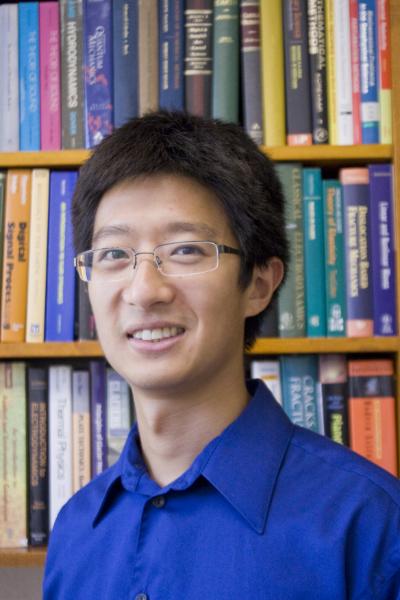
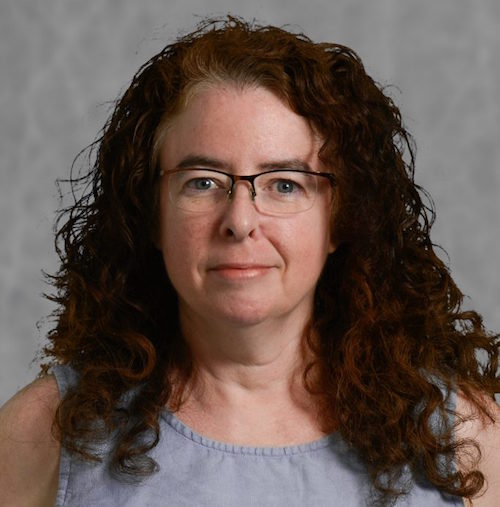
Dr. Amir Nourhani is an Assistant Professor and BRIC Core Faculty member at the University of Akron, with joint appointments in Mechanical Engineering and Biology. His research explores microscale transport phenomena, including electrokinetics, acoustofluidics, and bio-fluid dynamics. He develops theoretical models for active particle systems, stochastic dynamics of microswimmers, and biomimetic swarm behaviors. Current projects include CAREER: Biomimetic Swarm of Active Colloids with Off-Center Interaction Sites. Recognitions include the David H. Rank Memorial Physics Award and Honorable Mention for the Peter Clay Eklund Graduate Lectureship Award.
Farid Farrokhi serves as an Associate Professor of Economics at Boston College, maintaining an office in Maloney Hall, room 341. His professional correspondence is facilitated through farid.farrokhi@bc.edu . His academic foundation includes: B.Sc. from Sharif University M.Sc. from Sharif University Ph.D. from Penn State Professor Farrokhi's research bridges International Trade , Spatial Economics , and Environmental Economics , with particular emphasis on trade-induced agricultural transformation, spatial migration patterns, and climate-trade policy interactions. His methodological approach integrates theoretical modeling with empirical analysis of global economic systems. Analysis of his 2019-2025 publications reveals a consistent focus on trade-environment synergies, notably examining deforestation dynamics and climate mitigation through trade policy. Concurrently, his spatial economics work investigates urban wage structures and refugee resettlement networks, while agricultural trade studies explore productivity shifts and food consumption patterns. No scientific awards were documented in the provided materials. The available information does not specify current advisees, grant funding, or research supervision activities. His professional resources include a curriculum vitae and research statement accessible through institutional channels. There is no indication of laboratory affiliations or dedicated research teams within the source documentation.
Professor Sergei Fedotov is a Professor of Applied Mathematics in the Department of Mathematics at the University of Manchester. He holds a PhD from Ural Federal University (1986) and has held academic positions in London, Aachen, Wuppertal, and Berlin before joining Manchester in 1998. His research focuses on random walk theory, reaction-transport systems, and anomalous transport phenomena with applications to biophysics, nanotechnology, and cancer biology. His expertise includes non-Markovian models, fractional calculus, and interdisciplinary collaborations in areas such as intracellular transport, nanoparticle dynamics, and DNA repair. Fedotov has led major grants, including EPSRC-funded projects on nanoparticle transport in radiotherapy and FAPESP-UoM collaborations on correlated memory in biological systems. He has supervised PhD students including Anna Gavrilova, Daniel Han, and Helena Stage, and collaborates with institutions globally, such as Universitat Autònoma de Barcelona and The Christie Hospital. Key research themes include stochastic models of subdiffusion/superdiffusion, fractional partial differential equations, and the application of statistical mechanics to biological systems. His work contributes to sustainable development goals through advancements in medical physics and environmental modeling. Recent publications explore heterogeneous transport in C. elegans, stochastic water flow dynamics, and the modeling of radiation-induced DNA damage. Fedotov’s team develops novel frameworks to bridge theoretical mathematics with experimental biology, emphasizing the role of memory effects and non-equilibrium processes. Grants managed include the EPSRC £702k project on improving radiotherapy via nanoparticle transport modeling (2021–2025) and the FAPESP-UoM study on correlated memory in biological systems (2018–2022). His work integrates mathematical rigor with experimental validation, addressing challenges in cellular logistics and disease mechanisms.
Timothy Verstynen is a Professor of Psychology and Neuroscience Institute at Carnegie Mellon University, affiliated with the Dietrich College of Humanities and Social Sciences. His research focuses on cognitive neuroscience, cognitive science, computational modeling, and learning science. He investigates how neural pathways regulate action planning, skill learning dynamics, and structure-function relationships in the brain. His work integrates psychophysics, computational models, and neuroimaging techniques (fMRI, TMS, diffusion imaging). Key research themes include: 1) Action selection and stopping mechanisms under sensory input; 2) Neurobiological bases of skill acquisition timelines; 3) White matter architecture's role in cognitive functions. Recent studies explore links between brain structure, cardiovascular health, and decision-making processes using multimodal imaging and machine learning. Notable publications address cortico-basal ganglia-thalamic circuits' role in decision policies, stress-brain connectivity, and reward-based learning. His CoAx Lab develops tools like CBGTPy for modeling decision-making systems. Research spans neuroimaging methodological advancements (e.g., local connectome fingerprinting) and translational health neuroscience projects.
Martin Erinin is an Assistant Professor in the Department of Mechanical Engineering at the University of Michigan . His research focuses on experimental fluid mechanics , with broad interests in multiphase flows , free-surface flows , and surfactant-dominated flows , alongside the development of optical measurement techniques for thermos-fluids . His work has significant environmental , naval , and industrial applications . Contact Details: Office: 2027 Automotive Lab, 1231 Beal, Ann Arbor, MI 48109-2133 Lab: G019 Automotive Lab Email: merinin@umich.edu Research Highlights: Studies ocean waves , air-sea interaction , and wave-particle transport mechanisms. Investigates ice accretion on marine structures and wave-ice sheet interactions . Develops experimental methods to analyze complex fluid dynamics systems.
Michael C. Gurnis is the John E. and Hazel S. Smits Professor of Geophysics at the California Institute of Technology and has served as Director of the Seismological Laboratory (2009-2024) and Schmidt Academy for Software Engineering (2019-). With a B.S. from the University of Arizona (1982) and a Ph.D. from Australian National University (1987), he has held faculty positions at Caltech since 1994, becoming full Professor in 1996 and Smits Professor in 2005. His research spans computational geodynamics, mantle convection, and plate tectonics. California Institute of Technology Division of Geological and Planetary Sciences Seismological Laboratory Schmidt Academy for Software Engineering Research Interests: Gurnis focuses on computational geodynamics to link mantle convection to surface tectonics, using forward/inverse models to study plate motion dynamics , subduction zone mechanics , and deep mantle structures . His work bridges present-day geophysics with historical models through 4D Earth modeling , integrating seismic tomography, mineral physics, and paleogeography via the GPlates consortium. Recent projects include dynamic emergence of continents , plume interactions , and impact-driven subduction . Publications: Gurnis' research spans high-resolution global models of mantle flow, subduction zone rheology, and cratonic basin dynamics. Key trends include multi-physics coupling , Bayesian inversion techniques , and planetary-scale tectonic drivers . His 2024 papers address nonlinear mantle viscosity , shear zone weakening , and impact origins of tectonics . Scientific Awards: Gordon Bell Prize Finalist (2008, 2010) Springer CSE Prize (2011) for plate tectonics simulation work Advising: Mentors graduate students in computational geodynamics, including Jiaqi Fang, Erin Hightower, Yida Li, and Ojashvi Rautela. Collaborates with postdocs and international institutions like ETH-Zurich and National University of Mexico on mantle wedge dynamics and seismic geography. Labs & Teams: Leads the Seismological Laboratory and co-founded the Schmidt Academy for Software Engineering , driving innovations in geodynamic simulations and computational tools.
Dr. Leonie Baumann is an Assistant Professor in the Department of Economics at McGill University, specializing in Economic Theory, Networks, Mechanism Design, and Game Theory. She holds a Ph.D. (summa cum laude) and M.Sc. in Economics from the University of Hamburg, and dual B.A. degrees from the University of Siegen. Currently on maternity leave, Dr. Baumann previously served as a Postdoctoral Research Associate at the University of Cambridge. Her research explores social interactions in microeconomic theory, with a focus on network formation dynamics, strategic evidence disclosure, and robust implementation mechanisms. Recent work examines how network structures influence economic decision-making and resource allocation. Dr. Baumann's publications demonstrate consistent focus on network economics and game-theoretic modeling, with emerging applications in discrimination mechanisms and evidence disclosure. Her methodological approaches combine theoretical rigor with computational innovations. Awards & Recognition: Vice-Chancellor's Innovation Award (2020) Econometric Society Travel Grant (2015) Multiple research grants including SSHRC and FQRSC funding Supervision & Service: Currently advising 4 doctoral students on topics ranging from biosolvent characterization to indoor air quality Active editorial board member for Journal of Mathematical Economics Organizes international conferences on economic theory
Dr. Tyler Derr is an Assistant Professor in the Department of Computer Science at Vanderbilt University, with affiliate roles in the Data Science Institute and the Frist Center for Autism and Innovation. He holds a PhD from Michigan State University (2020) and focuses on data mining, machine learning, and graph neural networks with applications in drug discovery, ethical AI, and neurodiversity research. Education: PhD in Computer Science, Michigan State University (2020) M.S. in Computer Science, Pennsylvania State University B.S. in Computer Science and Mathematics, Pennsylvania State University His research emphasizes interdisciplinary social good, including drug discovery, education equity, and autism innovation. He directs the Network and Data Science (NDS) Lab, mentoring students who have won 50+ awards. Notable contributions include tools like FairNNV for fairness certification and datasets like WelQrate for drug discovery benchmarking. Awards include the NSF CAREER Award (2023), NVIDIA Academic Grant (2024), and Vanderbilt’s Career Catalyst Impact Award (2025). He co-founded the MLoG workshop series and serves on editorial boards for ACM TKDD and IEEE Transactions on Big Data . Grants & Leadership: NSF Grant for student travel to KDD2024 NVIDIA BioNeMo Platform grant for peptide design DOE Computational Science Fellowship advising His work bridges theory and practice, with tutorials on graph ML at AAAI/KDD and keynotes on ethical AI. The NDS Lab hosts interdisciplinary collaborations in computational biology, transportation, and neurodiversity advocacy.
Justus Ndukaife is an Associate Professor of Electrical Engineering and Mechanical Engineering at Vanderbilt University's School of Engineering. He holds a Ph.D. in Electrical Engineering from Purdue University (2017), an M.S. from Purdue, and a B.S. from the University of Lagos. His research focuses on nanophotonics, microfluidics, and bio-inspired soft robotics, with emphasis on optical trapping, programmable self-assembly of nanostructures, and optobiomechanical actuators. Key research areas include nano-optical trapping using plasmonic and dielectric metasurfaces, energy harvesting systems, and single-nanoparticle analysis for biomedical and environmental applications. Notable achievements include the 2017 Dimitris N. Chorafas Foundation Award for his doctoral work and the NSBE Golden Torch Award. His recent work explores advanced optical tweezers, quasi-bound states in the continuum (BIC) for thermal emission control, and lab-on-a-chip technologies. He leads interdisciplinary projects funded by NSF grants, including the CAREER grant for EV analysis (2022) and the NOTED quantum photonics initiative (2023). Grants: NSF CAREER (2022), NSF CQIS (2023) Labs/Teams: Interdisciplinary nanophotonics and optofluidics research groups Publications: Over 60+ peer-reviewed articles in Nature Nanotechnology , Science , and ACS Nano , emphasizing optical manipulation and nanoscale systems.
Roles and Affiliations: Daniel Berkowitz is a Professor of Economics at the University of Pittsburgh. He holds a secondary appointment at the Graduate School of Public and International Affairs. His research focuses on comparative institutions, development economics, and applied microeconomics, with a strong emphasis on legal frameworks and economic reforms in transitioning economies, particularly China and post-Soviet states. Recent Activities: Visiting Researcher, Bank of Finland Institute for Emerging Economies (2024) Visiting Professor, Heinz School of Carnegie Mellon University (2022) Executive Secretary of the Association for Comparative Economic Studies (2019-2021) Former Co-Managing Editor of the Journal of Comparative Economics (2007-2016) Research Interests: Berkowitz’s work explores how legal institutions, political dynamics, and historical contexts shape economic outcomes. Key themes include: The impact of legal transplants on trade and development State-owned enterprises and reforms in China Environmental and energy economics, including fracking’s economic implications Bureaucratic capacity and policy effectiveness His interdisciplinary approach merges law, economics, and policy analysis. Publications Overview: His recent work addresses topics like household financial strategies in fracking regions, bureaucratic influences on income distribution, and corporate governance in China. Earlier research examined Russia’s market reforms and the long-term effects of legal systems on trade. Grants and Labs: Active in cross-institutional collaborations, including visiting roles at Tsinghua University and the National Bureau of Economic Research. No specific lab affiliations were mentioned, but his work often involves empirical field studies and institutional analysis.
Tino Weinkauf is a Professor of Visualization and Head of the Division of Computational Science and Technology at KTH Royal Institute of Technology in Stockholm. His work bridges computer science and applied mathematics, with a focus on visualization and topological data analysis. He leads research in visualizing complex data from fields like fluid dynamics, neurobiology, and human-computer interaction. Education: Ph.D. in Computer Science (not explicitly stated in provided texts, but inferred from career trajectory). Research interests include flow visualization, topological methods for data analysis, and interactive visualization techniques. He develops tools like the TopoInVis Toolkit (TTK) and contributes to infrastructure such as the Swedish Research Infrastructure for Visualization Support (InfraVis). His work emphasizes applications in turbulence modeling, biomedical imaging, and user-centered design. Teaching: Responsible for courses such as Advanced Topics in Visualization and Computer Graphics , Information Visualization , and Introduction to Visualization and Computer Graphics . Supervises degree projects in Computer Science and Engineering across specializations like Machine Learning and Interactive Media Technology. Publications focus on topological data analysis, flow segmentation, and algorithm optimization. Notable projects include binary segmentation of turbulent flows and interactive reward tuning systems for preference elicitation. Labs/Teams: Leads the Division of Computational Science and Technology at KTH, fostering interdisciplinary research in computational methods and visualization technologies.
James Roscow is a Senior Lecturer in the Department of Mechanical Engineering at the University of Bath, affiliated with the Centre for Integrated Materials, Processes & Structures (IMPS), IAAPS, and the Institute of Sustainability and Climate Change. His research focuses on developing ferroelectric composites for energy harvesting, sensing, and energy storage, with expertise in material fabrication, property tuning, and numerical modeling. He holds a PhD in Mechanical Engineering from the University of Bath and a BSc in Materials Science from the University of Manchester. Research interests include porous ferroelectric ceramics, piezoelectric and pyroelectric materials, and their applications in renewable energy and sensors. He has led or contributed to 12 projects funded by organizations like EPSRC and Innovate UK, exploring topics such as low-cost transducers, nanofluid cooling for solar panels, and phase transformations in ceramics. Key publications (2021–2025) address piezoelectric energy harvesting, porous material design, and advanced manufacturing techniques. His work aligns with UN SDGs, particularly sustainable energy and innovation. Roscow supervises PhD students in functional ceramics, energy storage, and sensor technologies. Notable collaborations include projects on hydraulic energy harvesters, SONAR transducers, and self-healing materials. He has contributed datasets on piezoelectric composites and energy storage systems, emphasizing reproducibility and applied research.
Matthias S. Maier is an Associate Professor in the Department of Mathematics at Texas A&M University, affiliated with the College of Arts & Sciences. His research focuses on multiscale methods, computational fluid dynamics, and finite element software development, particularly with the deal.II library. He organizes an annual undergraduate summer school on PDE modeling and simulation. Research Interests: Multiscale effects in Maxwell’s equations, computational fluid dynamics, finite element methods, and numerical analysis. His work includes studies on surface plasmon-polaritons, homogenization theory, and high-performance computing for hyperbolic systems. Developed ryujin, a high-performance finite-element solver for compressible flows. Contributed to deal.II, a widely used open-source finite element library. Recipient of NSF awards (DMS 1912847, DMS 2045636) and AFOSR funding. Teaching includes courses on numerical methods (Math 417, 610), mathematical modeling (Math 442), and finite element methods (Math 676). He advises graduate students in applied mathematics and computational science. Labs/Teams: Core developer of deal.II and contributor to the ryujin framework. Collaborates with interdisciplinary teams in physics and engineering.
Victor Tsai is a Professor of Earth, Environmental, and Planetary Sciences at Brown University. He specializes in seismology, geomechanics, and theoretical glaciology, with a focus on earthquake mechanics, glacial dynamics, and wave propagation. His research bridges geophysical theory and observation, addressing topics like fault network complexity, subglacial hydrology, and seismic tomography. Tsai holds a PhD from Harvard University (2009) and has been recognized with awards including the NSF CAREER Award (2015) and the Charles F. Richter Award (2014). Education: PhD (Harvard, 2009), AM (Harvard, 2006), BS (Caltech, 2004) Affiliations: Brown University (since 2019), previously at Caltech (2011–2019) Research highlights include modeling earthquake source complexity, understanding high-frequency ground motion, and developing new seismic imaging techniques. His work on glacial earthquakes and meltwater pulses has advanced climate-ice interaction studies. Collaborations span seismology, glaciology, and planetary science.
Sharon Lubkin is a Professor in the Department of Mathematics at North Carolina State University (NCSU). Her research focuses on modeling biological systems, continuum mechanics of tissues, and morphogenesis. She is affiliated with the Quantitative and Computational Developmental Biology research cluster and the NCSU/UNC Department of Biomedical Engineering. Dr. Lubkin holds roles such as SIAM representative to the Joint Committee on Women in Mathematics (2017-23) and former Publications Chair of the Society for Mathematical Biology (2004-2016). Education: Ph.D. in Applied Mathematics from Cornell University (1992). Research Interests: Modeling biological systems Continuum mechanics of soft tissues Mechanobiology and drug delivery Biomechanics of morphogenesis Collaborations with experimental biologists and engineers Funding: Supported by the Simons Foundation, NSF, and NIH. Advises students in Biomathematics, Applied Mathematics, Biomedical Engineering, and Mechanical Engineering. Professional Activities: National SIAM committee roles Leadership in mathematical biology organizations Active in promoting interdisciplinary collaborations