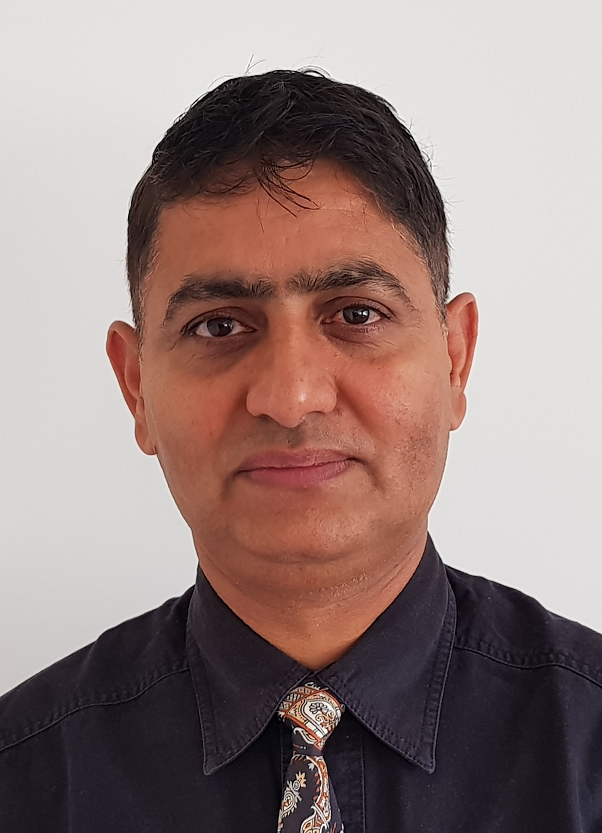
Professor Vishnu Pareek is the John Curtin Distinguished Professor at Curtin University, leading the Western Australian School of Mines (WASM) within the Faculty of Science and Engineering. He has held academic roles including Dean of Engineering, Head of School, and various professorships since 2002. His research focuses on multiphase flow modeling, computational fluid dynamics, and reactor engineering, with applications in energy and chemical processes. He holds a BE (Hons) from MNIT, MTech from IIT Delhi, and a PhD from UNSW. Key research interests include LNG process modeling, erosion modeling, and granular flow dynamics. He has authored over 200 peer-reviewed publications, with recent work emphasizing structured packing design, biomass gasification, and additive manufacturing for process intensification. Notable projects include CFD-ANN hybrid models for fluidized beds and experimental studies on 3D-printed structured packings. His expertise spans industrial collaborations in LNG safety, fluid catalytic cracking, and biofuel production. Teaching areas include chemical engineering fundamentals and process systems engineering. He advises on energy policy and leads research teams in multiphase flow and reactor design.
Dr. Matthew Jones is a Senior Lecturer in Criminology at Swinburne University of Technology’s School of Social Sciences, Media, Film and Education. With a career spanning institutions in the UK and Australia, Matthew’s research bridges interdisciplinary domains including policing, sociology, law, and organizational studies. He is a Senior Fellow of the Higher Education Academy, emphasizing evidence-informed pedagogy and curriculum innovation. Affiliation: Swinburne University of Technology (2022–Present) Previous Roles: The Open University (2017–2022), Northumbria University (2014–2017), Cardiff Metropolitan University (2013–2014). Research Themes: Matthew’s work focuses on three core areas: Policing: Police visibility, digital strategies, occupational culture, diversity, and leadership. LGBTQI+ Criminology: Workplace discrimination, hate crimes, community-police relations, and victimology. Digital Criminology: Technology’s role in policing, crime prevention, and digital victim support systems. Publications: His 15 most recent articles highlight evolving trends in digital policing, police visibility, academic standards in policing education, and LGBTQI+ workplace experiences. These works span qualitative studies, policy analysis, and interdisciplinary collaborations, reflecting his commitment to visual criminology and semiotics. Scientific Awards: Senior Fellow of the Higher Education Academy (2022) Fellow of the Higher Education Academy (2013) Professional Activities: Matthew served as Chair (2019–2022) and Board Member (2013–2019) of the British Society of Criminology’s Policing Network. He led curriculum development for police apprenticeships (2017–2019) and contributed to the first UK Subject Benchmark Statement for Policing (2022). He supervises PhD students on topics like community policing, child maltreatment resilience, and crime drama narratives. Education: He holds an LLB in Law, an MSc in Social Science Research Methods, a PhD in Socio-Legal Studies, a PGCert in Higher Education pedagogy, and an MBA in Leadership Practice.
Kwanghee Jeong is a Research Fellow at the University of Western Australia , affiliated with the Fluid Science and Resources research group within the School of Engineering and Chemical Engineering Department . His work focuses on energy transport, decarbonisation technologies, and flow assurance. Education: PhD in Chemical Engineering (UWA, 2020), BSc in Mechanical Engineering (Dongguk University, 2014) Research Themes include: Flow Assurance for hydrogen, CO2, and natural gas pipelines Carbon Capture & Emissions Management (MOFs, Raman spectroscopy) Cryogenic Hydrogen Process Engineering (liquefaction, boil-off gas) Cold Energy Utilisation and Waste Heat Recovery Hydrate Formation Kinetics via Acoustic Levitation Article Trends reflect expertise in: Using Raman spectroscopy for real-time adsorption and phase transition analysis Developing Joule-Thomson loops to simulate pipeline conditions Optimizing Metal-Organic Frameworks for GHG separation Advancing hydrogen liquefaction efficiency through catalysis Addressing microplastics and hydrate nucleation via spectroscopic methods Scientific Awards : Best Poster Award (2023) - Natural Gas UWA Travel Award (2017) ARC PhD Scholarship (2016) He contributes to UN Sustainable Development Goals via decarbonisation research and has collaborated with Chevron, Woodside Energy, and Curtin University. His technical skills include Aspen HYSYS, OLGA simulations, HAZOP studies, and Differential Scanning Calorimetry (DSC).
Zachary Aman is a Professor in the School of Engineering , Chemical Engineering department at the University of Western Australia . His research focuses on gas hydrates , flow assurance , and subsea pipeline management , with applications in petroleum engineering and hydrocarbon processing . Research Output: 127 publications Grants: 53 funded projects H-index: 39 Research interests include: Hydrate formation kinetics and rheology Subsea flowline stability and inhibition Hydrocarbon separation under high-pressure Novel composite materials and ionic liquids for hydrate management Article Trends highlight his work on hydrate probability models , flowloop experiments , and environmental applications like oil spill modeling and CO 2 capture. His recent work explores nanostructured additives and transient simulation tools for energy and environmental systems. Grants and Supervision reflect 53 funded projects and 19 supervised works, indicating active mentorship and industry collaboration.
Professor Asif Gill is Head of Discipline for Software Engineering at the School of Computer Science, University of Technology Sydney (UTS), where he was promoted to Professor of Computer Science in January 2024. He also serves as Director of the DigiSAS Research and Innovation Lab and is actively involved in the Global Big Data Technologies Centre at UTS. As a founder of both the DigiSAS Lab and the Future Generation Enterprise Architecture Community of Practice (FGEA CoP), he has established integrated teaching-research-engagement frameworks that translate academic research into practical applications while enhancing graduate employment opportunities. Professor Gill's research interests span Adaptive Enterprise Architecture , Agile Software Development , and Design Science Research & Innovation , with a particular focus on architecting large-scale data-intensive enterprise software systems. His work addresses challenges across academia, industry, government, and society, with significant contributions to AI systems architecture, digital identity management, and enterprise knowledge graphs. His applied research has resulted in numerous collaborations with organizations including the Reserve Bank of Australia, Revenue NSW, Capsifi, Data Zoo, and the NSW Department of Planning, Industry and Environment. His publication record includes 3 books and over 190 articles in major academic journals such as IEEE Transactions on Professional Communication, Information and Management, and Information Systems. His recent work demonstrates a consistent focus on cutting-edge topics in enterprise architecture, AI systems, and digital identity, with multiple publications appearing in 2024-2025. His research trajectory shows a clear evolution from foundational work in agile software development toward more sophisticated integration of AI, enterprise architecture, and data governance. Fellow of the Australian Computer Society (ACS) Fellow of DSE (ESCP Center for Design Science in Entrepreneurship) Senior Member IEEE Associate Editor, IEEE Transactions on Technology & Society Associate Editor, Springer Nature Discover Data journals Member, Data Sharing Committee, IFIP Technical Committee 8.1 Member, Standards Australia Software and Systems Engineering Committee IT-015 Professor Gill has successfully secured numerous research grants from 2019-2026, totaling significant funding for projects related to digital identity, enterprise architecture, and AI systems. His approach emphasizes industry-academia collaboration, with many projects involving direct partnerships with government agencies and industry organizations. He has supervised multiple PhD and Master's students through industry-sponsored scholarships and maintains active collaborations with researchers across multiple institutions. Leading the DigiSAS Research and Innovation Lab, Professor Gill has created an environment that bridges theoretical research with practical implementation. The lab focuses on developing frameworks and tools for adaptive enterprise architecture, with particular emphasis on AI-enabled systems, data governance, and digital identity solutions. His work on the Data Satellite Architecture represents a significant contribution to combating data pollution in federated digital ecosystems.
Ganesh Veluswamy is a Research Fellow at the School of Engineering, RMIT University. His research focuses on sustainable engineering solutions, including biochar applications, thermal treatment of biosolids, and waste-to-energy systems. He explores environmental management strategies and renewable energy technologies to address challenges in chemical and environmental engineering. His work integrates experimental techniques with computational modeling, such as Aspen Plus simulations for techno-economic analysis and CFD modeling for fluid dynamics. Key areas include PFAS destruction during thermal processes, hydrogen production from biogas, and algal biomass systems. Veluswamy contributes to advancing circular economy principles through innovative approaches to waste valorization and resource recovery. His research also extends to fluid catalytic cracking units, multiphase flow optimization, and biohythane utilization in fuel cells. These efforts highlight a commitment to bridging engineering innovation with environmental sustainability.
Bruce Norris is a Research Fellow and Lecturer in the Department of Chemical Engineering within the School of Engineering at the University of Western Australia (UWA), Faculty of Engineering and Mathematical Sciences. His work bridges academic research and industry applications, focusing on subsea oil and gas developments with emphasis on gas hydrate risk management and flow assurance optimization for deepwater operations. Education: PhD in Chemical Engineering, University of Western Australia (2019) Bachelor of Engineering (Chemical Engineering), University of Western Australia (2014) Bachelor of Science (Physics), University of Western Australia (2014) Research Focus: Norris specializes in quantifying gas hydrate risks through coupled hydrodynamic-hydrate modeling, with primary applications in subsea tieback systems. His research integrates experimental validation using high-pressure flowloops with predictive modeling to address hydrate formation severity and probability. Key contributions include developing tools for rheological analysis of hydrate slurries , regenerated inhibitor systems , and cage-specific thermodynamic models that enhance industry decision-making for safer, more cost-effective operations. His work directly supports UN Sustainable Development Goal 7 (Affordable and Clean Energy). Publication Trends: Recent publications (2021-2025) demonstrate a strategic shift toward integrated experimental-theoretical frameworks for hydrate management. Over 60% of his work addresses transient flow conditions and rheological behavior of hydrate systems, while emerging research focuses on emissions monitoring and renewable inhibitor technologies . His 2024-2025 publications reveal increasing industry collaboration, particularly with energy majors on deepwater tieback challenges. Research Funding: Norris actively leads multiple industry-funded projects including: Australian Technology Testbed for Fugitive Emissions Sensors (FEnEX CRC, 2025-2026) Static Hydrate Formation (Woodside Energy, 2024-2026) Hydrate Detection System for LNG Plants (FEnEX CRC, 2024-2025) Collaborative Infrastructure: Works within UWA's Fluid Science and Resources group utilizing specialized facilities including high-pressure flowloops, Joule-Thomson expansion apparatus, and hydrate formation simulators. Maintains strong industry partnerships with Woodside Energy, FEnEX CRC, and international research networks focused on advancing subsea production technologies through experimental validation and predictive modeling.
Mauricio Di Lorenzo Ruggeri serves as a Research Fellow at the University of Western Australia through a joint appointment and holds the position of Principal Research Engineer at CSIRO. He currently manages the Hytra flowloop facility at the Australian Resources Research Centre in Perth. Education: PhD in Mechanical and Chemical Engineering, University of Western Australia (2017) His research spans critical energy-sector disciplines with emphasis on subsea flow dynamics and fluid behavior: Natural gas hydrate formation and inhibition in pipeline systems Thermodynamic modeling of oil and gas production fluids Multiphase flow hydrodynamics in transportation pipelines Stability mechanisms of emulsions and colloidal suspensions Prior to joining CSIRO in 2007, he executed 13 years of industrial R&D at PDVSA (Venezuela), specializing in drilling fluid chemistry and production hydrodynamics. His laboratory management expertise supports experimental validation of flow assurance solutions.
Dr. Maryam Shahbazi is a Lecturer at the University of Sydney Business School. Her academic and professional background encompasses international business, project management, and social media analytics. Doctoral Dissertation in Business Information Systems (BIS) MPhil in Social Network Analysis Master of Project Management Executive Master of Business Administration (EMBA) Her research focuses on Business Information Systems and Social Network Analysis with applications in Crisis Management , particularly during pandemics and natural disasters. She investigates how social media dynamics influence situational awareness and decision-making in chaotic environments. Maryam's publications highlight a consistent trend in leveraging social media for crisis response and information systems continuity. She also contributes to pedagogical advancements in business education through work-integrated learning frameworks. She teaches the course INFS2050 - Data Governance and Technology Assurance , reflecting her expertise in information systems and management practices.
Dr. Leo Lebanov is a HYTECH ARC Training Centre Research Fellow in Analytical Chemistry at the Australian Centre for Research on Separation Science (ACROSS) within the School of Natural Sciences at the University of Tasmania, Australia. His research focuses on hyphenated analytical techniques, particularly gas chromatography-mass spectrometry, for analyzing complex samples including natural products and industrial process materials. His educational background includes: PhD in Analytical Chemistry/Data Analysis from the University of Tasmania (2021-2023) MSc in Analytical Chemistry from the ERASMUS MUNDUS MASTER IN QUALITY IN ANALYTICAL LABORATORIES (EMQAL) program in Barcelona/Bergen, Spain/Norway (2014-2016) Dr. Lebanov's primary research interests span separation science, analytical chemistry, data mining, analytical spectrometry, process control and simulation, quality assurance, chemometrics, traceability, metrological chemistry, and flow analysis. He specializes in applying advanced multivariate statistical approaches to extract insights from complex spectroscopic and chromatographic data, with recent work focusing on portable devices for process analytical technology. His research has significant applications in natural products analysis, pharmaceutical quality control, and industrial process monitoring. His publication record demonstrates a strong focus on the analysis of natural products, particularly essential oils, and the development of innovative analytical techniques. A significant portion of his work involves chemometrics and machine learning applications to analytical chemistry problems, with multiple publications on ylang-ylang essential oil analysis. He has made notable contributions to multidimensional gas chromatography, smartphone-based analytical devices, and LED-based detection systems, showing a consistent pattern of developing practical analytical solutions for complex chemical problems. Dr. Lebanov has secured research funding for projects including an "On-line monitoring system for Furacell tm process control" from the Australian Institute of Mathematics & Science Pty Ltd, valued at $20,500, demonstrating his ability to translate analytical research into industrial applications. His supervision activities include: Current doctoral supervision of "Analysis of biosolvent process samples" (since February 2024) External PhD/Masters supervision of "Biosolvents from Cellulose: Chemical characterisation of production processes" (since December 2022) Current doctoral supervision of "Biosolvents from Cellulose: Chemical characterisation of production processes" (since December 2022) Dr. Lebanov maintains strong industry connections through his concurrent position as a Scientist at Norske Skog Paper Mill/Circa Group (2021-2023), where he applied his analytical expertise to industrial process development, particularly in the Furacell tm production process for Cyrene tm . His work bridges academic research and industrial application, focusing on real-time process monitoring and quality control solutions.
Dr Matthew O'Meara is a Conjoint Senior Lecturer at the School of Women's & Children's Health, UNSW Sydney. His clinical and research focus spans paediatric emergency medicine , resuscitation , health systems , and medical education . Based at Sydney Children's Hospital, he contributes to advancing emergency care protocols and training programs for pediatric patients. His publications over two decades reflect expertise in pediatric emergencies, including dehydration management, asthma care, trauma resuscitation, and child protection. Key trends in his research emphasize fluid therapy , pre-hospital care , simulation training , and clinical guideline development to improve outcomes in vulnerable populations. While no specific grants or awards are mentioned in the provided texts, his work remains influential in pediatric emergency care systems.
George John is a Senior Lecturer in Pharmacy Practice and Head of Discipline Medical Science at Charles Sturt University’s School of Dentistry and Medical Sciences. With over 25 years of experience across Africa, Asia, and Australia, he specializes in teaching Pharmacy and Medical Science graduates while leading curriculum innovations. B.Pharm. (India) M.Pharm.Prac. (South Africa) Graduate Certificates in Pharmacoeconomics, Disease Management, University Learning & Teaching, and Leadership & Management (Australia) His research spans pharmacy practice , medical education , generative AI ethics , microbiology , and healthcare process improvement . Recent publications include studies on: Pre-analytical errors in diagnostics (2025) AI depiction bias in pharmacy (2024) Candida auris resistance mechanisms (2024) Online learning modules for medical laboratory students (2024) He has secured $150,000 in competitive grants and supervised over 20 Research Higher Degree students. Active in academic governance via the Academic Senate and Faculty Boards, he also contributes to: NSW Ministry of Health Pharmacy Workforce Planning (2012-2022) Murrumbidgee Local Health District Safety & Quality Committee
Paul Stanwix is Associate Professor in the School of Engineering at the University of Western Australia, with joint appointments in Mechanical and Chemical Engineering. His research develops novel sensing technologies for fluid mixtures in energy applications, particularly hydrogen, natural gas, and cryogenic systems. Research focuses on: Hydrogen liquefaction and ortho-para conversion Microwave and NMR sensing technologies Thermophysical property measurement Gas hydrate formation and flow assurance Cryogenic fluid behavior Recent publications feature advanced sensor designs for industrial applications, including hydrogen purity monitoring and multiphase flow measurement. Research integrates experimental techniques with thermodynamic modeling. Significant recognition includes: WA Innovator of the Year Finalist (2019) ARC Discovery Early Career Award (2014) National Measurement Institute Prize (2008) Stanwix co-founded Jovian Tech commercializing hydrogen sensors and holds multiple patents. Current projects include developing hand-held skin cancer probes and optimizing hydrogen liquefaction processes.
Dr. Asheesh Kumar is a Researcher at the CSIR-Indian Institute of Petroleum. Previously, he held positions as a Post-Doctoral Research Fellow at the National University of Singapore (2016–2018) and a Research Associate at the University of Western Australia (2018–present). He specializes in gas hydrate technology, CO₂ capture/sequestration, and flow assurance. His work focuses on energy storage solutions, including solidified natural gas (SNG) and hydrate-based carbon capture. Education: M.Tech., Indian Institute of Technology Roorkee (2010) Ph.D., CSIR-National Chemical Laboratory, Pune (2016) Research Interests: His research spans gas hydrate formation kinetics, CO₂ sequestration in marine sediments, and sustainable energy storage. He has pioneered studies on additives to enhance hydrate stability and reduce environmental impact. Notable contributions include the use of biopolymers and recycled materials in energy systems. Key Achievements: Two of his publications are listed as highly cited by Essential Science Indicators. He received the NCL RF-Keerti Sangoram Memorial Endowment Award (2016) for excellence in research. Labs & Teams: Associated with the Fluid Science and Resources group, focusing on advanced hydrate-based technologies and sustainable resource management.
Thomas Miller is a Professor at Queensland University of Technology's Faculty of Business & Law, specifically within the School of Information Systems. His research focuses on the intersection of blockchain technology, supply chain management, and decentralized finance systems. With a publication record spanning from 2008 to 2025, his work demonstrates a significant evolution from materials science applications to cutting-edge blockchain implementations. Miller's research interests center around blockchain technology applications in supply chain traceability, decentralized finance instruments, and e-commerce security systems. His work particularly emphasizes practical implementations in food supply chains, with multiple case studies focused on the Australian beef industry and livestock export sector. He has developed innovative approaches combining organizational theory with technical blockchain implementations, particularly through integrating the REA (Resource-Event-Agent) accounting model with multisignature architecture. His publication portfolio reveals a strong trend toward solving real-world business problems through blockchain technology, with particular emphasis on cross-border trade barriers, consumer trust mechanisms, and governance frameworks that bridge on-chain and off-chain systems. The progression of his research shows increasing sophistication in addressing both technical and organizational challenges in implementing blockchain solutions. Miller has established a robust collaborative network, frequently publishing with researchers including Shoufeng Cao, Marcus Foth, Warwick Powell, and Xavier Boyen. These collaborations span multiple disciplines, connecting information systems with business, agriculture, and international trade perspectives.