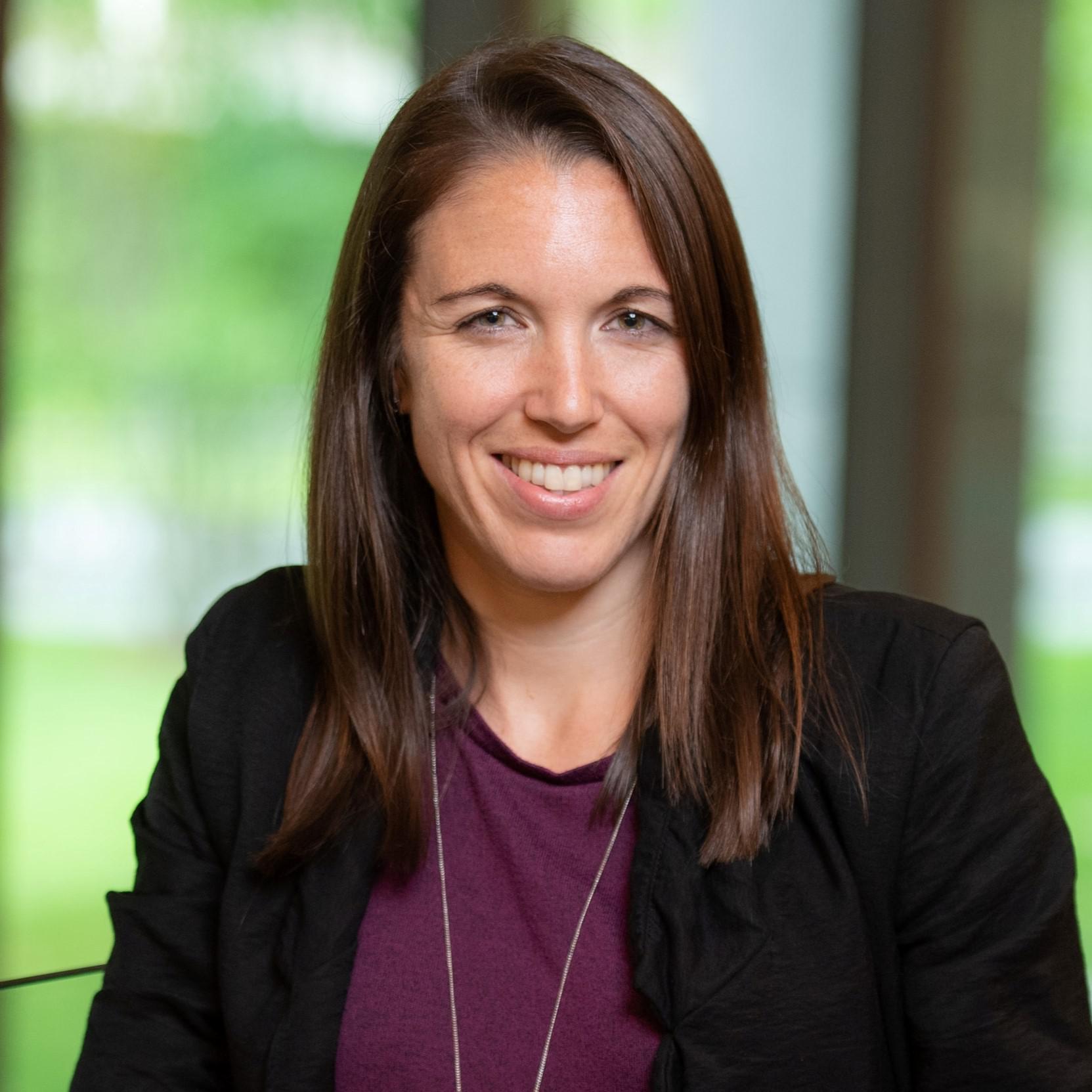
Petri Jokela is a Researcher affiliated with the Faculty of Engineering and Natural Sciences, focusing on advanced wastewater treatment technologies. His work emphasizes dissolved air flotation (DAF) applications in managing industrial and aquacultural effluents. Key contributions include studies on activated sludge clarification and fish farming wastewater treatment. Research outputs (2): 2003: Published in Water Science and Technology on DAF for chemical industry wastewaters 2000: Presented at the 4th International Flotation Conference on fish farming wastewater treatment His research bridges environmental engineering and chemical engineering, addressing critical challenges in sustainable water resource management.
Annika Norell-Clarke is an Associate Professor in Psychology Research at Karlstad University, with affiliations at Kristianstad University. She specializes in children and adolescents’ mental health and insomnia mechanisms, contributing to the 'Sleep and Health' network, which publishes the Swedish journal Sömn och Hälsa . She holds a psychologist license since 2010 and earned her doctorate in 2014 with a thesis on cognitive processes in insomnia. Education: Psychologist degree (2008) Doctorate in Psychology (2014) Research Interests: Her work focuses on insomnia treatments, cognitive behavioral therapy (CBT), sleep interventions (e.g., sleep robots, flotation therapy), and the psychological impact of family structures (e.g., parental separation) on sleep. She also investigates the role of emotion dysregulation and comorbid mental health conditions in sleep disorders. Publications Trends: Recent work emphasizes digital health innovations (e.g., sleep robots), systematic reviews of insomnia treatments, and longitudinal studies on adolescent sleep patterns. Her research bridges clinical practice and theoretical frameworks, such as paradoxical intention and psychometric scale validation. Grants/Advising: No grants or student advisees explicitly listed. Collaborates widely with institutions like Örebro University and Kristianstad University. Labs/Teams: Active member of the 'Sleep and Health' network, promoting interdisciplinary sleep research in Sweden.
Marissa Lynne Gray serves as an Assistant Professor (Research) in Brown University's School of Engineering and directs the Biomedical Engineering Master's Program. She joined Brown in January 2019 after serving as Teaching Assistant Professor and Associate Chair of Graduate Programs at Stevens Institute of Technology, bringing expertise in clinical engineering and wearable sensor systems. Her educational background includes a PhD (2014) and ME (2011) in Biomedical Engineering from Stevens Institute of Technology, and a BS in Biomedical Engineering with Electrical and Computer Engineering minor from Worcester Polytechnic Institute (2009). Dr. Gray's research bridges electrical engineering principles with clinical applications through wearable sensor technology. Her work spans military-funded projects like dry EEG electrode headsets for the Army Research Laboratory and smart flotation devices for U.S. Special Operations Command, to current cancer care applications monitoring anxiety through physiological sensors. She emphasizes translational engineering solutions for real-world healthcare challenges. Recent publications (2022-2025) reveal dual research trajectories: advancing biomedical engineering education through curriculum innovation and industry partnerships, while developing wearable sensor applications for mental health monitoring in clinical populations. Her work consistently connects pedagogical development with practical clinical implementations. Her research has secured Department of Defense funding for military medical technology development. As Director of the Biomedical Engineering Master's Program, she shapes graduate curriculum and oversees student training in engineering design and innovation. Dr. Gray maintains active collaborations across Brown's ecosystem, particularly with Radiation Oncology, Computer Science, and Psychiatry departments, leveraging interdisciplinary approaches to advance wearable sensor applications in clinical settings.
Dr. Nevena Vukić serves as a Professor at the Department of Physics and Materials within the Faculty of Technical Sciences, University of Kragujevac. Her academic career spans institutions including the Faculty of Technology in Novi Sad (2012-2020) and her current position at the Čačak campus since 2020. She holds a PhD in Materials Engineering from the University of Novi Sad with a perfect 10.00 average grade. Her research focuses on sustainable materials science, particularly biodegradable packaging, polymer nanocomposites, and green chemistry applications. Analysis of her 15 most recent publications reveals consistent emphasis on cellulose-based films, polylactide modifications, and nanotechnology-enhanced materials. Key trends include valorization of waste streams (PET glycolysis), edible packaging development, and educational applications of materials science. Scientific recognition includes: Best female scientist award at University of Kragujevac (2023) Author/co-author of 150+ conference papers and journal articles Textbook author and book chapter contributor Technical solution patent holder She mentors diploma and master's theses at vocational studies programs while serving on doctoral dissertation committees. Her international collaborations include research stays at Demokritos National Research Center (Athens) and Institute of Materials Research (Košice), along with participation in COST and FP7 projects.
Lei Pan serves as Associate Professor in the Department of Chemical Engineering within Michigan Technological University's College of Engineering. He joined the department in Fall 2016 after completing postdoctoral research at Virginia Polytechnic Institute and State University, where he also earned his advanced degrees in Mining Engineering. His research focuses on surface chemistry and process modeling to enhance mineral processing efficiency while reducing environmental impacts. Dr. Pan's academic credentials include: PhD in Mining Engineering from Virginia Polytechnic Institute and State University MS in Mining Engineering from Virginia Polytechnic Institute and State University BS in Mineral Processing Engineering from Central South University, China His research spans mineral processing fundamentals and applied sustainable technologies, with current projects targeting lithium extraction from primary/secondary resources, industrial decarbonation through mineral carbonation, and circular economy solutions for electric vehicle battery recycling. This work directly addresses critical challenges in critical minerals supply chains and industrial sustainability. Analysis of Dr. Pan's 2010-2016 publications reveals a cohesive research trajectory centered on fundamental mechanisms in particulate separation processes. His work consistently investigates bubble-particle interactions, hydrophobic forces, and wetting film dynamics through experimental measurement and first-principles modeling, establishing foundational knowledge for advancing mineral processing technologies. No scientific awards were documented in the provided materials. Dr. Pan actively recruits fully funded PhD candidates through research grants, offering stipends starting at $24,000 (with inflation adjustment) and full tuition coverage ($27,702). His research group provides substantial professional development including conference travel support, entrepreneurship training, and structured leave policies, with graduates securing industry positions at $120K-$210K starting salaries. He directs the Laboratory of Multiscale Separation Technologies (LAMST), which integrates experimental wet chemistry with computational modeling to develop next-generation separation processes for critical materials and decarbonization applications.
Dr. Ngoc N. Nguyen is a Senior Lecturer and ARC DECRA Fellow at the School of Chemical Engineering, The University of Queensland (UQ), Australia. He earned his PhD in Chemical Engineering at UQ in 2018 after receiving an Australia Award Scholarship. His postdoctoral work included an Alexander von Humboldt Fellowship (2019-2021) at the Max Planck Institute for Polymer Research and visiting scholar roles at Pacific Northwest National Laboratory (USA) and Hanoi University of Science and Technology (Vietnam). Research Interests: Dr. Nguyen specializes in surface and interfacial science, with applications in minerals processing, energy and resources engineering, and environmental sustainability. His work addresses challenges in the low-carbon economy through Gas hydrate-based energy storage (e.g., hydrogen, methane) Eco-efficient mineral extraction and separation CO 2 capture and mine waste recycling Publication Trends: His recent articles focus on ion-specific effects in flotation, colloidal interactions, gas hydrate kinetics, and sustainable mineral processing. Key methodologies include sum frequency generation spectroscopy , colloidal probe AFM , and X-ray tomography . Scientific Awards: ARC DECRA Fellowship (2024) Alexander von Humboldt Fellowship (2019) Supervision & Grants: As an associate investigator in the ARC Centre of Excellence for Eco-enabling Beneficiation of Minerals, he mentors PhD candidates on topics like flotation froth dynamics and X-ray CT applications in mineral processing. His research has secured significant ARC and industry funding.
Brajendra Mishra is the Kenneth G. Merriam Professor of Mechanical & Materials Engineering at Worcester Polytechnic Institute (WPI) and Director of the Metal Processing Institute (MPI). He also leads the NSF-funded Industry/University Collaborative Research Center on Resource Recovery & Recycling. Previously, he held roles at the Colorado School of Mines and Tata Steel, and served as President of TMS and AIME. His expertise spans corrosion, materials processing, and sustainable resource management. Education: Bachelor of Technology in Metallurgical Engineering, Indian Institute of Technology, Kharagpur (1981) M.S. in Materials Science, University of Minnesota (1983) Ph.D. in Materials Science, University of Minnesota (1986) Research Interests: Mishra focuses on corrosion-resistant materials, advanced manufacturing processes, and recycling technologies. His work emphasizes environmental sustainability, particularly in critical materials recovery and industrial waste valorization. He advocates for student engagement in cutting-edge research to bridge academia and industry needs. Awards & Recognition: ASM International Fellow (2001) TMS Fellow (2016) 2010 Minerals, Metals & Materials Society Distinguished Service Award 2008 Indian Institute of Metals Honorary Membership Grants & Leadership: Directs NSF-funded research centers and collaborates with industries to advance sustainable materials processing. His work includes optimizing mobile manufacturing labs for military applications and analyzing road salt impacts on automotive materials. Labs & Teams: Leads the MPI at WPI, fostering interdisciplinary research in metallurgy, corrosion science, and resource recovery. Engages students in projects addressing global challenges like material scarcity and recycling inefficiencies.
Dr Timothy Hunter is an Associate Professor at the School of Chemical and Process Engineering , University of Leeds. He serves as the Deputy Director for Industrial Engagement at the Leeds Institute for Fluid Dynamics (LIFD) and leads the Nuclear Engineering Group at Leeds. His expertise spans Ultrasonics , particle-stabilized foams/emulsions , surfactant & polymer solution structure , and ion exchange for effluents . Education: PhD in Chemical Engineering, University of Newcastle, Australia (2009) BSc(Chemistry)/BE(Chemical Engineering) Hon. Class 1, University of Newcastle, Australia (2005) Research Interests: Dr Hunter’s work focuses on multiphase suspension and slurry processing , interfacial colloidal systems , and nuclear effluent treatments . Key projects include acoustic characterization techniques , responsive latex particles , and process intensification of ion-exchange systems for water treatment applications. Professional Affiliations: Member of the Institution of Chemical Engineers (IChemE) and the Royal Society of Chemistry . Leadership roles include Head of Nuclear Engineering Group and Faculty Pathways Coordinator .
Yahui Zhang is an Associate Professor in the Department of Process Engineering at Memorial University of Newfoundland. He holds dual PhDs in mineral processing (Central South University, China) and materials engineering (University of Alberta, Canada). Prior to his current role, he held academic positions at Northeastern University, China, and worked as a senior metallurgist at BGRIMM for nine years. His expertise spans mineral processing, hydrometallurgy, and materials chemistry, with a focus on rare earth elements, precious metals, and nanomaterial synthesis. Education: PhD in Mineral Processing, Central South University, China PhD in Materials Engineering, University of Alberta, Canada Research Interests: Mineral flotation and sulfuride mineral surface analysis Hydrometallurgical recovery of rare earth elements and nonferrous metals Novel reagents and resins for metal extraction Wastewater treatment innovations Nanoparticle/nanopowder preparation for industrial applications Publications & Research: Dr. Zhang has authored over 100 peer-reviewed papers and 13 patents, focusing on topics like fluidized bed reactor optimization, ion exchange separation, and corrosion-resistant coatings. His work bridges theoretical mineralogy with industrial applications, emphasizing sustainable metallurgical processes. Grants & Advising: He has led over 20 research projects and advised numerous students. Notable collaborations include studies on tailings management, electrocatalysts for hydrogen production, and enhanced oil recovery via nanomaterials.
Theresa Windus is a Distinguished Professor and Department Chair at Iowa State University's Department of Chemistry. She leads the Windus Group, which develops computational models to solve environmental and energy challenges, with research focusing on high-performance computing, software interoperability, heavy metal systems, and quantum chemistry methods. Her group specializes in massively parallel algorithms for state-of-the-art computational resources. Her research spans multiple disciplines including: Scalable ab initio Monte Carlo methods GPU implementations of quantum integrals Exascale computing development (NWChemEx project) Rare earth element extraction Aerosol nucleation modeling Her recent publications explore computational chemistry software sustainability, GPU-accelerated quantum chemistry, nanopore modeling, and rare earth element extraction. She has mentored numerous graduate students including Alex, Erin, Daniel Turley, and Zach who received prestigious scholarships.
Dr. Raju Chowdhury is a Research Associate at the School of Engineering, University of Newcastle, Australia. He specializes in multiphase flow, heat transfer, and phase change phenomena, with a focus on sustainable steelmaking. His research involves computational fluid dynamics (CFD) modeling, experimental techniques, and collaboration with industry partners like BlueScope Steel. He holds a PhD in Chemical Engineering (2023) from the University of Newcastle and prior degrees from Bangladesh institutions, including an MPhil in Mathematics from BUET. Education: PhD (2023, University of Newcastle), MPhil (2016, BUET), MSc & BSc (Mathematics, University of Rajshahi). Professional experience includes roles as Assistant Professor and Lecturer at Stamford University Bangladesh (2011–2018). He has authored/co-authored over 20 publications in areas like nanofluid heat transfer, CFD modeling of steelmaking processes, and multiphase flow dynamics. His work addresses industrial challenges such as furnace wear reduction and coating formation mechanisms. Research interests span CFD, heat and mass transfer, multiphase flow, and solidification processes. Key projects include modeling slag splashing dynamics in steelmaking furnaces and investigating droplet impingement behavior. Awards include scholarships from the University of Newcastle and RTP stipend support. He collaborates with multidisciplinary teams and applies mathematical modeling to solve industrial problems. Current affiliations include the BHP Centre for Sustainable Steelmaking Research. His work bridges fundamental research and industrial applications, with contributions to both academic journals and conferences. He actively engages in teaching and mentorship, having previously instructed mathematics at undergraduate levels in Bangladesh.
Emilijan Mohora is affiliated with Singidunum University, where he holds the role of Researcher. His academic background includes a Bachelor's in Physics (1988-1994), Master's in Environmental Engineering (2000-2002), and a Doctorate in Chemistry/Biochemistry (2010-2013) from the University of Novi Sad. His research focuses on environmental engineering, particularly arsenic removal from groundwater and water treatment technologies using electrocoagulation and advanced materials. He has contributed to over a dozen peer-reviewed studies since 2003, addressing topics ranging from electrochemical processes to pollutant modeling in aquatic systems. Key research interests include: environmental sustainability, electrochemical technologies for water purification, and innovative sorbent materials. His work emphasizes practical solutions for contaminated water systems, particularly in regions with high arsenic or organic matter concentrations. Collaborative projects often involve interdisciplinary approaches combining engineering, chemistry, and environmental science. Publications since 2012 highlight advancements in continuous electrocoagulation systems and low-cost biosorbents for arsenic removal. Earlier contributions (2003-2004) explored statistical modeling of diffusion in materials and fire/explosion risk mitigation using D'Alambert's principle. Despite no explicitly listed awards or grants, his sustained publication record reflects active engagement in environmental research and technological innovation.
Dr. Teresa McGrath is an Adjunct Associate Professor at Curtin University's WASM School of Minerals, Energy, and Chemical Engineering. She leads the Gold Technology Group's Amira P420 Project, focusing on plant optimization, preconcentration, and gold processing technologies. Her research integrates experimental workflows, data analysis, and collaborative industry partnerships. McGrath holds a PhD (2015) and MS in Metallurgical Engineering (Montana Tech) alongside a BS in Biological Sciences. Her career spans roles as a lab manager, researcher, and educator, including teaching mineral processing labs at Montana Tech. Her research emphasizes hydrometallurgy, mineral flotation, and gravity separation. Recent work explores bentonite effects on flotation, cyanidation optimization, and statistical methods for coarse gangue rejection. She pioneered the Scout Carbon Meter (2014 Innovation Award) and contributed to preconcentration models like ILLM and SIMCIL. Publications (2020–2025) highlight advancements in gold leaching kinetics, slurry behavior, and ore amenability assessment. She holds a 2017 patent for slurry measurement technology. Awards: Curtin University Innovation Award 2014 Labs/Teams: Gold Technology Group, Curtin's AMIRA P420 Project, CAMP (Montana Tech)
Mohammadbagher Fathi is a Research Fellow in Geometallurgy/Engineering Geology at the University of Tasmania's School of Natural Sciences, part of the CODES (Centre for Ore Resource Engineering) research group. He holds a PhD in Mining & Mineral Processing from Amirkabir University of Technology, Iran, and previously served as an Assistant Professor at Urmia University's Mining Engineering Department from 2012 to 2022. His research focuses on hydrometallurgy, separation technologies, and mineral processing, with a particular emphasis on critical minerals recovery and sustainable processing methods. He is a key researcher in the Regional Research Collaboration (RRC) project's Element 2: Pathways to Production of Critical Minerals. Education: PhD in Mining & Mineral Processing, Amirkabir University of Technology, Iran Research Interests: Critical minerals recovery (e.g., rhenium, tungsten, cobalt) Hydrometallurgical and physical beneficiation techniques Adsorption and ion-exchange processes Flotation optimization and machine learning-driven process modeling Environmental sustainability in mineral processing Grants & Collaborations: Lead researcher in the $3.5M Australian Government-funded 'Regional Research Collaboration' project (2022–2027), collaborating with industry and government partners to advance critical metals production. Supervision: Current doctoral supervision includes projects on critical metal potential in Tasmanian deposits (e.g., Arthur River Magnesite, Kara W deposit). Labs/Teams: Member of CODES at the University of Tasmania, specializing in ore resource engineering and critical minerals research.
Qi Liu is a Professor in the Department of Chemical and Materials Engineering at the University of Alberta's Faculty of Engineering. He holds the Glencore Chair in Mining and Mineral Processing Engineering and previously held the Ron Nolan/Hatch Chair in Sustainable Energy and Mineral Processing Technologies (2009-2021). Dr. Liu earned his BEng in mineral processing from China, followed by MASc and PhD degrees in the same field from the University of British Columbia (UBC). His academic career spans roles at Wuhan University of Technology and Process Research Associates Limited before joining the University of Alberta in 1998. Education: BEng (Mineral Processing, China), MASc (Mineral Processing, UBC), PhD (Mineral Processing, UBC) Current Affiliations: Professor, Chemical and Materials Engineering Dept (Faculty of Engineering, University of Alberta) Research Interests: Focuses on mineral separation, solid-liquid separation, and metal ion separation, with expertise in critical minerals, energy minerals, and oil sands processing. His work includes advancements in homo-aggregation flotation (HAF) for fine particle separation, bitumen extraction from oil sands, tailings dewatering technologies, and magnetic sorbent-based metal ion separation. Teaching: Currently teaches CME 472 - Extractive Metallurgy and MAT E 204 - Materials Engineering Thermodynamics , covering topics such as ore preparation, leaching processes, thermodynamic functions, and phase relations. Scientific Honors: Ron Nolan/Hatch Chair in Sustainable Energy and Mineral Processing Technologies (2009-2021) Glencore Chair in Mining and Mineral Processing Engineering