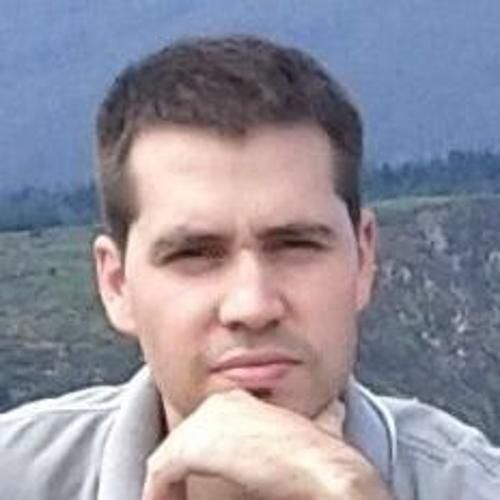
Dr. Adam Toomes is a Postdoc Research Fellow in the Department of Ecology and Evolutionary Biology at the University of Adelaide. He is affiliated with the Benham building on North Terrace campus and can be reached via email at adam.toomes@adelaide.edu.au. His research focuses on understanding the dynamics and risks of wildlife trade, particularly involving invertebrates, reptiles, amphibians, and birds, with an emphasis on biosecurity, invasive species management, and policy interventions. Key research interests include monitoring online and dark web wildlife trade networks, predicting species vulnerability in pet markets, and evaluating legislative frameworks to prevent ecological harm. He has contributed to studies on the global terrestrial invertebrate trade, Australia’s illegal pet trade risks, and forecasting biological invasions. His work integrates multi-omics analysis, socio-economic modeling, and policy analysis to address conservation challenges. Recent articles highlight his focus on untangling Australia’s terrestrial invertebrate trade dynamics, assessing reptile smuggling trends linked to legal markets, and advocating for EU wildlife trade reforms. His research also explores the intersection of e-commerce platforms with illegal wildlife transactions, emphasizing tools for surveillance and intervention. Dr. Toomes has not been noted to have received scientific awards in the provided materials. His advising and grant activities remain unspecified, though his active publication record since 2019 indicates sustained research engagement. No lab or team affiliations are detailed in the source text.
Jose Manuel Dominguez Alonso is a researcher at the University of Vigo , affiliated with the Faculty of Sciences and the Marine Research Center . His work focuses on Earth Physics and Smoothed Particle Hydrodynamics (SPH) applications in marine and renewable energy systems. He is part of the FA9 EphysLab research group at the Ourense campus. Education: PhD in Applied Physics from the University of Vigo (2014) under advisors Dr. Moncho Gómez Gesteira and Dr. Alejandro Jacobo Cabrera Crespo. His research explores fluid dynamics , off-shore wind turbines , wave energy converters , and fluid-structure interaction . He has developed DualSPHPhysics for high-performance computing in marine environments. His recent articles (2024-2025) emphasize teaching numerical modeling to students, 3D hydrodynamic analysis , and coupled simulation techniques . His work bridges computational methods with real-world marine engineering challenges like coastal protection and renewable energy optimization.
Vassilios V. Dimakopoulos is a Professor of Parallel Processing at the Department of Computer Science and Engineering, University of Ioannina, Greece. He has been affiliated with the university since 1998, initially as an adjunct professor and later as a regular faculty member. Currently, he serves as the Dean of the School of Engineering and Chairman of the Technical Council of the University of Ioannina. His academic journey includes a Diploma in Computer Engineering from the University of Patras (1990), and M.A.Sc. and Ph.D. degrees in Electrical and Computer Engineering from the University of Victoria, Canada (1992 and 1996, respectively). His research focuses on parallel and distributed systems, parallel programming models, systems software, computer architecture, embedded systems, and performance analysis. He has held administrative roles such as Deputy Chairman of the Department (2014–2017) and Director of Graduate Studies (2016–2020). His contributions include pioneering work on OpenMP runtime systems, adaptive scheduling for embedded multicore architectures, and probabilistic search protocols in dynamic networks. Dimakopoulos is a member of the IEEE and the Technical Chamber of Greece. His work emphasizes bridging compiler design, runtime systems, and hardware constraints to optimize parallel computing efficiency. Recent research trends include hybrid OpenMP-MPI offloading strategies, adaptive task scheduling in heterogeneous environments, and fog computing cost modeling. His administrative leadership spans multiple institutional committees, reflecting his dual role as an academic leader and researcher. His research group collaborates on projects involving high-performance numerical optimization, task-based global optimization for protein folding, and embedded systems integration.
Mohamed Abdelshafy is an Assistant Professor at the CEES School of Science, Coventry University. His research focuses on network security, mobile ad hoc networks (MANETs), and routing protocols. He specializes in mitigating attacks such as blackhole and flooding attacks on MANET routing protocols like AODV and DSR. His work emphasizes secure cross-layer designs, multipath routing, and fault tolerance in wireless networks. He has contributed to protocols like the Cross-Layer Multipath Multichannel MAC for MANETs and reliable route migration in ad hoc networks. Abdelshafy's research trends center on enhancing network resilience against malicious activities, optimizing routing efficiency, and improving security mechanisms in dynamic environments. His publications span from 2001 to 2018, reflecting long-term engagement in wireless communication security and protocol analysis. No scientific awards or funded grants are explicitly mentioned in the provided texts. He has not listed advisees or students, though his research collaborations include co-authors like N. S. Mirza and P. J. B. King. No specific lab affiliations or teams are disclosed.
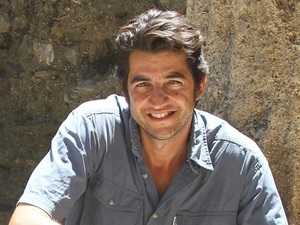
David Hernandez is the Eli J. and Helen Shaheen Associate Professor of Classics at the University of Notre Dame, affiliated with the Department of Anthropology. He holds a PhD in Classical Archaeology from the University of Cincinnati and a B.A. in Physics from UC Berkeley. His research focuses on ancient urbanism in Greece, Albania, and Italy, particularly Roman imperialism and Hellenistic architecture. He directs the Roman Forum Excavations Project at Butrint, a UNESCO site in Albania, and co-directs projects at Rome's Mausoleum of Hadrian and Tivoli's Hadrian's Villa. Education: Ph.D. and M.A. in Classical Archaeology (University of Cincinnati, 2010 and 2004), B.A. in Physics (UC Berkeley, 1996). Research Interests: Archaeology of ancient urbanism, Roman colonization, imperial cult, Latin epigraphy, and excavation methodologies. His fieldwork includes projects at Butrint’s necropolis, Amantia, and Mursi. He has received grants from the Loeb Foundation, ACLS, Packard Humanities Institute, and Notre Dame’s Institute for Scholarship in the Liberal Arts. Publications include Butrint 7: Beyond Butrint (2020) and numerous articles on Roman urbanism, archaeobotany, and Epirus history. He teaches courses on Roman archaeology, Pompeii, and the archaeology of early Rome. Awards: Loeb Classical Library Fellowships, ACLS Fellowship, and keynotes at major archaeological conferences. His work bridges archaeology with environmental studies, examining how urban centers adapted to ecological challenges across antiquity.
Dr. Sven Lautenbach is a Professor and Chief Scientist at the Institute of Geoinformatics, University of Heidelberg , affiliated with the HeiGIT research group. His work bridges geospatial analysis, environmental modeling, and public health, with a focus on urban systems and land-use decision-making. Current role: Chief Scientist at HeiGIT gGmbH Key affiliations: Department of Geoinformatics, University of Heidelberg Research Interests : Lautenbach's interdisciplinary research addresses: Trade-offs in land use decisions and ecosystem services Health geography and spatial epidemiology Application of machine learning and AI to urban geospatial data Open data quality assessment (OpenStreetMap, social media) Climate adaptation strategies for urban environments Vector-borne disease risk modeling Publication Trends : Recent work emphasizes: Geo-social media for pandemic early warning systems Deep learning for infrastructure mapping (e.g., road surfaces) Flood impact analysis on urban accessibility Heat stress mitigation in pedestrian routing Multi-modal urban human dynamics during crises Open data quality evaluation for humanitarian applications Project Leadership : Lautenbach directs initiatives including: myGreen: Urban green space analysis Climate Change and Spatial Epidemiology Summer School OPERAs/FP-7: Ecosystem science-policy integration CONNECT: Biodiversity-ecosystem service synergies
Manuel Maria Olias Alvarez serves as a Professor in the Department of Earth Sciences at the Faculty of Experimental Sciences, University of Huelva, where he leads the RNM293 Environmental Geomorphology and Water Resources research group. His work is conducted through the Research Center for Natural Resources, Health and Environment, focusing on critical water resource challenges in southwestern Spain. His academic foundation includes a 1995 PhD from the University of Granada, with doctoral research on unsaturated zone dynamics in the Almonte-Marismas aquifer supervised by Dr. José Javier Cruz Sanjulián and Dr. José Benavente Herrera. Dr. Olias Alvarez specializes in hydrogeological responses to mining pollution, particularly acid mine drainage (AMD) in the Iberian Pyritic Belt. His research integrates field monitoring, hydrogeochemical modeling, and contaminant transport analysis to address metal mobility in river-aquifer systems, ecological impacts on protected areas like Doñana National Park, and innovative approaches for critical raw material recovery from mining wastes. Current projects examine sea-level rise effects on AMD-affected sediments and irreversible damage from groundwater over-extraction. Analysis of his 15 most recent publications reveals consistent focus on AMD pollution dynamics, with increasing emphasis on climate change interactions, resource recovery economics, and transboundary pollution management. Key trends include high-resolution monitoring of rare earth elements, life cycle assessments of sludge valorization, and forensic tracing of spill incidents in the Huelva estuary. He actively supervises graduate theses on watershed management and pollution remediation while collaborating with international consortia like the EIT-funded MORECOVERY project. His research directly informs environmental policy through hydrological modeling of pollutant fluxes and assessment of remediation scenarios for the severely impacted Odiel River basin. As principal investigator of the RNM293 group, he coordinates field campaigns across the Iberian Pyritic Belt, maintaining long-term monitoring networks for rivers Tinto and Odiel. The team's work combines hydrogeochemical analysis, GIS-based watershed modeling, and ecological risk assessment to develop sustainable management frameworks for mining-affected regions.
Francesco Pilla is a Full Professor at University College Dublin's School of Architecture, Planning and Environmental Policy, specializing in Smart and Sustainable Cities. His work bridges urban technology, geospatial modeling, and citizen science initiatives. Coordinates EU Horizon projects: iSCAPE (air pollution control), OPERANDUM (flood risk reduction), WeCount (mobility systems), Connecting Nature (nature-based solutions) Leads SFI Investigator Grant on scalable mobility analytics Co-Director of Spatial Dynamics Lab Research focuses on: Geospatial big data & AI integration Participatory sensing with low-cost sensors Climate action through educational co-design Urban microclimate optimization Policy-driven AI consensus models Key articles demonstrate expertise in air quality monitoring, traffic safety analysis, and energy-efficient urban design. Awards include: Haagen-Smit Prize for atmospheric research Electric Vehicle Awards 2024 for eMobility innovation Academic Research Award from Financial Times Teaching responsibilities include: Advanced GIS (2018-2025) Smart Cities module (2019-2024) Research Methods coordination (2019-2024) Labs & Teams: Co-Director of Spatial Dynamics Lab, member of Science Foundation Ireland Energy Institute, and collaborator with MIT & IBM research labs.
Juan Vidal Puga is a Full Professor ( Professor Catedrático ) at the Department of Statistics and Operations Research, University of Vigo, since August 2022. He holds a PhD in Mathematical Sciences (2002) with an Extraordinary Doctoral Award and is accredited as a University Professor in both Science and Social/Legal Sciences branches. Research Areas: Game Theory, Economics, Environmental Sciences, Public Management Key Projects: Game theory and economic inequalities (2021-2025) , Climate change resilience (2022-2024) His research focuses on cooperative game theory, particularly bargaining models, cost allocation in network problems (minimum cost spanning trees, land rental agreements), and applications to environmental risk prevention. Recent work includes developing efficient Shapley-type solutions for fuzzy games and analyzing freight transportation models. Scientific Awards : Erasmus scholarship (1994-1995) Extraordinary doctoral award (2002) He has supervised two PhD students and evaluated international journals like Journal of Economic Theory , Games and Economic Behavior , and European Journal of Operational Research . Teaching includes courses on Game Theory in Public Management, Quantitative Methods, and Microsoft Office workshops.
Dr. Georges Kesserwani is a Senior Lecturer in Water Engineering at the School of Mechanical, Aerospace and Civil Engineering , University of Sheffield. His work bridges flood risk modeling , hydrodynamic simulations , and agent-based modeling to advance automated flood mapping and forecasting. He holds an EPSRC Early Career Fellowship (2018–2024) and has organized international workshops on flood modeling. Research Interests: He develops computational methods to integrate fluid mechanics , uncertainty quantification , and human behavior in flood scenarios. Current projects include GPU-accelerated flood models Agent-based evacuation dynamics Multiwavelet terrain filtering Two-way pedestrian-floodwater interaction Scientific Contributions: His publications reveal trends in Hybrid numerical-data-driven flood simulation Uncertainty propagation in multi-hazard environments Agent-based modeling of urban evacuation Experimental validation of flow-structure interactions Awards: ASCE’s 2024 Best Reviewer Award EPSRC Early Career Fellowship DAAD Visiting Fellowship (2013–2014) Teaching & Leadership: Dr. Kesserwani teaches hydraulics , hydrology , and computer modeling to water engineering students. He leads the Water - Environmental Fluid Mechanics research group and co-organized the 2024 Advances in Flood Modelling workshop.
Ana Maria Chirosca is a Lecturer at the University of Galati, focusing on maritime engineering, climate risk assessment, and computational fluid dynamics (CFD). Her work bridges hydrodynamics, renewable energy, and maritime transport analysis, with a strong emphasis on European seas. Her research explores: Climate Impact on Navigation: Assessing hydrological and meteorological risks on the Danube and Mediterranean/Black Seas. Maritime Engineering: Studying ship behavior (e.g., container ships, DTC hulls) and propulsion systems. Renewable Energy: Analyzing offshore wind/wave potential and green hydrogen technologies for sustainable shipping. Recent publications highlight trends in maritime climate modeling, CFD validation, and adaptive strategies for shipping under climate change. While no awards are listed, her work demonstrates technical expertise in integrating engineering and climate science for maritime solutions.
Dr. Erica Kuligowski is an ARC Future Fellow and Principal Research Fellow in the School of Engineering at RMIT University, where she studies evacuation and emergency communications in fire, flood, and other hazards. She holds a Vice-Chancellor's Senior Research Fellow position and previously served as an Adjunct Professor at the University of Maryland, College Park from 2011-2014. Dr. Kuligowski earned her PhD in Sociology along with MS and BS degrees in Fire Engineering, creating a unique interdisciplinary foundation for her work. Her educational background bridges social science and engineering disciplines, enabling her to approach disaster response from multiple perspectives. Her research focuses on applying social science theory and methods to disaster-related engineering problems, with particular emphasis on evacuation behavior during disasters including bushfire, flood, tsunami, and building fires. She specializes in people movement and behavioral data collection and analysis from emergencies, emergency communication systems, evacuation simulation modeling at both building and community scales, and community resilience and disaster recovery. Her work integrates traditional data collection methods with innovative approaches like social media analysis, GPS-based mobile phone signals, and virtual reality experiments. This interdisciplinary approach spans environmental sociology, fire safety engineering, modeling and simulation, community planning, and environmental communication. Dr. Kuligowski's scholarly output demonstrates consistent growth in both fire safety and emergency management domains, with recent publications focusing on wildfire evacuation decision-making, social vulnerabilities during disasters, and the effectiveness of emergency warning messages. Her research increasingly incorporates advanced technologies including machine learning, virtual reality, and social media analysis to understand human behavior in emergencies. Her exceptional contributions to the field have been recognized with numerous prestigious awards: 2025 NFPA's Foundation Medal for the WUI-NITY 4 project 2025 Natural Hazards Research Australia's Research Team Award Shortlisted for 2024 Resilient Australia National Research for Impact Award Co-editor of a Special Issue that won the Applied Communication Division Distinguished Journal Special Issue Award (2024) 2023 Fire Technology's Editor's Choice Award ARC Future Fellowship (2023-2027) Elsevier's Top 2% of scientists in the world for career-long impact (2021-2023) Dr. Kuligowski actively mentors the next generation of researchers and is open to supervising Masters and PhD students. Current supervision projects include Multi-Agent Reinforcement Learning for Wildfire Evacuation Simulations, Using Virtual and Augmented Reality to Better Understand Bushfire Evacuation Behaviour, and Augmented Training and Assistive Systems for Fire Evacuation. She has secured significant research funding, including an ARC Future Fellowship, and collaborates extensively with international partners including Imperial College London, Lund University, National Research Council Canada, CSIRO, and Fire Protection Research Foundation. She plays leadership roles in several key research initiatives including as Co-convenor of RMIT's Disaster Research Network (2023-present), Co-lead of RMIT's Centre for Urban Research Climate Change Transformations Research Program (2021-2024), and Co-Chair of the International Association for Fire Safety Science Working Group on Human Behaviour in Fires (2021-present). She is also part of an international team developing the WUI-NITY simulation platform to model evacuation from bushfire-prone communities.
Kristen Underwood is a Research Professor in the Department of Civil and Environmental Engineering at the University of Vermont (UVM), affiliated with the College of Engineering and Mathematical Sciences. Her work bridges water resources engineering, aquatic ecology, and advanced computational methods to address environmental challenges. She holds a Ph.D. in Environmental Engineering and an M.S. in Geosciences from UVM and Penn State University, respectively. Education: Ph.D., Environmental Engineering (UVM); M.S., Geosciences (Penn State) Her research focuses on applying machine learning, Bayesian inference, and geostatistical tools to study catchment dynamics, fluvial geomorphology, and sediment-nutrient flux in rivers. She explores sustainable infrastructure design and floodplain restoration to mitigate hazards and enhance ecological compatibility. Recent work emphasizes floodplain functionality, including sediment deposition patterns and phosphorus retention in restored wetlands. She collaborates on projects like the Functioning Floodplain Initiative and Vermont’s Water Resources Monitoring Network. Publications highlight innovative applications of AI in turbidity forecasting, flood routing models, and snow hydrology using LIDAR data. She also investigates the impact of climate change on water systems and interdisciplinary approaches to Critical Zone science. Dr. Underwood teaches courses in Applied River Engineering and Data Analytics for Water Resources, reflecting her commitment to integrating theory and practical solutions in environmental engineering.
Sarah Baker is a Professor at the School of Humanities, Languages and Social Science , Griffith University , with a focus on Critical Heritage Studies and Cultural Sociology . Her work examines the role of community-led initiatives in preserving intangible and material cultural heritage, particularly through GLAM institutions and volunteer-managed archives . Since 2008, she has been a member of the Griffith Centre for Social and Cultural Research . Education : BA (University of South Australia), BA (Hons, University of South Australia), PhD (University of South Australia), Graduate Certificate of Higher Education (Griffith University), Graduate Certificate of Organisational Coaching (Swinburne University) Her research explores popular music heritage , cultural justice , and creative labor , with a particular interest in post-industrial cities and UNESCO World Heritage sites . She has led major projects on Norfolk Island and Australian community heritage institutions , emphasizing participatory methods like zine-making and participatory mapping . Her work has been recognized with awards such as the Mander Jones Award and Rebecca Coyle Prize . As a supervisor, she has guided students on topics ranging from Indigenous language preservation to creative labor in media industries . Her recent publications analyze climate change impacts on heritage , DIY archiving , and heritage policy frameworks .
Dr. Alexander Whittaker is a Reader in Landscape Dynamics at the Department of Earth Science & Engineering, Imperial College London. His research focuses on the interplay between tectonics, climate, and sedimentation processes in landscapes. He holds affiliations with the Basins Research Group, Grantham Institute, and Imperial Centre for Geohazards. Whittaker's work integrates field observations, remote sensing, and numerical modeling to study active faulting, fluvial dynamics, and sediment routing systems. Education: PhD (2007), University of Edinburgh M.A. (2005), University of Cambridge MSci. (2002), University of Cambridge B.A. (2001), University of Cambridge Research Interests: Active tectonics and geohazards Climate-driven erosion and sedimentation Fluvial and submarine channel systems Quantitative paleohydrology Source-to-sink sediment flux analysis Recent publications highlight his focus on sediment dynamics in the Pyrenees during the Paleocene-Eocene Thermal Maximum (PETM), fluvial intermittency under climate change, and induced seismicity mechanisms. His work bridges geology, geophysics, and environmental science, addressing both natural hazards and anthropogenic impacts. Whittaker’s grants include funding for projects on flood risk assessment in the Ganga Basin and machine learning applications in seismology. He leads the Earth Observation Network and collaborates with international teams on sedimentary basin studies.