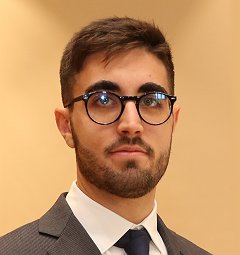
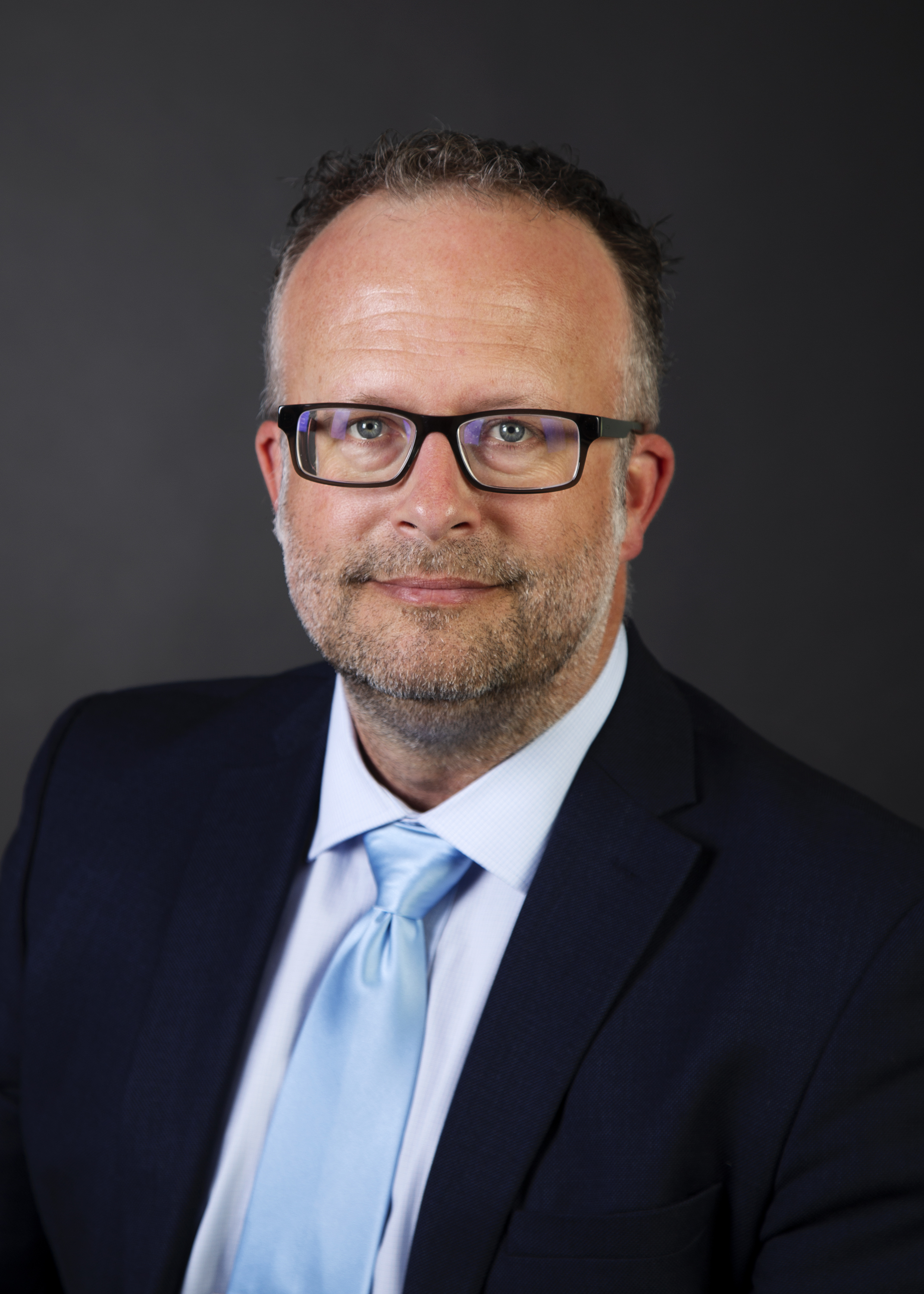
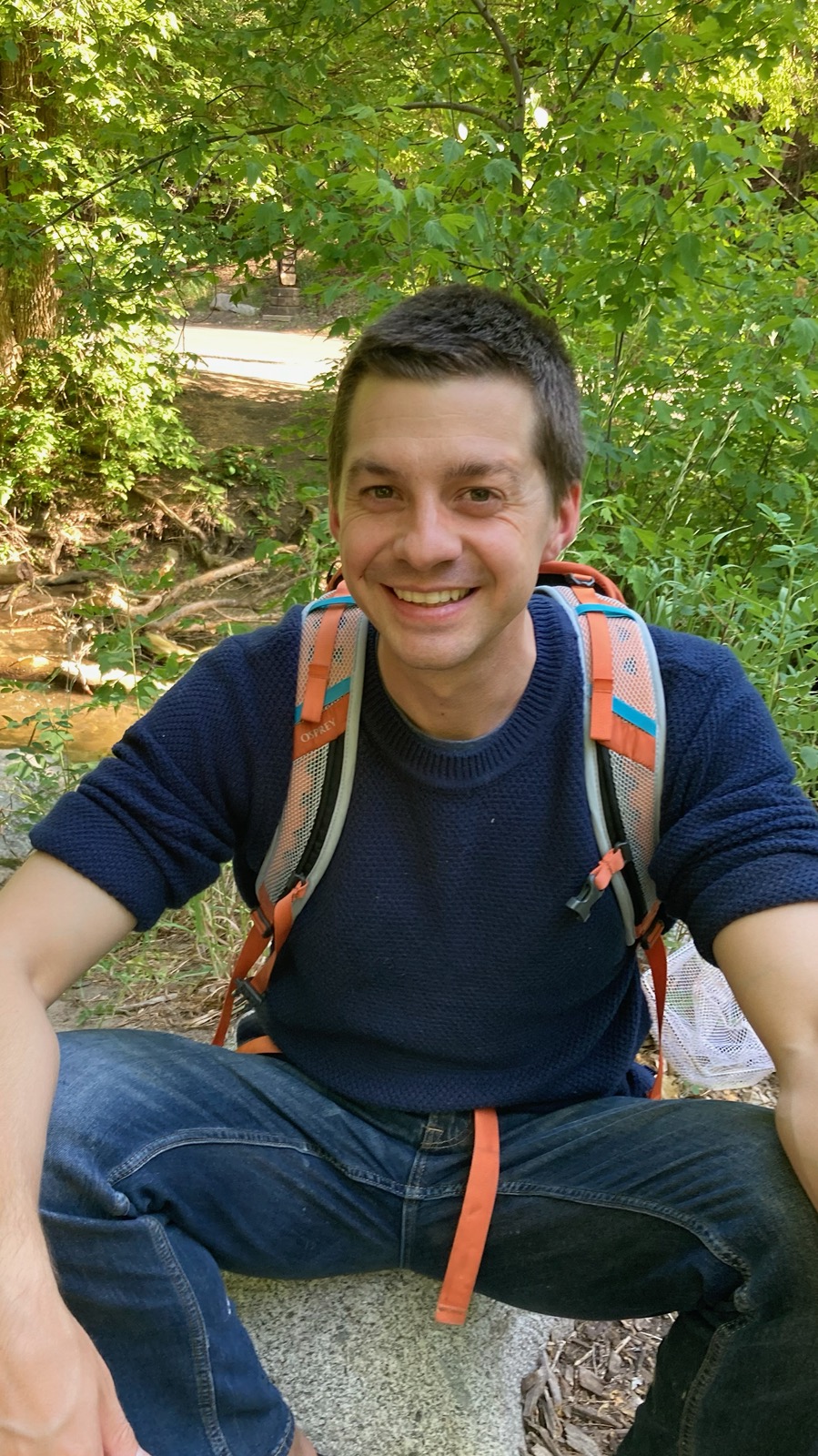
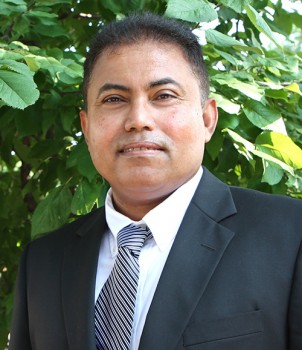
Michele Chiari is a researcher at TU Wien (Vienna University of Technology) specializing in formal methods, software verification, and approximate computing. With active contributions to academic conferences like SPLASH, ICFP, and ECOOP, they combine theoretical rigor with practical applications in programming language design and analysis. Research Focus Temporal logic and model checking Probabilistic program inference Floating-point verification techniques Parallel parsing algorithms Conference Involvement 2025: Member of OOPSLA Review Committee (SPLASH conference) 2025: Program Committee member for VORTEX-track 2024: Committee Member in VORTEX conference 2023: External Reviewer for ECOOP Research Papers-track Publications 2025: Boosting Parallel Parsing through Cyclic Operator Precedence Grammars (SLE track) 2025: Exact Inference for Nested Discrete Probabilistic Programs (LAFI track) 2021: Verification of Floating-Point C/C++ Programs with math.h/cmath Functions (ICSE Journal-First Papers)
Wei Yang is an Associate Professor in the Department of Computer Science at the University of Texas at Dallas, working within the Erik Jonsson School of Engineering and Computer Science. He holds a regular faculty position with an office in ECSS 4.225 and is actively engaged in teaching, research, and mentoring graduate students. His academic journey spans multiple prestigious institutions, and he currently serves on editorial boards for major software engineering journals. Dr. Yang received his Ph.D. in Computer Science from the University of Illinois at Urbana-Champaign in 2018, advised by Prof. Carl A. Gunter and Prof. Tao Xie. He earned his M.S. in Computer Science from North Carolina State University in 2013 under Prof. Tao Xie, and his B.E. in Software Engineering from Shanghai Jiao Tong University in 2011 under Prof. Jianjun Zhao. He was also a visiting researcher at the University of California, Berkeley, invited by Prof. Dawn Song. Dr. Yang's research spans multiple cutting-edge areas at the intersection of software engineering and security. His primary focus centers on software engineering for AI systems , particularly addressing challenges in deploying AI on edge devices like mobile phones, IoT devices, and autonomous vehicles. His pioneering work on efficiency robustness (initiated in 2019) explores how different inputs can trigger varying computational costs in neural networks, leading to novel attacks and defenses. He also develops infrastructure support for AI deployment , including compiler toolchains for dynamic-shaped neural networks and security analysis for IoT deployments. His research extends to mobile testing (since 2012), malware detection using expectation context analysis, and intelligent tools for software engineers and security researchers. Dr. Yang's publication record demonstrates a clear trajectory toward addressing critical challenges in AI security and efficiency. His recent work shows increasing focus on foundation models, large language models, and their security implications, while maintaining strong connections to practical software engineering challenges. The publications reveal a consistent pattern of high-impact research in top-tier venues across software engineering, AI, and security domains. NSF CAREER Award (2022) ACM SIGSOFT Distinguished Paper Award (2021) Amazon Research Award Dr. Yang actively mentors a large group of graduate and undergraduate students, with several PhD students currently working under his supervision. He serves as a faculty advisor for the ASTRO (AI Security and Trustworthiness Operations) team, which was selected as a red teaming participant in the Amazon Nova AI Challenge. His research is supported by significant grants, including the NSF CAREER award providing approximately $500,000 over five years. He emphasizes practical student development, helping them navigate the job market and transition from academic training to professional careers. Dr. Yang leads a vibrant research group focused on software engineering and security challenges in AI systems. His team, including the ASTRO group participating in the Amazon Nova AI Challenge, develops innovative techniques for testing, securing, and improving AI-based systems. The research environment fosters collaboration across multiple domains, with students working on projects ranging from mobile security to foundation model engineering.
Brad Buckham is a Professor and Chair of the Department of Mechanical Engineering at the University of Victoria (UVic). He leads the West Coast Wave Initiative (WCWI) and co-directs the Pacific Regional Institute for Marine Energy Discovery (PRIMED), focusing on marine energy technologies and resource assessment. His expertise spans underwater vehicle dynamics, finite element methods, and offshore mechanics. Dr. Buckham’s research emphasizes wave energy conversion, grid integration, and community-based renewable energy solutions. He has been recognized with 2018 Excellence in Teaching awards from Engineers and Geoscientists of BC and Engineers Canada. His work bridges academia and industry through collaborations like AXYS Technologies, deploying wave buoys for resource assessment. Key areas include tidal and wave energy systems, control design for energy converters, and techno-economic feasibility studies. Research outputs span hydrodynamic modelling, mooring dynamics, and policy frameworks for marine energy deployment. He actively contributes to student-led projects through WCWI, fostering innovation in renewable energy technologies.
Fredrik Dahlqvist is a faculty member at the University College London , Department of Computer Science , focusing on theoretical and applied aspects of probabilistic programming , semantics , and formal verification . His work bridges computer science with mathematical logic , machine learning , and programming language theory . Education: PhD in Coalgebraic Logics from Imperial College London (2014) His recent publications (2016–2025) explore model pruning , reparameterisation invariance , probabilistic numerical analysis , and categorical approaches to machine learning . Key themes include optimisation , cosine similarity , and omega-complete cone duality in probabilistic systems. Contact: f.dahlqvist@ucl.ac.uk (institutional) or f.p.h.dahlqvist@gmail.com (private), located at Gower Street, London WC1E 6BT, United Kingdom .
GANESH GOPALAKRISHNAN is a Professor of Computer Science at the University of Utah's School of Computing. His work focuses on formal verification of parallel/distributed systems, GPU programming, and numerical error analysis. He has contributed to tools like ISP for MPI verification, ARCHER for OpenMP race detection, and FLiT for floating-point consistency testing. His research spans theoretical foundations (e.g., concurrency models) and practical applications (e.g., GPU error analysis). Recent work includes advancing formal methods for mixed-precision computing and resilience in exascale systems. Notable projects include rigorous error estimation for floating-point operations and compiler-assisted verification techniques. Research Interests: Formal Verification of Parallel Systems | GPU & HPC Correctness | Floating-Point Numerical Analysis | Concurrency Bugs | Tools for Distributed Systems. Current work emphasizes hybrid approaches combining formal methods with dynamic analysis to address emerging challenges in heterogeneous computing architectures. Articles Trends: Recent publications (2020–2025) emphasize GPU verification (data races, error analysis), mixed-precision computing (matrix operations, tensor cores), and resilience in HPC systems. Tools like FPDetect and BinFPE highlight practical contributions to error detection in production runs. Workshops (DOE/NSF) indicate leadership in defining correctness strategies for exascale computing. Labs/Teams: Leads research groups focused on formal methods for parallel computing and numerical system reliability. Collaborations include Argonne National Lab, NVIDIA, and LLNL on verification tools and HPC correctness frameworks.
Benjamin Lee Greenman is an Assistant Professor at the Kahlert School of Computing , part of the John and Maria Price College of Engineering at the University of Utah. His research focuses on programming languages, gradual/migratory type systems, formal methods, and human factors in software development. He holds a Ph.D. from Northeastern University (2020), a CIFellows postdoc at Brown University (2020–2022), and degrees from Cornell University (B.S. in ILR, M.Eng. in CS). Key projects include: Forge: A tool for teaching formal methods with lightweight model finding. FlowFPX: Tools for debugging floating-point exceptions in scientific computing. LTL Tutor: An adaptive learning system addressing temporal logic misconceptions. Gradual Typing Benchmarks: Evaluating performance and guarantees of type systems. His work emphasizes rigorous methods for language design, including empirical studies, performance evaluation, and human-centered approaches. Recent contributions include exploring misconceptions in LTL education and advancing type system interoperability between typed and untyped code. Teaching roles include courses on compilers, software verification, and programming languages. He advocates for practical tools like Rhombus (Python-like syntax with Lisp macros) and Static Python ’s sound gradual typing system.
Mohammad Saquib is a Professor in the Department of Electrical Engineering at the Erik Jonsson School of Engineering and Computer Science, University of Texas at Dallas. He has been a faculty member at UT Dallas since 2000, progressing from Assistant to Associate and currently Professor. Prior to this, he held assistant professor positions at Louisiana State University. Education: Ph.D. in Electrical Engineering, Rutgers University, 1998 M.S. in Electrical Engineering, Rutgers University, 1995 B.S. in Electrical Engineering, Bangladesh University of Engineering & Technology, 1991 Mohammad Saquib's research focuses on wireless data transmission, emphasizing system modeling, performance evaluation, signal processing, and radio resource management. A significant portion of his work explores open-access spectrum sharing techniques and the development of low-cost signal processing solutions for radar and medical applications, particularly in microsurgery. His expertise bridges theoretical and applied domains in communications and signal processing. The 15 most recent articles (limited to 8 available) reflect a consistent focus on wireless systems, signal processing algorithms, and their applications in aerospace, medical, and mobile networks. Key themes include interference mitigation, handover optimization, adaptive modulation, and real-time physiological signal prediction. The publications appear in top-tier IEEE journals, demonstrating sustained scholarly impact. Scientific Awards and Recognitions: University of Texas System Regents’ Outstanding Teaching Award, 2014 Best paper award, International Test Synthesis Workshop (ITSW), 2007 Best student paper award, IEEE International Waveform Diversity and Design Conference, 2009 Best doctoral dissertation award (advised student), 2005 Donald Ceil & Elaune T. Delaune Endowed Professorship, 2000–2004 IEEE Senior Member (2009–present) Multiple best paper finalists and teaching recognitions Mohammad Saquib has successfully advised numerous graduate students, many of whom have received national awards for their research and theses. He has served as associate editor for IEEE Transactions on Wireless Communications and IEEE Communications Letters , contributing significantly to academic service. His work has been supported by institutional and professional recognition, though specific grant details are not listed in the text. He is deeply committed to teaching excellence, as reflected in multiple awards and student testimonials. He leads research in wireless and signal processing systems, likely supervising a lab or research group focused on communications and biomedical signal processing, though no formal lab name is provided.
Gianmarco Cherchi is a Tenure-Track Assistant Professor and Computer Science Researcher in the Department of Mathematics and Computer Science at the University of Cagliari, Italy, where he also completed his PhD. He teaches courses in Data Visualization and Web Programming at the undergraduate level. His research lies at the intersection of Computer Graphics and Geometry Processing, with a strong focus on surface and volumetric mesh generation, optimization, digital fabrication, and polycube-based modeling. His work combines algorithmic innovation with practical applications in fabrication, visualization, and interactive systems. The recent publications highlight a consistent trend in advanced hexahedral meshing techniques (e.g., HexBox, VOLMAP), robust geometric computation (e.g., mesh booleans), and interactive tools (e.g., ProtoSketchAR, Py3DViewer). His research spans theoretical algorithm development, benchmark creation, and applied systems for VR/AR and simulation. His scientific accolades include the Young Investigator Award 2024 from the Shape Modeling International Organization, and prior Best Thesis Awards from the Eurographics Italy Association for both his M.Sc. and Ph.D. work. Cherchi actively collaborates with researchers such as Marco Livesu, Riccardo Scateni, and others, contributing to major surveys and state-of-the-art methods in hexahedral meshing. His work is supported by publications in top venues like ACM Transactions on Graphics (SIGGRAPH), Computer Graphics Forum (Eurographics), and IEEE VR. He has also developed practical software tools like Py3DViewer for geometry processing prototyping. He leads research in digital fabrication pipelines, as evidenced by publications on polycube decomposition for manufacturing and automated flat pattern generation. His lab work involves developing interactive and robust systems for 3D modeling and analysis.
Poria Fajri is an Associate Professor at the University of Nevada, Reno . His research focuses on electric and hybrid electric vehicles, renewable energy systems, and advanced power electronics control. Electric and hybrid electric vehicles Plug-in Hybrid Electric Vehicle (PHEV) and Vehicle-to-Grid (V2G) technology Wind and solar power generation technologies Optimal control of power electronic devices utilized in renewable energy generation Automotive/aerospace power electronics and motor drives Energy management in hybrid systems Mechatronics and robotics Recent publications highlight his work on machine learning applications for power consumption modeling and motor fault detection, hybrid ML-digital twin frameworks for cyberattack differentiation, and GaN-based inverter optimization. His research spans grid resilience, autonomous vehicle energy efficiency, and cybersecurity in smart distribution systems. Key article trends include integrating machine learning with energy systems, advancing V2G technologies, and addressing cybersecurity challenges in smart grids. His work on regenerative braking optimization and power electronics for renewable energy systems demonstrates a focus on sustainable transportation and grid stability.
Aleksandar Zeljić is a Researcher at Stanford University's Center for Automated Reasoning and Center for AI Safety . He holds a PhD from Uppsala University's Department of Information Technology, supervised by Philipp Ruemmer, Christoph M. Wintersteiger, and Wang Yi. Research Focus: Automated reasoning (SAT/SMT solvers), formal verification of deep neural networks, and machine arithmetic analysis. Projects: Marabou (neural network verification), UppSAT (SMT approximation framework), mcBV (bit-vector SMT solver), and SmallFloats (Z3-based floating-point approximation). His recent publications focus on bit-vector interpolation, neural network optimization, and parallel verification techniques. Articles reveal expertise in formal methods , symbolic computation , and AI safety . Notable recognition includes the IJCAR Best Paper Award (2014) . Contributions to theoretical computer science include: Developing approximation frameworks for SMT solvers Advancing bit-vector and floating-point arithmetic verification Creating parallelization strategies for neural network analysis He has served as PC member for conferences like VSSTE, PAAR, and FOMLAS, and reviewed for journals including TCS and JAR.
Prof. Guy Even serves as a Professor in the School of Electrical Engineering at Tel Aviv University's Iby and Aladar Fleischman Faculty of Engineering. His research focuses on theoretical and applied aspects of computer engineering, with primary expertise in: Approximation algorithms for NP-complete problems in VLSI design Computer arithmetic systems Floating-point unit architecture Systolic array implementations Contact is available via email at guy@eng.tau.ac.il , phone (03-6407769), fax (03-6405027), and office location in Computer and Software Engineering room 202.
Dr. Irma Kveladze is a Tenure Track Assistant Professor at Aalborg University's Technical Faculty of IT and Design, specifically within the Department of Sustainability and Planning. Her research focuses on geoinformatics, earth observation, and urban mobility solutions. Current Affiliation: Aalborg University (Copenhagen campus), Technical Faculty of IT and Design Research Themes: Urban mobility, migration patterns, spatial data visualization, mixed reality geospatial applications Her work involves advanced spatial analysis and innovative cartographic representations, recently developing frameworks for micro-mobility integration in urban contexts through the PROMISE project. She contributes to mixed reality usability evaluation standards and analyzes digital communication networks across European countries. Key projects include: PROMISE (2025-2028): Principal Investigator for car dependency reduction through smart policy AquaINFRA (2024): Project participant in data infrastructure development She serves as peer reviewer for journals like Sustainability and ISPRS International Journal of Geo-Information , and participates in organizations such as AGILE and EuroSDR.
Claes Eskilsson is a researcher at Chalmers University of Technology , specifically in the Department of Mechanics and Maritime Sciences under the Marine Technology division. His work focuses on computational fluid dynamics (CFD) , wave energy converters , and mooring system dynamics for marine applications. Research Projects: MIDWEST: Multi-fidelity decision tools for wave energy systems (2015-2018) Assessment of tidal turbine noise pollution (2015-2016) Including nonlinear/viscous effects in wave energy modeling (2015-2017) Forankringslösninger for wave energy devices (2015-2017) SDWED: Structural design of wave energy devices (2013-2014) His research interests include: Computational modeling of marine systems Wave energy converter hydrodynamics High-order numerical methods (spectral/hp elements, Discontinuous Galerkin) Cavitation and erosion analysis in marine flows Multiphysics modeling of floating structures The publications span topics in wave energy converter dynamics, mooring system analysis, and CFD methodology. Key trends include 2013-2015 developments in spectral/hp element methods for coastal engineering, and 2015-2020 advancements in multi-fidelity modeling of ocean energy systems. He has collaborated extensively with institutions such as Royal Institute of Technology (KTH) , Lund University , and Technical University of Denmark (DTU) , with funding from agencies including the Swedish Energy Agency and Danish Energy Agency .
Тетяна Сергіївна Дьячук є старшим викладачем кафедри комп'ютерних систем та мереж Факультету комп'ютерних наук і технологій Запорізької національної технічної політехніки, де працює з 2006 року після закінчення університету з відзнакою. Вона є активним членом академічної спільноти, зосереджуючись на сучасних напрямках комп'ютерних наук та технологій. Освіта: Запорізька національна технічна політехніка, 2006 рік, спеціальність "Комп'ютерні системи та мережі", кваліфікація "Магістр комп'ютерних систем та мереж" (з відзнакою) Запорізька національна технічна політехніка, 2006 рік, кваліфікація "Менеджер-економіст" Наукові інтереси Тетяни Сергіївни охоплюють ключові напрями сучасних комп'ютерних технологій, зокрема розподілені та паралельні обчислення, блокчейн-технології, децентралізовані платформи та оптимізацію обчислень. Вона також активно займається дослідженнями в галузі Android-програмування та розробки мобільних додатків. Її наукова робота характеризується практичною спрямованістю, що знаходить відображення в численних публікаціях та конференціях. Аналіз наукових публікацій Тетяни Сергіївни показує чітку еволюцію її наукових інтересів від фундаментальних досліджень розподілених систем та алгоритмів планування ресурсів до сучасних технологій блокчейну, штучного інтелекту та автоматизації процесів програмування. Особливо вражає її здатність поєднувати теоретичні дослідження з практичними застосуваннями в різних галузях, від медичної діагностики до розробки мов високого рівня. Наукові досягнення: Понад 15 наукових публікацій в провідних наукових виданнях Активна участь у міжнародних наукових конференціях Реєстрація в наукометричних базах: Scopus, Web of Science, Google Scholar, ORCID Тетяна Сергіївна активно бере участь у науково-педагогічній діяльності, викладаючи курси, що відповідають сучасним тенденціям в комп'ютерних науках. Вона також займається науковою роботою зі студентами, сприяючи їх інтеграції в наукову спільноту через участь у наукових конференціях та проєктах. Незважаючи на те, що конкретні науково-дослідні гранти не зазначені в доступних джерелах, її публікаційна активність та участь у конференціях свідчать про продуктивну наукову діяльність. Хоча конкретні лабораторії або наукові групи, якими керує Тетяна Сергіївна, не зазначені в доступних джерелах, її наукова робота тісно пов'язана з розвитком сучасних технологій розподілених систем та обчислень, що ймовірно відбувається в рамках кафедри комп'ютерних систем та мереж Запорізької політехніки.
Dr. Irina Zeleneva is an Associate Professor at the Department of Computer Systems and Networks, Faculty of Computer Science and Technologies, Zaporizhzhia Polytechnic National University. With a Ph.D. in Computers, Systems, and Networks, she has 15+ years of academic experience since joining the university in 2003. Specializes in FPGA-based digital system design Focuses on hardware acceleration and reliability optimization Teaches advanced topics in microprocessor architecture Her research includes: Development of energy-efficient FPGA systems Hardware-software co-design Neural network text classification accelerators Reliable embedded control architectures Recent publications analyze FPGA implementation of floating-point multipliers, finite state machines with elementary state chains, and AI-enhanced educational frameworks . Her work frequently appears in international conferences like IDAACS and PIC S&T, with multiple Scopus/WoS indexed articles. Dr. Zeleneva's contributions: Co-author of two monographs on FPGA acceleration PI in multiple university research projects Active participant in annual "Week of Science" conferences