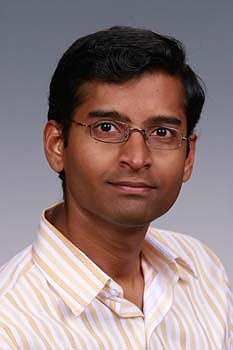
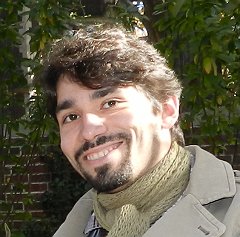
Barry Rountree is a researcher affiliated with Lawrence Livermore National Laboratory (LLNL), specializing in High-Performance Computing (HPC), Power Management, and Parallel Computing. His work focuses on optimizing energy efficiency, fault tolerance, and performance in large-scale supercomputing environments. He has contributed extensively to the development of tools and frameworks for power-aware scheduling, hardware overprovisioning, and visualization performance optimization. Key research interests include HPC system design, processor manufacturing variability, and energy-efficient algorithms. Rountree has collaborated with institutions like NERSC and Intel on projects involving exascale computing challenges and resource management strategies. His publications span conferences such as SC, IPDPS, and ICS, emphasizing practical solutions for scalable and sustainable HPC systems. Notable contributions include the SpackNVD vulnerability audit tool, the msr-genie framework for processor register navigation, and adaptive power management strategies for visualization applications. His work highlights interdisciplinary approaches to addressing computational challenges in science and engineering domains.
Mauricio Ayala Rincón is a Full Professor at Universidade de Brasília, affiliated with the Department of Computer Science and the Department of Mathematics. He is a leading researcher in computational logic, formal methods, and term rewriting systems, and heads the Theory of Computation research group (GTC/UnB). Research Interests: His work focuses on the formalization of mathematical and computational theories using proof assistants like PVS. Key areas include term rewriting systems, equational and rewrite-based deduction, automated reasoning, unification, nominal logic, formal verification, and applications in genomics and evolutionary algorithms. He also explores ethics in AI and mechanized mathematics. Recent Publication Trends: His recent articles (2023–2024) reflect a strong emphasis on formalizing algebraic and logical theories in PVS, advancing nominal equational reasoning, anti-unification over algebraic theories, and applying evolutionary algorithms to computational biology. The work is highly theoretical yet applied in verification and combinatorics. Scientific Awards: Best Paper Award at CICM 2023 for "Nominal AC-matching" Advising and Grants: He actively seeks PhD students in algorithmics, formal methods, theorem proving, and AI ethics. He has led numerous research projects, evidenced by extensive publications and editorial roles. He has not listed specific grants, but his continuous output suggests sustained funding. Labs and Teams: He leads the Grupo de Teoria da Computação (GTC/UnB) , which develops PVS libraries for term rewriting (TRS), nominal theories, and evolutionary algorithms. The group maintains public repositories and contributes to the NASA PVS library.
Mikhail Dorojevets is an Associate Professor in the Department of Electrical and Computer Engineering at Stony Brook University , New York. His research focuses on parallel computer architecture, high-performance systems design, and superconductor processors . He has contributed extensively to RSFQ (Rapid Single Flux Quantum) and RQL (Resonator Quantum Logic) technologies for ultra-high-speed computing systems. Key areas of expertise include: Superconducting electronics for energy-efficient computing High-frequency (GHz-scale) processor design Architectures for parallel and wave-pipelined systems FPGA-based hardware acceleration for network processing His work spans both theoretical and applied aspects, including: Design of RSFQ arithmetic logic units (ALUs) and multipliers Development of 20+ GHz microprocessor prototypes Optimization of energy consumption in superconductor-based systems Publications emphasize advancements in: Superconductor VLSI implementation High-performance storage architectures Multi-port register file designs Integration of satisfiability solvers with hardware
Zhoulai Fu is a tenured Associate Professor at the State University of New York (SUNY), Korea, specializing in programming languages and software security. He also holds joint appointments as a Research Associate Professor at Stony Brook University and is affiliated with the Electrical and Computer Engineering Department at Virginia Tech. His educational background includes: Ph.D., 2009-2013, INRIA – Université de Rennes 1, France M.Eng., 2008-2009, Télécom ParisTech, France M.S, B.S, and French engineer degrees (Ingénieur), 2005-2008, École Polytechnique, France Professor Fu's research focuses on the intersection of Programming Languages, Software Security, and Large Language Models, with special emphasis on improving software reliability through formal methods, numerical error analysis, and scalable verification techniques . His work spans abstract interpretation, automated testing, and verification tools development. He has made significant contributions to floating-point analysis and program verification, with publications at top-tier conferences including PLDI, POPL, OOPSLA, ICSE, and CAV. His publication record shows a consistent trajectory in programming language theory with increasing practical applications. Early work focused on foundational aspects of abstract interpretation and floating-point analysis, while recent papers address security concerns through programming language techniques and incorporate modern approaches like incorrectness logic. Key themes across his publications include formal verification of low-level code, numerical error analysis, and developing scalable analysis tools for real-world software systems. His notable achievements include: Principal Investigator for DARPA E-BOSS Program funding Sole Principal Investigator for National Research Foundation of Korea funding Program Committee membership for POPL 2026, FSE 2024, and PLDI 2023 Professor Fu actively mentors students and has taught courses including Foundations of Computer Science, Programming Abstractions, and Research in Computer Science. His research is supported by significant grants from DARPA and NRF, enabling him to lead the Data & Intelligent Computing Lab at SUNY Korea. He is currently seeking postdocs, PhD, and graduate students to join his research team. He leads the Data & Intelligent Computing Lab, which focuses on advancing programming language techniques for software reliability and security. The lab collaborates with institutions including Virginia Tech, Stony Brook University, and international partners across Europe, working on projects that bridge theoretical computer science with practical software engineering challenges.
Juan David Guerrero Balaguera is a Research Fellow at Politecnico di Torino's Department of Automatic Control and Computer Science (DAUIN), affiliated with the CAD group. He holds a Ph.D. in Computer and Control Engineering from Politecnico di Torino (2024), advised by Prof. Matteo Sonza Reorda and Prof. Ernesto Sanchez. His research focuses on dependable hardware for safety-critical systems, including GPU reliability, fault tolerance, AI accelerators, and functional in-field testing. Prior to his Ph.D., he earned a Master's (2017) and Bachelor's (2013) in Electronics Engineering from Universidad Pedagógica y Tecnológica de Colombia, where he taught digital design, embedded systems, and FPGA-based image processing from 2014 to 2020. His research interests span advanced FPGA design, computational arithmetic for AI, fault effects analysis in GPUs, and reliability assessment of neural networks. Notable contributions include methods for generating self-test libraries (STLs) for GPUs, evaluating fault impacts on TCUs, and enhancing CNN robustness via dropout layer optimization. Education: Ph.D. in Computer and Control Engineering, Politecnico di Torino (2024) M.S. in Electronics Engineering, Universidad Pedagógica y Tecnológica de Colombia (2017) B.S. in Electronics Engineering, Universidad Pedagógica y Tecnológica de Colombia (2013) He has received the Ph.D. Quality Award (2023 and 2024) from Politecnico di Torino and Best Paper recognitions at DATE 2023 and DDECS 2021. His work bridges theoretical fault models with practical GPU testing methodologies, emphasizing real-world applications in AI and edge computing. Current teaching roles include collaborating on GPU programming (Master's level) and computer sciences courses (Automotive Engineering). Research collaborations involve exploring reliability trade-offs in split-computing DNNs and developing fault-aware design flows for AI accelerators.
Wolfgang Ahrendt is a Professor at the Department of Computer Science and Engineering, Chalmers University of Technology and University of Gothenburg. His research focuses on formal methods, software verification, and automated deduction, particularly for Java and smart contracts. He has led major projects like the KeY verification system and contributed to bridging AI with formal verification. Education Roles: Vice-head of Department for PhD Education (2023), Director of PhD Studies (2016-2023), Head of IT and Computer Science Programs (2005-2015). Community Work: Chair of iFM Steering Board, PC co-Chair for TAP 2020 and iFM 2019, Conference Chair for CADE-26 (2017), and member of AAR and CADE secretariats. His research interests span formal verification, symbolic execution, runtime verification, and smart contract security. He has pioneered the integration of static and runtime verification through tools like KeY and StaRVOOrS. Recent work explores AI-assisted programming and hybrid verification frameworks. Publications highlight his focus on smart contract analysis, differential dynamic logic for autonomous systems, and advancements in the KeY system. His edited works include Deductive Software Verification - The KeY Book and proceedings for TAP, iFM, and ISoLA conferences. As a teacher , he coordinates courses on formal methods, verification techniques, and Java modeling. His lab assignments emphasize hands-on experience with tools like SPIN and KeY, fostering practical understanding of verification workflows.
Dr. Silviu Filip is a Chargé de Recherche (junior researcher) at INRIA Rennes - Bretagne Atlantique, affiliated with the Taran team since October 2018. Previously, he held postdoctoral positions at INRIA (2018) and the University of Oxford's Numerical Analysis group (2017-2018). He obtained his PhD in Computer Science from École Normale Supérieure de Lyon in 2016, focusing on algorithmic aspects of digital filter design. His research spans: Approximation theory and numerical computations Computer arithmetic and hardware acceleration Convex/integer optimization Efficient deep learning computations Digital filter design and FPGA implementations Research trends from publications show consistent focus on numerical optimization techniques applied to hardware-efficient deep learning, including mixed-precision training (70% of recent papers), FPGA acceleration (40%), and novel quantization methods (30%). Awards: Best Paper Award at IEEE Symposium on Computer Arithmetic (ARITH-30, 2023) PhD Supervision: Cédric Gernigon (2020-present) Léo Pradels (2020-present) Sami Ben Ali (2022-present) Software Development: Leads multiple open-source projects including firpm (FIR filter design), MPTorch (mixed-precision training), srfloat (stochastic rounding), and contributes to Chebfun (numerical computing).
Cesare Tinelli is the F. Wendell Miller Professor of Computer Science at the University of Iowa within the College of Liberal Arts and Sciences. He is a co-director of the Computational Logic Center and leads the development of critical tools like the CVC4 and cvc5 SMT solvers, as well as the Kind model checker. His academic credentials include: Ph.D. in Computer Science (1999), University of Illinois at Urbana-Champaign M.S. in Computer Science (1995), University of Illinois at Urbana-Champaign Laurea in Scienze dell'Informazione (1990), University of Bari Research Interests : Tinelli specializes in Automated Reasoning , particularly Satisfiability Modulo Theories (SMT) , Model Checking , Software Verification , and Formal Methods . His recent work explores Inductive Reasoning in SMT , Proof-Certificate Generation , and Logical Frameworks for Proof Systems . His methodologies bridge theoretical advancements with practical implementations, impacting both academia and industry. Scientific Contributions : Tinelli's research drives innovation in SMT solving, model checking, and automated theorem proving. His 15 most recent publications span topics from stateful protocol testing ( Saecred ) to proof certification ( IsaRare ) and generalized optimization ( Generalized OMT ). Awards and Recognition : NSF CAREER Award (2003) Haifa Verification Conference Award (2010) CAV Award (2021) Advising and Collaborations : His former students and postdocs hold positions at leading institutions like NASA, Intel, MIT, and EPFL. He collaborates with organizations such as Amazon, Facebook, General Electric, and Microsoft.
Ilse C.F. Ipsen is a Distinguished Professor in the Department of Mathematics at North Carolina State University, with a joint appointment in the Department of Statistics. She is a Fellow of the American Mathematical Society and the Society for Industrial and Applied Mathematics (SIAM), and delivered the Olga Taussky-Todd Lecture at ICIAM 2023. Institution: North Carolina State University School: College of Sciences Department: Department of Mathematics Rank: Professor Email: ipsen@ncsu.edu Her research centers on numerical linear algebra, randomized algorithms, and probabilistic numerical analysis. She has made significant contributions to error analysis in floating-point computation, matrix perturbation theory, and the development of randomized methods for large-scale data problems. Her work bridges theoretical foundations with practical applications in data science, quantum physics, and computational statistics. She is the author of the textbook Numerical Matrix Analysis (SIAM, 2009) and serves as Editor-in-Chief of the SIAM Book Series on Data Science. The recent publications highlight a strong trend toward probabilistic numerical methods, uncertainty quantification, and randomized matrix algorithms. Themes include error analysis for inner products and summation, Bayesian solvers for linear systems, and scalable methods for trace and diagonal estimation. Applications span biobank data analysis, quantum physics, and PageRank computation. Scientific Awards: Fellow of the American Mathematical Society (AMS) Fellow of the Society for Industrial and Applied Mathematics (SIAM) Olga Taussky-Todd Lecture, ICIAM 2023 She has advised multiple graduate and undergraduate students, including J.T. Holodnak, T. Wentworth, and R. Rehman. Her collaborative research has been supported by interdisciplinary grants, particularly in quantum physics and data-intensive computing. She has served on editorial boards of leading journals such as SIAM Review , Acta Numerica , and Numerische Mathematik , and chaired SIAM activity groups, reflecting her leadership in the applied mathematics community. She is actively involved in the development of software and algorithms, including the MATLAB package kappa_SQ for randomized sampling, and has contributed to discussions on communicating applied mathematics through case studies.
Ben Greenman is a Researcher at Brown University , specializing in Gradual Typing , Formal Methods , and Programming Language Design . He has developed tools like Forge for teaching formal methods FlowFPX for floating-point exception debugging CnD for specification visualization His work bridges theoretical advancements and practical software engineering challenges. Research Trends: Recent publications focus on Temporal logic misconceptions (2024-2025) Gradual typing performance (2023-2025) Tool-driven formal methods education (2023) Language design for macro systems (2023) Numerical computation reliability (2023) Key Contributions: Unified deep/shallow type systems Blame assignment strategies Collapsible contracts Corpus studies for type analysis Visual debugging frameworks
David Mallasen Quintana is a Scientist and Lecturer at the Swiss Federal Institute of Technology Lausanne (EPFL), affiliated with both the School of Engineering (STI) and the Integrated Systems Laboratory (ESL) within the Institute of Electrical and Microengineering. He also holds teaching responsibilities in the School of Computer and Communication Sciences (IC) at EPFL. Dr. Quintana completed his Ph.D. in Computer Engineering at Universidad Complutense de Madrid in 2024. His research focuses on: Computer architecture and arithmetic systems RISC-V ecosystem development and customization Energy-efficient hardware design and domain-specific accelerators Posit arithmetic implementations and optimizations Embedded systems and low-power computing solutions His recent publications demonstrate consistent focus on RISC-V extensions, posit arithmetic implementations, and hardware/software co-design approaches for efficient computing. The work spans from fundamental arithmetic units to application-specific accelerators, with evolving emphasis on scientific computing applications and energy-constrained environments. Dr. Quintana actively contributes to open-source hardware projects including PERCIVAL, x-HEEP, and various arithmetic unit implementations. His research group develops energy-efficient platforms and tools for hardware deployment within the RISC-V ecosystem.
Yeachan Park is an Assistant Professor in the Department of Mathematics and Statistics at Sejong University, South Korea, since 2025, following a postdoctoral fellowship at Korea Institute for Advanced Study (KIAS) from 2022-2025. Education: Ph.D., Seoul National University (2022) B.S., Pohang University of Science and Technology (2015) His research centers on low-level computer vision and machine learning theory, with major contributions in neural network expressivity, loss surface geometry, computer arithmetic implementations (floating/fixed-point), mathematical language models, and learning dynamics. This work bridges theoretical mathematics with practical deep learning applications through rigorous mathematical frameworks. Recent publications (2022-2025) demonstrate consistent focus on mathematical foundations of deep learning, spanning computer vision (image deraining), neural network theory (expressivity under finite precision), and learning dynamics (grokking acceleration). The research exhibits strong interdisciplinary integration of numerical analysis, theoretical computer science, and image processing. No scientific awards are documented in the provided materials. Regarding academic advising and research funding, the available information does not specify student supervision or grant-supported projects.
Sriram Krishnamoorthy is a Research Professor at Washington State University's School of Electrical Engineering & Computer Science and a research scientist at Pacific Northwest National Laboratory (PNNL), where he serves as the System Software and Applications Team Leader in PNNL's High Performance Computing group. Dr. Krishnamoorthy earned his B.E. from the College of Engineering, Guindy in Chennai, India, and his M.S. and Ph.D. degrees from The Ohio State University. He is a senior member of the Institute of Electrical and Electronics Engineers. His research focuses on parallel programming models, fault tolerance, and compile-time/runtime optimizations for high-performance computing. He has made significant contributions in areas including: Fault tolerance techniques that minimize rollback during failures Dynamic load balancing for irregular parallel applications Compiler and runtime optimizations for HPC applications GPU programming and heterogeneous computing Quantum chemistry simulations and quantum computing Dr. Krishnamoorthy's publications span computational science, high-performance computing, and quantum chemistry. His recent work shows strong trends toward quantum computing applications, fault tolerance in large-scale systems, and optimization of computational chemistry methods. He has developed techniques for density matrix quantum circuit simulation, floating-point error analysis, and scalable execution of coupled-cluster models. His scientific achievements have been recognized with several prestigious awards: Best Paper Award at International Conference on High Performance Computing (HiPC'03) Best Paper Award at International Parallel and Distributed Processing Symposium (IPDPS'04) U.S. Department of Energy Early Career award (2013) PNNL's Ronald L. Brodzinski Award for Early Career Exceptional Achievement (2013) The Ohio State University's Outstanding Researcher award (2008) Dr. Krishnamoorthy has advised numerous graduate students and collaborated extensively with researchers across computational science domains. His work on the NWChem project demonstrates significant grant funding and large-scale collaborative research efforts in computational chemistry. He leads research efforts in PNNL's High Performance Computing group, focusing on system software and applications development for next-generation supercomputing platforms.
Arthur Azevedo de Amorim is an Assistant Professor in the Department of Computer Science at the Rochester Institute of Technology's College of Computing. His research focuses on making software more secure and reliable using techniques based on formal verification, programming languages, and type systems. Previously, he held postdoctoral positions at Boston University and Carnegie Mellon University after completing his Ph.D. at the University of Pennsylvania under Benjamin Pierce and co-advised by Cătălin Hrițcu. His educational background includes undergraduate studies in computer science and engineering at Unicamp and Polytechnique. He is also one of the authors of Software Foundations, an introductory textbook to the Coq proof assistant, and maintains an active blog about Coq. Dr. de Amorim's research spans several critical areas in programming languages and security. His work on cryptographic protocols leverages recent advances in program verification (particularly separation logic) to verify cryptographic protocols. His research on compartmentalization analyzes formal guarantees of techniques for limiting the scope of vulnerabilities in low-level languages like C and C++. These research areas reflect his commitment to bridging theoretical foundations with practical security applications. His recent publications demonstrate strong activity across multiple top-tier conferences including POPL, PLDI, CCS, and ICALP, with research spanning formal verification, secure compilation, differential privacy, and programming language theory. His work consistently combines theoretical rigor with practical applications in security and reliability. Dr. de Amorim has served on numerous program committees for major programming languages conferences including POPL, PLDI, ICFP, and CoqPL, demonstrating his active engagement with the research community. He has also contributed to important educational resources through his work on Software Foundations. He currently advises several graduate students at RIT working on various aspects of programming languages and security. His lab develops multiple open-source software projects including Cryptis (for verifying cryptographic protocols), Deriving (a Coq library for automating class instances), and Extructures (a Coq library of finite data structures).
Rob A. Rutenbar is the Senior Vice Chancellor for Research at the University of Pittsburgh and holds Distinguished Professorships in Computer Science (School of Computing and Information) and Electrical and Computer Engineering (Swanson School of Engineering). He also serves as Adjunct Professor at UIUC and CMU. With nearly 40 years in academia and industry, his research focuses on integrated circuit tools, nanoscale chip design statistics, and AI hardware accelerators. He led the University of Illinois' CS department (ranked #5 nationally) and spent 25 years at CMU, where he pioneered analog CAD tools and founded Neolinear (acquired by Cadence) and Voci Technologies (acquired by Medallia). Education: PhD (Computer Engineering, University of Michigan, 1984), MS (Computer Engineering, University of Michigan, 1979), BS (Electrical Engineering, Wayne State University, 1978). Research interests include analog circuit synthesis, statistical methods for nanoscale ICs, and hardware architectures for AI. Notable contributions include the first MOOC on chip design tools (60k+ learners) and the Phil Kaufman Award for lifetime contributions to EDA. His work spans over 200 publications and 14 patents, with funding from DARPA, NSF, and industry partners like Google and IBM. Awards include ACM SIGDA Pioneering Achievement Award (2021), AAAS Fellowship (2019), and NAI Fellow (2019). He has advised over 50 PhD students, many of whom lead industry and academia (e.g., Amith Singhee at IBM, Saurabh Tiwary at Google). Rutenbar's leadership initiatives at Pitt include the Momentum Funds for team science, LifeX Labs for life sciences commercialization, and the Office of Industry Partnerships to align research with industry needs.