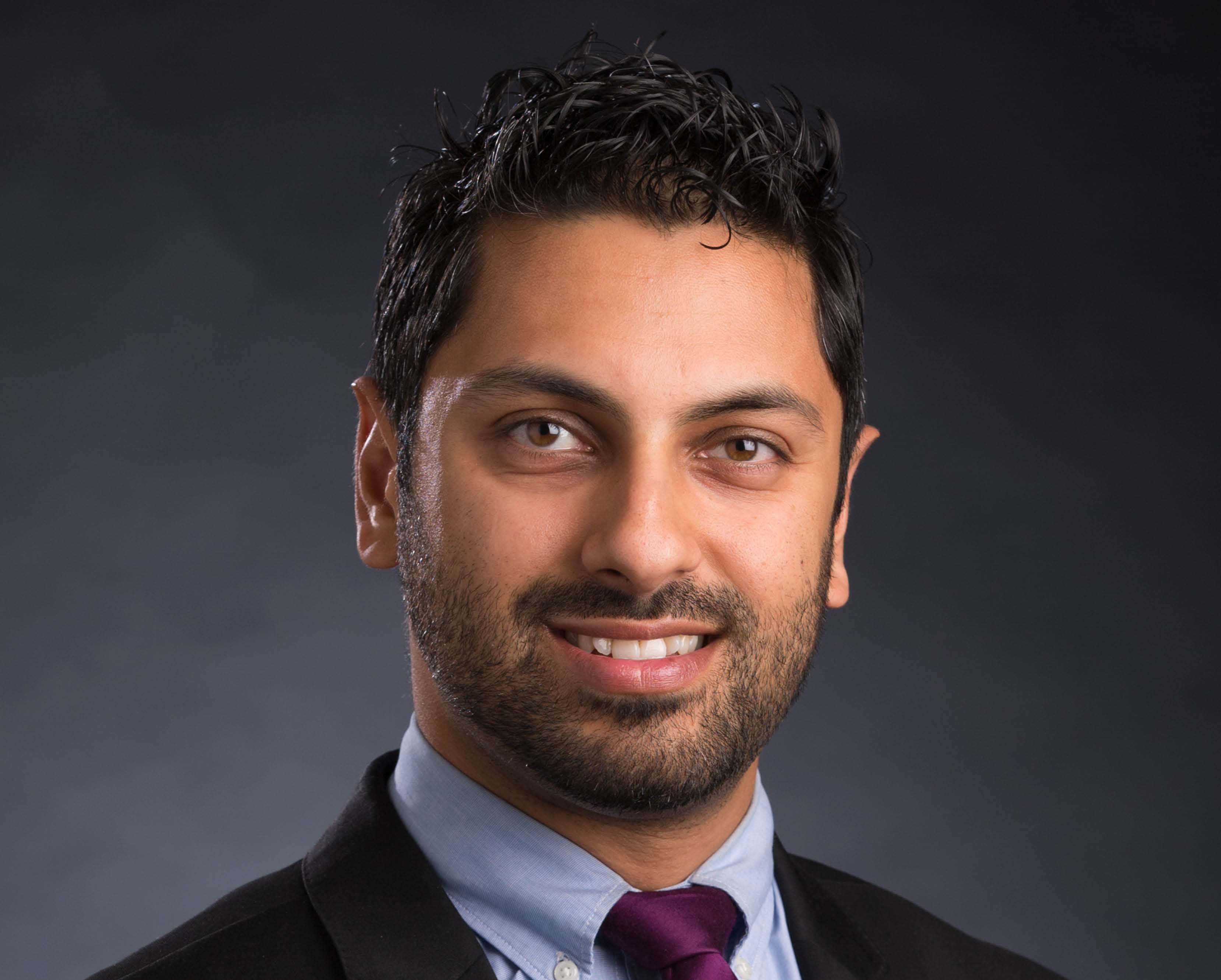
Dr. Gary Glover is a Professor of Radiology (Radiological Sciences Lab) at Stanford University , with courtesy appointments in Psychology and Electrical Engineering. His work focuses on the physics and mathematics of MRI, particularly rapid scanning methods using spiral k-space trajectories for functional brain imaging and multimodal neuroimaging (fMRI/EEG/fPET/fNIRS) combined with neuromodulation techniques like TMS and transcranial ultrasound. Academic Appointments: Radiology, Psychology, Electrical Engineering Professional Affiliations: Bio-X, Stanford Cancer Institute, Wu Tsai Neurosciences Institute Research Interests include: Development of blood oxygen level-dependent (BOLD) and viscoelastic contrast in MRI Functional MR Elastography for brain activation mapping Optimization of MR-ARFI for transcranial ultrasound guidance Automated spinal cord segmentation (EPISeg) using machine learning Scientific Awards : National Academy of Engineering (2013) Gold Medal, ISMRM (2000) Steinmetz Award, General Electric (1985) Lauterbur Lecture, ISMRM (2018) Recent Publications analyze: Fast fMRI sampling and spurious signal correction Dissociated patterns in default mode network anti-correlations Neural correlates of collaborative behavior in triadic fMRI Salience network contributions to depression pathophysiology
Dr. Goetz Bramesfeld serves as a Professor in the Department of Aerospace Engineering at Toronto Metropolitan University, where he leads research in applied aerodynamics and unconventional flight systems. His expertise spans flight vehicle design, small UAV development, and motorless flight dynamics, with particular emphasis on energy harvesting from atmospheric phenomena. Bramesfeld's educational background includes a PhD (2006) and MS (1999) from The Pennsylvania State University, and a BEng (1998) from Technische Universität Braunschweig. His research interests focus on applied aerodynamics , flight dynamics , and energy-efficient aircraft design , with notable contributions to sailplane optimization, gust energy extraction, and microwave-powered UAV concepts. His work bridges theoretical aerodynamics with practical applications in both terrestrial and planetary exploration contexts. Analysis of his publication record reveals consistent innovation in energy harvesting flight systems, particularly through gust energy extraction and unconventional propulsion methods. His research evolves from traditional sailplane optimization toward cutting-edge concepts like microwave-powered aircraft and planetary exploration gliders, maintaining strong connections between fundamental aerodynamics and real-world flight applications. Bramesfeld actively supervises graduate students through the Applied Aerodynamics Laboratory of Flight (AALF) and maintains significant professional engagement as a Senior Member of the American Institute of Aeronautics and Astronautics (AIAA), member of the Canadian Aeronautics and Space Institute (CASI), Associated Editor for the Technical Soaring Journal, and board member of the Organisation Scientifique et Technique du Vol à Voile (OSTIV).
Dr. Joseph Moore is an Assistant Professor in the Department of Mechanical Engineering at Johns Hopkins University (JHU), serving as Director of the Agile and Intelligent Robotics (AIRO) Laboratory. He is affiliated with the Laboratory for Computational Sensing and Robotics (LCSR), the Institute for Assured Autonomy (IAA), and holds a Bridging Faculty appointment in the Research and Exploratory Development Department (REDD) at JHU/APL. His research focuses on computational control, machine learning, and robotics to enable agile systems operating in complex environments. Dr. Moore previously served as Robotics Group Chief Scientist at JHU/APL, leading projects on hybrid unmanned aerial-aquatic vehicles and aerobatic fixed-wing systems. He has secured funding as Principal Investigator (PI) for ONR, DARPA, and ARL programs, particularly in post-stall maneuvering control and multi-robot coordination. His work emphasizes robust control strategies for autonomous systems in constrained environments. Research interests include aerial robotics, optimization, and learning-based control. Notable contributions involve NMPC-based systems, UAV navigation, and adaptive control for uncertain environments. His recent articles highlight advancements in swarm coordination, morphing-wing UAVs, and PAC-NMPC frameworks. Dr. Moore advises students such as Mark Gonzales and Adam Polevoy. Key grants include ONR/DARPA-funded projects on post-stall flight control and Army-funded multi-robot coordination efforts. His lab (AIRO) and collaborations (LCSR, IAA) drive applied and theoretical robotics research.
Craig Kluever is a Professor and Director of Undergraduate Studies in the Department of Mechanical and Aerospace Engineering at the University of Missouri, within the College of Engineering. He holds a strong academic and industry background in aerospace engineering, with extensive contributions to research, education, and professional societies. Education: PhD in Aerospace Engineering, Iowa State University MS in Aerospace Engineering, Iowa State University BS in Aerospace Engineering, Iowa State University His research centers on the guidance, navigation, and control of aerospace vehicles, with deep expertise in orbital mechanics, reentry flight mechanics, and trajectory optimization. These areas form the foundation of modern space mission design and flight dynamics. His work bridges theoretical modeling and practical aerospace applications, particularly in space flight systems and dynamic system control. Kluever is the author of two widely used textbooks: Dynamic Systems: Modeling, Simulation, and Control and Space Flight Dynamics , both published by Wiley, which are instrumental in engineering education. Although specific publications are not listed here, his active editorial role and scholarly output suggest ongoing research contributions. Scientific Awards and Honors: 2020 Kemper Fellow Associate Fellow, American Institute of Aeronautics and Astronautics (AIAA) Fellow, American Astronautical Society (AAS) Kluever has made significant contributions to academic service, currently serving as Deputy Editor of the AIAA Journal of Guidance, Control, and Dynamics . His leadership extends to education as Director of Undergraduate Studies, where he shapes curriculum and mentors students. While no specific grants or student advisees are listed, his textbook authorship and editorial position indicate substantial impact on both teaching and research in aerospace engineering. He is affiliated with active research in aerospace systems and is likely involved in collaborative projects through the Mechanical and Aerospace Engineering department at Mizzou, contributing to high-impact research, student training, and innovation in space flight dynamics.
Dr. Minkwan Kim is an Associate Professor at the University of Southampton's Department of Engineering and the Environment. His research focuses on advanced plasma technologies, CubeSat propulsion systems, and aerospace engineering solutions for space exploration and environmental challenges. He currently supervises seven PhD students in the fields of engineering and environmental science. Research Interests: CubeSat Propulsion Systems, Plasma Sterilization, Hypersonic Vehicle Shielding, In-Situ Resource Utilization, and Environmental Plasma Applications. His work combines experimental and computational approaches to address real-world problems such as space debris mitigation and atmospheric protection. Publications highlight innovations in plasma-driven water treatment, hypersonic magnetic shielding, and CubeSat mission design. Collaborations include projects on air sterilization systems and nanosatellite architectures. Dr. Kim has received recognition for an innovative idea addressing pandemic-related challenges through the AHSN Regional Competition (2020). Teaching responsibilities include modules like Advanced Astronautics and Spacecraft Systems Engineering. His supervision record spans diverse topics from plasma reactor design to CubeSat disposal strategies.
Davide Scaramuzza is a Professor and Director of the Robotics and Perception Group at the University of Zurich. He holds a Ph.D. from ETH Zurich and has conducted postdoctoral research at the University of Pennsylvania and Stanford. His research focuses on autonomous drone navigation using visual and event-based sensors, leading to breakthroughs like AI drones outperforming human pilots in racing (Nature 2023). He pioneered algorithms for Mars helicopter navigation and developed the PX4 autopilot system. Key awards include the Kiyo-Tomiyasu IEEE Technical Field Award (2024), ERC Consolidator Grant (2019), and multiple best paper awards. His entrepreneurial ventures include co-founding Zurich-Eye (later Meta Zurich) and SUIND for agricultural drones. He co-authored the textbook Introduction to Autonomous Mobile Robots , widely used in academia. Research spans event camera algorithms, visual-inertial SLAM, and reinforcement learning for agile flight. His lab's work is featured in IEEE Spectrum, The Guardian, and Forbes. He advises UN initiatives on AI for disaster response and nuclear safety. Current projects include Graph-Generating State Space Models (CVPR 2024) and event-based vision for automotive systems (Nature 2024).
Prof. Juan Alonso is the Vance D. and Arlene C. Coffman Professor and James & Anna Marie Spilker Chair in the Department of Aeronautics & Astronautics at Stanford University. He directs the Aerospace Design Laboratory (ADL), focusing on high-fidelity computational methods for aerospace system design. His expertise spans transonic/supersonic/hypersonic aircraft, rotorcraft, and launch vehicles. Alumni include record-holding teams for human-powered watercraft and lightweight unmanned aerial vehicles. Education: PhD (1997) from Princeton University in Mechanical & Aerospace Engineering; M.A. (1993) Princeton; B.S. (1991) MIT Aeronautics/Astronautics. Research emphasizes multi-disciplinary optimization, numerical methods, and parallel computing applied to advanced aircraft design, sustainable aviation, and UAS systems. Notable contributions include computational design frameworks like SU2 and SUAVE, and initiatives in curriculum development for engineering education. Recent work focuses on: GPU-accelerated CFD solvers, multi-fidelity surrogate models (e.g., VortexNet), contrail simulation frameworks, and battery degradation modeling for electric aircraft. Active in urban air mobility and high-fidelity trajectory optimization for hypersonic systems. Labs/Teams: Aerospace Design Laboratory (ADL) leading open-source computational tools development. Involved in NASA-funded projects and industry partnerships for advanced propulsion systems.
Keenan Albee is a Robotics Technologist at NASA’s Jet Propulsion Laboratory and an incoming Assistant Professor at the University of Southern California (starting Fall 2025). His research focuses on autonomous robotics for extreme environments including lunar missions, microgravity, and underwater operations. Education: Ph.D. in Aeronautics and Astronautics (Autonomous Systems), MIT (2022) S.M. in Aeronautics and Astronautics, MIT (2019) B.S. in Mechanical Engineering, Columbia University (2017) Albee’s work integrates optimal control , reinforcement learning , and motion planning to develop autonomy for mobile robotic systems operating under uncertainty. His expertise spans space robotics , microgravity systems , and underwater robotics , with a focus on environment-aware algorithm design. Recent research includes parametric information-aware motion planning (RATTLE algorithm), distributed multi-agent exploration, and robust control for uncooperative targets. His publications highlight on-orbit validation of autonomy algorithms via NASA’s Astrobee platform and upcoming lunar missions. Scientific Awards: NASA Space Technology Research Fellowship (2022) Albee actively develops open-source autonomy frameworks and will establish the Laboratory for Autonomous Systems in Exploration and Robotics (LASER) at USC. His work bridges theoretical control methods with real-world deployment, including first-of-its-kind achievements in space robotics.
Karthik Dantu is an Associate Professor in the Department of Computer Science and Engineering at the University at Buffalo, State University of New York, within the School of Engineering and Applied Sciences. His research focuses on mobile sensor networks, robot networks, networked embedded systems, mobile computing, wireless networks, and embedded operating systems. He leads the Distributed Robotics and Networked Embedded Sensing (DRONES) Lab and has received significant funding including an NSF CAREER Award. Dr. Dantu's educational background includes: PhD in Computer Science from University of Southern California (2009) BE in Computer Science from Sri Jayachamarajendra College of Engineering (1999) His research interests center on algorithmic and systems challenges in Edge Computing Systems, with particular focus on enabling seamless vision sensing in cloud-edge environments. Dantu's work bridges mobile systems and robotics, developing novel approaches for UAV software, visual SLAM, and distributed sensing. His research addresses critical challenges in resource-constrained environments, security, and real-time performance for mobile and robotic systems, with emphasis on practical implementations that solve real-world problems in autonomous systems. Dr. Dantu's publication record shows a strong trajectory in mobile systems and robotics research, with increasing focus on edge computing applications for visual sensing. His recent work demonstrates expertise in adapting visual SLAM to edge environments, securing mobile systems through technologies like Rushmore, and developing novel approaches for UAV software reliability and depth sensing. The research spans theoretical algorithms and practical system implementations, with particular strength in bringing academic research to practical applications in robotics and mobile computing. Dr. Dantu has received several scientific honors: NSF CAREER Award on Enabling Seamless Vision Sensing in Cloud-Edge Systems Outstanding service award from the Office of International Services NSF Travel Grant for SenSys 2005 Conference Travel Grant for SIGCOMM 2002 As an advisor, Dr. Dantu has mentored numerous PhD students to completion, with graduates now working at companies like Samsung Research and Zoox Inc., or continuing academic careers as Assistant Professors. His research is supported by substantial grants including a DARPA OFFSET Sprint 4 award ($470k), an NSF CAREER award ($550k), and multiple NSF collaborative grants totaling over $1.5 million. He serves on numerous conference committees including Mobicom, MobiSys, and ICRA, demonstrating leadership in the mobile systems and robotics research communities. Dr. Dantu leads the Distributed Robotics and Networked Embedded Sensing (DRONES) Lab at UB, which focuses on developing algorithms and systems for mobile sensor networks, robot networks, and embedded sensing applications. The lab's work spans theoretical foundations to practical implementations, with particular expertise in UAV systems, visual SLAM, and edge computing for robotics, maintaining strong collaborations with industry partners and other academic institutions to advance the state of the art in mobile and robotic systems.
Imraan Faruque is an Associate Professor in the Department of Mechanical and Aerospace Engineering at Oklahoma State University (OSU), part of the College of Engineering, Architecture and Technology (CEAT). His research focuses on biologically-inspired flight control systems, engineered autonomy for unmanned aerial vehicles (UAVs), and the integration of sensory feedback mechanisms in autonomous systems. Education: Faruque holds a Ph.D. and M.S. in Aerospace Engineering from the University of Maryland (2011 and 2010) and a B.S. in Aerospace Engineering from Virginia Tech (2006). Research Interests: His work emphasizes bio-inspired solutions for aerial autonomy, including swarm coordination, gust-aware flight control, and human-autonomy interaction. Key areas include unmanned systems design, visual feedback algorithms, and adaptive control strategies derived from insect flight dynamics. Awards: He has received notable accolades such as the ONR Young Investigator Award (2019), AIAA Hal Andrews Young Engineer/Scientist Award (2017), and multiple 'Best in Session' recognitions at major conferences. His team also secured 1st Place in the International Aerial Robotics Championship (2005). Publications: Faruque’s research spans topics like orbital debris management, swarm intelligence, and tornado sensing with UAVs. His work bridges biological principles and engineering, with applications in aerospace, robotics, and environmental monitoring.
Ingo Jahn is a Professor at The University of Queensland's School of Engineering. His academic career spans roles including R&D at Rolls-Royce (2007–2012) and academic positions at The University of Queensland (2012–2022). He holds an MEng (Oxford, 2005) and PhD (Oxford, 2011). Education: MEng in Engineering, University of Oxford (2005) PhD in Aerospace Engineering, University of Oxford (2011) Research Interests: Hypersonics: vehicle design, glide trajectory optimization, and aerothermodynamics Fluid Dynamics: computational methods, turbulence, and flow control Control Systems: model predictive control and co-design frameworks Thermodynamics: heat transfer in supercritical CO2 cycles and thermal protection systems His work bridges theoretical and experimental approaches, with a focus on hypersonic vehicle integration and propulsion systems. Publications: Recent articles emphasize hypersonic vehicle co-design, fluid-structure interaction, and experimental methods. Key themes include trajectory optimization, thermal management, and advanced simulation techniques. Grants & Awards: No awards explicitly listed, but extensive industry collaboration (e.g., Rolls-Royce) and leadership in high-impact projects indicate significant recognition. Supervision: Currently supervising 8 doctoral students on topics like hypersonic co-design, unstart prevention in ramjets, and scramjet trajectory optimization. Affiliations: Institute for Advanced Engineering and Space Sciences, AIAA, ASME. Active in conferences like AIAA SciTech and Global Power and Propulsion Society events.
Univ.-Prof. Karl Crailsheim is a Professor at the University of Graz, affiliated with the Institute of Zoology within the Faculty of Natural Sciences. His research focuses on honeybee behavior, physiology, and health, particularly investigating the honeybee superorganism and threats to their colonies. He explores swarm systems, robotics, and swarm intelligence, with recent emphasis on colony losses and environmental threats. His work bridges biology and robotics, applying insights from honeybee behavior to algorithm design. Research interests include honeybee nutrition, immune responses, pathogen impacts, and the application of citizen science in ecological studies. Key projects involve tracking honeybee behavior, analyzing pollen diversity, and developing robotic systems inspired by swarm dynamics. Collaborative efforts with citizen scientists enhance ecological data collection. Publications highlight advancements in understanding bee health, pesticide effects, and swarm robotics. His interdisciplinary approach addresses both biological and technological challenges in apiculture and robotics.
David J. Olinger is a Professor of Aerospace Engineering at Worcester Polytechnic Institute (WPI). He specializes in renewable energy technologies, particularly airborne and hydrokinetic systems involving tethered kites and gliders for energy extraction from wind and ocean currents. His research emphasizes experimental and computational approaches to optimize these systems, including a low-cost kite-powered water pump for underdeveloped regions. Education: BS in Engineering (Lafayette College, 1983), MS in Mechanical Engineering (Rensselaer Polytechnic Institute, 1985), PhD in Mechanical Engineering (Yale University, 1990). Research focuses on fluid dynamics, aerodynamics, and fluid-structure interaction. His articles span advancements in tethered systems control, energy harvesting, and simulation techniques. Recent work integrates computational models and physical experiments to refine underwater kite systems and airborne wind energy solutions. Awards: Summer Faculty Research Fellow (1993, U.S. Navy) WPI Teaching Technology Fellowship (2000) ASME National Curriculum Innovation Award Honorable Mention (2001) Advising & Grants: Supervises graduate/undergraduate project teams in MQP (Major Qualifying Project) initiatives. Focuses on applied engineering solutions, such as renewable energy systems and fluid dynamics experiments. Labs/Teams: Leads a research group developing emerging energy technologies, emphasizing interdisciplinary collaboration between mechanical engineering and fluid dynamics.
Victor Becerra is a Professor of Power Systems Engineering at the University of Portsmouth, affiliated with the School of Electrical and Mechanical Engineering within the Faculty of Technology. He is also associated with the Centre for Environmental and Renewable Energy Solutions and the Agile Centre For Equitable Sustainability. His research focuses on advanced control systems, renewable energy integration, smart grids, battery management, and nuclear power plant control. He actively supervises PhD students in topics like optimal control of battery systems and microgrid optimization. His academic work spans over 193 publications, with recent contributions emphasizing techno-economic analysis of green hydrogen, modular energy storage solutions, and optimal control strategies for batteries and nuclear reactors. His research often addresses real-world applications such as grid flexibility at ports, peer-to-peer energy trading platforms, and drone-based inspection of offshore wind turbines. Becerra's expertise includes developing control algorithms for marine structures, sodium-cooled reactors, and unmanned aerial vehicles. He has contributed to books on solar energy engineering and applications, highlighting interdisciplinary approaches to sustainability challenges. His work integrates theoretical models with practical implementations, such as energy management systems for compressed air and advanced BMS for drones. Key themes in his research include renewable energy systems optimization, fault-tolerant control mechanisms, and adaptive control strategies for dynamic environments. He collaborates internationally, addressing global energy challenges through innovative control methodologies and sustainable technologies.
Guoquan Huang is an Assistant Professor in the Department of Mechanical Engineering at the University of Delaware. He holds a B.Eng. in Automation from the University of Science and Technology, Beijing (2002), and M.Sc. and Ph.D. degrees in Robotics from the University of Minnesota (2009 and 2012). Prior to his current role, he was a Postdoctoral Associate at MIT's Computer Science and Artificial Intelligence Laboratory (CSAIL). His research focuses on robotics, computer vision, and autonomous systems, emphasizing probabilistic perception, estimation, and control for ground, aerial, and underwater vehicles. He leads the development of the OpenVINS platform for visual-inertial estimation and has contributed to advancements in SLAM (Simultaneous Localization and Mapping), sensor fusion, and multi-robot coordination. Education: B.Eng in Automation (Electrical Engineering), University of Science and Technology, Beijing, 2002 M.Sc. in Robotics, University of Minnesota, Twin Cities, 2009 Ph.D. in Robotics, University of Minnesota, Twin Cities, 2012 His research interests span robotics, computer vision, and autonomous systems , with a focus on: Visual-inertial navigation and SLAM Sensor fusion (LiDAR, IMU, camera) Autonomous vehicle control and safety Multi-robot cooperative localization His recent publications (2023–2025) emphasize robust algorithms for navigation in GPS-denied environments, real-time sensor calibration, and dataset development for aerial visual localization. He has pioneered techniques like decoupled error-state estimation and consistent parallel frameworks for SLAM. Labs/Teams: Leads the development of the OpenVINS research platform, focusing on visual-inertial state estimation. Collaborates on projects involving human-swarm interactions and resilient ground vehicle navigation.