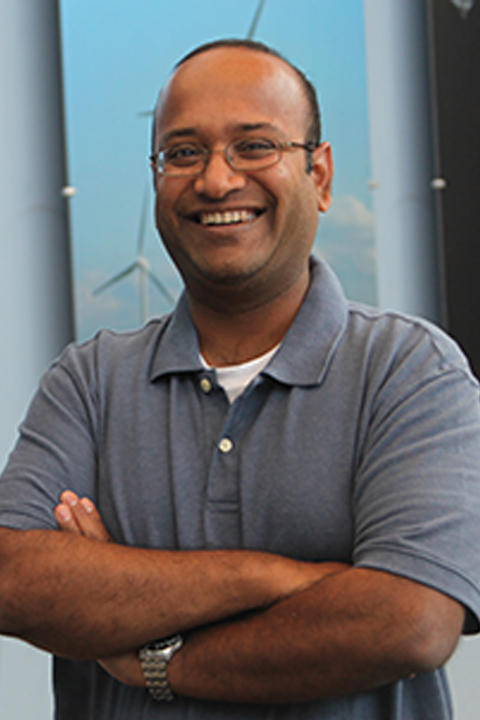
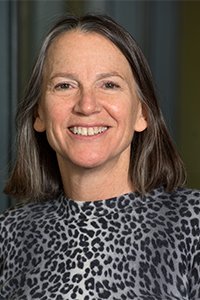
Assad Anshuman Oberai is a Professor at the University of Southern California's Viterbi School of Engineering . His research spans computational mechanics, inverse problems, and machine learning applications in nuclear engineering and biomedical imaging. Key Research Areas: Multi-fidelity modeling, Bayesian inference in mechanics, conditional GANs for posterior estimation, ultrasonic sensing of nuclear fuel canisters, mechano-microscopy for tumor elasticity imaging Methodological Contributions: Novel operator network architectures, dimension-reduced Bayesian frameworks, active noise cancellation techniques, and error estimation in variational multiscale methods Recent work focuses on non-invasive nuclear fuel inspection using ultrasonic sensing and machine learning, achieving significant signal-to-noise ratio improvements with active noise cancellation. In biomedical domains, his team develops cGAN-enhanced elasticity imaging for cancer differentiation, outperforming traditional algebraic methods. Methodologically, he pioneered VarMiON (Variationally Mimetic Operator Networks) with rigorous error analysis, demonstrating superior performance over DeepONet in partial differential equation approximations. His publications address high-dimensional inverse problems through generative models, with applications in epidemic modeling (capturing algebraic decay via behavioral feedback), 3D traction microscopy accounting for cell-induced matrix degradation, and compressible phase change simulations using discontinuous finite element methods. Co-authors include researchers from mechanical engineering, biomedical informatics, and nuclear safety domains.
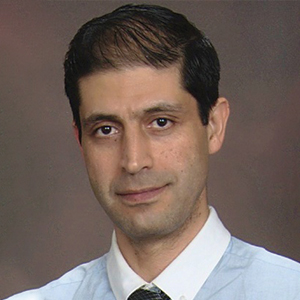
Srikanth Gururajan is an Associate Professor in the Department of Aerospace and Mechanical Engineering at Saint Louis University's School of Science and Engineering. His research focuses on fault-tolerant flight control systems, experimental flight testing with UAVs, and UAV-based remote sensing applications in precision agriculture, pest management, and emissions monitoring. He leads the Aircraft Computational & Resource Aware Fault Tolerance (AirCRAFT) Lab and has extensive experience in UAV platform design and interdisciplinary research collaborations. Ph.D. in Aerospace Engineering (West Virginia University) M.S. in Mechanical Engineering (West Virginia University) Bachelor of Engineering (University of Madras, India) Gururajan's work bridges computational modeling with real-world UAV applications, emphasizing structural health monitoring, adaptive control algorithms, and STEM outreach. His publications highlight expertise in sensor fusion, formation flight control, and UAV performance evaluation. He previously served as a Post-Doctoral Fellow at West Virginia University, where he managed UAV flight testing programs and developed fault-tolerant control frameworks. At Saint Louis University, he integrates aerospace design competitions into pedagogy to enhance interdisciplinary learning.
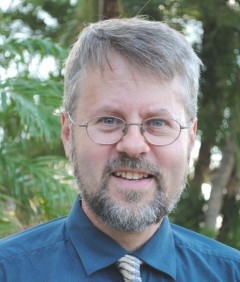
David Stapleton, Ph.D. , is a Professor in the Department of Mathematics & Statistics at the University of Central Oklahoma. His research spans aerospace studies, flight dynamics, and mathematical modeling, with collaborations involving the USAF, FAA, and ICAO. He has over 28 years of experience teaching courses such as Mathematical Modeling, Advanced Calculus, and Numerical Analysis. Ph.D. in Applied Mathematics from the University of Arizona (1990) Stapleton's work focuses on GPS/WAAS navigation systems, aircraft terminal procedures, missile risk analysis, and spaceplane trajectory simulations. He employs MATLAB and C++ for 3D modeling, algorithm optimization, and real-time flight safety calculations. Recent publications highlight his expertise in numerical linear algebra, mathematical modeling, and aviation safety standards. Stapleton has contributed to ICAO's Extended Pinsker height loss model and FAA studies on runway pavement repair protocols.
Kshitij Jerath serves as Associate Professor in the Department of Mechanical and Industrial Engineering, Robotics at the Francis College of Engineering, University of Massachusetts Lowell. His research focuses on self-organized dynamics in complex systems, multi-agent control, and robotic swarms, with significant contributions to traffic flow theory and sensor characterization. He directs the Emergent Dynamics, Control and Analytics Labs (EXALABS), advancing bottom-up control algorithms for minimal-intervention system guidance. Dr. Jerath's academic background includes: Ph.D. in Mechanical Engineering from Pennsylvania State University (2014), dissertation: 'Influential subspaces in self-organizing multi-agent systems' M.S. in Electrical Engineering from Pennsylvania State University (2011), thesis: 'Sensor noise modeling, characterization and simulation: An Allan variance tutorial' M.S. in Mechanical Engineering from Pennsylvania State University (2010), thesis: 'Impact of adaptive cruise control on the formation of self-organized traffic jams on highways' Bachelor's equivalent in Mechanical and Automation Engineering from Amity School of Engineering and Technology, India His research spans self-organized dynamics , multi-agent systems , and robotic swarm control , applying statistical mechanics principles to model emergent behavior in transportation networks and complex systems. Current work focuses on influencing macro-scale dynamics through minimal intervention by small agent subsets, with extensions to social ensembles and neural systems. His methodologies integrate control theory, network science, and machine learning for real-world applications in autonomous vehicles and system reliability. Recent publications (2023-2025) reveal strong trends in relational network applications for multi-agent learning, adaptive data granulation techniques, and human-swarm interaction frameworks. Key developments include database-inspired algorithms for sensor characterization, renormalization group approaches to traffic modeling, and fault-tolerant recovery mechanisms for robotic teams. These works demonstrate increasing convergence of control theory, database systems, and reinforcement learning in addressing complex system challenges. Dr. Jerath has received notable recognition including: Two Best Presentation awards at American Control Conference (2014, 2012) Kulakowski Travel Award from Penn State (2014) National Merit-cum-Means Scholarship from Indian Government (2013) 2nd place in ITS America Student Essay Competition (2012) His research is supported by grants including the CPS: Medium project 'Automated Discovery of Data Validity for Safety-Critical Feedback Control in Connected Vehicles' (2019) and a Graduate Teaching Fellowship from Penn State (2013). EXALABS maintains active collaborations with transportation agencies and robotics researchers to translate theoretical advances into practical applications. The Emergent Dynamics, Control and Analytics Labs (EXALABS) develops frameworks for modeling, quantifying, and influencing collective behavior across scales. Current projects include human-guided swarm control in virtual reality, traffic flow optimization using connected vehicle networks, and adaptive granulation techniques for large-scale sensor data. The lab employs interdisciplinary approaches combining control theory, statistical mechanics, and machine learning to solve problems in robotics, transportation, and system reliability.
Dr. Ian Foulds is an Associate Professor at the School of Engineering under the Faculty of Applied Science at the University of British Columbia Okanagan. His primary research focuses on Microelectromechanical Systems (MEMS) , Microfluidics , and Microfabrication , with applications spanning biomedical diagnostics, geological dating, and terahertz technology. Degrees: PhD (2007), MASc (2004), BASc (2003) in Electrical Engineering from Simon Fraser University Courses Taught: ENGR 353 Semiconductor Devices, APSC 179 Linear Algebra for Engineers His research integrates microfluidic systems with advanced fabrication techniques , including 3D printing and laser ablation, to develop cost-effective diagnostic tools and explore geological processes through high-precision chronology. Recent publications highlight innovations in droplet generation , agglutination assays , and terahertz emitter design , often combining interdisciplinary approaches from engineering and geoscience. Dr. Foulds holds the Principal's Research Chair - Indigenous Reconciliation in Engineering (Tier 1) , emphasizing his commitment to integrating Indigenous knowledges in engineering practices. His work involves collaborations across materials science, biomedical engineering, and geology, supported by technical expertise in MEMS and microfabrication.
Dr. Bidur Khanal is the current Head of Department for Aerospace and Aircraft Engineering at Kingston University. He joined Kingston in August 2024, bringing extensive experience from MBDA Missile Systems (Team Lead in Simulation and Modelling), Coventry University (Senior Lecturer), and Cranfield University (Lecturer in Complex Weapons). Faculty of Engineering, Computing and the Environment, Kingston University Department of Aerospace and Aircraft Engineering His academic journey includes a PhD in Computational Aerodynamics and Aeroacoustics from Cranfield University (2010), MPhil in Computational Aeroacoustics from the University of Southampton, and a BEng (First Class Honours) in Aeromechanical Systems Engineering from Cranfield University. He also holds a PGCert in Academic Practice. Dr. Khanal's research focuses on high-speed aerodynamics, non-linear heat transfer, and turbomachinery using high-fidelity computational methods. His work spans turbulence modeling, aeroacoustics, and flow control, often addressing complex aerospace engineering challenges related to missiles, turbine blades, and aircraft aerodynamics. His publications highlight expertise in computational fluid dynamics (CFD), unsteady flow analysis, and thermal management. Key contributions include studies on cavity flow control, thrust reverser configurations, and droplet evaporation in multicomponent fuels. Recipient of several national and international awards/scholarships during his time as a student in the UK Chartered Engineer (CEng) Fellow of Royal Aeronautical Society, UK Fellow of the Higher Education Academy, UK Dr. Khanal has delivered lectures as an invited speaker at various forums in the UK and internationally. His teaching encompasses core aerospace topics such as Aerospace Technology Flight Dynamics and Control Aerospace Propulsion Machine Learning and AI for Aerospace Applications . He is passionate about integrating industry insights into academia, having collaborated with entities like Advantage-CFD (Formula One) and Airbus during his academic career. His professional experience includes a postdoctoral role at the Rolls-Royce University Technology Centre at Oxford and a position as Aerodynamic Methods and Tools Engineer at GE Power. Dr. Khanal emphasizes the importance of aligning Kingston University's Aerospace Engineering courses with industry needs, ensuring graduates are equipped with cutting-edge computational techniques and practical knowledge.
Christian Rieger, M.Sc., is a Lecturer at the Chair of Aircraft Design at Technical University of Munich (TUM). His work focuses on aircraft design and mission optimization for unmanned aerial systems, with particular emphasis on VTOL UAV development and analysis. He is involved in projects related to aerodynamic measurement systems, noise modeling, and flight testing infrastructure. Institution: Technical University of Munich Department: Chair of Aircraft Design Academic Rank: Lecturer Contact: christian.rieger@tum.de Research interests center around advanced UAV development, including: Aeropropulsive system optimization Noise modeling for eVTOL aircraft Flight data analysis and sensor integration Modular measurement systems for flight testing His recent publications demonstrate expertise in flight dynamics analysis, noise modeling, and UAV force measurement systems, with applications in both conventional and eVTOL aircraft configurations. The work integrates system identification methodologies and geospatial data processing.
Nezamoddini-Kachouie Nezamoddin is an Associate Professor in the Department of Mathematics and Systems Engineering at Florida Institute of Technology , with an affiliate appointment in the Department of Electrical Engineering and Computer Science , both within the College of Engineering and Science . Since joining Florida Tech in 2012, he has built an interdisciplinary research program bridging engineering, medicine, and biology. Education & Training BASc – Electrical & Computer Engineering MASc – Systems Design Engineering, University of Waterloo, 2008 PhD – Biomedical Engineering Postdoctoral Fellow – Harvard Medical School & Harvard School of Public Health, 2010-2012 Research Interests Dr. Kachouie’s work sits at the confluence of statistical modeling , machine learning , artificial intelligence , image processing , pattern recognition , and biostatistics . He leverages these tools to tackle grand challenges in cancer research , public health , and climate change , producing actionable insights from complex, high-dimensional data. Publication Trends With more than 120 peer-reviewed papers spanning 2003-2025, his recent output emphasizes deep learning (U-Net, CNNs), Bayesian spatiotemporal models , and generalized additive models applied to glacier recession , wildlife population monitoring , sea-level rise , and cancer genomics . These works collectively advance both methodological innovation and high-impact societal applications. Student Mentorship & Grants He has mentored 80+ undergraduates who presented at venues such as NCUR, JSM, and AMS. Seven PhD students have graduated under his supervision and now hold academic positions. He has served as PI of the NSF REU Site “Statistical Models with Applications to Geoscience” (2020-2024) and as mentor for the NSF Biomath REU Site (2015-2017). Currently, his group comprises 2 post-docs, 6 PhD, 2 Master’s, and 7 undergraduate researchers. Contact & Resources Email: nezamoddin@fit.edu Office: Crawford 335 (inside 328) Phone: (321) 674-7485 Profiles: Google Scholar , Research Website
David Fleming is an Adjunct Professor in the Department of Aerospace, Physics and Space Sciences at Florida Institute of Technology, with a focus on composite materials and aerospace structures. His research emphasizes structural analysis of composite joints, crashworthiness, and finite element modeling. University: Florida Institute of Technology Department: Aerospace, Physics and Space Sciences Dr. Fleming's research interests include composite material behavior under crash conditions, finite element analysis for structural failure prediction, and lightweight design for aerospace and vehicle applications. His work bridges analytical models with experimental validation to improve crashworthy structures. The article list reveals a consistent focus on composite structures for aerospace crashworthiness, hydrodynamic RAM analysis, bonded joint integrity, and additive manufacturing. Keywords span materials science, structural engineering, and aerospace safety, with sub-fields including finite element modeling, delamination, and energy absorption. Scientific Awards: AIAA Associate Fellow Dr. Fleming serves as Faculty Adviser for the FIT AIAA student branch and is a member of SAMPE and the Vertical Flight Society. He has not been noted to advise graduate students directly.
Peter Gibbens is an Associate Professor in Aerospace Engineering at the School of Aerospace, Mechanical and Mechatronic Engineering, University of Sydney. He previously worked as a Research Scientist at the Defence Science and Technology Organisation (DSTO) in Australia until 1996. Research Interests Flight stability and handling qualities Aerodynamic parameter estimation and flight testing Flight control systems and control design techniques Navigation systems, data fusion, and fault detection Visual navigation and Simultaneous Localisation and Mapping Teaching improvement in engineering education through simulation-based experiential learning
Dr. Fengfeng (Jeff) Xi is a Professor in the Department of Aerospace Engineering at Toronto Metropolitan University and holds the Industrial Research Chair in Advanced Systems and Interiors. His expertise spans manufacturing automation, robotics, morphing systems, and smart aircraft cabin design. 1993: PhD in Aerospace Engineering, University of Toronto 1984: MSc in Mechanical Engineering, Shanghai University 1982: BEng in Mechanical Engineering, Shanghai University Xi's research focuses on morphing mechanisms with applications in adaptive aircraft wings, sensor-responsive smart aircraft cabins, and robotic manufacturing systems. His work integrates kinematic modeling, control theory, and intelligent design principles to enhance aerospace efficiency and functionality. His publications from 2011–2017 highlight innovations in robotic riveting systems , morphing wing dynamics , and automated polishing algorithms , emphasizing interdisciplinary applications of robotics, contact mechanics, and aerospace design. Green Aviation Research and Development Network (GARDN) Research Award for Morphing Wing Xi supervises students in advanced manufacturing and robotics projects, including composite wing construction and robotic system testing. He also leads industry partnerships through the Centre for Advanced Engineering Research and Innovation in Aerospace, fostering collaboration between academia and aerospace companies.
James J. Bock is the Marvin L. Goldberger Professor of Physics at the California Institute of Technology and a Senior Research Scientist at the Jet Propulsion Laboratory. He earned his B.S. from Duke University (1987), M.A. (1990) and Ph.D. (1994) from the University of California, Berkeley. His career spans roles at JPL (1994-2012) and Caltech (1994-24), including Visiting Associate, Senior Faculty Associate, and Professor. Current affiliations include leading the Observational Cosmology group at Caltech and contributing to the BICEP Array and SPHEREx projects. B.S., Duke University, 1987 M.A., University of California, Berkeley, 1990 Ph.D., University of California, Berkeley, 1994 Dr. Bock specializes in observational cosmology and instrumentation development for space missions. His research focuses on studying the cosmic microwave background (CMB), galaxy evolution, and designing cryogenic systems for infrared and millimeter-wave telescopes. Key projects include SPHEREx, SPIDER, and BICEP Array, addressing questions about cosmic inflation, gravitational lensing, and dust polarization. His recent publications highlight advancements in CMB polarization analysis, cryogenic engineering for space telescopes, and extragalactic background light studies. Collaborative work spans institutions and journals like the Astrophysical Journal and IOP Conference Series. Marvin L. Goldberger Professor of Physics (current title) Dr. Bock contributes to lab groups developing novel instrumentation for cosmological studies, including teams working on the BICEP Array and SPHEREx brassboard models. His work bridges theoretical cosmology and experimental space mission execution.
Dr. Keith Joiner is a Senior Lecturer at the University of New South Wales (UNSW) Canberra within the School of Engineering and Technology. He joined academia in 2015 after a distinguished 30-year career in the Australian Air Force, where he served as an aeronautical engineer, project manager, and Director-General of Test and Evaluation for the Australian Defence Force (2010-2014). His military contributions earned him the Conspicuous Service Cross and U.S. Meritorious Service Medal. Dr. Joiner holds a PhD in Calculus Education, an MSc in Aerospace Systems Engineering (Loughborough University, UK), an MMgmt, and a BEng in Aeronautical Engineering. He is a Certified Practising Engineer (CPEng) and Certified Practising Project Director (CPPD) with professional affiliations including MAIPM and MIEAust. His research integrates statistical methods (design-of-experiments, regression modeling) with defense and cybersecurity applications. Key areas include: (1) Test/evaluation frameworks for autonomous systems, electronic warfare, and cyber-resilience; (2) Project governance in defense digitization and critical infrastructure; (3) Engineering education reforms focusing on inclusive curricula and peer-review efficacy. He actively explores human-autonomy teaming and cyber-physical system safety. Recent publications emphasize aerospace innovation (hybrid vehicles, electrification), AI assurance, and NLP applications in aviation safety. Methodological rigor in test design and computational modeling unifies his work, reflecting defense-industry collaboration and real-world problem-solving. Awards/Honors: Conspicuous Service Cross (2010-2014) U.S. Meritorious Service Medal (2009 Baghdad service) He mentors part-time PhD students in industry-collaborative projects related to test design, project governance, and autonomous systems. Current priorities include drone technology validation and cyber-resilience frameworks for space systems.
Ellen K. Longmire is a Professor in the Department of Aerospace Engineering and Mechanics at the University of Minnesota. Her research focuses on advanced experimental methods in turbulent fluid dynamics , multi-phase flows , hypersonic flows , and biomedical flows . Email: longmire@umn.edu Research Lab: Longmire Research Lab Her work spans eddy identification , particle transport in boundary layers , laminar-to-turbulent transition , and hypersonic re-entry flow measurements . She has led projects funded by the National Science Foundation and the U.S. Department of Defense, focusing on CubeSat platforms for hypersonic testing and contact forces in immiscible fluid displacement . Recent research outputs include studies on soap bubble velocimetry , granular raft encapsulation , and spectrometer integration for re-entry vehicles , highlighting her interdisciplinary approach to fluid mechanics. Notable Collaborations: HyCUBE Sensor Probe Project (2023-2025, USDOD Air Force) Laminar-Turbulent Transition in Pipe Flow (2016-2021, NSF)
Thierry Klein is a Professor of Statistics at École Nationale de l'Aviation Civile (ENAC) and a member of the Toulouse Institute of Mathematics. His research spans statistical methodology with applications in diverse fields including aviation safety, environmental science, and computational mathematics. Dr. Klein's research focuses on advanced statistical methods, particularly in sensitivity analysis, probability theory, and machine learning. His work on Sobol indices has contributed significantly to variance-based sensitivity analysis, while his research on Wasserstein spaces has advanced the understanding of probability distributions in metric spaces. He has developed innovative methods for Gaussian process regression and has applied statistical techniques to problems in aviation safety, coastal flooding prediction, and paleoenvironmental reconstruction. His recent publications demonstrate a strong focus on sensitivity analysis methods, particularly Sobol indices, with applications across multiple domains. He has also made significant contributions to the theory of Wasserstein spaces and their applications in statistical learning. His work bridges theoretical statistics with practical applications in engineering, environmental science, and aviation. Dr. Klein is currently involved in three major funded projects: the PEPR PDE-AI project (2023-2028) on Partial Differential Equations for Artificial Intelligence, the ANR GATSBII project (2025-2029) as project leader, and the ANR MBAP-P project (2025-2029) as a member. These projects reflect his interdisciplinary approach, combining statistical theory with applications in artificial intelligence, engineering, and environmental science.