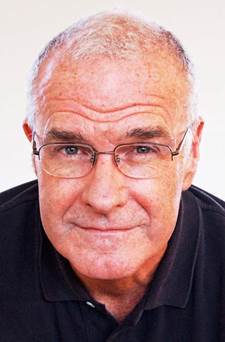
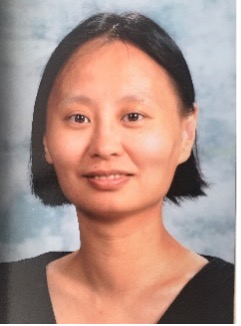
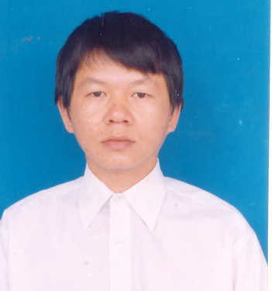
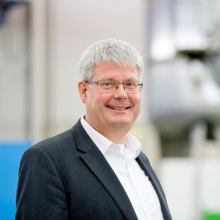
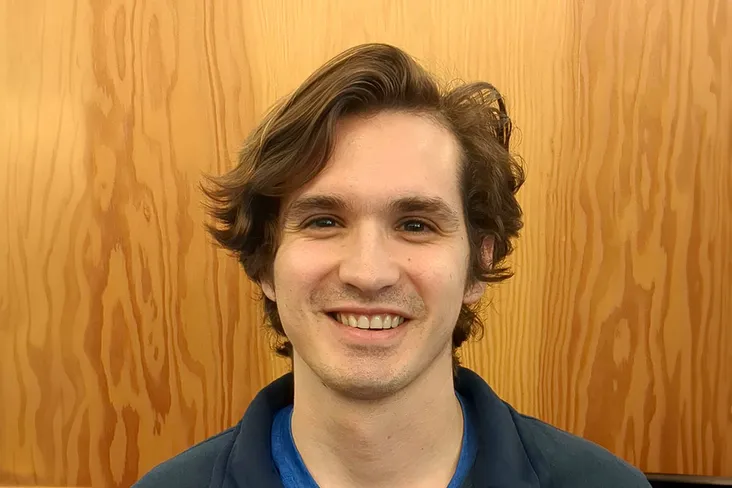
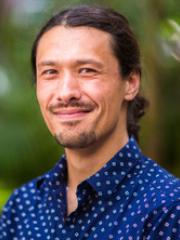
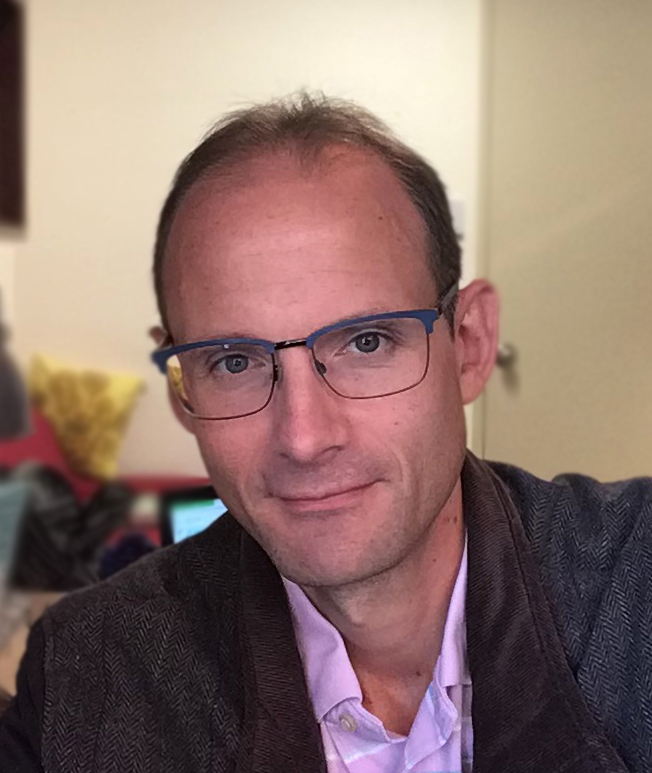
Yang (Gilbert) Ye is an Assistant Professor in the Department of Civil and Environmental Engineering at Northeastern University, joining in January 2025. His research focuses on human-AI/robot teaming, automation in engineering, and assistive technologies, with a particular emphasis on human-centric robotics and sensorimotor processes. He holds a PhD in Civil Engineering from the University of Florida (2024), advised by Dr. Eric Jing Du. **Affiliations**: Member of ASCE, IEEE, and HFES. His work integrates VR/AR, robotics (e.g., drones, exoskeletons), and AI to enhance civil engineering workflows and workforce training. He leads the Ye Lab, actively recruiting PhD students and postdocs with coding experience (Python/C++/C#) and backgrounds in engineering or computer science. **Key Research Themes**: Human-robot interaction, construction automation, exoskeleton training, and delayed feedback mitigation in teleoperation. Over 20 peer-reviewed publications in journals like ASCE JoCEN, IEEE Access, and Advanced Engineering Informatics. **Lab Opportunities**: PhD/postdoc applicants require strong academic records (GPA ≥3.5) and coding skills. Undergrad/master students can apply for thesis/research roles. Funding covers tuition, insurance, and stipends.
Jan K. Brueckner is a Distinguished Professor of Economics at the University of California, Irvine, and a member of the Institute of Transportation Studies. He holds dual expertise in Urban Economics and Airline Economics, with affiliations spanning academia and policy research. His career includes roles at University of Illinois at Urbana-Champaign and visiting positions at institutions like Sapienza University of Rome and Charles University in Prague. Education: PhD (Economics) from Stanford University (1976), A.B. (Economics) from UC Berkeley (1972). Research focuses on urban growth, fiscal federalism, transportation economics, and housing policy, with over 100 journal articles and 7 books. He has advised governments globally on land-use policies and airline regulations. Research highlights include analyzing urban sprawl, zoning regulations, airline alliances, and the impact of telework on cities. Awards include the John M. Quigley Medal (2015) and Walter Isard Award (2008). He chaired 49 doctoral committees and edited major journals like Journal of Urban Economics . Consulting experience includes advising the World Bank, U.S. Department of Transportation, and airlines on policy and market dynamics. His recent work explores post-pandemic urbanization, carbon reduction in aviation, and land-use regulation in China and India.
Professor Steve G Burrow is a faculty member at the School of Civil, Aerospace and Design Engineering at the University of Bristol. His research focuses on energy harvesting, vibration control, and environmental sensing, particularly in aerospace and glaciological contexts. Professor of Aircraft Systems Member of the Cabot Institute for the Environment Active in Dynamics and Control research themes His work in energy harvesting emphasizes electromagnetic transducers and nonlinear resonant structures, while environmental sensing involves deploying sensors under ice sheets to study glacial hydrology. Recent articles highlight inerter-based suspension systems, vibration absorber optimization, and broadband energy harvesting techniques. Collaborations span nonlinear mathematics, glaciology, and structural dynamics. No scientific awards were explicitly mentioned, but his research outputs demonstrate extensive contributions to power electronics and sustainable technologies.
Parviz Moin holds the Franklin P. and Caroline M. Johnson Professorship in Stanford University's School of Engineering. As founding director of the Center for Turbulence Research (CTR)—a NASA-Stanford consortium established in 1987—he has pioneered computational methods for turbulence physics, including direct numerical simulation and Large Eddy Simulation (LES) techniques. CTR serves as an international hub for turbulence studies across engineering, mathematics, and physics disciplines. Moin's research encompasses computational physics of turbulent flows, with emphasis on boundary layer control, hypersonic aerodynamics, propulsion systems, and aircraft icing. His recent work advances high-fidelity simulations for aerospace applications, particularly developing wall models for LES that accurately capture separation phenomena under complex pressure gradients and Reynolds number effects. Recent publications demonstrate extensive applications of LES to aircraft design challenges, including transonic buffet prediction, high-lift configuration analysis, and icing aerodynamics. Investigations consistently address fundamental turbulence physics while developing practical computational tools for aerospace engineering, with particular focus on hypersonic boundary layers, flow separation mechanisms, and conjugate heat transfer in iced environments.
Dr. Qiang Lee is an Associate Professor in the Electrical and Computer Engineering Department at Hampton University, located in the Franklin W. Olin Engineering Building. She holds a Ph.D. in Electrical Engineering from Georgia Institute of Technology (2006), an M.S. in Computer Information Science from Clark Atlanta University (2002), and a B.Sc. in Electrical Engineering from Beijing University of Aeronautics and Astronautics (1995). Her research focuses on multi-modal sensor fusion, multiple target tracking, signal processing, and geospatial data analysis. Notable projects include NASA's ULI initiative on spectroscopy sensors for hypersonic flight control and ARL-funded work on sensor networks for target tracking. She has served as Principal Investigator (PI) on NSF and ARL grants, and co-investigator on NASA projects. Dr. Lee's publications span machine learning applications in spectroscopy, scramjet control systems, and multitarget tracking algorithms. Her work bridges aerospace engineering, data science, and sensor network optimization. She contributes to engineering education research, particularly in minority-serving institutions. Lab affiliations include Hampton University's School of Engineering research groups focused on sensor systems and aerospace applications. Grants highlight her role in advancing sensor technology for defense and aerospace industries.
Sheryl Grace is an Associate Professor of Mechanical Engineering at Boston University, leading the Unsteady Fluid Mechanics & Acoustics Laboratory (UFMAL). Her primary appointment is in the Department of Mechanical Engineering within the College of Engineering. She holds a PhD from the University of Notre Dame. Her research focuses on unsteady aerodynamics, aeroacoustics, and fluid-structure interactions, with applications in aerospace systems, propulsion technologies, and biological acoustics. Notable projects include NASA-funded work on quieter vertical lift vehicles and computational modeling of gerbil hearing mechanics. Professor Grace’s research interests span aerodynamics, fluid dynamics, and acoustics. She develops analytical and computational models to predict sound and vibration generated by unsteady flows interacting with solid structures. Recent studies include noise reduction in aircraft wings, turbine blade fatigue analysis, and acoustic scattering in gerbil ears. Her work bridges theoretical models with practical engineering solutions, emphasizing cost-effective predictive tools for next-generation systems. Her publications highlight advancements in shock-droplet interactions, cavitation modeling, and machine learning applications in aeroacoustics. Collaborative projects include multi-institutional efforts to address urban air vehicle noise challenges. While no explicit awards are listed, her contributions to computational acoustics and fluid dynamics are recognized through extensive peer-reviewed output. Advising and grants: Professor Grace leads the UFMAL lab and has secured funding from agencies like NASA. Her research integrates fluid mechanics, acoustics, and computational methods to address industrial and environmental noise issues. She collaborates across disciplines, including mechanical engineering, aerospace, and biomedical acoustics.
Noel T. Clemens serves as a Professor and holds the prestigious Clare Cockrell Williams Centennial Chair in Engineering within the Aerospace Engineering and Engineering Mechanics Department at the University of Texas at Austin's Cockrell School of Engineering. He has been a faculty member since 1993 and served as department chair from 2012 to 2020. His research laboratory is part of the Center for Aeromechanics Research (CAR) where he directs the Flowfield Imaging Laboratory. Dr. Clemens' research focuses on experimental investigations of hypersonic flows, turbulent combustion, and advanced optical diagnostic techniques. His current work emphasizes 3D shock wave/boundary layer interactions, inlet unstart control, flashback in high-pressure combustors, turbulent combustion with non-equilibrium effects, and high-temperature ablation phenomena. He has pioneered laser-based measurement techniques for extreme environments, particularly for hypersonic flight applications where conventional measurement approaches fail. His recent publication record through 2025 demonstrates continued leadership in experimental fluid dynamics, with particular emphasis on plasma diagnostics for ablation studies, shock/boundary layer interaction physics, and advanced optical measurement techniques for extreme environments. The research spans fundamental fluid mechanics investigations to applied aerospace engineering problems relevant to hypersonic vehicle development. Elected to National Academy of Engineering (2024) AIAA Aerodynamic Measurement Technology Award (2022) Elected AIAA Fellow (2019) National Science Foundation Presidential Faculty Fellow (1996) Editor-in-Chief of Experiments in Fluids (2009-2013) Fellow of the American Physical Society Dr. Clemens has secured substantial research funding for his experimental investigations in hypersonics and combustion, leading multiple major research projects with government and industry partners. His laboratory facilities include advanced wind tunnels and state-of-the-art optical diagnostic systems for high-speed flow visualization. The Flowfield Imaging Laboratory at UT Austin serves as a national resource for advanced flow measurement techniques development. As an educator, he teaches core courses in compressible flow, viscous flow, combustion, experimental methods, and laser diagnostic techniques, training the next generation of aerospace engineers in both fundamental principles and cutting-edge measurement technologies.
Professor Khac Duc Do is a faculty member at Curtin University, holding a position in the School of Civil and Mechanical Engineering within the Faculty of Science and Engineering. He serves in the Office of the Provost and is based at Curtin Perth campus. His research focuses on advanced control systems, nonlinear dynamics, and robotics applications in marine, aerospace, and mechanical systems. He earned a PhD with distinction in 2003 and has held prestigious fellowships including ARC Postdoctoral Fellow (2004) and ARC Australian Research Fellow (2009). His teaching includes courses like Advanced Control and Mechatronics, Navigation and Marine Control Systems, and Advanced Control Engineering. Key research interests encompass control of nonlinear systems, stochastic systems, formation control of mobile agents, fluid-structure interaction, and boundary control of PDE-governed systems. His funded projects include wave-energy converter development (2023-2026), inerter-based damper research (2019-2021), and ocean vehicle control systems. Scientific awards include ARC grants totaling over AUD 2 million. Current opportunities include scholarships in control systems/fluid-structure interaction and a postdoc position in wave-energy conversion.
René Jr Landry is a full Professor in the Department of Electrical Engineering at École de technologie supérieure (ETS), Université du Québec, specializing in Global Navigation Satellite Systems (GNSS), avionics, and wireless communication technologies. His academic journey includes a B.Ing. from Polytechnique Montréal, M.Sc. from University of Surrey (UK), and Ph.D. from SupAréo in Toulouse. He maintains active research leadership through two key laboratories: LASSENA (Laboratory of Space Technologies, Embedded Systems, Navigation and Avionics) and LACIME (Communications and Microelectronic Integration Laboratory). His research spans critical aerospace navigation domains including GNSS signal processing, inertial navigation systems, software-defined radio for avionics, radio frequency interference mitigation, and indoor positioning technologies. Landry's work addresses real-world challenges in satellite navigation robustness, precision positioning in urban/denied environments, and next-generation avionic system security. His current projects focus on blockchain-enhanced IoT security, AI-driven GNSS disruption analysis, and adaptive RF front-ends for multi-band avionics applications. Analysis of his recent publications reveals strong emphasis on resilient positioning systems through multi-constellation integration (particularly Iridium-NEXT), blockchain applications for navigation security, and explainable AI techniques for GNSS signal quality assessment. His work increasingly bridges traditional navigation engineering with cutting-edge security and machine learning paradigms. 2014 Prix d'excellence du c.a. pour les services à la collectivité Landry has supervised over 100 graduate students across doctoral, master's, and research projects since 2005, with current supervision extending through Summer 2025. His research funding supports multiple industry partnerships focused on avionics certification, software-defined radio implementations, and next-generation navigation systems. The LASSENA laboratory under his leadership develops certified avionic products from open-source SDR platforms and advances multi-sensor fusion techniques for challenging navigation environments. His research infrastructure includes specialized facilities for GNSS signal simulation, avionics hardware testing, and multi-sensor integration. Current work emphasizes flight-tested validation of RF front-end technologies, blockchain-secured navigation data, and real-time interference mitigation systems for aviation applications.
Stefano Grivet Talocia is a Full Professor in the Department of Electronics and Telecommunications at Polytechnic University of Turin. He serves as Director of the Doctoral School, is a member of the Interdepartmental Center SmartData@PoliTO - Big Data and Data Science Laboratory, and holds positions on the University Committee for Research and the Commission for the Promotion of Library, Archive and Museum Heritage. He is also President of the Doctoral School Council. His educational background includes a Laurea degree (summa cum laude) in Electronic Engineering (1994) and a Ph.D. in Electronic and Communication Engineering (1998), both from Polytechnic University of Torino. From 1994 to 1996, he worked at NASA/Goddard Space Flight Center in Greenbelt, MD, USA. Professor Grivet Talocia's research focuses on passive macro-modeling of concentrated and distributed interconnect structures for Signal/Power Integrity, order reduction techniques, and modeling and simulation of fields, circuits, and their interactions. His work spans several key areas including fast simulation of transmission lines (TOPLine technique), macromodeling and model order reduction, simulation methods for fields and circuits, passivity enforcement of lumped macromodels, waveform relaxation techniques, and wavelet applications. His research has significant applications in electromagnetic compatibility and signal integrity verification of complex electronic systems. His recent publications demonstrate strong trends in model order reduction techniques applied to power integrity verification, advanced macromodeling for electromagnetic compatibility, nonlinear circuit analysis, uncertainty quantification in PCB design, and power electronics modeling. These works consistently address practical engineering challenges in high-speed electronic design with emphasis on computational efficiency and accuracy. URSI Young Scientist Award (1999) Best symposium paper (2006) Three IBM Shared University Research Awards (2007-2009) IEEE Transactions on Advanced Packaging Best Paper Award (2007) Best EPEP conference paper awards (2007, 2008) Best Associate Editor Award - IEEE Transactions (2020) Best Conference Paper Award (2020) Three Intel SRS Grants (2022-2024) IEEE Fellow (2018) Professor Grivet Talocia actively supervises PhD students working on cutting-edge topics including machine learning applications in signal integrity, model reduction techniques, and electromagnetic compatibility. He has secured significant research funding through competitive grants including PRIN projects and multiple industry-sponsored research contracts with major technology companies such as IBM, Intel, Nokia, Hitachi, and Infineon. His technology transfer activities include co-founding the spin-off IdemWorks (acquired by CST in 2016) and maintaining active collaborations with industry partners. He leads the EMC Group (Electromagnetic Compatibility) within the Department of Electronics and Telecommunications and has developed the autoCircuits web service for automated generation of circuit theory problems. His research has been recognized by inclusion in the top 2% worldwide researcher catalog (Stanford) since 2019.
Prof. Dr.-Ing. Stephan Staudacher is the Director of the Institute of Aircraft Propulsion at the University of Stuttgart. His work focuses on aircraft propulsion systems, gas turbine performance, and turbomachinery design. He holds a professorship in the Faculty of Mechanical Engineering and Aerospace, leading research in advanced engine technologies, erosion effects, and fault detection algorithms. Research interests include engine reliability, computational fluid dynamics (CFD), and experimental validation of propulsion systems. His publications emphasize topics like neural network applications for fault detection, ice crystal icing simulations, and particle transport in additive manufacturing processes. Recent studies highlight the optimization of composite-cycle engines and assessment of mission severity caused by erosion. Key contributions include advancements in engine condition monitoring, transient performance analysis, and the development of Stuttgart University’s Altitude Test Facility (ATF). His work bridges theoretical models with industrial applications, addressing challenges in both civil and military aviation propulsion systems.
Steven Ceron is an Assistant Professor in Robotics at the University of Michigan's College of Engineering. His research focuses on swarm robotics, multi-agent systems, and programmable self-organization of micro- and macro-scale robot swarms. He leads the Synergetic Adaptive Machinas (SAM) Lab, which develops reconfigurable robot swarms for biomedical applications and smart materials integration. Key research areas include microrobot fabrication, heterogeneous swarm coordination, and self-reconfigurable modular systems. His work envisions seamless integration of robot swarms into daily life through innovations in design, control, and scalability. Recent publications emphasize swarmalator dynamics, strain-based coordination in soft robots, and scalable fabrication methods. His lab explores both theoretical frameworks and practical implementations, bridging micro-scale and macro-scale robotics applications. Though no awards were explicitly listed, his contributions to novel fabrication techniques and modular robotics suggest ongoing recognition in the field. Advising and grant details are not provided here, but his lab's focus on biomedical and aerospace applications indicates active collaborative projects.
Dr. David Sewell is a Senior Lecturer and Deputy Head of School (Teaching & Learning) at the School of Psychology, The University of Queensland. His research focuses on attention, learning, memory, and decision-making, with a strong emphasis on formal mathematical models of human cognition. He is affiliated with the Centre for Perception and Cognitive Neuroscience within the Faculty of Health, Medicine and Behavioural Sciences. Education: Bachelor (Honours) of Arts and Doctor of Philosophy, both from the University of Western Australia. David's research explores the intersection of cognitive psychology and computational modeling. Key areas include perceptual decision-making, attentional mechanisms, and the application of diffusion models to understand cognitive processes. His work also extends to sustainability and collective self-regulation through cognitive frameworks. The 15 most recent articles highlight his contributions to modeling decision thresholds in memory prioritization, analyzing gaze cueing effects, and investigating neural correlates of confidence in multisensory decisions. Collaborative projects frequently involve interdisciplinary approaches, combining neuroscience, psychology, and computational methods. He has supervised multiple PhD candidates, serving as Principal or Associate Advisor, with research topics ranging from visual categorization to metacognition in children. Current and past funding includes ARC Discovery Projects on collective self-regulation and category learning constraints.
Leif Ristroph is an Assistant Professor of Mathematics at the Courant Institute of Mathematical Sciences , New York University . His research bridges experimental physics and applied mathematics , focusing on fluid-structure interactions in both biological and geophysical contexts. Key research areas include: Biophysical Flows : Aerodynamics of insect flight ( Applied Mathematics Laboratory ), hydrodynamics of fish schooling, and flow-sensing mechanisms via the fish lateral line system Geophysical Flows : Shape evolution during erosion, dissolution patterns in fluid flows, and bubble formation dynamics Recent publications (2019-2015) explore: Flow interactions in flapping swimmers and hovering systems Evolutionary optimization of wing shapes and self-sculpting processes Stability mechanisms in tandem flapping and insect flight His work has been featured in major media outlets like Nature , New York Times , and ScienceDaily . Ristroph's lab at NYU's Applied Mathematics Laboratory combines physical experiments, computational models, and theoretical analysis to study complex fluid-structure interactions.
Chao Liu is a Research Scientist at CNRS (French National Center for Scientific Research) since 2008, affiliated with the DEXTER team and the Department of Robotics, LIRMM at University of Montpellier, France. He earned his Ph.D. in Electrical & Electronic Engineering from Nanyang Technological University, Singapore (2006). Current research focuses on surgical robotics , haptics , teleoperation , and nonlinear control theory with applications in computer vision. His work addresses challenges in robotic-assisted telesurgery, including: Stable and transparent human-robot interaction through wave variable compensators and passivity filters Physiological motion compensation using spatio-temporal LSTM and dual Kalman filters EMG-based motion recognition for surgical skill assessment 3D soft-tissue reconstruction with stereo-endoscopes and deep learning Dr. Liu leads European and French projects like: TS2RT (CNRS-funded): Safer teleoperation with motion compensation ROBACUS (ANR-funded): Needle positioning with MPC control HaTUMoCo (CNRS-funded): Haptic teleoperation with uncertainty handling ARAKNES (EU-funded): Microrobotic systems for endoluminal surgery Scientific honors include Senior Member of IEEE and Member of Sigma Xi . He supervises Ph.D. and Master's students working on topics such as concentric tube robot optimization, haptic teleoperation, and EMG-based force estimation. Dr. Liu serves on IEEE Technical Committees for Telerobotics and Haptics , and as Technical Editor of IEEE/ASME Transactions on Mechatronics.