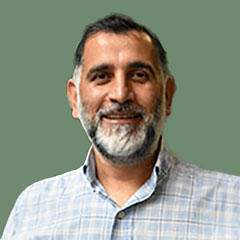
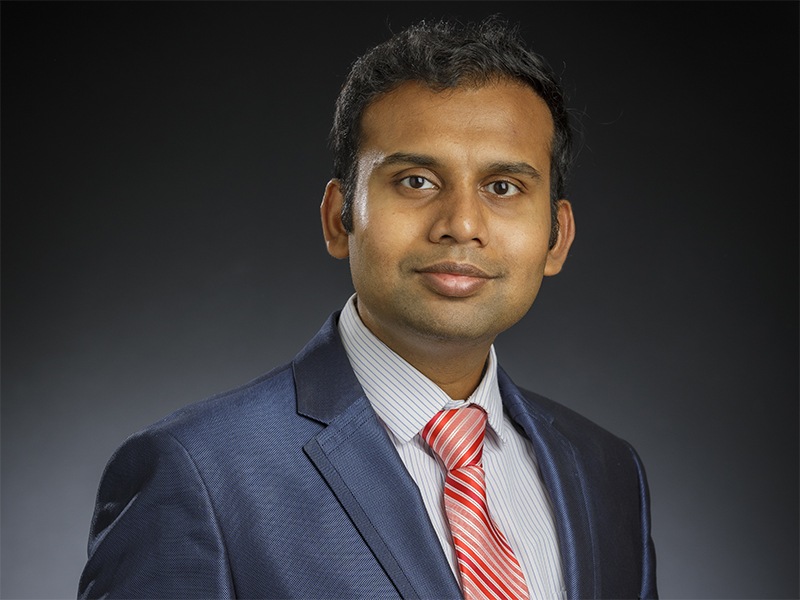
Nebojša Jovičić is a Professor in the Department of Energy and Process Engineering at the Faculty of Engineering, University of Kragujevac, Serbia. His research focuses on energy and process engineering with emphasis on renewable energy systems, waste management, and sustainable industrial processes. Research interests include: Energy efficiency in manufacturing processes Sustainable waste treatment technologies Biogas production optimization Circular economy implementation Environmental impact assessment His recent publications demonstrate significant focus on waste management innovations, particularly in municipal solid waste systems, plastic packaging assessment, and biogas production from organic waste co-digestion. Articles frequently explore applications of digital technologies for improving waste collection services and sustainability in industrial supply chains. Laboratory affiliations include serving as Chair of Energy and Process Engineering, with office facilities located in Building B-III-10 at the University of Kragujevac campus.
Dr. Péter Udvardy is an Associate Professor at Óbuda University. He is affiliated with the university's engineering and environmental science programs, located at the Budai Út Campus in Székesfehérvár. His research focuses on advanced technologies such as UAV applications, agricultural sensors, robotics, and environmental monitoring. He actively contributes to interdisciplinary fields like precision agriculture, remote sensing, and GIS-driven urban planning. His work combines theoretical and practical innovations, addressing challenges in renewable energy infrastructure inspection, livestock health monitoring via ingestible sensors, and educational robotics. Notable projects include UAV-based wind turbine assessment and bolus sensor development for dairy cattle. Udvardy emphasizes real-world problem-solving in industrial maintenance, data collection methodologies, and sustainable energy solutions. He maintains a consultation schedule on Mondays and can be reached via udvardy.peter@amk.uni-obuda.hu. His research outputs are publicly accessible via Google Scholar and institutional repositories.
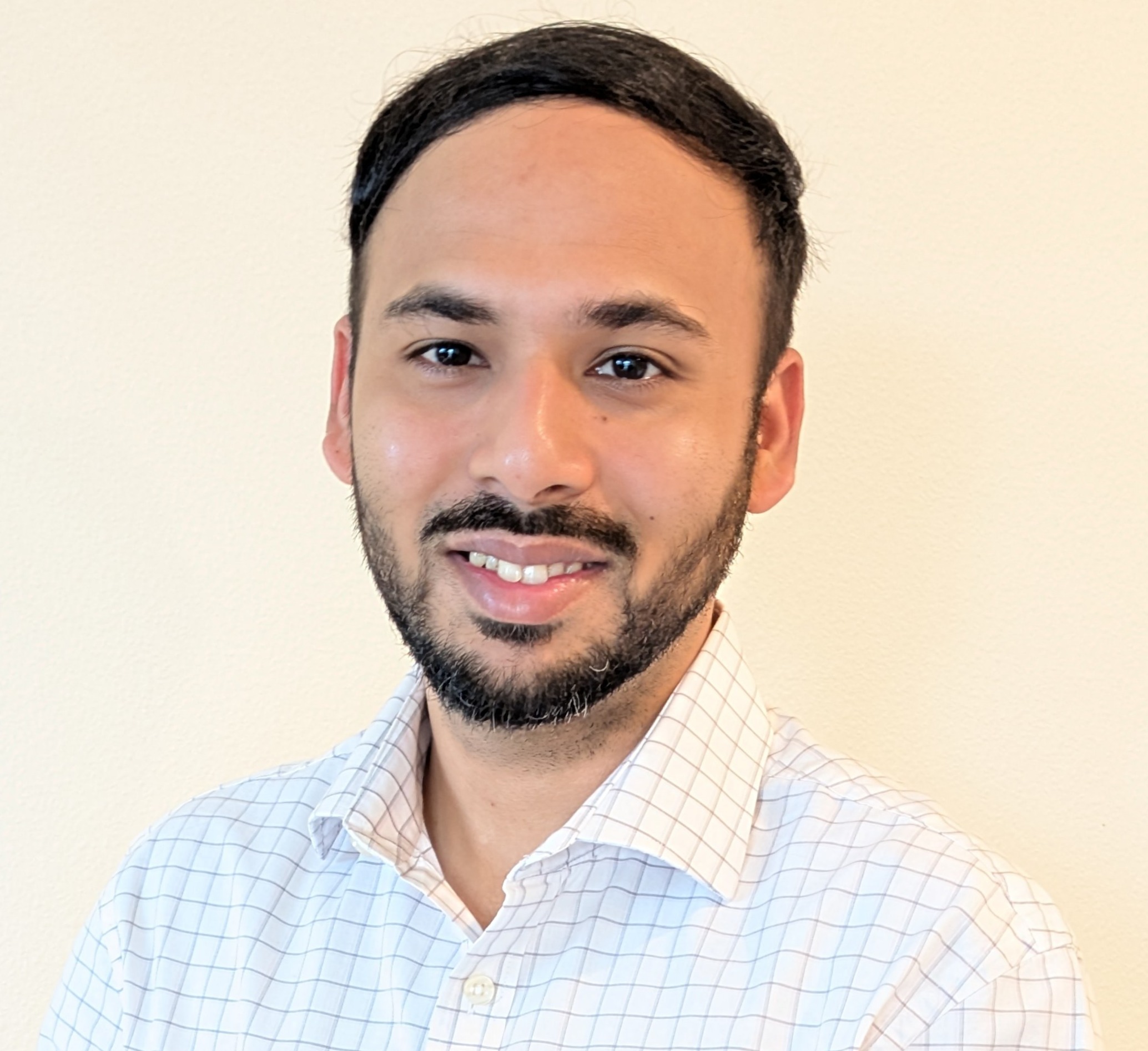
Asif Baba is a Clinical Associate Professor in the Department of Computer Science and Engineering at the University of North Texas. His research focuses on cybersecurity, Internet of Things (IoT), and blockchain technology, with a particular emphasis on secure data transmission, phishing detection, and industrial networking. Research Keywords: Computer Science, Cybersecurity, IoT, Blockchain, Wireless Sensor Networks Email: Asif.Baba@unt.edu Dr. Baba’s recent publications highlight advancements in IoT security, including secure medical data transmission frameworks and fuzzy logic-based phishing detection systems. He has also contributed to blockchain applications in access control, accounting, and education records verification, alongside innovations in industrial IoT networking and RFID data cleansing. His work spans fog computing, drone simulation, and sensor localization, reflecting a multidisciplinary approach to solving real-world challenges through technology.
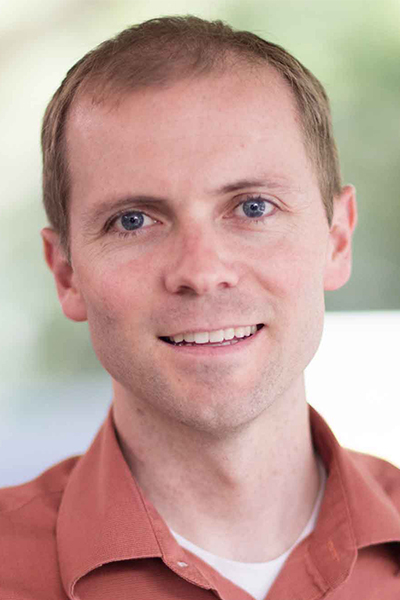
Douglas Hunsaker is an Associate Professor in the Mechanical and Aerospace Engineering Department at Utah State University (USU), where he has been teaching since 2011. Prior to academia, he worked in industry for four years at Scaled Composites (Stratolaunch and SpaceShipTwo programs) and consulted for drone companies like AeroVironment and Vayu. Education: PhD in Mechanical Engineering (2011), USU MS in Mechanical Engineering (2007), Brigham Young University BS in Mechanical Engineering (2005), Brigham Young University Research Interests: Dr. Hunsaker specializes in aerodynamic design and optimization for aircraft, spanning subsonic to hypersonic regimes. His work includes computational fluid dynamics (CFD) modeling, bio-inspired morphing aircraft design, and flight dynamics analysis. He develops tools like MachLine for aerodynamic simulations and MachUp for airframe design. Key Scientific Contributions: His research supports NASA and the Air Force Research Lab through improved aircraft efficiency and rapid design methods. He explores unsteady flows in flapping flight and applies optimization to reduce induced drag and sonic boom loudness in supersonic vehicles. Teaching: Dr. Hunsaker teaches advanced courses in aerodynamics (MAE 5500), flight dynamics (MAE 5510), flight simulation (MAE 6510), and potential flow (MAE 6500). His teaching spans 2016–2024, with a focus on practical applications in aircraft design. Scientific Awards: He received multiple accolades including Graduate Mentor of the Year (2024) , Teacher of the Year (2022) , and Young Investigator Program Recipient (2018) from the Office of Naval Research. His students have placed in AIAA competitions and pursued careers at Boeing, DARPA, and the Air Force Research Lab. Students Mentored: Dr. Hunsaker has supervised over 35 graduate and undergraduate students, including Jeffrey Taylor (PhD, 2022), Christian Bolander (PhD, 2023), and Benjamin Moulton (PhD, 2025). His mentees have contributed to cutting-edge research in morphing wings, sonic boom analysis, and flight simulation tools. Labs and Teams: He leads the AeroLab at USU, focusing on rigorously understanding mathematical and physical principles of flight. The lab develops open-source tools like MachLine and MachUp, and has collaborations with industry leaders such as Sandia National Labs and AeroVironment.
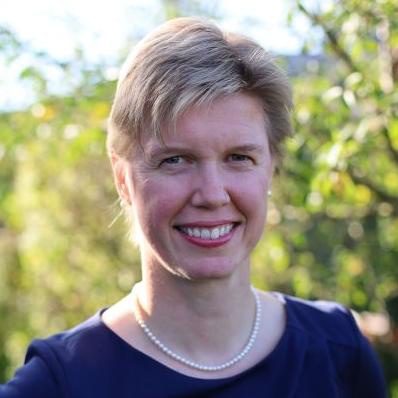
Prof. Antje Neve holds the Professorship for Internet of Things at Bundeswehr University Munich. Her expertise spans IoT, data analytics, robotic systems, and sensor technology. She actively supervises student projects in collaboration with industry partners like BMW Group and EnOcean. Her research focuses on smart city data processing, autonomous systems, and automotive safety. Notable work includes 3D object detection for driver assistance and functional safety compliance in automotive systems. She teaches courses on cyberarchitectures, robotics, and data mining. Recent student projects include drone collision avoidance, ROS2 implementation, and AWS-based sensor data visualization. Vacancies exist in DTEC MORE initiatives involving cloud-edge computing and smart city virtual twins. Her lab includes scientific staff like Daniel Rossow. She has pioneered patents in display safety interfaces and sensor calibration devices.
Dr. Vivek Sharma is an Assistant Professor and Online Program Chair in the College of Aeronautics at Florida Institute of Technology. He holds a Ph.D. in Aviation Sciences with a focus on Human Factors and Safety. His expertise spans aviation safety, human factors in advanced air mobility (AAM), unmanned aircraft systems (UAS), and user experience (UX) research. Dr. Sharma advises on FAA initiatives, leads data analysis projects, and promotes drone safety through his role in the FAA’s Safety Team. His recent work includes studies on BVLOS drone operations, urban air mobility, and pilot personality dynamics. Education: Ph.D. in Aviation Sciences (concentration: Human Factors and Safety). Research Interests: Dr. Sharma’s work explores aviation safety through interdisciplinary lenses, including data-driven analyses of flight instructor behaviors, wildlife strike patterns, and passenger acceptance of emerging technologies like AI-piloted aircraft. He also examines the intersection of cybersecurity and aviation training, aiming to bridge diversity gaps in tech fields. Publications: His recent articles focus on AAM system design, wildlife-aircraft collision mitigation, and public perception of autonomous flight. Notable trends include a growing emphasis on AI applications in aviation and UX challenges in human-agent teams. Advising & Grants: Serves as thesis committee chair and member, and collaborates with the FAA’s PEGASAS Center of Excellence and ATLAS Lab on funded research projects. Labs/Teams: Active in the ATLAS Lab and FAA’s PEGASAS Center, focusing on data analytics and safety innovation in aviation systems.
Jérémie Garcia is an Assistant Professor in the Interactive Informatics Team at the French Civil Aviation University (ENAC) in Toulouse, France. His academic career spans research positions at Goldsmiths University, Paris-Sud University, and IRCAM, with a consistent focus on Human-Computer Interaction applied to specialized domains including music technology and aviation systems. Garcia completed his Ph.D. at the in|situ| team at LRI and in the Music Representation group at IRCAM, followed by postdoctoral positions at Goldsmiths University and IRCAM. His educational background bridges computer science and music technology, providing a unique interdisciplinary foundation for his research. Dr. Garcia's research focuses on developing innovative interaction techniques that enable users to express, develop, and evaluate ideas effectively and creatively. He employs participatory design methodologies and explores the potential of augmented reality, visual programming, auditory feedback, and interactive paper technologies. His work has evolved from music composition interfaces to drone control systems and aviation safety applications, demonstrating a consistent thread of applying HCI principles to domain-specific challenges. Garcia has made significant contributions to accessible drone interfaces through projects like CandyFly and HandiFly, which address the needs of pilots with visual impairments. His recent publications reveal a strong focus on aviation safety, particularly in drone operations and pilot assistance systems. Garcia has pioneered work in augmented reality displays for drone inspections (SafeSpect), tactile feedback systems for pilots (Tactilient), and tools for improving mission planning safety. His research increasingly addresses accessibility challenges, with several publications focusing on making drone technology usable for people with disabilities. The interdisciplinary nature of his work bridges computer science, human factors engineering, and aviation safety, with a clear trajectory from music technology applications to practical aviation solutions. Dr. Garcia teaches Human-Computer Interaction, design techniques, and programming courses for undergraduate and graduate students at ENAC since 2016, including Interactive Web Programming, Creativity Bootcamp, JAVA-FX, Interaction Design, and Python programming. Previously, he taught at Goldsmiths University (2015-2016) and Paris-Sud University (2011, 2015), covering subjects from introductory programming to advanced HCI design. He actively develops research software tools including Dronible (operating drones with tangible objects), Trajectoires (mobile/web app for sound spatialization control), and MetaOSC (Bluetooth to OSC bridge). Garcia participates in numerous research projects related to drone interaction and aviation interfaces, with recent work focusing on safety-critical applications such as SafeSpect and FOCUS. His GitHub profile shows ongoing collaboration with students and colleagues on interactive systems development, demonstrating his commitment to translating research into practical tools.
Hisham Ali is an Assistant Professor in the Department of Aerospace Engineering Sciences at the University of Colorado Boulder (CU Boulder), affiliated with the Aerospace Mechanics Research Center (AMREC). He holds a PhD and MS in Aerospace Engineering from Georgia Institute of Technology (2019 and 2015) and a BS from the University of Alabama (2013). His research focuses on hypersonics, magnetohydrodynamics (MHD), plasma physics, planetary entry systems, and aerocapture technologies for space exploration. Education: PhD, Aerospace Engineering, Georgia Tech, 2019 MS, Aerospace Engineering, Georgia Tech, 2015 BS, Aerospace Engineering, University of Alabama, 2013 Ali’s research explores MHD drag modulation for planetary entry missions (e.g., Neptune aerocapture), plasma wind tunnel development, and energy harvesting during atmospheric entry. His work aims to reduce mission costs, enhance spacecraft efficiency, and enable human exploration of outer planets. Key projects include tabletop-scale plasma tunnel facilities and RF/MW instrumentation suites for hypersonic flow studies. He has received prestigious awards such as the NASA Space Technology Research Fellowship (2013) and the Barry M. Goldwater Scholarship (2012). His contributions span academic and industrial roles, including postdoctoral research at Georgia Tech and a position at The Aerospace Corporation. Ali advises graduate students in CU Boulder’s Aerospace Engineering program and collaborates on grants focused on hypersonic aerodynamics and MHD systems. His laboratory (AER0 369) integrates experimental and computational approaches to advance space exploration technologies.
John Farnsworth is an Associate Professor in the Department of Aerospace Engineering Sciences at the University of Colorado Boulder. He serves as Director of the Aerospace Mechanics Research Center (AMReC) and the Research and Engineering Center for Unmanned Vehicles (RECUV). His expertise lies in experimental fluid dynamics, particularly in flow control, unsteady aerodynamics, and wind tunnel testing. Farnsworth holds a PhD, MS, and BS in Aeronautical Engineering from Rensselaer Polytechnic Institute (2011, 2007, 2006). His research focuses on image-based flow velocimetry, fluid-structure interaction, and biologically inspired flight. Notable contributions include studies on wind turbine aerodynamics, synthetic jet dynamics, and stall flutter mechanisms. He has developed novel wind tunnel systems like the WindCline for wildfire combustion analysis and the unsteady low-speed wind tunnel with louver systems. Awards include the Michael A. Sadowsky Prize (2007) and NSF Graduate Fellowship Honorable Mention (2006–2007). His work bridges computational and experimental methods, emphasizing practical applications in aerospace systems and environmental fluid dynamics. Key collaborations include investigations into wind turbine blade aerodynamics under varying inflow conditions and active flow control strategies for flexible wings. His labs emphasize interdisciplinary approaches to address challenges in aerodynamics, propulsion, and unmanned vehicle systems.
Dr. Lecturer İnci Umakoglu is an Assistant Professor at the Faculty of Engineering , Kütahya Dumlupınar University . She holds a PhD in Electrical-Electronics Engineering from the same university and has been a Research Assistant in multiple laboratories since 2015, including Analog & Digital Communications, Measurement & Circuit, and Logic Design. Her research focuses on Wireless Communication Systems (NOMA, OTFS modulation) Antenna Design for 5G and beyond UAV-assisted network architectures IoT device security protocols She has led and advised numerous student research projects in avionics, telemetry, and low-altitude defense systems under the TÜBİTAK 2209-A and Scientific Research Project (BAP) programs. Recent publications highlight her work in deep learning for signal detection , LoRa-based telemetry systems , and IoT security methods , with a strong emphasis on practical implementations in 5G and UAV technologies. She is an active member of IEEE and the Applied Computational Electromagnetics Society (ACES) .
Pierre BEAUSEROY is a Full Professor at Université de Technologie de Troyes (UTT), France, and serves as Deputy Director of the European alliance EUT+. His research focuses on learning methods, data analysis, and their applications in fields like system monitoring, urban noise analysis, and biological data processing. He teaches courses in Computer Science (Algorithms, Datawarehouse, Machine Learning) and Statistics, and has delivered lectures internationally at Shanghai University (China) and Universidad Tecnologica Nacional (Argentina). Key research areas include detection rule training, adaptive monitoring systems, structured data decision-making, and variable selection techniques. Collaborative projects with industrial/academic partners include DARSE (CNRS-CEA), VIRTUALIS (THALES), and SCALA (ANR), among others. His work addresses challenges in non-destructive testing, flight data analysis, and real-time sensor diagnostics. Dr. BEAUSEROY’s expertise spans both theoretical advancements (e.g., performance-constrained learning algorithms) and practical applications (e.g., agricultural quality control via imaging systems). He maintains active engagement in European research initiatives and technology transfer programs.
Prof. Dr. Marc Naguib is a Full Professor in Behavioural Ecology at the Wageningen Institute of Animal Sciences (WIAS), part of Wageningen University & Research. His research focuses on avian behavioral ecology, particularly in species like zebra finches and great tits, investigating topics such as communication networks, social behavior, and environmental adaptation. Expertise includes: animal communication, reproductive strategies, wildlife tracking technology, and conservation biology Leads projects on African rangeland ecology and human-wildlife conflict Supervises 9 PhD candidates including studies on martial eagles, elephant resource use, and turtle hybridization Research interests emphasize understanding how animals adapt to environmental challenges through behavioral mechanisms. Recent work explores climate impacts on avian reproduction and the functional consequences of hybridization in sea turtles. Publications highlight innovative tracking methods and insights into animal communication systems. Active in education through MOOCs on animal behavior and conservation. Media engagements discuss topics like avian conservation and animal welfare policy.
Luis Mejias Alvarez is an Associate Professor and Researcher in the School of Electrical Engineering & Robotics at Queensland University of Technology (QUT). He specializes in Unmanned Aerial Systems (UAS), focusing on vision-based guidance, collision avoidance, and autonomous navigation technologies. His work integrates computer vision, sensor fusion, and control systems to advance UAV applications in aerospace and robotics. Education: Electronic Engineer (UNEXPO, Venezuela, 1999) MSc in Networks and Telecommunication Systems (Universidad Politécnica de Madrid, 2001) PhD in Robotics and Automation (Universidad Politécnica de Madrid) Research Interests: His research spans Unmanned Aerial Systems (UAS), including autonomous helicopters, vision-based navigation, collision avoidance, and forced landing technologies. He develops algorithms for computer vision, sensor fusion, and control systems, with applications in aerospace engineering and artificial intelligence. His work aims to enhance UAV safety and autonomy in complex environments. Awards & Fellowships: 2017 Endeavour Executive Fellowship Visiting Professorships at Université de Bretagne Occidentale (2017) and UTIS (2017) Editor of Springer Tracts in Advanced Robotics (2016) Keynote Speaker at CIIMA 2014 Program Chair for UAS Conferences (2013) DECRA Fellowship (2012–2015) IRSES Grant (2009) Advising & Grants: Supervised PhD/Masters students in areas like vision-based collision avoidance and UAV navigation. Key grants include ARC DECRA and international IRSES collaboration with European institutions. Labs & Collaborations: Active in QUT’s Centre for Robotics and the Australian Research Centre for Aerospace Automation. Collaborates globally on projects like drone ship landing under adverse conditions and beyond-line-of-sight navigation.
Dr. Alok Menon serves as a Lecturer in the Department of Aerospace Engineering at Wichita State University's College of Engineering. Based in Wallace Hall on the Main Campus, he maintains active contact through email (alok.menon@wichita.edu) and phone ((316) 978-3410), reflecting his current institutional engagement in teaching and research within aerospace engineering. His research portfolio demonstrates deep specialization in flight dynamics and adaptive control systems for next-generation aircraft. Key focus areas include morphing wing structures, SansEC sensor-based structural health monitoring, and flight testing methodologies. Dr. Menon's work bridges theoretical control frameworks with practical applications, particularly in flexible aircraft systems where he develops stability-guaranteed control architectures and real-time deflection measurement techniques. His educational contributions extend to flight dynamics curriculum development and mobile flight logging tools. Analysis of Dr. Menon's publication record (2014-2025) reveals three dominant research thrusts: (1) adaptive control innovations for morphing/flexible wings using hybrid PDE-ODE models, (2) SansEC sensor applications for structural monitoring in flight environments, and (3) empirical flight data analysis from ASM/Lead aircraft fleets. His recent work increasingly integrates augmented reality displays for pilot advisories and explores decentralized control architectures, indicating evolving focus toward human-machine interfaces in aviation safety systems. No scientific awards or honors were documented in the provided materials. While specific advisees aren't listed, Dr. Menon's flight test assignment modules and mobile logging applications suggest active mentorship in aerospace education. His operational loads monitoring studies using ASM aircraft fleets imply significant research collaboration with aviation organizations, though specific grant details remain unreported in the source text. Dr. Menon's SansEC sensor research and flight test instrumentation work indicate probable involvement with structural dynamics laboratories equipped for aeroelastic testing, though specific lab affiliations weren't explicitly stated in the provided information.
Dr. Atanu Halder is an Assistant Professor in the School of Mechanical and Aerospace Engineering at Oklahoma State University (OSU). His research focuses on advanced aerospace systems, including the design, control, and optimization of unmanned aerial vehicles (UAVs), e-VTOL platforms, and rotorcraft. He holds a Ph.D. in Aerospace Engineering from Texas A&M University (2019), and M.S. and B.S. degrees from the Indian Institute of Technology Kharagpur (2014). Dr. Halder’s research interests span rotorcraft aeromechanics, nonlinear aeroelasticity, structural dynamics, and applications of machine learning. He has been recognized with prestigious awards, including phase-I and II wins in the Boeing GoFly Prize, best paper awards at AIAA and American Helicopter Society conferences, and the Texas A&M Future Faculty Fellowship. Education: Ph.D., Aerospace Engineering, Texas A&M University (2019) M.S., Aerospace Engineering, IIT Kharagpur (2014) B.S., Aerospace Engineering, IIT Kharagpur (2014) His work bridges theoretical models with experimental validation, particularly in cycloidal rotor dynamics and thrust vectoring systems. Publications highlight innovations in UAS scalability, hydrodynamic propeller modeling, and satellite control systems. Dr. Halder teaches MAE 3724: Systems Dynamics and Introduction to Control at OSU. Awards: Boeing GoFly Prize Phase-II Winner (2019) Vertical Flight Foundation (VFF) Scholarship (2018) AIAA Best Paper Award (2019) Best Paper, AHS National Forum (2017)