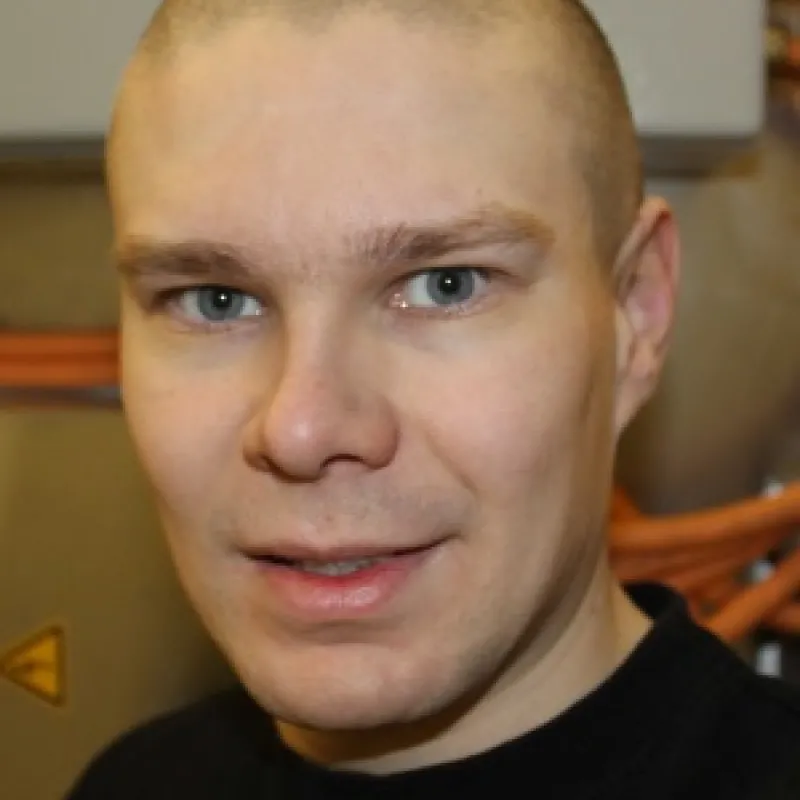
Mariia Zhuldybina is a Professor in the Department of Electrical Engineering at École de technologie supérieure (ÉTS), Montreal. She leads research in metamaterials, terahertz technology, printed electronics, and smart textiles. Her work focuses on sustainable manufacturing, non-destructive testing, and eco-design principles. Education: M.Sc.A. in Physics from Moscow Institute of Physics and Technology, Ph.D. in Electrical Engineering from ÉTS. She directs the LACIME laboratory’s research on functional materials and microsystem fabrication. Research interests include terahertz spectroscopy for quality control, environmental impact assessment of electronic materials, and wearable sensor integration. Her recent projects address 6G communication surfaces, circular economy practices in IoT, and bio-based conductive inks. Advising: Supervises 10+ graduate students across PhD, M.Sc. and project courses. Notable supervisees include Niranjan Namdev Jadhav (6G intelligent surfaces), André-Louis Morneau (6G frequency selectors), and Marie-Jade Lucier (smart textile integration). Labs/Teams: Core member of LACIME – Communications and Microelectronic Integration Laboratory. Collaborates on interdisciplinary projects combining photonics, materials science, and environmental engineering.
Dr. Rosanna Olsen is an Associate Professor (Status Only) at the University of Toronto and a Scientist at the Rotman Research Institute (RRI), Baycrest. She leads the Olsen Lab, which investigates the neural organization of human memory systems using advanced neuroimaging techniques (fMRI, MEG), eye-tracking, and studies of amnesia patients. Her research focuses on medial temporal lobe function, memory formation across lifespan, eye-movement patterns in memory, thalamo-cortical interactions, and early biomarkers of cognitive decline in aging. Education: • PhD in Psychology (Cognitive Neuroscience) from Stanford University • Postdoctoral fellowship at Rotman Research Institute Research Focus: The Olsen Lab specializes in: 1) Structural and functional characterization of medial temporal lobe subregions in memory-impaired populations; 2) Neural oscillations and short-delay memory maintenance; 3) Eye-movement patterns as indirect memory measures; 4) Roles of thalamic nuclei in associative memory; 5) Promoting diversity in neuroscience. Methodologies include high-resolution MRI, fMRI, MEG, and behavioral paradigms. Article Trends: Recent publications (2020-2024) predominantly explore hippocampal subfield volumetry, aging-related memory decline, eye-movement patterns, thalamic contributions to memory, and inclusive academic practices. Over 70% involve neuroimaging analyses, with consistent focus on preclinical Alzheimer's biomarkers and hormonal influences on cognition. Advising: Actively mentors graduate students (Psychology, University of Toronto) and oversees postdoctoral fellows. Current trainees include 4 PhD candidates and 2 postdocs researching thalamic memory pathways, oscillatory dynamics, and visual discrimination in aging. The lab employs 5 research assistants. Lab & Collaborations: Directs the Olsen Lab at Baycrest with 11 active members. Collaborates with Drs. Jennifer Ryan (Baycrest), Brad Buchsbaum (Baycrest/UofT), Morris Moscovitch (UofT), and international consortia including the Hippocampal Subfields Group. Research has been featured in Science Daily and Neuroscience News .
Therese Eskilsson is an Associate Professor at Umeå University and Head of the Department of Community Medicine and Rehabilitation's Physiotherapy section. She holds a PhD in Public Health (2009) and has clinical employment in physiotherapy. Associate Professor, Physiotherapy (2022) PhD in Public Health (2009) Clinical researcher and practitioner Her research focuses on preventing work-related ill health and rehabilitating stress-related illnesses through: Randomized controlled trials with mixed methods Workplace interventions and dialogue Physical activity prescription Cognitive training programs Gender-sensitive rehabilitation Long-term recovery strategies Key publications address: Outdoor activity in preschool design (2025) Digital workplace health tools (2025) Brain correlates in exhaustion disorder (2024) Longitudinal rehab outcomes (2024) Activity-based office impacts (2024) She teaches in work environment health , stress management , and motivational interviewing at undergraduate and postgraduate levels.
Dr. Damian Nieckarz is a Lecturer at the Department of Theoretical Chemistry , Institute of Chemical Sciences , Faculty of Chemistry , Maria Curie-Skłodowska University in Lublin, Poland. He earned his PhD in Chemical Sciences with distinction in 2016. His research focuses on computational methods like Monte Carlo simulations and scanning tunneling microscopy (STM) to study molecular self-assembly on surfaces. Education : PhD in Chemical Sciences (2016, Maria Curie-Skłodowska University) Dr. Nieckarz's work explores the formation of nanomaterials , supramolecular tessellations , and exotic molecular fractals stabilized by directional bonds (coordination, halogen, hydrogen, covalent). He investigates chirality , relativistic effects , and hierarchical organization of organic molecules on flat surfaces. The articles listed highlight his contributions to two-dimensional molecular networks , including fractal structures and order-disorder transitions . His simulations bridge mathematical chemistry and applied physics , with applications in metal-organic frameworks and adsorption dynamics .
Dr. Lucheng Peng is a Research Fellow at the Institute of Photonic Sciences (ICFO) , working within the Functional Optoelectronic Nanomaterials department. His research focuses on advanced nanomaterials for optoelectronic applications. PhD in Chemistry from Jilin University (CN) Research spans nanomaterials , quantum dots , and solar cells , with a strong emphasis on infrared detection and semiconductor engineering . Recent work highlights heavy-metal-free quantum dots and AgBiS2 nanocrystals for sustainable optoelectronics. Key publication trends include core-shell heterostructures , vacancy-driven material optimization , and anisotropic growth techniques for nanocrystals. His work bridges materials science and applied photonics .
Hartmut Wiggers is an Adjunct Professor at the University of Duisburg-Essen , leading the Nanoparticle Synthesis group within the Institute for Energy and Material Processes - Reactive Fluids . His career spans over three decades, focusing on gas-phase synthesis and functionalization of nanoparticles for energy and environmental applications. Research Interests : Hartmut’s work centers on gas-phase synthesis of nanoparticles using flame, plasma, and laser reactors, enabling precise control over material properties. His research extends to kinetics, in-situ diagnostics, and device engineering, including sensors and battery anodes. Key areas include catalysis , energy storage , and nanomaterials for water remediation . Publications : His recent work (2024-2025) explores advanced nanomaterials for energy conversion, such as perovskite catalysts for oxygen evolution reactions, silicon-carbon composites for lithium-ion batteries, and graphene-based hybrids. The articles highlight scalable synthesis methods and performance optimization through structural engineering. Affiliations & Roles : He is affiliated with the DECHEMA Center for Nanointegration Duisburg-Essen , Materials Research Society , and serves as a scientific advisor at the Institute of Energy and Environmental Technology e.V. (IUTA) .
Muthu B Wijesundara is a Research Professor in the Bioengineering department at The University of Texas at Arlington . He has held various positions including Principal Research Scientist at UTARI and Faculty Associate at the Automation and Robotics Research Institute. His work focuses on biomedical devices , soft robotics , and sensor arrays for rehabilitation and trauma prevention. His research involves soft robotic gloves for hand therapy, pressure modulation systems to prevent ulcers, and impact-mitigating materials . Publications span biomechanics , neural stimulation , and wearable technology . Grants include federal funding from NIH, NSF, and CDMRP for projects like ReHeal Glove and AFIRMII Bioreactor . $498,968 NIH grant for Clinical Trial of ReHeal Glove $741,767 CDMRP grant for Automated Seat for Pressure Ulcer Prevention $1.3M NSF grant for Multi-Modal Skin and Garments He holds patents for fluid-driven actuators , interconnected cell arrays , and variable stiffness insoles . Awards include Founding Fellow of SaferCare Texas Patient Safety Institute. Service roles include Institutional Lab Safety Board membership and Task Force on Faculty Diversity.
Dr. Ye Sun is an Associate Professor in the Department of Mechanical and Aerospace Engineering and Electrical and Computer Engineering at the University of Virginia, with a concurrent appointment as Adjunct Associate Professor at Michigan Technological University. She earned her PhD in Electrical Engineering from Case Western Reserve University in 2014. Her research integrates engineering innovation with human health and behavior, focusing on wearable sensors, IoT, and cyber-physical systems for healthcare and transportation safety. Her interdisciplinary work spans: Human-centered monitoring technologies Wearable robotics and sensor networks Human-machine interaction in critical domains Data-driven solutions for healthcare and transportation Analysis of her 15 most recent publications (2022-2025) reveals dominant themes: AI-driven wearable systems (68% of articles), rehabilitation robotics (33%), biomedical signal processing (27%), and IoT-enabled health monitoring (20%). Emerging trends include physics-guided machine learning, soft robotics, and non-invasive neural interfaces. Dr. Sun has secured significant NSF funding including: NSF-CAREER-CPS (2018-2023): $500,000 for 'System-on-Cloth: Cloud Manufacturing Framework for Embroidered Wearable Electronics' NSF-TTP Supplement (2019-2023): $99,986 for commercialization of embroidered electronics NSF-ECCS (2017-2020): $330,504 for mitigating triboelectric artifacts in wearables
Dr Juan Baena Vargas is a Post-Doctoral Research Fellow in the Department of Mechanical and Manufacturing Engineering at the University of New South Wales (UNSW), Faculty of Engineering. His research focuses on advanced materials for acoustic and fire safety applications, as well as tribological properties of polymers for biomedical use. His primary research interests encompass the development of metamaterials for underwater sound absorption, fire-retardant coatings and composites for bushfire protection, and the mechanical and tribological behavior of ultra-high-molecular-weight polyethylene (UHMWPE) composites in artificial joints. He employs nanomaterials such as carbon nanotubes and graphene to enhance material properties through innovative fabrication methods including 3D printing and visible light polymerization. Analysis of his recent publications (2023-2015) indicates a strategic shift toward fire safety and acoustic materials since 2020, with 12 of 15 recent articles addressing flame retardancy or sound absorption. His work demonstrates expertise in optimizing nanocomposite formulations (PDMS/MWCNT, silicone rubber/graphene) and bio-inspired coatings (chitosan-expandable graphite), while his foundational research on UHMWPE tribology remains influential in biomedical engineering.
Joe K. Kearney is a Professor in the Department of Computer Science at the University of Iowa and the University of Minnesota. His career spans over three decades, focusing on virtual reality, computer vision, and human-computer interaction research. Key affiliations: University of Iowa (Iowa City, IA, USA), University of Minnesota (Minneapolis, MN, USA) Research domains: Virtual environments, perception-action coupling, motion capture systems, pedestrian behavior simulation Research trends show sustained contributions to immersive visualization , autonomous navigation , and human factors in virtual reality . His 2014-2025 work explores AR-based pedestrian safety systems, while earlier studies (1986-2006) established foundational frameworks for virtual environment simulation and optical flow analysis. Long-term collaborations with Jodie M. Plumert (1986-2021), James F. Cremer (1986-2009), and Pooya Rahimian (2015-2017) demonstrate consistent team research in VR cognition and autonomous systems.
Dr. Michael Reynolds is the Department Chair and Associate Professor in the Department of Mechanical Engineering at the University of West Florida, part of the Hal Marcus College of Science and Engineering. He has played a pivotal role in establishing the mechanical engineering program since its inception in 2016, leading curriculum design, lab development, and accreditation efforts. He is based in Building 4, Room 327, and can be reached at mreynolds2@uwf.edu. Education: Ph.D. in Mechanical Engineering, Purdue University, West Lafayette M.S. in Mechanical Engineering, Purdue University, West Lafayette B.S. in Mechanical Engineering, Marquette University Dr. Reynolds' research centers on vibration and control systems, with significant work in time-optimal tracking control of flexible systems. He has also contributed to interdisciplinary areas including biomechanics, acoustic metamaterials, and engineering education—especially online pedagogy. His research is supported by NASA grants focused on high-altitude balloons, microgravity exercise, and structural health monitoring using metamaterials. The recent publications reflect a strong trend in control theory applied to mechanical and aerospace systems, with growing emphasis on metamaterials for vibration suppression and innovative methods in engineering education. His work bridges theoretical control design with practical applications in aerospace, biomechanics, and education technology. Scientific Awards: No specific awards are mentioned in the text. Dr. Reynolds leads research funded by NASA and serves as Editor-in-Chief of the Journal of Online Engineering Education , the leading journal in online pedagogy for engineering. He has advised curriculum development and accreditation processes, though no named students are listed. His leadership extends to both academic administration and research innovation. His lab and research team focus on dynamic systems, with projects involving command shaping, acoustic metamaterials, and structural health monitoring. These efforts are integrated into student projects and collaborations with agencies like NASA.
Lei Chen is an Assistant Professor in the Department of Mechanical Engineering at Mississippi State University, College of Engineering. His research focuses on advanced computational modeling techniques applied to materials and mechanical systems. Education: Ph.D., Mechanical Engineering, National University of Singapore (NUS), Singapore, 2012 M.E., Materials Processing, Huazhong University of Science & Technology (HUST), China, 2007 B.E., Materials Processing, Huazhong University of Science & Technology (HUST), China, 2005 His research interests lie at the intersection of computational mechanics and materials science, particularly in fracture modeling, multi-scale simulations, and phase-field methods. He develops and applies advanced numerical techniques to model phenomena such as dendrite growth in batteries, microstructure evolution in alloys, and mechanical behavior of biological and composite materials. His work integrates finite element methods, smoothed finite element methods (S-FEM), and phase-field models with crystal plasticity and multi-physics coupling. The recent publications highlight a strong trend in computational modeling of energy materials and structural integrity. Key themes include phase-field simulations of lithium dendrite formation, multi-scale modeling of polycrystal grain growth, and advanced fracture mechanics using edge-based strain smoothing techniques. These works span disciplines from battery technology to biomaterials, demonstrating a versatile and impactful research program. Scientific Awards and Honors: Travel Fellowship, Enabling Methods for Materials Innovation, University of Florida, 2015 Travel Grant, USNCCM13, 2015 Z. Hsu Scientific Paper Award, 2015 Vice-Chancellor's Research Fellowship, QUT, AUS Chinese Excellent Self-financed Student Abroad Scholarship, 2012 President Graduate Fellowship (top 5%), NUS, 2009–2011 Research Graduate Scholarship, NUS, 2007–2011 Outstanding Graduate Student Award, HUST, 2006 Excellent Bachelor Graduate Award, HUST, 2005 First-Class Scholarship, HUST, 2002–2004 Dr. Chen has advised research students and collaborated extensively with leading researchers such as Long-Qing Chen. His work is supported by academic grants and institutional fellowships. He has contributed to significant advancements in computational methods for fracture and microstructure modeling. He has also published in high-impact journals and presented at major international conferences. He is actively involved in research related to energy storage systems, additive manufacturing, and biological materials, often leveraging high-performance computing and image-driven simulations. His lab focuses on developing robust and accurate numerical frameworks for predicting material behavior across scales.
Dr. Luca Caracoglia is an Associate Professor in the Department of Civil & Environmental Engineering at Northeastern University. He specializes in wind engineering, wind energy systems, fluid-structure interaction, and structural dynamics under extreme climate conditions. His research focuses on mitigating wind-induced damage to infrastructure and optimizing renewable energy technologies through advanced modeling and experimentation. Education: Ph.D., Structural Engineering, University of Trieste, Italy (2001) 5-year Diploma in Civil Engineering, University of Trieste, Italy (1997) Research Interests: Dr. Caracoglia's work addresses critical challenges in wind engineering, including bridge aerodynamics, wind turbine blade stability, and tornado/downburst impact assessment. He leads the Wind Engineering Research Group (WERG), which combines numerical simulations and wind tunnel experiments to evaluate structural resilience. Recent projects involve NSF-funded initiatives on turbulence effects on large flexible structures and tornado-resistant infrastructure design. Key Contributions: Dr. Caracoglia has authored over 50 peer-reviewed articles, focusing on stochastic flutter analysis, energy harvesting from wind-induced vibrations, and performance-based wind engineering frameworks. His 2020 ASCE Fellowship and 2009 NSF CAREER Award highlight his impactful contributions. He has secured $2.7M+ in grants, including a $14M NSF collaborative grant for tornado-resistant infrastructure testing. Awards & Recognition: Fellow of the American Society of Civil Engineers (2020) NSF CAREER Award (2009) Consistently ranked among top 2% most-cited scientists in Stanford University’s global assessments (2021-2024) Labs & Collaborations: Director of the Wind Engineering Research Group (WERG) at Northeastern, collaborating with institutions like the University of Massachusetts Amherst and international partners. Active in organizing international wind engineering seminars and serving on IAWE committees.
Vesa Ruuskanen is an Associate Professor at the LUT School of Energy Systems, Lappeenranta University of Technology (LUT), Finland. He holds M.Sc. and D.Sc. degrees in electrical engineering from LUT (2007 and 2011, respectively). His research focuses on renewable energy systems, particularly water electrolysis and CO₂ electrolysis for energy storage and fuel production. He has contributed to projects like SOLETAIR (2017) and Neo-Carbon Food (2019), demonstrating innovative fuel and food production from air. Education: Doctor of Science (Technology) in Energy Systems (2011) Employment: Assistant Professor at LUT since 2012, transitioning to Associate Professor His research interests include: Electrolysis technologies for renewable energy integration Electromagnetic design of electric motors for wind and traction applications Finite Element Analysis (FEA) for motor performance optimization Drive cycle analysis for electric vehicles His publications span topics like electrolyzer design, motor efficiency, and thermal management in renewable energy systems. He actively reviews for journals including Applied Energy , International Journal of Hydrogen Energy , and Energy Conversion and Management . Research highlights include: Developing real-time fault detection systems for crystallization processes Advancing in situ electrolyzer stack integration with electrobioreactors Optimizing permanent magnet synchronous motors for wind turbines and electric vehicles Labs/Teams: Active contributor to LUT's GREENRENEW research platform and the Neo-Carbon Energy project.
Akif Yavuz serves as an Assistant Professor at Istanbul Technical University's Graduate School, specializing in automotive engineering with emphasis on brake systems, vibration analysis, and noise control. His research bridges theoretical modeling and experimental validation to address critical challenges in vehicle dynamics. Research Focus: Yavuz's work centers on: Brake squeal suppression mechanisms Nonlinear friction-induced vibration modeling Piezoelectric damping applications Vehicle noise pollution impacts Stability analysis of mechanical systems Automotive component design validation His recent publications (2024-2025) demonstrate a cohesive research trajectory focused on experimental validation of squeal metrics, camshaft design optimization, and piezoelectric-based noise suppression. This work consistently addresses real-world automotive challenges through advanced mechanical modeling and innovative damping solutions. Research Leadership: Currently leading the project 'Suppression of high-frequency brake noise with piezoelectric-based passive damping elements' (2024-2025), Yavuz demonstrates active grant acquisition and project management capabilities. His collaborations primarily involve O. T. Sen across multiple publications. Impact: With an h-index of 18 and growing citation metrics (including PlumX readership and news mentions), his research contributes significantly to automotive noise control literature. The comprehensive review on vehicle noise pollution impacts highlights his expanding scope into environmental health considerations.