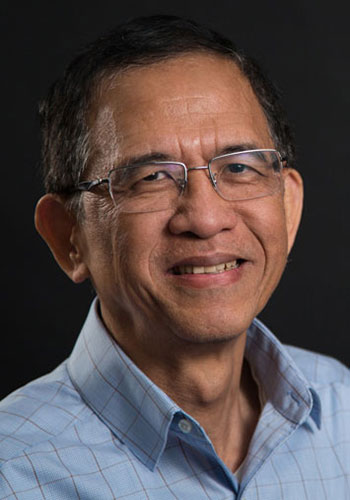
Dr. Hung Le is an Instructional Associate Professor at the University of Houston's Cullen College of Engineering, Department of Electrical and Computer Engineering. He holds IEEE Life Senior Member and Senior Member of the National Academy of Inventors statuses. With over 30 years of industry experience in computer, telecom, and oil/gas sectors, his expertise spans embedded systems, IoT, reconfigurable systems, and memory controller design. Education: M.Sc., Electrical Engineering, University of Alberta Ph.D., Electrical Engineering, University of Houston Research Interests: Embedded Systems & IoT Reconfigurable Systems (ASIC/FPGA) Memory Controllers Machine Learning His work emphasizes hardware-software co-design, adaptive systems, and secure memory architectures. Publications highlight advancements in memory subsystems, dynamic buffer mechanisms, and secure embedded systems. Over 20 patents underscore his contributions to memory management, password security, and low-power device communication. Advising focuses on graduate instruction, with no listed advisees. Professional experience includes adjunct roles (2005-2008) and current instructional professorship since 2017. No specific labs or teams explicitly mentioned, though his patents indicate involvement in interdisciplinary hardware research.
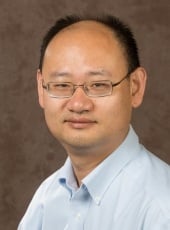
Jianhui Yue is an Assistant Professor in the Department of Computer Science at Michigan Technological University. His research focuses on computer architecture, operating systems, and system optimization for big data processing. He specializes in memory systems, persistent memory technologies, and hardware acceleration for graph processing and machine learning workloads. His work addresses challenges in optimizing performance, energy efficiency, and reliability in modern computing systems. Key research areas include hybrid memory architectures, in-storage accelerators (e.g., FlashGNN), and crash consistency mechanisms for non-volatile memory. His publications emphasize innovations in cache optimization, NAND flash management, and graph algorithms for dynamic data mining. His recent work (e.g., Cheetah, P3DC) highlights advancements in reducing latency and improving scalability in high-performance computing environments. Dr. Yue’s contributions span hardware-software co-design, with a focus on practical applications of computer architecture principles to real-world systems. His research bridges theoretical concepts with deployable solutions, addressing critical bottlenecks in data-centric computing.
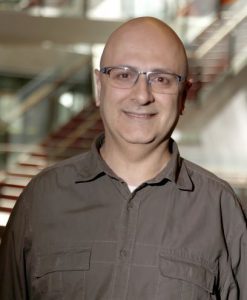
Professor Emanuele Viterbo is a faculty member in the Department of Electrical and Computer Systems Engineering at Monash University, where he has served as Professor since 2010 and Associate Dean (Graduate Research) from 2012 to 2020. His research focuses on error control coding, lattice codes, and algebraic coding theory with applications to wireless communications. He holds a PhD and Laurea in Electrical Engineering from Politecnico di Torino. Key research areas include lattice codes for fading channels, algebraic space-time coding (e.g., Golden Code), and OTFS modulation. He has received prestigious awards such as the IEEE Fellow designation (2011) and the Australia-India Fellowship (2012-13). His work on polar codes and coding for NAND flash memories has advanced practical coding schemes for modern communication systems. Major grants include projects on blockchain coding, high-mobility wireless systems, and NAND flash memory reliability. He has supervised numerous PhD students and contributed to foundational research in information theory. His affiliations include leadership roles in IEEE committees and visiting research positions at institutions worldwide. Scientific achievements include pioneering contributions to space-time coding and lattice-based modulation. Current projects explore OTFS modulation, error control for blockchains, and advanced modulation techniques for 5G/6G networks.
Younghyun Kim is an Associate Professor in the Department of Electrical and Computer Engineering at Purdue University. His research spans interdisciplinary domains including machine learning, edge computing, IoT security, and wearable medical devices, with a notable emphasis on agricultural technology via dairy cattle monitoring systems. Institution: Purdue University Department: Electrical and Computer Engineering Academic Rank: Associate Professor Kim's work focuses on energy-efficient systems, hardware-software co-design, and security mechanisms for IoT and medical devices. His recent publications highlight applications in dairy cattle health monitoring, virtual reality authentication, and distributed edge AI architectures. His 15 most recent articles reflect trends in agricultural IoT (e.g., MooBot, MmCows), secure device pairing (e.g., VoltKey, AeroKey), edge computing (e.g., Content-aware input scaling), and energy-efficient hardware (e.g., AxFTL, SAADI). Notable subfields include precision livestock farming, federated learning, sensor fusion, homomorphic encryption, hardware reverse engineering, and low-power design. Email: younghyun@purdue.edu
Dr Julian Dean is a Senior Lecturer in Materials Science at the University of Sheffield , affiliated with the School of Chemical, Materials and Biological Engineering. His research focuses on functional materials, finite element modeling, and multi-physics simulations to optimize materials responses under external stimuli. PhD in Micro-Electromechanical Systems (University of Sheffield, 2007) MPhys in Physics (University of Sheffield, 2004) Research interests include: Magnetic and dielectric materials for energy applications Impedance spectroscopy for fusion technologies Finite element modeling of materials under multi-physics conditions Recent publications analyze electrode contact effects in ferroelectric ceramics, FLASH sintering mechanisms, and resistive surface layer modeling. Collaborations include industry partners like Volkswagen (VW), KAVX, and UK Atomic Energy Authority (UKAEA). Scientific Awards Co-awarded the 2009 Kroto Prize for Excellence in Science Education of Young People Dean actively engages in public outreach, developing educational tools like FlashyScience for A-level physics tuition and conducting hands-on workshops for ages 5–18. He leads the 1st-year Materials Science module MAT1643 and contributes to advanced finite element modeling instruction.
Madhusudhan Govindaraju is a Professor in the School of Computing at Binghamton University and currently serves as the Vice Provost for International Education and Global Affairs (IEGA). He holds a PhD and MS from Indiana University. His research focuses on cloud computing, big data systems, distributed and high-performance computing, and web service frameworks. He has contributed to optimizing multi-threaded applications for multi-core processors and semantic web technologies for data reduction. Education: PhD in Computer Science, Indiana University MS in Computer Science, Indiana University His research interests span cloud resource management, distributed systems optimization, and energy-efficient computing. Notable contributions include frameworks for Kubernetes and Apache Mesos environments, as well as studies on power-aware scheduling and vertical scaling techniques. Key publications from 2019 to 2024 highlight advancements in fair resource allocation, GPU-accelerated data structures, and multi-cloud orchestration. His work emphasizes practical solutions for scalability, efficiency, and performance in distributed computing systems. Awards include the Chancellor's Award for Excellence in Teaching (2008-2009) and the Chancellor's Award for Excellence in Faculty Service (2016-2017). He has been affiliated with initiatives such as the Center for Technology for Advanced Scientific Component Software (TASCS) and contributed to science gateway integrations like SEAGrid. His advising and grants focus on advancing distributed computing technologies. He is actively involved in labs such as TASCS, exploring component-based software and middleware for scientific applications.
Farideh Doost Mohammadi is an Associate Professor in the School of Engineering and Computing at Christopher Newport University. Her academic journey includes a Ph.D. in Electrical Engineering from West Virginia University (2017), an M.Sc. with First Honors from Amirkabir University of Technology (2012), and a B.Sc. from Iran University of Science and Technology (2010). Ph.D., Electrical Engineering - West Virginia University (2017) M.Sc., Electrical Engineering - Amirkabir University of Technology (2012) B.Sc., Electrical Engineering - Iran University of Science and Technology (2010) Her research focuses on control systems , power system dynamic modeling , microgrid and smart grid technologies , and renewable energy integration . Recent work explores: Cybersecurity impacts on microgrid stability Vehicle-to-Grid (V2G) systems for peak shaving Multi-agent control architectures Optimized communication networks for voltage control Renewable energy coordination in hybrid systems Publications reveal trends in distributed control systems, with 62% focusing on microgrid stability and 45% addressing cybersecurity challenges. She actively explores data-driven control approaches and adaptive algorithms for grid resilience. Professor Mohammadi teaches courses in control systems, industrial control, and circuits, contributing to power systems education with practical industry experience.
Chee Yeow Meng is the Provost and Chief Academic & Innovation Officer at the Singapore University of Technology and Design (SUTD), effective April 2025. He holds a Professor rank and oversees curricular, research, and innovation affairs. Previously, he served as Vice President (Innovation and Enterprise) at NUS and held senior roles in academia and public service, including leadership positions at the National Computer Board and Infocomm Development Authority. His education includes a BMath (Hon) and MMath from the University of Waterloo (1988-1989), followed by a PhD in Computer Science (1996). His research focuses on combinatorics' intersection with computer science, particularly coding theory, extremal set systems, and AI applications. He has pioneered work in error-correcting codes, combinatorial cryptography, and data science. Prof Chee is an associate editor for IEEE Transactions on Information Theory and a Fellow of the Institute of Combinatorics and its Applications. His awards include the Public Administration Medal (Silver, 2018) and the Long Service Award (NTU, 2018). He has founded multiple startups and holds patents in coding technologies. His recent publications emphasize innovations in coding theory applications (e.g., domain wall memories, DNA storage) and machine learning for combinatorial optimization. He actively contributes to national committees and international forums on innovation policy and AI ethics.
Yu-Fang Chen is a Full Professor and Research Fellow at the Institute of Information Science, Academia Sinica, Taiwan, where he has been affiliated since 2018. His research group focuses on cutting-edge work in formal methods, quantum programming, and automata theory, with significant contributions to quantum circuit verification and constraint solving. His research centers on developing automata-based frameworks for quantum program verification (AutoQ Project), string constraint solving (Z3-Noodler), and symbolic execution techniques. Core interests include formal verification of quantum systems, satisfiability modulo theories, automata theory applications in quantum contexts, and developing practical verification tools. Chen's recent publications (2020-2025) demonstrate a strong focus on quantum circuit verification, automata theory adaptations for quantum systems, and string constraint solving. Work frequently combines theoretical foundations with practical tool development, showing consistent innovation in quantum program analysis techniques and symbolic execution methods. Awards & Honors: Academia Sinica Scholar Award (2025-2029) SIGLOG/CACM research highlights nomination (2025) Distinguished Paper Awards (OOPSLA 2023, PLDI 2023) Best Paper Awards (FM 2023, TACAS 2010) Young Scholar Creativity Award (2023) MOST Research Project for Excellent Junior Research Investigators (2020-2023) Chen actively advises PhD students and postdoctoral researchers, with open positions advertised for his quantum computing and formal methods research group. He leads significant projects including the AutoQ framework development and has secured multi-year funding through the Academia Sinica Scholar Award and MOST grants. He directs a research laboratory at Academia Sinica focused on automata theory and quantum verification, developing tools like AutoQ and Z3-Noodler. The team collaborates internationally and regularly contributes to top-tier conferences in formal methods and programming languages.
Tokunbo Ogunfunmi is a Professor of Electrical and Computer Engineering and Director of the Information Processing and Machine Learning (IPML) Research Lab at Santa Clara University's School of Engineering. He served as Associate Dean for Research and Faculty Development from 2010-2014 and as Associate Dean for Mission, Culture and Inclusion from 2021-2024. Dr. Ogunfunmi holds a Ph.D. and M.S. from Stanford University (1990, 1984) and a B.S. from the University of Ife, Nigeria (1980). His research interests span deep learning, artificial neural networks, adaptive/nonlinear signal processing, digital signal processing, and multimedia signal processing with VLSI/DSP/FPGA implementations. Dr. Ogunfunmi has published 4 books and over 200 refereed journal and conference papers in these areas. His recent publications demonstrate strong focus on deep learning applications, hardware acceleration for neural networks, quaternion-based adaptive algorithms, and efficient video/speech processing techniques. Dr. Ogunfunmi has received numerous awards including the SCU Presidential Special Recognition Award (2020), IEEE Meritorious Service Awards (2021, 2013), Carnegie Foundation Visiting Professorships (2019, 2015), and multiple Best Paper Awards. He has served in significant editorial roles including Senior Associate Editor for IEEE Signal Processing Letters and Associate Editor for several IEEE Transactions. As an active member of the professional community, he is a Senior Member of IEEE, Member of Sigma Xi, and Member of AAAS. His industrial experience includes consulting for major companies such as Broadcom, AMD, NEC, AT&T Bell Labs, and NIKON Precision Research & Development. Dr. Ogunfunmi is also a registered professional engineer in California.
Prof. Ilia Petrov is a faculty member at Reutlingen University's Faculty of Computer Science and Engineering (INF), leading the Data-Management and -Analysis department. He holds the academic rank of Professor and has been affiliated with the university since 2012. His research focuses on advancing data management and analytics, particularly in the realms of database systems, hardware-optimized storage, and near-data processing. He leads the Daten-Management Labor (Data Management Lab), which explores innovations in computational storage, flash memory optimization, and high-performance database architectures. His research interests include the development of novel storage technologies, such as native computational storage and processing-in-memory systems, alongside efficient indexing methods (e.g., B-Tree variants) for multi-version databases. He has contributed to projects like DANSEN and nativeNDP, which aim to leverage modern hardware for accelerating database operations. Key themes in his work involve minimizing write amplification on flash storage, optimizing HTAP workloads, and enabling efficient near-data processing through FPGA and NVMe integration. Prof. Petrov's publications span topics including computational storage architectures, Bloom filter optimizations for range queries, and concurrency control in large-scale multi-socket systems. His work emphasizes the synergy between database software and hardware innovations, with applications in enterprise systems and big data analytics. He has collaborated on frameworks like NVMulator for non-volatile memory emulation and Cache-coherent shared locking mechanisms for smart storage systems. His lab's activities include the development of KV-store accelerators (e.g., nKV) and cost models for query optimization in key-value systems. He has also explored blockchain data structures and snapshot isolation techniques for database transactions. Current trends in his research address the challenges of real-time data processing, cross-layer data formats, and the integration of emerging storage technologies like computational storage drives.
Peter M. Chen is the Arthur F. Thurnau Professor in the Department of Electrical Engineering and Computer Science (EECS) at the University of Michigan, part of the College of Engineering. He leads research in operating systems, distributed systems, and persistent memory technologies. His work includes foundational contributions to virtualization (e.g., ReVirt), reliable memory systems (Rio), and non-volatile memory semantics. He is a member of the Software Systems Lab and collaborates with the Computer Engineering Lab. Education and affiliations: Ph.D. in Computer Science (implied through career trajectory), affiliated with EECS and multiple labs at U-M. His research interests span speculative execution, security in distributed systems, and high-performance storage. He has advised over 20 graduate students, many of whom have contributed to seminal papers in systems research. Awards include the Arthur F. Thurnau Professorship and multiple best paper awards at top conferences like OSDI and SOSP. His work on ReVirt pioneered virtual machine logging for intrusion analysis, and Rio revolutionized reliable memory caching. Current projects focus on persistent memory programming models and wear management in NVM technologies. Key grants and teams: Active in NSF-funded projects on persistent memory systems and security. Collaborates with industry through partnerships in cloud computing and mobile systems optimization. His lab develops open-source tools like Rio and Vista, emphasizing practical system implementations alongside theoretical contributions.
Qi Liu is an Assistant Professor at the Department of Computer Science, University of Hong Kong, and serves as Programme Director for the BASc(FinTech) Programme. He holds an MS from the National University of Singapore and a PhD from the University of Oxford. His research focuses on Natural Language Processing (NLP), Machine Learning (ML), and FinTech. He has contributed to leading conferences/journals such as NeurIPS, ICML, ICLR, ACL, and EMNLP, and actively serves on their program committees. His work includes advancements in relational memory models, causal inference, graph neural networks, and domain-specific representation learning. Key research areas include NLP applications in dialogue systems, counterfactual data augmentation for translation, and hyperbolic representations for knowledge graphs. Recent articles explore cutting-edge topics in photonics, spintronics, and memory device security, reflecting interdisciplinary interests. Education: MS (NUS), PhD (Oxford) Programme Role: BASc(FinTech) Director Email: liuqi@cs.hku.hk Homepage: leuchine.github.io No scientific awards are explicitly listed in the provided text. His research spans theoretical ML advancements and applied FinTech systems, with a focus on scalable NLP solutions and secure memory technologies.
David Hung-Chang Du is a Professor and Qwest Chair Professor in the Department of Computer Science and Engineering at the University of Minnesota, Twin Cities. He served as the Center Director of the NSF multi-university I/UCRC Center of Research in Intelligent Storage (CRIS) from 2009-2021, which was sponsored by 18 companies with $3.35M industrial membership funding. Prior to that, he organized an Intelligent Storage Consortium at Digital Technology Center with industrial funding from 2002-2009. He was also a Program Director at the National Science Foundation CISE/CNS Division from March 2006 to August 2008. Dr. Du received his B.S. degree in Mathematics from National Tsing-Hua University (Taiwan) in 1974 and M.S. and Ph.D. degrees from University of Washington (Seattle) in 1980 and 1981 respectively. He joined University of Minnesota as a faculty member in 1981 and has been there for over 40 years. He has also been a visiting professor in Germany, Korea, Singapore, Hong Kong and Taiwan. Dr. Du's research focuses on intelligent storage systems, sensor/vehicular networks, and cyber physical systems. His early career work included parallel processing and database design, followed by Computer-Aided Design for VLSI circuits in the 1980s and 1990s. From the late 1980s to present, he has worked on computer networking and its related applications including multimedia computing. Starting from 2000, his research has focused on new memory and storage technologies for handling extremely large volumes of available data and long-term data preservation. His current research focuses on hyper-converging infrastructure, recognizing that the Internet has become the largest existing computer system where data collection, storage, and networking must be integrated. His recent publications (2019-2022) demonstrate continued innovation across multiple domains including DNA storage technologies, hybrid storage systems, key-value store optimization, and edge computing. These works reflect his ability to adapt to emerging technological landscapes while maintaining focus on fundamental storage and systems challenges. The publications show strong industry collaboration, particularly with major technology companies like Facebook, where his team has characterized and optimized key database workloads. IEEE Fellow (since 1998) Fellow of the Minnesota Supercomputer Institute ACM Recognition of Service Award (2013) IEEE Certificate of Appreciation (2012, 2007) NSF Director's Award for Collaborative Integration (2008) Best Paper Award, International Conference on Internet of Vehicles (2015) Best Paper Award, International Conference on Computer Design (1998) Dr. Du has been highly active in professional service, serving as Editor of IEEE Transactions on Computers (1993-1998), member of several editorial boards, and holding leadership positions in numerous conferences including General Chair for IEEE Security and Privacy Symposium (2009), Program Committee Co-Chair for International Conference on Parallel Processing (2009), and General Chair for IEEE International Conference on Distributed Computing Systems (2010-2011). He has graduated 67 Ph.D. students (58 as single adviser and 9 jointly supervised) and 109 Master's students over his 40+ year career. His research has been supported by substantial grants from NSF, industry partners, and other funding sources totaling millions of dollars.
Dr. Ajith Soman Narayanan is a Research Fellow at the University of Surrey's School of Chemistry and Chemical Engineering, focusing on advanced materials for clean energy technologies. His work centers on solid oxide electrolysis cells (SOECs) and fuel cells (SOFCs), with expertise in nanomaterial synthesis and characterization. He earned an M.Sc. in Chemistry from the University of Madras (2011) and a Ph.D. in Chemistry from Sathyabama Institute of Science and Technology (2022). His research spans microstructural engineering, electrochemical evaluation, and collaboration with institutions like Robert Gordon University and the National Physical Laboratory (UK). His work involves Developing durable cathodes for next-generation SOECs Synthesizing ceramic thin films via pulsed laser deposition (PLD) Applying X-ray diffraction and electron microscopy for material analysis Recent projects funded by EPSRC (UK) aim to improve green energy conversion systems. Scientific awards include Col. Dr. Jeppiaar Best Thesis Award (2022) Second Prize in National Flash Talk Competition on Ceramics Materials (2021) International Visiting Fellowship from MoE Taiwan (2019) Best Oral Presentation Awards (2018) MHRD Research Fellowship (2015-2018) He actively collaborates with Prof. Yen-Pei Fu (National Dong Hwa University, Taiwan) and Dr. K. Prabahar (DMRL, India). Current projects emphasize energy storage and nanomaterials for sustainable applications.