Peter Bartlett is a Professor in the Department of Electrical Engineering and Computer Sciences and the Department of Statistics at the University of California, Berkeley. He also serves as Head of Google Research Australia and Director of the Foundations of Data Science Institute and the Collaboration on the Theoretical Foundations of Deep Learning. His research focuses on machine learning, statistical learning theory, and related areas such as pattern classification, adaptive control, and reinforcement learning. Bartlett earned a Ph.D. in Electrical Engineering from the University of Queensland, Australia (1992). He has held roles including Associate Director of the Simons Institute for the Theory of Computing and visiting positions at institutions like the University of Paris and the Australian National University. His contributions include co-authoring Neural Network Learning: Theoretical Foundations and pioneering work on AdaBoost, online learning, and high-order Langevin diffusion. He has been recognized with awards like the Malcolm McIntosh Prize (2001), ACM Fellowship (2018), and election to the Australian Academy of Science (2015). Bartlett advises numerous students and collaborates on grants related to theoretical foundations of machine learning. His leadership in research institutes and editorial roles at journals like Journal of Machine Learning Research underscores his impact on the field.
Sebastian Will is a Full Professor of Bioinformatics at École Polytechnique IP Paris since 2020. Previously held positions include: Researcher with Ivo Hofacker at TBI, University of Vienna Researcher with Peter Stadler at Bioinformatics group, University of Leipzig Akademischer Rat at Bioinformatics group, University of Freiburg (2005-2012) Postdoc with Bonnie Berger at MIT's CSAIL (2010-2011) His research focuses on: RNA structure prediction algorithms Pseudoknot modeling RNA-RNA interaction analysis Structure design with Infrared framework Multi-target RNA design Integration of experimental data Ensemble-based sparsification Publication trends show concentrated research in: RNA structure prediction techniques Algorithm development Dynamic programming optimization Tree decomposition applications Stochastic sampling methods Multi-objective design Contributed extensively to software development including: LocARNA 2.0 Infrared framework SparseMFEFold BiAlign RNAPOND Pankov LocARNA-P
Sascha Kurz is an Associate Professor at the Mathematical Institute of the Faculty of Mathematics, Physics and Computer Science at the University of Bayreuth, Germany. His research focuses on discrete structures, coding theory, voting systems, and combinatorial optimization. Professor Kurz's primary research interests span several interconnected fields in discrete mathematics and its applications: Coding Theory : With a focus on divisible codes, subspace codes, and constant dimension codes, his work explores the theoretical foundations and practical applications of error-correcting codes. Discrete Geometry : His research in finite geometry, particularly on arcs in projective spaces and vector space partitions, contributes to both theoretical understanding and coding applications. Game Theory and Voting Systems : He investigates power indices, weighted voting games, and their applications to political science and decision-making processes. Combinatorial Optimization : His work includes network coding, subspace packings, and algorithmic approaches to classification problems in coding theory. Analysis of Professor Kurz's recent publications reveals a strong focus on the intersection of coding theory and discrete geometry. His work consistently addresses fundamental questions about code parameters, classifications, and constructions, with particular attention to divisible codes and their properties. There's a clear progression from theoretical foundations to computational methods, as evidenced by his increasing use of computer-assisted classification techniques. His research demonstrates significant contributions to understanding the structure of linear codes, subspace codes, and their geometric interpretations. Professor Kurz has made notable contributions to both theoretical and applied aspects of his fields, collaborating with researchers across Europe and beyond. His work bridges pure mathematics with practical applications in information theory and network communication.
Nitis Mukhopadhyay is a Professor in the Department of Statistics at the University of Connecticut, with extensive research contributions in sequential analysis and statistical inference. His academic work focuses on developing innovative methodologies for confidence interval and point estimation problems, particularly in sequential and multistage sampling frameworks. His research has significant applications across various domains including environmental science, clinical trials, and survey methodology. Professor Mukhopadhyay's research interests center on sequential analysis, with particular emphasis on confidence interval estimation, point estimation, survey sampling, environmental sampling, clinical trials, and multivariate data analysis. His work bridges theoretical statistical developments with practical applications, developing methodologies that address real-world data challenges while maintaining rigorous mathematical foundations. His research often involves complex statistical problems requiring sophisticated solutions that balance accuracy with efficiency. Analysis of Professor Mukhopadhyay's recent publications reveals a strong focus on advanced sequential methodologies, particularly in minimum risk point estimation, fixed-width confidence interval problems, and multistage sampling strategies. His work demonstrates increasing attention to big data contexts and computational implementations, while maintaining rigorous theoretical foundations. The publications show consistent development of second-order asymptotic properties and practical implementations across various parametric families including normal, exponential, and gamma distributions. Professor Mukhopadhyay maintains active correspondence with the statistical community through his office at AUST 331 on the Storrs Campus of the University of Connecticut. His work continues to influence methodological developments in sequential analysis and statistical inference, with applications spanning environmental monitoring, clinical research, and various scientific domains requiring sophisticated sampling strategies.
Petr Hliněný is a Professor at the Faculty of Informatics, Masaryk University in Brno, Czech Republic, where he also serves as the Vice-dean for research, development, and doctoral studies. He is affiliated with the Department of Computer Science and leads the Discrete Methods and Algorithms (DIMEA) research group. His research interests span Graph Theory , Discrete Mathematics , Theoretical Computer Science , with a focus on structural and topological graph theory, parameterized complexity, logic in computer science, twin-width, crossing numbers, and discrete geometry. His recent work includes structural results on planar graphs, visibility graphs, and logical aspects of graph classes. His recent publications exhibit a strong trend in analyzing structural width parameters such as twin-width and clique-width, their logical transductions, and algorithmic implications. He has published extensively on planar graphs, crossing numbers, and geometric graphs, often in top venues like European Journal of Combinatorics , Journal of Combinatorial Theory , and LIPIcs conference proceedings. Professor, Faculty of Informatics, Masaryk University Vice-dean for Research, Development and Doctoral Studies Head of DIMEA Research Group Guarantor of Doctoral Study Programme in Computer Science He actively supervises PhD and master’s students, including current doctoral candidates Filip Pokrývka, Shubhang Mittal, Jakub Balabán, and Jan Jedelský. He has led multiple research grants funded by the Czech Science Foundation (GAČR), including project 20-04567S on tractable instances of hard graph algorithmic problems. He also organizes seminars such as IV119 and IV131, and offers thesis topics in discrete mathematical methods.
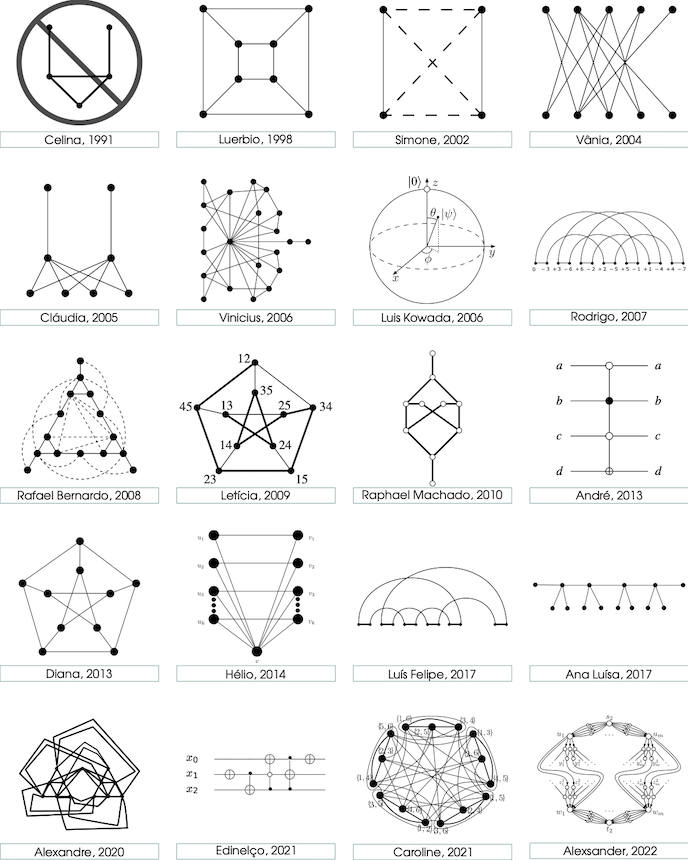
Celina Miraglia Herrera de Figueiredo is a full Professor at the Systems Engineering and Computer Science Program (PESC) of COPPE, the Alberto Luiz Coimbra Institute for Graduate Studies and Research in Engineering at the Federal University of Rio de Janeiro (UFRJ). She holds a PhD in systems and computer engineering from UFRJ and a postdoctoral degree from the University of Waterloo, Canada. She is a CNPq Level 1A Research Fellow and a FAPERJ Cientista do Nosso Estado awardee, and leads the algorithms and combinatorics research group at COPPE/UFRJ. University: Federal University of Rio de Janeiro School: Alberto Luiz Coimbra Institute for Graduate Studies and Research in Engineering Department: Systems Engineering and Computer Science Program Academic Rank: Professor Email: celina@cos.ufrj.br Her research centers on theoretical computer science, with a focus on graph theory, algorithms, computational complexity, and combinatorial optimization. She has made significant contributions to the understanding of graph classes such as perfect graphs and snarks, algorithm design, and computational complexity. Her work is grounded in the Mathematics Subject Classification codes 05-XX (Combinatorics), 68-XX (Computer Science), and 90-XX (Operations Research). The most recent publications indicate a strong trend in analyzing the computational complexity of graph problems (e.g., MaxCut, Steiner Tree, total coloring) on structured graph classes such as interval, permutation, and path graphs. Her work frequently involves proving NP-completeness results, developing parameterized algorithms, and studying graph invariants like pebbling numbers and chromatic numbers. She consistently publishes in high-quality journals such as Discrete Mathematics , Discrete Applied Mathematics , and RAIRO Operations Research . Giulio Massarani Award for Academic Merit (2006) COPPE Fifty Years Award (2013) CNPq Research Fellowship (Level 1A) FAPERJ Cientista do Nosso Estado Member of the Brazilian Academy of Sciences (2023) Celina has advised numerous students, including Raphael Machado, Vinícius de Sá, Alexsander Melo, and Ana Silva, and has secured significant research funding from CNPq and FAPERJ. She is deeply involved in the academic community, serving on the editorial boards of RAIRO Theoretical Informatics and Applications, Bulletin of the Brazilian Mathematical Society, and Matemática Contemporânea. She has also been a key organizer and committee member for major international conferences such as LAGOS, WG, LATIN, and FCT, reflecting her leadership in the fields of algorithms and combinatorics. She coordinates the Center of Excellence in Randomized, Quantum, and Approximative Algorithms and has been a driving force in promoting women in science, serving on the jury of the L'Oréal–UNESCO–ABC Program for Women in Science. Her Erdős number is 2, highlighting her extensive collaborative network in mathematics and computer science.
Yann Strozecki is an Associate Professor (Maître de Conférences HDR) at the University of Versailles Saint-Quentin, where he is based in the DAVID Laboratory and leads the ALMOST research team focused on algorithms and stochastic models. He is currently on a part-time assignment at LIGM, Gustave Eiffel University, and has previously held positions at LIP6 (RO team), Paris-Sud University (ALGO team), and completed a postdoctoral fellowship at the University of Toronto's Theory Group. He earned his PhD from Paris Diderot (Paris 7) under Arnaud Durand. His research lies at the intersection of theoretical computer science and discrete mathematics, with core interests in: Enumeration complexity, especially delay and space constraints Algorithmic game theory, particularly simple stochastic games (SSGs) Graph and matroid algorithms Cheminformatics and molecular structure generation Sparse polynomials and algebraic complexity Analysis of his recent publications reveals a strong trend in developing efficient enumeration algorithms with provable delay and space bounds, advancing the theoretical foundations of output-sensitive computation. He also contributes to practical algorithms for Cloud RAN scheduling and cheminformatics, often combining theoretical rigor with real-world applications. His work on geometric amortization and strategy improvement in SSGs demonstrates innovation in algorithm design. Notable scientific contributions include: Generic strategy improvement methods for SSGs Polynomial-delay enumeration via closure operations Efficient deterministic scheduling for low-latency networks Tools for molecular cage generation in chemistry Yann Strozecki actively supervises PhD and master’s students, including Noé Demange, Maël Guiraud, and Xavier Badin de Montjoye. He co-organizes the ALMOST team seminar and has advised numerous interns in algorithmics and game theory. His research has been supported through collaborations with Nokia Bell Labs (CIFRE thesis) and interdisciplinary projects in cheminformatics and networking.
Wojciech Czerwiński is an Associate Professor at the Institute of Informatics, Faculty of Mathematics, Informatics and Mechanics, University of Warsaw. His research lies at the intersection of automata theory, logic, and computational complexity, with a focus on infinite-state systems such as vector addition systems (VASS) and Petri nets. His research interests include: Automata and logic Infinite-state systems Reachability and separability problems Complexity of computational models Formal verification and concurrency theory His recent work has significantly advanced the understanding of the complexity of reachability in VASS, proving it to be Ackermann-complete. This line of research has been published in top venues including FOCS, STOC, LICS, and CONCUR, where several papers received Best Paper Awards. His publications reflect a strong trend toward resolving long-standing open problems in decidability, complexity, and logical definability in infinite-state models. Scientific awards include: Best Paper Award, CONCUR 2022 Best Paper Award, STOC 2019 He leads an ERC-funded project and is actively recruiting PhD students and post-docs. He organizes the Friday Afternoon Seminar and co-organized the Infinite Automata Workshop (2024). He has also contributed to public understanding of science as an editor and author for the journal Delta from 2013 to 2022. His work involves collaboration with leading researchers such as Sławomir Lasota, Jérôme Leroux, Georg Zetzsche, and others. He has made foundational contributions to problems like bisimilarity, language equivalence, and regular separability in various automata models.
Prof. Dr. rer. nat. Malte Prieß is a Professor for Cloud Technologies at Kiel University of Applied Sciences since October 20224, following eight years as Dean and Professor of Applied Computer Science at Schleswig-Holstein Cooperative State University (DHSH) . He teaches modules including Cloud Computing , Web Applications , and Advanced Cloud Computing , with additional involvement in Agile Development Methods and Software Engineering . Academic Background: Diploma in Physics (with distinction) from Leibniz University Hanover and Max Planck Institute for Gravitational Physics (2002-2007) Dr. rer. nat. (magna cum laude) from Kiel University in Algorithmic Optimal Control (2008-2012) Research Interests focus on the intersection of cloud computing, artificial intelligence, and modern software engineering . His work includes surrogate-based optimization for climate models, AI-driven document capture systems , and ethical considerations in AI deployment within project work. Recent Publications demonstrate expertise in AI vulnerability assessment , deep learning training optimization , and document search algorithms for governmental agencies. Scientific Recognition: Best Paper Award at CLOUD COMPUTING 2025 for "Graph of Effort" vulnerability assessment Accepted fellowship at AI Campus (Stifterverband) for "Teaching AI, learning AI at DHSH" (2022) Research Projects: Central Innovation Programme for SMEs (ZIM): "AI MODULES for the skilled trades" (2024/25) HR dashboard for DRK Schwesternschaft, Lübeck Scalable Data Analytics project under BMBF FHprofUnt program (2018)
Dimitrios Zoros holds the position of Lecturer at the Department of Mathematics of the National and Kapodistrian University of Athens (NKUA). His primary affiliations include NKUA and the MPLA (MPLA's formal English name?). He is actively involved in teaching courses such as Recursion Theory and Data Structures. His research focuses on Graph Theory, Parameterized Complexity, and related areas. Education: BSc in Mathematics from NKUA, MSc in Logic, Algorithms, and Computation from MPLA, and a PhD in Logic and Algorithms from NKUA under Prof. Dimitrios M. Thilikos. Research Interests: Graph Obstruction Sets, Graph Searching, Parameterized Complexity, Computability, Algorithms, Logic/Set Theory, and Discrete Mathematics. His work contributes to theoretical foundations of algorithms and graph theory applications.
Sujoy Bhore is affiliated with the Indian Institute of Technology Bombay (Department of Computer Science & Engineering), Université libre de Bruxelles, and Technische Universität Wien. His research focuses on algorithms , computational geometry , and graph theory , with a strong emphasis on geometric optimization , dynamic data structures , and parameterized algorithms . Recent publications highlight advancements in Euclidean spanners for sparse network design online algorithms for dynamic geometric problems Steiner trees and tree covers in planar domains k-median/means approximation using coresets His collaborative work spans institutions, with frequent joint research on geometric intersection graphs , map labeling , and planar graph embeddings . Co-authors include prominent researchers like Csaba D. Tóth, Martin Nöllenburg, and Timothy M. Chan. While no formal awards are documented here, his contributions to algorithmic complexity and geometric networks remain significant.
Abel Torres Cebrián is a staff member affiliated with the Biomedical Signal Processing and Interpretation research group at the Institute for Bioengineering of Catalonia (IBEC). His work focuses on respiratory signal analysis, particularly using electromyography (sEMG) and mechanomyography (MMG) to assess neuromuscular activity in conditions like COPD. Research interests include: Biomedical signal processing and entropy-based algorithms Neural respiratory drive estimation under cardiac interference Wearable devices for non-invasive cardiorespiratory monitoring Entropy analysis for signal quality assessment The 15 most recent publications highlight his expertise in developing adaptive signal-processing techniques, with a focus on fixed sample entropy and Lempel-Ziv complexity for respiratory muscle activity quantification. His collaborations span institutions like the University of Barcelona and IEEE conferences. Abel Torres Cebrián has no listed scientific awards or formal teaching/grant activities in the provided text. He participates in the research group Biomedical Signal Processing and Interpretation , which likely involves multidisciplinary collaborations with biomedical engineers and clinicians.
Professor Mariusz Michta serves at the Institute of Mathematics, University of Zielona Góra, with his office located in room 401 A-29. His professional email is m.michta@im.uz.zgora.pl. Professor Michta's research spans multiple advanced mathematical domains. His primary research interests include: Multivalued analysis with focus on selection theorems and multivalued Young integrals Stochastic analysis encompassing multivalued stochastic integrals, stochastic equations, and stochastic inclusions Analysis of multivariate linear models for parameter estimation and hypothesis testing Iterative methods for fixed point problems in Hilbert spaces Game theory including stochastic, multigenerational, and large-scale games Operator theory on locally convex spaces with integral representation problems Approximation theory using Fourier series and summability methods Nonlinear wave propagation and extensions of Korteweg-de Vries equations Mean theory and iterative Gaussian/Archimedes-Borchardt algorithms His teaching portfolio includes stochastic processes, mathematical statistics, financial engineering, and actuarial mathematics, demonstrating strong connections between theoretical mathematics and practical applications in finance and economics. Professor Michta's work consistently bridges pure mathematical theory with computational approaches to solve complex problems across multiple disciplines, particularly in contexts involving uncertainty, optimization, and mathematical modeling of dynamic systems.
Miriam Schulte is a Professor at the Institute for Parallel and Distributed Systems (IPVS) at the University of Stuttgart . As Dean of Studies SimTech , she leads academic programs in simulation technology. Her research focuses on high-performance computing , multi-physics simulations , and scientific software development , with significant contributions to coupling libraries like preCICE and biophysical frameworks like OpenDiHu . Key Research Areas: High-Performance Computing (HPC) Multi-physics and Fluid-Structure Interaction (FSI) Sparse Grids and Hierarchical Numerical Methods Machine Learning in Simulation Software Parallel and GPU-Accelerated Algorithms Advising: Guided student projects on quantum neural networks , GPU-optimized sparse grids , and SYCL-based HPC frameworks . Coordinated SimTech Research Modules and IPVS/SGS team initiatives. Software Leadership: Maintains preCICE (coupling library for multi-physics) Develops OpenDiHu (neuromuscular simulations) Advances PLSSVM (parallel SVM library) and SG++ (sparse grids) Her recent publications (2022–2025) emphasize machine learning integration with multi-physics simulations , including groundwater heat pumps , brain tumor modeling , and neuromuscular EMG prediction . She actively promotes open-source software sustainability and collaborative research infrastructure at the University of Stuttgart.
Alexander Wolff is a Professor at the Chair of Algorithms and Complexity within the Institute of Computer Science at the University of Würzburg. His work focuses on graph drawing, computational geometry, and algorithmic complexity, with applications in geographic information systems and network visualization. Chair of Algorithms and Complexity, Institute of Computer Science, University of Würzburg (since 2009) Managing Director, Institute of Computer Science (2011–2013, 2015–2017) Editorial roles in journals like JoCG and JGAA Conference leadership in Graph Drawing (GD) and SOFSEM His research explores geometric graph representations, obstacle numbers, and parameterized complexity. Recent publications address level planarity, polyhedral surface adjacency, and metro map visualization. Collaborative projects include algorithmic quality assurance and interactive industrial network visualization. Wolff’s work bridges theoretical graph algorithms with practical applications, such as optimizing public transport schematics and enhancing data accessibility. He has supervised numerous PhD students and co-authored over 100 publications, with editorial and organizational roles in major computational geometry and graph drawing conferences.