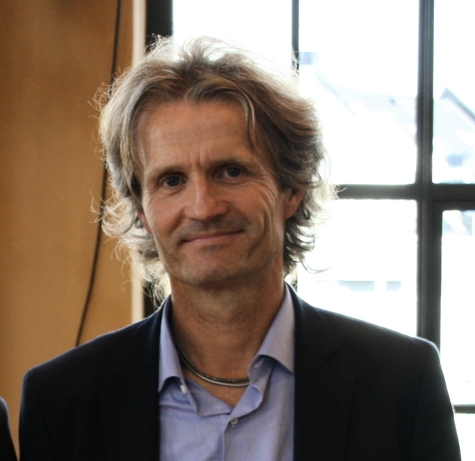
Fedor Fomin is a Professor at the Department of Informatics, Faculty of Mathematics and Natural Sciences, University of Bergen. He is renowned for his contributions to theoretical computer science, particularly in parameterized complexity and exact exponential algorithms, earning him the ACM Fellow 2023 distinction. University: University of Bergen School: Faculty of Mathematics and Natural Sciences Department: Department of Informatics Academic Rank: Professor Research Interests: Fomin's work focuses on designing efficient algorithms for computationally hard problems, with a specialization in parameterized and exact exponential algorithms. His research spans graph theory, combinatorial optimization, and computational complexity, addressing foundational challenges in sparse graphs, planar graphs, and treewidth-based techniques. Key Contributions: His research includes kernelization methods, subexponential algorithms for planar graphs, and novel approaches to edge domination and satisfiability problems. He has published extensively in top venues like STOC, FOCS, and SODA. Awards: ACM Fellow 2023 EATCS Award 2019 ERC Advanced Grant 2016 Nordic Researcher Award in Theoretical Computer Science 2010 Publications: His work covers parameterized algorithms for cluster editing, feedback vertex sets, and induced subgraph problems, with applications in computational biology and network science. Collaborations: Fomin collaborates with leading researchers in theoretical computer science, including Petr Golovach and Saket Saurabh, mentoring numerous PhD students and shaping the field's future.
Kun-Mao Chao is a Full-Time Professor at the Department of Computer Science and Information Engineering, National Taiwan University, where he has held multiple roles since 2002, including Chair Professor and Academician of Academia Sinica. He also serves in the Graduate Institute of Biomedical Electronics and Bioinformatics (2006–present) and holds adjunct appointments at various institutions. Education: PhD in Computer Science, Pennsylvania State University (1993) MS in Computer Engineering, National Chiao Tung University (1987) BS in Computer Engineering, National Chiao Tung University (1985) Research Expertise spans Algorithm Design (applied algorithms, approximation algorithms), Bioinformatics , and Computational Molecular Biology . His work focuses on problems like sequence alignment, spanning tree optimization, and DNA copy number variation analysis, often with interdisciplinary applications in medicine and epidemiology. Recent Publications (2012–2022) include studies on mathematical modeling for influenza vaccination policies , nanocarrier drug delivery systems , and XML database query algorithms , reflecting his diverse interests in both computer science and biomedical applications . Professional Activities: He has served as Editor for Information Processing Letters , PC Co-Chair for IEEE BIBE 2011 and ISAAC 2012, and on advisory committees for numerous conferences (APBC, BIBE, GIW, etc.). Laboratory: Leads the Algorithms and Computational Biology Laboratory at National Taiwan University, mentoring students in cutting-edge research areas.
Peter Mathys is an Associate Professor in the Department of Electrical and Computer Engineering at the University of Colorado at Boulder. He holds a Dipl.Ing. and Ph.D. from the Swiss Federal Institute of Technology (ETH), Zurich. His research focuses on multi-user information theory, data networks, communication theory, and wireless communications, with particular emphasis on spectrum sharing and regulatory compliance. He has consulted for companies in the US and Europe on communications, data networks, error control coding, and cryptography. His academic contributions span theoretical and practical domains, including the development of spectrum sharing models, interference mitigation strategies, and educational tools like GNU Radio for undergraduate communication theory. He has authored numerous papers on topics such as propagation models, modulation parameter detection, and hybrid random-access systems. His work integrates practical insights through industry collaborations and teaching innovations. Mathys's research trends emphasize spectrum utilization in 6/13 GHz bands, software-defined radio implementations, and real-time spectrum monitoring. His publications reflect a balance between foundational theory and applied engineering solutions. His expertise extends to coding theory, channel modeling, and system design, with applications in both academic and commercial contexts. He has contributed to advancements in collision channel protocols, ALOHA systems, and signal constellation optimization.
Alberto Luigi Cologni is a Lecturer at the University of Bergamo and Project Manager at e-Novia spa. He holds an MSc in Computer Engineering (2009) and PhD in Mechatronics (2013) from the University of Bergamo. His research focuses on control systems, industrial automation, and mechatronics with applications in polymer processing, robotics, and remote maintenance systems. Key professional roles include Research Assistant at CAL (2014-2015), leading the Touchplant and HOLMES EU-funded projects, and Researcher Assistant at Intellimech (2010). His work spans actuator control, SCADA systems, and embedded software for industrial automation. Research interests emphasize closed-loop control strategies, vibration damping systems, and data-driven approaches in manufacturing processes. He has contributed to over 20 peer-reviewed publications since 2010, addressing topics like anti-sway crane control, modular automation software, and telepresence maintenance systems. His projects often involve collaboration with industrial partners, exemplified by the Cometha and Remote Maintenance systems initiatives. Current teaching includes the Industrial Automation course at University of Bergamo.
David Schindl is a Lecturer in the Department of Informatics at the University of Fribourg's Faculty of Management, Economics and Social Sciences, with his primary appointment at Haute Ecole de Gestion (HEG) Geneva since 2008. His research bridges graph theory and combinatorial optimization with practical applications in logistics, vehicle routing, and academic timetabling systems. Education: PhD in Mathematics, EPFL, 2004 Research Interests: Dr. Schindl specializes in theoretical graph structures—including k-community detection, clique-width parameterization, and EPG graphs—with direct applications to transportation logistics, waste management, and educational scheduling. His work on course/exam timetabling at HEG since 2012 demonstrates his commitment to solving real-world operational challenges through mathematical optimization. Research Trends: Analysis of his 2020-2025 publications reveals sustained focus on community structures in graph classes and width-parameterized algorithms, alongside growing emphasis on sustainable logistics. His waste collection project exemplifies the environmental application of combinatorial optimization to reduce municipal fuel consumption and emissions. Grants and Projects: Efficient and sustainable waste collection (2019-2022): Funded by Innovation, this project developed optimization algorithms for waste collection routing in Swiss municipalities using electric vehicles and intermediate depots to minimize environmental impact. Teaching: At the University of Fribourg, he teaches decision support and graph theory courses. At HEG Geneva, he delivers instruction in statistics and mathematics for economics students, emphasizing practical applications of quantitative methods.
Andrew Harman is a Professor of Virology and Immunology at the University of Sydney, affiliated with the School of Medical Sciences and the Faculty of Medicine and Health. He co-directs the Centre for Virus Research at the Westmead Institute for Medical Research and leads the Faculty of Medicine and Health High School Outreach program. His research focuses on mucosal immunology, particularly sexual transmission of HIV and immunological aspects of Inflammatory Bowel Diseases like Crohn's disease. Academic affiliations: University of Sydney, Westmead Institute for Medical Research Key collaborations: Sub-Saharan African HIV strains, international institutions (Emory, Oregon, UC Davis, University of Washington) His research leverages high-parameter single-cell technologies (flow cytometry, imaging mass cytometry, RNA sequencing) to study immune cell dynamics in human tissues. He has developed RNAscope technology for real-time HIV interaction visualization. Awards include the Westmead Institute WISE Award (2020) and multiple NHMRC grants. Supervised students include Daniel Buffa, Fred Collin, and Jackson Karrasch. 2023 NHMRC Ideas Grant: Antigen Presenting Cells in Crohn's 2022 NHMRC Grant: Anogenital phagocytes in HIV transmission 2021 ACH2 Support: HIV-epithelial targeting International links span South Africa (HIV strains), UK (University of Newcastle), and US institutions.
Prof. Dr. Hans Bodlaender is a Full Professor of Algorithms and Complexity at Utrecht University's Faculty of Science, Department of Information and Computing Sciences. He holds a Ph.D. in Mathematics from Utrecht University (1985) and has held academic positions since 1983, including roles at Eindhoven University of Technology. His research focuses on algorithms, computational complexity, graph theory, and parameterized complexity, with a particular emphasis on treewidth and network algorithms. He has been recognized with the EATCS-IPEC Nerode Prize (2014) and has contributed to over 500 publications. His work includes developing algorithms for graph decomposition, scheduling, and NP-hard problem analysis. He has organized international workshops and served on editorial boards, including the Journal of Discrete Algorithms. Education: B.Sc. Mathematics, Utrecht University (1981) M.Sc. Mathematics, Utrecht University (1983) Ph.D. in Distributed Computing (1985), supervised by Jan van Leeuwen Research Interests: Algorithms, complexity theory, parameterized complexity, treewidth, graph algorithms, network optimization, and computational problem-solving. His work bridges theoretical foundations with practical algorithm design, emphasizing efficient algorithms for NP-hard problems. Recent Article Trends: Focus on parameterized complexity, treewidth applications, scheduling algorithms, and algorithmic lower bounds. Recent work explores fixed-parameter tractability, graph decompositions, and hardness results for problems on structured graphs. Awards: EATCS-IPEC Nerode Prize (2014) for contributions to parameterized complexity. Grants/Advising: Extensive involvement in grant-funded research projects and academic leadership roles. Supervised numerous PhD and Master's students (details not fully listed here). Labs/Teams: Active in the Algorithms and Complexity research group at Utrecht University, collaborating on theoretical computer science and algorithmic challenges.
Saeed Ahmed is a Tenure Track Assistant Professor of Systems and Control at the University of Groningen, affiliated with the Engineering and Technology Institute Groningen (ENTEG) and the Jan C. Willems Center for Systems and Control. Research Interests: His work develops intelligent control algorithms for autonomous vehicles, energy systems, and medical devices. Core theoretical interests include: Feedback optimization strategies Nonlinear and hybrid system stability Robust control under uncertainty Time-delay system analysis His publications reveal strong focus on predictive control for energy networks (especially district heating), stability analysis of hybrid systems, and observer design for complex nonlinear systems. Recent work emphasizes distributed control solutions with practical constraints. Professional Activities: Associate Editor for Systems and Control Letters and member of IFAC Technical Committees on Nonlinear Control Systems and Networked Systems. Teaches courses in Mechatronics, Complex Networks, and Control Theory.
Han Hong is a Professor of Economics at Stanford University's Department of Economics. He holds a Ph.D. in Economics (1998), M.S. in Computer Science (1998), and M.S. in Statistics (1997) from Stanford University, and a B.A. in International Trade from Zhongshan University (1993). His research focuses on econometric methodology, health econometrics, statistical modeling, and computational economics. He has developed innovative approaches for panel data analysis, structural estimation, and decision-making algorithms. Professor Hong has received numerous honors including the Willard G. Manning Memorial Award (2017), Arrow Award Honorable Mention (2015), and multiple NSF grants. He serves as Co-Editor of the Journal of Econometrics and is a Fellow of the Econometric Society. He teaches courses in Advanced Econometrics, Data Science, and Econometric Methods, and mentors students through honors thesis research and directed reading programs.
Dr. Igor Razgon serves as an Associate Professor in the Department of Computer Science at Durham University, where he conducts foundational research at the intersection of discrete mathematics and theoretical computer science. His work bridges abstract graph theory with practical applications in artificial intelligence systems and database optimization. His research program centers on structural graph theory, algorithms and complexity, with particular emphasis on tree-width parameters, hypertree decompositions, and constraint satisfaction frameworks. This work establishes critical connections between graph structural properties and computational tractability boundaries, directly impacting query optimization in database management systems and knowledge representation in AI. Analysis of his 2021-2025 publications reveals consistent focus on dichotomy theorems, fractional decomposition methods, and width parameters for hypergraphs. His research demonstrates how structural graph properties determine computational complexity thresholds, with direct applications to database query optimization and constraint-based reasoning systems. Professional recognition includes: Nerode Prize (2020) for contributions to computational complexity theory While his publications indicate significant collaborative work with leading researchers in discrete mathematics, the available information does not specify doctoral advisees, grant funding sources, or laboratory affiliations. His research trajectory suggests ongoing investigation into structural parameters for combinatorial problem solving.
Daniel J. Rosenkrantz is a Distinguished Professor at UVA's Biocomplexity Institute and Initiative with courtesy appointment in Computer Science. A Columbia Ph.D. graduate and ACM Fellow, his foundational contributions span algorithms, database systems, and dynamical systems. Previously, he spent 28 years at SUNY Albany as Leading Professor and chaired the Computer Science department. Research interests include algorithm design, database architectures, complexity theory, and discrete dynamical systems. Recent publications explore Bayesian networks, multi-agent systems, epidemic forecasting, and fixed-point computation in networked systems. Work consistently addresses computational complexity, system behaviors in constrained networks, and algorithmic solutions for dynamical problems. Awards: ACM Fellow (1995), SIGMOD Contributions Award (2001), JACM Editor-in-Chief (1986-1991), SUNY Albany Excellence in Research Award (1991) Industry experience includes roles at GE Global Research and Phoenix Data Systems as Principal Computer Scientist.
Jan Arne Telle is a Professor in the Department of Informatics at the University of Bergen. His research focuses on algorithms, computational complexity, and graph theory, with recent contributions to explainable AI (XAI) and machine teaching. He leads the Norwegian Research Council-funded project 'Machine Teaching for Explainable AI' and has taught courses such as INF339 on Algorithmics of Causality. His work spans graph algorithms, parameterized complexity, and combinatorial optimization, with notable contributions to graph decomposition techniques like mim-width, cliquewidth, and boolean-width. Collaborations include researchers from institutions like the University of Rostock and the University of Montpellier. Key research trends include analyzing time series classification interpretability, optimizing robust simplifications for machine learning models, and solving combinatorial problems in machine teaching. Telle's algorithms for problems like Feedback Vertex Set and Perfect Matching Cut have advanced the field of parameterized complexity. Despite no listed awards, his extensive publication record reflects significant academic impact. He is involved in the Algorithms Research Group at UiB and contributes to computational theory education and outreach, including participation in programming competitions and academic leadership roles.
Oliver Bachtler is a Researcher in the Department of Optimization at Rhineland-Palatinate Technical University of Applied Sciences (RPTU). He is based in Kaiserslautern, Germany, located in Room 256 of Building 31 (Felix-Klein-Zentrum). His work focuses on optimization, algorithmic graph theory, and combinatorial problems. Contact him via telephone at +49 (0)631 205 2852 or email at o.bachtler@math.rptu.de. His research interests center on advanced optimization techniques, including graph algorithms, scheduling under uncertainty, and parametric combinatorial optimization. He explores topics like public transport planning, matroid interdiction, and graph certification methods. His recent publications highlight contributions to fixed-parameter tractability, pathwidth analysis, and decomposition conjectures in graph theory. His work trends reveal a consistent focus on bridging theoretical computer science with practical optimization challenges. Notable themes include robust scheduling strategies, algorithmic certification processes, and innovative approaches to graph structure analysis. No scientific awards or grants are explicitly mentioned in the provided materials. His academic contributions are primarily through his research and teaching in optimization methodologies.
Charis Papadopoulos is a Professor at the Department of Mathematics, University of Ioannina, Greece. He holds a PhD in Computer Science (2005) and MSc (2001) from the University of Ioannina, and conducted postdoctoral research at the University of Bergen, Norway (2005-2007). His academic activities include visiting researcher positions at the University of Ioannina (2008-2010) before joining the faculty in 2011. Education: MSc and PhD in Computer Science, University of Ioannina Postdoc: Algorithms Research Group, University of Bergen (2005-2007) His research interests focus on Theoretical Computer Science, particularly: Design and analysis of algorithms Algorithmic graph theory Graph modification problems Width parameters and graph layouts Combinatorial enumeration Algorithm engineering Recent publications address structural parameterization of cluster deletion, subset feedback vertex set problems, avoidable vertex/path enumeration, and connectivity-preserving subgraphs. His work spans both journal publications (e.g., Algorithmica , Theory of Computing Systems ) and conference proceedings (e.g., WALCOM , SODA ). He has served on program committees for major conferences including: CIAC 2025 EuroCG 2025 WADS 2023 WALCOM 2023 Current projects include FANTA (Efficient Algorithms for Network Analysis) funded by H.F.R.I. and Separators and Cut Problems under HFRI grants. He has supervised PhD and Master's dissertations and collaborated with European research institutions.
Yoshio Okamoto is a Professor at the Department of Computer and Network Engineering, Graduate School of Informatics and Engineering, at The University of Electro-Communications in Tokyo, Japan. He has held this position since April 2017, after serving as an Associate Professor at the same institution from April 2012 to March 2017. Prior to his appointment at the University of Electro-Communications, he held academic positions at Tokyo Institute of Technology, Japan Advanced Institute of Science and Technology, and Toyohashi University of Technology. His educational background includes: Bachelor of Systems Science from The University of Tokyo (1999) Master of Systems Science from The University of Tokyo (2001) Doctor of Theoretical Science from ETH Zurich (2005) Professor Okamoto's research spans several interconnected areas in theoretical computer science and discrete mathematics. His primary interests include Discrete and Computational Geometry, Graph Algorithms, Combinatorial Optimization and Polyhedral Combinatorics, Discrete Mathematics and Combinatorics, and Game Theory. His work often explores the interplay between these fields, developing theoretical foundations with practical algorithmic implications. He has made significant contributions to understanding the structural properties of geometric and combinatorial objects, as well as designing efficient algorithms for related problems. His recent publications demonstrate a continued focus on fundamental problems in discrete mathematics and theoretical computer science, with increasing applications in quantum computing, fair division, and reconfiguration problems. His work often appears in top-tier journals such as ACM Transactions on Algorithms, Algorithmica, and Theoretical Computer Science, reflecting his standing in the theoretical computer science community. Professor Okamoto has received several prestigious awards recognizing his contributions to the field: IPSJ-CS Outstanding Achievement and Contribution Award (January 2024) Research Award from The Operations Research Society of Japan (September 2020) Best Review Paper Award (with colleagues) from Japan Society for Software and Technology (September 2014) Research Encourage Award from The Operations Research Society of Japan (September 2012) 8th EATCS/LA Presentation Award (February 2010) Editors' Choice 2003 from Discrete Applied Mathematics (September 2004) As an educator, Professor Okamoto has taught numerous courses at The University of Electro-Communications since 2012, including Discrete Mathematics, Graphs and Networks, Discrete Mathematical Engineering, and Foundations of Discrete Optimization. He has served as an editor for multiple prestigious journals including Graphs and Combinatorics (Managing Editor since 2020), Acta Informatica, Journal of Computational Geometry, and Journal of Graph Algorithms and Applications. His extensive service on program committees for major conferences in theoretical computer science demonstrates his active engagement with the research community. Professor Okamoto leads a research laboratory at The University of Electro-Communications, where his team explores fundamental questions in discrete mathematics and theoretical computer science. The lab maintains strong connections with researchers worldwide, as evidenced by his numerous international collaborations. His research has been supported through various channels, including Japan Society for the Promotion of Science grants, and he has served as a reviewer for international funding agencies including the Swiss National Science Foundation and The Netherlands Organization for Scientific Research.