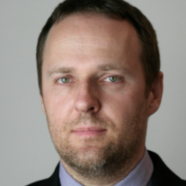
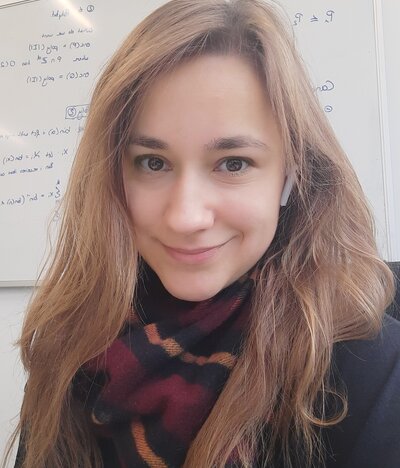
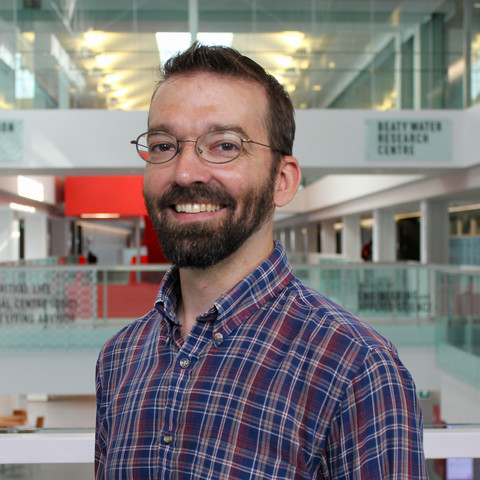
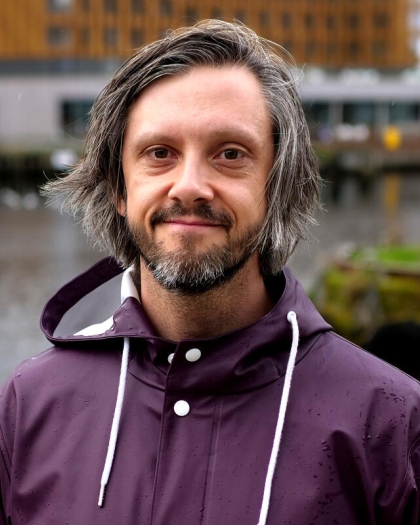
Dr. hab. inż. Piotr Chrostowski is an Associate Professor at the Department of Transportation Engineering, Faculty of Civil and Environmental Engineering, Gdańsk University of Technology. His research focuses on railway infrastructure, particularly in the areas of track geometry measurement, diagnostics, and environmental impact assessment. His research interests include: Railway track geometry analysis and design GNSS-based mobile measurement systems for railway infrastructure Mechanics of railway tracks Environmental impact monitoring of railway traffic Noise pollution measurement related to rail transport Dr. Chrostowski's publication record demonstrates a strong focus on innovative measurement techniques for railway infrastructure. His recent work (2020-2025) centers on multi-receiver GNSS systems for precise track geometry measurement, methods to reduce measurement uncertainty, and integrated systems for monitoring the environmental impact of railway traffic. His research often involves collaboration with Polish railway infrastructure manager PKP PLK through the BRIK research program. Dr. Chrostowski serves as project manager for the InfraNoise project, which aims to develop a precise monitoring system for the impact of railway traffic on the environment, taking into account operational, technical, and environmental data.
Alexandra Lassota is an Assistant Professor at Eindhoven University of Technology (Netherlands) since 2023. She holds a PhD in Computer Science from CAU (Germany), advised by Klaus Jansen. Her postdoctoral research included stints at EPFL (Switzerland) under Fritz Eisenbrand and at MPI-INF in Saarbrücken (Germany) with Danupon Nanongkai. Her work focuses on theoretical computer science, particularly integer programming, scheduling, and algorithmic complexity. Education: B.Sc./M.Sc. from Lübeck University (Germany), Ph.D. from CAU (Germany). Her research interests include mixed-integer programming , extension complexity , fixed-parameter tractability , and approximation algorithms . Recent work explores lower bounds for block-structured integer programs and the computational hardness of detecting points in integer cones. Her 2024 publications address topics like separable convex optimization, parameterized algorithms for large-scale integer programs, and aggregation of continuous preferences in AI-driven systems. These contributions highlight her expertise in bridging theoretical foundations with practical algorithmic challenges. Grants: Supported by Swiss National Science Foundation (SNSF), GA ČR, and Einstein Foundation Berlin. Lassota is affiliated with the Combinatorial Optimization group at TU/e and actively contributes to research in discrete mathematics and computational complexity.
Blair Sullivan is a Professor at the Kahlert School of Computing, University of Utah. Her research focuses on graph algorithms, parameterized complexity, and network analysis. She has contributed to theoretical advancements in clustering, graph decomposition, and algorithmic efficiency with applications in robotics, bioinformatics, and social networks. Education details are not explicitly stated in the provided text, but her affiliation indicates a terminal degree in Computer Science or a related field. Her work frequently intersects with interdisciplinary domains such as computational biology and quantum computing. Research interests emphasize algorithm design for large-scale networks, with a focus on graph-based problems such as clustering, coloring, and structural optimization. Recent publications explore hypergraph clustering, robotic motion planning, and fairness in network information access. Her work often bridges theoretical computer science with practical applications, including biomedical data analysis and quantum program compilation. Publications since 2023 reflect a sustained focus on graph-theoretic challenges such as parameterized complexity, edge augmentation for fairness, and decomposition techniques. Notable themes include algorithmic approaches to gerrymandering, genetic association analysis, and hyperbolicity in networks. No scientific awards or grants are listed in the provided text. She is affiliated with the University of Utah’s Kahlert School of Computing, where she contributes to research and education in computational theory and applications.
Martin J. Wainwright is the Cecil H. Green Professor at the Massachusetts Institute of Technology (MIT) , affiliated with the Department of Electrical Engineering and Computer Science (EECS) and the Department of Mathematics . He is also associated with the Statistics and Data Science Center , the Laboratory for Information and Decision Systems , and the Institute for Data, Systems and Society . His research bridges machine learning , high-dimensional statistics , and information theory , with a focus on theoretical guarantees for algorithms in reinforcement learning, optimization, and graphical models. Books : High-Dimensional Statistics: A Non-Asymptotic Viewpoint (2019, Cambridge University Press), Statistical Learning with Sparsity: The Lasso and Generalizations (2015, CRC Press). Research Themes : Statistical and computational trade-offs, robustness in adaptive learning, posterior contraction rates, and decentralized estimation. His recent work explores non-asymptotic analysis , stochastic approximation , and instance-dependent guarantees in reinforcement learning and optimization. Key contributions include minimax optimality in value estimation, variance-reduced Q-learning , and adaptive inference under elliptical constraints. Awards : IMS Medallion Lecturer , COPSS Presidents' Award , Loève Prize in Probability , Fellow of the Institute of Mathematical Statistics , NIPS Outstanding Paper Award .
Fedor Fomin is a Professor at the Department of Informatics, Faculty of Mathematics and Natural Sciences, University of Bergen. He is renowned for his contributions to theoretical computer science, particularly in parameterized complexity and exact exponential algorithms, earning him the ACM Fellow 2023 distinction. University: University of Bergen School: Faculty of Mathematics and Natural Sciences Department: Department of Informatics Academic Rank: Professor Research Interests: Fomin's work focuses on designing efficient algorithms for computationally hard problems, with a specialization in parameterized and exact exponential algorithms. His research spans graph theory, combinatorial optimization, and computational complexity, addressing foundational challenges in sparse graphs, planar graphs, and treewidth-based techniques. Key Contributions: His research includes kernelization methods, subexponential algorithms for planar graphs, and novel approaches to edge domination and satisfiability problems. He has published extensively in top venues like STOC, FOCS, and SODA. Awards: ACM Fellow 2023 EATCS Award 2019 ERC Advanced Grant 2016 Nordic Researcher Award in Theoretical Computer Science 2010 Publications: His work covers parameterized algorithms for cluster editing, feedback vertex sets, and induced subgraph problems, with applications in computational biology and network science. Collaborations: Fomin collaborates with leading researchers in theoretical computer science, including Petr Golovach and Saket Saurabh, mentoring numerous PhD students and shaping the field's future.
Sean Kauffman is an Assistant Professor in the Department of Electrical and Computer Engineering at Queen's University, Faculty of Engineering and Applied Science. He holds his office in Walter Light Hall, Room 611, and can be reached at sean.k@queensu.ca or by phone at 613-533-6000 ext. 77360. Dr. Kauffman earned his Ph.D. in Electrical and Computer Engineering from the University of Waterloo before completing a two-year postdoctoral position at Aalborg University in Denmark. Notably, he returned to academia after accumulating over a decade of industry experience as a software engineer, with his final industry role being Principal Software Engineer at Oracle. His research expertise spans several critical areas in computer science and software engineering, with a particular focus on safety-critical software systems. His work significantly contributes to the fields of Formal Methods, Runtime Verification, Anomaly Detection, and Explainable AI. Dr. Kauffman has established productive research collaborations with prestigious organizations including NASA's Jet Propulsion Laboratory, the Embedded Systems Institute, QNX, and Pratt and Whitney Canada. Dr. Kauffman's research output demonstrates a consistent focus on event stream analysis, formal verification techniques, and the development of practical tools for system monitoring. His most notable contribution is the nfer language and toolset, which has become influential in the runtime verification community for its ability to abstract event streams into meaningful temporal hierarchies. His publications reveal a progression from theoretical foundations to practical implementations, with applications spanning spacecraft telemetry, autonomous vehicles, and embedded systems. Among his scientific contributions, Dr. Kauffman has received recognition for his work on the complexity analysis of nfer evaluation, developing methods for annotating control-flow graphs for formalized test coverage criteria, and creating frameworks for anomaly detection in embedded systems. His research has been published in top-tier venues including Science of Computer Programming, International Journal on Software Tools for Technology Transfer, and proceedings of major conferences like Runtime Verification and NASA Formal Methods. As an educator, Dr. Kauffman employs active learning techniques, productive failure approaches, and peer instruction to foster student engagement. His industry background informs his teaching approach, providing students with practical insights into real-world software engineering challenges, particularly in safety-critical domains. Dr. Kauffman leads the CritLab research group at Queen's University, which focuses on critical systems research. The lab develops tools and techniques for analyzing and verifying systems where failures could have severe consequences, with applications in aerospace, automotive, and other safety-critical domains. His work on the nfer language has spawned related projects including nvis for visualizing temporal interval hierarchies.
Inne Singgih is an Assistant Professor Educator in the Department of Mathematical Sciences at the University of Cincinnati. They hold a Ph.D. in Mathematics from the University of South Carolina (2020), an M.S. in Applied and Computational Mathematics from the University of Minnesota Duluth (2015), and a B.Sc. in Mathematics from Universitas Indonesia (2009). Their research focuses on Graph Theory, particularly graph labeling, including magic/antimagic labelings, DNA graph labeling, and genome rearrangement models. They have published extensively in top journals like Theoretical Computer Science and Electronic Journal of Combinatorics . Key research interests include exploring structural properties of graphs, algorithmic approaches to genome rearrangement, and combinatorial optimization. Recent work bridges graph theory with bioinformatics, such as analyzing pairwise rearrangement tractability in genome models. Their Erdős number is 2, reflecting strong collaborative networks in discrete mathematics. Teaching excellence is evident through awards like the 2020 Outstanding Graduate Student Instructor and multiple teaching grants. Active in pedagogical development, they led initiatives like the Jupyter NoteBook Calculus Classroom Resources project and hold certifications in inclusive teaching practices. Current projects include antimagic labeling collaborations and undergraduate research on DNA graph characterization. Notable grants include the 2021 University of Cincinnati Research Launch Award and teaching grants focused on improving calculus instruction. Their work often involves interdisciplinary teams, such as collaborations with bioinformaticians on genome rearrangement algorithms and combinatorialists on labeling theory advancements.
Luke Russell is a Contract Instructor at Carleton University's Faculty of Engineering and Design. He holds a Ph.D. from Carleton University. His research focuses on econometric theory, statistical methods for causal inference, and machine learning applications in policy analysis. Key areas include counterfactual analysis, partial identification in econometric models, and robust optimization techniques. His publications span topics like dynamic panel models, specification tests for moment inequalities, and Wasserstein-robust counterfactuals. He contributes to methodological advancements in handling endogeneity, nonseparable models, and optimal policy learning. No awards or grants are explicitly mentioned in the provided information. Russell’s work bridges econometrics and machine learning, addressing challenges in treatment effect estimation and policy evaluation. While specific lab affiliations are unlisted, his role within the Faculty of Engineering suggests involvement in interdisciplinary research initiatives.
Ingo Steinwart is a Full Professor and Head of the Institute for Stochastics and Applications at the University of Stuttgart, within the Faculty of Mathematics and Physics. He holds a Chair for Stochastics and has held academic positions since 2010, including roles at Los Alamos National Laboratory and the University of California, Santa Cruz. His research focuses on statistical learning theory, kernel-based methods, cluster analysis, and neural networks, with significant contributions to the theoretical foundations of machine learning. Education: He earned a Doctorate (Dr. rer. nat.) in Mathematics from Friedrich-Schiller University, Jena (2000) and a Diploma in Mathematics from Carl-von-Ossietzky University, Oldenburg (1997). Research Interests: Steinwart's work emphasizes rigorous mathematical analysis of learning algorithms, including kernel methods, support vector machines (SVMs), and density estimation. His research explores topics like the capacity of function classes, generalization bounds, and applications to large-scale data. Notable contributions include advancements in SVM theory, reproducing kernel Hilbert spaces, and cluster analysis techniques. Publications: His work spans foundational papers on SVMs, kernel methods, and learning theory, with a focus on theoretical guarantees and algorithmic efficiency. Recent contributions address topics like adaptive learning rates, neural network initialization, and the theoretical limits of kernel-based methods. Grants & Editorial Roles: Steinwart serves as Associate Editor for journals such as the Journal of Complexity and the Annals of Statistics. He has organized conferences like COLT and contributed to software tools like liquidSVM for SVM implementation. Labs & Software: He leads development of software packages like liquidSVM (for SVMs) and liquidCluster (for cluster analysis), emphasizing computational efficiency and automated hyperparameter selection.
Pierre Del Moral is a prominent Research Professor at INRIA (Institut National de Recherche en Informatique et en Automatique), specifically affiliated with the Bordeaux - Sud Ouest Center. He serves as Head of the INRIA team project ALEA, focusing on stochastic models and uncertainty, and has led the INRIA theme 'stochastic models and uncertainty' (theme 1) since 2010. His significant contributions include strategic planning for EDF-INRIA collaborations and leadership of multiple research initiatives. Del Moral's research centers on Feynman-Kac models and interacting particle systems , with applications spanning nonlinear filtering, Bayesian statistics, financial mathematics, biology, and computational chemistry. His work has established foundational mathematical frameworks for particle filters and sequential Monte Carlo methods, addressing complex problems in robotics, image processing, signal processing, and rare event analysis. His influential publications include the monograph Feynman-Kac formulae. Genealogical and interacting particle approximations (Springer, 2004) and Mean field simulation for Monte Carlo integration (Chapman & Hall/CRC, 2013). Analysis of his recent publications (2023-2025) reveals a continued focus on theoretical foundations of particle methods, with increasing attention to entropic optimal transport, Schrödinger bridges, and Sinkhorn algorithms. His work demonstrates deep connections between probability theory, functional analysis, and computational mathematics, with applications ranging from quantum mechanics to biological systems modeling. The research shows consistent progression from foundational particle filter theory toward more sophisticated mathematical frameworks for high-dimensional and complex stochastic systems. As an academic leader, Del Moral has supervised numerous PhD students including Christophe Baehr, Fredrik Lindsten, and Samuel Remy. He has secured significant research funding through CNRS, INRA, INRIA, and European Commission projects. His methodological contributions have been implemented in the BIIPS software for Bayesian inference with interacting particle systems, developed by the INRIA ALEA team. Del Moral maintains an active role in the academic community as an independent expert for the European Commission (since 2013), member of the Excellence in Research for Australia 2015 evaluation committee, and participant in numerous university selection committees across Europe. His ALEA research team continues to be a leading center for theoretical and applied work on stochastic particle methods.
Wulfram Gerstner is a Full Professor at EPFL, with double appointments in the School of Computer and Communication Sciences and School of Life Sciences . He directs the Computational Neuroscience Laboratory , focusing on spiking neuron models, synaptic plasticity, and learning mechanisms. His research spans: Models of spiking neurons and spike-timing dependent plasticity Neuronal coding in single neurons and populations Linking biologically plausible learning to behavioral outcomes High-dimensional neural dynamics and chaotic networks Recent Publications (2024–2025) explore: Emergent rate-based dynamics in spiking networks Context selectivity and lifelong learning Optogenetic validation of cortical models Energy-efficient deep spiking networks Awards : Valentino Braitenberg Award (2018) Member, Academy of Sciences and Literature Mainz (Germany) Teaching includes courses on Brain-style learning in Neural Networks and Computational Neuroscience: Neuronal Dynamics , targeting interdisciplinary students in NeuroX, Physics, Computer Science, and Life Sciences.
Alireza Karimi is a Full Professor at École Polytechnique Fédérale de Lausanne (EPFL) within the School of Engineering, Institute of Mechanical Engineering. He leads the Data-Driven Modelling and Control (DDMAC) research group and serves on the Doctoral Program Commission for Robotics, Control, and Intelligent Systems. His educational background includes: B.Sc. and M.Sc. in Electrical Engineering from Amir Kabir University (Tehran Polytechnic), 1987 and 1990 DEA and Ph.D. in Automatic Control from Institut National Polytechnique de Grenoble (INPG), 1994 and 1997 Karimi's research focuses on data-driven controller tuning and robust control methodologies, with significant applications in mechatronic systems and electrical grids. His work bridges theoretical control concepts with practical implementations in power systems, robotics, and adaptive optics. Recent publications demonstrate strong emphasis on frequency-domain methods, Koopman operator applications, and robustness against nonlinearities. Analysis of his 15 most recent publications (2023-2024) reveals dominant research themes: data-driven frequency-domain control (appearing in 70% of works), power system applications (40%), and advanced robotics/optics implementations (30%). His group consistently develops methods for fixed-structure controllers validated through industrial case studies. Regarding academic leadership, Karimi supervises 6 active PhD students while having directed 11 completed theses. His teaching portfolio includes courses in Automatic Control, System Identification, and Advanced Control Systems. He maintains the DDMAC laboratory focused on experimental validation of control algorithms, with notable projects in adaptive optics for astronomy, grid-forming inverters for renewable integration, and precision motion control systems.
Vincent Leung is a Postdoctoral Research Associate in the Communications and Signal Processing Group at the Department of Electrical and Electronic Engineering, Imperial College London. He holds a PhD (2023) and a first-class MEng (2018) in Electrical and Electronic Engineering from Imperial College London, supported by the President's PhD Scholarship. His research focuses on deep learning for 3D reconstruction of dynamic protein complexes from Cryo-EM data and signal processing methodologies such as FRI signal reconstruction. He is affiliated with the Faculty of Engineering and actively contributes to interdisciplinary projects at the intersection of AI and biomedical engineering. Education: PhD in Electrical and Electronic Engineering, Imperial College London (2023) MEng (First Class) in Electrical and Electronic Engineering, Imperial College London (2018) Research Interests: His work combines deep learning, signal processing, and neuroscience to develop innovative solutions for computational imaging and biomedical data analysis. Key areas include FRI signal reconstruction using autoencoders, spiking neural networks, and heterogeneous neural architectures for robust learning. Recent projects involve advancing Cryo-EM data analysis through deep neural networks. Grants & Collaborations: Recipient of the BBSRC Grant (2024): 'Deep Learning for 3-D Reconstruction of Heterogeneous Molecular Structures from Cryo-EM Data' Collaborations with Prof. Pier Luigi Dragotti and international researchers in signal processing and AI Publications: His work spans 5+ peer-reviewed articles in top-tier journals like IEEE Transactions on Signal Processing, focusing on signal reconstruction, spiking neural networks, and FRI methodologies. Notable contributions include learning-based FRI reconstruction frameworks and neural heterogeneity studies.
Dr. Eran Ginossar is an Associate Professor and Associate Head for Research & Innovation at the Advanced Technology Institute within the School of Mathematics and Physics at the University of Surrey. He holds a PhD from the Weizmann Institute of Science (2008) and has conducted postdoctoral research at Yale University. His research focuses on quantum optics, superconducting circuits, and quantum information processing at the intersection of quantum mechanics and solid-state physics. Key interests include quantum optimal control, topological states of matter, and quantum simulations. He has held an EPSRC Fellowship (2011–2014) and is a member of the Institute of Physics (IoP) and the American Physical Society (APS). His teaching includes advanced courses such as Advanced Quantum Mechanics and Superconducting Quantum Processors . He supervises PhD students (current: Niril George, Anthony Balchin) and postdoctoral researchers (e.g., Priya Sharma). Notable past advisees include Matthew Elliott and Joseph Allen. His work contributes to UK leadership in quantum computing through initiatives like the Surrey-led quantum computing roadmap. Research themes emphasize developing protocols for quantum information processing using solid-state devices, with methodologies combining non-equilibrium modeling and large-scale simulations. Recent projects address Majorana states, topological insulators, and robust quantum computing architectures. His lab is affiliated with the Advanced Technology Institute, fostering interdisciplinary innovation in quantum technologies. Awards: EPSRC Fellowship (2011–2014) Grants: Contributions to UK quantum computing initiatives Publications: Over 50 articles in journals like Physical Review Letters and Nature Communications , focusing on quantum circuits, topological systems, and quantum control.
Pål Grønås Drange is an Associate Professor at the Department of Informatics, University of Bergen. His research focuses on parameterized complexity of graph algorithms, experimental algorithmics, and applications in machine learning and network interdiction. He leads projects on trustworthy AI and energy transition optimization. Dr. Drange holds a diploma in electronics, bachelor's in cognitive science, master's in logic for AI, and a PhD in algorithms. His work bridges computer science, mathematics, and engineering. Education: PhD in Algorithms (University of Bergen) Master's in Logic for AI Bachelor's in Cognitive Science Electronics Diploma His research interests include parameterized complexity, sparse network algorithms, and applied machine learning. Recent projects involve correlation clustering with overlapping data and autonomous drone inspection algorithms. He is affiliated with the Center for Data Science (CEDAS) and leads the Algorithmic Foundations for Trustworthy AI project funded by the Trond Mohn Foundation. Dr. Drange has received the 2024 outreach award for science communication. His lectures on AI ethics and societal impacts have reached diverse audiences, including policymakers and industry leaders. He is active in program committees for major conferences like ESA, COCOON, and SWAT. Key Achievements: PACE 2024: 1st in parameterized track, 2nd in heuristics track Lead software advisor for Equinor's energy transition projects Open-source contributions to algorithmic toolkits Teaching includes courses on algorithms, machine learning, and software engineering. He advises industry workshops and has conducted over 30 outreach lectures on AI ethics and technology governance in 2023–2025.