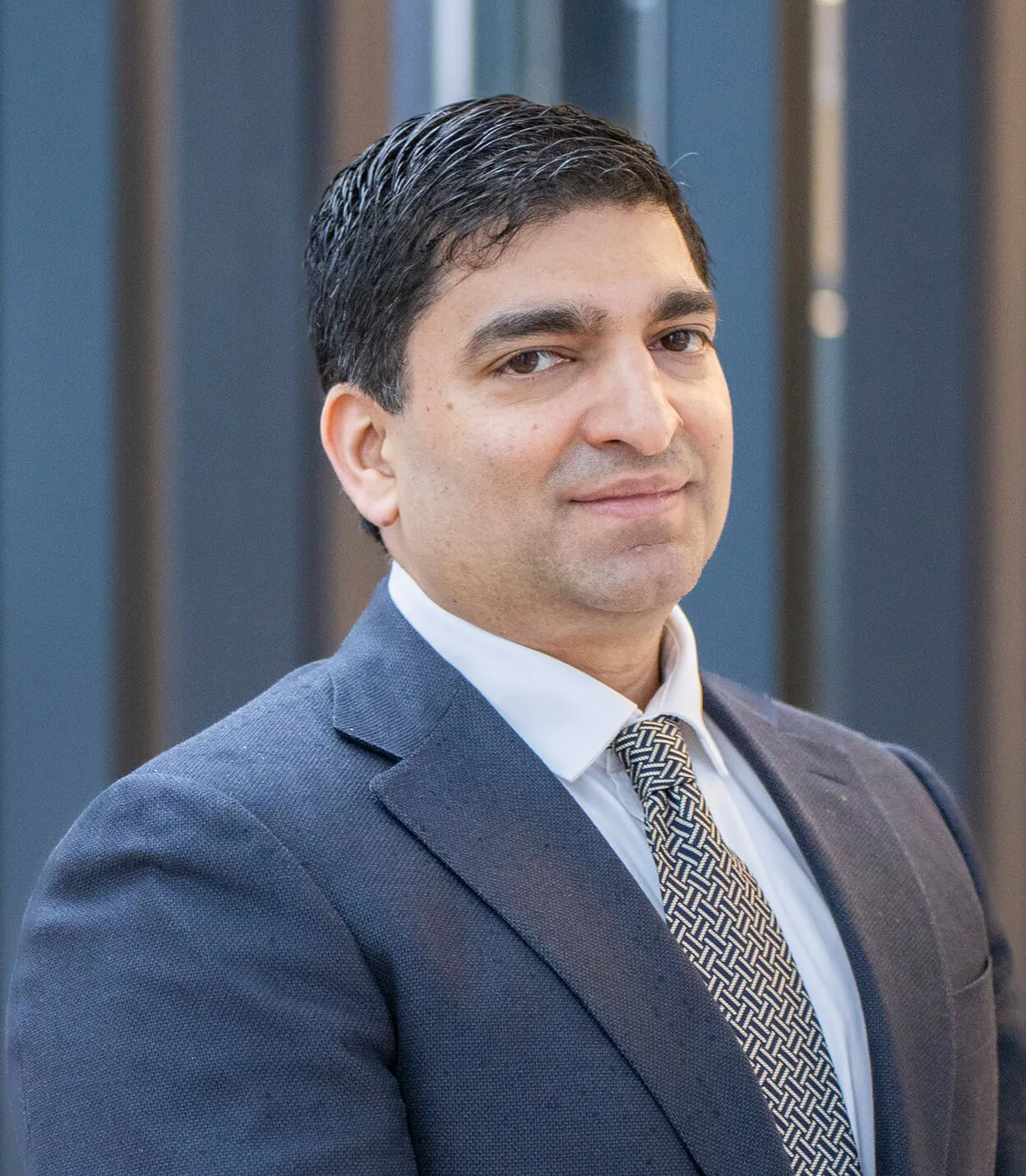
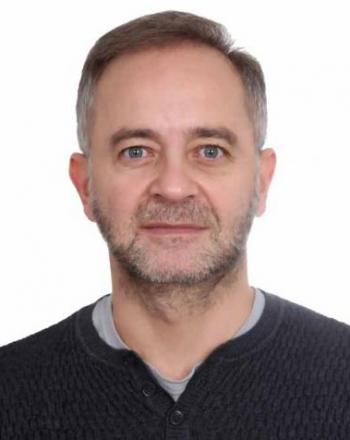
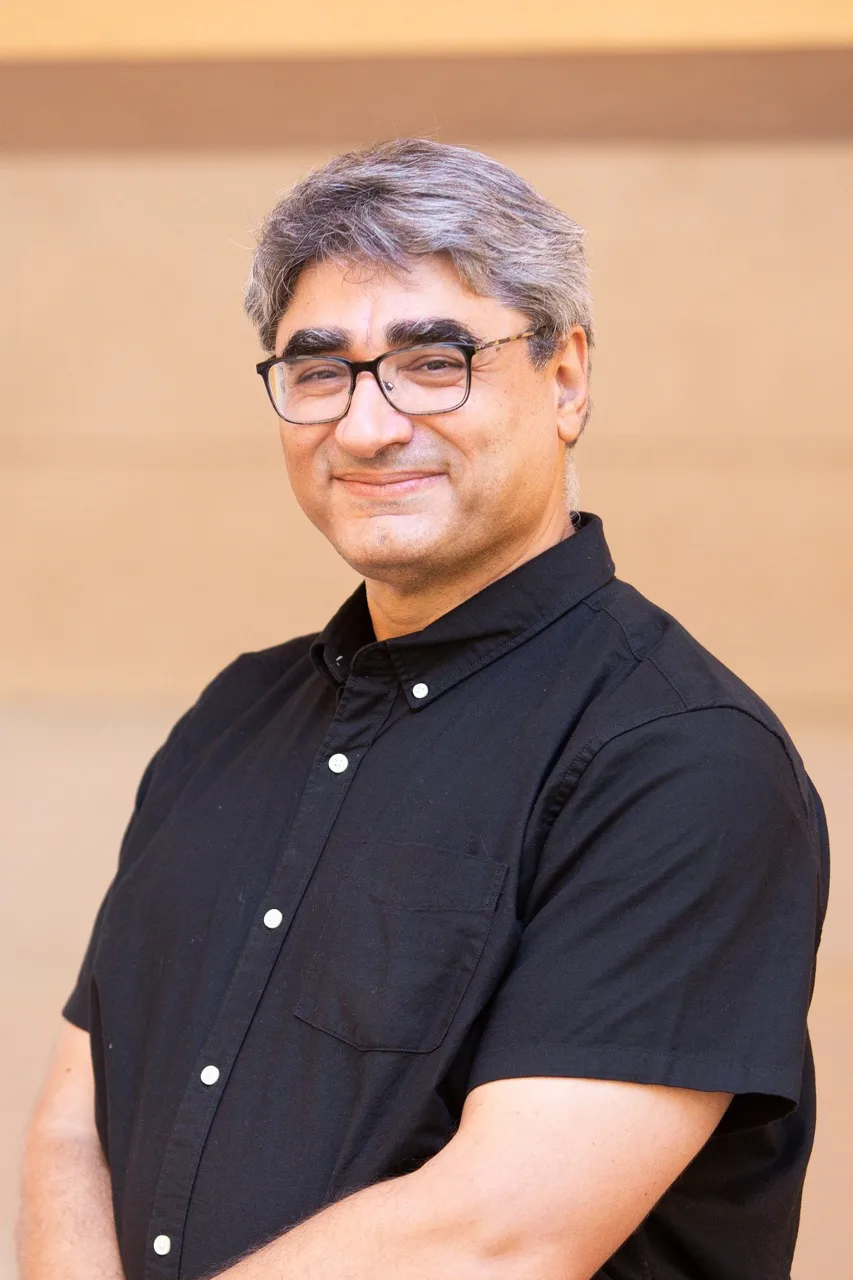
Ray Daroga serves as an Assistant Professor, Teaching Stream (Part-time) in the Finance Area at the University of Toronto's Rotman School of Management. With a strong academic background and extensive industry experience, he brings practical insights to his teaching. Education: Master of Finance, Rotman School of Management, University of Toronto Master of Business Administration (MBA), Rotman School of Management Bachelor of Applied Science, Engineering Science, University of Toronto Professor Daroga specializes in financial education, with research interests spanning financial markets, capital markets theory, corporate finance, fixed income securities, valuation, economics, and accounting. His teaching approach integrates theoretical knowledge with real-world applications. Awards: Rotman School of Management Teaching Award (2016) Rotman School of Management Teaching Award (2020) Before transitioning to academia, Professor Daroga accumulated over 25 years of professional experience at IBM, where he led complex international integration projects across 63 countries. His industry background significantly informs his teaching methodology and curriculum development in finance education.
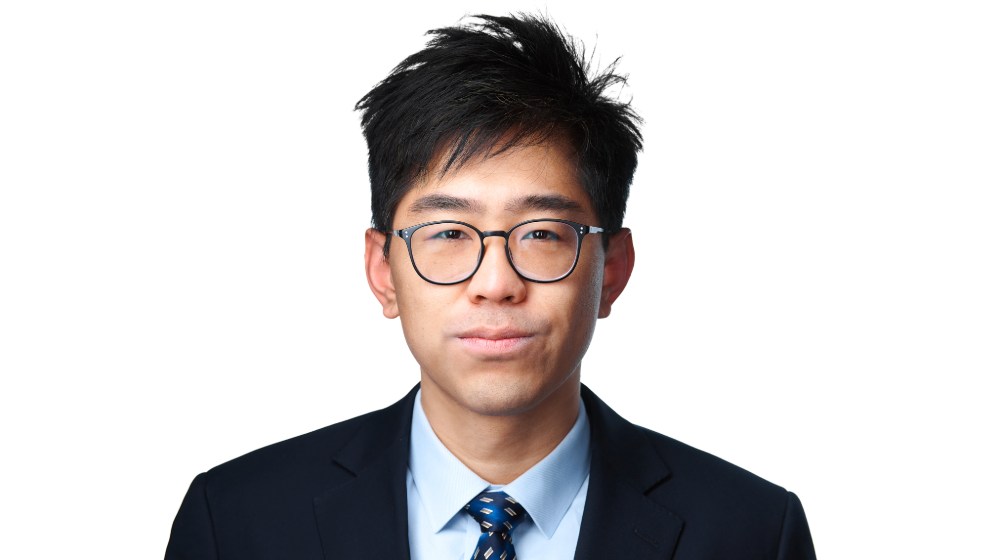
Xiang Gao is an Assistant Professor of Finance at the Quinlan School of Business, Loyola University Chicago. His research focuses on corporate finance, financial markets, credit risk, and financial innovation, particularly examining how financial instruments and systems influence firm behavior and risk dynamics. Research Interests: Corporate Finance Financial Markets and Institutions Credit Risk and Fixed Income Debt Maturity Structure Financial Innovation Machine Learning in Finance His recent publications explore topics such as corporate bond maturities, credit default swaps, firm location and risk, and behavioral responses to data breaches. These works appear in leading journals including Management Science , Journal of Financial and Quantitative Analysis , Review of Accounting and Finance , and Journal of Business Research , reflecting a strong empirical and interdisciplinary approach to finance. Scientific Recognition: Research featured by the International Swaps and Derivatives Association (ISDA) Teaching and Advising: Dr. Gao teaches courses such as Principles of Corporate Finance, Introduction to Derivatives, Financial Institutions, and Financial Management. While no formal advisees are listed, he contributes to graduate and undergraduate education in finance. He is involved in research that bridges traditional finance with emerging analytical techniques. Laboratories and Research Centers: Although not explicitly listed as a member, his work aligns with research initiatives at the Lab for Applied Artificial Intelligence and the CME Group Foundation Business Analytics Lab at Quinlan, particularly in applying machine learning to financial data.
Robert Feingold is a Lecturer in the Department of Finance at the Isenberg School of Management, University of Massachusetts Amherst. He holds a BSBA from Georgetown University (1990) and an MBA from Northwestern University (1995). Before academia, he had an extensive 16-year career in finance roles at Babson Capital Management LLC (2000-2016), Triumph Capital (1999-2000), Wellington Management Company (1996-1999), and Houlihan Lokey (1995-1996). His research focuses on security price dynamics, quantitative investment strategies, and fixed income trader performance measurement. Teaching interests include Investments, Fixed Income, Security Analysis, Financial Markets, and Financial Statement Analysis.
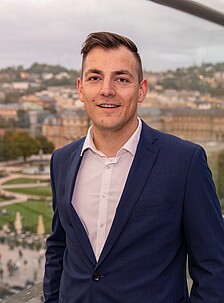
Jonas Hurm is a Researcher at the Department of Banking and Financial Services, University of Stuttgart. He is affiliated with the Chair of Business Administration: Banking and Financial Services (510F). His research focuses on Housing Finance, Credit Risk Modeling, and Financial Engineering with a specialization in structured financial products and portfolio strategies. He actively contributes to academic publications in journals such as Zeitschrift für das gesamte Kreditwesen and Corporate Finance . Teaching responsibilities include master's courses on Portfolio Management and Derivatives, as well as doctoral-level seminars in Finance and Contract Theory. His work often bridges theoretical finance with practical applications, such as analyzing yield curve modeling using German and UK government bonds, evaluating hedging strategies via cash-secured put options, and exploring the role of catastrophe bonds in asset allocation. He has published a monograph on volatility-based hedge fund strategies (Springer Nature, 2024) and collaborates on case studies in financial engineering, including reverse convertible bonds. His research also investigates EU crowdfunding markets and their regional dynamics. Contact him via his university office in Room 4.36/120 (+49 711 459-23283).
Kenneth Bigel is an Adjunct Professor of Business Ethics at the Leonard N. Stern School of Business, New York University, a position he has held since 1994. He also serves as Professor of Finance and Business Ethics and Chair of the Business Department at Touro University's Lander College for Men. His expertise lies at the intersection of finance and ethics, with extensive experience in both academia and the financial industry. His educational background includes: Ph.D. in Business Education and Financial Ethics, NYU Steinhardt M.B.A. in Finance, NYU Stern B.A. in Philosophy and Mathematics, Brooklyn College Certified Financial Planner (CFP), International Board of Standards and Practices One-year program, Hebrew University of Jerusalem Dr. Bigel's research centers on Financial Ethics, Ethical Psychology, Behavioral Finance, and Political Economy . He explores the moral dimensions of financial decision-making and the psychological foundations of ethical behavior in business contexts. His scholarly work includes two published online textbooks— Introduction to Financial Analysis and Corporate Finance —with a third, Fixed Income Mathematics , under review and expected in late 2024. While no specific publications are listed, his body of work reflects a strong thematic focus on ethical frameworks in finance, financial education, and the behavioral aspects of investing and leadership. Dr. Bigel has been actively involved in professional and public engagement. He has conducted executive education programs for leading financial institutions such as Morgan Stanley, Merrill Lynch, UBS, Lehman Brothers, and China CITIC Bank. He was a visiting scholar at Sichuan University and Xi’an Jiaotong University in China and has appeared on Chinese television and American radio. He currently serves on the Financial Industry Regulatory Authority’s (FINRA) Board of Arbitrators, contributing his expertise to financial dispute resolution. He has prior industry experience as a fixed-income analyst at Bankers Trust (now DeutscheBank), investment analyst at Ford Motor Company, senior portfolio manager at Prudential Securities, and operated an independent wealth management practice until selling it in 1999. He was formerly registered under Series 3, 7, 15, 24, 63, and 65. There is no mention of specific research labs or teams, but his academic and professional engagements suggest active collaboration across academic, regulatory, and industry domains.
Andrea Macrina is Professor of Mathematics at the Department of Mathematics, University College London (UCL), and Honorary Professor at the African Institute of Financial Markets and Risk Management, University of Cape Town (UCT). He founded the Financial Mathematics MSc programme at UCL in 2012 and served as its director until 2024. He co-founded the annual Financial Mathematics Team Challenge (FMTC) at UCT and holds adjunct and visiting positions across multiple international institutions, including King's College London, Kyoto University, and ETH Zurich. His research focuses on information-based asset pricing and the emerging field of Mathematical Climate Finance . He has pioneered stochastic frameworks for pricing credit, equity, fixed-income, and insurance-linked assets using information filtrations. Recent work extends to climate risk modelling, climate-contingent bonds (e.g., S-CloCo), and ensemble stress testing frameworks. His research integrates applied probability, martingale transport, quantile processes, and risk measure distortions. His recent publications reflect a strong trend toward integrating climate risk into financial mathematics, with a focus on innovative instruments, systemic risk quantification, and sustainable finance. These works span stochastic modelling, real-time risk management, and regulatory frameworks in post-LIBOR financial systems. Fields Research Fellowship Elliott-Yui Distinguished Visitor, The Fields Institute Prof. Macrina has supervised and collaborated with doctoral students and researchers across Africa, Europe, North America, and East Asia. His research programme is supported by international collaborations and academic-industry partnerships in The City of London. He is Associate Editor of the International Journal of Theoretical and Applied Finance and a member of several professional societies, including the London Mathematical Society and the Bachelier Finance Society. He leads research initiatives such as the ISM-UCL-UCSB-MQ Workshop on Climate Finance and Risk and contributes to special issues on climate and nature risk in mathematical finance. He is actively involved in shaping the future of financial mathematics through education, editorial work, and interdisciplinary research in climate finance.
Dr. Weina Zhang is an Associate Professor of Finance at the National University of Singapore (NUS) Business School. She serves as Academic Director of the MSc in Sustainable and Green Finance Programme and Deputy Director of the Sustainable & Green Finance Institute (SGFIN). With a PhD from Northwestern University's Kellogg School, her research focuses on sustainable finance, fixed income, and policy impacts. She teaches courses on sustainability and investment strategies at undergraduate and master's levels. Research & Teaching: Her work examines corporate social responsibility pricing, policy instability effects, and emerging markets' financial instruments. She has published in top journals like Journal of Empirical Finance and serves as a reviewer for major finance conferences and grants. Awards: Recipient of multiple best paper and teaching awards. Her research explores intersections between finance and sustainability, with notable contributions to green finance frameworks and policy analysis. Affiliations: NUS Business School, SGFIN, and collaborations with institutions like INSEAD and Singapore Management University. Active in executive training and lifelong learning programs on sustainable finance topics.
Ashleigh Eldemire is an Assistant Professor in the Department of Finance at the Haslam College of Business, University of Tennessee, Knoxville. Her research focuses on empirical corporate finance, capital structure, and fixed-income securities. She previously served as an instructor in the same department. Education: Ph.D. in Business Administration - Finance, Moore School of Business, University of South Carolina (2018) M.S. in Business Administration - Finance, Moore School of Business, University of South Carolina (2014) B.S. in Chemical Engineering, College of Engineering, University of Michigan (2010) Her research explores topics such as wealth preservation for low-income seniors, racial discrimination in municipal borrowing costs, and labor mobility impacts on corporate investment. Recent work highlights systemic biases in financial markets and socioeconomic disparities. Awards & Honors: Best Student Paper, PhD Project Finance DSA Conference (2016) Outstanding Graduate Student Instructor (2016) Presidential Fellow at USC (2012–2016) Her academic trajectory includes research assistant roles and scholarships focused on academic excellence. Eldemire’s interdisciplinary work bridges corporate finance with societal challenges, leveraging both quantitative analysis and policy perspectives.
Frank Codey is an Adjunct Instructor in the Stiller School of Business at Champlain College. He holds a BS in Business with a Finance concentration from Boston University and a Master of Science in Analytics from Villanova University. His professional experience includes 21 years at Bear Stearns & Co. managing Fixed Income Prime Brokerage, roles at JP Morgan during a merger, and leadership positions at ClearShares LLC and Equinox Funds Management. He specializes in finance, securities markets, and data analytics, advising institutions on operations, technology, and business strategy. Education: Bachelor of Science in Business (Finance), Boston University Master of Science in Analytics, Villanova University Research & Expertise: Frank's work focuses on financial technology applications, fixed income trading, Robotic Process Automation (RPA), and data-driven business solutions. His industry experience spans investment advisory, global banking operations, and alternative strategy fund management. No academic awards or grants are explicitly mentioned in the provided texts. Frank’s advising and lab affiliations remain unspecified in the available data.
Hany Guirguis is a faculty member and Dean of the O'Malley School of Business at Manhattan College. His teaching portfolio includes courses such as Business Statistics, Corporate Finance, and Advanced Econometrics. As a researcher, he focuses on econometric modeling, real estate finance, and macroeconomic policy, with over a decade of publications addressing market volatility, housing economics, and financial instruments. Econometrics Real Estate Finance Corporate Finance Macroeconomics Guirguis' research spans critical financial and economic domains. His recent work explores housing market forecasting , alternative data strategies , and Phillips curve dynamics . Earlier studies examined REITs volatility , ETF hedging , and income inequality effects on investment behavior. His scholarly output includes empirical analyses of real estate derivatives monetary policy transmission portfolio risk mitigation market spillovers with methodological emphasis on Markov regime-switching models and time-series econometrics . National Association of Real Estate Investment Trusts, Research Grant, 2010 NAIOP, Commercial Real Estate Development Association, Research Grant, 2010 Manhattan College, Summer Research Grant, 2006 Center for Energy, Economics and Environment Policy, 2004 Ford Foundation Grant for Graduate Study in Economics, 1998 Guirguis has secured multiple institutional grants for economic research and actively collaborates on empirical finance studies. His affiliations with American Real Estate Society and Financial Management Association underscore his disciplinary impact.
Kenneth McGovern is an Adjunct Professor at the Cox School of Business , Southern Methodist University , and an Executive in Residence at the Sam M. Walton School of Business , University of Arkansas . He specializes in Finance, Investments, Capital Markets, and Corporate Development, with extensive experience in executive advisory roles and teaching courses like Global Mergers & Acquisitions and Derivative Securities. Masters in Mathematical Finance, Columbia University MS Industrial Administration, Purdue University BS, University of Maryland His research and professional interests span Finance, Risk Management, Alternative Investments, and Fixed Income Securities. With a focus on data analytics and corporate strategy, McGovern bridges academic theory with practical applications in capital markets and corporate development. McGovern teaches courses including Global Mergers and Acquisitions, Derivative Securities, and Fixed Income Securities. His professional career includes leadership roles such as Chief Investment Officer at Flagstone Reinsurance, Chief Financial Officer at a $30B AUM hedge fund, and Director of Capital Markets at Walmart. He has also contributed to NASA's Patent and Licensing System and consulted for IBM and the U.S. Air Force.
Mukunthan Santhanakrishnan serves as a Professor of Practice in the Department of Finance at Southern Methodist University's Cox School of Business, where he has been a faculty member since 2013. He concurrently holds the position of Director for the Master of Science in Finance Program. Prior to his appointment at SMU, he was an associate professor of finance at Idaho State University, teaching both undergraduate and graduate finance courses across multiple institutions. His educational background includes: PhD in Finance from Arizona State University (recipient of the Jack D. Furst dissertation fellowship) MBA from Cleveland State University Bachelor's degree from Birla Institute of Science and Technology (Pilani, India) Professor Santhanakrishnan's research centers on Behavioral Finance , specifically examining how cognitive constraints influence small investors' decision-making processes. He also investigates pedagogical issues in finance education , developing innovative teaching methodologies for complex financial concepts. His work bridges theoretical finance with practical educational applications, emphasizing real-world relevance in curriculum design. His publication portfolio spans behavioral finance, accounting, venture capital, and sports economics, revealing consistent themes in decision-making analysis across diverse financial contexts. The interdisciplinary nature of his research connects individual investor psychology with institutional investment practices, demonstrating how cognitive limitations manifest in market behaviors and educational settings. His notable recognitions include: Jack D. Furst dissertation fellowship during doctoral studies Highly Commended Award at the Literati Network Awards for Excellence 2012 for R&D valuation research As Director of the MS in Finance program, Professor Santhanakrishnan oversees curriculum development and student mentorship, aligning academic training with industry demands. His teaching portfolio includes graduate-level Fixed Income Securities (FINA 6218) and undergraduate courses in International Finance (FINA 4329) and Financial Management (FINA 3320), reflecting his commitment to both theoretical rigor and practical application in finance education.
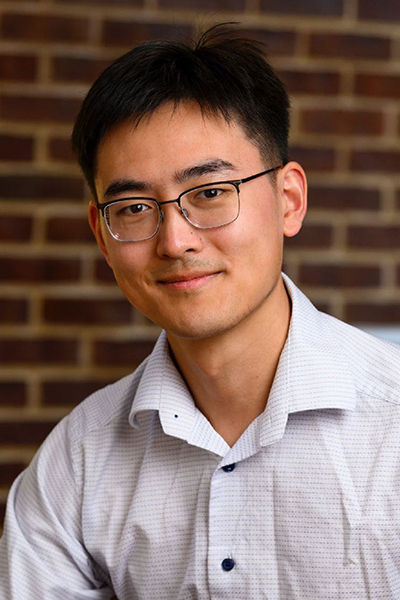
David Xiaoyu Xu is an Assistant Professor of Finance at Southern Methodist University's Edwin L. Cox School of Business. He holds a PhD in Finance from the University of Texas at Austin and specializes in financial intermediation, asset management, and the economics of information. His research focuses on several key areas within finance: Financial intermediation and information economics Asset management and mutual fund behavior Securitization markets and loan quality assessment AI applications in fixed income markets Geographic aspects of credit supply and information flows Xu's recent publications demonstrate a strong focus on how information flows through financial markets and impacts various aspects of finance, from securitization to loan pricing to asset management. His work often examines the interplay between market structure, information asymmetry, and financial outcomes, with particular attention to innovative mechanisms like the 'self-healing' approach in securitization and AI-driven price discovery in illiquid markets. His notable awards include being a finalist for the QCGBF Young Economist Prize and winning the FMCG Best Paper Award in Banking/Financial Institution. Xu teaches courses including Derivatives (Undergraduate, 2023-2025) and Investment Management (Undergraduate, 2019). Previously, he served as a Teaching Assistant for multiple courses including Financial Modelling & Testing, Investment Theory & Practice, Advanced Corporate Finance, and Corporate Finance Theory.
Arhan S. Ertan is an Associate Professor of Economics in the Department of International Trade at Boğaziçi University. He holds a PhD and MA in Economics from Brown University, an MA in Economics from Boğaziçi University, and a BS in Civil Engineering from Boğaziçi University. Education PhD in Economics, Brown University MA in Economics, Brown University MA in Economics, Boğaziçi University BS in Civil Engineering, Boğaziçi University His research spans Economic Development , Behavioral & Experimental Economics , International Trade & Finance , and Migrantion , with recent work on the strategic logic of digital disinformation , AI trade dynamics , and pandemic-induced behavioral shifts . He employs interdisciplinary empirical methods, combining economics, political science, and computational approaches. His publications include studies on Turkey’s external deficit, financial markets, and the socio-political dimensions of pandemics. Current projects focus on digital public diplomacy , pandemic-related uncertainties , and refugee integration . Scientific Awards Most Cited Article Award (European Economic Review) Stephen R. Ehrlich Fellowship (Brown University) CEPR Fellowship He has supervised PhD and master’s students at Kadir Has University and served as a visiting professor at institutions including Brown, NYU, and Boston University. His non-academic experience includes roles as an economist at Finansbank and academic consultant at Istanbul Economy Research.
Hamed Ghoddusi is an Associate Professor at California Polytechnic State University (Cal Poly). He is an applied theorist and structural modeller with expertise in energy/commodity markets, real estate, platforms, and risk/uncertainty. He holds a PhD from Vienna Graduate School of Finance, graduate degrees in Quantitative Economics (Institute for Advanced Studies) and Management Science/MBA (Sharif University of Technology), and a BS in Industrial Engineering (Sharif University of Technology). He was a visiting PhD student at UT Austin. His research spans interdisciplinary topics at the intersection of finance, economics, and industrial systems, emphasizing quantitative modeling of market dynamics and risk frameworks. With over 10 years of teaching experience, he instructs courses including Security Analysis and Investment Management (BUS431) and Fixed Income Markets and Securities (BUS439). Previous courses include Corporate Finance, Econometrics, Financial Econometrics, Microeconomic Theory, and Quantitative-Finance Senior Thesis. Prior to Cal Poly, he served as Assistant Professor of Finance at Stevens Institute of Technology (2013–2020), Postdoctoral Associate at MIT, and Consultant for the United Nations Industrial Development Organization (UNIDO).