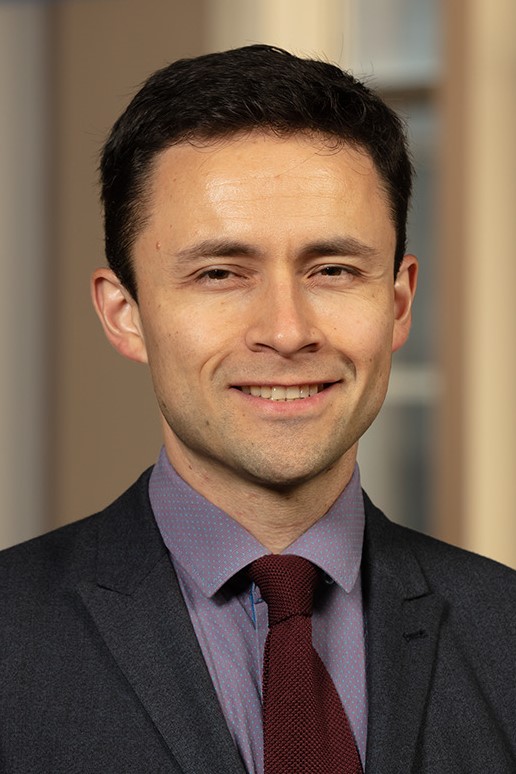
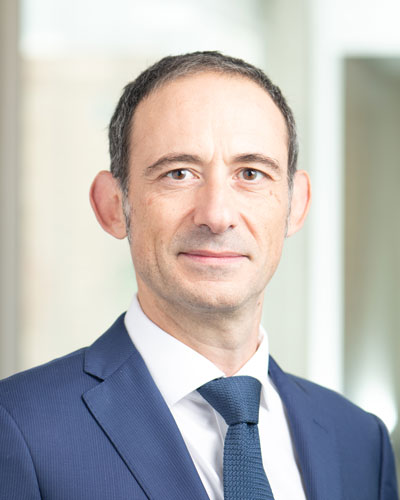
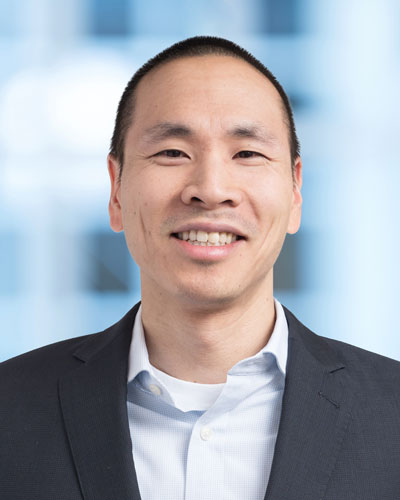
Boone Bradley serves as a Lecturer in the Department of Finance within the School of Business at the University of Kansas, Lawrence. He concurrently holds the pivotal role of Director for the Applied Portfolio Management program, a student-managed investment initiative housed in Capitol Federal Hall (Room 2165), where he oversees real-world investment decision-making with substantial university endowment funds. His professional expertise centers on practical finance applications, particularly in portfolio construction, investment strategy development, and financial market analysis. Through the Applied Portfolio Management program, Bradley bridges theoretical finance education with hands-on asset management experience, guiding students in equity/fixed income portfolio management, risk assessment, and performance evaluation within live market conditions. This experiential learning model prepares students for careers in institutional investment and wealth management. As program director, Bradley manages student recruitment, portfolio allocation strategies, and investment committee operations for KU's student-run fund. His leadership emphasizes professional conduct, analytical rigor, and ethical investment practices, positioning the program as a flagship experiential learning opportunity within the finance curriculum. He maintains direct student mentorship through portfolio management practicums and investment team supervision.
Dr. Phillip Daves is an Associate Professor in the Department of Finance at The University of Tennessee and holds the William Voigt Memorial Professorship as the Voigt Scholar. He serves as Director of the Global Leadership Scholars Program in the College of Business Administration. His research focuses on asset pricing, corporate governance, derivative securities, and valuation, with notable publications in The Journal of Finance and Applied Financial Economics . He has authored/co-authored textbooks including Intermediate Financial Management and Corporate Valuation: A Guide for Managers and Investors . Education: Ph.D. in Business Administration (Finance) from the University of North Carolina at Chapel Hill, M.S. from University of North Carolina, and A.B. from Davidson College. Research Interests: Corporate finance, firm valuation, executive compensation, and financial management in non-profits. His work bridges academic research and practical applications, such as consulting for venture capital firms and internet startups. He has received the Outstanding Teacher Award twice from the Physician’s Executive MBA program. Key Article Trends: His publications span market sentiment analysis (e.g., January effect studies), corporate governance mechanisms, healthcare workforce dynamics, and innovative financial instruments like synthetic bonds. Recent work addresses physician burnout and community food access challenges. Awards: Multiple teaching accolades highlight his educational impact. He advises on mergers, LBOs, and holds experience as CFO of an internet startup. Labs/Teams: Oversees the Global Leadership Scholars Program, fostering leadership in business administration.
Sang Baum "Solomon" Kang serves as an Associate Professor of Finance at the Stuart School of Business, Illinois Institute of Technology. His academic appointment is complemented by his role as Assistant Director of Undergraduate Programs in Business. Kang maintains active engagement with professional networks through his LinkedIn profile and ResearchGate presence, where he has accumulated 33 publications with over 7,000 reads. His educational background includes a Ph.D. in Finance from McGill University, an M.S. in Computational Finance from Carnegie Mellon University, an M.S. in Actuarial Science from the University of Wisconsin at Madison, and a B.S. in Applied Statistics from Yonsei University in Korea. Prior to his academic career, Kang worked for nine years in the energy sector, holding managerial positions including Director of Structuring and Pricing at PacifiCorp Energy, a subsidiary of Berkshire Hathaway Energy. Kang's research spans energy finance, real options, commodities, and financial derivatives, with particular emphasis on electricity markets, crude oil, environmental markets, and weather markets. His work demonstrates consistent methodological sophistication through simulation techniques, real options analysis, and quantitative modeling approaches. His research has been published in reputable journals including Energy Economics , Journal of Energy Markets , Economics Letters , and Applied Economics Letters . Analysis of Kang's 15 most recent publications reveals a clear evolution in his research focus while maintaining core methodological approaches. Early work concentrated on traditional energy finance and real options applications to electricity generation. More recently, his research has expanded into cryptocurrency markets, sustainable finance, and ESG applications, while maintaining his expertise in quantitative methods and risk analysis. This demonstrates both continuity in methodological strengths and adaptability to emerging financial markets. 2012 FMA Asian Conference Best Paper Award 2010 NFA Best Ph.D. Student Paper Award Kang has taught at McGill University, Korea Advanced Institute of Science and Technology (KAIST), and Illinois Institute of Technology. He holds Financial Risk Manager certification from the Global Association of Risk Professionals. His professional experience bridges academic theory and practical industry application, particularly through his pre-academic career in energy sector financial modeling. Kang mentors students through his teaching roles and maintains active industry connections through his media expertise in business and economics topics. His research activities are organized around energy market analysis, with particular focus on electricity storage valuation, complex derivatives in energy markets, and energy risk management. Kang collaborates extensively with researchers including Jian Jia, Yao Xie, Jialin Zhao, Pascal Letourneau, and others across institutions, demonstrating an active research network in quantitative finance and energy markets.
David Echeverry is an Assistant Professor of Finance at the Universidad de Navarra's Faculty of Economics and Business Administration. He holds a Ph.D. in Finance and Real Estate from UC Berkeley's Haas School of Business. His research focuses on fixed income markets, information frictions, behavioral economics, and collective action problems in financial systems. His research examines government interventions through economic games in field settings and addresses credit risk modeling, mortgage markets, and financial market inefficiencies. Key areas include green lending incentives, synthetic risk transfers, and consumer debt dynamics during economic crises. Recent publications explore Brazilian credit card debt impacts during recessions, nonparametric approaches to default estimation, and behavioral aspects of investor decision-making. His work integrates empirical finance with macroeconomic policy analysis.
Professor Gareth W. Peters is the Janet & Ian Duncan Chair in Actuarial Science at the Department of Statistics & Applied Probability, University of California Santa Barbara (UCSB). A Fellow of multiple prestigious institutions (FIOR, FRSS, FIMA, YAS-RSE, IEEE-Senior), his research spans statistical risk modeling, insurance analytics, machine learning, and environmental finance. Risk & Insurance Bayesian Modeling Machine Learning in Finance Environmental Data Analysis Cyber Risk Quantification His recent work explores agricultural commodities, municipal green bonds, hearing loss diagnostics, and financial regime classification. Articles reflect trends in network-structured data, multivariate screening, and causal inference. Scientific Awards Peter-Clark Prize (2024) Fellow of the Institute of Risk & Safety Management (FIOR) Fellow of the Royal Statistical Society (FRSS) Fellow of the Institute of Mathematics and its Applications (FIMA) Young Academy of Scotland (YAS-RSE) Elected Member of the International Statistical Institute (ISI) IEEE Senior Member
Xiaohui Gao Bakshi is a Research Professor at Temple University's Fox School of Business and Management , Department of Finance. She also serves as Assistant Director of the FOX-Tsinghua Doctoral of Science in Global Finance program . Her research focuses on empirical corporate finance, asset pricing, behavioral finance, entrepreneurship, international finance, and FinTech. She holds a Ph.D. in Finance from the University of Florida, alongside a Master of Science in Mathematics, and a Bachelor of Science in Mathematics from Fudan University. Key research contributions include studies on derivatives, commodities, and financial risk modeling. Notable awards include the 2013 William F. Sharpe Award and the 2010 Jensen Prizes First Prize. She teaches Courses: FIN 4596: Seminar in Corporate Finance (Undergraduate) FIN 9001: Corp Finance Theory (Graduate) Her work bridges theoretical and empirical finance, with recent publications exploring equity disasters, option risk premiums, and default risk modeling. She actively contributes to the FOX-Tsinghua Doctoral Program , fostering global finance research collaborations.
Rui Liu is an Associate Professor of Finance at Duquesne University's Palumbo-Donahue School of Business. She specializes in teaching investments, portfolio management, fixed income, derivatives, and financial management. She developed a derivatives course for Actuarial Science and Quantitative Finance certificate programs. Her research focuses on empirical asset pricing, macro-finance, fixed income markets, and financial econometrics, with emphasis on Treasury yield curves, monetary policy impacts, and commodity futures dynamics. Her work has been published in high-impact journals like the Journal of Financial Economics and Management Science. Education: Ph.D., Finance, University of Houston M.Sc., Finance, Auburn University M.B.A., Finance, Auburn University Her research trends emphasize volatility analysis in commodity and fixed income markets, regulatory impacts on market structures, and macroeconomic determinants of financial instruments. She has presented at major conferences including the San Francisco Federal Reserve-Bank of Canada Conference and the Financial Management Association meetings. Dr. Liu serves as a reviewer for journals such as the Journal of Banking and Finance and Journal of Empirical Finance. Her work bridges theoretical econometric models with practical market analysis, particularly in energy and derivatives markets. Lab/team affiliations: Not explicitly stated in the provided materials.
David Blanchett, PhD, is an Adjunct Professor of Wealth Management at The American College of Financial Services and co-host of the Wealth, Managed podcast. He is also the Managing Director and Head of Retirement Research at QMA, a division of Prudential Financial, and formerly held roles at Morningstar Investment Management, LLC. His expertise spans financial planning, tax planning, retirement strategies, and wealth management. David holds a PhD and a Master of Science in Financial Services (MSFS). His research focuses on retirement planning, wealth management, tax strategies, and annuities. He explores topics such as longevity risk mitigation, portfolio diversification, and the impact of health considerations on retirement income. Blanchett’s articles address contemporary issues in financial planning, including longevity risk, social security strategies, and navigating bond markets during volatile periods. His work emphasizes practical insights for advisors and investors, blending academic rigor with real-world applications. Blanchett has received numerous accolades, including: Academy of Financial Services Best Paper Award (2017) CFP Board Center for Financial Planning 2017 Academic Research Colloquium Best Investments Paper Award Journal of Financial Planning’s 2007 Financial Frontiers Award Financial Analysts Journal 2015 Graham and Dodd Scroll Award Journal of Financial Planning’s 2014, 2015, and 2018 Montgomery-Warschauer Awards Retirement Management Journal’s 2012 Thought Leadership Award While no formal advisees are listed, Blanchett contributes extensively to the field through his research and advisory roles. His work at QMA and The American College supports the development of practical wealth and retirement management strategies. Blanchett collaborates within QMA’s research teams and contributes to initiatives at The American College, though specific lab or team affiliations are not detailed.
Lara Cathcart is Professor of Finance at Imperial College Business School and Academic Director of MSc Finance, Risk Management, and Financial Technology programs. Her research examines credit risk modeling, behavioral finance, and climate-related financial risks. Current investigations focus on sovereign credit default swaps, media impact on financial markets, and climate change effects on corporate default probabilities. Recent publications analyze Lebanon's currency crisis, bankruptcy determinants post-deregulation, and early credit rating impacts on bond volatility. Professor Cathcart serves as Associate Editor for the European Journal of Finance and has consulted for investment banks and HM Treasury. Her ESRC-funded research develops novel approaches to measuring climate regulatory exposure and assessing default risks in changing environmental conditions.
Monika Piazzesi serves as the Joan Kenney Professor of Economics at Stanford University, holding a prominent position within the Department of Economics. Her academic career is distinguished by significant contributions to asset pricing, macroeconomics, and financial econometrics, with particular expertise in bond markets and housing economics. As a member of Stanford's Academic Council faculty, she maintains active research and teaching roles while engaging with major economic policy discussions. Her research interests span Asset Pricing , Macroeconomics , and Financial Economics , with specialized focus on bond risk premia, term structure modeling, housing market dynamics, and climate finance. Piazzesi's work bridges theoretical modeling with empirical analysis of financial markets, often incorporating time series econometric techniques to examine how monetary policy affects asset prices. Recent research increasingly addresses climate-related financial risks and sustainable investment. Analysis of her publication record reveals a consistent focus on yield curve dynamics and bond market behavior, evolving toward contemporary challenges including climate finance and digital currency systems. Her work demonstrates methodological rigor in time series analysis while maintaining relevance to central banking and financial regulation. The trajectory shows increasing engagement with environmental economics intersecting with traditional financial markets research. National Academy of Sciences Member (2023) American Finance Association Vice President Piazzesi actively contributes to academic discourse through leadership in the Stanford Reading group on Financial Markets, where she facilitates discussions on cutting-edge research in household finance, spatial growth models, and business cycle dynamics. Her collaborative work with Martin Schneider spans multiple projects examining housing markets, monetary policy, and financial intermediation. Current research directions include climate-related asset pricing and the implications of central bank digital currencies. She leads specialized research groups focusing on financial market dynamics, with particular emphasis on housing finance and payment systems. Her reading group examines topics ranging from incomplete risk sharing to directed search models in asset markets, fostering interdisciplinary dialogue between macroeconomics and finance researchers.
David Mather is a fixed-term Assistant Professor of International Development in the Department of Agricultural, Food, and Resource Economics at Michigan State University (MSU), associated with the Food Security Group. He holds a Ph.D. and M.S. from MSU and a B.A. from The University of the South. His research focuses on rural development, food policy, and poverty reduction strategies in sub-Saharan Africa, Southeast Asia, and Central America. He leads projects under the Feed the Future Innovation Lab for Food Security Policy, emphasizing policy analysis and impact assessment. Education : Ph.D., Michigan State University M.S., Michigan State University B.A., The University of the South Research Interests : Dr. Mather investigates rural poverty reduction, agricultural technology adoption, smallholder market participation, and the role of government in agricultural markets. His work explores how adult mortality impacts household income and schooling, as well as consumption-nutrition linkages. Recent studies include evaluations of fertilizer subsidy programs and institutional arrangements in sugarcane value chains. Key Contributions : He has authored/co-authored influential papers on fertilizer policy in Kenya, Zambia, and Tanzania, and analyzed women’s empowerment in Tanzania’s cashew sector. His work emphasizes evidence-based policy solutions for food security and resilience in resource-constrained environments.
Ayala Wineman is a fixed-term Assistant Professor at Michigan State University's Department of Agricultural, Food, and Resource Economics (AFRE), part of the College of Agriculture & Natural Resources. She also serves as a Research Scientist at the Global Child Nutrition Foundation. Her work focuses on rural development, food security, agricultural land markets, and school feeding programs in sub-Saharan Africa and globally. Dr. Wineman holds a Ph.D. and M.Sc. in Agricultural, Food, and Resource Economics from Michigan State University. Her research explores food systems transformation, nutrition policy, and the intersection of school feeding programs with agricultural development. Key projects include co-leading the Research Supporting African MSMEs to Provide Safe and Nutritious Food (RSM2SNF) initiative and contributing to programs like the Kenya Tegemeo Agricultural Policy Research and Analysis Project (TAPRA II). Her work spans diverse regions including Nigeria, Malawi, Tanzania, and Kenya, addressing challenges such as food safety, market dynamics, and policy environments for large-scale food fortification. Recent projects include rapid reconnaissance studies of Nigeria's fish and vegetable value chains and assessments of stakeholder perceptions in Tanzania. Dr. Wineman has contributed to the Global Diet Quality Score framework and the Global Survey of School Meal Programs , emphasizing actionable metrics for food systems management. She has also engaged in policy-oriented initiatives like the Tough Questions in International Development webinar series. Notable collaborations include the Feed the Future Innovation Lab for Food Security Policy Research and the MwAPATA Institute. Her research highlights linkages between agricultural transformation, land markets, and nutritional outcomes, with a focus on equitable development strategies.
Per Östberg is an Associate Professor of Finance at the University of Zurich (UZH), affiliated with the Department of Finance and the Swiss Finance Institute. He is a member of the DF Directorate and regularly participates in global finance conferences as a speaker and program committee member. Research Interests : His work focuses on corporate finance, investments, liquidity dynamics, and the European sovereign debt crisis. Notable studies include analyzing trading volume responses during market stress, exploring peer effects among investors, and investigating liquidity mechanisms in financial markets. Teaching & Supervision : Teaches advanced finance courses such as the Research Seminar BBLS Banking & Finance (HS25). Supervised numerous theses (BA, MA, PhD) between 2011–2023, though specific student names are not listed. Affiliations & Activities : Swiss Finance Institute Faculty Member Member of DF Directorate Program committee member for international finance conferences Key Research Contributions : Examines topics like investor recognition effects on returns, liquidity dynamics during crises, and corporate payout policies. His work bridges theoretical finance with empirical analysis, often leveraging high-frequency data and econometric methods.
Stefano Battiston is an Associate Professor in Sustainable Finance and Networks at the University of Zurich (UZH) and holds a part-time position as Associate Professor at the University of Venice Ca' Foscari. He serves as vice-chair of the Center of Competence for Sustainable Finance and is a Lead Author for the IPCC’s Sixth Assessment Report on Finance and Investment. His research focuses on systemic risk, climate-related financial risks, and sustainable finance, with methodologies like DebtRank and climate stress-tests widely adopted in policy and practice. Education includes a PhD in Statistical Physics from École Normale Supérieure, Paris, and a Master’s in Neuroscience from Brandeis University. He has directed EU-funded projects such as SIMPOL and DOLFINS, totaling over €9 million in funding. His work bridges academia and policy, engaging with institutions like the ECB, ESMA, and the European Commission. Key research interests include financial networks, climate policy integration, and the societal impact of complex systems. His awards include the Swiss National Science Foundation (SNSF) Professorship and a CNRS Post-Doctoral Fellowship. Battiston has supervised over 10 PhD students and 8 postdocs, contributing to roles in academia and financial regulatory bodies. Teaching roles span courses on systemic risk, sustainable finance, and climate change at UZH, Venice, and ETH Zurich. He organizes major conferences on financial networks and sustainability, including the FINEXUS series. His interdisciplinary approach addresses challenges at the nexus of finance, climate, and policy.
Jonathan Fu is a postdoctoral researcher at the University of Zurich's Department of Finance, affiliated with the Center of Competence for Sustainable Finance and the Center for Human Rights Studies. His research focuses on sustainable finance, fintech, financial intermediation, and political economy. He holds a BA in Economics from UC San Diego and Master's degrees from LSE and Sciences Po, specializing in public and economic policy. Education: Bachelor of Arts in Economics, University of California, San Diego Master's in Public and Economic Policy, London School of Economics & Sciences Po Research Interests: Sustainable finance mechanisms and policy impacts Fintech adoption dynamics in crises Political economy of financial systems Microfinance and business environment interactions Publications highlight themes like fintech's global expansion during crises, green bond valuation using NLP, and business environment effects on micro-enterprise growth. His work bridges theoretical finance with real-world policy applications. Labs/Teams: Collaborates with the Center of Competence for Sustainable Finance and Center for Human Rights Studies at UZH, exploring intersections between finance and socio-environmental justice.