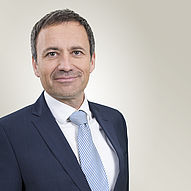
Ronald Gallant is the Liberal Arts Professor of Economics at Pennsylvania State University. He earned his PhD from Iowa State University in 1971. His research specializes in econometric theory, Bayesian methods, and financial econometrics, with applications to asset pricing, industrial organization, and computational statistics. Gallant develops novel estimation techniques for complex economic models, including Bayesian nonparametrics, Markov chain Monte Carlo methods, and dynamic game theory. His recent work examines asset pricing under ambiguity aversion and high-frequency financial data analysis. He has extensive editorial experience in leading econometrics journals.
Jingzhi Huang is a Professor of Finance and Mathematics, and Faculty Chair in Finance at the Smeal College of Business, Pennsylvania State University. He joined Penn State in 1997 after earning his Ph.D. in Finance from New York University, where he also previously taught at the Stern School of Business. His expertise spans credit risk, fixed-income markets, derivatives markets, mutual funds, hedge funds, and machine learning applications in finance. His research integrates quantitative finance with mathematical modeling. No specific publications, grants, or awards are listed in the provided materials. His academic profile emphasizes interdisciplinary work at the intersection of finance and mathematics.
Kenneth Roskelley is a Professor of Finance at Mississippi State University's College of Business. He holds a Ph.D. in Finance from the University of Arizona (2002), an MA in Economics (1997), and a BA in Economics from Brigham Young University (1995). His research spans Bayesian Econometrics, Model Averaging, Optimal Forecasting, Fixed Income, Affine Term Structure Models, and Real Estate finance. His publications focus on monetary policy, REITs, IPO markets, arbitrage models, and behavioral aspects of financial decision-making. Research employs advanced econometric techniques to analyze market efficiency, investor behavior, and corporate strategies.
Dr. Jim DeMello is a Professor of Finance and holds the PNC Financial Services Chair of Finance and Commercial Law at the Haworth College of Business, Western Michigan University. His expertise spans corporate finance, investments, and security analysis. Education: Ph.D., Kent State University MBA, Kent State University Research Interests: His work focuses on mergers and acquisitions, capital market efficiency, and stock selection strategies. He has contributed to prominent journals such as the Financial Analysts Journal, Journal of Portfolio Management, and Journal of Fixed Income. Professional Activities: DeMello has authored Cases in Finance and presented research at regional and national conferences. His seminars on finance for non-financial managers highlight his commitment to bridging academic and practical applications.
Dr. David Schroeder is a Reader in Finance at Birkbeck Business School, part of Birkbeck, University of London. He holds a PhD in Economics from the University of Bonn (2008) and has been affiliated with Birkbeck since 2009. His research focuses on empirical asset pricing, decision-making under uncertainty, and firm profitability dynamics. He currently supervises four doctoral researchers and has mentored alumni like Michael Howell (2018). Teaching responsibilities include modules such as Asset Management and Corporate Finance. He chairs the Examinations Sub-board for the MSc Finance program, demonstrating his leadership in academic governance. His work spans theoretical and applied finance, with notable contributions to dividend timing, ambiguity preferences in decision-making, and international market efficiency analysis. Education: PhD in Economics, University of Bonn (2008) Research Interests: Empirical asset pricing, ambiguity aversion modeling, and firm profitability forecasting Administrative Roles: Chair of MSc Finance Examinations Sub-board Publications highlight his expertise in behavioral finance, with a focus on investor sentiment and market efficiency. His recent work (2025) explores sentiment analysis using non-traditional data sources like social media, reflecting cutting-edge trends in financial research.
Fred Bereskin is an Associate Professor and Richard G. Miller Professor of Finance at the Robert J. Trulaske, Sr. College of Business, University of Missouri. He holds a PhD in Finance from the University of Rochester and a Bachelor of Mathematics from the University of Waterloo. His research focuses on empirical corporate finance, with emphasis on innovation, corporate governance, and securities regulation. Previously, he served at the University of Delaware and Drexel University, and held industry roles in fixed-income management and risk management at Canadian banks. Within the Trulaske College, he has served as interim chair of the Department of Finance and as Ph.D. coordinator. His research appears in top journals such as the Journal of Financial Economics, Management Science, and Journal of Law and Economics. Notable works examine injunction risk impacts on firms, technological fit in mergers, and whistleblower effects on CEO turnover. He has been recognized for teaching excellence across multiple institutions and has contributed to non-profit boards. His work bridges academic research with real-world corporate challenges in governance, innovation, and financial strategy. Education: PhD in Finance, University of Rochester Bachelor of Mathematics, University of Waterloo Key Contributions: Examined how patent infringement allegations affect stock returns Explored cultural similarity's role in merger success Investigated real earnings management’s innovation impacts His interdisciplinary approach integrates legal insights (e.g., SEC enforcement patterns) and labor market dynamics (e.g., managerial talent mobility). Current research interests include the intersection of board diversity and regulatory outcomes.
Eric A. Powers is Associate Professor and Chair of Finance at the Darla Moore School of Business, University of South Carolina. His research focuses on corporate finance (restructuring, capital investment) and fixed-income securities. Education includes a Ph.D. from MIT (1998), MBA from Cornell (1993), and B.A. from Cornell (1986). Research Interests: Corporate control mechanisms, bond tender offers, and capital structure optimization. His work integrates empirical analysis with theoretical financial models to examine market behaviors. Publications: Recent articles explore bond call provisions and regulatory impacts, reflecting deep engagement with fixed-income markets and corporate debt innovation. Awards: Mortar Board Teaching Excellence (2001, 2002) Multiple nominations for institutional teaching awards Advising: Mentored 9 doctoral students on topics including corporate finance and market microstructure. Extensive service includes curriculum development and academic leadership roles.
Prateek Sharma is Clinical Assistant Professor of Finance at the University of South Carolina's Darla Moore School of Business. His research examines banking regulation, financial intermediation, and market discipline mechanisms in financial systems. Research concentrates on deposit market dynamics, risk management in banking, and regulatory impacts on financial institutions. Significant contributions analyze deposit rate structures, branch proximity effects, and pandemic-related liquidity shifts. Teaching responsibilities include Fixed Income Securities (FINA 475) and Derivatives Securities (FINA 471). Professional background includes industry experience in investment banking and equity research prior to academic career.
Sergey Tsyplakov is Associate Professor of Finance at the University of South Carolina, with expertise in corporate finance, risk management, and fixed income markets. His award-winning research analyzes capital structure dynamics and regulatory design. He consults for Goldman Sachs and publishes in top journals like the Journal of Finance. Tsyplakov holds a Ph.D. from the University of Texas and advises on financial policy.
Eric Reiner, MBA, MS, MA, is an Instructor in the Department of Finance • Risk Management and Insurance at the CU Denver Business School. His expertise spans taxation, insurance risk management, and financial planning. He has held teaching roles since at least 2016, earning the Excellence in Teaching Award for Non-Tenure Track Faculty in 2016. Dr. Reiner holds an MBA from the University of New Orleans, MA in Sociology, MS in Industrial/Organizational Psychology (Tulane University), and BS in Psychology from Louisiana State University. His academic and professional career bridges finance, insurance, and behavioral analysis. His research focuses on tax planning strategies, insurance industry risks, and financial advisor practices. Notable themes include inflation's impact on tax policies, commercial real estate risks, and healthcare industry dynamics. His recent articles analyze Roth conversion pitfalls, Medicare enrollment trends, and U.S. debt ceiling implications for clients. Reiner's work appears in Financial Advisor and Private Wealth magazines, covering topics like I bond yields, level-funded health plans, and tax compliance challenges. His contributions emphasize actionable insights for financial professionals navigating evolving regulatory and economic landscapes. Award-winning educator with a focus on practical financial advice, Reiner also serves as a contributor to major financial publications, bridging academic insights with real-world financial management needs.
Dr. Amanjot Singh is an Assistant Professor of Finance at the Faculty of Business, University of New Brunswick (UNB) on the Saint John campus, appointed in 2024. Previously, he served on the faculty of King’s University College at the University of Western Ontario. He earned his PhD from Deakin University, Australia, and brings extensive expertise in finance research and teaching. Education & Credentials PhD – Deakin University, Australia Certified Financial Planner (India) Research Interests Dr. Singh's research spans several inter-related areas within finance and governance. He investigates corporate finance questions surrounding capital structure, investment efficiency, and the impact of shareholder activism on firm policies. His work also delves into empirical asset pricing , analyzing how information asymmetries and uncertainty—especially oil price shocks —affect stock returns and corporate behavior. Recently, he has explored the intersection of cybersecurity incidents and corporate outcomes, examining how data breaches influence trade credit and firm value. Additional themes include stakeholder orientation and the role of institutional investors in enhancing market efficiency and governance. His studies often leverage large-scale data from emerging markets , particularly India, to provide global insights. Publications & Scholarly Impact Dr. Singh has published extensively in premier finance journals, including FT-50 and ABDC A*/A-rated outlets. His recent articles illuminate how hedge-fund activism alters debt maturity choices, how long-term institutional ownership shapes analyst target-price informativeness, and how aggregate uncertainty affects information acquisition and recommendations. Other works document the real effects of oil-price uncertainty on inventory investment, diversification value, and labor investment efficiency, as well as the repercussions of cybersecurity breaches on corporate trade-credit policies. Awards & Funding SSHRC research grants – Social Sciences and Humanities Research Council of Canada Editorial & Reviewing Service Associate Editor – Vision: The Journal of Business Perspective Ad-hoc reviewer for multiple top-tier finance journals Professional Engagement Dr. Singh actively contributes to the academic finance community by presenting at and serving on committees for leading conferences such as the American Finance Association (AFA), Financial Management Association (FMA), Eastern Finance Association (EFA), Southern Finance Association (SFA), Asian Finance Association, and the Canadian Economics Association (CEA).
Prof. Gregor Dorfleitner is a Full Professor of Finance at the University of Regensburg, leading the Department of Business Administration (especially Finance) and the Center of Finance. He holds a doctorate in Mathematics from the University of Augsburg (1998) and habilitation in Business and Economics (2003). His academic career includes roles at Vienna University of Economics and Business and founding the Financial Engineering and Derivatives Group there before joining Regensburg in 2007. Research Interests: Sustainable Finance, Microfinance, FinTech, Risk Management, Corporate Scandals, ESG Integration, and Financial Engineering. His work bridges theoretical finance with practical applications, emphasizing quantitative methods in corporate finance and risk management. Teaching: Leads courses in Corporate Finance, Financial Engineering, and Risk Management. His teaching integrates research insights, combining theoretical foundations with real-world case studies. Recent Article Trends: Focus on greenwashing detection, FinTech’s regulatory challenges, climate impacts on microfinance, and corporate governance linkages to scandals. His research often employs advanced analytics like NLP and simulation models. Advising & Teams: Supervises doctoral candidates (e.g., Jens Eckberg, Christian Kreuzer, Christian Sparrer) and leads a research team exploring sustainable finance innovations. Collaborates with institutions like Deutsche Bundesbank and Österreichische Nationalbank. Labs/Teams: Heads the Financial Engineering and Derivatives Group and the Center of Finance at Regensburg, fostering interdisciplinary research in finance and sustainability.
Dr. Svetlozar Todorov Rachev is a Professor in the Department of Mathematics & Statistics at Texas Tech University (TTU), specializing in mathematical finance, probability theory, and statistics. He holds a Ph.D. in Mathematics from Lomonosov University (1979) and a Doctor of Science (Habilitation) from the Steklov Mathematical Institute (1986). His career includes roles at the University of California, Santa Barbara (1998–2010), Karlsruhe Institute of Technology (1989–1998), and Stony Brook University (2011–2012). He is renowned for pioneering work on probability metrics, financial risk modeling, and derivative pricing, notably founding the methodology behind FinAnalytica's flagship product. His research interests span mathematical finance, econometrics, and statistical methodologies, with a focus on heavy-tailed distributions and risk assessment. Rachev has authored over 50 books and 300 papers, including seminal works like Financial Models with Lévy Processes and Volatility Clustering and Stable Paretian Models in Finance . He has mentored over 60 Ph.D. students and holds patents for risk management systems. Rachev’s awards include the Senior Humboldt Professor Award, Fellow of the Institute of Mathematical Statistics, and the Barney E. Rushing Faculty Distinguished Research Award. He actively contributes to academic leadership, including editorial roles in journals like Journal of Risk and Financial Management . His current teaching at TTU includes courses on quantitative finance, mathematical statistics, and actuarial mathematics. Research focuses on sustainable finance, ESG valuation, and advanced risk metrics. He directs the TTU Center for Quantitative Finance, fostering interdisciplinary research and industry collaboration.
Jinghua Wang is an Assistant Professor at the MT School of Management, New Jersey Institute of Technology (NJIT). Her research focuses on finance, cryptocurrency, real estate investment trusts (REITs), financial volatility, and international finance. She holds a Ph.D. in Management Science in Finance from Illinois Institute of Technology (2012), an M.A. in International Finance from London Metropolitan University (2003), and a B.S. in Economics in International Trade from Heilongjiang University (1995). Her work explores asset interactions, market dynamics, and financial innovation. Recent studies analyze cryptocurrency-REIT interactions, volatility transmission mechanisms, and Bitcoin's market dominance. She also investigates bond markets, oil-economy linkages, and CSR practices in organizational contexts. Her research employs advanced methodologies like machine learning and time-frequency decomposition. Dr. Wang has no listed scientific awards but maintains an active publishing record with 17+ articles since 2000. She teaches corporate finance and uses Bloomberg Terminal integration in her courses. Her website is available on ResearchGate.
Nusrat Jahan is an Instructor in the Department of Economics at Carleton University, Canada. She holds a Ph.D. in Economics from Carleton University, along with prior degrees from Dhaka University. Her research focuses on Financial Economics, Macroeconomics, and Applied Econometrics. She has taught courses such as ECON 2009 (Managerial Economics) since 2017, including Summer 2020 to present. Her work includes analyzing asset durability’s impact on financing, macroeconomic influences on corporate credit spreads, and monetary policy transmission mechanisms. She has also served as a Teaching Assistant and TA Mentor at Carleton and previously lectured at the Independent University Bangladesh. Her research explores how asset durability affects firms’ financing capabilities, with findings indicating heterogeneous responses to monetary policy based on asset durability. She has also investigated the limited role of macroeconomic factors in explaining Canadian corporate credit spread variations. Teaching responsibilities span managerial economics, econometrics, and macroeconomics at both undergraduate and graduate levels. Contact details include institutional and personal emails, with a CV available online.