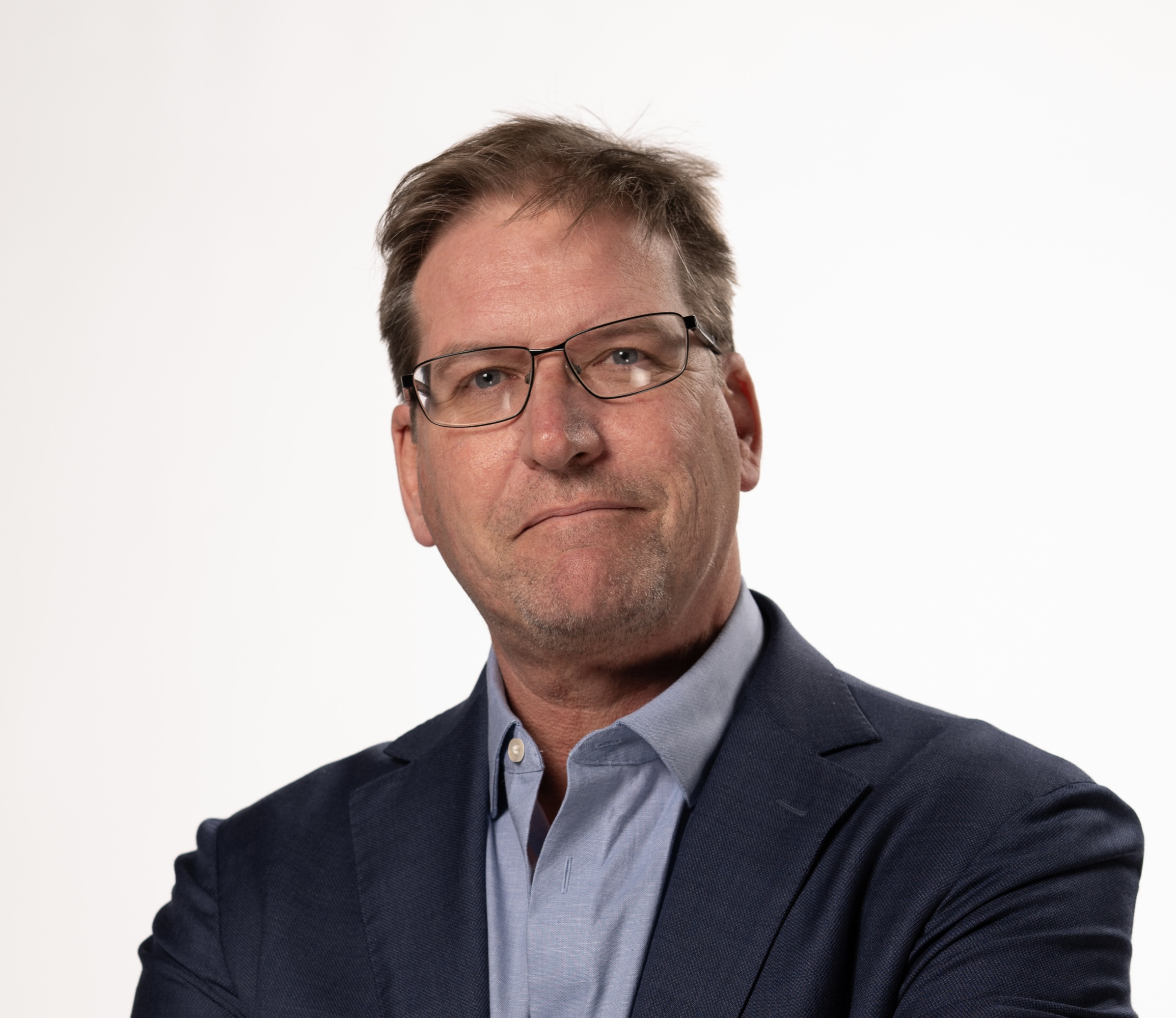
Dr. Gavin Mount is a researcher at UNSW Canberra , specializing in non-traditional security studies , ethnic conflict , and the sociopolitical implications of emerging technologies . His work bridges theoretical analysis with practical applications in conflict transformation and defense studies. Research Focus: Global politics of ethnic conflict, hybrid peace/war frameworks, and socio-political impacts of drone technology. Teaching: Courses like Ethnic Conflict in World Politics and Law, Force and Legitimacy , with a focus on military education and strategic studies. Publications: Recent work includes contributions to Thinking Swarms (2025) and Hybridity on the Ground in Peacebuilding and Development (2018). Grants: Leads the Curricula Integration of Student Wellbeing Resources project under HERDSA. Key Themes across his research include the intersection of technology and conflict, evolving defense paradigms, and pedagogical innovations in security studies.
Professor Anthony Richardson is a mathematical ecologist at the University of Queensland , holding a joint position with CSIRO Environment since 2005. He leads the Mathematical Marine Ecology Lab , focusing on marine conservation through mathematical, statistical, and computational modeling. School of the Environment, Faculty of Science, University of Queensland Affiliate, Centre for Marine Science Affiliate, Centre for Biodiversity and Conservation Science Research Interests span marine spatial planning (climate-smart protected areas, 3D ocean zoning), marine ecosystem modeling (lower trophic levels, plankton-dynamics), and climate change impacts (carbon sequestration, fisheries productivity, and marine diseases). His work has been cited in IPCC Assessment Reports and emphasizes international collaboration through projects like the Global Working Group on Climate Change Synthesis . Recent Publications focus on Zooplankton's role in carbon cycling Climate-smart marine protected area design Ecosystem modeling under climate uncertainty Marine megafauna connectivity patterns Supervision is offered for >250 peer-reviewed papers and advanced projects in climate-smart conservation planning, with established funding from ARC Discovery Projects and Norwegian Polar Institute .
Christopher O'Donnell is a Professor of Econometrics at the University of Queensland's School of Economics. He holds a PhD from the University of Sydney and has held academic leadership roles including Director of the Centre for Efficiency and Productivity Analysis. His research focuses on productivity and efficiency analysis, econometric methods, and their applications in agriculture, public policy, and environmental economics. Education: PhD (University of Sydney), MCom (University of New South Wales), BAgEc (Hons) (University of New England). Research interests include economic and statistical methods for measuring productivity changes, stochastic frontier analysis, and metafrontier frameworks. He has authored/co-authored three books and over 80 journal articles, with notable contributions in the American Journal of Agricultural Economics , Journal of Econometrics , and European Journal of Operational Research . Scientific awards include being a Distinguished Fellow of the Australian Agricultural and Resource Economics Society. His work has been applied in sectors like healthcare, fisheries, and public utilities through collaborations with organizations such as the World Bank and Asian Productivity Organization. Key projects include measuring agricultural productivity in China, analyzing hospital efficiency, and evaluating climate impacts on farming. Grants include studies on productivity measurement in Australian universities and Northern Grains Region farms. Labs/Teams: Former Director of the Centre for Efficiency and Productivity Analysis, collaborating with global institutions on productivity benchmarking and policy analysis.
Associate Professor Marcus Cattani is a faculty member at Edith Cowan University (ECU), affiliated with the School of Medical and Health Sciences and the Department of Occupational Health and Safety. He serves as Deputy Director of the WA Government-funded MARS Centre, focusing on Mental Awareness, Respect, and Safety initiatives. Since joining ECU in 2015, he has developed risk management and leadership programs for undergraduate/postgraduate programs and supervises PhD/Master's research. His research emphasizes injury risk reduction in industries like mining, oil/gas, and construction, with recent focus on agriculture safety and radiation exposure in Western Australian mining. Education: Doctor of Philosophy (Occupational Health and Safety), Murdoch University (2004) Master of Science, United Kingdom (1995) Research interests include occupational safety frameworks, real-time exposure assessment, fatigue management, and safety leadership tools. Current projects address critical controls for construction fatalities, radiation exposure in mining, and OHS systems for remote work. Over 30 years of industry experience as an occupational hygienist and HSE consultant informs his academic and applied work. Key collaborations involve government agencies (DMIRS, Water Corporation) and industry partners (Rio Tinto, Lifeline WA). Recent grants include MARS Centre initiatives and NORM exposure studies. His 2025 focus includes translating injury prevention techniques into agriculture contexts. Professional memberships include Australian Institute of Health and Safety (Chartered OHS Professional) and the Australian Institute of Occupational Hygienists.
Professor Paul A. Raschky is affiliated with the Department of Economics at Monash University , where he also directs the SoDa Labs and co-founded the KASPR Datahaus PTY LTD and IP Observatory . His academic focus spans Political Economy , Environmental Economics , Insurance Economics , and Development Economics , with a specialization in natural hazards and data science applications. Education: PhD (University of Innsbruck, 2008), with a postdoctoral research visit at the Wharton School . Research: Explores intersections of disaster risk , governance , and economic development , leveraging machine learning and big data . Recent Publications: Focus on generative AI productivity , ethnic favoritism , disaster insurance , and conflict economics . Awards: Recipient of the ABDC Award for Innovation and Excellence in Research (2022) and Dean’s Excellence in Research Award (2016) . Projects: Leads initiatives on internet suppression in Myanmar , news media availability , and AI-driven policy insights in South-East Asia and the Pacific. Future Work: Will be on sabbatical in 2025 , likely expanding on AI applications and disaster resilience .
Professor Sabine Dittmann is a leading expert in coastal ecosystem ecology and marine sciences at Flinders University, Australia. As a Professor of Marine Biology in the College of Science and Engineering, her work bridges research and environmental management, focusing on hypersaline estuaries, blue carbon restoration, and invasive species control. She holds a Habilitation in Ecology from the University of Bremen (2001), PhD from the University of Göttingen (1987), and MSc from the same institution (1984). Her research interests include coastal ecosystem health, mangrove and saltmarsh restoration, and decision support frameworks for marine conservation. She has advised government agencies on marine parks, Commonwealth Marine Reserves, and the Coorong ecosystem. Key roles include national president of the Australian Marine Sciences Association (2012–2014), current president of the Royal Society of South Australia, and member of the Australian Antarctic Science Council since 2019. Her recent work emphasizes the global challenges of hypersaline wetland restoration, invasive species impact, and blue carbon methodologies. Over 112 publications span estuarine dynamics, benthic macrofauna, and policy-relevant ecosystem assessments. Projects like the Coorong benthic surveys highlight her commitment to translating science into conservation action.
Professor Nick Paul is a marine scientist at the University of the Sunshine Coast (UniSC), leading applied research in seaweed and algae for sustainable product development. He holds a PhD and BSc (Hons) from UNSW and a Graduate Certificate in Tertiary Education Management from the University of Melbourne. His work focuses on seaweed aquaculture innovations, including waste-to-resource biotechnology, functional foods, and environmental remediation. He leads international projects funded by organizations like ACIAR, CSIRO, and Advance Queensland. Research interests include seaweed-based solutions for livestock health, wastewater treatment, and sustainable aquaculture expansion near the Great Barrier Reef. He has pioneered commercial land-based seaweed farming and developed intellectual property in this field. Awards include the 2015 UNAA World Environment Day Award for Sustainable Water Management and the 2015 Queensland Water Innovation Forum Best Paper. He serves on the Asian Fisheries Society Council and Fiji’s National Seaweed Taskforce. Key publications span seaweed cultivation methods, marine genomics, and socio-economic impacts of aquaculture in the Pacific. Grants total over A$3.7 million for projects like diversifying Pacific Island seaweed industries and improving Indonesian seaweed production.
Christopher John O'Donnell is a distinguished Professor at the School of Economics, University of Queensland, Australia, where he holds a dual affiliation (50% each) with both the main School of Economics and the Centre for Efficiency and Productivity Analysis (CEPA). His research primarily focuses on efficiency and productivity analysis across various sectors including agriculture, fisheries, public services, and healthcare. As a leading scholar in his field, he has published extensively in top-tier economics and operations research journals and is recognized as being among the top 5% of authors globally according to multiple citation metrics. O'Donnell's research interests span several interconnected domains: efficiency analysis, productivity measurement, agricultural economics, econometrics, state-contingent production frontiers, and metafrontier analysis. His work often bridges theoretical methodology with practical applications, particularly in estimating efficiency and productivity changes under various constraints and uncertainties. He has developed innovative approaches for measuring productivity in public service providers, agricultural sectors, and healthcare institutions, with particular attention to how weather, climate change, and demand uncertainty affect performance metrics. His research output demonstrates consistent productivity, with publications spanning from the 1990s to the present, including significant contributions in the last five years. O'Donnell frequently collaborates with researchers internationally, particularly with scholars from Australia, Europe, and Asia, reflecting the global relevance of his work. His publications appear in leading journals such as the American Journal of Agricultural Economics, Journal of Productivity Analysis, European Journal of Operational Research, and Agricultural and Applied Economics journals. Ranked among top 5% authors by citation metrics (Number of Citations) Ranked among top 5% authors by citation metrics (Number of Citations, Discounted by Citation Age) Ranked among top 5% authors by citation metrics (Number of Citations, Weighted by Number of Authors) Ranked among top 5% authors by citation metrics (Number of Citations, Weighted by Number of Authors, Discounted by Citation Age) Ranked among top 5% authors by citation metrics (Euclidian citation score) O'Donnell has supervised numerous graduate students, as evidenced by his 'Record of graduates' noted in his RePEc profile. His research has been supported by various institutions, particularly focusing on agricultural productivity, public sector efficiency, and resource economics. He has contributed significantly to methodological developments in productivity measurement, including nonparametric approaches and metafrontier frameworks that allow for cross-technology comparisons. As a core member of the Centre for Efficiency and Productivity Analysis (CEPA) at the University of Queensland, O'Donnell contributes to one of the world's leading research centers in efficiency and productivity analysis. His work has practical applications for policymakers in agriculture, fisheries management, healthcare, and public service delivery, helping organizations measure and improve their performance in increasingly complex economic environments.
Michael Bode is a Professor in the School of Mathematical Sciences at Queensland University of Technology (QUT). His research focuses on applying mathematical and computational methods to ecological and conservation challenges, particularly in marine ecosystems and coral reef management. He holds a PhD in Applied Mathematics from the University of Queensland. Research Interests: Professor Bode specializes in larval dispersal modeling, conservation prioritization, and the application of ecosystem models to real-world management scenarios. His work integrates disciplines like applied mathematics, statistics, and ecology to address issues such as coral reef resilience, invasive species control, and climate change impacts. Grants & Projects: Securing Antarctica's Environmental Future (2020) Conserving Coral Reef Fish and Sustaining Fisheries in the Anthropocene (2019) Tackling Pests Using Game Theory (2019) New Methods for Conserving Dispersing Species on Coral Reefs (2017) Awards: 2020 Fenner Medal (Australian Academy of Science) Eureka Prize finalist (2020) Australian Research Council Future Fellowship (2017) Labs & Teams: He leads the QUT Applied Mathematical Ecology Group (QUTAMEG), which develops quantitative tools for ecological and conservation problems. His work is published in journals like Conservation Biology , Nature Sustainability , and PLoS Biology .
Thomas Wernberg is a Professor in the School of Biological Sciences at The University of Western Australia (UWA), affiliated with the UWA Oceans Institute. His research focuses on ecological interactions in coastal marine habitats, particularly kelp forests, and their responses to climate change, marine heatwaves, and invasive species. He has held roles including Chair of UWA's Boating & Diving Safety Committee and Editor-in-Chief of Aquatic Botany . Wernberg has contributed to over 267 publications and secured 53 grants, including projects on kelp restoration and blue carbon management. He is a recipient of multiple 'Highly Cited Researcher' awards and has advised on initiatives like Seaforester . His work bridges sub-cellular to macro-ecological scales, addressing climate mitigation through marine ecosystem services. Education: MSc from Roskilde University (RUC). Previous Positions: ARC Future Fellow (2011–2015), Senior Lecturer (2015–2021), and various postdoctoral roles at UWA and other institutions. Research Themes: Climate change impacts, marine heatwaves, kelp restoration ( Green Gravel ), blue carbon, and biodiversity conservation. His lab explores resilience thresholds, ecological costs of stress, and genetic diversity's role in adaptation. Collaborations span global institutions, with active research in Arctic/Subarctic regions and Australian marine ecosystems. Grants & Projects: Includes operational upscaling of seaforestation, hydrodynamic energy attenuation studies, and blue carbon management. He leads initiatives to protect 4 million hectares of kelp forests by 2040. Awards: 2019–2022 Highly Cited Researcher (Web of Science), 2022 Senior Research Award (UWA School of Biological Sciences). Labs/Teams: Collaborates with the Great Southern Reef Foundation, Uluu Scientific Advisory Board, and international networks like the Green Gravel Action Group .
Dr. Roger Moser is a Senior Lecturer at Macquarie University's Department of Management Innovation, Strategy and Entrepreneurship Research Centre. He also holds adjunct roles at the Indian Institute of Management Udaipur (since 2012) and the University of St. Gallen (since 2012). His research focuses on Decision Intelligence, Strategic Management, and International Management, particularly exploring how executives leverage data (small/big) to enhance decision-making frameworks. He has over 99 publications since 2005, with notable works in journals like Journal of Service Research and Journal of Business Research . Dr. Moser holds a Dr. rer. pol. from EBS European Business School (2006) and a lic. oec. HSG (MSc) from the University of St. Gallen (2003). His research interests include Decision Model Innovation, Social Capital in emerging markets, and strategic alignment in supply chains. He has conducted impactful studies on access-based services in India, supplier integration in China's automotive sector, and humanitarian logistics using satellite data. His recent work emphasizes technology integration in B2B value creation, decision frameworks for uncertainty reduction (e.g., in agriculture and disaster management), and AI-driven expert systems. He has presented at global forums on topics like digital transformation and decision intelligence applications, contributing to both academic and practitioner discourse. External Roles: Adjunct Professor of Business Policy, Indian Institute of Management Udaipur Titularprofessor / Permanent Lecturer, University of St. Gallen Notable impacts include a project providing clean drinking water in India through access-based solutions, recognized for quality-of-life and societal contributions. His research has been cited over 1,666 times with an h-index of 21.
Prof Justin Seymour is a Professor in the Climate Change Cluster (C3) at the University of Technology Sydney (UTS). He leads the Ocean Microbiology Group, focusing on microbial ecology and oceanography. His research explores microbial roles in ocean ecosystems, spanning from ocean-basin dynamics to microscale interactions between microbes and marine organisms. He supervises Masters and PhD students, teaches Microbial Ecology (91170), and advises on courses like Ocean Systems and Climate Change (91156). Education: Not explicitly listed, but his academic role implies advanced degrees in microbiology or marine science. Affiliations: Faculty of Science, UTS Climate Change Cluster (C3) Research Interests: His work addresses microbial contributions to ocean biogeochemistry, including interactions between microbes and corals, fish, seagrasses, and harmful pathogens. Key themes include: Microbial Oceanography Marine Microbial Ecology Climate Change Impacts on Microbiomes Articles Trends: Recent publications emphasize climate-driven shifts in microbial communities, pathogen dynamics linked to oyster mortality, and chemotaxis mechanisms in marine bacteria. Research highlights include the role of Vibrio species in disease outbreaks and the influence of marine heatwaves on microbiology. Awards: ARC Discovery Projects (DP240100370, DP230100127, DP210101610) UTS Chancellor's Research Fellowship Gordon and Betty Moore Foundation Grant Advising & Grants: Active in securing funding (e.g., ARC, NSW Government, Fisheries grants) for projects like oyster disease resilience and microbial contamination studies. Supervises interdisciplinary teams addressing climate change and marine health challenges. Labs/Teams: Leads the Ocean Microbiology Group, collaborating internationally on microbial ecology, coral restoration, and aquaculture.
Associate Professor Ben Gilby is a coastal and marine ecologist at the University of the Sunshine Coast (UniSC), specializing in ecological restoration, conservation biology, and spatial ecology. He holds an Associate Professor position in Animal Ecology within the School of Science, Technology and Engineering. His research focuses on optimizing ecosystem management through systematic planning, spatial ecology, and ecological indicators, with expertise in coastal fish habitats and shellfish reef restoration. He collaborates extensively with government agencies, NGOs, and industries to address ecological monitoring, restoration, and environmental planning challenges. Ben Gilby's education includes a PhD and BSc(Hons) from Griffith University (Griff) and the University of Queensland (Qld). His teaching includes courses on endangered animals, coastal and marine ecology, and restoration ecology. His research has been published widely in journals like Ecology , Conservation Biology , and Restoration Ecology , with a focus on seascape connectivity, urbanization impacts, and the ecological functions of coastal habitats. Key research topics include shellfish reef restoration, nutrient offsetting using coastal wetlands, and the integration of spatial ecology into conservation planning. He coordinates postgraduate research on coastal fish ecology, ecological restoration hotspots, and the ecological roles of coastal habitats. His work emphasizes maximizing ecological, social, and economic outcomes through evidence-based approaches.
Dale Edward Squires is an economist affiliated with the Southwest Fisheries Science Center under the US NOAA Fisheries in La Jolla, California, and serves as an Adjunct Professor of Economics at the University of California San Diego . His work bridges economic analysis with marine conservation and fisheries policy. Research interests include: Marine economics and fisheries management Bycatch mitigation strategies Conservation agreements and policy frameworks Data-limited fisheries analysis Stakeholder-driven resource governance Deep sea mining regulations Recent publications focus on multidisciplinary approaches to bycatch reduction, sustainable tuna management, shark conservation frameworks, and stakeholder participation in deep-sea mining policies. His collaborations span institutions in the US, UK, Sweden, and international foundations.
Sean R. Connolly is a Research Professor at the Smithsonian Tropical Research Institute (STRI) in Panama, where he leads the Connolly Lab focused on coral reef ecology and biodiversity dynamics. He joined STRI in late 2019 after approximately 20 years of research on Central Indo-Pacific coral reefs, and now directs his research toward the coral reefs of the Tropical East Pacific and Caribbean regions. Dr. Connolly's research interests center on understanding the mechanisms that maintain biodiversity in species-rich systems, particularly coral reefs. His work investigates how large numbers of species coexist despite similar resource requirements, what determines the commonness or rarity of different species, how fishing and marine reserves impact reef ecosystems, and how coral reefs respond to climate change. His approach combines empirical field studies with mathematical and statistical modeling across multiple spatial and temporal scales. His publication record demonstrates a strong focus on coral reef community dynamics, biodiversity patterns, climate change impacts, and fisheries management. Recent work increasingly addresses the effects of multiple stressors on reef ecosystems, with growing attention to the Tropical Eastern Pacific as a comparative natural laboratory. His collaborative research spans multiple institutions globally, reflecting the international nature of coral reef science. Dr. Connolly received his B.A. from Earlham College in 1994 and his Ph.D. from Stanford University in 1999. His educational background provided the foundation for his interdisciplinary approach that bridges theoretical ecology with practical conservation applications. His research program currently investigates reef ecosystems on both sides of the Isthmus of Panama, taking advantage of the dramatically different reef conditions in the Tropical East Pacific (where one coral group dominates marginal reef conditions) and the Caribbean (where former community dominants have collapsed to a fraction of historical abundances). This comparative approach provides unique insights into the mechanisms of biodiversity maintenance and ecosystem resilience.