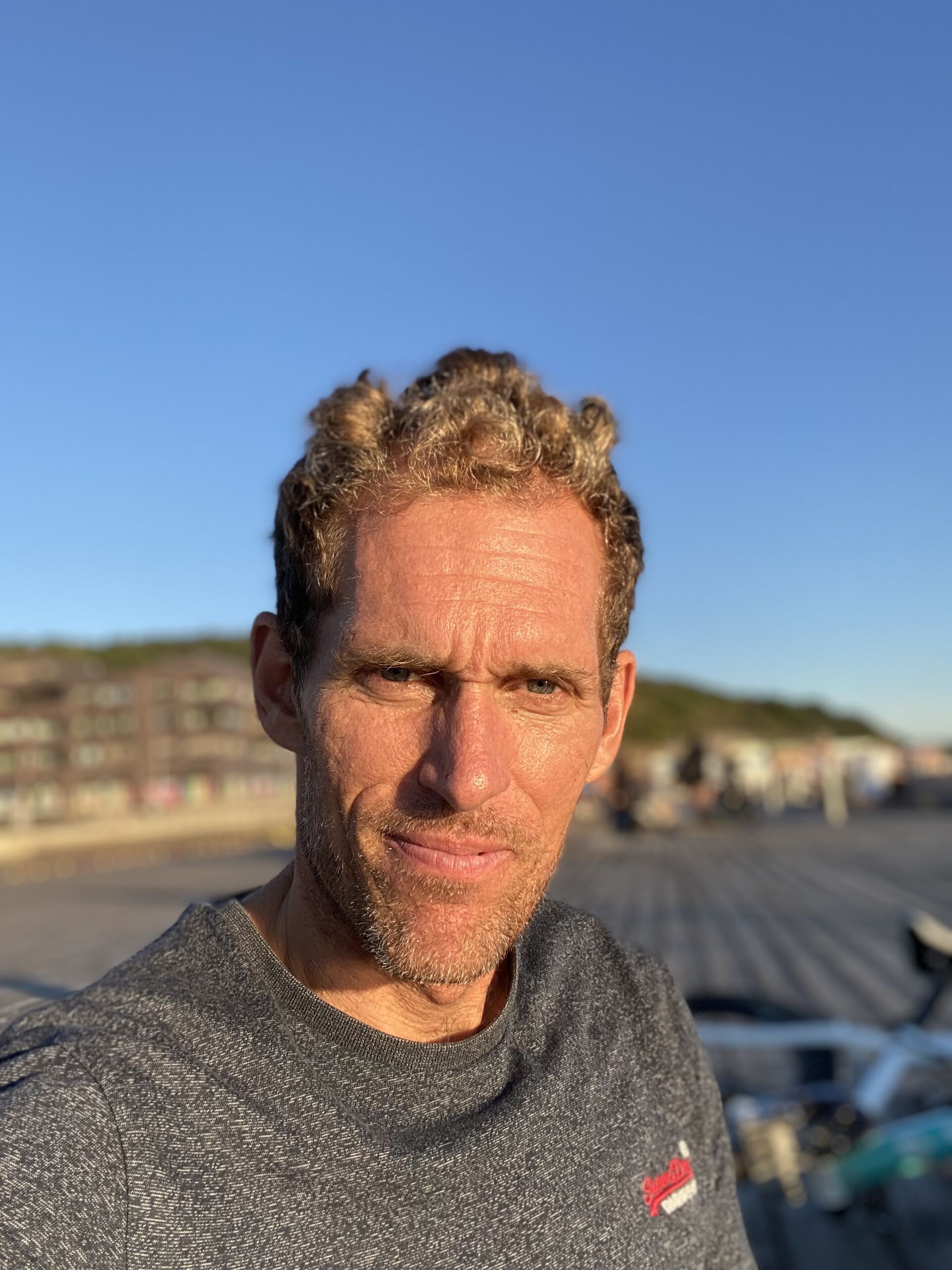
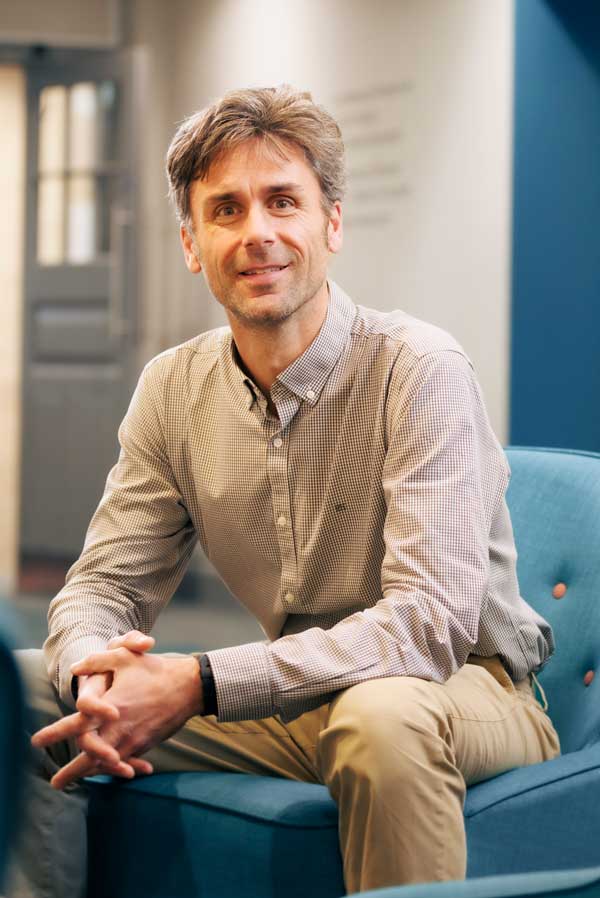
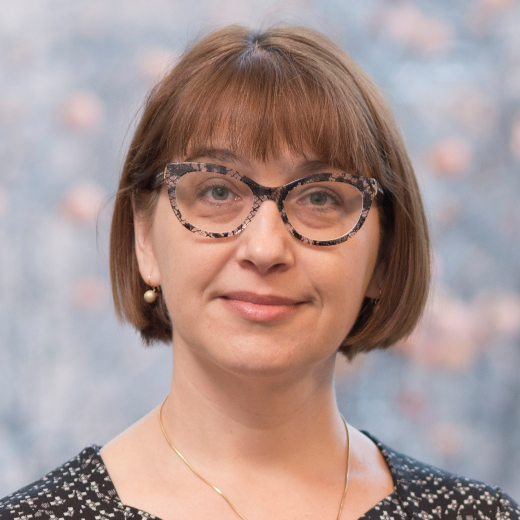
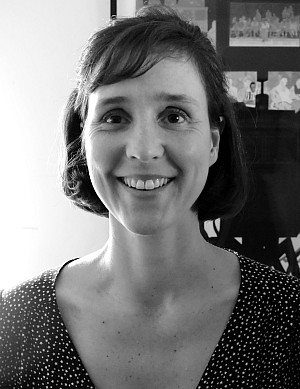
Dr. Wilbert Kadye is an Associate Professor at the Department of Ichthyology and Fisheries Science (DIFS) at Rhodes University . He completed his PhD in 2012 at Rhodes University, was appointed as a lecturer in 2015, promoted to senior lecturer in 2019, and further advanced to associate professor in 2023. His research focuses on freshwater ecosystems , particularly in community ecology , invasion biology , stream ecosystem functioning , and fisheries resource management . Education: BSc (Hons), MSc, PhD (Rhodes University) He is a co-investigator of the Ecology, Evolution and Systematics Group , a collaboration between DIFS and the South African Institute of Aquatic Biodiversity (SAIAB). His work also involves statistical analysis , numerical ecology , and collaborative research in taxonomy and molecular systematics of freshwater fishes . He serves as the third-year course coordinator. Scientific Awards Fellow of the DHET Future Professors Programme (FPP)
Katja Enberg serves as Professor and Deputy Head of the Department of Biological Sciences at the University of Bergen, Norway, where she leads research in the Theoretical Ecology Group. Her work bridges academic research, policy application, and sustainability education with a focus on marine ecosystems and fisheries management. Her research interests encompass: Marine Ecology and Fisheries Science Evolutionary Ecology, particularly fisheries-induced evolution Sustainable use of marine resources and ocean conservation Climate change impacts on marine ecosystems Digital technologies for fisheries monitoring (AI, stereo cameras, digital twins) Sustainable seafood systems and food security Science communication and public engagement on ocean issues Enberg's recent publications (2023-2025) reveal a strong emphasis on technology-driven approaches to fisheries sustainability, with significant attention to carbon footprint analysis of fishing practices, digital twin applications for fish welfare, and the integration of genetic data into marine conservation. Her work increasingly connects fisheries science with broader sustainability frameworks, particularly UN Sustainable Development Goal 14 (Life Below Water), while maintaining strong theoretical foundations in evolutionary ecology. She teaches several key courses related to ocean sustainability: SDG214: UN Sustainable Development Goal 14: Life below water BIO325: Ocean Science SDG200: Ocean-Climate-Society: Sustainability summer course Bergen Summer Research School: Science and Society towards the Sustainable Development Goals Notably, Enberg participated in the "One Ocean Expedition" teaching sustainability while sailing across the Pacific Ocean aboard Statsraad Lehmkuhl, bringing together 86 students from 62 study programs across 12,000 nautical miles. Her leadership in the NFR project "How can fisheries contribute more to a sustainable future?" (2021-2025) demonstrates her commitment to practical applications of marine science for sustainability challenges.
Dr. Robert de Vries is an Associate Professor at the Department of Chemical Biology and Drug Discovery , Utrecht Institute for Pharmaceutical Sciences , Utrecht University. His research focuses on the receptor binding specificity of influenza A viruses and other glycan-binding pathogens, with particular interest in mechanistic understanding of viral-host interactions , chemo-enzymatic glycan synthesis , and development of glycan arrays for specificity assays. His work has revealed key mutations in zoonotic influenza viruses through collaborations with structural biology groups (Ian Wilson, Rob Woods), combining X-ray crystallography , glycan modeling , and multivalent binding assays . He has received prestigious grants including an ERC Starting Grant (2018) , NWO VENI Fellowship , and Rubicon Fellowship . Key Research Themes: Influenza A virus receptor specificity Rotavirus and avian coronavirus glycan interactions Antiviral glycomimetics development Host sialic acid diversity in pathogenesis Notable Discoveries: Molecular basis for avian-human receptor switching in H5/H7 viruses Role of sialylated glycolipids in SARS-CoV-2 entry Evolutionary constraints in hemagglutinin glycosylation Novel influenza receptors in livestock species Scientific Recognition: Beijerinck Premium (2019) ESWI Best Body of Work Award (2020) ERC Proof of Concept Grants (2022, 2024) Mizutani Foundation Grant (2023) NWO XL Grant (2024) He supervises PhD students and collaborates with international institutions like Scripps Research Institute and University of Twente , with recent publications in Nature , PNAS , and Cell journals.
Alexander Eiler is a Professor at the University of Oslo's Institute of Biosciences, working within the Center for Biogeochemistry in the Anthropocene. His research integrates microbial ecology with biogeochemical processes to understand how microorganisms shape aquatic ecosystems and influence greenhouse gas dynamics in the context of climate change. His work combines advanced molecular techniques with traditional biogeochemical approaches to develop more predictive ecological frameworks. Dr. Eiler's research interests focus on microbial community dynamics in aquatic environments, particularly examining how microbes facilitate the storage, transport, and turnover of key elements that influence greenhouse gas production and water quality. His work spans diverse ecosystems from boreal lakes to thawing permafrost regions, addressing critical questions about climate change impacts on microbial processes. He employs cutting-edge approaches including environmental DNA (eDNA) metabarcoding, metagenomics, and stable isotope tracer studies to investigate microbial food webs and biogeochemical transformations. His recent publications reveal strong trends in climate change research, particularly examining microbial responses to permafrost thaw, glacial retreat, and anthropogenic disturbances. His work increasingly focuses on the intersection of microbial ecology with practical applications for environmental monitoring, conservation, and understanding climate feedback mechanisms. The research spans from fundamental microbial ecology to applied studies addressing antibiotic resistance, waste management, and water quality assessment. Dr. Eiler leads multiple significant research projects including Biogov (Biogeochemical processes governing boreal C cycling), Coastal Ecosystem Dynamics under anthropogenic pressures, MarMip (Impact of marine microplastics associated biofilms), and PEAT-THAW (Thawing permafrost peatlands). These projects reflect his commitment to addressing pressing environmental challenges through interdisciplinary research that bridges microbial ecology with climate science.
Sara Rodrigues Passos Rocha is a Researcher at the University of Vigo, Spain, affiliated with the Faculty of Biology, Department of Biochemistry, Genetics and Immunology, and the Marine Research Center. She leads the XB2 EVOLUTIONARY GENETICS AND BIODIVERSITY CONSERVATION research group, focusing on genetic mechanisms underlying biodiversity and evolutionary processes in marine and island ecosystems. Her research spans evolutionary genetics, biodiversity conservation, marine genomics, phylogeography, and speciation. She investigates genetic diversity patterns in marine species (e.g., European hake, cockles), island biogeography of reptiles (particularly geckos), and transmissible cancers in marine invertebrates. Her work integrates genomic, transcriptomic, and phylogeographic approaches to study adaptation, population declines, and conservation needs under climate change pressures. Analysis of her recent publications reveals dominant themes in marine cancer evolution (especially transmissible leukemias in bivalves), reptile dispersal mechanisms across oceanic barriers, and conservation genetics of vulnerable marine populations. Her research frequently employs next-generation sequencing to address speciation history, inbreeding effects, and human-mediated species invasions, with strong emphasis on Western Indian Ocean and European coastal ecosystems. Dr. Rocha actively contributes to the Marine Research Center of the University of Vigo through the XB2 research group, which conducts field and genomic studies on evolutionary adaptation and biodiversity conservation. Her collaborative projects span international teams studying marine genomics, island biogeography, and conservation strategies for threatened species.
Pung-Pung Hwang is a distinguished academic affiliated with two major institutions: Academia Sinica as a Research Fellow at the Institute of Cellular and Organismic Biology, and National Taiwan University as a Jointly-Appointed Professor in the Department of Life Science. Education: BSc in Zoology (1976) from National Taiwan University, Ph.D. (1984) from University of Tokyo. His research focuses on aquatic physiology , particularly molecular mechanisms of ion transport and osmoregulation in teleost fishes. Key areas include Na+ uptake pathways , acid-base regulation , and environmental adaptation strategies in freshwater systems. Publications demonstrate specialized expertise in gill physiology, branchial transporters, and responses to acidified environments. Recent publications (2022-2023) span topics including Na+-Cl− co-transporters, ammonia excretion under stress, and functional assays for acid secretion. These works appear in journals like Frontiers in Physiology and International Journal of Molecular Sciences , with keywords indicating intersections between molecular biology and aquatic environmental adaptation. Collaborators span international institutions including University of Michigan, National Chung Hsing University, and University of Manitoba. Current editorial roles include Chief Editor for Aquatic Physiology at Frontiers in Physiology.
Joana Katina is an Assistant Professor at the Faculty of Mathematics and Informatics, Vilnius University, Lithuania, teaching Internet Technologies and Algorithms and Data Structures continuously from 2016/2017 through 2025/2026 academic terms across multiple course formats including lectures, exercises, and subgroup sessions. Her research bridges computer science with energy systems and financial engineering, focusing on household energy behavior in Lithuania/Morocco, cryptocurrency forecasting using neural networks, Industrial Control Systems cybersecurity, and queueing theory. She integrates computational modeling with socio-technical analysis to address sustainability challenges and market prediction problems. Analysis of her 2023-2025 publications reveals a dominant trend toward renewable energy transitions (particularly waste-to-energy systems and cross-regional green strategies) combined with machine learning applications in finance. This evolution from earlier virtual stock exchange simulations demonstrates increasing interdisciplinary scope while maintaining core expertise in stochastic modeling and predictive analytics.
Dr Pedro Beltran-Alvarez is a Senior Lecturer in Health and Climate Change at Hull York Medical School (HYMS), University of Hull, where he serves as co-Director of the MSc Health and Climate Change program. His work explores the critical links between human health and climate change, identified by the WHO as the biggest health threat facing humanity. Dr Beltran-Alvarez completed his PhD at the University of Bristol (2004-2007) with funding from a Marie Curie grant, followed by postdoctoral research at the European Molecular Biology Laboratory (EMBL, Heidelberg, 2007-2009). He then worked at the Cardiovascular Research Centre at the University of Girona (2009-2014), where he held a Sara Borrell Postdoctoral Fellowship. He joined the University of Hull in 2015 as a Lecturer and was promoted to Senior Lecturer in 2022. His research focuses on protein post-translational modifications, particularly arginine methylation, and their role in biological responses to environmental changes with implications for human health. His work spans cardiovascular disease, brain tumors (particularly glioblastoma), and climate change impacts on biological systems, employing innovative approaches including tissue-on-chip technology. Analysis of his recent publications reveals a consistent focus on environmental factors and human health across diverse model systems from zebrafish and lizards to human clinical samples. Dr Beltran-Alvarez actively supervises PhD students working on cardiovascular disease, stress signaling in fish, and brain tumor research. His research has been supported by grants totaling over £147,000 from The Hull and East Riding Cardiac Trust and Yorkshire Brain Tumour Charity, in addition to internal university funding for his 'Happy Chemical Cluster' project. He contributes to the academic community as Editor of Amino Acids (Springer) in the Environmental Science section, serves on the Yorkshire and Humber Climate Commission, and acts as an external PhD thesis examiner, demonstrating his commitment to translating research into policy and practice.
Ari Löytynoja is a University Lecturer at the University of Helsinki , affiliated with the Faculty of Biological and Environmental Sciences and the Organismal and Evolutionary Biology Research Programme . His research integrates ecology, evolutionary biology, genetics, and computer science to address fundamental questions in genome evolution and population genetics. Research Interests: Evolutionary genomics and phylogenetics Population genetics of natural populations Genomic consequences of hybridization and speciation Bioinformatics tool development for sequence analysis Conservation genetics of endangered species His recent work (2022–2025) focuses heavily on genomic analyses of stickleback fishes and Arctic seals , exploring topics such as deleterious mutation dynamics, sex chromosome evolution, hybridization, and demographic history . Student Supervision & Mentorship: Primary or co-supervisor for multiple PhD students including Mikko Kivikoski, Xueyun Feng, and Andres Veidenberg Supervised MSc theses (e.g., Junru Dong) Active member of doctoral thesis committees and follow-up groups since 2015 Grants & Projects: Principal Investigator, Medical implications of short template-switch mutations (2025–2026), funded by the Research Council of Finland
Sanja Baric is a Professor at the Faculty of Agricultural, Environmental and Food Sciences of Free University of Bozen-Bolzano (unibz), Italy. Her research focuses on plant pathology , particularly chestnut blight and apple postharvest diseases , integrating molecular genetics and agricultural technology to enhance disease detection and management. Current projects address phytoplasma infections in apple trees and fungal pathogens in fruit crops. She teaches courses in plant protection and phytopathology for bachelor’s and master’s programs in Agricultural, Food and Mountain Environmental Sciences. Her publications emphasize genetic diversity of pathogens like Cryphonectria parasitica and Colletotrichum species , alongside innovative diagnostic tools such as knowledge-based Bayesian networks and duplex TaqMan assays . While no specific awards are listed, her work aligns with EU-funded collaborations and interdisciplinary agricultural research .
Stella Ebner serves as Associate Professor of Printmaking within the School of Art+Design at State University of New York at Purchase. Her academic journey includes a BFA from the University of Minnesota and MFA in Printmaking from the Rhode Island School of Design. She maintains active studio hours with Thursday appointments from 10:00-12:00. Professor Ebner's research centers on contemporary print media with specialization in woodcut, screenprinting, and Japanese woodblock techniques. Her artistic practice explores still life composition, domestic symbolism, and narrative through organic forms and everyday objects, often integrating botanical subjects with cultural commentary. Recent works examine agricultural systems, digital culture, and subcultural documentation through meticulous print processes. Her artistic output demonstrates consistent engagement with technical innovation in printmaking, with exhibitions at major institutions including the Bronx Museum of Arts, International Print Center New York, and SFMOMA Artists Gallery. The thematic evolution across her portfolio reveals deepening exploration of eco-critical perspectives and social narratives through print media. Chancellor’s Award of Excellence in Teaching (2024-25) Juanita and Joseph Leff Distinguished Professor (2018-2019) Kala Art Institute Fellowship Minnesota State Arts Board Artists’ Assistance Fellowship Ebner maintains an active studio practice supported by prestigious residencies at MI-LAB (Japan), Tamarind Institute, Lower East Side Printshop, and Kala Art Institute. Her work is held in significant collections including the Cleveland Museum of Art and Minnesota Museum of American Art. She teaches courses including Screenprint, Woodcut, Japanese Woodblock, and Special Topics in Printmaking.
Sjannie Lefevre is an Associate Professor in the Department of Biosciences at the University of Oslo, Norway, where she works in the Section for Physiology and Cell Biology (FYSCELL). She co-leads the Adaptations - Lefevre-Nilsson research group with Professor Göran E. Nilsson, focusing on comparative physiology with particular emphasis on respiratory and cardiovascular adaptations in animals. Dr. Lefevre's educational background includes a PhD in Zoophysiology from Aarhus University, Denmark (2012), preceded by M.Sc. and B.Sc. degrees from the same institution. Her research career has progressed from postdoctoral positions funded by the Carlsberg Foundation and the Research Council of Norway to her current Associate Professor position. Current Position: Associate Professor (2020-present), Department of Biosciences, University of Oslo Previous Positions: Group Leader (2017-2020), Postdoctoral Fellow (2014-2017), Researcher (2012-2014) Education: PhD in Zoophysiology, Aarhus University (2012) Dr. Lefevre's primary research interests center on comparative respiratory physiology, particularly in fish. Her work spans from whole-animal physiology to molecular mechanisms, with a special focus on the anoxia-tolerant crucian carp and its ability to survive without oxygen and subsequent re-oxygenation stress. She employs advanced techniques including metabolomics, transcriptomics, translatomics, single-cell RNA sequencing, and spatial transcriptomics. Additionally, she investigates the effects of climate change on coral reef fish and other marine organisms. Her recent publications reveal a strong trend toward molecular approaches to understand physiological adaptations, particularly in the context of oxygen regulation. The research shows increasing sophistication in analytical methods, moving from whole-animal respirometry to cutting-edge genomic and proteomic techniques that allow examination of tissue-specific and cell-type-specific responses to environmental challenges. Research Council of Norway Researcher Project (2021) Research Council of Norway Young Research Talent Grant (2017) Nansen Foundation Grants (2015, 2013) Carlsberg Foundation Individual Postdoctoral Fellowship (2013-2014) Dr. Lefevre serves as convenor for the Comparative Physiology Special Interest Group of the Scandinavian Physiological Society and has been nominated as commission chair of "C-VII Comparative Physiology: Evolution, Adaptation & Environment", joining the council of the International Union of Physiological Sciences. She has also worked as an academic editor for Biology Open and contributed to interdisciplinary projects examining hypometabolism in crucian carp. She teaches several advanced physiology courses including Human Physiology (BIOS3800), Comparative and Ecological Physiology (BIOS5810/BIOS9810), and Advanced Physiology and Neurobiology (BIOS5812/BIOS9812), demonstrating her commitment to education alongside her research endeavors.
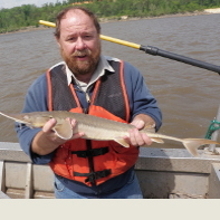
Edward J. Heist is a Professor in the Department of Zoology at Southern Illinois University Carbondale . His research focuses on Conservation Genetics , Population Genetics , and Fish Molecular Ecology . He teaches courses including Marine Biology (Zool 385), Molecular Genetics Techniques (Zool 579), Conservation Genetics (Zool 584), and Evolution (Zool 510). His academic background includes a Ph.D. from the College of William and Mary. Recent publications highlight his work on endangered sturgeon species, landscape genetics of terrestrial mammals, and molecular marker development. His lab integrates genetic tools across marine and freshwater ecosystems, emphasizing Wildlife conservation Population connectivity Reproductive ecology Habitat fragmentation impacts .
Professor John Stewart is an evolutionary palaeoecologist at Bournemouth University, specializing in the use of faunas to reconstruct Pleistocene-Holocene ecologies and study species responses to environmental change. His work bridges ancient DNA analysis, climate modeling, and conservation biology. Research Focus: Ice age refugia, molecular biogeography, Quaternary data applications in conservation, and Neanderthal-environment interactions. Key Collaborations: Ancient DNA practitioners, European paleontological teams, and conservation institutions like Natural England. Students: Includes Jacqueline Pitt (ecology of chickens), Oxala García-Rodríguez (phylogeography), Becca Rickard (bird-climate links), and Monika Knul (mammalian range dynamics). His recent publications focus on genetic diversity in cold-adapted species, human-driven ecological changes, and applications of ancient DNA to historical biogeography. Grants from the Leakey Foundation and EU-funded synthesis projects support his interdisciplinary work at sites like Trou Al'Wesse (Belgium) and Tolbor 16 (Mongolia).
Dr. Andreas Kotula is a postdoctoral researcher at the Department of Prehistory and Early History, University of Göttingen, since July 2019. His work focuses on Late Mesolithic and Neolithization in Northern Central Europe, with expertise in wetland archaeology, taphonomy, and digital methods. Spätmesolithikum in Nordmitteleuropa Neolithisierung und kultureller Wandel Feuchtbodenarchäologische Analysen GIS-gestützte Methoden Research publications highlight his work on Mesolithic burials at Groß Fredenwalde, pottery analysis at Dąbki, and application of LiDAR technology in Lower Saxony. His studies span from Ice Age settlements in Harz caves to digital stratigraphic analysis of Stone Age sites. Current affiliations include the DFG-funded project on Groß Fredenwalde burials and collaborations with international archaeologists across Germany and Poland. Publications demonstrate interdisciplinary approaches combining material science with cultural studies, particularly examining pottery residue and regional exchange patterns.