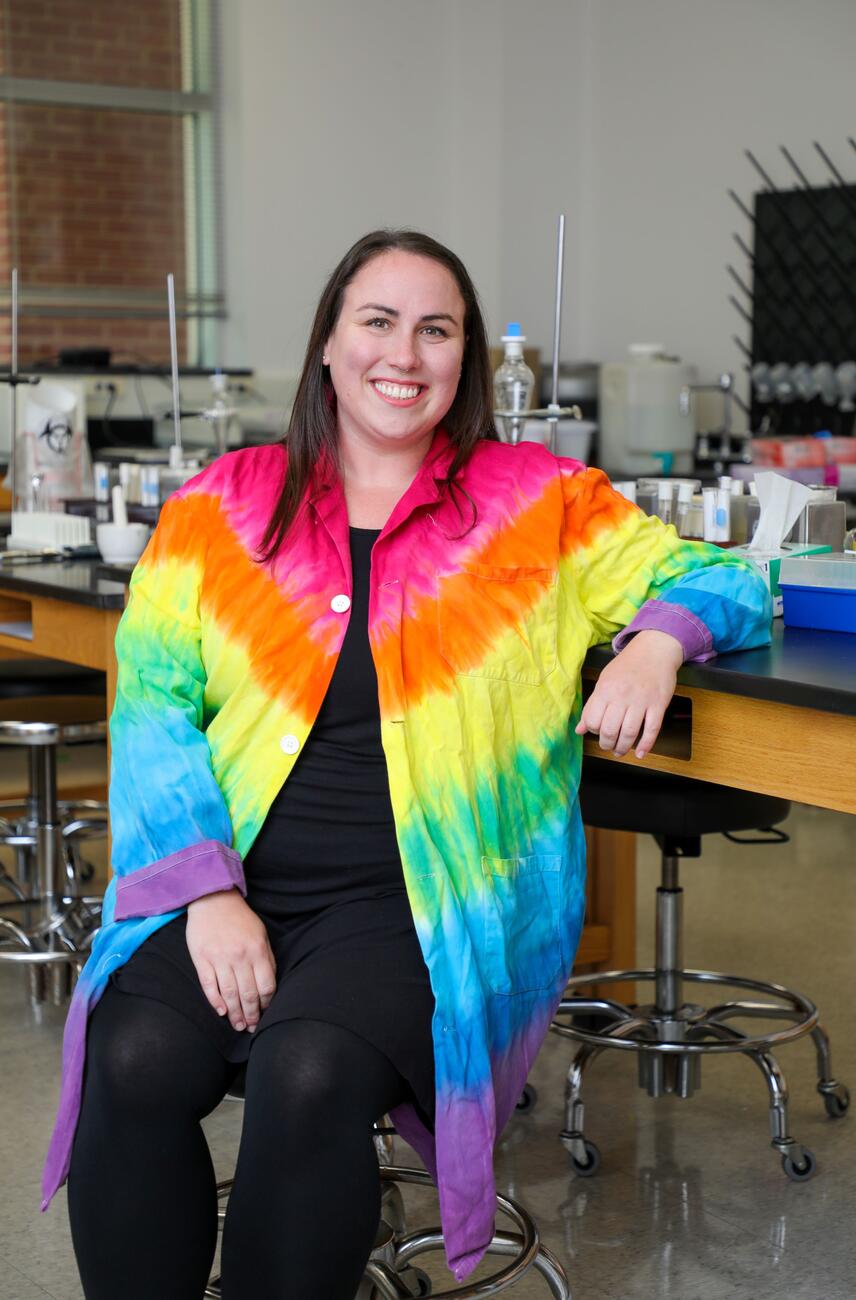
Miriam Ashley-RossView profile
Professor
Miriam Ashley-Ross is a Professor in the Department of Biology at Wake Forest University, where she conducts research in functional morphology, biomechanics, and comparative physiology. Her work bridges evolutionary biology and neurobiology, focusing on the mechanics of animal movement across diverse species including salamanders, tarantulas, and fish. B.S., Northern Arizona University (1988) Ph.D., University of California, Irvine (1994) Her research explores how animals move in different environments, particularly during evolutionary transitions such as the shift from aquatic to terrestrial locomotion. Using techniques like high-speed video and electromyography, her lab investigates the functional basis of behaviors such as tail-flip jumps in fish, prey capture in archer fish, and postural recovery in tarantulas. She emphasizes experimental approaches that link anatomy, physiology, and behavior. The recent publications highlight a consistent focus on the biomechanics of locomotion and behavioral adaptation. Key themes include the evolution of terrestrial movement in fish, the neuromuscular control of escape responses, and the functional morphology of fins and limbs. These studies often involve collaborative work and student participation, reflecting an integrative and educational research model. While no specific scientific awards are listed in the provided text, her sustained research output and leadership of an active lab indicate a distinguished academic career. She advises both graduate and undergraduate students, many of whom are co-authors on her publications. Her lab is equipped for advanced biomechanical analysis and is actively involved in externally funded research, with recent proposals funded in 2025. She collaborates with institutions such as Northern Arizona University and Vassar College, extending the reach of her research program. The Ashley-Ross Lab focuses on understanding the mechanistic basis of animal behavior, particularly in locomotion and prey capture. The lab uses a comparative approach across species to uncover general principles of movement and adaptation.