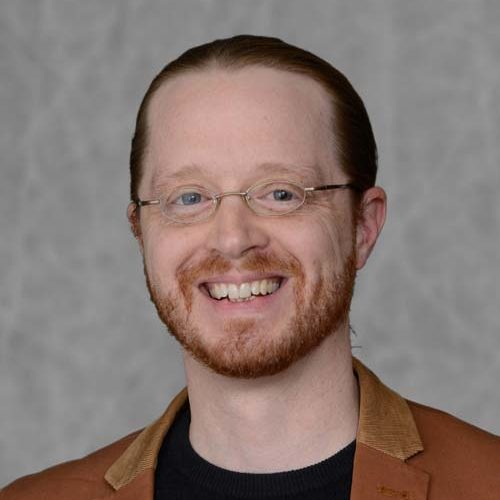
Dr. Michael Alfaro is a Professor in the Department of Ecology and Evolutionary Biology at UCLA, where he leads the UCLA Alfaro Lab. His research focuses on understanding evolutionary dynamics of organismal diversification, particularly in marine fishes. He employs interdisciplinary approaches combining evolutionary morphology, molecular phylogenetics, and theoretical evolution to explore patterns and mechanisms of morphological and functional diversity. Education: Ph.D. in Evolutionary Biology, University of Chicago (2000) M.A. in Biology, Humboldt State University (1995) B.A. in Dramatic Arts, University of California, Davis (1989) Research interests emphasize the interplay between morphological diversity and ecological/functional dynamics. Notable themes include the drivers of diversification in marine lineages, the role of physiological traits in lineage success, and the integration of computational tools for large-scale phenotypic analysis. Alfaro has contributed to advancements in phylogenetic methodology and genomic resources for studying fish evolution. His work bridges macroevolutionary theory with empirical data, often leveraging crowdsourced phenotypic data and bioinformatics tools like Sashimi and Charisma for high-throughput analysis. The lab actively engages in collaborative projects addressing biodiversity patterns and evolutionary mechanisms across marine and terrestrial systems. Grants and advising activities are central to his academic contributions, though specific details are not detailed in the provided text. The UCLA Alfaro Lab collaborates internationally, emphasizing both basic research and applied conservation contexts.
Anssi Laurila is a Professor in the Department of Ecology and Genetics, specializing in Animal Ecology at Uppsala University, Sweden. His research integrates evolutionary biology and ecology to explore the mechanisms underlying phenotypic and genetic variation in natural populations, particularly amphibians. His primary research interests include phenotypic plasticity , local adaptation , maternal effects , life-history evolution , and genomic responses to environmental gradients such as latitude, temperature, acidity, and predation. He investigates how populations adapt to heterogeneous environments through both plastic and genetic mechanisms, often using comparative studies across latitudinal clines and contrasting habitats. His work frequently focuses on amphibians like Rana temporaria , Rana arvalis , and Bufo bufo , as well as other ectotherms including freshwater snails and fish. The trends in his recent publications (2020–2025) show a strong emphasis on genomic and transcriptomic analyses of adaptation, host-pathogen interactions (especially with Batrachochytrium dendrobatidis ), immunogenetics (MHC diversity), conservation genetics of edge populations, and acclimation physiology . His studies often combine field observations with controlled experiments and molecular techniques, contributing to understanding evolutionary responses to climate change and anthropogenic stressors. No scientific awards are explicitly mentioned in the provided text. Dr. Laurila actively collaborates with researchers across Europe and supervises or co-supervises numerous studies, as evidenced by his consistent presence as a senior or corresponding author. While specific grant details are not listed, his extensive publication record in high-impact journals suggests sustained funding for research in evolutionary ecology and conservation. His work has implications for biodiversity conservation, particularly in the context of climate change and emerging infectious diseases. He is involved in research on amphibian microbiomes, thermal adaptation in geothermal systems, and the genetic basis of adaptive traits. His team explores how environmental stressors shape phenotypic and genetic variation, with a focus on understanding the limits and costs of plasticity and adaptation.
Barbara Fischer is an Elise Richter Fellow and Lecturer at the University of Vienna, Department of Evolutionary Biology. Her research investigates the evolutionary biomechanics of human childbirth, combining geometric morphometrics, comparative anatomy, and evolutionary modeling to resolve the 'obstetric dilemma'. Key contributions include the cliff-edge model of obstetric selection explaining rising Caesarean rates, analyses of sexual dimorphism in hominin pelves, and methods for skeletal age estimation using pubic symphysis morphology. Comparative work extends to Darwin's finches' self-medication behaviors and stickleback adaptation plasticity. She develops statistical approaches for morphological integration studies and teaches biostatistics, mathematical biology, and evolutionary medicine. Recognized with an Elise Richter Fellowship and science communication awards.
John Eadie is a Professor and the Dennis G. Raveling Endowed Chair in Waterfowl Biology at the University of California, Davis, affiliated with the Department of Wildlife, Fish and Conservation Biology in the College of Agricultural and Environmental Sciences. He has been at UC Davis since 1995, progressing from Assistant Professor to Distinguished Professor in 2022. Colleagues praise his humility, clarity in teaching, and dedication to supporting underrepresented students through initiatives like the Wood Duck Internship Program, which he founded in 2003 and has engaged over 500 students. Eadie’s research integrates behavioral ecology, population dynamics, and conservation strategies for waterfowl and wetlands. He emphasizes the importance of preserving wetlands and addressing climate change, drought, and urbanization impacts. His work includes agent-based modeling for habitat and harvest management and studies on conspecific brood parasitism, nest survival, and migratory patterns. Recent articles highlight innovative approaches to understanding stress responses in captive birds and ecological effects of agricultural practices. In 2023, he received the UC Davis Teaching Prize, donating the $60,000 award to establish a scholarship promoting diversity in wildlife biology. He also contributed to the North American Waterfowl Management Plan, serving as a leader in its Continental Assessment Team. Eadie’s advising and mentorship are pivotal in shaping the next generation of conservationists, while his participation in the Avian Sciences and Animal Behavior Graduate Groups expands his academic impact. His advocacy for diversity in conservation professions underscores his commitment to equitable representation. Eadie collaborates on projects such as the SWAMP agent-based model for wetland management and explores genetic admixture in endangered species like the Hawaiian duck. His legacy combines rigorous scholarship with a passion for education, reflecting his belief that conservation requires both scientific insight and inclusive mentorship.
William E. Bemis is a Professor of Ecology and Evolutionary Biology and Faculty Curator of Ichthyology at Cornell University's Museum of Vertebrates. He holds a B.A. from Cornell (1976), M.S. from University of Michigan (1978), and Ph.D. from UC Berkeley (1983). His research focuses on vertebrate anatomy, evolutionary patterns, and organismal biology, with specializations in teleost fishes, fossil records, and comparative morphology. He has extensively studied sharks, lungfishes, coelacanths, and sturgeon conservation. Bemis teaches courses in vertebrate biology, anatomy, and paleontology, and co-developed an edX MOOC on shark biology. His work employs advanced imaging techniques like micro-CT and histology. Research highlights include investigations into suction feeding mechanisms, tooth development, and functional morphology of aquatic organisms. He has conducted fieldwork in over 50 global collections and served as director of Shoals Marine Laboratory. His lab focuses on integrating anatomical studies with evolutionary questions, emphasizing specimen-based research. Bemis collaborates internationally and has contributed to major textbooks like Vertebrate Life . Current projects explore morphological adaptations in deep-sea species and evolutionary innovations in fish feeding systems. Key academic contributions include over 100 peer-reviewed publications, mentoring numerous graduate students, and preserving biodiversity through museum curation. His research bridges paleontology and modern ecology, shaping understanding of fish evolution and conservation strategies.
Dr. W. James Cooper is an Assistant Professor in the Department of Biology at Western Washington University, with a joint appointment in the Marine and Coastal Science program. He holds a PhD from the University of Chicago and previously served as faculty at Washington State University. His research focuses on evolutionary developmental biology, integrating studies of fish feeding mechanics, skull development, and ecological diversification. Key areas include the role of developmental constraints in evolution, the interplay between genetics and biomechanics, and the use of zebrafish as model organisms. Education: BS and MS from Florida State University (1991, 2000), PhD from University of Chicago (2006), postdoctoral training at Syracuse University (2007-2011). Research interests span Evo-Devo studies, cranial morphogenesis, and the evolutionary drivers of trophic niche specialization. His lab employs techniques such as morphometric analyses, high-speed videography, and molecular genetics to explore how developmental processes shape evolutionary trajectories. Recent work emphasizes larval fish in the Salish Sea and experimental models of zebrafish development. Advising and mentoring include undergraduate and graduate students, with notable contributions to collaborative projects on damselfish phylogeny and cichlid skull evolution. His research has been published in journals like Evolution & Development , Journal of Experimental Biology , and Molecular Phylogenetics and Evolution . Labs/Teams: Cooper Lab at WWU, focusing on integrative approaches to Evo-Devo and marine science. Ongoing collaborations include work on thyroid hormone regulation in zebrafish and comparative studies of fish diversification.
Reade Roberts is an Associate Professor and University Faculty Scholar at North Carolina State University's Department of Genetics, serving as Director of the Graduate Program in Genetics. His research focuses on evolutionary genetics, particularly in cichlid fishes, exploring topics such as sexual conflict, genomic architecture, and ecological adaptation. He leads the Genetics and Genomics Academy (GGA) and collaborates with institutions like the Center for Human Health and the Environment (CHHE) and the Functional Genomics group. His work integrates genomics, developmental biology, and ecology to understand how genetic variation drives morphological and behavioral adaptations. Notable contributions include studies on sex determination mechanisms, trophic adaptation in cichlids, and the genomic basis of pigmentation patterns. Roberts has received the 2020 University Faculty Scholar award recognizing his academic excellence. His research also extends to conservation biology, analyzing microbiome stability in ex situ cheetah populations and investigating mutation dynamics in Chernobyl dogs. He promotes STEM education through immersive research programs for students.
Ainhoa Agorreta Calvo is a faculty member at the Department of Zoology and Physical Anthropology, Complutense University of Madrid. She earned her PhD in 2013 from Universidad de Navarra with a thesis on Molecular phylogenetics of gobioid fishes , supervised by Dr. Rafael Miranda Ferreiro and Dr. Lukas Rüber. Her research spans molecular evolution, phylogenetics, and ecomorphological adaptations in aquatic organisms. Primary Affiliation: Complutense University of Madrid, Faculty of Zoology and Physical Anthropology PhD Institution: Universidad de Navarra Her research focuses include: Evolutionary ecology of amphibious fishes (mudskippers) Phylogenetic analysis of gobioid fishes Molecular adaptation in aquaporins and podoplanin genes Brain size evolution in insects (e.g., bees) Coastal geomorphology and intertidal ecology Key article trends involve: Phylogenetic methods and genomic data processing Water-to-land transition mechanisms Positive selection in adaptive genes Ecological-morphological correlations in fish species
Stephan Lautenschlager is an Associate Professor in Palaeobiology at the University of Birmingham's School of Geography, Earth and Environmental Sciences. His research focuses on functional morphology and biomechanical analysis of extinct vertebrates, applying computational techniques to restore fossil morphology and reconstruct biological functions. He specializes in dinosaurs, birds, crocodiles, and mammals, with projects including the evolution of herbivory in archosaurs and brain morphology in vertebrates. Education: Diploma in Geology/Palaeontology (Ludwig-Maximilians-Universität, Munich) PhD in Palaeontology (University of Bristol) Research Interests: Stephan’s work integrates digital restoration, biomechanical modeling (FEA/MDA), and CT scanning to investigate form-function relationships in fossils. Key areas include fossil soft-tissue reconstruction, evolutionary biomechanics, and computational paleontology. His research highlights how computational methods bridge gaps in understanding extinct organisms’ behavior and ecology. Publications: Recent work includes studies on stem gnathostomes, saber-toothed predators, and dinosaur visual capabilities. These contributions underscore the application of advanced digital tools to address evolutionary and ecological questions in vertebrate paleontology. Advising & Grants: While specific grants are not detailed, his postdoctoral research at Bristol (2013–2016) and prior roles reflect engagement with funded projects. He advises students on computational and morphological research in palaeobiology. Labs/Teams: Active within the School’s Palaeobiology and Earth Sciences research groups, contributing to interdisciplinary projects on vertebrate evolution and fossil reconstruction.
Kjartan Østbye is a full Professor at the University of Inland Norway (INN), based at the Faculty of Applied Ecology, Agricultural Sciences and Biotechnology within the Department of Forestry and Wildlife Management . He is an active member of the research group E4 – Evenstad ecology, evolution and environment , contributing to internationally recognised research in ecology, conservation genetics and fish biology. Research interests revolve around how freshwater organisms adapt to environmental change. His work integrates evolutionary ecology , landscape genetics and ecotoxicology to investigate: adaptive divergence and speciation in post-glacial fishes (sticklebacks, whitefish, Arctic charr); genetic consequences of habitat fragmentation on amphibians and mammals; mercury biomagnification and amino-acid dynamics in subarctic lake food webs; remote-sensing approaches to predict habitat properties and inform conservation. Across more than 50 peer-reviewed publications since the early 1990s, his research exhibits a clear trajectory: early ecotoxicological studies on aluminium toxicity in salmonids evolved into sophisticated genomic and modelling approaches that illuminate how landscape structure, predation regimes and climatic gradients shape biodiversity. Recent work couples field sampling with next-generation sequencing and GIS-based habitat modelling to forecast species distributions under future climate scenarios. Scientific awards & recognition : while specific honours are not listed in the provided text, the volume and impact of his publications (many in top ecology and evolution journals) indicate sustained international recognition. Advising & grants : the extensive publication record implies supervision of numerous graduate students and post-doctoral researchers; however, individual student names are not supplied in the text. External funding has supported large-scale comparative studies across Scandinavian lakes and long-term translocation experiments with Arctic charr. Laboratory & field teams : work is centred at INN’s Evenstad campus, with active field programmes in boreal and subarctic lake systems and collaborations extending to Sweden and beyond.
Dahiana Arcila is an Assistant Professor at UC San Diego's Scripps Institution of Oceanography in the Marine Biology department. Her research employs genomic and morphological approaches to study the evolutionary history of marine fishes, with particular focus on phylogenetic relationships, biogeographic patterns, and adaptations to deep-sea environments and past climate change events. Education: B.S., Universidad del Quindío, Colombia PhD, The George Washington University Dr. Arcila leads the Fish Evolution Lab, where her team investigates fundamental questions about fish diversification using cutting-edge genomic technologies and comparative methods. Her research program bridges paleontology, developmental biology, and computational genomics to understand how environmental changes shape biodiversity. Recent publications demonstrate Arcila's focus on deciphering evolutionary patterns in diverse fish groups through phylogenomic approaches. Her work consistently explores themes of adaptive radiation, genomic adaptation, morphological innovation, and the impact of historical climate events on marine diversification. These studies employ diverse methodologies from micro-CT scanning to genome-wide selection scans.
Fabien Locher is a CNRS Research Fellow at the École des Hautes Études en Sciences Sociales (EHESS), affiliated with the Centre de Recherches Historiques (CRH) where he leads the Research Group in Environmental History (GRHEN). Based in Paris at 54, boulevard Raspail, he serves on multiple prestigious academic bodies including the Office of the Scientific Council of INSHS, the jury of section 53 of the CNRS, and the Laboratory Council of the Historical Research Center (UMR8558). He is also a member of the Board of Directors of RUCHE (the network of French environmental historians) and participates in the scientific council of the ANR LIFEDEEPER project and the interdisciplinary GDR OMER (Ocean and SEAs). Locher's research focuses on the long history of climate change knowledge from the 15th to 21st centuries, commons and global commons history, ecological thought history including population and neo-Malthusianism, geosciences history (particularly atmosphere, climate, seas and oceans), and 20th century environmental history of marine environments. His work bridges historical analysis with contemporary environmental concerns, examining how past understandings shape present approaches to environmental governance. His most recent publications include 'Chaos in the Heavens. The Forgotten History of Climate Change' (2024) with Jean-Baptiste Fressoz, continuing his exploration of historical climate understanding that began with 'The Revolts of the Sky' (2020). His research shows a clear trajectory examining how societies have historically conceptualized and governed environmental resources, particularly focusing on property relations and commons management across different historical periods and geographical contexts. Locher has led significant research projects including the ANR GOVENPRO project (2014-2018) on environmental governance through property rights across Europe, the United States, and post-colonial worlds from the late 18th century to present, and the 'War and Environment in the 20th Century' project (2014-2017) funded by the Île-de-France Sustainable Development Research Network. His scholarly contributions reveal a consistent focus on the intersection of environmental knowledge systems, governance structures, and historical change, with particular attention to how concepts of property and commons have shaped human relationships with atmospheric and marine environments throughout history.
Katie McGhee is an Associate Professor in the Department of Biology at Sewanee: The University of the South, where she has been teaching and conducting research since Fall 2015. She previously held postdoctoral positions at the University of Cambridge (2013-2015) and the University of Illinois (2009-2015). Her research focuses on behavioral ecology, particularly how early environmental experiences shape behavioral variation in fish species. McGhee earned her PhD from Florida State University under advisor Dr. Joseph Travis, following an MSc also at Florida State University with Dr. Don Levitan. Her academic journey has taken her from large research universities to a small liberal arts college setting, where she has adapted her teaching and research approaches to maximize undergraduate involvement. Dr. McGhee's research centers on how parental and early-life experiences affect behavioral development in fish. Using primarily the mangrove rivulus (Kryptolebias marmoratus), a self-fertilizing hermaphroditic fish, she investigates transgenerational effects of stress, predator exposure, and social interactions on offspring behavior. Her work explores how these early experiences influence risk assessment, exploration, mate choice, and other behavioral traits across generations. She approaches these questions from both ecological and evolutionary perspectives, examining how behavioral plasticity might serve as an adaptive response to environmental challenges. Analysis of McGhee's recent publications reveals a consistent focus on transgenerational effects of environmental stressors on fish behavior. Her work spans multiple model systems including mangrove rivulus, threespine stickleback, and mosquitofish, with particular attention to how parental experiences with predation risk shape offspring behavior. A notable trend is her increasing use of genetically controlled systems to isolate environmental effects, as well as her growing emphasis on the interaction between genetic background and early environmental experiences. Highlighted in a New Faculty Profile by the Society for the Study of Evolution Associate Editor for Proceedings of the Royal Society (Biological Sciences) Editor for Animal Behaviour (until 2024) Multiple papers featured as highlighted articles by journal editors Research featured in Nature Dr. McGhee is deeply committed to undergraduate research mentorship. She has guided numerous students through independent projects, many of which have resulted in publications where students are first authors. Her mentoring philosophy emphasizes building student confidence while providing constructive guidance, recognizing the importance of creating a safe space for students to learn through experimentation and occasional failure. She has successfully adapted her research program to thrive in a small liberal arts college environment without graduate students, focusing on projects that can be accomplished with undergraduate researchers. The McGhee lab operates within Sewanee's unique environment - a small liberal arts college with fewer than 1,800 undergraduate students situated on the Cumberland Plateau in Tennessee, surrounded by over 10,000 acres of university-owned wilderness. This setting provides rich opportunities for both field and laboratory research, with easy access to diverse aquatic habitats where many of her study species are found. Her lab has produced research on topics including parental effects on offspring behavior, risk assessment in fish, mate choice, and chemical communication, with particular emphasis on the mangrove rivulus system.
Peter Wainwright is a Professor and Department Chair in the Department of Evolution and Ecology at the University of California, Davis. His research focuses on vertebrate evolution, functional morphology/biomechanics, and ecological physiology, with a particular emphasis on fish systems. He leads the Wainwright Lab, studying evolutionary innovations in feeding mechanisms, body shape diversification, and ecological adaptation in marine and freshwater environments. His work integrates phylogenomic analyses, biomechanical experimentation, and comparative methods to explore how functional traits drive diversification. Key themes include the role of key innovations (e.g., pharyngeal jaws) in enabling evolutionary radiations, the impact of habitat complexity on morphological evolution, and the interplay between locomotion, diet, and body shape in reef fishes. Wainwright’s recent publications highlight breakthroughs in understanding coral reef fish diversification, the evolutionary lability of feeding systems, and the ecological drivers of body shape variation. His research bridges macroevolutionary patterns with organismal-level adaptations, offering insights into how form and function evolve in response to ecological challenges. Labs/Teams: Wainwright Lab (UC Davis).
Dr. Emily Naylor is an Assistant Professor in the Department of Biology at James Madison University since 2022. Her research focuses on animal locomotion through biomechanical, evolutionary, and ecological perspectives, emphasizing interactions between small-bodied vertebrates (lizards, frogs, fishes) and their environments. Techniques include high-speed videography, scanning electron microscopy, and respirometry. She teaches BIO 270L (Human Physiology Lab) and BIO 290L (Human Anatomy Lab). Education : - PhD in Evolution, Ecology, & Organismal Biology, University of California, Riverside (2020) - BS in Biological Sciences, Ohio University (2013) Research Interests : Her work investigates how environmental variation impacts locomotion, performance, and behavior. Key themes include substrate interactions, adhesive systems in geckos, and evolutionary adaptations in amphibians and reptiles. The Naylor Lab uses interdisciplinary methods to study fine-scale organism-environment dynamics. Labs/Teams : The Naylor Lab explores locomotor diversity and ecological pressures, spanning morphology, biomechanics, and behavior. Techniques include GPS data modeling, high-resolution imaging, and field observations. They prioritize understanding how phenotypic and environmental variation shape movement strategies.