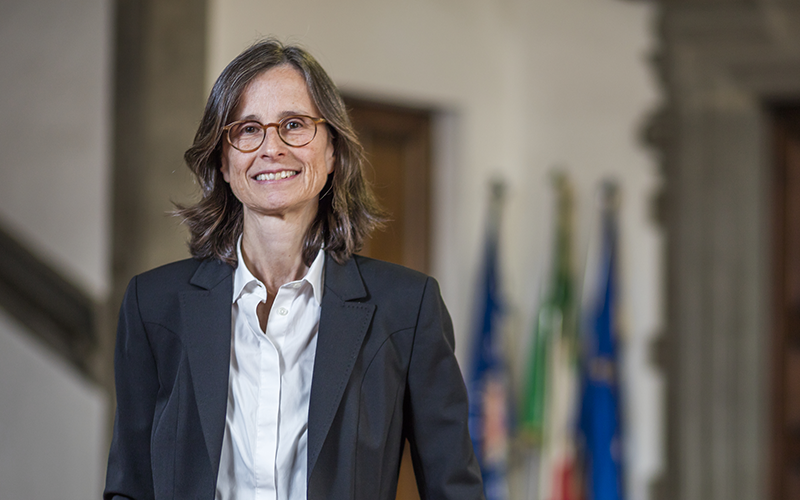
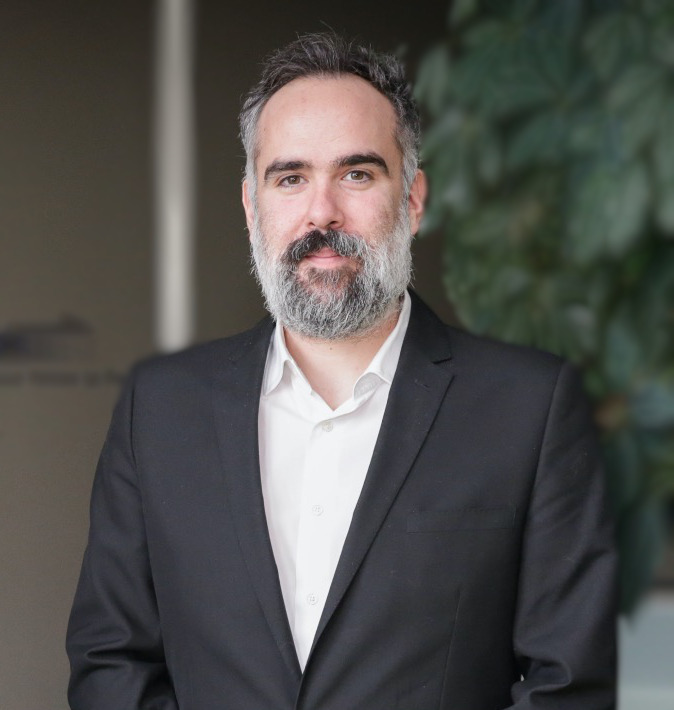
Yu Fen Hsiao is a Part-Time Lecturer in Chinese language instruction at George Mason University since Fall 2021, teaching Mandarin from a background at Sun Yat-sen University (Taiwan). She has prior teaching experience at Linnaeus University (Sweden), Trinity University of Asia (Philippines), and Manila Science High School. Education : Implied expertise in materials science through publications, though formal degrees are not specified in the provided text. Research Interests : Span materials science, focusing on nanocrystalline alloys, grain boundary diffusion, atomistic simulations, and thermodynamic stabilization of microstructures. Her work bridges mechanical engineering and computational modeling. Publications highlight trends in nanotechnology, grain boundary dynamics, and machine learning potentials for materials modeling. Scientific awards include the NSF-BSF grant for metallic nanoparticle research.
William Schneider is the Dorini Family Chair of Energy Studies and Professor and Chair of the Department of Chemical and Biomolecular Engineering at the University of Notre Dame’s College of Engineering. He is also a Concurrent Professor in the Department of Chemistry and Biochemistry, reflecting his interdisciplinary expertise across chemical engineering and chemistry. Education: Ph.D., Ohio State University (1991) B.Sc., University of Michigan-Dearborn (1986) Research Interests: Professor Schneider’s research group employs state-of-the-art first-principles molecular simulations, primarily density functional theory (DFT), to investigate heterogeneous surface reactivity and catalysis. His work addresses critical challenges in energy production and environmental protection, including catalytic removal of NOx emissions, conversion of shale gas, fuel cell catalysis, and plasma-enhanced chemical transformations. The group bridges chemical engineering, chemistry, physics, environmental science, and materials science to deliver molecular-level insights that guide catalyst design and process optimization. Scientific Awards: Giuseppe Parravano Memorial Award for Excellence in Catalysis Research & Development (2018) Fellow, American Association for the Advancement of Science (AAAS) (2011) BP Foundation Outstanding Teacher Award for the College of Engineering (2009) Group & Collaborations: The Schneider Research Group operates within the Computational Environmental Catalysis theme at Notre Dame. The team collaborates broadly with experimental groups worldwide to validate predictions and accelerate technology deployment. Group resources include a GitHub organization hosting code repositories, standard operating procedures, and course materials, alongside a dynamic seminar schedule and open positions for graduate students and postdocs.
Jorge Kohanoff is a Visiting Professor at Queen’s University Belfast's School of Mathematics and Physics, affiliated with the Research Centre in Sustainable Energy. His work spans theoretical and computational physics, focusing on materials science and sustainable energy applications. Research interests include Electronic structure calculations Thermoelectric materials Real-time electron dynamics Nanotechnology for biomedical and energy applications Radiation effects on materials Climate change mitigation via material innovation Recent research outputs highlight his expertise in Density Functional Theory , nanobubble drug delivery , and thermoelectric cement composites , with trends toward interdisciplinary applications of physics in energy and medicine. Scientific awards include Cesar Milstein Fellowship (2010) Kohanoff has led projects on thermoelectric efficiency near phase transitions and high-altitude plant/bacteria applications for climate mitigation, collaborating with institutions like CIC NANOGUNE and participating in training schools and international conferences.
Doç. Dr. Özlem Defterli is an Associate Professor at Çankaya University's Faculty of Arts and Sciences, Department of Mathematics. With a doctorate from Middle East Technical University (2011) and postdoctoral experience at Michigan State University (2014) and Saginaw Valley State University (2013), she specializes in fractional calculus, mathematical modeling, and optimal control theory. PhD in Mathematics (2011), Middle East Technical University, Turkey MSc in Mathematics-Computer (2004), Çankaya University, Turkey BSc in Computer Engineering (2002) and Mathematics-Computer (2002), Çankaya University, Turkey Her research focuses on fractional-order systems, nonlinear dynamics, and applications in epidemiology, physics, and engineering. She has contributed to projects like COST Action CA21154 (Cancer Control) and CA15225 (Fractional Systems), and received awards including the Wen Chen Award (2020) and TÜBİTAK National Doctoral Scholarship (2021). Defterli's publications analyze chaotic systems, superintegrable models, and fractional tumor-obesity dynamics. She has taught courses like Scientific Computing and Mathematical Modeling, advised 3 master's theses, and collaborated internationally with researchers from Poland, Taiwan, and the USA. Best Paper Presentation Award (2024) 20th Year Service Award (2022) TÜBİTAK National Doctoral Scholarship (2021) Wen Chen Award (2020) Service Award (2013) Faculty First Place (2002)
Himanshu Joshi is an Assistant Professor at the Indian Institute of Science, affiliated with the Departments of Biotechnology and Engineering Science. His research spans interdisciplinary areas combining biotechnology, engineering, and computational sciences. Assembly and Dynamics of membrane-DNA systems Biomimetic Materials Nanopore sequencing DNA nanotechnology Computational Virology Biomedical Materials Biomedical Devices Biophysics/Medical Physics First Principle Calculations Multiscale Modelling Nanoscience & Technology Disease/Toxicity Mechanisms Drug Discovery/Drug Target Validation Preclinical Testing Molecular Virology Statistics Soft and Active Matter
Mohd Suhail Rizvi is an Assistant Professor in the Department of Biomedical Engineering at Indian Institute of Technology Hyderabad . He is also affiliated with the Heritage Science & Technology program. His interdisciplinary research lies at the intersection of biology and physics, focusing on biomechanics, biophysics, systems biology, and biomedical materials. Education: Ph.D. from IIT Kanpur Research Interests: His work integrates multiscale modeling , first-principle calculations , and high-performance computing to explore complex biological phenomena. Key areas include: Cell-ECM interactions and mechanosensing Cancer metastasis mechanics Collective cell migration and motility Pattern formation in tissues Mechanoregulation in embryonic development 3D bioprinting mechanics Constitutive modeling of biomaterials AI/ML applications in bioengineering Teaching: He teaches a wide range of courses including Mathematical Models and Systems Biology , Computational Biomechanics Lab , Statistical Inference Methods in Bioengineering , Mechanobiology , Bayesian Inference in Bioengineering , and Control Systems . Contact: Email: suhailr@bme.iith.ac.in Office: BM305, BTBM Building, IIT Hyderabad, India Phone: +91 40 2301 6109
Vishal Agarwal is an Associate Professor in the Department of Chemical Engineering at Indian Institute of Technology Kanpur (IIT Kanpur). His research focuses on developing molecular-level understanding of complex systems in catalysis, biomass conversion, and nucleation processes. Dr. Agarwal received his PhD from the University of Massachusetts Amherst in 2012, followed by postdoctoral research at the University of California Santa Barbara from 2012-2016. He also holds an M.Tech from IIT Bombay (2006) and a B.Tech from Panjab University (2003). His research interests span Catalysis, Biofuels, Nucleation, Gas-Surface and Liquid-Surface Interactions, Molecular Simulation, Ab initio Molecular Dynamics, Density Functional Theory, Rare-Event Simulations, and Reaction Rate Theory. Dr. Agarwal's work primarily employs computational methods to investigate atomic-level processes that govern molecular transformations in various chemical systems. Analysis of his publication record shows a strong focus on computational chemistry applied to catalysis and materials science, particularly in the areas of zeolite chemistry, cellulose pyrolysis, and oxygen vacancy formation in metal oxides. His work bridges theoretical computational methods with practical applications in energy and materials. Research on cellulose decomposition highlighted in BioBased Digest and North American Clean Energy RG Madhudhane M. Tech. Best Masters Research Thesis Award, IITB, 2006 1st Prize in Technical Paper Presentation, Eureka-2002, PU, 2002 Dr. Agarwal has mentored several graduate students and has been involved in significant research projects related to computational chemistry and materials design. His laboratory at IIT Kanpur focuses on developing and applying advanced computational methods to understand complex chemical processes at the molecular level. The research group maintains active collaborations with institutions worldwide and has made notable contributions to the understanding of catalytic processes, biomass conversion mechanisms, and nucleation phenomena.
Amalendu Chandra is a Professor in the Department of Chemistry at the Indian Institute of Technology Kanpur (IIT Kanpur) , specializing in theoretical physical chemistry . He has been with IIT Kanpur since 1993, progressing through the ranks of Assistant Professor, Associate Professor, and Professor. He also held the Sajani Kumar Roy Memorial Chair Professorship from 2011 to 2014. Education: PhD (1991) from Indian Institute of Science (IISc), Bangalore Research Interests: Professor Chandra's research focuses on the structure and dynamics of molecular solutions in bulk and confined systems, including: Hydrogen bond dynamics in aqueous and associated liquids Electrolyte solution behavior and ion effects Molecular dynamics at interfaces (solid-liquid, liquid-vapor) Supercooled and supercritical fluids Proton transport and electron localization in clusters First-principles simulations using Car-Parrinello molecular dynamics Scientific Awards and Honors: Shanti Swarup Bhatnagar Prize in Chemical Sciences (2007) Fellow, Indian Academy of Sciences (2006) Fellow, Indian National Science Academy (2013) J. C. Bose National Fellowship (2013) Sajani Kumar Roy Memorial Chair Professorship (2011–2014) Ramanna Fellowship, DST, Government of India Professional Experience: Postdoctoral Fellow, University of British Columbia (1991–1993) Assistant Professor, IIT Kanpur (1993–1999) Associate Professor, IIT Kanpur (1999–2001) Professor, IIT Kanpur (2001–present)
Xiulin Ruan is a Professor in the Department of Mechanical Engineering at Purdue University's College of Engineering, with joint appointments at the Birck Nanotechnology Center and Energy Center. He holds a B.S./M.S. in Engineering Thermophysics from Tsinghua University (2000, 2002) and an M.S. in Electrical Engineering/Ph.D. in Mechanical Engineering from the University of Michigan (2006, 2007). His research focuses on nanoscale energy transport , radiative cooling , and phonon physics , with emphasis on sustainable materials. Key innovations include ultrawhite radiative cooling paints (Guinness World Record, Time Magazine's 'Best Inventions of 2023'), four-phonon scattering theory (Brillouin Medal 2023), and machine learning applications in thermal science. His work bridges computational modeling (e.g., ab initio molecular dynamics) and experimental synthesis. Recent publications emphasize radiative cooling materials, phonon hydrodynamics, and anisotropic thermal transport, with trends toward machine learning-accelerated design and scalable manufacturing. Awards include: ASME McDonald Mentoring Award (2024) Brillouin Medal (2023) NSF CAREER Award (2012) SXSW Sustainability Innovation Award (2023) He directs the Nanoscale Energy Transport and Conversion Laboratory , advising 40+ graduate students. Alumni include 15 faculty members (e.g., Tianli Feng, University of Utah). Major grants include DARPA and NSF funding for phononics and sustainable cooling technologies.
Prof. Dr. Michael Rohlfing is a theoretical physicist at the Institute of Solid State Theory , University of Münster. His research focuses on electronic structure , optical excitations , and many-body perturbation theory in 2D materials and hybrid heterostructures . He leads the AG Rohlfing group, which develops and applies ab initio methods to study surfaces , interfaces , and nanoscale systems . Current projects include optical excitations in TMDC heterostructures under pressure (DFG since 2020) and electronic interface states in weakly bound systems (SFB 103, A13). His group investigates phenomena such as excitonic effects , electron-phonon interactions , and spin-orbit-driven surface states , with applications in nanotechnology and optoelectronics . Recent work explores trions , image potential effects , and valley-selective interlayer coupling in materials like CrSBr and MoS2 . Key publications highlight exciton dynamics in 2D systems, strain-tunable optical properties , and first-principles simulations of scanning tunneling microscopy images. His research team is involved in the Collaborative Research Center 1083 (Structure and Dynamics of Internal Interfaces) and the Computational 2D Materials Database (C2DB) . Scientific awards include the Heisenberg Fellowship (DFG, 2001-2004) and recognition for STM simulations and electron correlation studies . Prof. Rohlfing supervises numerous Bachelor’s , Master’s , and PhD students , including recipients of the Infineon PhD Award (Matthias Drüppel, 2017). His group regularly contributes to public workshops and collaborative experimental-theoretical studies .
Professor Benedetta Mennucci is a Full Professor of Physical Chemistry at the Department of Chemistry and Industrial Chemistry, University of Pisa, where she has built her entire academic career. She currently serves as the Vice-Rector for Research Promotion at the University of Pisa, having previously held significant institutional roles including Coordinator of the Doctoral School in Chemical and Materials Sciences (2012-2015) and President of the Graduate Program in Chemistry (2016-2019). Her educational background includes: Chemistry degree from University of Pisa (1994) Research experience at University of Colorado and University of Pittsburgh Doctorate in Chemistry from University of Pisa (1999) Professor Mennucci's research focuses on the development of multiscale computational approaches that combine quantum chemical descriptions with classical models to study molecular processes in complex systems. Her work has significantly advanced our understanding of light harvesting processes in photosynthetic organisms and the activation mechanisms of photoreceptor proteins. She employs sophisticated quantum mechanical/molecular mechanical (QM/MM) methods to investigate photoinduced phenomena at the molecular level, with particular emphasis on energy transfer, electron transfer, and protein-chromophore interactions. Analysis of her recent publications reveals a consistent focus on light-driven biological processes, particularly in photosynthetic systems and photoreceptor proteins. Her work integrates advanced computational methodologies with experimental insights to unravel complex photochemical mechanisms. Key themes include quantum effects in biological energy transfer, protein-environment interactions in photofunctional systems, and the development of novel computational approaches for modeling excited states in complex environments. Her scientific achievements have been recognized with prestigious awards: ERC Starting Grant (2011) for project "EnLight" ERC Advanced Grant (2018) for project "LLIFETimeS" Membership in the International Academy of Quantum Molecular Science (IAQMS) since 2014 Membership on the Board of the World Association of Theoretical and Computational Chemists (WATOC) since 2015 Professor Mennucci has coordinated numerous national and international research projects and serves as Senior Editor of "The Journal of Physical Chemistry Letters." Her extensive publication record of over 350 peer-reviewed articles, with more than 44,000 citations and an H-index of 71 (as of 2022), demonstrates her significant impact in the field. She has mentored numerous students and researchers through her involvement in doctoral programs and research projects. She leads a research group focused on computational photochemistry and photobiology, developing and applying advanced multiscale modeling approaches to understand light-driven processes in biological systems. Her team collaborates extensively with experimental groups worldwide, creating a synergistic approach to studying complex photobiological phenomena.
George Volonakis serves as a Junior Professor at the University of Rennes, France, affiliated with the Institute of Chemical Sciences of Rennes (ISCR) and the Inorganic Theoretical Chemistry team (CTI). His research focuses on computational materials science for energy applications, employing first-principles quantum mechanical calculations to investigate perovskite-based materials for next-generation solar cells and opto-electronic devices. His primary research interests encompass computational prediction of structural, electronic, and optical properties in energy materials, with specialized expertise in halide perovskites and their surface/interface phenomena. He develops advanced simulation methodologies including parameter-free hybrid functionals and efficient semiempirical approaches to model complex materials systems, aiming to accelerate discovery of stable, high-efficiency photovoltaic materials through computational design. Analysis of his 2021-2025 publications reveals sustained focus on perovskite materials science, with growing emphasis on lead-free alternatives (double perovskites), dimensionality effects (2D/3D structures), and polaronic phenomena. Key trends include integration of computational predictions with experimental validation, methodological innovations for band gap prediction, and targeted exploration of surface stability issues critical for device performance. Professor Volonakis currently leads the ANR-funded SURFIN project investigating surfaces/interfaces in new materials, demonstrating active grant support. Holding an HDR qualification, he supervises PhD students and maintains an open recruitment policy for motivated candidates. His research group operates within the CTI team at ISCR, providing computational expertise in materials discovery with strong collaborative links to experimental groups.
Rajeev Ahuja is a Professor at the Department of Physics and Astronomy at Uppsala University , specializing in Materials Theory . His research spans computational materials science with a focus on superconductivity , hydrogen storage , and 2D materials for energy and electronic applications. Current affiliations: Uppsala University Key research areas: Condensed matter physics, thermoelectrics, battery materials, and photocatalysis His recent work explores topological states in 2D materials , sensor design using boron rings , and adsorption behaviors of MXenes for biomedical and environmental applications. Collaborative studies with international teams have produced high-impact publications on superconducting hydrides and strain-engineered nanomaterials . Emerging trends in his publications reveal increasing emphasis on twisted heterostructures , transition metal oxides , and environmental remediation via boron nitride and graphene -based systems. Research also extends to planetary material physics (Jupiter/Saturn interiors) and biocompatible nanomaterials .
Dr. Carlos Moyses Graca Araujo is a researcher at Uppsala University's Department of Physics and Astronomy , specializing in Materials Theory . With expertise in condensed matter physics , his work focuses on renewable energy science , particularly battery materials and photo-electro-catalysis . Education : PhD in Condensed Matter Physics (Uppsala University), Postdoc (KTH Royal Institute of Technology, Yale University) His research employs density functional theory , molecular dynamics , and Monte Carlo simulations to investigate energy conversion and storage mechanisms. He has received prestigious awards including the Benzelius Prize , Ångström Premium , and Bjurzon’s Premium for his contributions to materials science. Dr. Araujo's recent publications highlight advancements in aqueous zinc-ion batteries , Li-metal anodes , and polymer solar cells , with a focus on computational materials design and electrocatalyst optimization . His work spans collaborations with institutions like Stanford and Lawrence Berkeley National Laboratory .
José Ángel Castellanos-Reyes is a Researcher in the Department of Physics and Astronomy at Uppsala University, specializing in the Materials Theory division. His work focuses on theoretical modeling and simulations of electron-matter interactions, particularly in magnetic materials and nanostructures using advanced electron microscopy techniques. His research spans Electron Microscopy, Quantum Mechanics, Electrodynamics, Optics, and Solid-State Physics, with deep expertise in nanoplasmonics and nanophotonics developed during graduate studies. Current work centers on scanning transmission electron microscopy (STEM) and electron-energy-loss/gain spectroscopies (EELS/EEGS), investigating phonon and magnon excitations in magnetic systems. Key areas include angular momentum transfer to nanoparticles, temperature effects on magnon scattering, and multiple scattering phenomena in spectroscopic measurements. Recent publications (2023-2025) demonstrate a cohesive research trajectory in theoretical electron microscopy, emphasizing computational models for magnon and phonon spectroscopy. His work bridges condensed matter theory with experimental microscopy, developing dynamical theories for angle-resolved EELS/EEGS that account for multiple scattering effects. Notable contributions include frameworks for detecting magnons at high resolution and simulating electron interactions with non-spherical nanoparticles, advancing quantitative analysis of magnetic and vibrational excitations at nanoscale. No scientific awards were mentioned in the available documentation. Information regarding student advising and research grant funding was not provided in the source materials. While affiliated with Uppsala University's Materials Theory group, specific laboratory facilities or dedicated research teams were not detailed in the provided content.