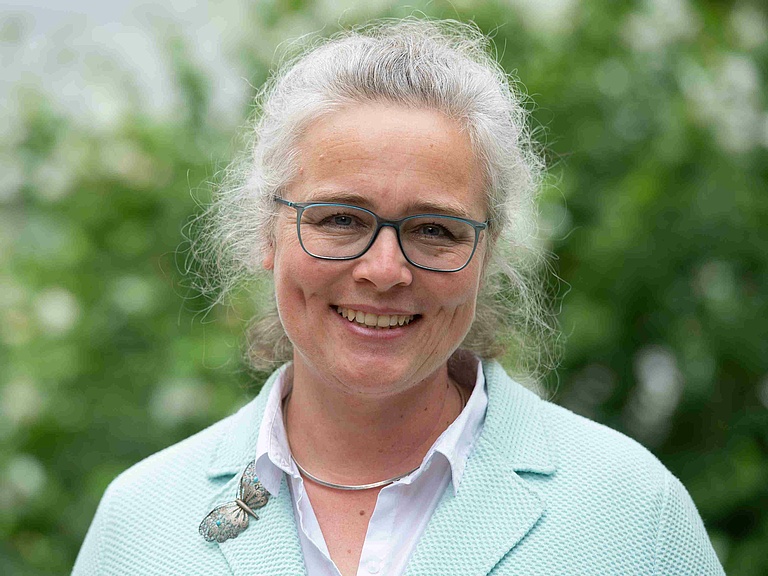
Prof. Dr. Gülşen Aytaç is a Professor at Istanbul Technical University in the Department of Landscape Architecture . With expertise in Biophilic Design , Green Urbanism , and Resilient Landscapes , her work bridges ecological theory with practical urban solutions. Education: PhD and MSc in Landscape Architecture from Istanbul Technical University (2007-2010, 2004-2007) Research Focus: Integrates Ecology , Climate Change Adaptation , and Disaster Resilience into landscape and urban design. Her recent publications emphasize biophilic design and algae-integrated architecture for air quality improvement and urban sustainability . Collaborations with researchers like Dalay, L. and Aman, D.D. highlight interdisciplinary approaches. Scientific Recognition: 2013 ASLA Honor Award 2014 Chicago Athenaeum Award 2012 Yenikapı Transfer Point Competition First Prize She leads projects such as the Microalgae Photobioreactors for Urban Air Quality and Benesta Acıbadem Housing Project , demonstrating applied innovation in landscape resilience and sustainable design . Her work with TETA Lab underscores experimental research in ecological design.
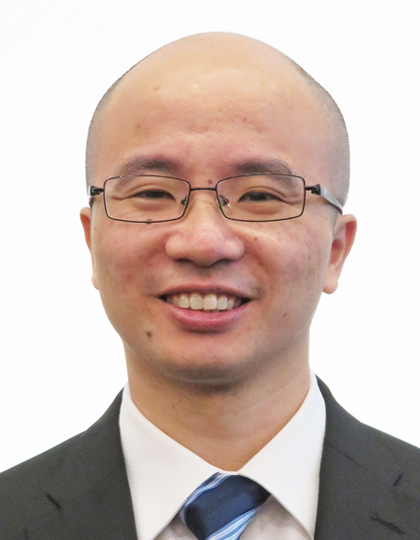
Professor David Xu is a distinguished faculty member in the Department of Information Systems at City University of Hong Kong, where he has served as Professor since 2023 after progressing from Associate Professor (2017-2023). Prior to joining CityU, he held academic positions at Wichita State University from 2011-2017, culminating in the Bomhoff Endowed Professor of Business title in 2017. His educational background includes a PhD in Management Information Systems from the University of British Columbia (2011), an MPhil in Information Systems from City University of Hong Kong, and a First-class honors BBA in Business Administration from Lingnan University. As Programme Leader for both BBA Information Management and Bachelor's Degree in Information Systems programs since 2018, he plays a significant administrative role in curriculum development. Professor Xu's research spans human-computer interaction, artificial intelligence applications, and technology adoption across diverse domains. With over 90 publications including 40+ journal papers in top-tier venues like MIS Quarterly and Information Systems Research, his work demonstrates exceptional scholarly impact. His Google Scholar metrics (3,300+ citations, h-index of 22) reflect substantial influence in the field. His recent publications reveal a strategic focus on AI ethics, information cocoon mitigation in social media, healthcare applications of AI, and digital transformation effects on business. The work spans theoretical contributions and practical implementations, with increasing emphasis on societal impacts of technology. AIS Early Career Award (2018) AIS Distinguished Member – Cum Laude (2020) Multiple teaching excellence awards (2021, 2024, 2025) ICIS and ISR Best Associate Editor Awards (2020-2021) Numerous paper award nominations across major conferences Professor Xu has secured significant research funding including NSFC, RGC GRF, and CityU Strategic Research Grants totaling millions in funding. His current projects address critical issues like AI beauty filters, depression treatment systems, and information cocoon mitigation. As Senior Editor for Information Systems Journal and Associate Editor for Information Systems Research, he shapes the field's scholarly discourse while supervising DBA and PhD students across multiple programs.
Professor Anthony Burke is a Professor of Architecture in the Faculty of Design Architecture and Building at the University of Technology Sydney (UTS), where he currently serves as Course Director for the Master of Architecture program. Previously, he held significant leadership roles including Associate Dean of International and Engagement (2017-2019) and Head of the School of Architecture (2010-2016). Internationally recognized for his work in architectural design, curation and commentary, Burke specializes in contemporary design theory at the intersection of technology, urbanism and practice, with a particular focus on ethical considerations in smart city development. Burke holds an M.Sc. in Advanced Architectural Design from Columbia University (2000) and a B.Architecture (First Class Honors) from UNSW Australia (1995). Prior to his current position at UTS, he was an Assistant Professor in Architecture at the University of California, Berkeley between 2002 and 2007. He has also served as a Visiting Professor at the Beijing Institute of Technology (2018-2020) and Institut Teknologi Bandung (2018-2019). Professor Burke's research explores the complex relationship between architecture, technology, and urban environments, with particular emphasis on how design can address societal challenges while maintaining human-centered values. His work spans architectural theory, urban technologies, and innovative practice models, often bridging academic scholarship with practical applications through numerous funded research projects and industry collaborations. He has published extensively on topics including the ethics of smart cities, architectural restoration, and the evolving role of architects in contemporary society. His recent publications reveal a consistent exploration of architecture's role in contemporary society, with recurring themes including the intersection of technology and design, ethical considerations in urban development, and innovative approaches to architectural practice. This body of work demonstrates both theoretical depth and practical relevance, connecting academic discourse with real-world applications. 2024 ACTAA Award for Lifestyle Category - Grand Designs Australia Season 11 2024 Honorary Fellow Beyond traditional academic work, Burke actively supervises PhD students and has secured significant research funding from organizations including Cumberland Council, IKEA, and the NSW Office of the Government Architect. His projects frequently involve interdisciplinary collaboration, bringing together architects, urban planners, technologists, and policymakers to address complex urban challenges. He has also founded initiatives like Open Agenda, an annual speculative design research competition for emerging Australian architects. Professor Burke extends his impact through media engagements, serving as host and presenter for popular television programs including Grand Designs Australia (Seasons 4-11), Restoration Australia (Seasons 4-7), and Culture X Design. These platforms allow him to communicate architectural concepts to broad audiences, with Grand Designs Australia reaching approximately 1 million viewers per episode in Australia and more internationally. His public outreach includes regular contributions to The Conversation, ABC News, and other media outlets, making architecture and design accessible to the general public while showcasing innovative Australian architecture.
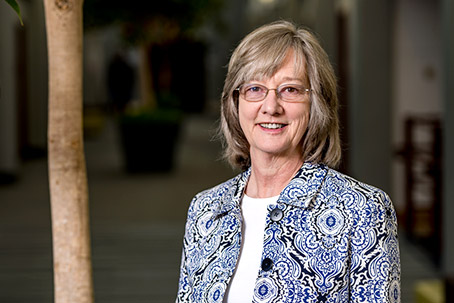
Patricia "Patsy" D. Brackin is Professor of Mechanical Engineering at Rose-Hulman Institute of Technology, where she also serves as Director of the Engineering Design Program. She is the architect of the Home for Environmentally Responsible Engineering (HERE) living-learning community and previously directed the Operation Catapult outreach program for eleven years. Education PhD, Mechanical Engineering, Georgia Institute of Technology, 1997 MS, Mathematical Sciences, University of Memphis, 1988 MS, Nuclear Engineering, University of Tennessee, 1975 BS, Nuclear Engineering, University of Tennessee, 1974 Research Interests Dr. Brackin’s scholarship centers on engineering design methodology and creativity , with particular emphasis on embedding design experiences across all four undergraduate years. She investigates how sustainability and humanitarian engineering mindsets can be cultivated through curricular interventions such as first-year sustainability modules and capstone design courses. Additional work applies Six Sigma principles to manufacturing and medical-device design processes, informed by her industry sabbaticals with Cummins, Inc. and Eli Lilly. Her recent publications reveal a consistent focus on capstone design pedagogy , formative assessment of student teams , and professional identity formation . Collectively, these works advance evidence-based strategies for mentoring multidisciplinary engineering teams and assessing complex design outcomes. Honors & Awards ABET Fellow (2020) ASME Fellow (2016) ASME Dedicated Service Award (2015) ASEE Best Paper Awards (2012, 2010) Kern Family Foundation Fellow (2006–2007) Rose-Hulman Rosie Award (1997, 2001) Advising, Grants & Programs While specific grant amounts are not disclosed, Dr. Brackin has spearheaded several high-impact initiatives. She directs the campus-wide Engineering Design Program, integrating design experiences across multiple disciplines. She founded and continues to lead the HERE program, a living-learning community focused on sustainability and humanitarian engineering. Over an 11-year span, she directed Operation Catapult, a summer outreach program that introduces high-school seniors to engineering. These efforts collectively engage hundreds of students annually and are sustained through institutional and external partnerships. Labs, Teams & Professional Service Dr. Brackin maintains active collaboration with industry partners (Cummins, Eli Lilly) and professional societies, especially ASME and ASEE. Her leadership roles extend to ABET accreditation activities, where her expertise in design assessment informs national standards for engineering education quality.
Assoc Prof Jacki Job is an acclaimed artist-scholar at the University of Cape Town with over 30 years of international experience in dance, choreography, and theatre-making. As a pioneer of Butoh in Africa and a leading practitioner in decolonial performance strategies, her work bridges artistic innovation and scholarly inquiry. PhD in Dance & Performance Studies (2022) MA in Dance Studies (2014) BA Hons (First Class) in Dance Research (2013) Her research focuses on Non-Western choreographic principles and Indigenous Methodologies, Embodied Decoloniality, Dance as Philosophy, and the Liminal Body. She explores animism, animal-human embodiment, and transformation in performance. Her publications and creative works (2019–2025) examine decolonial aesthetics, relational body theories, and third-space choreography. Notable projects include Daai za Lady (1995–present) and And Then… (2018–2024), which earned UCT Creative Works Prizes and Naledi Award nominations. Scientific awards include: UCT Meritorious Creative Works Prize (2022, 2024) NRF Thuthuka Grant (2019, 2023) David & Elaine Potter Fellowship (2016) Japan Foundation International Performance Grant (2011)
Dennis Esch serves as Lecturer (Assistant Professor) in Marketing and Behavioural Science at Cranfield School of Management, Cranfield University, where he acts as the Strategic Marketing and Sales Group's liaison for research matters. Previously, he directed the Cranfield Customer Management Forum, one of the School's premier research practice clubs. Dr. Esch holds award-winning academic qualifications in marketing, psychology and behavioural science from Lancaster University Management School and Cranfield School of Management, establishing a strong interdisciplinary foundation for his research. His research program centers on three interconnected domains: the psychological mechanisms of brand influence in consumer decision-making, the transformative impact of emerging technologies on consumer perceptions and preferences, and the complex relationship between social consumption experiences and human happiness. Methodologically, he integrates behavioral science principles with marketing theory through quantitative approaches including experiments, field studies, and big data analysis to address questions with both theoretical significance and practical managerial relevance. Dr. Esch's publication record reveals an evolving research trajectory from foundational consumer behavior studies (2016-2019) examining product assortment effects, sports consumption impacts, and social identity dynamics, toward contemporary methodological innovations in mobile research platforms (2022-2025). His recent work demonstrates particular expertise in evaluating mobile-first platforms for crowdsourcing behavioral, advertising, and personality research, addressing critical questions about digital research validity and ecological relevance. While specific major scientific awards beyond his noted 'award-winning degrees' aren't detailed in available information, his research has been published in reputable outlets including Behavior Research Methods and Academy of Marketing Science proceedings, indicating scholarly recognition. Dr. Esch brings extensive international teaching experience across multiple contexts, having instructed postgraduate students and executives in brand management, marketing strategy, consumer behavior, and research methods in the UK, Germany, and Switzerland. His pre-academic industry background includes significant roles at Audi, Henkel, Vaillant Group, and Swiss Post, providing practical grounding for his academic work and enhancing the real-world applicability of his research findings. His research methodology reflects a commitment to bridging the gap between laboratory rigor and field relevance, particularly through his investigations of mobile research platforms that can capture authentic consumer experiences while maintaining scientific validity. This approach addresses contemporary challenges in behavioral research methodology while generating actionable insights for marketing practitioners.
Laura Wareing is a Researcher at the Lancaster Medical School , with over a decade of experience in co-design methodologies and public sector engagement. Her work bridges health equity , participatory design , and community-driven innovation , particularly focusing on underserved populations in the UK's North West region. PhD in Design (Lancaster University) MA in Multidisciplinary Design Innovation (Northumbria University) BA in Industrial Design (Northumbria University) Research interests center on co-design processes that address health inequalities, improve patient involvement in service design, and build capacity for sustainable collaborative frameworks. Her recent projects focus on prehabilitation services for cancer patients and creating equitable opportunities for marginalized youth through place-based approaches. Her peer-reviewed publications highlight co-design applications in healthcare and social innovation, with trends toward patient-centered tools , systems thinking , and equity-focused service design . Key contributions include the Hexagon Tool for idea generation and the Inspirer newspaper co-created with underrepresented youth. Scientific Recognition: Royal Society of Arts first place award for social change design Laura has led knowledge exchange initiatives with organizations including NHS , Scottish Government , and The V&A Museum . She is principle investigator for the PARITY project (2024-2027) and contributed to the AHRC-funded Design Leadership Fellowship (2020). Her work has generated over £130k in funding for local organizations. As a co-founder of the Leapfrog Project and New IDEAS knowledge exchange initiatives, she has developed tactile tools for collaborative ideation and evaluation. Her research group affiliations include the GRACE team at Lancaster Medical School and ImaginationLancaster design lab.
Prof. Birke Häcker holds the Schlegel Chair in Civil Law, Common Law, and Comparative Law at the University of Bonn, directing the Institute of International and Comparative Private Law. She previously led the Institute of European and Comparative Law at Oxford (2018–2022) and held the Oxford Chair in Comparative Law (2016–2022). Educated at Oxford and German law schools, she earned a D.Phil. (2007) and later an honorary doctorate from Stockholm (2023). Her research focuses on German/English/European private law structures, comparative legal systems, and legal history. Education highlights include a Second German State Examination (Munich, 2011), D.Phil. from Oxford (2007), and First German State Examination (Cologne, 2004). She completed legal training at Munich Higher Regional Court (2009–2011). Research interests span contract law, tort law, unjust enrichment, property law, and succession law. She explores civil vs common law comparisons and common law historical evolution. Recent work examines freedom/liberty concepts in private law and causal links in contractual obligations across systems. Awards include the Therese von Bayern Prize (2015) and honorary memberships in Lincoln’s Inn and Academia Europaea. She serves on editorial boards for Zeitschrift für Europäisches Privatrecht and Studies of the Oxford Institute , and chairs the German Academic Scholarship Foundation’s executive board. Her career includes research at the Max Planck Institute for Tax Law (2011–2016) and teaching at LMU Munich. Current affiliations include Bonn’s Dependency/Slavery Studies Centre and the Stockholm Centre for Commercial Law.
Begoña Ramon Camara is an Assistant Professor in the Department of Philosophy at the University of Murcia's Faculty of Philosophy. Her research focuses on ancient philosophy, particularly Plato's concepts of the Good and first principles. She holds a PhD from the Universitat de València, awarded in 2016 for her thesis Bien y principio en Platón. Bien et principe chez Platon , supervised by Dr. Francis Wolff and Dr. Tomas Calvo Martinez. Her academic work centers on analyzing ethical and metaphysical frameworks in Plato's philosophy, with a specialization in the intersection of Platonic principles and their foundational roles in Western thought.
Maria Y. Rodriguez is a Principal Research Scientist in the Department of Computer Science and Engineering at the University at Buffalo's School of Engineering and Applied Sciences, with affiliate appointments at the Gender Institute and Digital Scholarship Studio and Network. Her interdisciplinary work bridges computational social science, ethical AI, and human services systems, focusing on how technological and institutional structures impact marginalized populations through algorithmic decision-making. Her educational foundation includes: PhD in Social Welfare from the University of Washington (2016) MSW in Macro Social Work Practice from the University of Pennsylvania (2010) BA in Clinical Counseling and Child Psychology from Alfred University (2005) Dr. Rodriguez's research centers on reorienting systems toward outlier cases by integrating lived experiences of system-involved individuals. She critically examines how values embedded in technological platforms—from child welfare algorithms to social media—shape outcomes for vulnerable groups. Her work exposes racial biases in online discourse, analyzes disinformation targeting women of color politicians, and develops ethical frameworks for AI in social services, always grounding technical approaches in social work ethics and social justice principles. Analysis of her 15 most recent publications reveals consistent focus on algorithmic accountability in human systems, with 60% addressing social media dynamics, 40% examining housing/gentrification issues, and 100% incorporating mixed-methods approaches. Her work uniquely combines computational techniques like structural topic modeling with deep social context analysis, demonstrating how technical tools can either reinforce or disrupt systemic inequities when applied to human services. Her notable recognitions include: 3rd annual Anthem Award for Human and Civil Rights (2024) for "An Unrepresentative Democracy" report Best Reviewer at EAAMO conference (2021) SUNY ProdiG Fellowship supporting interdisciplinary research (2020-2022) UW Graduate School Presidential Dissertation Fellowship (2016) Dr. Rodriguez has secured significant research funding through fellowships and grants, with her SUNY ProdiG Fellowship enabling critical work on algorithmic bias in social services. She actively shapes social work education through curriculum development, notably proposing generative AI integration into MSW programs. Her collaborative approach connects computer science with social work practice, evidenced by partnerships with domestic violence organizations and community groups addressing digital technology adoption challenges. Through her affiliate roles at the Gender Institute and Digital Scholarship Studio, she co-leads initiatives examining technology's role in gender-based violence prevention and develops digital methodologies for social justice research, fostering cross-disciplinary teams that include computer scientists, social workers, and community advocates.
Professor Mark Price is a leading academic in engineering at Queen's University Belfast, holding the title of Professor of Aeronautics in the School of Mechanical and Aerospace Engineering. He specializes in aerospace engineering, mechanical engineering, and advanced manufacturing technologies. His research focuses on bio-inspired design, cloud-based manufacturing systems, and design automation. He has held key administrative roles, including Pro-Vice-Chancellor for Engineering and Physical Sciences (2015-2020) and Head of the School of Mechanical and Aerospace Engineering (2011-2015). Education: BEng (First Class Honours) in Aeronautical Engineering, Queen's University Belfast (1987) MEng in Engineering Computation, Queen's University Belfast (1988) PhD in Mechanical Engineering (Hexahedral Finite Element Mesh Generation), Queen's University Belfast (1993) Research Interests: Professor Price’s work explores disruptive design technologies, including bio-inspired generative design methodologies, cloud-based manufacturing systems, and sustainable engineering practices. His current projects include the EPSRC Programme Grant on 'Re-Imagining Engineering Design' and the 'Design the Future 2' initiative, which aim to integrate design and manufacturing processes inspired by natural systems. He has published over 240 articles and supervised 30 PhD students. Awards: 2006 Thomas Hawksley Medal from the IMechE Best Paper Gold Award (17th International Conference on Manufacturing Research, 2019) Best Paper Prize (Journal of Materials and Design, 2012) Advising & Grants: Supervised 30 completed PhD students Principal Investigator of EPSRC grants totaling millions Lead on international collaborations, including the UK-China E9 Consortium Labs & Teams: Professor Price leads the Re-Imagining Engineering Design project (EPSRC Programme Grant) and the Biohaviour initiative (EP/R003564/1). He is affiliated with the Research Centre in Sustainable Energy Aerospace and Manufacturing and has contributed to the Northern Ireland Advanced Composites and Engineering Centre (NIACE).
Victoria Dunn is a Clinical Associate Professor of Family Medicine at the Keck School of Medicine of the University of Southern California, where she joined in 2015. She serves as Co-Director of the Introduction to Clinical Medicine and actively teaches medical students and residents across multiple programs. Dr. Dunn earned her medical degree from Newcastle University in the United Kingdom and completed residency through the Northumbria Vocational Training Scheme. She became a Member of the Royal College of General Practitioners (MRCGP) in 2005 and holds the Diploma of the Royal College of Obstetricians and Gynaecologists (DRCOG) for her expertise in women's health. After relicensing in California, she achieved US board certification in Family Medicine in 2019. She is currently pursuing a master's degree in academic medicine to advance her educational methodology. Her professional focus spans Family Medicine with specialized emphasis on Women's Health and innovative Medical Education techniques. Dr. Dunn teaches first-year students in the Professionalism and Practice of Medicine (PPM) course, directs the fourth-year college health selective, lectures for Family Medicine clerkships, and mentors students applying to residency programs. Her clinical teaching integrates primary care principles with human rights perspectives through involvement in the Keck Human Rights Clinic. Her teaching excellence was formally recognized with the Keck School of Medicine's Outstanding Teaching in Professionalism and the Practice of Medicine award in 2016. Dr. Dunn contributes significantly to academic governance through service on the Medical Education Curriculum Committee and Institutional Review Board (IRB), while actively participating in clinical education initiatives at the Keck Human Rights Clinic.
Yuchi Zhang is an Associate Professor of Marketing and Program Director of the Master's of Science in Marketing Program at Santa Clara University's Leavey School of Business. He holds a Ph.D. in Marketing from the University of Maryland and a B.S. in Economics from the Wharton School, University of Pennsylvania. His research focuses on e-commerce, digital promotions, and social media strategy, employing Bayesian methods, machine learning, and field experiments to study consumer decision-making in technology-enabled environments. He has published in top journals like Marketing Science and Journal of Marketing Research. Dr. Zhang teaches undergraduate and graduate courses in Principles of Marketing and Social Media Marketing. He has received outstanding teaching and research awards at Santa Clara University, reflecting his dual commitment to pedagogy and scholarly impact. His work explores topics such as omnichannel retailing strategies, the impact of social media influencers, and the interplay between online and offline consumer behavior. He currently oversees the MS Marketing Program, emphasizing practical industry-relevant training.
Michael S. Kang is the Class of 1940 Professor of Law at Northwestern University Pritzker School of Law, recognized nationally for expertise in election law, campaign finance, voting rights, redistricting, and judicial elections. His research appears in premier law journals and has been cited by the U.S. Supreme Court, including in Justice Ginsburg's opinion in Williams-Yulee v. Fla. Bar , while receiving coverage in the New York Times , Washington Post , and Forbes . His academic foundations include: BA from the University of Chicago MA from the University of Illinois JD from the University of Chicago (Order of the Coif, Law Review Technical Editor) PhD in Government from Harvard University Professor Kang's research employs rigorous empirical methods to dissect critical election law issues, notably examining how campaign finance influences judicial behavior, the mechanics of partisan gerrymandering, and post- Citizens United regulatory voids. His co-authored book Free to Judge: The Power of Campaign Money in Judicial Elections (Stanford 2023) exemplifies his data-driven approach to understanding democratic institutions. His publication trends reveal sustained focus on constitutional dimensions of electoral systems, with recurring analysis of judicial decision-making in election contexts and evolving campaign finance frameworks. This body of work consistently bridges legal doctrine with political science methodology. Key honors include: Best Election Law Paper of 2017 (AALS Section on Election Law) Presidential Appointment to the Supreme Court Commission (Biden Administration) Order of the Coif distinction from University of Chicago Law School While specific grant details remain undisclosed, Kang's extensive empirical research and high-impact publications—including collaborations with scholars like Joanna Shepherd—demonstrate significant scholarly influence. His appointment to the Presidential Commission underscores national recognition of his expertise, though student advising specifics are not documented in available materials. No dedicated research laboratories or formal research teams are referenced in current institutional materials.
Jill Carter (Anishinaabe/Ashkenazi) is an Associate Professor at the Centre for Drama, Theatre and Performance Studies at the University of Toronto, specializing in the Transitional Year Programme and Indigenous Studies. She is currently on leave from July 1, 2025 to January 5, 2026. PhD, University of Toronto MA, University of Toronto BA, University of Toronto Carter’s research focuses on Indigenous pedagogical models for performance, application of Indigenous research methods within theatre studies, land acknowledgements, and land-based dramaturgies. Her work centers on ethical relationality with Indigenous peoples and lands through storytelling. Recent publications explore land-based storytelling, decolonial performance, and Indigenous knowledge systems. Projects include a new First Story Toronto website and a multi-year SSHRC-funded archival initiative. 2024 Elliot Hayes Award for Outstanding Achievement in Dramaturgy 2020 Early Career Teaching Award Richard Plant Award winner (2016) and honorable mention (2017, 2021) Harcourt-Brown Fellowship (2018) Carter collaborates with Indigenous artists, co-facilitates workshops with Ange Loft, and works with the Directors’ Lab North as Artistic Associate. She serves on the University of Toronto’s Research Ethics Board and the editorial board of Theatre Survey .