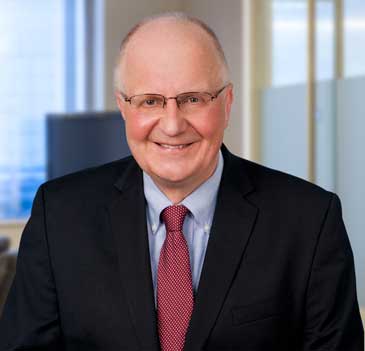
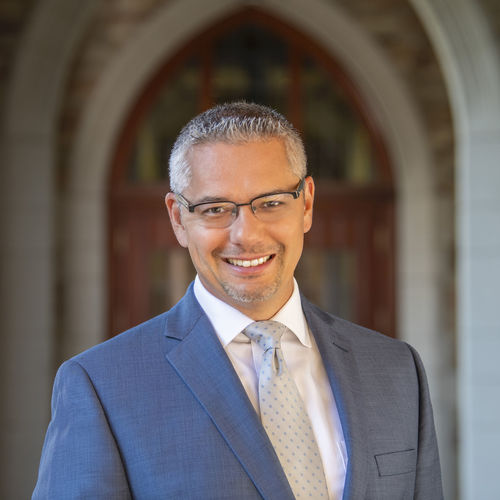
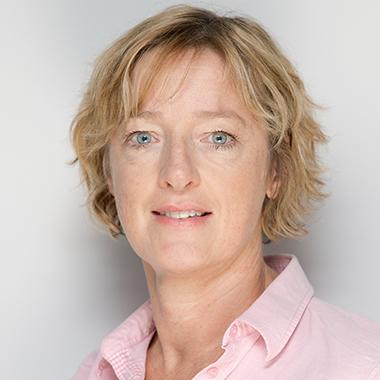
William A. Goddard, III is the Charles and Mary Ferkel Professor of Chemistry, Materials Science, and Applied Physics at the California Institute of Technology. With a career spanning over five decades, he has held positions from Noyes Research Fellow (1964–66) to his current professorship since 2001. His educational background includes a B.S. from UCLA (1960) and a Ph.D. from Caltech (1965). Quantum chemistry and first-principles simulations Multiscale modeling (QM→MD→mesoscale) Catalysis and protein structure prediction Nanotechnology and bionanotechnology Energy storage (batteries, supercapacitors) Recent publications emphasize applications in metal-organic frameworks , electrocatalysis , and space manufacturing , reflecting his interdisciplinary approach. His work on G-protein coupled receptors and Li-S batteries demonstrates methodological innovation through quantum mechanics and machine learning . Horizon Prize , Royal Society of Chemistry Over 1548 total publications (1967–2022) As Director of Caltech's Material and Process Simulation Center , he leads development of software like ReaxFF for reactive dynamics. He teaches Ch 120 ab (Nature of the Chemical Bond) and Ch 121 ab (Atomic-Level Simulations), emphasizing hands-on computational applications for experimentalists and theorists.
Micahł Masny is a Research Fellow at MIT, previously serving as a Postdoctoral Fellow at UC Berkeley's Kavli Center and completing his PhD in Philosophy at Princeton University. His work bridges moral/political philosophy with pressing societal concerns, focusing on well-being, humanity's future, and work ethics. He has earned teaching accolades, including Princeton's Graduate School Teaching Award for pioneering interdisciplinary courses like 'Ethics of Technology.' Education: PhD in Philosophy (Princeton University), Postdoctoral Fellowships at UC Berkeley and MIT. Research explores theoretical issues in well-being (e.g., wasted potential, life extension ethics), societal progress, and work's evolving role in the technological era. Current projects examine work-life separation, shorter working hours, and obsolescence anxieties. Publications span topics like epistemic consequentialism, Schopenhauer's philosophy, and intergenerational ethics. His work appears in Philosophical Studies , Journal of Moral Philosophy , and Philosophy & Public Affairs . Teaching includes MIT's biomedical ethics courses and Berkeley's first AI ethics graduate seminar. Awards: Princeton's Graduate School Teaching Award (2020). Advising: No formal advisees listed, but impactful mentorship through course development. Active in ultramarathons and philosophical generalism.
Mahsan Nourani is a Research Assistant Professor at Northeastern University, specializing in intersections of human-computer interaction, artificial intelligence, and healthcare informatics. Their research focuses on explainable AI systems, user behavior in AI partnerships, and design of interactive machine learning tools. Current work explores cognitive biases in human-AI collaboration, predictive analytics in healthcare, and activity recognition in videos. Key research areas include user profiling in AI applications, trust dynamics in intelligent systems, and visual debugging tools for machine learning models. Notable projects include the HEART initiative for real-time healthcare analytics and development of the DETOXER explanation framework for temporal classification systems. Recent publications investigate nudge techniques for behavioral change (Romadoro project), anchoring bias effects in AI system trust, and evaluation of view rotation techniques in virtual reality navigation. Their work consistently bridges technical AI advancements with human-centered design principles. No academic awards are listed in the provided materials. Current affiliations include Northeastern University's research groups in AI ethics, human-computer interaction, and healthcare technology innovation.
Bruce Grohsgal serves as the Helen S. Balick Professor in Business Bankruptcy Law at Widener University Delaware Law School, where he joined the faculty in July 2014 after over 30 years of legal practice. His primary academic affiliation is with Widener University's Law School, where he teaches Bankruptcy, Contracts I and II, Secured Transactions, International Bankruptcy, and Financial Regulation. Prior to academia, he practiced at Pachulski Stang Ziehl & Jones, LLP in Wilmington, Delaware, representing major entities in high-profile bankruptcy cases including Solyndra, Global Home Products, and Trans World Airlines. Professor Grohsgal's research focuses on bankruptcy law with particular expertise in business restructuring, student loan dischargeability, and financial institution insolvency. His work critically examines the absolute priority rule, structured dismissals, and the legislative history behind student loan nondischargeability. He has extensively analyzed how bankruptcy courts handle debtor-creditor agreements, lease rejections, and the recharacterization of debt claims as equity. His scholarship consistently bridges theoretical legal analysis with practical restructuring challenges faced by practitioners. As Editor-in-Chief of the Norton Journal of Bankruptcy Law and Practice and the Norton Annual Survey of Bankruptcy Law, Grohsgal significantly influences bankruptcy scholarship. His recent publications (2020-2023) demonstrate a concentrated focus on student loan bankruptcy discharge mechanisms, evolving interpretations of the absolute priority rule, and procedural innovations in Chapter 11 cases. The articles reveal growing scholarly attention to consumer bankruptcy issues within traditionally corporate-focused bankruptcy scholarship. Professor Grohsgal actively engages with policy development through congressional testimony, including written submissions for H.R. 1667 (Financial Institution Bankruptcy Act of 2017). He directs the Institute of Delaware Corporate and Business Law and previously chaired the Delaware State Bar Association's Bankruptcy Section. His practical experience informs his academic work, particularly regarding first-day motions, asset sales in bankruptcy, and derivatives treatment in insolvency proceedings.
Dyanna Jolly is a Senior Lecturer in the Department of Environmental Management at Lincoln University, Aotearoa New Zealand. She is of Whitebear First Nations (Cree, Saulteaux, Nakota, Dakota) heritage from Treaty 4 territory in Saskatchewan, Canada, and was adopted into the Kakakaway, Shepherd, Maxie family. Her work centers on Indigenous-led environmental decision-making processes grounded in Te Tiriti o Waitangi principles. Her educational background includes: PhD from University of Otago, Dunedin MNRM from University of Manitoba, Winnipeg BA (Hons) from University of Regina, Regina Jolly's research focuses on transformative engagement through Indigenous planning, environmental management, and impact assessment. She has over two decades of experience developing Iwi Management Plans and cultural impact assessments while collaborating with iwi, hapū, industry, and government. Her work bridges Western scientific approaches with Māori environmental knowledges (Mātauranga Taiao) and global Indigenous studies, emphasizing epistemic justice in environmental health risk assessment and soil science applications. Her publications reveal strong thematic trends in Indigenous authority within impact assessment frameworks, cultural impact assessment effectiveness in Aotearoa New Zealand, and knowledge-weaving methodologies connecting soil science with Indigenous land management practices. Recent works highlight decolonial approaches to environmental decision-making and the integration of Māori perspectives in horticultural land use studies. Key recognitions include: University of Otago Humanities Divisional List of Exceptional Doctoral Theses (2020) New Zealand Geographical Society Best Doctoral Thesis in Geography Award (2022) Jolly actively supervises Master's and PhD students while leading significant research initiatives including 'Te Rua o mahara - Stories stored in the depths' (2024) and 'Building the Autonomy of Indigenous Communities to Make their Data Work for Decision-Making' (2025). She serves as Programme Convenor for the Master of Planning Programme and maintains extensive professional engagement through the New Zealand Association for Impact Assessment Core Group, EIANZ Impact Assessment Special Interest Group, and as Chair of the Mana Whenua Advisory Group for Te Hapū o Ngāti Wheke and Lyttelton Port Company. Her collaborative work with the Tāwhaki Joint Venture demonstrates practical application of Indigenous planning theory in environmental management contexts, creating tangible pathways for community-led environmental governance.
Yan Huang is an Associate Professor of Business Technologies at the Tepper School of Business, Carnegie Mellon University. She holds a Ph.D. in Information Systems and Management from Carnegie Mellon University (2013) and a B.Sc. (with honors) in Information Systems and Management from Tsinghua University, Beijing, China (2009). Prior to joining Carnegie Mellon University, she served as an Assistant Professor of Technology and Operations at the University of Michigan–Ann Arbor, Ross School of Business (2013-2018). Her educational background includes: B.Sc. (with honors) in Information Systems and Management, Tsinghua University, Beijing, China (2009) Ph.D. in Information Systems and Management, Carnegie Mellon University, Pittsburgh, United States (2013) Dr. Huang's research examines the economic and social impacts of technologies and identifies effective designs and policies for technology-enabled markets and platforms. She employs economic theories, structural modeling, statistical modeling, machine learning methods, and an understanding of the underlying technologies in her research. Her recent work focuses on the economics of artificial intelligence (AI) and machine learning (ML), with particular attention to algorithmic fairness, transparency, and collusion. She is among the first to bring economic and social perspectives to research on fair ML. Additionally, she studies digital platforms and online markets, examining how firms can leverage data-driven strategies to optimize pricing, personalization, and user engagement. Her recent publications demonstrate a strong focus on the intersection of AI/ML with economic principles, particularly in areas like algorithmic bias, pricing strategies, and platform regulation. A significant portion of her work examines how machine learning algorithms impact financial lending decisions, housing markets, and content creation platforms. Her research methodology frequently combines structural econometric modeling with empirical analysis of real-world data, providing both theoretical insights and practical implications for platform design and policy. Dr. Huang has received several prestigious awards for her scholarly contributions: AIS Senior Scholar Best Publication of 2023 Award for "Algorithmic Transparency with Strategic Users" Runner Up, Best Paper Published in Information Systems Research for 2021 for "Crowds, Lending, Machine, and Bias" INFORMS Information Systems Society Sandy Slaughter Early Career Award Finalist, Best Student Paper Award, CIST 2021 for "Human-Algorithmic Bias: Source, Evolution, and Impact" Pounds Fellowship As an active member of the academic community, Dr. Huang serves on various committees at CMU including the MSBA Curriculum Review Committee and the Tepper School Strategic Plan Task Force. She has also held editorial positions for Management Science, Information Systems Research, and the International Conference on Information Systems. Her teaching portfolio includes courses on Human and Algorithmic Bias, Modern Data Management, and PhD-level instruction at the Tepper School.
Hongyi Xu is a Senior Lecturer at the Australian National University's Research School of Chemistry and a researcher/principle investigator at Stockholm University (0.2 FTE). He holds a PhD in Materials Engineering from the University of Queensland (2013) and a Bachelor of Engineering (Mechatronics) from the same institution (2008). His research focuses on developing electron crystallography methods for studying materials, small molecules, peptides, and macromolecules, with applications in drug design and structural biology. He has pioneered MicroED techniques, including solving the first new protein structure using this method and demonstrating protein-inhibitor binding analysis. Key research areas include electron crystallography methodology, multidimensional electron microscopy toolkits, metalloenzyme charge state analysis, and fragment-based drug design. He has secured grants such as the Swedish Research Council Starting Grant and has collaborated with over 25 international groups. Notable achievements include the development of SerialED and contributions to cryo-EM advancements like Single Particle Analysis (SPA) and cryo-ET. Recent publications highlight advancements in perovskite photovoltaics, electrocatalytic hydrogen peroxide production, and zeolite structural analysis. His work bridges materials science and biology, addressing challenges in structural determination through innovative microscopy techniques. Awards include the Dean’s Accommodation for Academic Excellence (2013) and the Best Thesis Award (2013).
Professor Martins Paparinskis is a Professor of Public International Law at University College London (UCL) Faculty of Laws since 2013. He holds multiple international roles, including membership in the UN International Law Commission (2023–present), where he serves as Chair (2025) and previously as Chairperson of the Drafting Committee (2023) and First Vice-Chair (2024). He is also a Senior Global Fellow at the National University of Singapore Centre for International Law and has held visiting positions at the National University of Singapore and University of Bologna. His expertise spans international dispute settlement, investment law, human rights, environmental law, and law of the sea. He earned his LL.B. from the University of Latvia, followed by M.Jur. (Distinction, Clifford Chance Prize), M.Phil (Distinction), and D.Phil. from the University of Oxford. PhD Scientific Board Member, University of Milan-Bicocca Doctoral College Member of the Professorial Council, University of Latvia Faculty of Law Editor-in-Chief of CIL Dialogues Research interests include international arbitration, investment law, environmental law, and human rights. His recent work addresses ISDS reforms, state responsibility, and pandemic-related legal challenges. He has contributed to over 50 articles and book chapters, including landmark publications on treaty interpretation and investor-state dispute mechanisms. Prof. Paparinskis has received the UCL Laws Excellence Award for Teaching (2016) and was nominated for Student Choice Awards (2023, 2024). He advises international bodies like the EU Fundamental Rights Agency and UNECE Water Convention Implementation Committee, and frequently participates in high-level judicial proceedings at ITLOS and the International Court of Justice. He leads editorial roles across 8 international journals, including the Journal of International Economic Law and Journal of World Investment and Trade. His advocacy focuses on harmonizing international investment law with human rights and environmental sustainability, particularly through SDGs 8 (Economic Growth) and 16 (Peace and Justice).
Dr. Vincent Phillip Muñoz is the Tocqueville Professor of Political Science and Concurrent Professor of Law at the University of Notre Dame, where he also serves as Founding Director of the Center for Citizenship & Constitutional Government. His research focuses on constitutional law, American politics, and political philosophy, particularly regarding religious liberty and the American Founding. He holds a B.A. from Claremont McKenna College, M.A. from Boston College, and Ph.D. from Claremont Graduate School. Education: B.A. Claremont McKenna College; M.A. Boston College; Ph.D. Claremont Graduate School His scholarship explores foundational questions about religious freedom, church-state relations, and constitutional interpretation. Key works include God and the Founders: Madison, Washington, and Jefferson (2009) and Religious Liberty and the American Founding (2022). His research has been cited in landmark Supreme Court cases like Fulton v. City of Philadelphia and Esipnoza v. Montana . He has secured over $20 million in grants/funding for the Center, edited leading constitutional law casebooks, and is a sought-after speaker on topics ranging from Madison's political thought to modern Supreme Court jurisprudence. Awards: Hubert Morken Award (2009-2010), NEH Fellowship (2022) His teaching spans undergraduate and graduate levels, with a focus on fostering critical engagement with constitutional principles. He advises students on historical and legal methodologies, including former advisee Kate Hardiman Rhodes. Current initiatives include exploring the modern Supreme Court’s reinterpretation of religious establishments and advancing interdisciplinary dialogue on citizenship education through the Center’s programs.
Courtney N. Reed is a Lecturer in Digital Technologies at Loughborough University London, where she joined in November 2023. She maintains a dual role as a visiting research fellow at the Max Planck Institute for Informatics. Her academic journey includes a BMus in Electronic Production and Design from Berklee College of Music (2016), followed by an MSc (2018) and PhD (2023) in Computer Science from Queen Mary University of London. Prior to her current position, she completed postdoctoral research at both the Max Planck Institute for Informatics and King's College London. Bachelor of Music: Electronic Production and Design, Berklee College of Music (2016) Master of Science: Computer Science, Queen Mary University of London (2018) Doctor of Philosophy: Computer Science, Queen Mary University of London (2023) Dr. Reed's research explores the entangled relationships between humans, bodies, instruments, and technology in music interaction, with particular focus on vocal electromyography (VoxEMG) and the vocalist-voice relationship. Her work incorporates feminist and post-human theories to examine sociopolitical contexts within arts technology, aiming to design for creativity while acknowledging individual, messy bodies in artistic practice. She has developed an open-source platform for vocal electromyography to investigate how biosignal feedback changes understanding and perception of the body in vocal performance. Her interdisciplinary approach bridges music technology, human-computer interaction, and embodied interaction studies. Analysis of Dr. Reed's recent publications (2023-2025) reveals a strong thematic focus on embodied interaction in music technology, with particular emphasis on vocal performance, biosignal feedback, and the philosophical underpinnings of digital instrument design. Her work consistently integrates theoretical frameworks like Karen Barad's agential realism with practical applications in digital musical instruments. Key trends include the exploration of ambiguity in data representation, the sociocultural dimensions of timbre in instrument design, and the development of novel methodologies for understanding embodied musical experiences through micro-phenomenology and ethnographic approaches. ACM SIGCHI Outstanding Dissertation Award (2024) for her thesis 'Imagining & Sensing: Understanding and Extending the Vocalist-Voice Relationship Through Biosignal Feedback' Best Newcomer Award at Loughborough University London's Community Awards Celebration (2024) Dr. Reed actively contributes to the academic community through conference organization and leadership roles. She serves as Member-at-Large on the NIME Board, previously chaired papers for NIME 2024, and co-organized the IBM SkillsBuild Sprint at Loughborough London. She has also chaired sessions at the ACM TEI Conference and co-chaired the Student Design Competition. Her collaborative work spans multiple institutions and includes significant contributions to interdisciplinary projects that bridge music, technology, and human experience. She has been instrumental in developing the senSInt research group and the RaveNET wearable network project. Dr. Reed leads the senSInt research group which focuses on sensorimotor interaction in music and performance contexts. The group develops innovative technologies including the VoxEMG platform for vocal electromyography, the Bones anti-corset for vocal performance, and the RaveNET network of wearable biosensing nodes. These projects explore the intersection of biosignals, embodied interaction, and musical expression, creating novel frameworks for understanding how technology mediates human creativity and performance. The group frequently collaborates with musicians, technologists, and theorists to develop and test these systems in real-world performance contexts.
Holly J. Nibert is an Associate Professor of Hispanic Linguistics and Director of the Spanish Language Program in the Department of Spanish and Portuguese at The Ohio State University. Her research focuses on second language acquisition (SLA) of Spanish phonology and phonetics within the revised Speech Learning Model (SLM-r). She also emphasizes principles of teaching Spanish as a second language, instructor training, and language program administration. Education: Ph.D. in Spanish Linguistics, University of Illinois at Urbana-Champaign (2000) M.A. in Spanish Linguistics, University of Illinois at Urbana-Champaign (1991) B.A. in Spanish, University of Illinois at Urbana-Champaign (1989) Research interests span Spanish phonetics/phonology SLA, pedagogical techniques, and leadership in language program administration. Her recent work examines applying leadership studies to program direction. She co-authored two Spanish textbooks: ¡Arriba! and Día a día . Key awards include the 2013 WMU Distinguished Teaching Award and multiple teaching accolades as a graduate TA. Her work bridges theoretical SLA research with practical classroom applications, including curriculum design and international teaching assistant training. Her contributions to the field include advancing techniques for SLA of segmental and prosodic features, as well as leadership strategies for language programs. She previously directed Western Michigan University's First-Year Spanish Program for 15 years before joining OSU in 2014.
Professor Steven V. Ley leads the Yusuf Hamied Department of Chemistry at the University of Cambridge, focusing on transformative research in flow chemistry, organic synthesis, and green chemistry. His work emphasizes sustainable methodologies and the integration of advanced technologies like microcontrollers and automation to revolutionize chemical processes. In 2018, he received the prestigious Arthur C. Cope Award—the first UK-based recipient—recognizing groundbreaking contributions to organic chemistry. Research interests include developing continuous flow systems for hazardous reaction management, immobilized reagents, and machine-assisted synthesis. Collaborations span academia and industry, notably through spin-off company New Path Molecular , which applies cutting-edge synthesis techniques to pharmaceuticals and agrochemicals. Key publications highlight innovations in flow chemistry applications, sustainable process design, and automation. His work bridges chemistry with engineering, aiming to address global challenges in resource efficiency and environmental impact. Awards: Arthur C. Cope Award (2018) Lab/Teams: Active research group at the University of Cambridge; collaborates with New Path Molecular on commercial applications.
Meghan Allen is the Associate Head of Undergraduate Affairs and Associate Professor of Teaching in the Department of Computer Science at the University of British Columbia (UBC). She specializes in computer science education, with a focus on inclusive pedagogy, curriculum design, and teaching methodologies. Her work addresses challenges faced by English Language Learners (ELLs), non-majors, and diverse student populations in STEM education. Allen has taught numerous introductory computer science courses, including CPSC 107, 110, 121, and 210, emphasizing practical programming skills and systemic program design. Allen's research spans autograding innovations, student engagement strategies, and the efficacy of online learning tools. She has co-authored studies on technical writing in CS, universal design principles for accessibility, and the role of experiential learning in software engineering education. Her work is informed by partnerships with students and faculty in Scholarship of Teaching and Learning (SoTL). Awards: Incredible Instructor Awards; UBC CS Teaching Award (2007); multiple TA Teaching Awards. Leadership: Oversees undergraduate affairs in the UBC CS Department, including course coordination and academic policies. Publications: 15+ peer-reviewed articles on education innovation, including recent works on autograding systems and ELL support strategies. Her office is located in the ICCS Building room 243, and she actively contributes to departmental initiatives like the CPSC 110 Challenge Exam process. Allen advocates for inclusive curricula and has pioneered strength-based evaluation approaches to improve student outcomes.
Elisa Maarit Lähde serves as an Assistant Professor in the Department of Architecture at Aalto University, where she advances sustainable urban design through interdisciplinary research at the intersection of landscape architecture, ecology, and planning. Her work focuses on transforming urban environments through biodiversity integration and socio-ecological innovation. Dr. Lähde's research centers on urban biodiversity mainstreaming, regenerative design frameworks, and landscape architectural storytelling. She pioneers approaches for integrating ecosystem services into urban planning, with particular emphasis on climate adaptation, green-blue infrastructure, and human-nature connection building. Her methodologies frequently employ co-creative processes with stakeholders to develop context-specific socio-ecological solutions. Recent publications (2024-2025) demonstrate a cohesive research trajectory examining practical applications of biodiversity principles across diverse urban contexts. Key thematic clusters include: (1) ecological assessment frameworks for built environments; (2) regenerative design strategies for Anthropocene challenges; (3) maritime spatial planning innovations; and (4) narrative techniques for enhancing ecological literacy. Her work bridges theoretical rigor with Finnish and international case studies, reflecting strong commitment to both scholarly contribution and real-world implementation. Dr. Lähde's scholarly contributions have been recognized through significant professional accolades: First prize in the Elielinaukio architectural competition (December 2021) for Helsinki Central Railway Station surroundings renewal Finalist in Ericsson Innovation Awards for FoodGrid project (June 2017) addressing Future of Food challenges First prize in International Stormwater Innovation Competition (November 2014) for urban furniture with water detention Honorary mention in Hiedanranta ideas competition (January 2017) for "There’s a New Town in the City" proposal While specific advising relationships and grant funding details aren't documented in available materials, her research portfolio demonstrates substantial collaborative engagement through multi-institutional publications and competition participations that likely involve student mentorship and research team leadership.
Professor Coral Dando is a Professor of Psychology at the University of Westminster, leading research in forensic cognition and investigative interviewing. With a background as a London Police Officer, she completed a BSc (Hons) Psychology and PhD in Applied Forensic Cognition. She is a Chartered Psychologist, National Teaching Fellow, and Registered Forensic Psychologist. Her research focuses on eyewitness memory, deception detection, and cross-cultural interviewing, with a particular emphasis on improving investigative methods in security and forensic contexts. Her academic roles include teaching forensic psychology modules (e.g., detecting deception, investigative interviewing) and supervising PhD students researching topics like virtual environments in interviews and neurodivergent credibility. She has secured significant research funding from entities like the Home Office, FBI, and CPNI, totaling over £2M across projects addressing insider threats, county lines exploitation, and aviation security. Key Research Themes: Eyewitness reliability, cognitive interviewing techniques, cross-cultural persuasion, and insider threat detection. Grants: Includes a 2024 €97,000 COST grant for implementing the Mendez Principles and a 2016 $469,000 FBI-funded study on intelligence interviewing. Professor Dando’s work bridges academia and practice, training professionals from police forces, security agencies, and NGOs. She contributes to policy development and has authored over 100 peer-reviewed publications, including seminal works on the cognitive interview and WAFA (Witness-Aimed First Account) for neurodivergent individuals. Her research emphasizes ethical, context-aware methodologies to enhance justice outcomes.