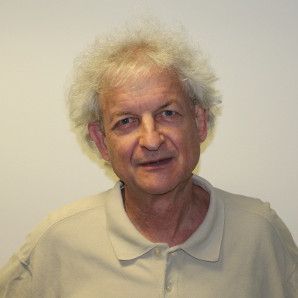
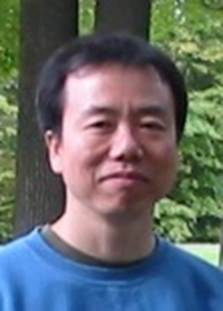
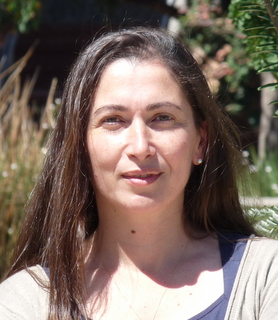
Jakob Kjøbsted Huusom is a Professor at the Department of Chemical and Biochemical Engineering, Technical University of Denmark (DTU). His research emphasizes advanced process control, model development for the process industry, and sustainable technologies. He is affiliated with the KT Consortium PROSYS and the Process and Systems Engineering Centre (PROSYS), contributing to UN Sustainable Development Goals related to affordable energy and climate action. His work spans hybrid modeling approaches integrating AI with first-principles methods, optimization of industrial processes, and real-time adaptive systems. Current projects include MPC tuning algorithms, enzymatic biodiesel production control, energy-efficient distillation technologies, and electrification of industrial processes using renewable energy. As a supervisor, he guides multiple PhD students in topics such as risk monitoring, model-based digitalization, and Power-to-X applications. His research tools and methodologies address challenges in process identification, state estimation, and controller design, with a focus on scalability and real-world implementation. Collaborations include international teams in Julia-based simulation tools and hybrid neural network modeling. His contributions advance both theoretical frameworks and practical solutions for sustainable industrial systems.
Dr. Zhenyu Wang is a Researcher at the Max Planck Institute for Sustainable Materials in Düsseldorf, Germany, specializing in computational materials design with a focus on electrochemistry and corrosion science. His research emphasizes ab-initio modeling of electrochemical solid/liquid interfaces, energy storage systems, and novel materials for photovoltaics and thermoelectrics. Education: B.Sc. in Physics, Xi'an Jiaotong University (2009-2013) Ph.D. in Electrical Engineering, Xi'an Jiaotong University (2013-2020) Visiting Ph.D. in Chemistry, University College London, UK (2016-2018) Research Interests: His work spans several key areas including: Ab-initio modeling of electrochemical interfaces Energy storage mechanisms in metal-air and metal-ion batteries Two-dimensional hybrid perovskites for photovoltaic applications High-performance thermoelectric materials and transparent conducting oxides Defect chemistry analysis in energy conversion materials Professional Background: Since 2021: Postdoctoral Researcher at Max-Planck-Institut für Eisenforschung and Max Planck Institute for Sustainable Materials Publications: His recent work focuses on advancing computational methods for modeling electrochemical systems, exploring novel materials for energy storage and conversion applications, and understanding interface phenomena through first-principles calculations and molecular dynamics simulations. Awards & Grants: No specific awards or grants mentioned in the provided information. Labs & Collaborations: Affiliated with the Department of Computational Materials Design, contributing to interdisciplinary research at the Max Planck Institute.
Daniel Friedan is a Distinguished Professor and founding member of the New High Energy Theory Center (NHETC) at Rutgers University's Department of Physics & Astronomy. His research focuses on quantum field theory, string theory, cosmology, and theoretical physics. He has pioneered work linking 2D renormalization group flows to Einstein's equations and developed mechanisms for large-distance physics and quantum computing design principles. His key achievements include formulating the λ-model connecting quantum string backgrounds to space-time physics, advancing quantum field theories of extended objects in higher dimensions, and proposing near-critical quantum circuit designs for large-scale quantum computers. Friedan has been honored with the 2010 Lars Onsager Prize and membership in the American Academy of Arts and Sciences. Recent teaching includes recitations for General Physics 203 and lectures for Analytical Physics 123. His research spans cosmological models, dark matter dynamics, and foundational questions in high energy physics. Major papers include 'The CGF dark matter fluid' (2022), 'First principles cosmology of the Standard Model epoch' (2022), and 'A pragmatic approach to formal fundamental physics' (2018).
David Vanderbilt is a Distinguished Professor and Board of Governors Professor at Rutgers, The State University of New Jersey, working in the Department of Physics. His research focuses on computational electronic-structure theory applied to dielectric, ferroelectric, and magnetoelectric properties of oxides and nanostructured materials. He pioneered methods for studying Wannier functions, Berry phase phenomena, and topological insulators. His work bridges theoretical innovation and practical applications in materials science. Key Awards: 2006 Aneesur Rahman Prize in Computational Physics, Simons Fellow in Theoretical Physics, Member of American Academy of Arts and Sciences, National Academy of Sciences Research Themes: Development of first-principles methods, electronic structure theory for complex oxides, topological materials, and interface effects in nanostructures. His group’s contributions include advancements in electric polarization theory and magnetoelectric coupling mechanisms. Grant Activity: Co-PI on NSF-funded projects exploring correlated electron systems and materials databases. Collaborations include work with Gabi Kotliar and Karin Rabe on computational materials design. Labs/Teams: Part of the Condensed Matter Theory Group at Rutgers, contributing to initiatives in topological materials and quantum transport phenomena.
Elena DEGOLI is a Full Professor at the University of Modena and Reggio Emilia, affiliated with the Department of Engineering Sciences and Methods. Her academic role focuses on theoretical physics of matter and materials science, with expertise in solid-state physics, nanotechnology, and computational modeling. Teaching: She currently teaches Physics I and Physics II for Mechatronic Engineering students, covering classical mechanics, thermodynamics, electromagnetism, and optics. Courses emphasize problem-solving, theoretical analysis, and experimental techniques. Research: Prof. DEGOLI's work spans defects in semiconductors, lithium-ion battery materials, nonlinear optics in solids, and silicon nanocrystals. Key areas include: Grain boundary dynamics and impurity segregation in silicon Computational modeling of electronic and thermal properties in nanostructures Development of novel battery anode materials using self-healing binders Optoelectronic properties of strained silicon and HfO₂ systems Publications: Her research has been published in top journals like Thin Solid Films , Journal of Materials Chemistry A , and Physical Review B , with a focus on multiscale modeling and first-principles simulations. Advising & Grants: While no specific grants or student advisement details are listed, her extensive publication record indicates active research collaborations and mentorship in computational and experimental materials science.
Jianwei Wang is an Associate Professor in the Department of Geology and Geophysics at Louisiana State University (LSU), within the College of Science. His research focuses on computational modeling of earth materials and processes, particularly using high-performance computing tools like first-principles calculations and molecular dynamics simulations. He holds a PhD in Earth Materials from the University of Illinois at Urbana-Champaign. Education: PhD in Earth Materials, University of Illinois at Urbana-Champaign Research Interests: Molecular modeling of geological processes at the molecular scale Nuclear materials and waste forms Materials under extreme conditions (high pressure, temperature) Mineral-water interface interactions Applications in energy and environmental solutions Grants & Opportunities: His research is supported by funding agencies such as NSF, DOE, and NRC. He actively seeks students and postdocs for projects in computational materials and geochemistry, including studies on Fe-Ni liquids under core conditions, ceramic corrosion mechanisms, and nuclear fuel chemistry. Labs & Collaborations: His work involves collaborations on advanced computational methods and experimental validation, contributing to interdisciplinary projects in energy and geoscience.
Radu Ion IFTIMIE is a Professor in the Department of Chemistry at the Faculty of Arts and Sciences, University of Montreal. His research focuses on developing computational methods and software to study complex chemical structures and reaction mechanisms in liquids and solids, with a specialization in proton transfer mechanisms and aqueous reactions. He teaches courses including CHM-1990 (General Physical Chemistry), CHM-3333 (Introduction to Molecular Modeling), and CHM-6422 (Statistical Mechanics). Research Interests: Iftimie's work combines theoretical chemistry, molecular dynamics simulations, and computational spectroscopy to investigate acid-base reactions, proton translocation in biomolecules, and material science applications (e.g., lithium-ion battery electrodes). His team develops novel software tools for first-principles molecular dynamics studies. Grants & Projects: Principal Investigator (2017–2024): Investigating Proton Translocation Mechanisms in Solution (CRSNG Grant PVX20965) Co-Investigator (2011–2016): Calcul Québec Strategic Group (FRQNT-funded) Advising: Supervised 6 graduate students (2009–2021), including studies on proton transfer kinetics, copper-catalyzed alkynylation, and LiFeV₂O₇ electrode materials. Labs/Teams: Leads a computational chemistry research group focused on advancing ab initio molecular dynamics methods and their applications in chemistry and materials science.
Brian Tackett is the Robert & Sally Weist Assistant Professor of Chemical Engineering at Purdue University, affiliated with the College of Engineering. His research focuses on advanced electrocatalytic systems for energy storage and CO2 conversion, with a particular emphasis on designing durable electrodes and understanding reaction mechanisms at the surface level. His work integrates experimental and computational methods to explore catalyst materials, such as platinum-modified carbides and conductive polymer-coated membranes, for applications in fuel cells, batteries, and CO2 reduction systems. Key areas include optimizing gas diffusion electrodes for long-term stability, quantifying adsorbate behavior during propane activation, and analyzing hydrogen evolution kinetics in zinc-based batteries. Publications from 2022–2025 highlight advancements in electrocatalyst design, including Cu nanoparticles on surfactant-treated carbon for CO2 reduction and novel membrane structures for robust gas diffusion layers. His studies often utilize operando spectroscopy and mass spectrometry to directly observe reaction pathways under operational conditions. No academic awards or student advising records are explicitly mentioned in the provided materials.
Maria Garcia de la Banda is a distinguished Professor at Monash University's Faculty of Information Technology, where she serves in the Department of Data Science and Artificial Intelligence (DSAI). With over 25 years of academic experience, she has held significant leadership roles including Deputy Dean (Research) until July 2022, overall Deputy Dean of the Faculty (2013-2016), and Head of the Caulfield School of Information Technology (2009-2011). She is currently a member of the ARC College of Experts and Co-Chair of the Monash-Woodside FutureLab. Her educational background includes a Doctor of Philosophy in Computer Science from the Universidad Politecnica de Madrid (awarded July 7, 1994) and an Ingeniero Informatico degree from the same institution (awarded March 1, 1992). Her PhD received the university's Best PhD Award. Garcia de la Banda's research spans multiple disciplines with a strong focus on constraint programming, combinatorial optimization, program analysis, and bioinformatics. She leads the Optimization research group within DSAI and has made significant contributions to declarative programming languages, parallelism, and automatic parallelization. Her interdisciplinary work bridges computer science with biological applications, particularly in protein structure analysis and computational drug design. Her publication record shows consistent contributions across constraint programming, optimization, and bioinformatics. Recent work demonstrates increasing interdisciplinary collaboration, with a notable expansion into bioinformatics applications alongside her core constraint programming research. She has maintained a strong presence at major conferences like CP (International Conference on Principles and Practice of Constraint Programming) while also building impactful industry collaborations. Her scientific recognition includes: Logan Fellowship (1997) - the first and only prestigious award of its kind in the Faculty of IT International Constraint Modelling Challenge winner (2005, with Peter Stuckey) Universidad Politecnica de Madrid's Best PhD Award (1994) Induction into the Monash Honour Roll (2021) Vice-Chancellor's Diversity and Inclusion Award (2020) As a research leader, Garcia de la Banda has secured over $20M in industry funding and $14M in nationally competitive funding, including $8M as Chief Investigator in 11 ARC grants (5 as lead). She has served as Area Editor of the Journal of Theory and Practice of Logic Programming since 2010 and on the Editorial Board of the Constraints journal since 2019. Her leadership extends to professional organizations, having served on the Executive Committees of both the Association of Logic Programming (2005-2008) and the Association of Constraint Programming (2017-2020), where she was President (2019-2020). She leads the Optimization research group within DSAI and collaborates extensively across Monash University and with industry partners. Her current major projects include HARNESS (Hierarchical Abstractions and Reasoning for Neuro-Symbolic Systems), the ARC Training Centre in Optimisation Technologies, and the Building 4.0 CRC project focused on better buildings through technology. These initiatives demonstrate her commitment to translating theoretical research into practical applications with real-world impact.
Luca Magri is a Reader in Data-Driven Fluid Mechanics at Imperial College London's Department of Aeronautics. He holds affiliations as a Fellow of The Alan Turing Institute and a Hans Fischer Fellow at the Technical University of Munich (TUM). His research focuses on physics-constrained machine learning, chaotic systems, and fluid mechanics. Magri’s work bridges computational methods with fluid dynamics, addressing challenges in turbulence, combustion, and acoustics through innovative approaches like reservoir computing and adjoint-based optimization. Education & Career PhD in Engineering, University of Cambridge (2015) Postdoctoral Fellow, Stanford University Center for Turbulence Research (2015–2017) Lecturer at Cambridge University Engineering Department (2017–2018) Current: Reader at Imperial College London since 2018 Research Interests Magri’s research integrates machine learning with fluid dynamics to model chaotic systems, optimize combustion processes, and analyze turbulence. Key areas include: Physics-informed neural networks for extreme event prediction Adjoint-based methods for thermoacoustic stability Bayesian data assimilation in nonlinear systems Publications & Awards His impactful work has been recognized with awards such as the ERC Starting Grant (2019), Royal Aeronautical Society Fellowship (2022), and multiple fellowships from Stanford and Cambridge. Over 50 publications span journals like Journal of Fluid Mechanics and Proceedings of the Royal Society A . Grants & Collaborations Magri leads projects funded by the EU Horizon 2020, UKRI, and the ERC. He collaborates globally, including with TUM’s Institute for Advanced Study and Cambridge’s Engineering Department.
Alexander Hambley is a Senior Research Software Engineer at the eScience Lab within the Department of Computer Science, focusing on developing computational tools for efficient research practices, particularly in web accessibility and Human-Centered AI. He contributes to the HDR UK Federated Analytics project, emphasizing FAIR principles. Previously, he served as an Associate Lecturer at The Open University and held roles at the University of Leeds. Education: PhD in Computer Science, University of Manchester (Research in web accessibility and machine learning) BSc (Hons) Computer Science, University of Nottingham (First Class) Research interests include Human-Centered AI, Web Accessibility, Human-Computer Interaction, and Open Science. His work bridges assistive technologies for visually impaired users and data-driven approaches to enhance accessibility evaluation via clustering and optimization methods. Key trends in his articles focus on workflow systems, accessibility tool development, and integrating machine learning for efficient auditing. His contributions span both technical software tools (e.g., OPTIMAL-EM) and collaborative projects like WorkflowHub Knowledge Graph. Honors include the Best Communication Paper at W4A 2022. His professional activities include founding Build Humanly, an inclusive web design agency, and affiliations with the Information Management Group and Interaction Analysis and Modelling Laboratory.
Dr. Attila Cangi is the Head of Department for Machine Learning for Materials Design at the Center for Advanced Systems Understanding (CASUS) , part of the Helmholtz-Zentrum Dresden-Rossendorf (HZDR) . His roles include leading research in computational materials science and developing scalable ML methods for electronic structure calculations. He has held permanent staff scientist positions at HZDR and Sandia National Laboratories, with postdoctoral experience at the Max Planck Institute. His research focuses on accelerating materials discovery through AI-driven simulations for energy storage, thermoelectrics, spintronics, and semiconductor modeling. Education: Ph.D. in Chemistry (Chemical and Materials Physics), University of California, Irvine (2011) M.Sc. in Physics, Rutgers University (2006) Research Interests: Dr. Cangi’s work integrates machine learning with first-principles simulations to model electronic structures, predict material properties (e.g., conductivity, magnetism), and simulate phase transitions. His lab leverages high-performance computing to address challenges in warm dense matter, plasma physics, and quantum transport phenomena. Key areas include: Development of physics-informed ML algorithms (e.g., MALA package) Electronic structure modeling at extreme conditions Design of sustainable materials for energy applications Lab & Collaborations: The Machine Learning for Materials Design group collaborates on projects like the European XFEL and employs tools such as atoMEC for average-atom modeling. Their work bridges theory and experiment, enabling predictions for novel materials under extreme environments.
Dr. Paul Kabaila is an Associate Professor of Statistics at La Trobe University's Mathematics & Statistics school. He holds a PhD from the University of Newcastle and prior degrees from the University of New South Wales. His research focuses on statistical inference methodologies, particularly confidence intervals affected by preliminary model selection, frequentist methods utilizing uncertain prior information, and model-averaged confidence intervals. He has supervised numerous PhD students across diverse fields including biostatistics, bioinformatics, and business analytics. Dr. Kabaila has held visiting appointments at prestigious institutions including Oxford University and the Australian National University. He secured an ARC Discovery Grant (2002–2005) advancing statistical analysis of count data, with applications in epidemiology and finance. He led La Trobe University's first Statistics Program accreditation by the Statistical Society of Australia. His recent work emphasizes high-dimensional data challenges in statistical/machine learning and post-shrinkage strategies. He received the 2020 Distinguished Author Award from the Journal of Time Series Analysis for sustained contributions. His teaching spans all levels of statistical education, including advanced subjects like Statistical Inference and Theory of Statistics .
Nicholas Mosey is an Associate Dean (Research) in the Faculty of Arts and Science at Queen's University and an Associate Professor in the Department of Chemistry. He leads the Mosey Group, which focuses on theoretical and computational chemistry, particularly in developing simulation methods and their application to catalysis, materials science, and tribology. His research integrates method development with high-performance computing to explore atomic-level phenomena in molecules and materials. Education: Ph.D. (2006) and B.Sc. (2001) in Chemistry from the University of Western Ontario. Postdoctoral fellowship at Princeton University (Mechanical & Aerospace Engineering). Joined Queen's University in 2008, becoming an Associate Professor in 2014. Research interests include computational chemistry, molecular modeling, reaction kinetics, catalysis mechanisms, and the interplay between mechanical forces and chemical reactions. Notable contributions include studies on anti-wear additives (ZDDP), tribological systems, and electrocatalysis. His work bridges theoretical and applied aspects, emphasizing practical applications in energy and materials. Publications span topics like catalytic materials, DFT methods, and nanoscale phenomena. The Mosey Group's work often involves collaborations across disciplines, yielding insights into surface chemistry, friction reduction, and energy-related materials. Leadership roles include overseeing research strategy within the Faculty and supervising a dynamic group of students and postdocs. Teaching focuses on general chemistry, quantum mechanics, and computational methods, emphasizing interdisciplinary connections.
Erdem Demiroz is an Assistant Professor at Trakya University's School of Education, Department of Computer Education and Instructional Technologies. He holds a PhD from the University of Missouri-Kansas City in Teacher Education and Curriculum Studies. His academic roles include serving as Erasmus+ and Mevlana Program Coordinator, as well as Vice Provost for the Sürekli Eğitim Merkezi. Demiroz has held adjunct roles at UMKC and founded Aloha Academy Co. Inc. to develop learning technologies. His work focuses on instructional technology integration, flipped learning, and psychosocial factors in STEM education. Education: Bachelor's Degree: Ege University (2006), Computer Education and Instructional Technologies Master's Degree: Learning Technologies & Teacher Education (2011) Doctoral Degree: Teacher Education & Curriculum Studies / Mathematics and Statistics (2016) Research Interests: Kinesthetic learning in virtual environments, course redesign strategies, multicultural pedagogy in online education, and the psychosocial impacts of instructional technology. He has published widely on topics like flipped classrooms, digital storytelling, and educational game design. Grants & Awards: 2020: First Place in Online Education Design Award (Turkey) 2017: UMKC Outstanding Doctoral Dissertation Honorable Mention 2016: UMKC Outstanding Doctoral Student Award Funded projects include investigations into gesture-based mathematics learning and virtual patient simulations Teaching: Courses include Principles of Testing, Classroom Assessment, and Teaching and Learning Technologies. Student evaluations highlight his engagement with ILTs and constructivist teaching methods. Labs/Teams: Leads the Enactive Patient Simulation project at Aloha Academy Co. Inc., focusing on applied learning technologies research.