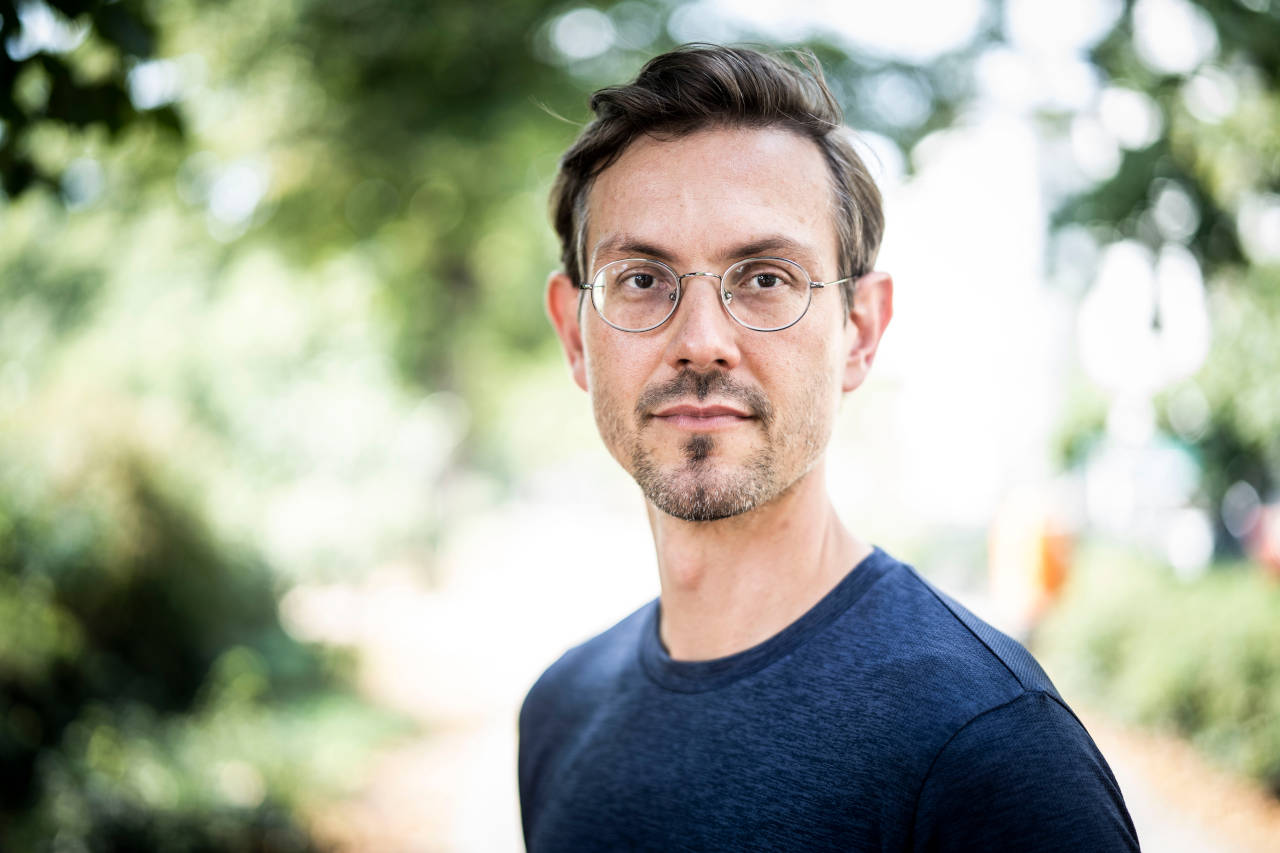
Juhan Aru is an Associate Professor in the Department of Mathematics at the École Polytechnique Fédérale de Lausanne (EPFL), affiliated with the Random Geometry (RGM) group. His research focuses on random geometry, Gaussian Free Fields (GFF), and stochastic processes , with applications to statistical mechanics and mathematical physics. He teaches courses such as Analysis IV, Probability, Gaussian Processes, and Introduction to Random Geometry. Affiliations: SB MATH RGM (Random Geometry Group) EDMA - Enseignement (Mathematics Education) SMA - Enseignement (Mathematics Teaching) His research investigates critical phenomena in 2D statistical physics, including SLE processes, Liouville quantum gravity, and multiplicative chaos. Recent work explores the interplay between GFF properties and geometric/topological structures like excursion decomposition and thick points. He advises PhD students including Philémon Bordereau and Han Xiao, and has directed Guillaume Charles Woessner's thesis. His lab's website is https://www.epfl.ch/labs/rgm/ .
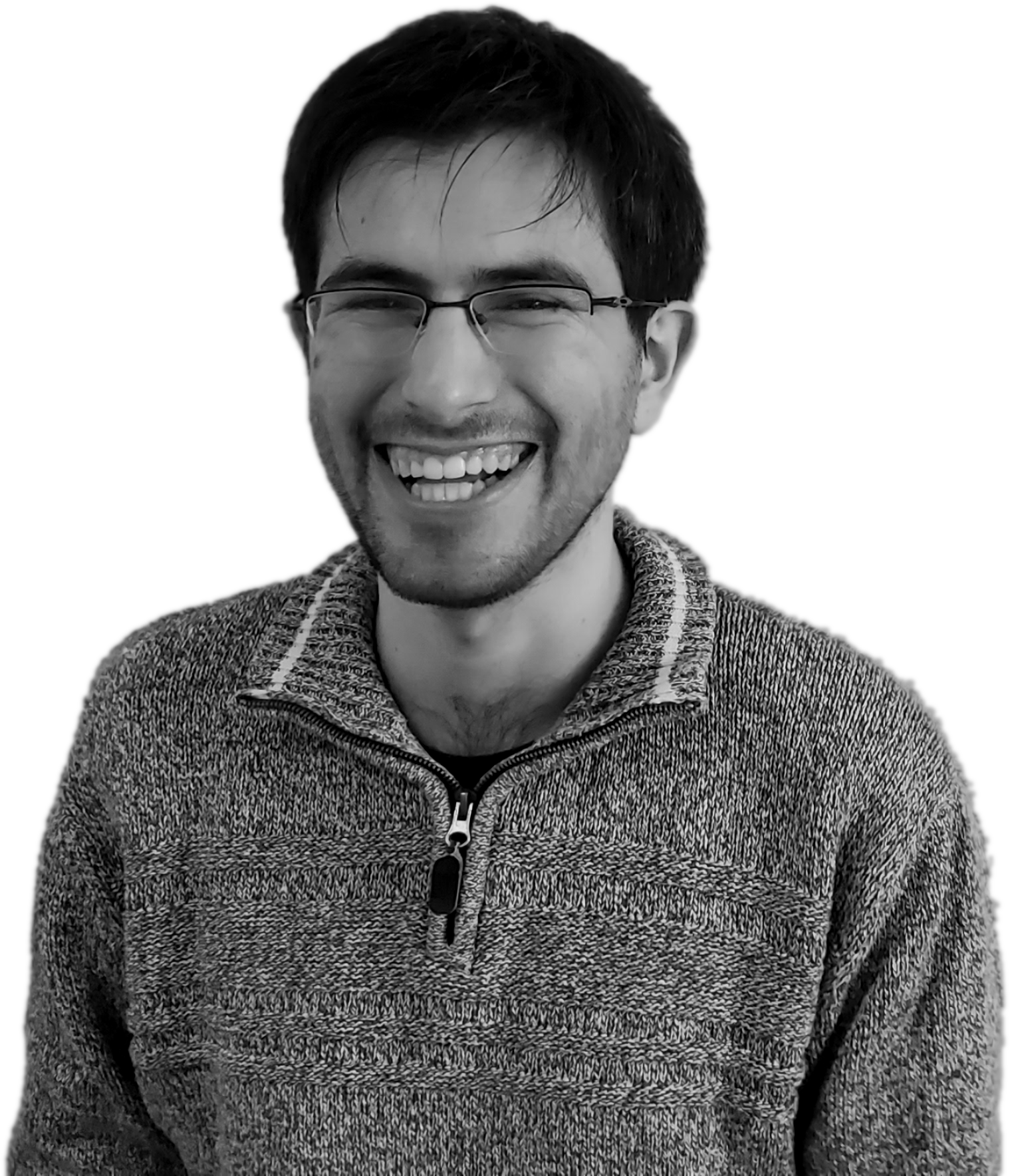
Erika Roldán Roa is a mathematician with academic affiliations at Ohio State University (Visiting Assistant Professor, 2019-2020) and Technische Universität München (Marie Skłodowska-Curie Fellow, 2020-2022). She holds a Ph.D. in Probability and Statistics from CIMAT (2018) and has conducted postdoctoral research at institutions like EPFL and Ohio State. Her work bridges stochastic topology, combinatorics, and educational technology, focusing on topics like cubical sliding puzzles, Eden growth models, and extremal topological problems in polyominoes. Education: Ph.D. in Probability and Statistics, CIMAT (2018) M.Sc. in Mathematics, CIMAT (2014) B.Sc. in Mathematics, Universidad de Guanajuato (2010) Research Interests: Her research spans stochastic topology, extremal combinatorics, and applications of discrete geometry to puzzles and games. She explores configuration spaces, topological properties of random structures, and innovative educational approaches like the Music Math Project, which integrates music and mathematics. Awards: Includes the Marie Skłodowska-Curie Fellowship (2020-2022), Arana-Ordaz Prize (2019), and Sofia Kovalevskaia Prize (2019). She has also received grants from CONACYT and CIMAT. Grants & Outreach: Developed workshops in marginalized communities using music and math, and contributed to software tools like the Eden Model analysis package. Active in science popularization through articles and outreach programs. Labs/Teams: Collaborated on projects like the Eden Model (topology analysis software) and extremal animal configurations, often involving interdisciplinary teams in mathematics and computer science.
Prof. Dr. Benedikt Jahnel is a Professor at the Institute of Mathematical Stochastics, Carl Friedrich Gauss Faculty, Technical University of Braunschweig, and Head of the Leibniz Junior Research Group on Probabilistic Methods for Dynamic Communication Networks. His research focuses on the modeling and analysis of spatially embedded systems with interacting random components, with applications in physics, epidemiology, and telecommunications. Education: PhD in Organismic and Evolutionary Biology from Ruhr University Bochum (2011), Diploma from Technical University of Berlin. Research interests: Uses tools from statistical mechanics and stochastic geometry to study phase transitions, percolation theory, and spatial random processes. Current projects investigate continuum percolation, interacting particle systems, and probabilistic methods for communication networks. Recent publications demonstrate strong emphasis on spatial stochastic processes and percolation theory, with applications to network connectivity and epidemic modeling. Trends include mathematical analysis of phase transitions in random environments and dynamics of communication networks. Scientific awards include leadership of Leibniz Junior Research Group, EURANDOM Ambassador appointment, and election to the board of the Probability and Statistics Group of the German Mathematical Society. Leads a research team including 3 postdocs and 3 predoctoral researchers. Current projects funded by DFG, ERC, and Math+ Cluster of Excellence. Heads the DYCOMNET research group at Weierstrass Institute Berlin, focusing on dynamic spatial random systems.
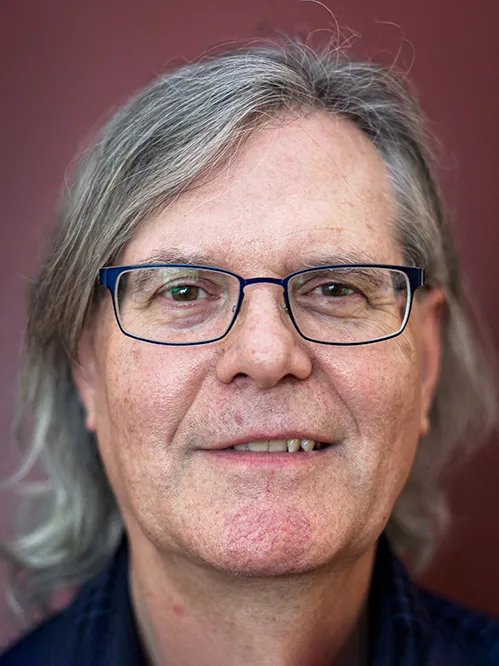
Avelio Sepúlveda is an Assistant Professor in the Department of Mathematics at Universidad de Chile, where he has been affiliated since 2021. He previously held a Chair CMM–CNRS fellowship (2020–2021) and completed postdoctoral work at Université Lyon 1 (2017–2020). His education includes a PhD from ETH Zürich (supervised by Wendelin Werner), a Master's from Université d'Orsay, and an Engineering degree from Universidad de Chile. His research centers on probability theory and statistical physics , with emphases on Gaussian free fields, random planar maps, percolation theory, and topological phase transitions. Key investigations include the structure of 2D Gaussian free fields, scaling limits of decorated planar maps, and dynamic conditioning of Markov processes ( myopic conditioning ). His publications (2020–2025) predominantly explore probabilistic geometry, phase transitions, and field theory, with recurring themes in conformal invariance, scaling limits, and lattice models. Notable methodological contributions include novel algorithms for myopic processes and combinatorial characterizations of Markov properties in planar maps. Awards & Service: Chair CMM–CNRS of Excellence for Young Researchers (2020–2021) Associate Editor: Electronic Journal of Probability and Electronic Communications in Probability Advising & Collaborations: He mentors six PhD/Master's students (Pablo Araya, Paul Cahen, Damian Cid, Felipe Espinosa, Pablo Zúñiga, Tomás Laengle) and collaborates extensively with researchers globally, including Christophe Garban (ERC Vortex). He co-organizes the Seminario de Probabilidades de Chile and workshops (e.g., 2025 Topological Phase Transition workshop).
Ivan Corwin is a Professor of Mathematics at Columbia University’s Faculty of Arts and Sciences and a member of the Data Science Institute (DSI). He holds affiliations with the Irving Center for Cancer Dynamics, Probability and Society Initiative, Program for Mathematical Genomics, and Quantum Initiative. He previously held positions at Microsoft Research, MIT, Institut Henri Poincaré (as a Poincaré Chair), UC Berkeley (as a Visiting Miller Professor), and others. His research focuses on probability and mathematical physics, particularly random interface growth, interacting particle systems, stochastic PDEs, and random matrix theory. Education: He earned his PhD from the Courant Institute in 2011. Research interests include KPZ universality, stochastic PDEs, and integrable probability models like ASEP, six-vertex models, and log-gamma polymers. His work bridges theoretical analysis and applications in non-equilibrium statistical mechanics, with recent trends emphasizing stationary measures, universality, and fluctuation behaviors. Awards include the 2021 Loeve Prize in Probability, 2018 Alexanderson Award, and fellowships from Clay Mathematics Institute, Packard Foundation, and Simons Foundation. He serves on scientific advisory boards for ICERM and MSRI. Advising and Grants: No specific grants or advisees listed, but his work has been supported by major fellowships. His affiliations with DSI and other institutes suggest involvement in collaborative projects. Labs/Teams: Active in interdisciplinary initiatives like the Probability and Society Initiative and Quantum Initiative, reflecting his focus on applying stochastic theory to complex systems.
Greg Morrow is a Professor in the Department of Mathematics at the University of Colorado Colorado Springs (UCCS), part of the College of Letters, Arts & Sciences. He holds a Ph.D. in Mathematics (1979) and M.S. in Statistics (1979) from the University of Illinois, Urbana-Champaign, and an M.A. in Counseling Psychology (1998) from Regis University. His research focuses on probability theory with specializations in random walks, percolation, and stochastic processes. Notable contributions include studies on gambler’s ruin models, percolation thresholds, and combinatorial probability. He has presented at conferences such as the International Conference on Lattice Path Combinatorics and contributed to journals like Stochastic Processes and Their Applications . Research interests emphasize theoretical probability applications in combinatorics and high-dimensional systems. Recent work explores rook paths, Bernoulli number identities, and random stopping times in stochastic models. His earlier research addressed critical percolation on lattices and statistical analysis in optical soliton systems. Lacking listed awards, Morrow’s academic service includes organizing the Frontier Probability Days and contributing to interdisciplinary collaborations. His personal website provides further details and publications.
Daniel Ahlberg is an Associate Professor in the Department of Mathematics at Stockholm University. His research utilizes probability theory to study spatial random processes including percolation models, random growth systems, branching processes, and combinatorial optimization problems. Current investigations focus on phase transitions in percolation, noise sensitivity of random systems, and geometric properties of random metrics. Research has established fundamental results on sharpness of phase transitions in continuum percolation, scaling limits of Boolean functions, and asymptotic behavior of first-passage percolation models. Recent work examines chaos phenomena in random growth models and statistical properties of geodesics in disordered media. Funded by multiple Swedish Research Council grants including a current research project grant (2022-2025). Recipient of the Ruth and Nils-Erik Stenbäck Foundation stipend (2022). Supervises doctoral students in probability theory and stochastic processes. Developed educational materials on probability fundamentals and Markov chain mixing. Teaches courses in probability theory, stochastic processes, and discrete mathematics.
Alexandre Stauffer is a Professor in Probability at the Department of Mathematics, King's College London. He holds a PhD from the University of California, Berkeley (2011), with postdoctoral positions at Microsoft Research and Università Roma Tre. He previously worked at the University of Bath (2013–2024) before joining King’s in 2024. His research focuses on discrete probability, interacting particle systems, and Markov chain mixing times. Key areas include first passage percolation, random walks, and phase transitions in stochastic systems. Stauffer has organized workshops on topics like strongly correlated random processes and random interacting systems. He secured grants such as the EPSRC Early Career Fellowship (2016–2022) and the Marie Curie Career Integration Grant (2013–2016). His work bridges theoretical probability with applications in statistical physics and computer science. Recent articles explore coexistence in competing percolation models and mixing times in dynamic systems. Stauffer’s research emphasizes multi-scale analysis and non-equilibrium phenomena in stochastic processes. Grants and organizational involvement highlight his leadership in probability theory. His publications span top journals like the Annals of Probability and Inventiones Mathematicae, reflecting rigorous mathematical contributions to understanding complex stochastic systems.
Partha Dey is an Associate Professor in the Department of Mathematics at the University of Illinois at Urbana-Champaign (UIUC), where he also serves as Director of the NetMath Program. He holds affiliations in both Mathematics and Statistics departments. His research focuses on Probability Theory and its intersections with Statistical Physics, emphasizing First/Last Passage Percolation, Random Growth Models, Stein’s Method, Spin Glasses, and Random Matrix Theory. Education: Ph.D. in Statistics from UC Berkeley (2010), supervised by Sourav Chatterjee and Steve Evans. Prior to UIUC, he was a Courant Instructor/Simons Fellow at NYU (2010-2013) and a Harrison Early-Career Assistant Professor at the University of Warwick (2013-2014). Undergraduate and Master’s studies at Indian Statistical Institute Kolkata (Mathematical Statistics & Probability). Research interests include analyzing stochastic processes in complex systems, with recent work on fluctuation phenomena in percolation models, spin glasses under external fields, and Stein’s method applications. His publications span high-impact journals like ALEA , Annals of Probability , and Communications in Mathematical Physics . Awards/Funding: No explicitly listed honors, though his positions suggest sustained academic recognition. Grants/Advising: No detailed grant info provided; no advisee names listed in texts. Labs/Teams: Leads NetMath Program, a distance-learning initiative in mathematics education. Collaborates widely on interdisciplinary projects in probability and statistical physics.
Kenneth Alexander is a Professor of Mathematics at the University of Southern California since 1996. He holds a Ph.D. from MIT (1982) and a B.S. from the University of Washington (1979). His research focuses on probability models in statistical mechanics, including percolation theory, first passage percolation, and polymers in random environments. He has contributed to understanding phase transitions, interface models, and stochastic processes in disordered systems. Education: 1982: Ph.D., Mathematics, MIT 1979: B.S., Mathematics, University of Washington Research Interests: Alexander explores probabilistic phenomena in physics, emphasizing percolation models (e.g., Ising, Potts, first passage percolation), Gibbs distributions, and polymers. His work includes studies on subadditive Euclidean functionals (e.g., minimal spanning trees) and stochastic processes in random environments. His recent articles analyze geodesic behavior, renewal theory, and phase transitions in disordered systems. Teaching: Taught Math 525a (Real Analysis) in Fall 2020. Scientific Awards: None explicitly listed in the provided texts. Grants and Advising: No grants or advisee details provided.
Vincenzo Nicosia is Senior Lecturer in Networks and Data Analysis at the School of Mathematical Sciences, Queen Mary University of London, and a member of the Centre for Complex Systems. His research deciphers the structure and dynamics of complex networks, with particular emphasis on multilayer and multiplex systems, random-walk processes, synchronisation, and their applications to urban analytics, neuroscience and epidemic modelling. Education & early career: While explicit degrees are not listed in the supplied text, Dr Nicosia has built an extensive publication record (100+ papers) since 2006, indicating long-standing academic training and international recognition in network science. Research interests: Nicosia’s work revolves around three inter-related pillars: Fundamental theory: random walks, diffusion, opinion dynamics, synchronisation and percolation on single and multilayer networks Methodological development: visibility graphs, first-passage observables, metadata-dependent embeddings, spectral and entropy-based metrics Data-driven applications: quantifying urban segregation and epidemic disparities, modelling cancer-spatial evolution, mining musical harmony networks, and analysing brain multiplex motifs His recent publications (2020-2023) reveal a strong focus on spatial stochastic processes —using random walks to measure segregation, mutation clustering in tumours, and the impact of city layout on COVID-19 spread—and on algorithmic inference in multiplex structures, including optimal percolation and compressed network representation. Grants & awards: He currently holds / has led EPSRC grant "Assessing spatial heterogeneity through random walks on graphs" (£162,886, 2019-2021). No other awards or fellowships are mentioned in the supplied material. PhD supervision & team: He advises an active cohort of doctoral researchers: Liam Fahey (temporal knowledge graphs), Yuhan Li (adaptive epidemic modelling), and Tom Roberts (stochastic sampling on lattice animals), among others. Outreach & service: Nicosia serves on the Council and Executive Committee of the Complex Systems Society, contributing to the governance and strategic direction of the international community.
Dr. Daniel Valesin is a Professor in the Department of Statistics at the University of Warwick. His research focuses on probability theory, with a particular emphasis on interacting particle systems, percolation theory, and random graphs. He has contributed to understanding critical phenomena in dynamic networks and stochastic processes on complex structures. Key research interests include contact processes on dynamic graphs, phase transitions in percolation models, and spatial Gibbs random graphs. His work combines rigorous mathematical analysis with probabilistic methods to explore metastability, extinction times, and scaling limits. Recent publications highlight advancements in first-passage percolation on random geometric graphs, adaptive contact processes, and the behavior of multirange percolation on oriented trees. His research often intersects with statistical mechanics and network science, addressing both theoretical and applied stochastic systems. No awards or grants are explicitly listed in the provided materials. He advises no listed students but collaborates extensively with researchers in probability and related fields.
Julia Komjathy is an Associate Professor at Delft University of Technology's Faculty of Electrical Engineering, Mathematics and Computer Science (EWI), within the Delft Institute of Applied Mathematics (DIAM). She leads the Applied Probability Group and focuses on probabilistic network models, including random graphs, spatial networks, and epidemic processes. Her research explores structural properties like 'explosion' in weighted graphs and phase transitions in contact processes. Education: Ph.D. in Mathematics from TU Budapest under Professors Márton Balázs and Károly Simon (2012). Thesis: Topics in Markov chains: Mixing and escape rate . Research Interests: Random graph models of complex networks Spatial random graphs and hyperbolic geometry Weighted random graphs and distance evolution Epidemic spread dynamics on networks Branching processes and percolation theory Phase transitions in scale-free systems Professional Activities: Organizer of TU Delft's Probability & Statistics Seminar Keynote speaker at WAW 2024 (Warsaw) and Discrete Probability Days 2023 (Barcelona) Supervised 4 PhD students, including Enrico Baroni (2017), Viktoria Vadon (2020), and Joost Jorritsma (2023) Awards: None explicitly listed, but her work has been published in top journals like PNAS, Annals of Applied Probability, and Random Structures & Algorithms. Current Projects: Investigating degree-dependent contact processes, first-passage percolation growth regimes, and cluster-size decay in spatial networks.
Leon Bungert is a W2 Professor with Tenure Track to W3 Professorship for Mathematics III (Mathematics of Machine Learning) at the University of Würzburg, appointed since 2023. He leads the Mathematics of Machine Learning group within the Institute of Mathematics. His academic journey includes a Ph.D. (summa cum laude) from the University of Erlangen-Nürnberg in 2020, focusing on nonlinear spectral theory with variational methods, followed by postdoctoral research at TU Berlin, Bonn, and Erlangen-Nürnberg. Research Interests: Bungert's work bridges applied analysis and machine learning, emphasizing PDEs on graphs, adversarial robustness, inverse problems, optimization, and nonlinear eigenvalue problems. His research often employs variational methods and explores the intersection of geometry, probability, and numerical analysis. Notable areas include adversarial machine learning, Lipschitz learning on graphs, and regularization techniques for inverse problems. Professional Activities: He serves as a guest editor for the European Journal of Applied Mathematics , associate editor for Advances in Continuous and Discrete Models , and co-organizes major conferences like MIA'25 and SSVM 2025. His work has been published in top journals such as Annals of Applied Probability , Journal de Mathématiques Pures et Appliquées , and SIAM Journal on Imaging Sciences . Upcoming Engagements: Invited speaker and organizer at events including the IHP Paris conference (January 2025), Osaka workshop on machine learning and numerics (March 2025), and the BIRS workshop on adversarial machine learning (August 2025). His research team collaborates with institutions globally, including MIT, University of Cambridge, and University of Bonn. Lab/Team: The Mathematics of Machine Learning group at Würzburg focuses on theoretical and applied aspects of machine learning, with active projects in adversarial robustness, PDE-based optimization, and geometric data analysis. Bungert’s team includes researchers like Eloi Martinet and Tim Roith, advancing interdisciplinary work in mathematical foundations of AI.
Prof. Dr. Matthias Schulte is a Professor of Stochastics at Hamburg University of Technology (TUHH), leading the Chair of Stochastics since September 2020. Previously, he held roles as Associate Professor at Heriot-Watt University (2020), Senior Assistant at University of Bern (2016–2020), and Research Associate at Karlsruhe Institute of Technology (2013–2016). He earned his PhD in Mathematics from the University of Osnabrück in 2013 and completed his Habilitation in Stochastics at the University of Bern in 2019. His research focuses on stochastic geometry, limit theorems, random graphs, and extreme value theory. Key areas include Boolean models, Malliavin-Stein methods, random geometric graphs, and Poisson process approximations. He has contributed extensively to stochastic analysis, spatial statistics, and Gaussian processes. Recent publications highlight advancements in hyperbolic stochastic geometry, moderate deviations on Poisson chaos, and algorithmic generation of hypergraphs. His work bridges theoretical probability with applications in geometric modeling and complex network analysis. Education: PhD (2013), Habilitation (2019), Diploma in Business Mathematics (2010) Affiliations: TUHH, University of Bern, Karlsruhe Institute of Technology Teaching: Courses in stochastic processes, stochastic geometry, and mathematical statistics Grants and collaborations: Active in GAMM Activity Group on Applied Operator Theory and SIAM Chapter Hamburg