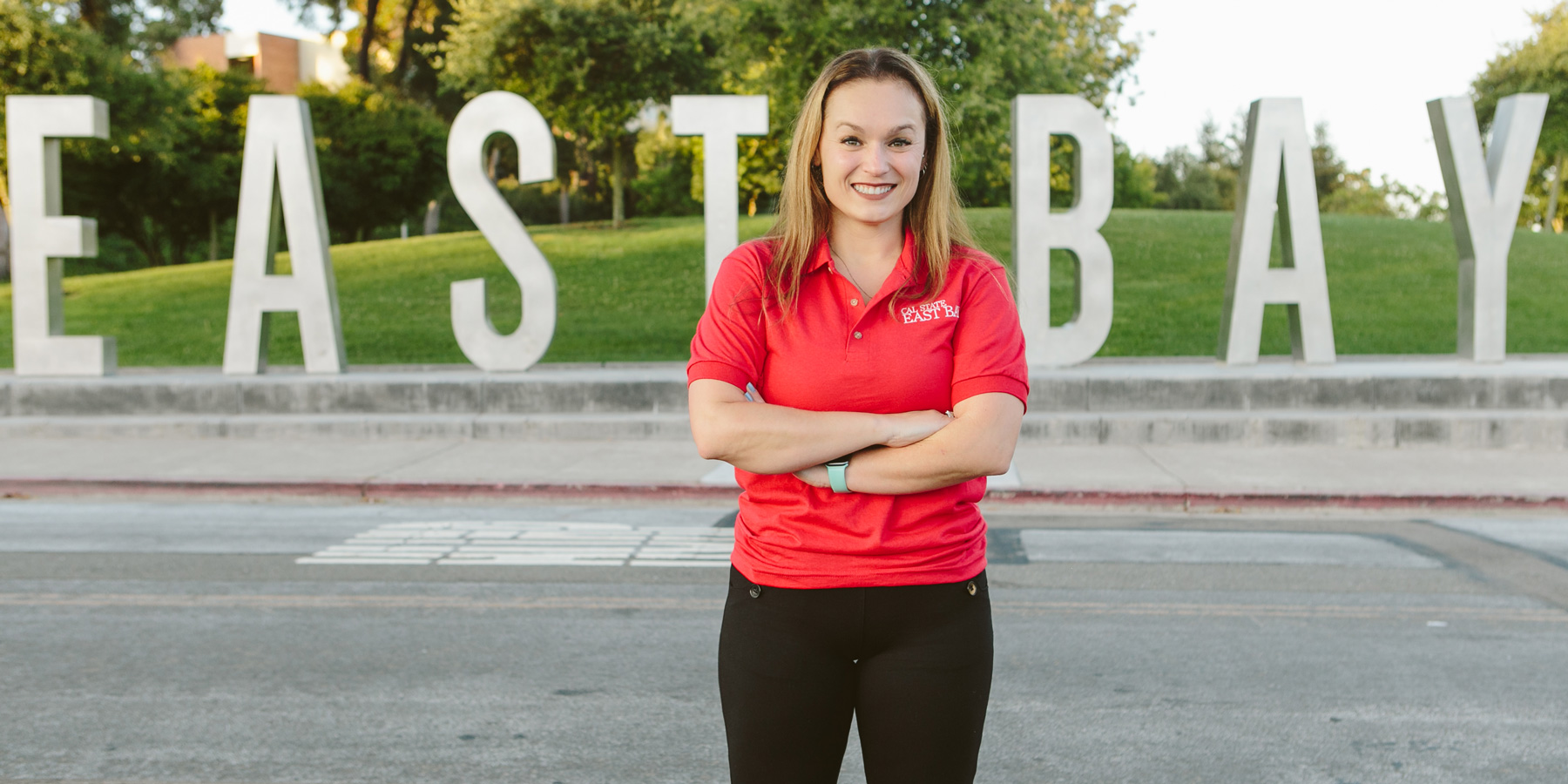
Michelle Rippy is an Assistant Professor in the Department of Criminal Justice Administration at California State University, East Bay, where she is also an alumna. Her work centers on educational equity and student success analytics, particularly for first-generation students. She leverages institutional data to develop evidence-based interventions that address systemic barriers to graduation. Research interests focus on: Identifying and closing equity gaps through data analysis Building community support systems for underrepresented students Designing academic navigation tools for first-generation learners Implementing retention strategies in criminal justice education She has pioneered several initiatives including the 'Taste of Success' networking event, a first-generation student cohort program, and a specialized orientation. She is currently developing a First-Generation Institute to centralize academic, psychological, and research resources. Professor Rippy's contributions to the CSU's Graduation Initiative 2025 exemplify data-informed approaches to improving student persistence across the university system.
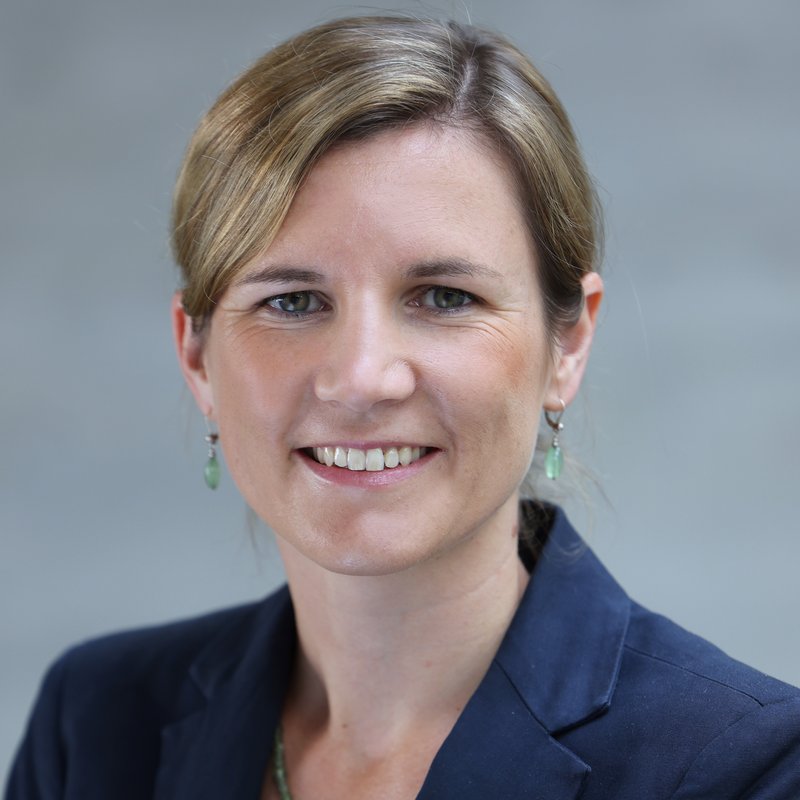
Professor Larissa Zierow is a Professor of Economics at ESB Business School, Reutlingen University, where she has been employed since September 2022. She serves as Programme Director of the BSc International Management Double Degree (IMX) program, German-French Link Liaison professor, Director of the Friedrich-List-Institute, and liaison professor for the German National Scholarship Foundation. Her academic career includes previous positions as Deputy Head of Division and Economist at the ifo Centre for the Economics of Education in Munich (2017-2022). Professor Zierow's research focuses on Economics of education , Labour economics , Applied econometrics , and Inequality . Her current research projects examine interventions to improve study skills, first-generation university students, the impact of civic education on civic engagement, and how the timing of income payments affects household behavior. Her work often employs quasi-experimental methods to evaluate educational policies and their long-term effects. Her recent publications (2023-2025) demonstrate a strong focus on education policy evaluation, with particular attention to school reforms, educational inequality during the pandemic, early childhood education impacts, and the relationship between economics education and entrepreneurial behavior. Her research spans multiple subfields including educational assessment, child development, labor market outcomes, and social policy evaluation. Active research projects include 'We help. You grow.' (study skills intervention) 'First generation students' research initiative Analysis of civic education impacts Research on family benefit payment timing effects Professor Zierow maintains significant external affiliations as a Research Professor at the ifo Centre for the Economics of Education and as a member of multiple professional economics associations. She supervises research through the Friedrich-List-Institute which she directs, providing opportunities for students interested in empirical economics research. Her teaching focuses on Macroeconomics, Labour economics, Applied Econometrics, and International Economics, reflecting her research expertise and methodological strengths.
Dr Chris Young is a Senior Lecturer in Biomedical Science and Enterprise Lead for the School of Allied Health Sciences at De Montfort University's Faculty of Health and Life Sciences. He also serves as a long-term visiting scientist at the Li Ka Shing Cancer Research UK Research Institute, Addenbrookes, Cambridge, and maintains research collaborations with the University of Portsmouth. Dr Young completed his PhD in Molecular Medicine at the University of Portsmouth (2007-2011), an MSc in Genetic Manipulation and Molecular Cell Biology with Distinction from the University of Sussex (2006-2007), and a BSc in Biochemistry and Organic Chemistry with First Class Honours from The Open University (2003-2006). He also holds a PG-Cert in Learning and Teaching in Higher Education with Distinction (2019) and is a Fellow of the Higher Education Academy. Dr Young's research focuses on skeletal muscle pathologies and in vitro/in vivo modeling of human pathologies, with two main themes: elucidating the role of autophagy in skeletal muscle stem cells, and developing next-generation wound dressings for trauma and disaster medicine. His work on autophagy has therapeutic potential extending to muscle disease, muscle aging, soft tissue injuries, rhabdomyosarcoma, diabetes, and liver disease. His expertise in muscle pathology underpins his co-founded company, Chromar Research & Development Ltd., which customizes IP and technology for human and veterinary markets. Analysis of Dr Young's publication record reveals a strong focus on muscle pathology, particularly Duchenne Muscular Dystrophy, with significant contributions to understanding autophagy mechanisms and purinergic signaling. His recent work has expanded into cancer research, particularly colorectal cancer biomarkers, and medical education innovations, reflecting his diverse research interests and interdisciplinary approach. ICURe Discover, Explore & Exploit awardee for Chromar Research and Development Ltd. (2024-2025) VentureVersity selected case study for success in Enterprise and Innovation (2024) Shortlisted for Academy of Medical Sciences Early Career Award (2023) Blavatnik Award Nominee (2022) Elected Member of the Fisheries Society of the British Isles (2022-present) Member of the Royal Society of Biology (2021-present) Future Research Leader Scholarship (2020) Innovation for International Education Award from Nanolive (2019) Dr Young successfully supervises PhD students including Michal Kozielecki, Kyle Gordon, and Divine Derefaka, and has secured four successive externally funded innovation grants to support Chromar in the last two years. His teaching portfolio includes Chemistry for the Biosciences, Biochemistry and Molecular Cell Biology, Cyto & Histopathology, Clinical Biochemistry, Clinical Genetics, and Cancer Biology, where he serves as Module Lead for Research Projects and as 1st Year Coordinator and Timetabling Coordinator for Biomedical Science. Dr Young maintains an active laboratory focused on skeletal muscle pathologies with two main research themes. He is collaborating with Dr Omar Qutachi to spin out Chromar Research & Development Ltd. with Innovate UK ICURe funding support, demonstrating his commitment to translating research into practical applications for human and veterinary markets.
Kaylene Waters serves as an IAS Tutor within the College for First Nations at the University of Southern Queensland's Toowoomba Campus. Her role focuses on academic support and educational development for First Nations students across the institution. Her research interests center on Indigenous Studies and First Nations Education, informed by her interdisciplinary background in General Studies and Law. This foundation enables culturally responsive teaching methodologies within the College for First Nations framework. As an academic tutor, she provides foundational educational support with emphasis on student retention and success. Her qualifications include a Bachelor of General Studies (BGenSt) and Bachelor of Laws (LLB), both completed at the University of Southern Queensland. She maintains direct student engagement through her campus-based tutoring role, operating within the university's dedicated First Nations educational structure without specialized laboratory or research team affiliations.
Sara Berens serves as an Associate Professor of Instruction in the College of Health Sciences and Professions at Ohio University, based in Grover W332. Her work bridges health administration education and student development through innovative advising practices and arts integration. Her academic credentials include: M.Ed. in College Student Personnel from Ohio University (2013) MFA from The Ohio State University (2010) Dr. Berens' research examines critical intersections in health education: Student Support systems for undergraduate healthcare programs Evidence-based Faculty Advising methodologies Arts and Health integration for enhanced learning outcomes Her commitment to student success manifests through sustained mentorship of first-generation students via We Are First and OHIO First Scholars programs across five academic years (2015-2020). As co-advisor for the Ohio University Society for Health Administration, she cultivates professional development opportunities while serving on the Master's of Health Administration Graduate Admissions Committee and PACE Proposal Committee for six consecutive years. Dr. Berens' administrative leadership includes interim coordination of Long Term Care Administration programs and active participation in university governance through hearing boards and appeals committees.
Dr. Leslie Ramos Salazar is a Professor and the Abdullat Professor of Business Communication and Decision Management at West Texas A&M University's Paul and Virginia Engler College of Business. She joined WTAMU in 2015 after earning her Ph.D. in Human Communications from Arizona State University. Dr. Ramos Salazar holds the distinguished position of Abdullat Professor of Business, recognizing her excellence in teaching, research, and service across the academic triad. Dr. Ramos Salazar's educational background includes: Ph.D. in Human Communications, Arizona State University (2013) M.A. in Intercultural Communication, California State University, Long Beach (2009) B.A. in Interpersonal and Organizational Communication, California State University, Long Beach (2007) Her research spans health communication, compassion, conflict management, cyberbullying, interpersonal communication, business communication pedagogy, and statistical education. Dr. Ramos Salazar has published extensively in top journals including Health Communication, Business and Professional Communication Quarterly, and Journal of Interpersonal Violence. Recent work examines mindfulness and self-compassion effects on faculty well-being, cyberbullying in academic settings, financial literacy among young adults, and AI integration in education. Her publication record shows consistent productivity with multiple articles appearing in 2024-2025 across diverse research areas. Dr. Ramos Salazar has received significant recognition including: Decision Sciences Journal of Innovative Education Best Research Paper Award (2018) Paul & Virginia Engler College of Business Professional Service Award (2019) Paul & Virginia Engler College of Business Research Excellence Award (2022) Abdullat Professor of Business designation (2018) As an educator, Dr. Ramos Salazar teaches Statistics for Business and Economics, Business Communication for Health Care Managers, Healthcare Communication for the Business Environment, and Contemporary Issues in Management Communication. She maintains an active advising load of 12-18 students per term and mentors numerous research projects through the McNair Scholars Program and other initiatives. Her commitment to student success extends to her role as faculty advisor for ALPFA (Association of Latino Professionals for America). Dr. Ramos Salazar serves on editorial boards, reviews manuscripts for multiple journals, and presents regularly at academic conferences. Her work demonstrates a strong commitment to advancing knowledge in communication studies while supporting student development and contributing to the academic community through meaningful service.
Domenico Caridi is an Associate Professor of Chemistry in the First Year College at Victoria University with over two decades of experience in chemistry education and research leadership. He spearheaded the successful implementation of block-mode chemistry curriculum for Years 1-2 undergraduate programs during 2018-2019 and pioneered innovative laboratory pedagogy for qualitative organic analysis and pharmaceutical testing. His educational credentials include: BAppSc FIT BScHons LaTrobe PhD LaTrobe GradDipSecEd VicMelb Caridi's research bridges educational innovation and analytical science. His educational scholarship focuses on pedagogy, curriculum design, and student learning within block-mode and laboratory environments, with current international collaborations examining STEM education models. His applied research centers on Analytical Chemistry and Separation Science, developing sensitive phytohormone detection methods for agricultural biostimulants and plant growth efficacy studies. This dual focus creates synergies between food chemistry analysis and pedagogical advancement. Publication analysis reveals two dominant trajectories: chemistry education innovations (block-mode curriculum design and laboratory instruction) and analytical food chemistry (vitamin/phytochemical quantification). The educational works demonstrate expertise in restructuring STEM delivery, while the analytical publications showcase advanced chromatographic and electrophoretic techniques for complex matrices like milk, onions, and broccoli. His recognition includes: Vice Chancellor’s Peak Award for Engagement (2012) Caridi maintains an extensive supervision record with 1 current PhD and 1 MSc candidate, having previously guided 5 PhD, 1 MSc, and 30 Honours students while co-supervising 2 additional graduate researchers. His research is funded by significant grants including $1,034,112 in internal teaching/research grants (2006-2019), $398,000 in university engagement funding (2008-2017), and $158,000 from Shimadzu Scientific Instruments for analytical instrumentation projects. He actively collaborates with international block-mode institutions on STEM education frameworks and leads agricultural chemistry initiatives developing phytohormone analysis protocols for biostimulant efficacy testing in plant systems.
Wei Chen is a Research Fellow at the Institute of Software, Chinese Academy of Sciences, where he serves as a PhD and Master's supervisor. He leads the Software Engineering Technology R&D Center and maintains affiliations with the University of Chinese Academy of Sciences and its Nanjing College. Dr. Chen has established himself as a leading figure in intelligent software engineering research within China's academic community. His primary research focuses on four interconnected areas: intelligent code maintenance and quality assurance (particularly Python ecosystem compatibility based on domain knowledge), reliability assurance of complex IoT systems in human-machine-object convergence scenarios, cloud-native system development with emphasis on Function-as-a-Service optimization, and quality assurance of deep learning frameworks in resource-constrained environments. Dr. Chen's work consistently bridges theoretical advances with practical applications, maintaining strong industry collaborations with major Chinese technology companies. Analysis of Dr. Chen's recent publications reveals a strategic integration of AI techniques with traditional software engineering challenges. His research shows increasing emphasis on leveraging large language models for IoT component synthesis, sophisticated dependency management solutions for Python ecosystems, and innovative approaches to testing autonomous systems. The work demonstrates both theoretical depth and practical utility, with many publications leading to implemented tools and systems. Second Prize of Science and Technology Progress Award of China Institute of Electronics (2022) First Prize of Science and Technology Progress Award of China Institute of Electronics (2021) ACM SIGSOFT Distinguished Paper Award (2023) Special Prize of the 4th China Software Open Source Innovation Competition (2021) First Prize in the 4th China Software Open Source Innovation Competition (2021) OW2 Programming Contest First Prize (2016) Dr. Chen has mentored over ten graduate students who have achieved notable success in academic competitions and industry placements. His laboratory (TCSE, http://tcse.cn/) currently manages multiple significant research projects including 'Complex IoT System Reliability Assurance Key Technology Research' (2025-2028), 'Intelligent Development, Testing, and Maintenance of Cloud-native Software Ecosystems' (2024-2027), and 'Traffic Infrastructure Digital Industrial Software Architecture and Core Technology Standard System' (2021-2024). The lab maintains active collaborations with Huawei, Alibaba, Tencent, and other leading technology enterprises.
Robert G. Rodriguez is a Professor of Political Science in the College of Humanities, Social Sciences and Arts at East Texas A&M University (formerly Texas A&M University-Commerce). He has served the institution since 2010, progressing from Assistant Professor to Associate Professor and ultimately to his current rank, while also holding the position of Interim Associate Dean from 2023 to 2024. A first-generation college graduate with Argentine immigrant parents, Dr. Rodriguez champions student success through personalized attention and leverages the university's proximity to Dallas for experiential learning opportunities. His educational background includes: B.A. in Political Science, University of California-Irvine (1994) M.A. in Political Science, University of Kansas (1996) Ph.D. in Political Science, University of Kansas (2005) Dr. Rodriguez's research spans Latin American Politics , Eastern European Politics , and Politics and Sports , examining political phenomena through unconventional lenses like sports figures and historical events. His work bridges academic theory with real-world applications, particularly in minority voting behavior, international relations, and sports policy. He actively publishes in interdisciplinary journals and contributes book chapters exploring cultural-political intersections. His publication trajectory reveals consistent thematic threads: analyzing politics through sports (evident in boxing and tennis studies), regional political dynamics (especially Latino voting patterns and U.S.-Ukraine relations), and historical justice issues. This multidisciplinary approach positions his work at the intersection of political science, sports history, and ethnic studies. Dr. Rodriguez has received extensive recognition including: TAMUC Office of Latinx Engagement & Outreach Leadership Award (2022) Multiple All-Texas A&M System Teaching Excellence Awards (2011, 2012) TAMUC Distinguished Global Fellow Award (2017) Office of Hispanic Outreach Faculty of the Year Award (2011) Latino Staff and Faculty Association Leadership Certificate (2020) An innovative educator, Dr. Rodriguez designs distinctive courses like 'The Politics of Muhammad Ali' and 'Nazis in South America', incorporating guest authors and immersive learning experiences. His teaching philosophy emphasizes student-professor interaction in small-class settings, reflecting his belief that personalized mentorship drives academic success. He actively participates in faculty governance and student outreach initiatives focused on underrepresented communities.
Professor Martin Wihoda is Deputy Head of the Institute of History at Masaryk University's Faculty of Arts in Brno, Czech Republic. A full Professor since 2010, he previously completed his habilitation in 2005 with the thesis 'The Golden Bull of Sicily. A wondrous story in the layers of memory.' Professor Wihoda's research focuses on medieval Central European history, with special emphasis on the westernization of Central Europe during the 10th-13th centuries, Czech history within the broader Central European context, and the political and religious structures of the medieval period. His work examines succession rules, church administration during the Hussite period, and the development of Czech political thought. His current research portfolio includes the international Erasmus+ project 'A Study of Central European Places of Memory for Collective Remembrance' (2023-2026), 'After Avars: The Rise and Fall of Carolingian Central Europe' (2025), and 'Cosmas of Prague and his World' funded by the Czech Science Foundation (2021-2024). He has also led projects on the cultural history of beer and Central European cultural identity. A Study of Central European Places of Memory for Collective Remembrance (2023-2026, Erasmus+) After Avars: The Rise and Fall of Carolingian Central Europe (2025, MU Internal) Cosmas of Prague and his World (2021-2024, Czech Science Foundation) Kulturní dějiny piva (Cultural history of beer) (2022-2023) České dějiny ve středoevropském kontextu (Czech history in Central European context) (2019) Young Europe: The First Expansion of Western Civilization (2018) As a supervisor, Professor Wihoda has guided numerous doctoral and master's students through thesis projects examining diverse aspects of medieval Central European history. His teaching responsibilities at Masaryk University include General History of the Middle Ages, Medieval History of Western Europe, source studies, and thesis seminars at all academic levels. His office is located in building B1/B1.407 at Arna Nováka 1, Brno.
Ylegnareb Caridad serves as an Adjunct Professor of Legal Skills and core member of the Academic Success team at St. Thomas University College of Law in Miami Gardens, Florida. Her teaching focuses on foundational legal competencies including case briefing, legal analysis, essay writing, and exam strategy, with dedicated mentorship for first-generation and foreign-trained law students navigating U.S. legal education and bar examinations. Her educational credentials include an LL.B. from the University of Zulia and a J.D. from St. Thomas University College of Law, where she served as a Research Assistant in cyber law and earned multiple Dean's List recognitions for academic excellence during her studies. Professor Caridad's professional expertise centers on Bar Preparation and Legal Education , enhanced by specialized practice in Property Insurance Law (residential/commercial litigation in South Florida), International Law (Venezuela/Latin America), and Consumer and Housing Law . Her Venezuelan legal licensure informs cross-border experience in oil and gas, environmental compliance, and labor law across the region. She actively volunteers with legal aid organizations addressing wrongful evictions, breach of warranty claims, defective products, and unfair consumer charges. Professor Caridad also maintains an active Florida real estate agent license, bridging practical property knowledge with her legal practice.
Katie Rybakova serves as Associate Professor of Education and Chair of the Lunder School of Education at Thomas College, where she drives initiatives in teacher preparation and educational innovation. Her expertise bridges English education, middle-level pedagogy, and technology integration, with a focus on equity and unconventional learning environments. Education: B.S. in English Education, Florida State University M.S. in English Education, Florida State University Ph.D. in Curriculum & Instruction, Florida State University Research Focus: Dr. Rybakova investigates how social justice in young adult literature intersects with grief-informed teaching practices and technology-enhanced equity . Her work examines first-generation college student experiences with Open Educational Resources, homeschooling in nomadic settings , and policy responses to educational crises like the COVID-19 pandemic. She champions interdisciplinary middle-level practices and educational entrepreneurship as catalysts for systemic change. Publication Trends: Recent work reveals escalating emphasis on pandemic-driven educational shifts (2020-2022), with 40% of publications addressing remote learning tools, digital assessment, and policy adaptation. Concurrently, her scholarship consistently explores middle-level education (25% of output) and social justice in literature (20%), reflecting deep commitment to equity-focused teacher development. Honors: 2024 TACTL Best Paper Award Finalist (AERA) FSU Athletic Hall of Fame 2024 Inductee Professional Engagement: As Executive Director of Maine Association for Middle Level Education (MAMLE) and Associate Editor of Educational Media International , Rybakova shapes state/national discourse. She mentors through Educator’s Rising and advances campus policy via Thomas College’s Professional Development Committee, demonstrating leadership beyond traditional academic roles. Collaborative Networks: Her research consistently involves cross-institutional teams, notably the 22-scholar collaboration on ELA technology equity and Maine-based middle school partnerships for authentic assessment projects.