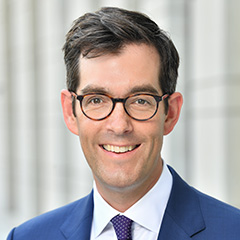
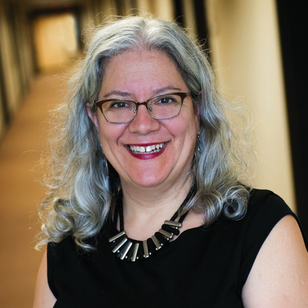
Craig Ferrell is an Assistant Professor and Program Coordinator for the Criminal Justice program at Houston Christian University (HCU). Prior to academia, he served over 30 years in the Houston Police Department (HPD), including 20 years on the Command Staff, and worked as General Counsel for the Major Cities Chiefs Association (MCC). His expertise spans law enforcement leadership, legal proceedings, and criminal justice education. Doctor of Jurisprudence, University of Houston Law Center Bachelor of Science in Criminal Justice, University of Houston Ferrell’s research focuses on legal and ethical challenges in law enforcement. His work explores digital privacy, immigration enforcement, constitutional rights, and the use of video evidence in policing. He addresses critical issues like civil rights litigation, employment law, and procedural justice. His publications highlight trends in law enforcement ethics, immigration policy, and technological integration in policing. Key themes include constitutional law, criminal procedure, and public policy development. Ferrell has contributed extensively to peer-reviewed journals and conference proceedings on these topics. Courses taught include American Government, Criminal Justice, Legal Aspects of Criminal Justice, Ethics in Crime, and Internships in Political Science. He emphasizes interactive teaching, leveraging his practical experience to engage students in real-world legal and ethical dilemmas.
Jennifer J. Lee is a Clinical Professor at Temple University Beasley School of Law, directing the Social Justice Lawyering Clinic at the Sheller Center for Social Justice. She represents low-income individuals and organizations on critical issues affecting marginalized communities, with expertise in low-wage worker rights and immigrant advocacy. Her clinic handles employment litigation and policy reform on family detention, language access, and temp worker exploitation, highlighted by the award-winning report Shortchanged exposing Pennsylvania wage theft. Education: J.D., Columbia Law School B.S., Massachusetts Institute of Technology Lee's research centers on the intersection of immigration status and labor rights for vulnerable workers. She examines systemic exploitation through wage theft, guest worker programs, and language barriers, advocating for structural change via clinical legal education and policy reform. Her scholarship reveals how immigration status exacerbates labor market vulnerabilities while exploring transnational solutions through comparative studies of migrant child detention and cross-border worker advocacy. Her publications demonstrate consistent focus on immigrant labor rights across disciplines, blending critical legal theory with empirical analysis of enforcement mechanisms. Key trends include challenging temporary visa programs as modern indentured servitude, reframing wage theft as systemic corporate exploitation, and developing frameworks for language justice in legal systems. This interdisciplinary approach bridges labor law, human rights, and social movement theory. Scientific Awards: Crystal Eastman Award for wage theft advocacy Derrick A. Bell Award (2020) for junior faculty activism George P. Williams Award as Outstanding Professor of the Year (2022) Paul & Sheila Wellstone Award to Combat Human Trafficking Cesar Chavez Organizational Leadership Award As clinic director, Lee mentors law students in high-impact litigation and policy campaigns, securing Fulbright funding for comparative research on migrant detention in Mexico. Her García-Robles Fulbright Scholarship enabled collaboration with UNAM on temporary visa worker protections, while clinic projects have attracted sustained media engagement and community partnerships. Lee leads the Social Justice Lawyering Clinic in strategic collaborations with grassroots organizations nationwide, focusing on systemic interventions in wage theft enforcement, language access in courts, and dismantling exploitative guest worker programs. Her team combines litigation, legislative advocacy, and community education to advance structural change for low-wage immigrant workers.
Clara Rauchegger is a Senior Assistant Professor of European Union Law and Digital Technology Law at the Department of Legal Theory and Future of Law, Faculty of Law, University of Innsbruck. She joined the university after serving as a Max Weber Postdoctoral Fellow at the European University Institute in Florence for two years. Her educational background includes: PhD from the University of Cambridge (Trinity Hall) Dr. Rauchegger's research focuses on European Union law with particular emphasis on fundamental rights protection and technology regulation. She is currently working on her Habilitation project on the governance of intermediary online platforms in the EU. Her work bridges legal theory with practical applications in digital governance, examining how EU law addresses emerging technological challenges while safeguarding fundamental rights. She approaches these issues from both doctrinal and empirical perspectives, often collaborating with computer scientists and other interdisciplinary experts. Her recent publications reveal a strong focus on the intersection of EU fundamental rights law and digital technology regulation. Key themes include the application of the EU Charter of Fundamental Rights in digital contexts, governance frameworks for online platforms, and the evolving relationship between EU law and national constitutional rights in the digital age. Her work demonstrates a consistent concern with ensuring that technological innovation aligns with constitutional values and fundamental rights protections. Dr. Rauchegger has received numerous prestigious awards: University of Innsbruck France Focus Award Eduard Wallnöfer Award Research Award of the City of Innsbruck Rotary Club Innsbruck Award for outstanding academic achievements University of Cambridge St Edmund's College Award for First Class LLM degree Winner of the Austrian Federal Language Competition in French As an active researcher, Dr. Rauchegger leads the legal component of the DeFiTrace project (FFG KIRAS), investigating data-driven methods for analyzing illegal payment flows in cross-ledger DeFi ecosystems. She participates in the ArtiPro consortium (ERA-PerMed) and serves on the Management Committee of the Global Digital Human Rights Network (COST). Her research has secured funding from multiple sources including the Austrian Science Fund (FWF), Austrian Academy of Sciences (ÖAW), and UK Arts & Humanities Research Council. Dr. Rauchegger is a member of the Digital Science Center at the University of Innsbruck, an interdisciplinary research center examining digital innovation from multiple perspectives. Through this affiliation, she collaborates with computer scientists, social scientists, and other experts to address complex challenges at the intersection of law and technology.
Bobby Burchfield serves as a Professorial Lecturer in Law at the George Washington University Law School, leveraging a distinguished 40-year career in private practice where he argued two landmark First Amendment cases before the U.S. Supreme Court and served as General Counsel for President George H.W. Bush's 1992 re-election campaign. His educational foundation includes: BA from Wake Forest University JD from George Washington University (Editor-in-Chief of the GW Law Review) Mr. Burchfield's expertise centers on Constitutional Law with deep specialization in First Amendment jurisprudence and Free Speech litigation, extending to Election Law and Business Ethics. His current Reading Group on Foundations of Free Speech as Applied to Contemporary Issues examines modern challenges to constitutional protections through real-world case studies and judicial analysis. Professional recognition encompasses: Two-decade inclusion in Best Lawyers in America Top-tier rankings from Chambers Partners and Benchmark Litigation Alumni Awards from three major institutions He maintains active leadership roles including service on GW Law's Dean's Advisory Board, the Wake Forest University Board of Trustees, the National Capital Area Boy Scouts Executive Board, and chairmanship of two federal super-PACs, reflecting his commitment to legal education and public service beyond the classroom.
George Thomas serves as the Burnet C. Wohlford Professor of American Political Institutions in the Department of Government, specializing in American Constitutionalism, American Political Thought, Constitutional Law, and Supreme Court analysis. His expertise bridges historical foundations and contemporary constitutional debates through rigorous scholarly inquiry. His academic credentials include a B.A. from the University of Utah and a Ph.D. from the University of Massachusetts, Amherst, following prior faculty service at Williams College as an Assistant Professor. Professor Thomas's research examines constitutional identity formation, religious influences on political development, and the tension between written constitutional text and unwritten principles. His work consistently connects historical analysis to current legal and political controversies, particularly regarding race, citizenship, and institutional design. Recent publications demonstrate a trajectory from foundational studies of Madisonian theory toward urgent contemporary issues like religious liberty conflicts and constitutional misinterpretations in public discourse. His scholarship increasingly engages with media through platforms like The Atlantic to correct popular misconceptions about American governance. His scholarly impact is evidenced by: American Political Science Association’s Alexander L. George Award (2006) National Endowment for the Humanities grant (2010) Huntington Library grant (2013) Professor Thomas maintains active research supported by major grants while mentoring students in constitutional theory; his office hours in Kravis Center 332 reflect ongoing engagement with academic community. No dedicated research laboratories or large-scale collaborative teams are referenced in available materials.
Martha A. Field is the Langdell Professor of Law at Harvard Law School. She holds a B.A. from Radcliffe College and a J.D. from the University of Chicago Law School, where she was valedictorian. Her career includes clerkships for Justice Abe Fortas of the U.S. Supreme Court and Judge John Minor Wisdom. Prior to Harvard, she taught at the University of Pennsylvania Law School for nine years. Her research focuses on constitutional law, civil procedure, disability rights, reproductive rights, family law, and First Amendment issues. She has engaged in international legal projects, including a five-year study of Central American judicial systems. Field’s work bridges legal theory and practice, addressing topics like surrogacy, federal jurisdiction, and disability rights. Her publications include influential books on surrogate motherhood and mental retardation rights. She has argued cases before the U.S. Supreme Court and federal appellate courts. Her teaching spans criminal law, evidence, and federal courts.
Zachary Bray is the James and Mary Lassiter Professor of Law at the University of Kentucky’s J. David Rosenberg College of Law. A Kentucky native, he previously served at the University of Houston Law Center before returning to Kentucky in 2016. His expertise spans monument law, environmental law, property rights, and administrative law. Bray holds a Juris Doctor from Yale Law School and a Bachelor of Arts in Philosophy and History from the University of Notre Dame. His career includes judicial clerkships with federal judges and work at Munger, Tolles & Olson LLP. His research focuses on legal frameworks for monuments, religious land use, endangered species protection, and groundwater law, published in journals like the Harvard Environmental Law Review and Brigham Young University Law Review. He teaches Property, Administrative Law, Land Use, and Natural Resources courses. Recipient of the 2015 Provost’s Teaching Excellence Award and 2022 Alumni Great Teacher Award, Bray emphasizes student success. He leads research initiatives like the Mellon Foundation-funded Monument Workshop exploring public memory and cultural heritage conflicts.
Richard W. Garnett is the Paul J. Schierl/Fort Howard Corporation Professor of Law and Concurrent Professor of Political Science at the University of Notre Dame’s Law School. He directs the Program on Church, State & Society and serves as a Faculty Fellow at the Center for Citizenship and Constitutional Government. His expertise spans constitutional law, religious freedom, church-state relations, and First Amendment issues. Garnett holds a J.D. from Yale Law School and a B.A. summa cum laude from Duke University. Formerly a clerk for Chief Justice William H. Rehnquist and Judge Richard S. Arnold, he practiced law in Washington, D.C., before joining Notre Dame in 1999. His research focuses on religious liberty, institutional autonomy, and the intersection of law, religion, and society. Key themes include the Establishment Clause, Free Exercise Clause, and the role of religious institutions in public life. Garnett has authored numerous books and articles, including Religion and the American Constitutional Experiment and First Amendment Stories . He frequently contributes to legal blogs like Mirror of Justice and testifies before legislative bodies on religious expression issues. Garnett’s scholarship emphasizes the structural and philosophical foundations of religious freedom, arguing for a balanced approach that respects both individual conscience and institutional autonomy. His work often critiques judicial overreach while advocating for pluralistic legal frameworks that accommodate diverse religious practices without state coercion. He has engaged in high-profile legal advocacy through amicus curiae briefs in landmark cases such as Hosanna-Tabor Evangelical Lutheran Church v. EEOC and Carson v. Makin , defending religious autonomy and school choice. His teaching includes constitutional law, criminal law, and courses on law and religion, reflecting his commitment to integrating doctrinal rigor with ethical and philosophical inquiry.
John Brooks is a Professor of Law at Fordham University School of Law, where he joined in 2022. Previously, he served on the faculty at Georgetown University Law Center for ten years and was a Climenko Fellow and Lecturer on Law at Harvard Law School. He holds a J.D. from Harvard Law School and an A.B. from Harvard College. Education: A.B., Harvard College J.D., Harvard Law School (Olin Fellow in Law & Economics) His research centers on tax law, public finance, and fiscal policy, with a focus on the federal student loan program and hidden forms of social welfare spending. He examines the constitutional dimensions of taxation, the treatment of income, and the role of cross-subsidies in government finance. His interdisciplinary work integrates legal theory, economics, and policy analysis. Brooks’s recent publications reveal a consistent focus on rethinking taxation, student debt, and public spending mechanisms. His work explores constitutional constraints on tax reform, the treatment of student loan cancellation, and the expansion of income-driven repayment systems. He frequently collaborates with leading scholars and contributes to both academic and public discourse through outlets like the New York Times and Washington Post. His notable recognitions include the Sidney I. Roberts prize for the best paper on taxation and the Olin Fellowship in Law & Economics. Sidney I. Roberts prize for the best paper on taxation Olin Fellow in Law & Economics Brooks advises policymakers and advocates on tax and student loan issues. He is currently writing a book on American 'hidden' social welfare spending under contract with Yale University Press. His prior professional experience includes working in the tax department at Ropes & Gray and clerking for Judge Norhan H. Stahl of the U.S. Court of Appeals for the First Circuit. He is affiliated with research platforms such as SSRN and maintains an active scholarly profile through publications in journals like the Georgetown Law Journal, Tax Law Review, and North Carolina Law Review.
Justin Driver is the Robert R. Slaughter Professor of Law at Yale Law School, where he teaches Constitutional Law, Education Law, Narratives from Prison, and The Law of Racial Inequality. He is a leading scholar in constitutional law, with a particular focus on students’ rights, civic education, and the intersection of law and public schooling. A graduate of Brown, Oxford (as a Marshall Scholar), Duke, and Harvard Law School, Driver has held teaching positions at Harvard, Stanford, the University of Chicago, the University of Texas, the University of Virginia, and Westville Correctional Facility. He clerked for the U.S. Court of Appeals for the D.C. Circuit and the U.S. Supreme Court. B.A., Brown University, 1997 M.A., Duke University, 1998 M.S., Oxford University, 2000 J.D., Harvard Law School, 2004 Driver’s research centers on constitutional law, education law, and the First Amendment, with a strong emphasis on how the Supreme Court shapes the rights of students in public schools. His work explores the legal foundations of civic education, racial inequality in education, and the constitutional limits of school authority. He advocates for a 'student-centered civic education' model that empowers young people to understand and assert their constitutional rights. His publications include influential law review articles and two major books. His first book, The Schoolhouse Gate: Public Education, the Supreme Court, and the Battle for the American Mind (2018), has been widely acclaimed, named a Washington Post Notable Book and an Editors’ Choice of The New York Times Book Review, and awarded the Steven S. Goldberg Award. His forthcoming book, The Fall of Affirmative Action: Race, the Supreme Court, and the Future of Higher Education (September 2025), analyzes the legal and social consequences of the Supreme Court’s recent decisions on race-conscious admissions. Driver has received numerous honors, including the William Nelson Cromwell Article Prize, election to the American Law Institute, and fellowship in the American Academy of Arts & Sciences. President Biden appointed him to the Presidential Commission on the Supreme Court of the United States and to the Holmes Devise Committee, which produces the official history of the U.S. Supreme Court. He has advised on civic education initiatives and co-leads a program placing Yale Law students in New Haven public schools to teach constitutional law. He has written extensively for public audiences in The Atlantic , The New York Times , The Washington Post , and The New Republic . He has also served as a commentator in high-profile legal symposia and moderated events with Supreme Court justices. Driver is actively involved in public discourse on constitutional law, frequently cited in Supreme Court decisions and consulted on issues involving religious exemptions, LGBTQ+ rights in schools, and the legacy of Brown v. Board of Education. His work continues to shape legal and educational debates across the nation.
Aviva A. Orenstein is a Professor of Law at Indiana University Maurer School of Law, where she holds the Karen Lake Buttrey and Donald W. Buttrey Chair. She currently serves as Associate Dean of Students and is a Val Nolan Faculty Fellow. Orenstein teaches Evidence, Civil Procedure, Family Law, and Children and the Law, and has taught American evidence law in China. Professor Orenstein earned her A.B. summa cum laude from Cornell University in 1981 and her J.D. magna cum laude from Cornell Law School in 1986, where she served as articles editor of the Cornell Law Review and was elected to the Order of the Coif. She clerked for the late Hon. Edward R. Becker, Chief Judge of the Court of Appeals for the Third Circuit. Cornell University, A.B., 1981 (summa cum laude) Cornell Law School, J.D., 1986 (magna cum laude) Professor Orenstein's scholarly work focuses on evidence law, particularly the intersection of evidence law and culture. Her research explores how jurors' emotions, especially regret, can justify rules excluding character evidence. She has written extensively on confrontation rights in domestic violence cases, the admissibility of prior sex crimes evidence, and the application of evidence rules in culturally specific contexts such as Jewish law and tribal courts. Her recent publications demonstrate a continued focus on evidence law with expanding applications to contemporary issues like digital evidence from social media, wrongful convictions based on "bad science," and religious accommodations in prison settings. Orenstein's work often bridges traditional legal analysis with insights from psychology, cultural studies, and gender theory. Professor Orenstein has received several honors and awards: Karen Lake Buttrey and Donald W. Buttrey Chair Val Nolan Faculty Fellow Order of the Coif (elected) Fellow, Poynter Center for the Study of Ethics and American Institutions (2005-06) Orenstein has been actively involved in mentoring law students through various programs. She founded and supervises Outreach for Legal Literacy, where law students teach constitutional law and civics to fifth-graders. She previously directed the Child Advocacy Clinic, supervising students who served as guardians ad litem for children in custody cases. Orenstein also serves as a court-appointed special advocate for abused and neglected children and performs pro bono work in juvenile court. Her administrative roles have included serving as associate dean for academic affairs (2017) and associate dean for students and academic affairs (2018-21). Professor Orenstein has demonstrated commitment to interdisciplinary work, having studied Bible, Talmud, and Jewish law as a visiting student at Hebrew College Rabbinical School, which has informed her scholarship on the cultural aspects of legal interpretation.
Robert A. Garda, Jr. serves as the Eleanor Legier Sarpy Distinguished Professor of Law at Loyola University New Orleans College of Law, where he teaches Contracts, Commercial Transactions, International Commercial Transactions, First Amendment, Fourteenth Amendment, and Education Law. A member of the Loyola Law School faculty since 2002, Professor Garda has established himself as a leading scholar in education law with a particular focus on students with disabilities and charter school issues. Professor Garda earned his J.D. from Duke University School of Law in 1994, where he served as Articles Editor on the Duke Law Journal, and his B.A. from Duke University in 1990. Prior to entering academia, he worked as a partner at the Salt Lake City firm of Fabian & Clendenin, focusing on education law, commercial litigation, and employment law, after externing for Justice Zimmerman of the Utah Supreme Court. His research interests center on education law with special emphasis on legal issues relating to students with disabilities, affirmative action, and charter schools. Professor Garda has published extensively in top law reviews including the North Carolina Law Review , Florida Law Review , and Journal of Law & Education . His scholarship examines the rights of students with disabilities to exercise public and private school choice, the impact of Supreme Court jurisprudence on religion clauses in schools, and racial and socioeconomic diversity in educational settings. Professor Garda has received significant recognition for his work, including the 2010 Good Apple Award from the Appleseed Network and the 2009 Gillis Long Poverty Law Center Public Service Award. He was voted Favorite Professor of the Year for 2008-2009 and 2009-2010 by Loyola Law students. 2010 Good Apple Award from the Appleseed Network 2009 Gillis Long Poverty Law Center Public Service Award Favorite Professor of the Year 2008-2009 Favorite Professor of the Year 2009-2010 Professor Garda has held significant leadership positions including past national Chair of the Association of American Law Schools (AALS) Section on Education Law and service on the Louisiana Advisory Committee to the U.S. Commission on Civil Rights. He currently serves as Chair of the Board of Directors for the Louisiana Mental Health Advocacy Services and on several non-profit boards related to special education. His public service extends to work with the Louisiana Bar Foundation, Louisiana Appleseed, and national and local public interest groups on education and disability issues. He is frequently consulted by Louisiana media on education matters, demonstrating the real-world impact of his scholarship. Professor Garda maintains an active role in addressing educational challenges through his board memberships and collaborations with organizations focused on special education, working to bridge the gap between academic scholarship and practical implementation of education law principles.
Dean Jennifer W. Reynolds holds the Dave Frohnmayer Chair in Leadership & Law at the University of Oregon School of Law, where she serves as Dean and teaches civil procedure and conflict of laws. An expert in negotiation and conflict management, she co-directs the nationally-ranked Oregon ADR Center and has chaired the ADR Section of the Association of American Law Schools. Her educational background includes a J.D. cum laude from Harvard Law School, an M.A. in English from the University of Texas at Austin, and a B.A. with honors from the University of Chicago. Prior to academia, she worked seven years as a systems analyst at UT Austin and practiced First Amendment law at Dow Lohnes PLLC in Atlanta. Reynolds' research centers on mediation, dispute systems design, and cultural influences in alternative dispute resolution. She pioneers unconventional approaches through the "Star Wars & Conflict Resolution" series, examining how popular culture reframes conflict resolution paradigms. Her work critically analyzes ADR's societal implications, campus sexual misconduct resolution systems, and the justice perceptions in mediated outcomes. Her recent publications reveal a trajectory from theoretical ADR frameworks toward practical applications in digital disputes (Snap Disputes), social justice activism, and institutional reform. Current work focuses on meta-analysis in dispute resolution and civil procedure pedagogy, reflecting her dual commitment to scholarly innovation and legal education. Reynolds has received Oregon's highest teaching honors including the Ersted Award and Hollis Teaching Award, alongside research recognition through Provost Banners and the SBA Margie Paris Award. Her 2023 appointment as Orlando John and Marian H. Hollis Professor of Law underscores sustained scholarly excellence. SBA Margie Paris Award (2024) Orlando John and Marian H. Hollis Professor of Law (2023) Recognized for Research Excellence (Provost Banners, 2023) Fund for Faculty Excellence Award (2021) Pillar of the Community Award (2020) Oregon Faculty Star (2019) University of Oregon Ersted Teaching Award (2012) University of Oregon School of Law Hollis Teaching Award (2012) Board of Advisors Faculty Achievement Award, University of Missouri (2008-2009) While specific grant details aren't documented in source materials, Reynolds has directed the Oregon ADR Center's nationally-recognized programs and served as interim university ombudsperson. Her leadership extends to the Pro Bono Program and Oregon Law Students Public Interest Fund, demonstrating commitment to practical justice engagement beyond traditional advising roles. As Faculty Director of the award-winning Oregon ADR Center, she oversees initiatives including the Appropriate Dispute Resolution Center's Works-in-Progress Conference and the AALS Alternative Dispute Resolution Section. The center's focus on campus sexual misconduct resolution systems and dispute systems design reflects her research-practice integration.
Kevin Johnson is an Associate Professor in the Department of Communication Studies at California State University, Long Beach (CSULB), within the College of Liberal Arts. His work focuses on rhetorical theory, First Amendment issues, and the analysis of public controversies through critical, cultural, and psychoanalytic lenses. His research spans from Greco-Roman rhetorical traditions to contemporary critical frameworks, emphasizing intersections between theory and political strategy critiques in domestic and international contexts. He actively engages with community organizations, serving as Director of the Center for First Amendment Studies, and holds leadership roles in the National Communication Association and Broadcast Education Association. Johnson contributes to academia through editorial board memberships for the Western Journal of Communication and First Amendment Studies Journal. His service extends to the Long Beach Branch NAACP, local church leadership, public school volunteering, and athletic officiating.
Tonja Jacobi is Professor of Law and Sam Nunn Chair in Ethics and Professionalism at Emory University School of Law, where she has established herself as a leading expert on Supreme Court judicial behavior. Her research combines empirical, formal, and doctrinal methods to examine various aspects of judicial decision-making, with particular expertise in Supreme Court oral arguments. Her educational background includes a PhD in Political Science from Stanford University, a Masters from the University of California, Berkeley, and law and undergraduate degrees with First Class Honors from the Australian National University. Professor Jacobi's research focuses on judicial politics, behavior, and strategy; American governmental institutions; and constitutional law, particularly constitutional criminal procedure. She has conducted empirical studies covering sixty years of Supreme Court arguments, identifying patterns and prejudices in judicial behavior that can predict case outcomes. Her work has been cited by Justices Sotomayor and Ginsburg, who noted it influenced how the Court conducts oral arguments. Her scholarship spans constitutional law, criminal procedure, legislative process, and judicial behavior, with particular attention to how political institutions interact to shape the law. Her research on Supreme Court oral arguments has been especially influential in understanding judicial decision-making processes. Professor Jacobi has published in over sixty peer-reviewed and law review journals and co-founded ScotusOA.com, a website devoted to empirical analyses of Supreme Court oral arguments. She regularly writes op-eds for major publications including the New York Times and Washington Post, and previously authored the 'Questions Presented' column for Bloomberg Law from April 2023 to April 2024. She serves as faculty advisor to both the American Constitutional Society and the Federalist Society at Emory Law, demonstrating her commitment to fostering diverse perspectives on constitutional issues.