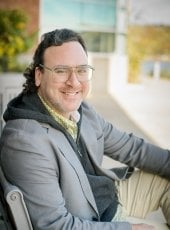
Jafar Zanganeh is a Research Fellow in the School of Engineering at the University of Newcastle, specializing in combustion engineering, fire safety, and sustainable energy systems. His research addresses fundamental and applied aspects of industrial safety and renewable energy technologies. Dr. Zanganeh's investigations span explosion dynamics, hydrogen safety, catalytic processes for green ammonia production, and innovative environmental remediation techniques. His recent publications focus on: Advanced combustion safety mechanisms for industrial settings Catalytic systems for sustainable ammonia and hydrogen production Energy efficiency improvements in commercial systems Novel environmental protection technologies Research contributions include the development of passive noise control systems, nanocomposite coatings for naval applications, and biomass-derived energy processes.
Elif Bal Beşikçi is an Assistant Professor at Istanbul Technical University in the Department of Maritime Transportation and Management Engineering, with a robust research profile evidenced by 18 research outputs and an active publication record extending through 2025. She serves as Principal Investigator for significant research projects including 'A Psychological Assessment Model on the Commercial Maritime Transport Sector' (2022-2024) and the EU-funded 'MARITIME EDUCATION FOR ENERGY EFFICIENCY' project (2018-2020). Her research expertise spans multiple critical areas in maritime studies: Maritime psychology and seafarer well-being Energy efficiency measures for ships Safety analysis of fire and explosion risks Application of advanced decision-making methodologies (AHP, VIKOR, TOPSIS) Chemical tanker operations and safety Environmental protection and waste management in shipping Dr. Bal Beşikçi's scholarly work demonstrates a sophisticated integration of technical maritime engineering with human factors considerations. Her recent publications reveal a growing emphasis on psychological aspects of maritime operations, particularly through bibliometric analyses that map the evolving field of maritime psychology. She has made significant contributions to safety analysis methodologies, applying fuzzy logic and fault tree approaches to assess risks in bulk carriers and chemical tankers. Analysis of her publication trends shows a consistent focus on applying quantitative decision-making frameworks to practical maritime challenges, with increasing attention to human factors and environmental sustainability in recent years. Her work bridges theoretical methodology development with practical maritime industry applications. Professional activities include: Supervision of 9 students Extensive research output with citations across multiple publications International collaborations reflected in co-authored works Development of models for ship-marine pilot assignments and risk factor analysis Dr. Bal Beşikçi's research program addresses critical challenges in maritime transportation, balancing technical safety requirements with human performance considerations. Her current projects suggest continued focus on psychological assessment models and energy efficiency education for the maritime sector, indicating her commitment to addressing both immediate operational concerns and long-term industry transformation needs.
Silvia Öttl is a Senior Lecturer at MCI Management Center Innsbruck in the Smart Building Technologies department. Previously, she held a PostDoc position at the University of Innsbruck’s Institute for Construction and Material Science and worked at Bartenbach GmbH in R&D, focusing on energy-efficient building technologies. Her academic career includes a PhD in Astrophysics (2014) and prior roles in astrophysical research at the University of Innsbruck’s Institute for Astro- and Particle Physics. Education: PhD in Astrophysics (University of Innsbruck, 2014), MSc/BSc in Physics (University of Innsbruck, 2011), and Matura from Naturwissenschaftliches Bundesrealgymnasium Wörgl (2001). Research interests span smart building systems, energy-efficient ventilation, fire safety in HVAC systems, and sustainable construction. Her astrophysical work focused on planetary nebulae ionization, gamma-ray sources via H.E.S.S. collaboration, and astrochemistry of interstellar molecules. Publications include peer-reviewed studies in astrophysics and building technology, including contributions to the H.E.S.S. collaboration’s gamma-ray observations and recent work on indoor air quality optimization in educational facilities. She has received the MCI Teaching Award (2022). Teaching roles include courses on energy-efficient lighting, building physics, and astrophysics at the University of Innsbruck. She advises Bachelor’s theses on energy communities, renewable energy integration, and indoor environment monitoring. Professional training includes project management for Horizon 2020, didactic qualifications, and mediation in academic environments.
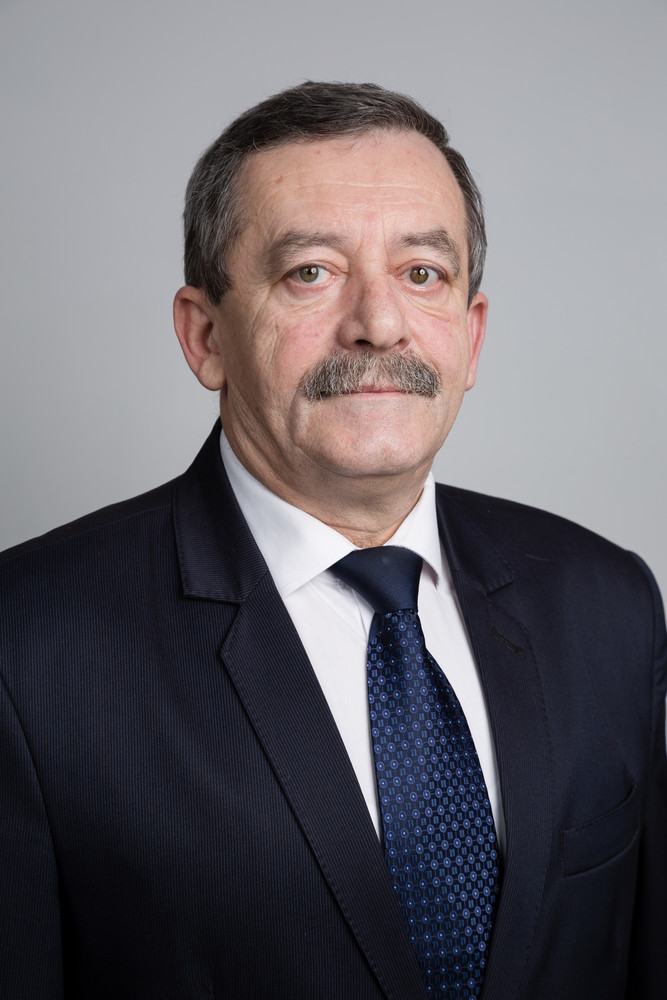
Prof. Roland Moraru is a faculty member at the University of Petroșani's Faculty of Mining, holding a position in the Department of Management and Industrial Engineering. His research focuses on occupational safety and health, risk management, mining engineering, and environmental impact assessment. He has contributed extensively to academic literature, with notable work on ventilation systems in mining, sustainable development goals integration in workplaces, and emerging technologies in safety management. His academic career includes over two decades of contributions to the field, with emphasis on practical applications of safety protocols in industries such as mining, construction, and manufacturing. He has authored monographs on resource-saving technologies and systemic approaches to occupational health management. Notable publications include analyses of human error in industrial settings and case studies on chemical risk assessment in furniture and electrical equipment companies. Prof. Moraru’s work bridges theoretical frameworks with real-world implementation, addressing challenges in digitalization of safety systems, ergonomic improvements through AI, and explosion risk mitigation in explosive storage facilities. His research often involves partnerships with Romanian industries, reflecting a strong focus on local context and practical solutions. His academic output includes over 50 peer-reviewed articles and books, with a thematic trend toward interdisciplinary approaches to occupational safety (e.g., integrating SDGs, behavioral science, and engineering solutions). While no specific awards are listed, his prolific publication record highlights sustained scholarly contribution.
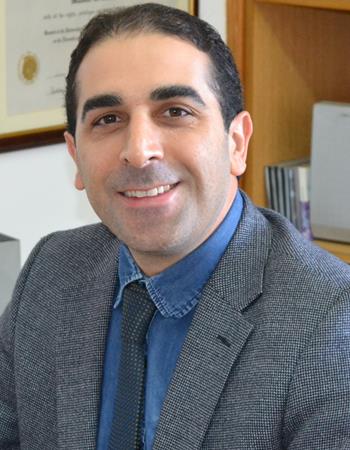
Prof. Orhan Korhan is a Vice Dean in the Faculty of Engineering at Eastern Mediterranean University (EMU), specializing in Industrial Engineering. He holds a PhD from EMU (2002-2010) and an MS from the University of Louisville (2000-2002). His research focuses on ergonomics, occupational safety, musculoskeletal disorders, Industry 4.0 technologies, and predictive maintenance. He has supervised numerous PhD and MS theses, including works on postural tracking algorithms, Industry 4.0 readiness, and cognitive ergonomics. His academic contributions include over 30 publications in journals like International Journal of Occupational Safety and Ergonomics and Sustainability . He received the EMU Publication Citation Award (2021) for scholarly impact. Prof. Korhan teaches courses such as Facilities Planning & Design and Industrial Management, and actively participates in research on digital twins, blockchain applications, and ergonomic interventions.
Dr. Sile Brennan is a Lecturer in Hydrogen Safety at the Belfast School of Architecture & the Built Environment, Ulster University. Her work focuses on computational fluid dynamics (CFD) modeling of hydrogen releases and fires, particularly in enclosed spaces and garages. BEng in Mechanical Engineering, University College Dublin PhD, Queen’s University Belfast Research interests include: Hydrogen safety in built environments CFD modeling for hydrogen dispersion Hydrogen-methane blend dynamics Pressure effects in enclosed spaces Emergency response protocols for hydrogen incidents Notable projects: Coordinator of FCH JU HyResponder (train-the-trainer program for hydrogen responders) Contributor to HyIndoor (indoor hydrogen pre-normative research) Coordinator of European technical school on hydrogen and fuel cells within H2FC infrastructure project Scientific awards: Senior Fellow of the Higher Education Academy
Prof. Sergiy Yakovlev serves as a Research Professor in the Department of Mathematical Modeling at University of Lodz, with room 167 and contact number +48 426313617. His extensive academic contributions span combinatorial optimization, geometric design, and artificial intelligence applications. His research interests focus on Combinatorial Optimization, Geometric Design, Computational Geometry, and AI in Public Health, with significant work in spatial configuration modeling and packing/covering problems. Recent publications demonstrate strong interdisciplinary connections between mathematical theory and practical applications in epidemiology and sensor networks. Analysis of his 15 most recent publications reveals a clear trend toward applying computational geometry and optimization techniques to public health challenges, particularly in modeling epidemic dynamics during the Ukraine conflict and developing AI frameworks for health misinformation detection. His work bridges theoretical mathematics with real-world crisis response systems. While no specific scientific awards are documented in the provided text, his publications appear in high-impact journals including Symmetry (70 points), Environmental and Climate Technologies (100 points), and Cybernetics and Systems Analysis. Prof. Yakovlev actively collaborates on epidemic modeling projects related to the Ukraine conflict, including migration impacts on COVID-19 dynamics and respiratory infection modeling in Kharkiv region. His work involves multiple international research teams across Poland, Ukraine, and Switzerland. He contributes to critical monitoring systems through his research on sensor network reliability for environmental emergencies and forest fire monitoring, with particular attention to failure analysis in hybrid network architectures.
Pierre Boivin is a Chargé de Recherche at CNRS with a Habilitation à Diriger des Recherches (HDR), affiliated with the Thermodynamique Ondes Numérique Interfaces Combustion team at M2P2 Institute (Aix-Marseille University). His work bridges theoretical and applied combustion research, focusing on numerical methods for reactive flows and hydrogen safety. Key Research Areas: Combustion physics, hydrogen flame modeling, lattice Boltzmann methods (LBM), compressible flow simulation, and detonation/ignition prediction. Scientific Contributions: 2024 CNRS Bronze Medal for advancing hydrogen combustion theory; developed novel LBM solvers for compressible flows and reduced-order models for self-ignition risks. Collaborations: Frequent co-authorship with Song Zhao, Pierre Sagaut, and teams at M2P2 and CNRS. Article Trends: Recent publications (2025–2021) emphasize LBM for hydrogen combustion, shock-wave interactions, and safety modeling. Key subfields include reactive flow stability, thermodiffusive instabilities, and hybrid numerical algorithms. Scientific Awards: CNRS Bronze Medal (2024) for hydrogen combustion breakthroughs.
WANG Xishi is a Professor at the University of Science and Technology of China affiliated with the State Key Laboratory of Fire Science in Hefei. He has served as Director of the Clean and effective fire suppression section since 2010 and previously as Executive Director of the Experimental Facility Division (2005-2010), maintaining active research leadership through 2021 publications. Education: PhD, University of Science and Technology of China (2002) Professor Wang's research pioneers clean fire suppression and explosion mitigation technologies with emphasis on water mist systems. His work spans lithium-ion battery thermal runaway control, propane/ethanol-gasoline vapor explosion suppression, and laser-based flow diagnostics. Recent studies combine experimental validation with numerical modeling to address real-world safety challenges in energy storage and industrial environments, demonstrating significant improvements in suppression efficiency through innovative agent delivery mechanisms. His 2019-2021 publications reveal a strategic shift toward energy storage safety (35% of recent work) and alternative fuel explosions (30%), with growing integration of laser diagnostics for precision measurement. This reflects evolving research priorities aligned with China's high-tech development goals in battery technology and clean energy. Scientific Awards: Anhui province Science and Technology Progress Award, First-class (2010) 6th Anhui Provincial Excellent Academic Papers Award, First-class (2010) Outstanding contributor in high-tech Olympics (2008) Wang Kuan Cheng YuCai Award, First-class (2007) 5th Anhui Provincial Excellent Academic Papers Award, First-class (2007) 4th Anhui Provincial Excellent Academic Papers Award, Third-class (2003) Best Paper Award of 5th AOSFST, Second Prize (2001) Professor Wang has led approximately 30 research projects including ten major grants from China's Ministry of Science and Technology, National Natural Science Foundation, and Ministry of Education. His team has produced over 120 journal papers, three books/chapters, and 15+ patents, with his 2007 selection into the "New Century Talents Supporting Program" marking significant career recognition. Current projects focus on water mist optimization for next-generation battery safety systems. As Director of the Clean fire suppression section at SKLFS, he oversees laboratory facilities for large-scale fire/explosion testing and laser diagnostics. His team collaborates with international institutions including The University of Tokyo and Hong Kong universities, maintaining active participation in the International Association for Fire Safety Science as a Lifetime Member since 2011.
Assoc. Prof. Sahand Daneshvar is a faculty member in the Department of Industrial Engineering at Eastern Mediterranean University (EMU). He holds a PhD in Mathematics (2002) from an unspecified institution, an MS in Applied Mathematics (1996), and a BA in Institutional Mathematics (1993). His research focuses on optimization techniques, particularly Data Envelopment Analysis (DEA), applied to diverse sectors such as healthcare, supply chain, and environmental sustainability. He is actively involved in teaching courses like IENG212/Modeling and Optimization, IENG314/Operations Research II, and graduate-level optimization modules. Education: PhD in Mathematics, 2002 MS in Applied Mathematics, 1996 BA in Institutional Mathematics, 1993 Research Interests: His work emphasizes DEA-based methodologies for efficiency evaluation, failure mode analysis (FMEA), and multi-criteria decision-making frameworks. Key areas include optimizing healthcare systems, green supply chains, and renewable energy policies. Recent studies explore applications in forex market forecasting using deep learning and spatiotemporal data analysis. Publications: Over 30 peer-reviewed articles highlight his contributions to operations research and industrial engineering. Notable trends include DEA model modifications for benchmarking, integrating smart FMEA for safety systems, and applying hybrid algorithms for energy storage optimization. Advising & Grants: Supervised 27+ theses (11 PhD/16 MS) on topics like DEA in healthcare efficiency, supply chain risk management, and forex prediction. Active in reviewing and editorial roles for academic journals. Labs/Teams: Engages in cross-disciplinary projects at EMU, focusing on optimization, sustainability, and industrial applications. Collaborates with international researchers on projects funded by EMU and external grants.
Dr. Siaka Dembele is an Associate Professor of Thermofluids at the Department of Mechanical Engineering, School of Engineering, Kingston University. He serves as the School Director of Research and Enterprise and University REF Coordinator for Unit of Assessment 12 (Engineering). His work bridges academic leadership with cutting-edge research in fire dynamics and fluid mechanics. PhD in Thermal and Energy Engineering, INSA Lyon, France (1998) MSc, University Claude Bernard Lyon 1, France MEng, Ecole Nationale Superieure des Ingenieurs d'Abidjan (ENSIA), Ivory Coast Fellow of the Higher Education Academy (FHEA) His research focuses on fire modelling using computational fluid dynamics (CFD) , fire suppression with water sprays/mist systems, and thermal radiation heat transfer in high-temperature environments. Additional interests include glass behavior under fire conditions and energy-related topics. Current projects involve CFD simulations of LNG rollovers, hydrogen jet fires, and multiphase flows in suppression systems. Selected publications highlight advancements in Radiation shielding with water mist Pool fire evaporation rate prediction Jet fire radiation characteristics LNG storage safety and computational methods for reactive flows. Fellow Higher Education Academy (FHEA) He has supervised over a dozen PhD students and led the Fire and Fluid Dynamics research group at Kingston University. His roles extend to coordinating EPSRC peer review activities and serving on international scientific councils, including the International Centre for Heat and Mass Transfer (ICHMT) and International Water Mist Association (IWMA) . Collaborative grants involve industry and European Commission funding.
Amit H Varma is the Karl H. Kettelhut Professor in Civil Engineering and Director of the Bowen Laboratory at Purdue University. He specializes in structural engineering, with a focus on advanced composite materials, seismic design, fire resistance, and infrastructure resilience. His research addresses challenges in steel-plate composite walls, concrete-filled steel tubes, and blast-resistant designs. He leads the Civil and Construction Engineering department and contributes to the CoE Safety Committee and other university initiatives. His research interests include structural integrity under extreme loads (seismic, fire, blast), composite materials behavior, and innovative repair strategies for corroded bridges. Notable projects include the development of SpeedCore wall systems for enhanced seismic performance and experimental studies on thermal loading effects on steel and concrete components. Recent studies emphasize multi-hazard resilience, such as post-earthquake fire behavior in steel frames and modular SC wall systems. He has collaborated on grants like CPF Research Grant# 03-20 for fire-resistant floor-to-wall connections. His work bridges cutting-edge materials science with practical engineering applications for safer infrastructure. Labs and facilities associated with his work include the Bowen Laboratory, where large-scale testing is conducted on structures like SC walls and composite members. His contributions span academic leadership, research innovation, and advancing industry standards in structural engineering.
Dr. Ali Heidari is Senior Lecturer and Admissions Tutor in Mechanical Engineering at Kingston University's School of Engineering. A Chartered Mechanical Engineer, his research applies computational fluid dynamics to fire safety, energy systems, and aerodynamics. His industrial collaborations include fire risk assessments for oil/gas companies. He teaches thermofluids and high-performance computing across engineering programmes.
Prof. Dr. Ing. Andreas Kempf is a Professor of Fluid Dynamics at the University Duisburg-Essen, leading the Department of Fluid Dynamics. His research focuses on Large-Eddy Simulation (LES) of turbulent reactive flows, nanoparticle synthesis, and combustion engine dynamics. He holds editorial roles in journals like Proceedings of the Combustion Institute and Flow, Turbulence and Combustion . His academic career includes roles at Imperial College London (2005–2011) and a PhD from TU Darmstadt (1999–2004). Kempf’s work emphasizes LES development, particularly in combustion and multiphase systems. His recent publications highlight advancements in scalar transport modeling, detonation confinement, and coal/ammonia co-combustion. Research collaborations involve institutions like TU Darmstadt and CER.UDE. He directs the Lehrstuhl für Fluiddynamik and contributes to the Center for Computational Sciences and Simulation (CCSS). Education: Diploma in Mechanical Engineering (TU Darmstadt, 1999), PhD in Engineering (TU Darmstadt, 2004). Research interests span LES methodology, nanoparticle synthesis via spray flames (SpraySyn), and computational diagnostics like chemiluminescence tomography. His lab addresses industrial challenges in combustion efficiency and emissions reduction, supported by grants and interdisciplinary networks.
Timothy Havens is a Professor at Michigan Technological University in the Department of Computer Science within the College of Computing. He holds the William and Gloria Jackson Professorship and serves as Executive Director of both the Great Lakes Research Center and the Institute of Computing and Cybersystems. Dr. Havens also directs the PRIME Lab and has been recognized for both teaching and research excellence, including the 2014-15 Professor of the Year award from IEEE Eta Kappa Nu and Best Paper Awards at FUZZ-IEEE 2012 and IEEE SMC 2011. Dr. Havens received his Ph.D. in Electrical and Computer Engineering from the University of Missouri, Columbia in 2010. Prior to joining Michigan Tech, he was an NSF/CRA Computing Innovation Postdoctoral Fellow at Michigan State University under Dr. Anil Jain. Before his Ph.D. work, he was an Associate Technical Staff member at MIT Lincoln Laboratory. His educational background includes an M.S. in Electrical Engineering (2000) and a B.S. in Electrical Engineering (1999), both from Michigan Technological University. His research focuses on pattern recognition and machine learning, signal processing, and sensor fusion, with specific expertise in fuzzy integrals, Choquet integration, community detection in networks, and heterogeneous data mining. Dr. Havens has made significant contributions to explainable AI, particularly through the application of fuzzy integrals to deep learning systems. His recent publications demonstrate strong activity in developing novel regularization techniques for fuzzy Choquet integrals, efficient algorithms for community detection, and similarity measures for interval data. Dr. Havens' research has been consistently funded by prestigious organizations including DARPA, NSF, US Navy, Office of Naval Research, National Geospatial-Intelligence Agency, Ford Motor Company, MIT Lincoln Laboratory, and numerous other government and industry partners. His current projects include significant grants for radar systems in the Great Lakes, generative modeling of satellite imagery, and algorithms for autonomous robot systems. Scientific Awards: 2014-15 Professor of the Year by IEEE Eta Kappa Nu, Beta Gamma Chapter Best Paper Award at FUZZ-IEEE 2012 Best Paper Award at IEEE SMC 2011 Best Student Paper Award Finalist (2018) IEEE Franklin V. Taylor Memorial Best Paper Award (2011) Dr. Havens has successfully mentored numerous graduate students, many of whom appear as co-authors on his publications. His research grants demonstrate strong leadership in coordinating multi-institutional collaborations with substantial funding. Beyond his academic work, Dr. Havens is also an active musician, playing bass in several bands including MUFJAC, FLOTUS, Defenestra, Skills of Ortega, Psylocubik, Triptych, Wheels of Fire, and Odibil libidO.