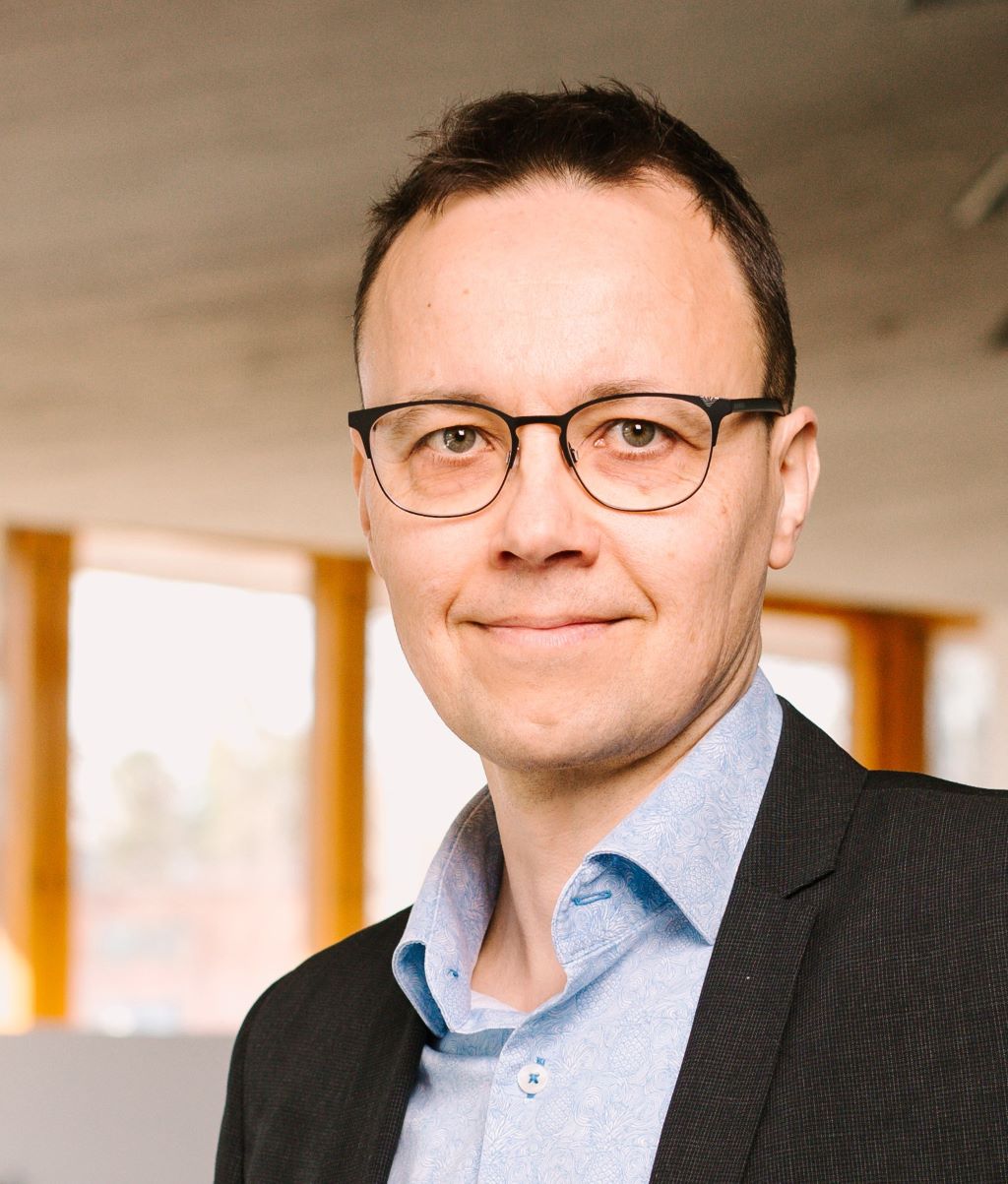
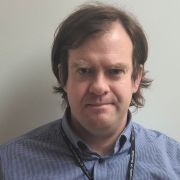
Simo Hostikka is a Professor in the Department of Civil Engineering at Aalto University's School of Engineering. His research focuses on fire safety engineering , utilizing numerical fire simulations to address critical challenges in building and infrastructure safety. Key Expertise: Fire Dynamics Simulator (FDS) development, thermal radiation heat transfer, pyrolysis modeling, fire toxicity calculations, and probabilistic risk analysis. Leadership: Supervises advanced fire safety research and contributes to international fire safety standards. Research Trends: Recent publications emphasize fire toxicity modeling , hydrogen fire safety , radiation heat transfer , and fire retardancy of polymeric materials . His work bridges computational methods with real-world fire safety applications. Scientific Awards: Philip Thomas Medal of Excellence (2008, 2005) Sjölin Award (2012) Interflam Trophy (2007) Harmathy Award (2020, 2019) Dean’s Award for Best MSc Thesis (2020) Best Paper in Rakenteiden Mekaniikka (2009) Advising: Supervised Topi Sikanen, who received the Young Talent Award from the International Water Mist Association.
Laureate Professor Behdad Moghtaderi is a globally recognized chemical engineer at The University of Newcastle's School of Engineering. He leads research in clean energy technologies, including the GRANEX heat engine, greenhouse gas abatement, and chemical looping processes. His work addresses critical challenges in energy efficiency, renewable energy systems, and reducing fugitive methane emissions from coal mines. With over $48M in research funding and 220+ publications, he directs the Newcastle Institute for Energy and Resources (NIER) and holds leadership roles in national and international energy initiatives. Education: PhD (University of Sydney), MEng (University of Sydney), BSc (Shiraz University) Administrative Roles: Director of NIER, former Head of School of Engineering, and member of global energy advisory bodies Research interests span energy systems, combustion science, and sustainable technologies. Notable innovations include the VAMCO system for methane abatement and solar thermal GRANEX installations. Awards include the Carrick Teaching Citation and multiple engineering excellence recognitions. Scientific contributions include 14 PhD completions and over 20 funded projects. Current focus areas include hydrogen safety, carbon capture, and thermochemical energy storage. His labs (NIER) collaborate with industry partners like Siemens Energy and the Australian Hydrogen Council.
Dr. Thanh-Son Pham is an ARC DECRA Research Fellow in the Geophysics Department at The Australian National University’s Research School of Earth Sciences. His research focuses on using seismic waves to study Earth’s interior structures, from polar ice sheets to the inner core. He has pioneered methods like teleseismic P-wave coda autocorrelation and coda correlation wavefield analysis, leading to breakthroughs such as detecting J-waves in the inner core and identifying an innermost inner core layer. His work has been featured in Science , Nature Communications , and international media. He holds a PhD from ANU (2019) and has supervised research projects on Antarctic seismology and earthquake source physics. Awards include the 2024 Zatman lectureship from SEDI. Current projects include probing Antarctic ice sheets via correlation seismology and advancing machine learning tools for deep Earth studies. Education: PhD in Geophysics (ANU, 2019), Graduate Diploma in Earth System Physics (ICTP, 2015), BSc in Applied Mathematics (Hanoi University, 2013) Research interests span seismic source inversion, Antarctic ice dynamics, and inner core anisotropy. His 2024 articles address Hunga Tonga eruption mechanics and PKIKP wave analysis using deep learning. Media highlights include BBC, NYT, and ANU press releases.
Stephen J. Kmiotek is a Chemical Engineering Professor of Practice at Worcester Polytechnic Institute (WPI). He holds BS, MS, and PhD degrees in Chemical Engineering from WPI (1980, 1982, 1986). His career spans 30+ years in chemical and environmental industries, focusing on Chemical Process Safety, Air Pollution Engineering, and Environmental Health & Safety Management. He integrates legal regulations and technical standards into multidisciplinary engineering practices, collaborating with engineers and attorneys across diverse industries like chemical manufacturing, electronics, pulp/paper, and metal foundries. Research Interests: Chemical Process Safety Management Air Pollution Control Strategies Regulatory Compliance Frameworks Industrial Hazard Mitigation His scholarly work includes studies on hazardous pollutant emissions modeling, catalyst deactivation, and zeolite sorption processes. While not actively leading a graduate research program, he advises numerous MQP projects with local industry partnerships. Media highlights include contributions to WPI’s explosion protection engineering program and features in International Fire Protection Magazine and Dust Safety Science .
David Lozinski is an Associate Professor in the Department of Mathematics and Statistics at McMaster University, Faculty of Science. His research spans combustion science, fluid dynamics, and financial mathematics. He has published extensively on topics like smoldering combustion, flame stability, and quantitative risk modeling. Teaching responsibilities include courses on risk management, actuarial mathematics, financial markets, and applied statistics. Research interests combine theoretical and applied mathematics with practical applications in combustion engineering and financial systems. Key contributions include studies on reverse smoldering mechanisms (1995), vapor diffusion flames (1995), and modern financial risk models (2024). Teaching spans undergraduate and graduate programs, covering mathematical finance, probability, and statistical inference. No scientific awards are listed in the profile. Active in curriculum development for financial mathematics programs, instructing courses like MFM 714 (Risk Management) since 2025 and STATS 3G03 (Actuarial Mathematics I) since 2024.
Anne Simone Dederichs is an Associate Professor in the Department of Civil and Mechanical Engineering at the Technical University of Denmark (DTU), specializing in Structures and Safety. She is actively engaged in research and teaching in fire safety engineering, combustion dynamics, and evacuation modeling. Her work spans academic, industrial, and policy-relevant domains, with strong collaborations across Scandinavia. Doctoral Degree, Dept. of Fire Safety Engineering, Lund University (1998–2004) Master of Science, Niels Bohr Institute, University of Copenhagen (1991–1997) Bachelor of Science, Niels Bohr Institute and Department of Mathematical Sciences, University of Copenhagen (1991–1996, 1991–1995) Her research focuses on fire safety engineering , evacuation dynamics , universal design in safety systems , and sustainable construction materials . She has led seminars and EU meetings on computational fluid dynamics in combustion and turbulent combustion, and she teaches in fire chemistry, fire dynamics, and risk management. Her work contributes to UN Sustainable Development Goals related to sustainable cities and inclusive design. Recent publications show a trend toward integrating digital tools like Building Information Modeling (BIM) into fire safety, analyzing evacuation inclusivity (e.g., on ships), and evaluating fire risks of new sustainable materials. Her research bridges experimental analysis, modeling, and real-world application in buildings and industrial settings. She has held external positions as a Senior Research Scientist at RISE (Research Institutes of Sweden) and as a Researcher at Lund University. She has supervised PhD projects on composite material aging and fire safety compliance through BIM. Anne is actively involved in project leadership and collaboration, particularly in Nordic research networks. She has organized post-graduate courses and authored teaching materials in fire safety and chemical kinetics.
Dr. Ajay V. Singh is an Associate Professor in the Department of Aerospace Engineering at the Indian Institute of Technology Kanpur, India. He leads the Combustion and Propulsion Laboratory and has established himself as a leading researcher in combustion science and propulsion technology in India. His work on detonation physics has positioned IIT Kanpur at the forefront of this field with the unveiling of "India's First Detonation Tube Research Facility". Dr. Singh's educational background includes: PhD in Mechanical Engineering from University of Maryland, College Park (2015) M.Tech in Aerospace Engineering from Indian Institute of Technology Kanpur (2008) B.Tech in Mechanical Engineering from U.P. Technical University, Lucknow (2006) His research spans fundamental and applied aspects of combustion science with particular focus on high-speed propulsion systems, detonation cycle engines, gas turbine combustion, soot formation and oxidation, flame-synthesized functional nanoparticles, and fire dynamics. His innovative work bridges theoretical understanding with practical applications in aerospace propulsion, energy systems, and fire safety engineering. The media has widely covered his research, with features in India Today, Times of India, Hindustan Times, and Republic Bharat. Dr. Singh's publication record shows a clear trend toward increasingly sophisticated detonation research and fire dynamics studies, with recent work focusing on turbulent wind-driven flames, detonation inhibition mechanisms, and alternative fuel combustion. His articles consistently address challenges in high-speed propulsion and fire safety, demonstrating both theoretical depth and practical relevance. His scientific contributions have been recognized with numerous prestigious awards including the Distinguished Paper Award from the Combustion Institute (the only faculty member in India to receive this honor), a nomination for the Silver Combustion Medal, multiple Best Paper Awards, and the Exemplary Performance in Teaching Award. As an educator and mentor, Dr. Singh has guided numerous PhD and Master's students through their research. His Combustion and Propulsion Laboratory is supported by multiple research grants from agencies including ISRO, ARDB, SERB, and ANRF. He has developed specialized courses including "Explosion and Detonation Physics," which is the first of its kind at IIT Kanpur. Dr. Singh's laboratory serves as a hub for cutting-edge research in combustion science, featuring India's first Detonation Tube Research Facility and advanced experimental setups for studying flame dynamics, soot formation, and detonation physics. His international collaborations include institutions such as Stanford University, University of Maryland, Peking University, and Beijing Institute of Technology.
Professor Evangelos Boulougouris is Head of the Department of Naval Architecture, Ocean and Marine Engineering at the University of Strathclyde, where he also serves as Chair of the Maritime Safety Research Centre. He is a chartered professional engineer with over 28 years of internationally recognized research in maritime safety, design for safety, and holistic ship design. His work spans damage stability, autonomous vessels, alternative fuels, and ship survivability, with strong impact on international regulations through roles in IMO, ITTC, SNAME, and RINA. Research Interests: His primary research focuses on safety of marine operations, including damage and intact stability in waves, collision avoidance, ship evacuation, crashworthiness, and the integration of alternative fuels like ammonia and hydrogen. He leads cutting-edge work in multi-objective ship design optimization, risk modeling, and decarbonization strategies for advanced marine vehicles. The recent 15 publications highlight a strong trend toward digitalization and sustainability in shipping, combining machine learning for propeller optimization, CFD simulations for catamaran performance, real-time decision support in emergencies, and hybrid propulsion systems for zero-emission vessels. His work increasingly emphasizes climate resilience, port risk under extreme weather, and energy management in CTVs, aligning with global SDGs. Scientific Awards: 2020 Denny Medal SNAME ABS Captain Joseph H. Linnard Prize (2023) Safety 2020 Best Paper Award (2022) Honorable Mention for Vice Admiral E. L. Cochrane Award (2022) EU CHAMPIONS of Transport Research (HOLISHIP, TRA 2014) Greek Technical Innovation Award, Lloyd’s List (2009) 1st Prize, International SAFER SHIP Competition (1999) Advising and Grants: He actively supervises PhD students and has led numerous EU and UK-funded projects such as SEASTARS, SAFARI, EcoShipYard, and Digital Shipwright. As Principal Investigator and Co-I, he secures substantial research funding, coordinates knowledge exchange (KE) initiatives, and leads training programs across Europe. Labs and Teams: He leads the Maritime Safety Research Centre at Strathclyde, fostering interdisciplinary collaboration on ship safety, stability, and sustainable design. His team works closely with industry partners RCG and DNV, and engages in international networks through STAB, ITTC, and IMO committees.
Niamh Nic Daeid is Professor of Forensic Science and Director of the Leverhulme Research Centre for Forensic Science (LRCFS) at the University of Dundee, leading the £15m Just Tech Institute for Innovation. She holds fellowships with the Royal Society of Edinburgh, Royal Society of Chemistry, and multiple forensic science bodies while serving on committees for INTERPOL, the International Criminal Court, and the United Nations. Her research focuses on forensic chemistry applications in prison drug analysis, explosives detection, and fire investigation. Recent work emphasizes science communication, particularly using comics to improve juror comprehension of forensic testimony. She leads major projects including Clarus (bias prevention in digital forensics) and the Smart Digital Forensic Advisor initiative. Nic Daeid's publications span forensic methodology development, from quantum dots for fingerprint detection to machine learning for footwear impression analysis. Her team's 2025 research includes prison drug studies using seized Scottish evidence and advanced cartridge case imaging techniques. European Network of Forensic Science Institutes Distinguished Forensic Scientist award (2018) Royal Society of Edinburgh Senior Medal for Public Engagement Peter Ganci Award for fire investigation services Gold Engage Watermark for Public Engagement (2019) Best Short Paper Award, International Conference on eXtended Reality (2022) She supervises 13 research students and early-career academics across forensic chemistry, digital forensics, and science communication projects. Current grants include the Leverhulme Trust's £10m LRCFS (2016-2026), UK government's Tay Cities Regional Deal funding, and Dundee City Council's VR/5G initiative. Her team maintains active collaborations with Scottish prisons, international forensic networks, and law enforcement agencies.
Xiaotao Bi is a Professor in the Department of Chemical and Biological Engineering at the Faculty of Applied Science, University of British Columbia. He is a Fellow of The Canadian Academy of Engineering, recognized for his significant contributions to the field of chemical engineering, particularly in biomass energy systems and environmental technologies. Dr. Bi's research focuses on developing environmental systems analysis and life cycle assessment tools to model and evaluate biomass energy systems. His work encompasses Canadian wood pellets, animal wastes, agricultural residues, and integrated impacts assessment of various biomass conversion processes including combustion, gasification, torrefaction, and pelletization. Current research interests include electrostatic charging of dielectric particles in gas-solids fluidized beds, dual fluidized bed for biomass steam gasification, and novel i-CFB reactors for catalytic NOx reduction. His extensive publication record demonstrates expertise across multiple domains of sustainable energy and environmental engineering. Recent work shows a strong emphasis on biomass conversion technologies, particularly microwave-assisted processes, fluidized bed systems, and waste valorization. There's a clear trend toward developing more efficient and environmentally friendly processes for converting various biomass feedstocks into energy and valuable products, with particular attention to addressing technical challenges like tar formation in gasification and electrostatic issues in particle handling. Dr. Bi has been recognized with the prestigious honor of being named a Fellow of The Canadian Academy of Engineering, which acknowledges his significant contributions to engineering research and practice in Canada. As a research leader, Dr. Bi has supervised numerous graduate students and secured funding for his research team to investigate innovative approaches to biomass conversion and environmental engineering challenges. His work bridges fundamental research with practical applications for sustainable energy systems. Dr. Bi leads a research team focused on developing advanced technologies for biomass conversion and environmental protection. His laboratory facilities likely include specialized equipment for fluidized bed operations, biomass processing, and analytical tools for characterizing biofuels and byproducts.
Professor Victoria C. Smith is a leading volcanologist at the School of Archaeology, University of Oxford. Her research focuses on tephrochronology, using volcanic ash layers to date and correlate sedimentary and archaeological records. She manages Oxford's electron microprobe facilities and cryptotephra laboratory, supporting global research on explosive volcanism. Research Interests : Volcanology, tephrostratigraphy, magmatic processes, and paleoenvironmental reconstruction. Geographic Focus : Italy, Mexico, Japan, Azores, Canary Islands, Ethiopian Rift, Antarctica. Her recent publications highlight collaborations in geochronology, magma evolution modeling, and tephra applications in synchronizing climate-human records. She supervises MSc and doctoral students in Archaeological Science, focusing on volcanic ash as chronological tools.
Matthew Hobbs is a Lecturer in Semiconductor Materials and Devices at the University of Sheffield's School of Electrical and Electronic Engineering. He also serves as an Electrical and Electronic Engineering Y1 & 2 Tutor. His academic journey includes an MEng (2009) and PhD (2014) in Electronic Engineering from the University of Sheffield, followed by a Knowledge Transfer Partnership (KTP) role with AMETEK Land. Since 2016, he has contributed to research on single-pixel measurement instruments and non-contact thermometry within the Sensor Systems Research Group. His current research focuses on developing novel optical instrumentation, including luminescence metrology, hyperspectral imaging, and aerosol jet-printed electronics. He actively supervises PhD students in optical sensing and instrumentation. Education: MEng (Hons) in Electronic Engineering, University of Sheffield (2009) PhD in Electronic Engineering, University of Sheffield (2014) Research Interests: Hobbs' work centers on advanced measurement technologies such as non-contact temperature sensing, hyperspectral imaging, and luminescence-based techniques. He is pioneering innovations in printed electronics via Aerosol Jet Printing and advancing instrumentation for industrial and academic applications. His research bridges fundamental science and practical industrial challenges in sectors like foundation industries and environmental monitoring. Grants & Leadership: PI of Game Changers grant: "Single-Pixel Salt Concentration Mapping" (2023-2023) PI of TFI Network+ grant: "Accurate Emissivity Characterisation of Metals" (2022-2023) Teaching & Mentorship: Teaches undergraduate courses including EEE117 (Electrical Circuits), EEE123 (Introduction to Circuits), and EEE126 (General Skills). He balances research with teaching roles since 2021. Professional Activities: Member of the Institution of Engineering and Technology (IET). Collaborates with industry partners such as AMETEK Land and actively publishes in high-impact journals like Optics Express and Sensors .
Professor Chengqing Wu is a distinguished academic in the School of Civil and Environmental Engineering at the University of Technology, Sydney (UTS). He serves as Professor of Structural Engineering with a research focus on blast-induced phenomena and advanced concrete technologies. His expertise spans structural response to blast loading, mitigation of blast effects, and the development of ultra-high performance concrete systems. Professor at University of Technology, Sydney Former Chair of Australian Chapter of International Association of Protective Structures (2013-2017) Associate Editor of ASCE Journal of Performance of Constructed Facilities Editorial Board Member of International Journal of Protective Structures Professor Wu's research interests center on structural engineering with emphasis on blast resistance, ultra-high performance concrete, geopolymer concrete, and structural response to extreme loading conditions. His work bridges theoretical analysis with practical applications, particularly in protective structures and extreme environment construction. His research group has made significant contributions to understanding material behavior under blast, impact, and extreme thermal conditions, with applications ranging from terrestrial infrastructure to potential lunar construction. Analysis of Professor Wu's recent publications reveals a strong focus on advanced concrete technologies for extreme environments. His research spans 3D-printed concrete, lunar and Martian construction materials, cryogenic performance of concrete, and blast-resistant structural systems. A notable trend is the increasing application of computational methods and machine learning techniques to predict structural response to explosions, alongside traditional experimental approaches. His work demonstrates a progression from fundamental material characterization to complex structural system analysis, with growing emphasis on sustainable construction and extraterrestrial applications. Author/co-author of over 200 international journal papers Editor of four conference proceedings Editor of two ASCE special issues Editor of two International Journal of Protective Structures special issues Professor Wu has successfully attracted over 4 million dollars in research funding from diverse sources including the Australian Research Council (ARC), Defence Science and Technology Organization (DSTO), and industry partners. His current projects include Eco-friendly Ultra-High Performance Rubberised Concrete, Decarbonised Infrastructure, Structural protective design on large capacity flywheel energy storage system, and Gas Explosion Resistance of Non-Cement Based High Performance Concrete. He actively supervises undergraduate honors students, coursework master's students, and research higher degree candidates, with several scholarships available for prospective postgraduates and research associates. Professor Wu leads research in protective infrastructure technology through the Joint Research Centre for Protective Infrastructure Technology and Environmental Green Bioprocess with Tianjin Chenjian University. His team operates the National Drop Weight Impact Testing Facility and contributes to the National Facility for Physical Blast Simulation. Current research directions include sustainable concrete technologies for extreme environments, blast-resistant structural systems, and innovative applications of concrete in space exploration contexts.
Jürgen Brune is a Professor in the Mining Engineering Department at Colorado School of Mines. With a career spanning three decades in mining engineering, he has held leadership roles such as Research Director at Edgar Experimental Mine and Associate Department Head. Previously, he worked at NIOSH, Consol Energy, and RWE-Rheinbraun, focusing on mine safety, ventilation, and disaster prevention. Dr.-Ing., Mining Engineering (Technical University Clausthal, 1994) MSc, Mining Engineering (Colorado School of Mines, 1983) Dipl.-Ing., Mining Engineering (Technical University Clausthal, 1981) His research focuses on mine safety and health, particularly methane explosion hazards, CFD modeling of mine ventilation systems, and spontaneous combustion prevention. He has pioneered innovations in refuge chamber safety, gob ventilation optimization, and proximity detection systems for explosive gas clouds. His recent publications from 2022-2025 explore AI-driven methane prediction, sub-micron particle toxicity, octree-based geotechnical modeling, and dust monitoring technologies. These works bridge mining engineering, environmental health, and computational modeling. Distinguished Member of SME (no. 407850RM) Councilor of MMSA (QP no. 1367) MSHA Approved Instructor for mine safety training Brune has mentored numerous graduate students in mine ventilation and safety projects. His patented pneumatic dust sampling instrument (U.S. Patent 10,371,605) and leadership in mine disaster prevention research demonstrate his commitment to advancing mining safety practices globally.
David Icove is a Professor of Practice in the Department of Electrical Engineering and Computer Science at the University of Tennessee, Knoxville. He holds a PhD in Engineering Science and Mechanics from the University of Tennessee (1979), an MS in Electrical Engineering (1973), a BS in Fire Protection Engineering from the University of Maryland (1975), and a BS in Electrical Engineering from the University of Tennessee (1971). With over four decades of experience, Dr. Icove is a renowned forensic engineering expert, retired federal law enforcement agent, and author of influential textbooks and peer-reviewed publications. Education: PhD, Engineering Science and Mechanics, University of Tennessee, 1979 MS, Electrical Engineering, University of Tennessee, 1973 BS, Fire Protection Engineering, University of Maryland, 1975 BS, Electrical Engineering, University of Tennessee, 1971 Research Interests: Dr. Icove's work focuses on forensic engineering analysis of electrical fires, high-performance computational modeling of fires and explosions, cybersecurity, intrusion detection, and pattern recognition. His research integrates advanced technologies to improve fire investigation methodologies, including the application of AI and image processing. He has contributed to critical projects such as fire modeling for nuclear facilities and arson case prosecution frameworks. Funded Research Highlights: U.S. Nuclear Regulatory Commission (2010-11): Fire Modeling for Nuclear Engineering Professionals National Institute of Justice (1998): Cybercrime Cyberterrorism Study U.S. Fire Administration (1995-2001): Arson Information Management System (AIMS) Project National Computer Security Center (1988-1993): Computer Assisted Security and Investigative Analysis Tool Professional Recognition: Dr. Icove is a Registered Professional Engineer in multiple states and holds senior membership in the IEEE. His contributions have been recognized through patents and authoritative textbooks, including co-authorship of Kirk’s Fire Investigation and Forensic Fire Scene Reconstruction . Labs and Collaborations: While not explicitly detailed in the text, his research collaborations span academic, governmental, and industry partners, reflecting his interdisciplinary approach to forensic and cybersecurity challenges.