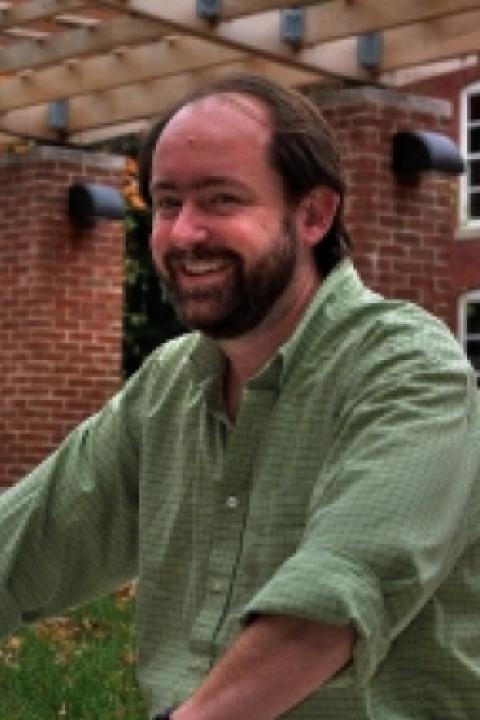
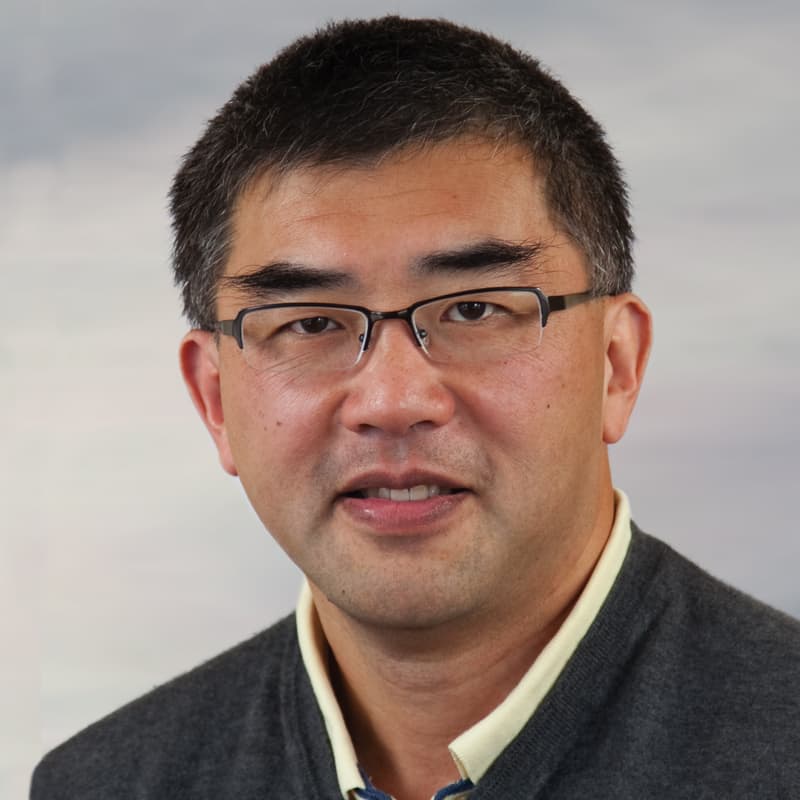
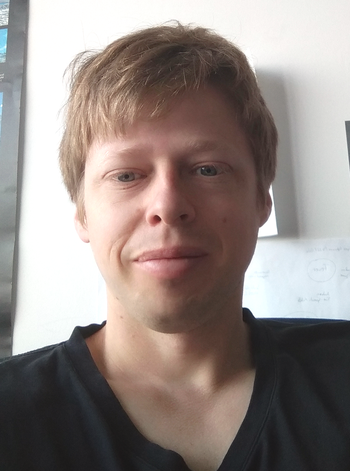
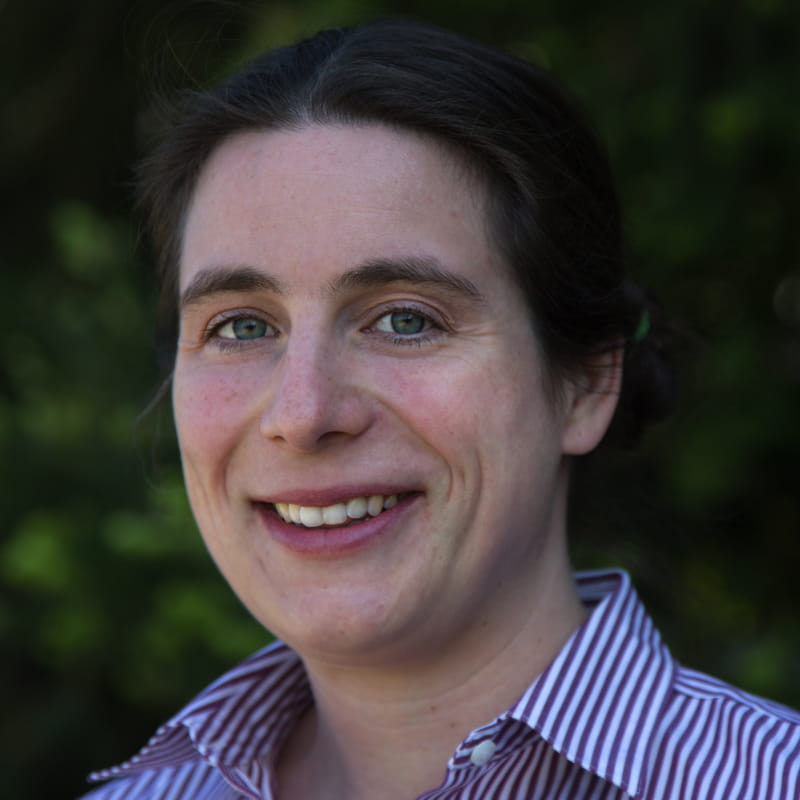
Matthew Hamilton is an Associate Professor at The Ohio State University, specializing in environmental governance and social-ecological systems. His research examines collective action for managing environmental risks through interdisciplinary frameworks combining policy analysis, network science, and environmental psychology. Department: Environmental policy and governance Key research themes: Collaborative environmental governance, wildfire risk mitigation, climate adaptation, and multi-scale policy systems Courses taught: Environmental Policy, Climate Change Policy, Collective Action in Environmental Governance Hamilton's recent publications focus on network metrics for social capital, wildfire governance, and climate adaptation strategies. His work emphasizes cross-scale institutional analysis and stakeholder collaboration in fragmented landscapes. For prospective graduate students, Hamilton invites inquiries through his lab's opportunities page at: https://sens-lab.github.io/opportunities
Prof. Dr. Burak Aricak is a faculty member at Bursa Technical University , where he serves in the Faculty of Forestry under the Department of Forest Engineering . His work integrates geospatial technologies and environmental science to address critical forestry challenges. Research Focus : Forest Road Planning, Harvesting Techniques, GIS & Remote Sensing Applications, and Ergonomics. Key Publications (2023-2025) explore climate change effects on forest species distribution, heavy metal accumulation in trees, soil respiration dynamics post-harvesting, and UAV/LiDAR advancements for biomass estimation. Contact : burak.aricak@btu.edu.tr | +90 (224)-8081101
Dr Jessica K Weir is an Associate Professor at the Institute for Culture and Society, Western Sydney University, specializing in environmental issues and natural hazard risk through Indigenous-non-Indigenous jurisdictional lens. With over two decades of collaboration with Indigenous leaders in Australia, her work challenges colonial environmental epistemologies and promotes integration of Indigenous knowledge in public-sector practices. Qualifications: Doctor of Philosophy, Australian National University Her research engages human geography, environmental humanities, and decolonial studies, focusing on cultural burning, disaster justice, and scientific-Indigenous knowledge exchange. She leads projects with the Bushfire and Natural Hazards Cooperative Research Centre and contributes to UN Sustainable Development Goals through climate change adaptation and indigenous rights frameworks. Scientific Awards: Deputy Vice-Chancellor Research Award ‘Excellence in Indigenous Research’ (2023) Dorothy R Taylor Award – Best Paper (2021) Emergency Communication – Research category winner (2022) Current collaborations include natural scientists in bushfire mitigation and policy reform, while producing diverse research outputs ranging from academic publications to artistic collaborations and community training programs.
Vitaliy Snytyuk is a Professor and current Head of the Department of Intelligent Information Systems at Taras Shevchenko National University of Kyiv since 2014, previously serving as Head of Department of Information Technologies of Design at Cherkasy State Technological University (2007–2014) with earlier academic appointments there as Assistant Professor, Senior Lecturer, and Associate Professor (1995–2004). His educational credentials include: Master in Mathematics from Taras Shevchenko National University of Kyiv (1991) Candidate of Technical Science in Systems of Automated Design from Kyiv National University Construction and Architecture (1999) Doctor of Technical Science in Information Technologies from Institute of Mathematical Machines and Systems Problems, Kyiv (2009) Dr. Snytyuk's research centers on intelligent decision support systems for minimizing technogenic/natural disaster impacts, leveraging fuzzy logic inference , evolutionary optimization , and real-time simulation . His work develops computational frameworks for emergency response management and resource optimization under uncertainty, with strong emphasis on practical implementation in crisis scenarios. Publication trends (2008–2015) reveal consistent focus on evolutionary decision-making under uncertainty, with increasing specialization in disaster response systems (2015) and economic modeling (2014), while maintaining foundational work in expert systems and forecasting methodologies. Scientific awards: No awards documented in source material Advising and grants: Source text provides no details regarding student supervision, grant funding, or research team composition despite leadership role. Research infrastructure: Leads Departmental research groups focused on intelligent decision systems for disaster management, though specific lab names or team structures are not detailed in available information.
Milan Marjanović is an Assistant Professor at the Department of Mechanical Engineering, Faculty of Technical Sciences in Čačak, University of Kragujevac. Holding an M.Sc. in Mechanical Engineering, he teaches Thermodynamics, Applied Thermodynamics, Renewable Energy Sources, and Machine Elements. His research focuses on Thermal Engineering, Thermoenergetics, and Renewable Energy systems. Born 1990 in Užice Completed primary/secondary education in Požega Faculty of Mechanical Engineering and Civil Engineering, Kraljevo (2012) Master's in Energy Engineering (2014) Research spans biomass combustion optimization, solar energy systems, and hydraulic simulation tools. Active in academic projects like the national PRIZMA 2023 initiative for Active Condensation Hybrid Systems. Key publications include work on: Biomass-fired district heating efficiency AI-driven solar energy prediction models Hybrid photovoltaic-thermal collector testing Industry 4.0 curriculum development for Mechatronics Scientific contributions appear in journals like Case Studies in Thermal Engineering and conferences including COAST 2024. Awards include Ministry scholarships and 'Mašinijada' competition victories. Collaborates with industry partners on mechanical testing equipment development.
Dr. Ewelina Rudnicka is an Assistant Professor at the Poznań University of Technology , affiliated with the Faculty of Chemical Technology and Department of Technical Chemistry and Electrochemistry . With a Ph.D. in Chemical Sciences (2017), she specializes in electrochemical energy storage systems, particularly Li-ion, Li-S, and Na-ion batteries, electrode material fabrication, and chemical reaction kinetics. 2007–2011: B.Sc. in Chemistry 2011–2012: M.Sc. in Chemistry 2012–2017: Ph.D. in Chemical Sciences 2016–2019: Research Assistant 2019–present: Assistant Professor Her research spans energy storage , electrochemical materials , and chemical kinetics , with recent work focusing on sodium-ion battery anodes, sustainable binders, and thermal safety in lithium systems. She has published in journals like Journal of Materials Chemistry A and Journal of Applied Electrochemistry . Teaching includes laboratory courses in Physical Chemistry , Chemical Thermodynamics , and Electrochemistry . Key article trends include: Advanced electrode composites (MoS2, Sb2S3, SnS) Biomass-derived binders (locust bean gum) Thermal safety in energy systems Hybrid faradaic/pseudocapacitive mechanisms
Mark Ducey is a Professor in the Department of Natural Resources and the Environment at the University of New Hampshire. His research focuses on forest biometrics, quantitative silviculture, and the application of remote sensing technologies like LiDAR to analyze forest structure, carbon dynamics, and ecological change across scales from individual stands to regional landscapes. Primary Affiliation: University of New Hampshire Department: Natural Resources and the Environment His work spans mixed-species forests in New England, the Blue Mountains of Oregon, and international collaborations in Europe, Australia, New Zealand, Costa Rica, and Brazil. Key research themes include: Quantitative forest inventory techniques Carbon sequestration and climate change impacts Coarse woody debris sampling Remote sensing integration for ecological modeling Land cover change analysis Recent publications highlight advancements in height-diameter modeling, biomass estimation via novel sampling methods, and ecological implications of forest management practices. His teaching includes courses on forest inventory analysis, grant writing, and contemporary conservation issues.
Stefan Nowak serves as Professor in the Department of Management and Innovation in Healthcare at Jerzy Kukuczka Academy of Physical Education in Katowice, Poland. His academic credentials include PhD and DSc (habilitation) degrees, with teaching responsibilities spanning Quality Management, Strategic Management, and Sustainable Development Engineering courses through 2025. His educational qualifications: PhD in Management Sciences DSc (habilitation) in Healthcare Systems Professor Nowak's research focuses on: Quality Management systems in tourism and healthcare Sustainable Development in supply chains Tourism Logistics optimization Waste Management innovation ERP/CRM system integration Religious pilgrimage infrastructure His work bridges theoretical frameworks with practical applications in public sector management, emphasizing environmental sustainability and operational efficiency. Analysis of his recent publications reveals consistent themes in sustainable tourism development, with increasing emphasis on digital transformation in waste management systems and pilgrimage site operations since 2015. His research demonstrates strong regional focus on Central European contexts while addressing global sustainability challenges. No scientific awards were documented in available sources. Professor Nowak actively supervises Master's and Diploma theses through coordinated seminars across multiple academic programs. While specific grant funding isn't referenced, his research output indicates sustained scholarly activity supported by institutional resources. He operates within standard university infrastructure without dedicated laboratory facilities, focusing on theoretical and applied management research through course development and thesis supervision.
Omid Abdi is a Postdoctoral Researcher at the Department of Forest Sciences, University of Helsinki, Finland. He specializes in geoinformatics and remote sensing applications in forestry, focusing on precision harvesting, forest disturbance monitoring, and GNSS-based forest operations. His research integrates advanced technologies like LiDAR, Sentinel-2 satellite data, and machine learning for environmental analysis. Research Interests: His work spans Remote sensing of forest ecosystems Geospatial data processing Automated forest monitoring systems Wildfire detection algorithms Forest infrastructure mapping Positioning accuracy in boreal forests Scientific Contributions: Recent publications analyze GNSS logging track automation, vegetation recovery after fires, and super-resolution imaging for canopy analysis. Active in the EU Horizon Europe OptiForValue project (2024-2028) developing sustainable forest technology solutions.
Professor Frank Lam, Senior Chair Professor of Wood Building Design and Construction at UBC Faculty of Forestry, specializes in timber engineering and applied mechanics. His research focuses on structural wood products, seismic performance analysis, and wood-based composite systems, with applications in sustainable construction and building innovation. Department of Wood Science, Forest Sciences Centre, UBC Active research areas: Timber engineering, Wood composites, Seismic resilience, Computational modeling His work includes projects funded by NSERC, NRCAN, and FII program, advancing knowledge in cross-laminated timber systems, hybrid structures, and environmental aging effects on timber materials. He has supervised graduate researchers like PhD candidate Xing Zhang. L.J. Markwardt Wood Engineering Award (1999) Japan Science and Technology Agency Research Fellowship (2001) Recent publications demonstrate technical leadership in developing fire-retardant wood composites, optimizing long-span timber floors, and improving seismic performance of hybrid systems. His research integrates computational modeling with experimental validation to enhance structural reliability and sustainable building practices.
Brian J. Lunday is a Professor of Operations Research at the Air Force Institute of Technology (AFIT) , specifically within the Department of Operational Sciences. His career spans over two decades, with a focus on applications of mathematical programming to cooperative and non-cooperative game-theoretic interactions, network design, optimization, interdiction, and resource allocation in military contexts. Education: Ph.D. in Industrial and Systems Engineering, Virginia Tech (2010) M.S. in Industrial Engineering, University of Arizona (2001) B.S. in Mechanical Engineering (Aerospace Systems), United States Military Academy (1992) Lunday’s research interests are broad and interdisciplinary, centering on operations research with military applications. His work includes network interdiction, resource location and allocation, game theory, and optimization under uncertainty. He has contributed to areas such as missile defense, vaccine pricing, medical evacuation logistics, and social network analysis. His methodological approaches often involve bilevel programming, stochastic and dynamic programming, and metaheuristics. The trends in his publications reflect a deep engagement with military logistics, game theory, and network optimization. Notable topics include the weapon-target assignment problem, robust location modeling, approximate dynamic programming for medical evacuations, and social network analysis using multilayer frameworks. His work frequently integrates mathematical rigor with real-world defense challenges, such as asymmetric satellite constellation design, truck platooning cost optimization, and intruder detection. Scientific Awards: 2024 Richard H. Barchi Prize (MORS) 2023 Outstanding Science and Engineering Educator (USAF) 2020 Dean’s Distinguished Teaching Award (AFIT) 2018 Lessons Learned Senior Civilian Professional of the Year (USAF) 2016 Outstanding Young Member OR/MS Award (INFORMS) 2014 Professor of the Year (ASAM Master’s Program) 2013 Dr. Leslie M. Norton Teaching Excellence Award Lunday has advised numerous students across his publications, including researchers working on military applications (e.g., C. G. Long, S. D. Donnel, M. J. Robbins) and optimization challenges (e.g., P. R. Jenkins, W. M. Caballero). His collaborative research extends to projects involving cyber readiness, missile defense, and healthcare logistics.
Dr. Stamatis Zografos is an Associate Professor in Architecture at the Bartlett School of Architecture, University College London . A registered architect (ARB) and co-founder of the interdisciplinary research platform Incandescent Square , he merges architectural practice with psychoanalytic theory and critical heritage studies. His work focuses on the intersection of fire, urban memory , and architectural conservation , notably explored in his monograph "Architecture and Fire: A Psychoanalytic Approach to Conservation" (2019). Current: Associate Professor, UCL Bartlett School of Architecture Past: Lecturer at Royal College of Art, Greenwich University, Coventry University, and University of Suffolk Founder: Institute of Psychoanalytic Studies in Architecture (iPSA) Education : PhD (2013) and MA (2005) in Cultural Studies, Goldsmiths University of London Diploma in Architecture (2003), Kingston University BA in Architecture (1999), University of Westminster His research pioneers the application of Freudian drives theory to architectural conservation, advocating for participatory models that incorporate controlled destruction. He has delivered invited talks globally and contributed to interdisciplinary conferences on urban violence, heritage, and the Anthropocene. Recent publications analyze fire’s role in shaping urban memory, with case studies ranging from the Grenfell Tower tragedy to Berlin’s historical traumas. His work challenges conventional conservation paradigms while exploring the cultural significance of fire in architectural history.
Prof. Dr. Fabian Fassnacht holds the Professorship for Remote Sensing and Geoinformatics at the Institute of Geographical Sciences, Freie Universität Berlin. His research focuses on applying remote sensing technologies to understand ecological patterns and processes in vegetation ecosystems, particularly forest systems and urban trees. He specializes in developing workflows for quantifying forest attributes and creating synthetic remote sensing data to improve ecological understanding and monitoring. Education: PhD in Forestry Sciences (University of Freiburg, 2010-2014) Key Projects: FORZA (forest decline analysis), INSANE (spatial forest products), ErWiN (wildfire dynamics), SYSSIFOSS (synthetic forest data), SaMovar (invasive species monitoring) Research Focus: Multi-scale vegetation monitoring, 3D forest modeling, upscaling ecological processes, and wildfire risk assessment using LiDAR and UAV technologies His work addresses critical challenges in remote sensing applications across diverse ecosystems, including semi-arid forests and temperate woodlands. He has coordinated numerous research initiatives funded by BMBF, DAAD, DFG, and other international agencies. Current efforts involve integrating deep learning with traditional remote sensing methods to enhance forest inventory models and ecological assessments.
Kyungsoo Yoo, a Professor in the Department of Soil, Water, and Climate at the University of Minnesota , is a leading researcher at the Minnesota Invasive Terrestrial Plants and Pests Center . His work spans soil biogeochemistry, earthworm invasions, and landscape-scale carbon dynamics. Primary affiliations: University of Minnesota (Soil, Water, and Climate), Minnesota Invasive Terrestrial Plants and Pests Center Current projects: Jumping Worm Management in Container Nursery Crops (2023-2026), Invasion of Geoengineering Earthworms in Alaska (2019-2022), Examining Economic Landscapes on Tau (2017-2022) Research focuses on soil-landscape evolution , invasive earthworm impacts , and carbon-weathering interactions . His recent publications analyze how erosion rates control organic carbon storage, mineral-organic associations in volcanic soils, and anthropogenic transport pathways of invasive species. Key scientific contributions: 2015 Institute for Advanced Study Faculty Fellowship Over 53 peer-reviewed publications Collaborations with NSF, USDA, and state agricultural departments Current projects examine post-fire soil analysis (2025-2028) and invasive earthworm management in nursery crops. He co-authors on 19+ Scopus-indexed publications since 2022.
Bianca Eskelson is a Professor in the Department of Forest Resources Management at the University of British Columbia (UBC) Faculty of Forestry. Her research focuses on statistical methods for forest inventory, climate-sensitive growth and yield modeling, wildfire effects on carbon dynamics, and invasive plant species in urban greenspaces. She is affiliated with institutions like the USDA Forest Service and has collaborated with researchers such as Dr. Vicente Monleon and Dr. Lori Daniels. Research Interests: Her work applies and extends statistical theory to forest resource analysis, emphasizing non-normal data, spatial dependence, and hierarchical structures. Key projects include quantifying disturbance effects post-wildfire, integrating climate sensitivity into growth models, and assessing invasive species in urban environments. Recent Publications: Her 2025 studies address climate-sensitive growth models, wildfire impacts, and urban thermal dynamics. Earlier work (2023-2024) examines thinning effects, fertilization responses, and spatial heterogeneity in dry forests. Awards: Humboldt Research Fellowship (2023-2025) OSU College of Forestry Dean’s Award for Outstanding Achievement (2011) Students: Kate Peterson (M.Sc., wildfire impacts on carbon dynamics) Collaborations: Partnerships with USDA Forest Service, Ecofish Ltd., West Fraser Timber Co. Ltd., and institutions like Oregon State University and Bangor University.