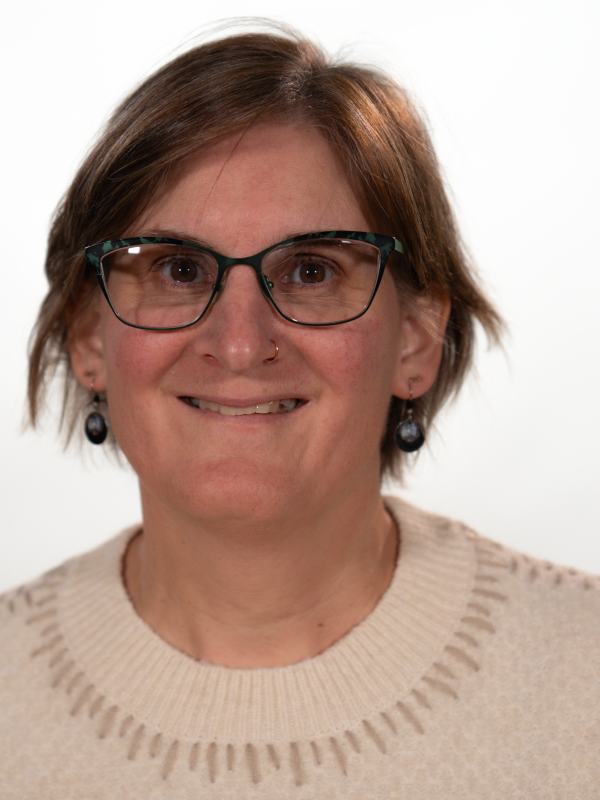
Julie S. Field is an Associate Professor in the Department of Anthropology at Ohio State University's College of Arts and Sciences. Her research examines human-environment interactions in Pacific Island societies, focusing on agricultural transitions, landscape transformations, and the emergence of social complexity in prehistoric Oceania. Field employs archaeological methods including isotopic analysis, GIS modeling, and zooarchaeology. Field's research interests include: Human-environmental dynamics in island ecosystems Development of agricultural systems in Polynesia Prehistoric conflict and cooperation patterns Anthropogenic impacts on island landscapes Subsistence transitions in Lapita and post-Lapita contexts Her geographic focus spans Fiji, Hawaii, Kauai, and other Pacific regions. Publications demonstrate methodological diversity: Geoarchaeological sourcing of volcanic materials Paleoclimate modeling of human migrations Zooarchaeological analysis of subsistence patterns GIS-based landscape archaeology Field co-authored the textbook 'World Prehistory and the Anthropocene' and directs field projects in Fiji and Hawaii. She advises graduate students including Craig H. Shapiro.
Hinsby Cadillo-Quiroz is Professor in the School of Life Sciences at Arizona State University, researching microbial controls on methane cycling in tropical peatlands. His work examines climate feedback mechanisms through biogeochemical analysis of Amazonian and boreal wetlands, with field sites across the Peruvian Amazon. Leads the PanAm Peat project studying carbon-water interactions across tropical peatland biomes. Research combines metagenomics, gas flux measurements, and ecosystem modeling to understand: microbial regulation of methane production/consumption; peatland responses to disturbance; restoration challenges in mined landscapes; and functional adaptations of archaeal communities. Current projects investigate Bathyarchaeia metabolism in Amazonian peat, mercury mobilization in gold mining areas, and stem methane fluxes in northern forests.
Viney Aneja is a Professor in the Department of Marine, Earth, and Atmospheric Sciences at North Carolina State University (NC State), with a secondary appointment in the Department of Forestry and Environmental Resources since 2001. He holds a B.Tech from IIT Kanpur (1971), and M.S. and Ph.D. from NC State (1975, 1977). His career includes industrial research roles at General Electric and Northrop Services before joining academia in 1987. Education: B. Tech, Chemical Engineering, IIT Kanpur (1971) M.S., Ph.D., Chemical Engineering, NC State (1975, 1977) MBA, Planning & Control, Union College (1986) Research Interests: Dr. Aneja focuses on environmental science and climate policy, particularly emissions from agriculture (e.g., CAFOs), wildfires, and their impacts on air quality and climate. His work integrates field measurements, satellite data, and modeling to address policy-relevant questions. Key areas include ammonia emissions, ozone formation, and nitrogen cycle dynamics. Professional Service: He has served on numerous advisory boards including the EPA’s Board of Scientific Counselors (2014–present), USDA Agricultural Air Quality Task Force (2001–2008), and North Carolina Governor’s Hazardous Materials Task Force (2006–2007). He currently chairs the editorial board of Atmosphere and serves on multiple international journal boards. Awards: North Carolina’s highest civilian honor (2007) Frank A. Chambers Award (1998) World’s top 2% scientists (Stanford, 2021) Rossby Visiting Fellow (2015) Teaching & Mentorship: Teaches courses on weather/climate and air quality. Advised 20 Ph.D. students, 45 M.S. students, and 9 postdocs. His research program is among the nation’s leading in agricultural air quality and climate science.
Kerrie Tomkins serves as Associate Professor and Pro Vice-Chancellor (Education) at Macquarie University Academy, Macquarie University. Her academic leadership spans educational strategy and research innovation within the university's governance structure. Her research expertise centers on Earth and Planetary Sciences with specialized focus on hillslope geomorphology , catastrophic event analysis , and vegetation dynamics in Holocene environments. Key methodologies include advanced remote sensing applications for fire severity assessment, invasive species monitoring, and streamflow analysis across Australian ecosystems. Publication trends reveal sustained contributions in Remote sensing technology integration (Sentinel, MODIS, Landsat) Environmental disaster response systems Biodiversity conservation frameworks Educational pedagogy research with significant output concentration between 2003-2021. Her scientific recognition includes: BHERT Award for Outstanding Collaboration (2017) Faculty Teaching Excellence Award (2017) Macquarie University Research Excellence Commendation (2017) Departmental Learning and Teaching Award (2017) As Pro Vice-Chancellor (Education), she leads institutional teaching strategy while maintaining active research supervision. Current projects focus on skills mastery integration in curricula and biodiversity monitoring through spectral libraries. Her collaborative network spans Australian environmental science institutions with significant cross-disciplinary partnerships.
Dr. Emilie Ens is an ARC Future Fellow at Macquarie University's School of Natural Sciences, where she leads the innovative and award-winning Cross-cultural Ecology Lab. She teaches in Environmental Management and has developed a vibrant research group focused on collaborative approaches to environmental science and management. Dr. Ens completed her PhD at the University of Wollongong in 2007, followed by a Post Doc in Weed Ecology at Charles Darwin University. She began collaborating with Indigenous researchers through the Centre for Aboriginal Economic Policy Research at The Australian National University, developing new cross-cultural approaches to science and environmental management. She joined Macquarie University in 2013. Her research spans multiple areas including invasive species management, fire ecology, wetlands, coastal floodplains, climate change adaptation, genetics, species modeling, and maintenance of cultural knowledge. Her work is characterized by genuine partnerships with Indigenous knowledge holders to develop cross-cultural understandings and management plans that respect both scientific and traditional knowledge systems. Dr. Ens's research portfolio demonstrates a consistent focus on biocultural approaches to conservation, with recent publications addressing biocultural credit assessment frameworks, feral ungulate impacts on carbon cycling, citizen science applications in biodiversity assessment, and collaborative approaches in conservation genetics. Her work often centers on Australian ecosystems, particularly in remote Aboriginal Australia and Arnhem Land. 2017 Eureka Prize for Innovation in Citizen Science 2014 Banksia Award for Indigenous Leadership in Sustainability 2017 BHERT Award for Outstanding Collaboration for National (non-economic) Benefit 2015 Banksia Award 2017 CSIRO DNFC Indigenous Engagement Award 2017 Faculty of Science and Engineering Award for Excellence in Research Dr. Ens actively mentors students and collaborates with Indigenous communities and ranger groups. She co-leads the Wuyagiba Bush Uni in the Northern Territory and serves on the Indigenous Working Group of the Ecological Society of Australia, the Indigenous Ally group of the Society of Ecosystem Restoration Australia, and as a Technical Advisory Group member for the Laynhapuy Indigenous Protected Area. She also contributes to academic discourse as an editorial board member for Ecological Management and Restoration and Sustainability journals. Her research is supported by numerous grants, including the ARC Future Fellowship (FT23: "Back to our roots: Re-activating Indigenous biocultural conservation") and collaborative projects like "LP22: Restoring & future-proofing the biocultural values of endangered seagrasses." The Cross-cultural Ecology Lab has made significant impacts in both scientific understanding and practical applications for Indigenous-led conservation efforts.
Gaute Einevoll is a Professor in the Department of Physics at the Norwegian University of Life Sciences (NMBU), Faculty of Science and Technology. His academic work bridges the disciplines of physics and neuroscience, with a strong focus on computational and mathematical modeling of brain function. Position: Professor of Physics Institution: Norwegian University of Life Sciences (NMBU) Department: Department of Physics Research Focus: Brain Physics, Computational Neuroscience His research interests lie at the intersection of physics and neuroscience, particularly in understanding the biophysical mechanisms underlying neural signals such as local field potentials (LFPs), EEG, and spike trains. He develops and applies mathematical models to interpret experimental data from multielectrode arrays and laminar recordings. His work includes modeling cortical circuits, thalamocortical networks, and the transition from grid cells to place cells in spatial navigation. He also investigates the biophysical basis of signal propagation and filtering in neural tissue. The 15 most recent publications reflect a consistent focus on computational modeling of neural activity, with strong emphasis on biophysical realism, data analysis methods, and tool development. Articles span topics from single-neuron contributions to EEG, astrocytic ion dynamics, and large-scale neural recordings. Keywords across these works include Computational Neuroscience, Biophysics, Neural Modeling, and Electrophysiology, with subfields covering LFPs, spike-train analysis, cortical circuits, and network dynamics. A recurring theme is the development of analytical and computational tools to bridge experimental data with theoretical understanding. No scientific awards are mentioned in the provided text. Gaute Einevoll has supervised research and taught courses such as FYS388/488 Computational Neuroscience and FYS102 Thermal Physics and Electromagnetism. He has contributed to major collaborative efforts like the Human Brain Project. While specific grants are not listed, his extensive publication record in high-impact journals suggests sustained research funding. He has also authored educational materials, including a textbook on physics and an edited volume on natural sciences. He is associated with research groups focused on computational neuroscience and brain physics. He has developed the LFPy tool for simulating extracellular potentials, indicating leadership in neuroinformatics tool development. His team likely involves interdisciplinary collaboration between physicists, neuroscientists, and computational biologists working on modeling neural systems.
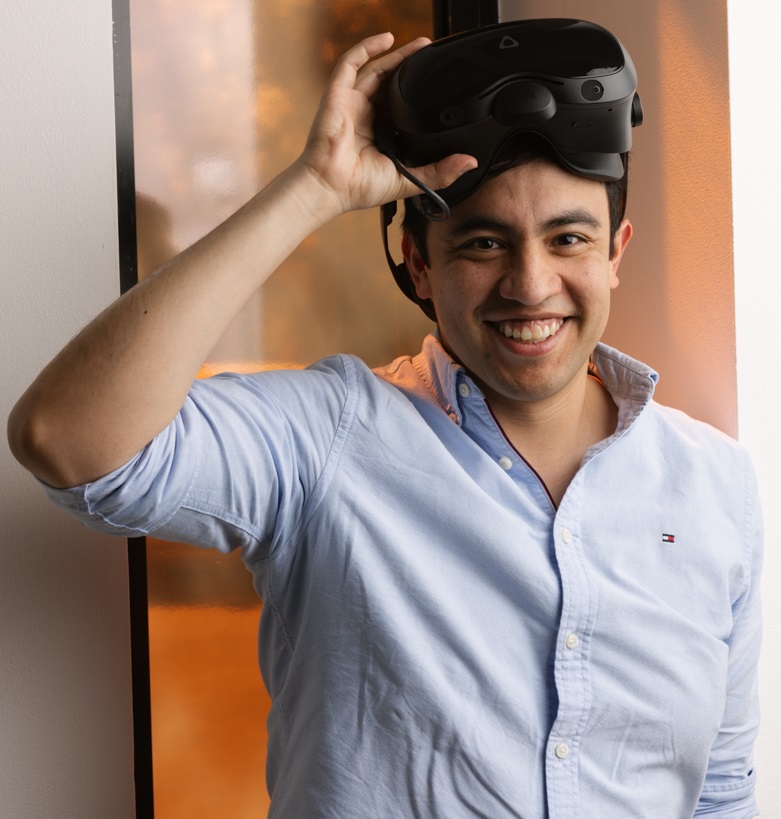
Carlos Tirado Cortes is a Lecturer in Interaction Design at the Discipline of Design Lab , Faculty of Architecture, Design and Planning, University of Sydney. As a virtual environments researcher, he focuses on Human-Computer Interaction and data visualization in immersive systems. Ph.D in Human-Computer Interaction (University of Technology Sydney, 2021) M.S. in Computer Game Engineering (Newcastle University, UK, 2015) B.S. in Engineering and Information Technology (Monterrey Institute of Technology, Mexico, 2012) His research explores immersive visualization for wildfire training (iFire project), VR sickness analysis, and brain-body dynamics during virtual navigation. Recent publications examine: AI-powered wildfire visualization systems Metaverse safety for children Postural instability in VR environments Fire-atmosphere interaction modeling Balance recovery techniques in immersive spaces
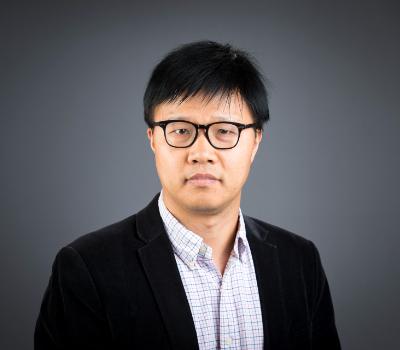
Haizhong Wang is a Professor in the Department of Civil and Construction Engineering at Oregon State University, affiliated with the College of Engineering. He holds a Ph.D. in Civil Engineering from the University of Massachusetts Amherst (2010), an M.S. in Applied Mathematics from the same institution (2010), and earlier degrees from Beijing University of Technology and Hebei University of Technology in China. His research focuses on transportation systems, disaster resilience, and intelligent infrastructure solutions. Education: Ph.D., Civil Engineering, UMass Amherst, 2010 M.S., Applied Mathematics, UMass Amherst, 2010 M.S., Civil Engineering, Beijing University of Technology, 2006 B.S., Civil Engineering, Hebei University of Technology, 2003 Dr. Wang's research integrates traffic flow modeling, agent-based systems, and interdisciplinary approaches to address challenges in emergency evacuation logistics, autonomous vehicle impacts, and climate-resilient infrastructure. He explores topics such as tsunami preparedness, wildfire evacuation behavior, and optimization of electric vehicle networks. His work emphasizes data-driven methodologies for enhancing transportation safety, efficiency, and disaster response capabilities. Recent studies highlight his contributions to understanding evacuation decision-making under time-critical scenarios, optimizing multi-modal transportation networks, and assessing infrastructure vulnerability to cascading disasters. Collaborative projects include developing frameworks for cooperative logistics systems and interdisciplinary models linking natural, built, and social systems for community resilience. His grants and collaborations focus on disaster preparedness, smart work zones, and connected vehicle technologies. He advises on transportation safety and serves on research initiatives addressing climate adaptation and emergency management. Current efforts include refining agent-based models for vertical evacuation strategies and evaluating the societal impacts of automated vehicles on urban mobility.
Giorgio Zavarise is a Full Professor in the Department of Structural, Building and Geotechnical Engineering (DISEG) at the Politecnico di Torino, where he also contributes to the SISCON Interdepartmental Center for Safety of Infrastructures and Constructions. His academic work spans computational and structural mechanics, with a focus on contact mechanics, finite element methods, and thermomechanical modeling. He has held leadership roles in numerous international conferences and serves on the editorial board of Computational Mechanics . His research interests include contact mechanics, isogeometric analysis, cohesive zone modeling, beam-to-beam contact, and the mechanics of masonry and massive concrete structures. He has extended his work into advanced technological applications such as subatomic particle detectors (e.g., Mu2e, SuperB, MEG), thermonuclear fusion (RFX, ITER), large optical telescopes (LBT), and structural fire analysis. His methodologies integrate physical modeling with computational efficiency, often involving multi-scale and coupled problems. The recent publications reflect a strong trend in computational contact mechanics, particularly using NURBS and T-splines for isogeometric analysis, as well as cohesive zone models for fracture and delamination. His work consistently emphasizes algorithmic robustness, geometric accuracy, and real-world engineering applications across civil, aerospace, and energy sectors. Scientific Awards and Recognitions: Fellow of the International Association for Computational Mechanics (IACM), 2013–2022 Professional Memberships: Full Member, IACM Full Member, Italian Group of Computational Mechanics Full Member, AIMETA (Italian Association of Theoretical and Applied Mechanics) Full Member, EUROMECH (European Mechanics Society) Advising and Grants: He has supervised PhD students in Civil, Mechanical, and Complex Systems Engineering at Politecnico di Torino and Università del Salento. He has led multiple PRIN-funded national research projects on contact and fracture mechanics and is currently managing a commercial consulting project on reconstructed stone materials. His editorial role in Computational Mechanics and chairmanship of the ICCCM series highlight his leadership in the computational mechanics community. He has also contributed to the Encyclopedia of Computational Mechanics . Laboratories and Teams: He is affiliated with the SISCON Interdepartmental Center, focusing on infrastructure safety, and collaborates internationally with institutions such as INFN (Lecce), Fermilab, CNR, and the University of Arizona’s Steward Observatory.
Michelle Mack is a Regents' Professor in the Department of Biological Sciences and a key faculty member at the Center for Ecosystem Science and Society at Northern Arizona University. Her research focuses on Arctic and boreal ecosystems, with emphasis on wildfire, permafrost, carbon cycling, and vegetation dynamics under climate change. Department of Biological Sciences, Northern Arizona University Center for Ecosystem Science and Society, Northern Arizona University Her research interests span ecosystem science, boreal forest ecology, Arctic tundra dynamics, permafrost, wildfire ecology, and climate change impacts. She employs field surveys, remote sensing, and modeling to understand how northern ecosystems respond to environmental change, particularly fire and warming. Recent publications highlight her work on Arctic vegetation mapping, overwintering fires, tundra phenology, and post-fire carbon recovery. Her research often involves large interdisciplinary collaborations and contributes to major datasets used in global change science. Michelle Mack has no listed scientific awards in the provided text. She is actively involved in mentoring and collaborative research, as evidenced by her frequent co-authorship with early-career scientists and inclusion in multi-investigator datasets. While no formal students are listed, her role in large research teams suggests significant advisory and leadership responsibilities. She contributes to major environmental research initiatives such as the Arctic-Boreal Vulnerability Experiment (ABoVE). She leads and contributes to research teams generating critical ecological datasets on boreal and Arctic systems. Her work is central to understanding climate feedbacks in high-latitude ecosystems.
Professor Paul Zedler is affiliated with the University of Wisconsin – Madison , where he holds a joint position as Professor of Environmental Studies at the Gaylord Nelson Institute for Environmental Studies and as an Affiliate in the Botany Department . He is also a Senior Scientist at the UW-Madison Arboretum , contributing to research and education at the interface of ecology, conservation, and environmental policy. Research Focus: Plant community/population ecology, fire ecology, ecosystem resilience, and biodiversity conservation in agricultural landscapes Key Projects: Wisconsin Healthy Grown® potato ecolabel, prairie restoration at Badger Army Ammunition Plant, Eastern Tallgrass Prairie Fire Science Consortium Teaching: Graduate course ES 993 (Land Resources program) and undergraduate capstone ES 600 (Environmental Studies certificate) Lab Structure: Virtual lab with students in Botany (via affiliation) and Nelson Institute programs, collaborating with Arboretum and external organizations His research spans fire dynamics in Mediterranean shrublands, Midwest prairie-oak savanna systems, and interdisciplinary solutions for environmental problems. Publications address ecological restoration, fire effects, and market-based conservation tools like eco-labels. Students include doctoral and master’s candidates in Environment and Resources, with lab alumni contributing to diverse conservation initiatives.
Stefan Ćirković is a Teaching Associate in the Department of Information Technologies at the Faculty of Technical Sciences in Čačak, University of Kragujevac. His office is located at Saint Sava 65, 32102 Čačak, Serbia. He is currently pursuing doctoral studies in Information Technology (2023–present) at the same institution. Education: Doctoral Academic Studies – Information Technology, University of Kragujevac (2023–present) Master of Academic Studies – Information Technology, University of Kragujevac (2022–2023) Basic Academic Studies – Information Technology, University of Kragujevac (2018–2022) Specialized Program – Cybersecurity, University of Kragujevac (2024) Research Focus: Ćirković specializes in applied artificial intelligence with significant work in cybersecurity, medical imaging, and network systems. His research demonstrates strong emphasis on practical AI implementations including real-time object detection (YOLO algorithm), anomaly detection in networks, federated learning for healthcare applications, and cybersecurity techniques using large language models. His work frequently intersects with medical informatics, particularly in diagnostic applications. Publication Trends: Recent publications (2024–2025) show predominant focus on AI/ML applications across multiple domains. Cybersecurity remains a core theme with novel approaches to web application security and network anomaly detection. Medical applications feature prominently, especially in diagnostic imaging (kidney stones, skin cancer) and hemodialysis optimization. Methodologically, there's consistent exploration of deep learning architectures and real-time systems. Laboratory Affiliations: Associated with the Computer Science Laboratory at the Faculty of Technical Sciences in Čačak. Utilizes institutional resources including the Moodle e-learning platform and Microsoft 365/Teams infrastructure for academic activities.
Christian Lauk is a researcher at the Institute of Social Ecology (SEC) within the University of Natural Resources and Life Sciences, Vienna (BOKU) . He holds a PhD in Social Ecology (2013, University of Klagenfurt) and a Master’s in Biology (2005, University of Vienna). His work bridges socio-ecological systems, carbon metabolism, and sustainability transitions, with a focus on bioenergy, land use, and urban food systems. Education PhD in Social Ecology, University of Klagenfurt (2013) Master in Biology, University of Vienna (2005) Research interests center on nature-society interactions , particularly: Climate change mitigation via food and land use systems Socio-metabolic carbon stocks and flows Post-growth economic models Global biodiversity footprint analysis Integrated land use scenarios His 15 most recent publications (2025–2021) explore: Food systems' impacts on planetary boundaries Historical agricultural emissions trends Material stocks as carbon pools Wildfire effects on forest carbon Regional self-sufficiency in EU agriculture Urban food scenarios for climate goals He has supervised theses like "Der Futtermittelbedarf der globalen Aquakultur" (2021). Scientific projects include leading ZEAFOLU (Zero emissions from agriculture in Austria) and contributing to EU-funded initiatives on circular bioeconomy and land use. His work integrates biophysical modeling with social theory to address sustainable transitions.
Michael Breuer serves as Professor of Photogrammetry and Remote Sensing within Department III – Civil Engineering and Geoinformation at Beuth University of Applied Sciences Berlin. He heads the Photogrammetry Laboratory and maintains extensive professional collaborations with authorities, universities, and companies across Berlin/Brandenburg, Germany, and internationally in geoinformation domains. His research spans photogrammetry, remote sensing, 3D modeling, and geospatial applications for archaeological documentation, disaster response, and environmental monitoring. Key focus areas include: Terrestrial and aerial photogrammetric methods for cultural heritage preservation Satellite-based remote sensing for land cover change analysis Drone-based systems (RPAS/UAS) for emergency response mapping Forensic measurement applications using photogrammetric techniques Integration of AI/ML in geospatial data processing Professor Breuer actively supervises numerous bachelor's and master's theses, often in partnership with external organizations including Brandenburg State Office for Monument Preservation, Berlin Fire Department, GFZ Potsdam, and international archaeological projects. His laboratory maintains strong ties with other BHT facilities including Geomedia Laboratory, Geodetic Measurement Technology Laboratory, and Geodata Analysis and Visualization Laboratory. He teaches core courses in photogrammetry, remote sensing, 3D geodata modeling, and digital image processing across both bachelor's and master's programs in Geoinformation. His teaching emphasizes practical applications through field exercises and industry collaborations.
Gui Becker is an Associate Professor in the Department of Biology at Pennsylvania State University, where he investigates critical intersections of disease ecology, microbiome dynamics, and conservation biology with a focus on amphibian populations. As an Affiliate Researcher in Penn State's Climate and Natural Systems theme, his work addresses environmental change impacts on wildlife disease in tropical ecosystems, particularly Brazil's Atlantic Forest and Cerrado biomes. His research spans four core areas: Disease Ecology: Mechanisms of fungal pathogens like Batrachochytrium dendrobatidis (Bd) in amphibian declines Microbiome Research: Protective roles of skin and gut microbiomes against disease Conservation Biology: Effects of habitat fragmentation, drought, and pollution on population viability Wildlife Disease Dynamics: Climate-pathogen interactions driving outbreaks Analysis of his 15 most recent publications reveals interdisciplinary trends combining field ecology, microbiome sequencing, and computational modeling. Key findings demonstrate drought-induced microbiome disruption increasing disease susceptibility, thermal mismatch effects on fungal virulence, and habitat fragmentation altering host-pathogen interactions. His work consistently links environmental stressors to disease outcomes, providing actionable insights for amphibian conservation in changing landscapes. Scientific Awards: No awards were mentioned in the provided text. Advising and Grants: The provided information does not specify student mentorship or grant funding details. Labs and Teams: Becker leads collaborative research across Brazil and North America, working with institutions in the Atlantic Forest region. His team integrates field ecologists, microbiologists, and conservation practitioners to address amphibian disease crises through the Climate and Natural Systems initiative at Penn State.