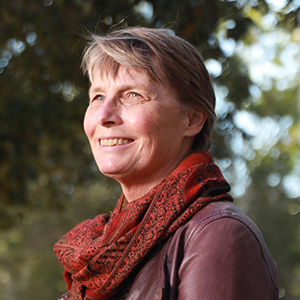
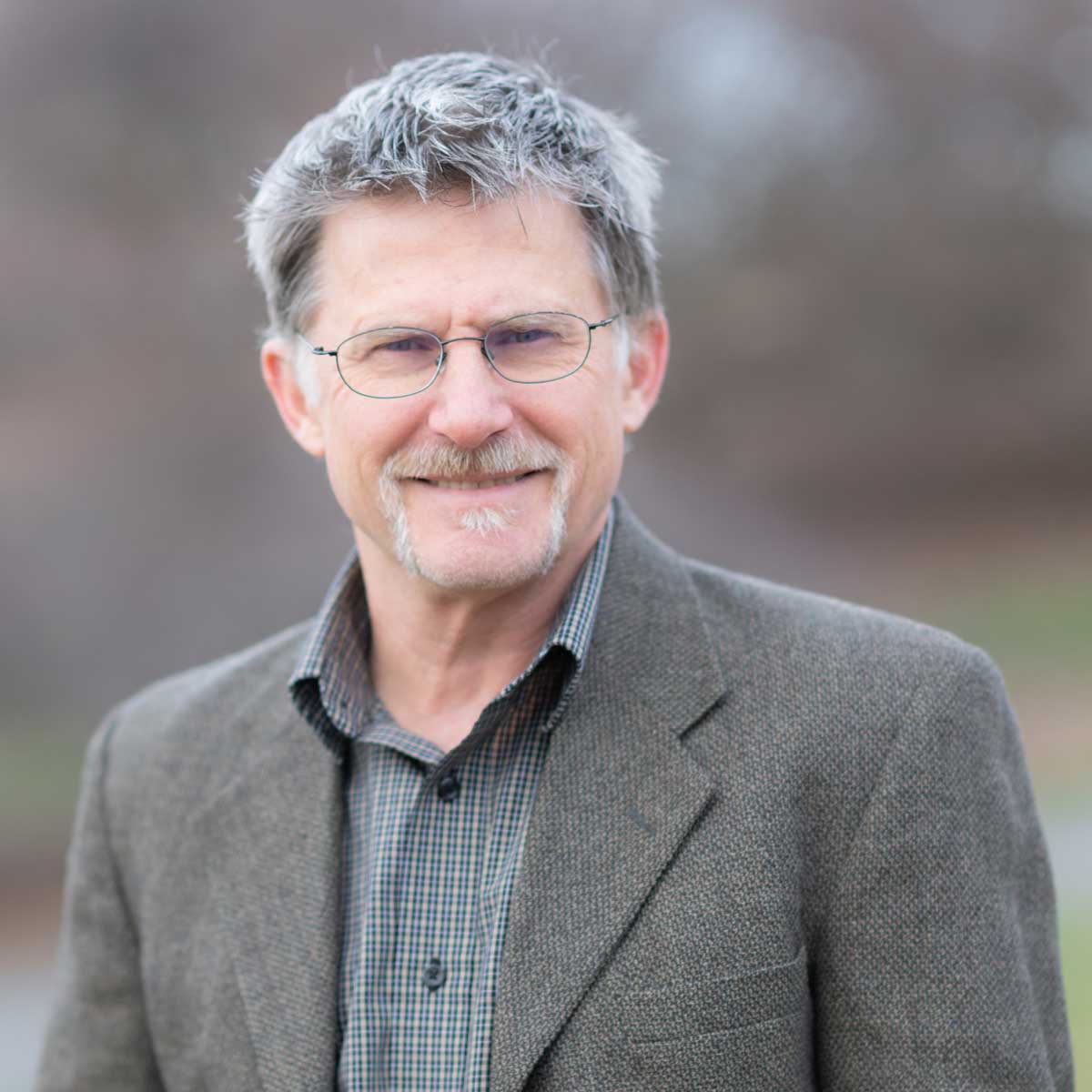
Lance Vickers serves as an Assistant Professor of Forest Management at the University of Kentucky's Martin-Gatton College of Agriculture, Food and Environment. His research focuses on sustainable forest management, population dynamics of oak species, and ecological challenges in hardwood regeneration. Ph.D., The University of Missouri (2015) M.S., Virginia Tech (2009) B.S., University of Arkansas-Monticello (2006) Vickers' work integrates quantitative silviculture with ecological modeling to address forest regeneration bottlenecks. Recent studies examine white oak population trends, soil-forest interactions, and the impact of invasive species like Chinese tallow on native ecosystems. His research emphasizes data-driven decision-making for sustainable timber management and biodiversity preservation. Key article themes include forest health threats (e.g., white oak demographics), digital tools for soil analysis, and mixedwood silviculture strategies. Many publications investigate regeneration failures in black cherry and longleaf pine, alongside anthropogenic impacts on forest composition.
Timothy J. Lewis is a Professor in the Department of Mathematics at the University of California, Davis, with a research focus on mathematical physiology, neurobiology, and excitable media. He has held positions at UC Davis since 2004, progressing from Assistant to Associate to Full Professor. Ph.D. in Mathematics (University of Utah, 1998) M.S. in Mathematics (University of Utah, 1993) M.Sc. in Physiology (McGill University, 1991) B.Sc. in Physiology and Physics (McGill University, 1988) His research interests include: Mathematical modeling of excitable media Neurobiology of electrically coupled neurons Cardiac electrophysiology and pharmacology Weakly coupled oscillator theory Dynamical systems in biological contexts His recent work spans computational neuroscience, cardiac drug interactions, and biomechanical systems. Key trends include: Modeling subcellular cAMP compartmentation Optimizing neurocardiac digital twins Analyzing sodium channel blocker efficacy Investigating spiral wave stability in excitable tissue Scientific awards include: 2011 G. Thomas Sallee Award for undergraduate teaching 2007 Galois Group Service Award He has mentored numerous graduate and undergraduate students, including: Jiawei Zhang (Ph.D. 2013, now at University of Arizona) Michael Schwemmer (Ph.D. 2010, now at Battelle Memorial Institute) Steffen Docken (current Ph.D. candidate)
Mark Ducey is a Professor in the Department of Natural Resources and the Environment at the University of New Hampshire. His research focuses on forest biometrics, quantitative silviculture, and the application of remote sensing technologies like LiDAR to analyze forest structure, carbon dynamics, and ecological change across scales from individual stands to regional landscapes. Primary Affiliation: University of New Hampshire Department: Natural Resources and the Environment His work spans mixed-species forests in New England, the Blue Mountains of Oregon, and international collaborations in Europe, Australia, New Zealand, Costa Rica, and Brazil. Key research themes include: Quantitative forest inventory techniques Carbon sequestration and climate change impacts Coarse woody debris sampling Remote sensing integration for ecological modeling Land cover change analysis Recent publications highlight advancements in height-diameter modeling, biomass estimation via novel sampling methods, and ecological implications of forest management practices. His teaching includes courses on forest inventory analysis, grant writing, and contemporary conservation issues.
Rizwan Bulbul is a researcher at the Institute of Geodesy , Graz University of Technology (TU Graz), Austria. His work bridges geodesy, geographic information systems (GIS), and computational modeling. Research Interests : Bulbul's research focuses on geospatial modeling, artificial intelligence integration, and sustainable urban development. Key areas include smart tourism simulations, energy transition policy analysis, and off-road robotic navigation using machine learning. His work also addresses forest fire prediction uncertainty, vertical photovoltaic potential, and cattle tracking in alpine environments. Publications : His research spans spatial optimization, 3D city modeling, and semantic routing. Recent projects involve leveraging AI for tourism simulations and energy policy evaluation, demonstrating interdisciplinary applications of geospatial technologies. Contact : Email: bulbul@tugraz.at Office: TU Graz, Steyrergasse 30/I, Room ST01122
Sebastian Hönel is a postdoctoral researcher at Linnaeus University, affiliated with the Faculty of Technology and the Department of Computer Science and Media Technology. He is an active member of the Data Intensive Software Technologies and Applications (DISTA) research group and currently serves as a co-Principal Investigator in the project "In-line visual inspection using unsupervised learning" focused on manufacturing defect detection using machine learning techniques. Hönel completed his Doctoral Thesis in 2023 titled "Quantifying Process Quality: The Role of Effective Organizational Learning in Software Evolution" and earned his Licentiate Thesis in 2020 on "Efficient Automatic Change Detection in Software Maintenance and Evolutionary Processes," both from Linnaeus University. His educational background demonstrates a strong foundation in software engineering and data analysis. Hönel's research spans software engineering, machine learning, and data science. Initially focusing on applying Machine Learning and Deep Learning to software evolutionary processes and organizational learning, his current work emphasizes unsupervised and zero/few-shot learning techniques for industrial anomaly detection. He has particular expertise in Deep Density Estimation (especially Normalizing Flows) and Representation Learning, with applications in manufacturing quality assessment and software maintenance. His research interests include anomaly detection methodologies, architectural innovations in autoencoders, and methodological considerations for evaluation metrics in machine learning applications. An analysis of his publication record reveals a consistent focus on bridging software engineering with advanced machine learning techniques. His most recent work shows a strategic shift toward industrial applications of unsupervised learning, particularly in manufacturing defect detection, while maintaining his foundational work in software metrics and quality assessment. The publications demonstrate progression from theoretical software metrics to practical applications of deep learning in quality inspection systems. Hönel actively contributes to academic education by teaching (Deep) Machine Learning courses (4DV652, 4DV660, 4DV661) and previously served as a teaching assistant for agile product development courses (1DV508, 4DV611). His role as co-PI on the visual inspection project indicates successful research funding and leadership capabilities. While specific grant details aren't provided in the available information, his position suggests ongoing research support. As part of the DISTA research group, Hönel collaborates extensively with colleagues including Ericsson, Löwe, and Wingkvist on projects that combine software engineering with advanced data analysis techniques. His work environment supports interdisciplinary research at the intersection of computer science, software engineering, and machine learning applications, with particular emphasis on practical implementations in both software development contexts and manufacturing quality control systems.
Elsa Pastor Ferrer is a Professor in the Department of Chemical Engineering at the School of Engineering of Eastern Barcelona (EEBE), Universitat Politecnica de Catalunya (UPC). She serves as a contracted professor (Catedràtic contractat) and leads significant research in forest fires and technological risk assessment. Her work spans multiple research groups including CERTEC (Center for Technological Risk Studies) and CER-H2 (Research Center for Hydrogen at UPC). Dr. Pastor Ferrer's research focuses on wildland-urban interface (WUI) fires, fire safety engineering, and technological risk assessment. Her expertise encompasses wildfire risk modeling, structural protection against fires, vegetation flammability, and hydrogen safety. She has developed methodologies for vulnerability assessment at property level and created tools like TourGuard for infrastructure vulnerability assessment. Her work integrates computational fluid dynamics (CFD) with artificial intelligence for dynamic risk assessment in fire scenarios. Her recent publication trends show strong emphasis on practical applications of fire safety research, with numerous deliverables for EU projects like WUITIPS and FIREPRIME. These publications demonstrate growing integration of virtual reality for risk visualization and intelligent systems for dynamic risk assessment. Her work bridges theoretical fire science with practical risk mitigation strategies for communities and infrastructure. Best Poster Award - First Place (2025) Mención Honorífica de DOCTOR EUROPEO (European Doctor Mention of Honor) Dr. Pastor Ferrer actively advises PhD students including Juan Antonio Muñoz Navarro, Francisco de Borja Rengel Darnaculleta, and Mario Miguel Valero Perez. She leads multiple competitive research projects with funding from EU Civil Protection Mechanism, Horizon Europe, and Spanish national programs. Her work includes significant collaboration with Eulalia Planas Cuchi (275 joint publications) and Alba Àgueda Costafreda (77 joint publications). She contributes to major research initiatives including the 3D Fire LABoratory and the GUARDIAN project for WUI fire protection. Her work extends to practical applications like assessing fire behavior in parking structures and developing irrigation technologies for wildfire protection.
Andrew Miri is an Assistant Professor in the Department of Neurobiology at Northwestern University's Weinberg College of Arts & Sciences. He holds a Ph.D. from Princeton University. His research focuses on understanding how the nervous system generates movement, particularly the interplay between spinal cord neurons and brain regions in the motor system. His lab employs advanced genetic, physiological, and data science tools to study motor system dynamics and functional units. Key research interests include motor system function, behavior quantification, systems neuroscience, and brain-behavior relationships. He investigates how motor cortical outputs engage spinal circuits and the elemental functional units underlying motor operation. Recent work explores skilled movement generation in real-time, cortical orchestration of movement, and corticospinal control mechanisms. Selected honors include the NIH Director's New Innovator Award (2020), Sloan Research Fellowship (2020), and Searle Scholar Award (2019). His lab includes students like Akiko Saiki (Ph.D.), Zhengyu Ma, and Sarah Hsu, alongside research technicians and undergraduates. Collaborative projects involve genetic tools, optogenetic inactivation, and EMG recordings to dissect neural mechanisms. Publications highlight studies on motor cortical influence, neural dynamics in gaze control, and motor neuron identity. His work bridges basic neuroscience with translational insights into movement disorders.
Professor Nathaniel Stern is a faculty member in the Department of Physics and Astronomy at Northwestern University, specializing in quantum interactions of photons with nano-scale systems. He holds a PhD from the University of California, Santa Barbara (2008) and leads the Stern Research Group, focusing on hybrid photonic systems, quantum materials, and light-matter interactions. His research explores novel optical and spin properties in monolayer semiconductors, chiral photonics, and magneto-optical effects. Education: PhD in Physics, University of California, Santa Barbara (2008). Research Interests: Quantum photonics, nano-scale optoelectronics, valley-polarized exciton-polaritons, and applications in quantum information science. His work bridges experimental approaches like time-resolved spectroscopy and single-photon detection with theoretical models for understanding quantum phenomena in 2D materials. Awards: Alfred P. Sloan Research Fellowship (2013), DOE Early Career Award (2014), ONR Young Investigator Award (2016). Advising & Students: Advised PhD students Carin Gavin (2023 Rapid Fire winner) and Hongfei (defended 2023). Current group members focus on quantum emission in van der Waals heterostructures and chiral photonics. Labs/Teams: Stern Research Group explores quantum systems in integrated photonic platforms, collaborating with the Chicago Quantum Exchange as part of the region’s US Tech Hub designation for quantum technologies.
Dr. Daniel Cohan is a Professor of Civil and Environmental Engineering at Rice University. He leads the Cohan Research Group, focusing on air quality modeling, energy systems, and climate policy. His work integrates atmospheric chemistry with policy analysis to address challenges like ozone pollution, renewable energy transitions, and agricultural emissions. Dr. Cohan earned a B.A. in Applied Mathematics from Harvard University and a Ph.D. in Atmospheric Sciences from Georgia Tech. Research interests include photochemical modeling, climate change mitigation, and the health impacts of pollutants. He has authored over 50 peer-reviewed publications and the book Confronting Climate Gridlock , which explores policy solutions for clean energy. Dr. Cohan serves on the U.S. EPA’s Board of Scientific Counselors and has received the NSF CAREER Award. Recent publications highlight wind-solar energy potential in Texas, health impacts of gas flaring, and soil nitrogen emissions modeling. His work emphasizes interdisciplinary approaches to environmental challenges, combining engineering, economics, and policy.
Senior Professor Kristine French is affiliated with the School of Earth, Atmospheric and Life Sciences (SEALS) at the University of Wollongong. She holds the position of Senior Professor since 2023 and previously served as Director of the Janet Cosh Herbarium from 1993 to 2023. Her research focuses on invasion ecology, urban ecology, and conservation biology, with a strong emphasis on invasive species management, biosecurity, and biodiversity conservation. Her work spans diverse ecosystems, including arid zones, rainforests, and urban environments. Key themes in her research include plant-invasive species interactions, restoration ecology, and the impacts of pesticides and climate change on biodiversity. She has supervised numerous postgraduate students, contributing to advanced studies in ecological processes and conservation strategies. Professor French has secured significant funding for projects addressing weed invasions, urban greenspace dynamics, and pesticide effects on fauna. Her publications reflect a commitment to interdisciplinary approaches, integrating ecology, microbiology, and evolutionary biology to solve real-world conservation challenges. Her contributions include advancing understanding of seed bank dynamics, microbial interactions in restoration, and the ecological consequences of urbanization. Despite no explicit mention of awards, her extensive grants and high-impact publications underscore her academic influence.
Tim Cohen is an Associate Professor in the School of Science at the University of Wollongong. He serves as Director of the ARC Centre of Excellence for Australian Biodiversity and Heritage (CABAH) and Deputy Director of Environmental Futures. His expertise spans geomorphology, Quaternary science, and climate extremes, focusing on integrating past and present environmental data to inform landscape management. Cohen holds a PhD from the University of Wollongong (2003) and a BSc (Hons) from Macquarie University (1996). He has led ARC-funded projects, including a Future Fellowship (2018–2022), and contributed to over 100 research outputs with an h-index of 28. His work addresses Australia's hydrological history, arid zone dynamics, and human-environment interactions. Education: PhD in Geosciences, University of Wollongong (2003) BSc (Hons) in Earth Sciences, Macquarie University (1996) Research Interests: Geomorphology, Quaternary Science, Climate Extremes, Environmental Management, Hydrology, and Paleoenvironmental Reconstruction. Recent articles highlight his work on Australian arid zone hydrology, climate-vegetation interactions, and lacustrine paleoenvironments. Cohen’s grants include tracking flooding patterns and aridification in Australian deserts (ARC Discovery, 2025–2029) and environmental resilience studies. He supervises PhD/MPhil students on topics like megadune evolution and paleofire records. Leadership roles include President of the Australian and New Zealand Geomorphology Group and roles in CABAH and the Optical Dating Facility. Awards include the ARC Future Fellowship (2018–2022). His research emphasizes multidisciplinary approaches, with global media coverage of findings on climate impacts and human adaptation in arid regions.
Dr. Reetam Majumder is an Assistant Professor of Statistics in the Department of Mathematical Sciences at the University of Arkansas's Fulbright College of Arts & Sciences. Research Focus: Develops statistical methods for environmental extremes, including spatial modeling of climate extremes, wildfire risk assessment, and hydrological forecasting. Combines traditional statistics with deep learning approaches. Publications: Recent work demonstrates strong focus on environmental applications of extreme value theory, including streamflow modeling under climate change, spatial optimization for fire management, and climate model bias correction. Research frequently employs semi-parametric methods and neural network approximations for complex environmental systems.
Janet Franklin is the Endowed Campanile Foundation Professor of Geography at San Diego State University (SDSU), affiliated with the College of Arts and Letters and the Center for Open Geospatial Sciences. Her research focuses on Landscape Ecology, Global Change Biology, and Conservation Biogeography, addressing ecological resilience to human-induced environmental changes. She holds a Ph.D. in Geography from the University of California, Santa Barbara (1988). Franklin’s career includes roles as Distinguished Professor Emerita at UC Riverside, Distinguished Biogeographer, and Adjunct Professorships at Arizona State University and the University of Queensland. She has led interdisciplinary projects on species distribution modeling, climate change impacts, and geospatial technologies. Her research emphasizes understanding plant community dynamics in forests, shrublands, and other ecosystems under global change. Collaborations with international scholars and practitioners drive solutions to ecological challenges. Notable awards include the James J. Parsons Award (2020), election to the National Academy of Sciences (2014), and Distinguished Fellow of the International Biogeography Society (2024).
Ryer Becker is an Assistant Research Professor at the University of Idaho's Department of Forest, Rangeland and Fire Sciences within the College of Natural Resources. He holds a Ph.D. (2022), M.S. (2017), and multiple B.S./A.A.S. degrees (2013-2014) in forest-related fields from Paul Smith's College and the University of Idaho. His research focuses on workforce development, smart forestry technologies, remote sensing applications, and forest operations safety. He specializes in leveraging technology such as LiDAR, GNSS-RF devices, and smartphone-based systems to improve forest management practices and engage future forestry professionals. Dr. Becker has authored/co-authored peer-reviewed articles on topics including fuel treatment modeling, equipment activity recognition, and mastication effects on forest ecosystems. His 2024 work highlights innovative approaches to workforce engagement through technology. He teaches courses like FOR 272 (GIS Applications) and FOR 230 (Forest Operations). Awarded the 2023 Western Region Technical Writing Award and 2015 SAF Presentation Award, his expertise bridges applied research with practical training for the forest products industry.
Courtney Conway is a Professor of Wildlife Sciences and Unit Leader of the Idaho Cooperative Fish & Wildlife Research Unit at the University of Idaho's College of Natural Resources. Their research focuses on wildlife management, conservation biology, behavioral ecology, and life history evolution, with a strong emphasis on applied conservation of species like greater sage-grouse, burrowing owls, and northern Idaho ground squirrels. Conway leads collaborative projects with federal and state agencies to address ecological challenges such as habitat management, climate impacts, and population recovery. Education: Ph.D., University of Montana (1998); M.S., University of Wyoming (1990); B.S., Colorado State University (1985) Research Interests: - Effects of land use (e.g., grazing) on wildlife populations - Migration and hibernation behavior in birds and mammals - Conservation of imperiled species through habitat restoration and genetic monitoring Publications highlight advancements in understanding differential migration patterns, predator-prey dynamics, and the impacts of human activities on wildlife. Conway has received numerous awards, including recognition from The Wildlife Society and the American Ornithological Society, and actively mentors graduate students in field and laboratory research. Awards: Over 15 accolades, including 2024 University of Idaho Excellence Award and 2019 Fellow of The Wildlife Society Labs/Teams: The Conway Lab at the USGS Idaho Cooperative Unit trains students and conducts interdisciplinary research to inform wildlife management policies.