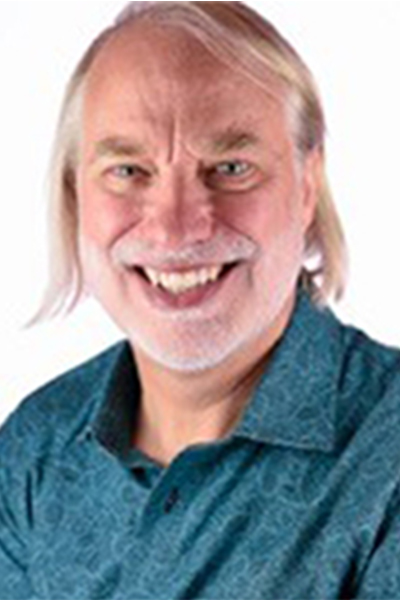
Dr David Begg is a Senior Lecturer at the University of Portsmouth, affiliated with the Faculty of Technology and School of Civil Engineering and Surveying. He contributes to the Portsmouth Centre for Advanced Materials and Manufacturing and serves as a PhD supervisor. Academic Rank: Senior Lecturer University: University of Portsmouth School: Faculty of Technology Department: School of Civil Engineering and Surveying His research focuses on structural engineering, concrete technology, and smart systems. Key areas include: Structural Modeling, Monitoring, and Design Steel Fiber Reinforced Concrete Building Information Modeling (BIM) Optimization Seismic Analysis and Rehabilitation Intelligent Structural Systems Research trends show consistent contributions to concrete material properties, BIM integration, and seismic vulnerability assessment. Scientific awards are not explicitly mentioned in available data. He accepts PhD students but notes no current funding opportunities.
Michael R. Gosz is an Associate Professor in the Department of Mechanical and Materials Engineering at the Illinois Institute of Technology (IIT), affiliated with the Armour College of Engineering. He serves dual roles as a faculty member and as IIT's Vice President of Data Analytics. His expertise lies in Computational Solid Mechanics, with a focus on finite element methods, composite materials, and fracture mechanics. Education: He holds a Ph.D. (1993), M.S. (1989), and B.S. (1988) in Mechanical Engineering from Northwestern University and Marquette University, respectively. Research Interests: Gosz specializes in computational modeling of composite materials, contact mechanics, thermal fatigue analysis, and microelectronic structures. His work spans applications in dentistry, aerospace, and aquaculture engineering, such as analyzing dental resin composites and designing submerged net-pen systems for aquaculture. Awards: He has received prestigious awards including the Cabell Graduate Fellowship (1988-89), IBM Faculty Development Award (1994), and multiple teaching awards at IIT (1999, 2006). His contributions to education include pioneering data-driven advising systems at IIT. Labs/Teams: Collaborates on interdisciplinary projects like neutrino factory research (Muon Collaboration) and aquaculture physical modeling. His work integrates computational mechanics with real-world engineering challenges.
Pezhman Mardanpour is an Associate Professor in the Department of Mechanical and Materials Engineering at Florida International University (FIU), part of the College of Engineering. His research focuses on aeroelasticity, constructal theory, fluid-structure interaction, structural dynamics, and thermodynamics. He is particularly known for work on origami-inspired design applications in engineering systems. Research Interests: Aeroelasticity (both experimental and theoretical) Constructal theory-based design optimization Fluid-structure interaction phenomena Thermodynamic systems analysis Biomimetic origami structures Professional Contributions: His work bridges theoretical constructs with practical applications in aerospace engineering, structural design, and materials science. Recent research emphasizes fatigue life optimization of origami-inspired structures and evolutionary aeroelastic design methods for flying wing aircraft. Affiliations: Director of the CELL-MET ERC Pathways-UP ERC member National Industry Advisory Board (NIAB) Lab affiliations include the Mardanpour Research Group , focusing on advanced structural mechanics and smart materials.
Cornelis van Westen is a Full Professor of Multi-Hazard Risk Dynamics at the Department of Earth Systems Analysis, University of Twente (ITC), Netherlands. He holds a dual appointment at the Digital Society Institute. Previously, he served as Director of the United Nations University - ITC Centre for Geoinformation in Disaster Risk Management (2005–2015). His expertise spans disaster risk management, landslide and volcanic hazard assessment, and climate change impact analysis using GIS and remote sensing. Education: MSc in Physical Geography, University of Amsterdam (1988) PhD in Engineering Geology, Delft University of Technology (1993) Research Focus: Developing methods for multi-hazard risk analysis, including abrupt (e.g., earthquakes) and gradual (climate/land-use changes) risks. Notable projects include the SafeLand EU project for landslide risk tools and CHARIM for Caribbean hazard mapping. Publications Trends: Recent work emphasizes landslide modeling in Colombia, post-seismic stability in China, and functional regression for hydro-meteorological hazards. His articles bridge GIS applications, climate adaptation, and decision support systems. Awards: ITC Research Award (1993) Richard Wolters Prize (IAEG, 1996) Advising & Grants: Supervised over 85 MSc and numerous PhD students. Key partnerships include projects in India (GITHRA), Vietnam (Multi-Hazard Risk Assessment), and Tajikistan (UNDP). Active in training programs like the GI4DRM course with UNOSAT and ADPC. Labs/Teams: Leads ITC’s Natural Hazards and Disaster Risk Management research. Collaborates with global institutions like the Chengdu University of Technology (China) and ICIMOD (Nepal).
Ethan K. Murphy is an Assistant Professor of Engineering at Dartmouth College's Thayer School of Engineering. His research focuses on electrical impedance tomography (EIT), finite element method (FEM) modeling, and data fusion for biomedical applications such as stroke monitoring, hemorrhage detection, and cancer imaging. He holds a PhD in Mathematics from Colorado State University (2007) and has been recognized with awards including the Society of Critical Care Medicine’s Gold Snapshot Award (2021) and the Clinical Poster Award at the Northeast ALS Conference (2019). His work integrates computational methods with medical technologies, such as developing smartphone-based 3D scanning for EEG electrode localization and EIT systems for real-time tissue characterization. He collaborates on devices like EIT-coupled surgical staplers and non-invasive biomarker systems for hypovolemic cardiovascular instability. His labs and projects emphasize interdisciplinary approaches to biomedical engineering challenges. Key contributions include advancements in fused-data EIT for breast and prostate cancer imaging, phantom studies for validation, and algorithms for rapid FEM mesh generation from 3D scans. Current initiatives aim to improve early detection of internal bleeding and enhance medical imaging accuracy through machine learning and multi-modal data integration.
Dr. Armin Nurkanović is an interim professor at the Technical University of Braunschweig's Department of Mathematical Optimization, where he teaches courses on dynamic optimization and numerical methods. Previously, he completed his PhD at the University of Freiburg under Prof. Moritz Diehl, focusing on optimal control of nonsmooth dynamical systems. His research emphasizes numerical methods for hybrid systems, real-time optimization, and applications in robotics and renewable energy systems. He has received the IEEE Control Systems Letters Outstanding Paper Award (2022) and was a finalist for the 2024 European Systems & Control PhD Thesis Award. Education: Bachelor's in Electrical Engineering (University of Tuzla, 2015) Master's in Electrical Engineering and Information Technology (Technical University of Munich, 2018) PhD in Control (University of Freiburg, 2023) Research Interests: Optimal control of hybrid and nonsmooth systems (e.g., Filippov systems, switched systems) Real-time optimization for model predictive control (MPC) Robust control theory and stochastic optimization Applications in robotics and renewable energy systems Teaching & Software: Developed open-source tools nosnoc and nosnoc_py for optimal control Teaching courses on numerical optimization and optimal control at TU Braunschweig Collaborations & Students: Open to academic and industry collaborations Supervises Bachelor's/Master's theses in mathematics, engineering, and computer science
Gabriele Bertagnoli is an Associate Professor in the Department of Structural, Building and Geotechnical Engineering (DISEG) at Politecnico di Torino, Italy. His research and teaching focus on civil and structural engineering, particularly in bridge design, composite and concrete structures, finite element analysis, and structural health monitoring. His research interests include: Structural Engineering Bridge and Composite Structures Finite Element and Nonlinear Analysis Structural Health Monitoring (SHM) Optimization of Reinforced and Prestressed Concrete Seismic Retrofitting and Safety Assessment Bertagnoli's recent publications reveal a strong trend in developing and applying advanced computational models for the safety assessment of existing bridges and buildings, especially under damage and seismic loading. His work integrates innovative sensor technologies for SHM, genetic algorithms for structural optimization, and nonlinear finite element simulations to evaluate structural performance and reliability. His scientific awards include: Best Ph.D. Thesis of 2006 in the field of concrete structures – fib (Fédération Internationale du béton) CTE Congress 2018 Memorial Award – CTE (Italy, 2020) He is actively involved in research supervision and grant leadership: Supervises PhD students: Mario Ferrara and Sofia Villar Principal Investigator on multiple national and international projects (e.g., PRIN, PNRR, DECORI, Ri-REVERSE) Leads commercial and applied research contracts in structural consultancy and monitoring His laboratory and research group are engaged in developing intelligent monitoring systems for urban infrastructure (e.g., INSIST, Smart Concrete) and innovative retrofitting solutions using steel exoskeletons, composite connections, and sensor-embedded materials.
Valerio De Biagi is an Associate Professor in the Department of Structural, Geotechnical and Building Engineering (DISEG) at the Polytechnic University of Turin, Italy. He is a member of the Interdepartmental Center SISCON (Safety of Infrastructures and Constructions) and serves as Vice Coordinator of the PhD program in Civil and Environmental Engineering. He also acts as the Partnership Agreement Coordinator with STRADA DEI PARCHI, reflecting his strong engagement with industry and infrastructure safety. Research Interests: Structural robustness and progressive collapse Natural hazards (rockfalls, avalanches, debris flows) Structural health monitoring and damage modeling Reliability and risk assessment of civil infrastructure Mechanics of granular materials (snow) His recent research output shows a strong trend toward probabilistic risk assessment, experimental and numerical modeling of impact events, and the development of resilient structural systems. He frequently applies advanced computational methods, including finite element analysis and generative AI, to simulate extreme loading scenarios and infrastructure response. Scientific Roles: Effective Member, SISCO - Italian Society of Building Science (2019–present) Guest Editor, Applied Sciences (2020–present) Evaluator for Swiss National Science Foundation (MINT 2023, COST 2022) Advising and Grants: He actively supervises multiple PhD students across several cycles and leads numerous funded research projects, including competitive national grants (PRIN), PNRR initiatives, and commercial research contracts with public infrastructure agencies. His projects focus on structural safety assessment, development of monitoring protocols, and risk mitigation strategies for bridges, tunnels, and rockfall-prone areas. Labs and Teams: He leads research teams focused on structural complexity, natural hazard interaction, and granular material mechanics. His work involves experimental campaigns, field surveys, and back-analyses of real-world structural failures.
Vincenzo Sergio Vespo is a Researcher at the Department of Structural, Geotechnical and Building Engineering (DISEG) and serves as an External Lecturer and Teaching Assistant at the Department of Environment, Land and Infrastructure Engineering (DIATI), both at the Polytechnic University of Turin. His work bridges research and education in geotechnical and environmental engineering, with a strong focus on sustainable infrastructure and climate action. His research interests include: CO2 storage and geological sequestration Coupled thermo-hydro-chemo-mechanical processes Geoenvironmental and geotechnical engineering Numerical modeling of porous media Unsaturated soil mechanics Waste disposal and barrier systems His recent publications highlight a strong trend in modeling and experimental analysis of caprock behavior for CO2 storage, hydraulic performance of cement-bentonite mixtures, and evapotranspiration cover systems. These works reflect interdisciplinary efforts in civil, environmental, and computational engineering aimed at addressing climate change and sustainable land use. Scientific contributions include: Development of numerical models for capillary pressure estimation in caprocks Physical modeling of drying effects on engineered barriers FEM simulation of atmosphere-soil interactions Investigation of chemo-hydro-mechanical degradation in caprocks Vespo actively contributes to teaching as a course collaborator in both bachelor's and master's programs, particularly in geotechnics and experimental civil engineering. He has not been awarded any explicit scientific prizes, nor are any grants or advising roles mentioned in the available text. His research aligns with UN Sustainable Development Goals 13 (Climate Action) and 15 (Life on Land), and he operates within the ERC PE8_3 sector (Civil Engineering, Geotechnics).
James A Bay is an Associate Professor in the Department of Civil and Environmental Engineering at Utah State University , with a focus on Geotechnical Engineering , Earthquake Engineering , and MSE Retaining Structures . He has taught courses such as Engineering Soil Mechanics , Geotechnical Principles , and Mechanics of Materials since the 1980s. PhD in Civil/Geotechnical Engineering (1997), The University of Texas MS in Civil and Environmental Engineering (1987), Utah State University BS in Civil and Environmental Engineering (1986), Utah State University His research centers on Engineering Geophysics , Soil Dynamics , and Soil Mechanics , particularly in applications such as resonant column testing , LIDAR visualization of earthquake damage , and nondestructive pavement evaluation . He has published extensively on topics including dynamic soil properties , seismic wave propagation , and MSE wall performance . James A Bay has mentored over 25 graduate students, including Yoon-Shin Bae , Fernando Ventura Tejeda , and Potikul Vivithkeyoonvong . He has also received multiple awards, including the Outstanding Teacher (2015) and the C.A. Hogentogler Award (2012).
Patrick Le Tallec is a Professor of Mechanics at École Polytechnique in France, where he currently serves as Dean of the Bachelor Program and is a member of the M3DISIM project. His distinguished academic career spans multiple institutions including Université Paris Dauphine, INRIA (French National Institute for Research in Digital Science and Technology), and international universities such as Stanford University, University of Wisconsin, and Shanghai Jiao Tong University. He has held leadership positions including Vice President for Education and Head of the Laboratory of Solid Mechanics at École Polytechnique. His educational background includes: Graduate from École Polytechnique Ph.D. in Engineering Mechanics from The University of Texas at Austin (1980) Thèse d'Etat in Applied Mathematics from Université Pierre et Marie Curie in Paris (1981) Professor Le Tallec's research focuses on computational mechanics and applied mathematics with expertise in nonlinear mechanics, domain decomposition methods, and multiscale modeling. His work bridges theoretical mathematics with practical engineering applications, particularly in material science and fluid-structure interactions. He has developed advanced numerical methods for elasticity, viscoelasticity, and fluid dynamics with applications in industrial manufacturing and biomedical engineering. His recent publications demonstrate progression from foundational numerical methods to sophisticated multiscale approaches addressing complex engineering challenges in material science. The research shows particular emphasis on rubber mechanics, fatigue analysis, and computational methods for nonlinear structures, reflecting his ongoing commitment to solving real-world engineering problems through mathematical innovation. His scientific honors include: CISI award in Scientific Computing Prize Blaise Pascal of the French Academy of Sciences Chevalier des Palmes Académiques Chevalier de la Légion d'Honneur Officier de l'Ordre National du Mérite Professor Le Tallec has directed over 40 Ph.D. students from 10 different nationalities, demonstrating significant impact in academic mentoring. His research has been supported through extensive collaborations with industrial partners including Michelin, PSA Group, and Dassault Aviation, as well as scientific advisory roles at the French Alternative Energies and Atomic Energy Commission. He has served as president of the French Society of Applied and Industrial Mathematics and held editorial positions with leading journals in his field. His laboratory work centers around computational mechanics research, particularly through the M3DISIM project at École Polytechnique. His research team brings together mathematicians, engineers, and computer scientists to develop innovative solutions for complex problems in material science and structural mechanics, with applications ranging from industrial tire manufacturing to biomedical engineering.
Gerhard Wellein is a Professor for High Performance Computing at the Department of Computer Science of Friedrich-Alexander-Universität Erlangen-Nürnberg (FAU). He is the head of NHR@FAU (Erlangen National Center for High Performance Computing) and a member of the board of directors of the German NHR-Alliance. Since 2024, he has also served as a Visiting Professor for HPC at the Delft Institute of Applied Mathematics, Delft University of Technology. He holds a PhD in theoretical physics from the University of Bayreuth and has over two decades of experience in HPC education and research. Research Interests: His research focuses on performance modeling and engineering, architecture-specific code optimization, novel parallelization techniques, and the development of hardware-efficient building blocks for sparse linear algebra and stencil solvers. His work bridges computer science, applied mathematics, and computational physics, aiming to maximize efficiency on current and future HPC architectures, including exascale systems. Publication Trends: His recent publications emphasize analytical performance modeling (e.g., Roofline, oscillator models), energy efficiency, GPU optimization, and scalable linear algebra. They reflect a strong focus on both theoretical modeling and practical implementation, with applications in CFD, quantum physics, and molecular dynamics. Scientific Awards: 2011 Informatics Europe Curriculum Best Practices Award (shared with Jan Treibig and Georg Hager) for outstanding teaching contributions in HPC. Grants and Advising: He has led numerous third-party funded projects from the EU, BMBF, and DFG, including EoCoE-III, ESSEX, EXASTEEL, and ProPE. These projects focus on exascale software, performance engineering, fault tolerance, and multiscale simulation. He has mentored multiple researchers and students, contributing to the development of tools such as LIKWID, ClusterCockpit, and GEOPM. Labs and Teams: He leads the HPC research group at FAU and is deeply involved in national and international HPC initiatives. His team collaborates extensively on open-source HPC software and performance tools, fostering a strong community-driven approach to performance engineering.
Harald Köstler is an Associate Professor and Head of Research at the Erlangen National High Performance Computing Center (NHR@FAU) within the Department of Computer Science at Friedrich-Alexander-Universität Erlangen-Nürnberg (FAU). He leads the research group on HPC Software Design at the Chair of Computer Science 10 (System Simulation), focusing on software engineering for high-performance computing and data analytics. His research interests include: Software Engineering for HPC Code Generation for Numerical Solvers Performance Engineering on Hybrid Architectures Discontinuous Galerkin and Lattice Boltzmann Methods Multigrid Solvers and Parallel Algorithms Performance Portability across CPUs, GPUs, and FPGAs The recent publications highlight a strong trend in developing efficient, scalable, and portable simulation frameworks for complex physical systems. His work emphasizes code generation, performance optimization, and the integration of classical model-driven and data-driven approaches. Key application areas include computational fluid dynamics, geotechnical engineering, and climate modeling, often leveraging the waLBerla and ExaStencils frameworks. Harald Köstler has no listed scientific awards in the provided text. He advises students in the areas of high-performance computing, numerical methods, and software engineering for scientific applications. His research is supported by collaborations within the FAU HPC ecosystem and likely involves grants related to national high-performance computing initiatives. He is a key contributor to the waLBerla framework, a block-structured, high-performance software for multiphysics simulations, and is involved with the ExaStencils project, which focuses on advanced multigrid solver generation. These frameworks form the core of his research team's efforts in scalable scientific computing.
Lionel Pichon is a leading researcher at the Laboratory of Electrical and Electronic Engineering of the University of Paris. His primary affiliations include the Department of Electrical and Electronic Engineering of Paris, where he specializes in advanced electromagnetic research. His work focuses on Electromagnetics , Electromagnetic Compatibility (EMC) , and Wireless Power Transfer , with particular emphasis on composite materials, biomedical applications, and automotive systems. Expertise in numerical methods (FDTD, FIT, DGTD) for electromagnetic simulations Pioneer in shielding effectiveness analysis for composite materials Developer of AI-driven approaches for dielectric property characterization Over 70 publications since 2017 highlight his contributions to fields like inductive power transfer systems, medical device EMC, and GPR imaging techniques. Collaborates extensively with institutions globally, including research on antenna design for implantable medical devices and electromagnetic compatibility in healthcare facilities. Current research trends emphasize machine learning integration with traditional electromagnetic analysis to optimize system performance and safety standards.
Annette Hoskin is an Adjunct Senior Research Fellow at the School of Health and Clinical Sciences, specializing in Optometry and Vision Science at The University of Western Australia. Her research addresses critical issues in ocular health, particularly eye injuries, pediatric vision, and evidence-based ophthalmology practices. Her primary research interests include ophthalmology, eye injury mechanisms, vision science, systematic reviews, pediatric optometry, meta-analytical methods, eye protection strategies, visual acuity assessment, pharmacological agents affecting the eye, and cohort effect studies in vision disorders. She contributes to UN Sustainable Development Goals through this work. Recent publications (2025) demonstrate a strong focus on ocular trauma epidemiology, sports-related eye injuries, vitreoretinal pathologies, and advanced analytical methodologies like systematic reviews and finite element modeling. Research themes consistently emphasize clinical applications for injury prevention and treatment optimization.